How to Choose an Air Purifier That Actually Works
Most people buy an air purifier that is too small for the room they want to clean. The manufacturer's room size rating assumes two air changes per hour — the minimum for general air quality, not the five air changes per hour that allergy sufferers actually need. A Coway AP-1512HH rated for 361 sq ft at 2 ACH only cleans a 144 sq ft room at 5 ACH. That is the gap between "technically covers" and "actually improves your health."
Four things determine whether an air purifier delivers measurable results in your space. Get all four right and you will notice a difference in 24-48 hours. Get even one wrong and you will have spent $100-400 on a machine that does almost nothing.
1. CADR — The Only Standardized Performance Metric
CADR (Clean Air Delivery Rate) is independently tested by AHAM and measures cubic feet of clean air delivered per minute at tobacco smoke (0.09-1 micron), dust (0.5-3 microns), and pollen (5-11 microns) particle sizes. A CADR of 246 means 246 cu ft of fully cleaned air per minute — roughly six air changes per hour in a 300 sq ft room with 8-foot ceilings. Manufacturer-claimed CADR without AHAM verification is unreliable; some brands inflate room coverage by 40-80%. Check the AHAM CADR directory before buying. Read our CADR explainer for the exact room sizing formula.
2. True HEPA — Grade Matters More Than the Label
True HEPA captures 99.97% of particles at 0.3 microns, covering pollen (10-100 microns), pet dander (5-10 microns), dust mite waste (0.5-3 microns), mold spores (1-20 microns) and fine smoke particles (0.01-1 micron). "HEPA-type" and "HEPA-like" filters have no standardized testing requirement and can perform 10-50x worse at fine particle capture. Within True HEPA, H11 captures 95% at 0.3 microns, H13 captures 99.95%, H14 captures 99.995%. If a brand claims H13 without third-party verification, verify it — especially after the 2024 Levoit labeling dispute. See our HEPA grades guide.
3. Activated Carbon — How Much Is Enough
HEPA captures particles; it does nothing for odors, gases, or VOCs from furniture, paint and cleaning products. Those require activated carbon — and the amount matters. A thin carbon-sprayed foam sheet under 100 grams adsorbs odors for a few weeks then saturates, while the machine still shows a green air quality light because the HEPA is still working. For genuine odor control, look for a dedicated carbon pellet or granule layer of at least 500 grams. The Winix 5510 adds zeolite alongside carbon, which specifically targets ammonia from litter boxes and urine that standard carbon handles poorly. Our VOC and carbon guide explains adsorption capacity in detail — including why activated carbon weight matters more than surface area claims.
4. Auto Mode — Sensor Quality Varies Enormously
A good auto mode sensor reacts to PM2.5-level fine particles within 60-90 seconds — a cat jumping off furniture, a window opened during high pollen season, cooking on the stove. A poor sensor only detects large visible particles and misses the fine particle events that drive allergy symptoms. The Coway AP-1512HH sensor is consistently one of the most responsive in its price class. Winix 5510 is similarly quick. Dyson sensors are accurate but slightly slower to trigger fan speed changes than Coway — better for monitoring than reactive response. Our noise and auto-mode guide shows how fan speed switching at night affects sleep quality across each brand.
What Air Purifiers Cannot Do
A portable room air purifier captures airborne particles that pass through it. That is the complete scope of what it does, and knowing the limits prevents the most common disappointment.
They do not clean surfaces. Settled dust, dander in carpet, pollen on furniture — a HEPA vacuum handles settled contamination; the air cleaner handles airborne. They are complementary, not interchangeable. They do not eliminate mold — airborne spores get captured, but active mold on a surface requires remediation and moisture control. An undersized unit provides almost no benefit: a CADR 100 machine in a 400 sq ft room delivers under one air change per hour. The most common cause of disappointment with air purifiers is wrong room sizing — not a defective product.
Filter Replacement — The True Cost of Ownership
Filter cost often exceeds the purchase price of the machine over two years. The Levoit Core 300 costs $80-100 to buy with $15-25 filters every 6-8 months — roughly $40-80 in filters over two years, total ownership cost under $180. The Blueair 211i Max costs $299-349 with $60-80 filters every 6 months — $240-320 in filters over two years, total $539-669. For a large room with heavy particle load that gap is worth paying. For a single bedroom it is not. Washable pre-filters on the Coway AP-1512HH, Winix 5510 and Blueair 211i Max extend HEPA life by 2-3x in pet households — a meaningful cost difference when cleaned every 10-14 days. Our filter replacement schedule guide gives exact replacement intervals for every major model and explains how particle load affects filter life.
Air Purifier Brands — What the Data Shows
We rank every brand against AHAM-verified CADR data. Advertising spend, Amazon listing position and review count have no influence on where brands appear. Each brand has a distinct niche the data consistently confirms:
Levoit — Best budget brand. Core 300 at $80-100 is the strongest pick under $100: AHAM-verified CADR 141, 24 dB sleep mode, cheapest filters at $15-25. Faced HEPA labeling challenges in 2024 on certain models; CADR data remains independently verified. Check the AHAM directory per model before buying.
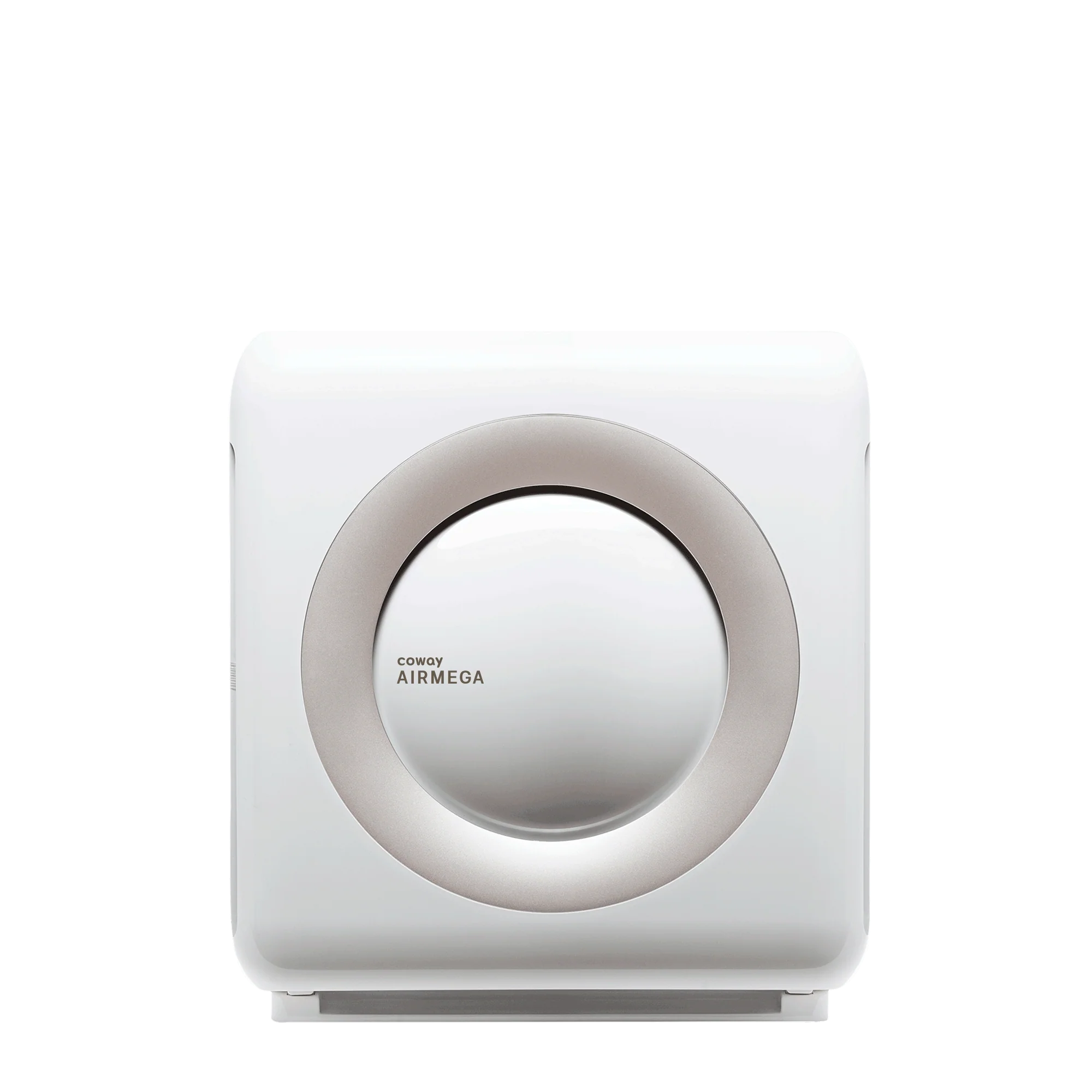
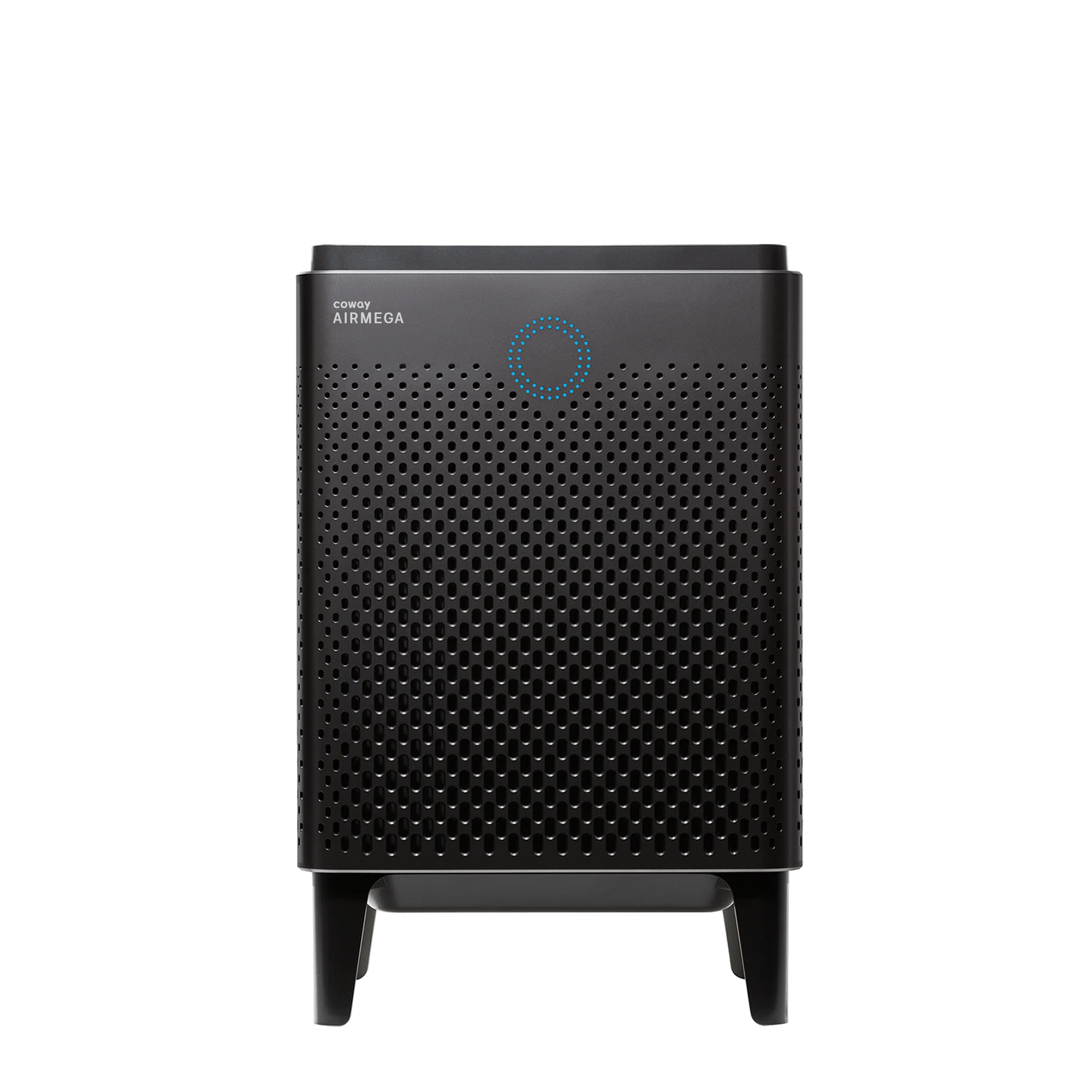
Coway — Makes our #1 ranked air purifier. The AP-1512HH Mighty has been the independent consensus pick for over 10 years: AHAM-verified CADR 246 dust, 233 smoke, responsive auto mode sensor, $50-60/year filters. The Airmega 200M delivers identical CADR in a cleaner aesthetic at $149-179 — both appear in our air purifiers under $200 ranked list alongside the strongest verified mid-range options.
Winix — Best brand for pet households. PlasmaWave targets ammonia and fatty acid compounds behind pet odor that carbon alone cannot handle. Washable pre-filter on the 5510 intercepts enough dog and cat hair to extend HEPA life 2-3x versus machines without one. CADR ratings are AHAM-honest.
Blueair — Highest CADR per dollar for large rooms. The 211i Max at CADR 410 leads the category for rooms above 400 sq ft. Machine-washable fabric pre-filter is the best pre-filter design we have tested — literal washing machine cycle, dry, reinstall.
Dyson — Best smart features. MyDyson app provides real-time PM2.5, VOC and NOx data with scheduling and filter tracking that no competitor matches. CADR is AHAM-verified but lower per dollar than Blueair or Coway at the same price. Buy Dyson for the software and design, not for maximum air cleaning per dollar.
Shark — Best warranty position. The NeverChange HP102 uses a filter rated for five years of normal use — no annual filter cost. Clean Sense IQ auto mode is competitive. Strongest budget alternative to Levoit for buyers who prioritize warranty coverage and US-based customer service.