Best Air Purifier for Asthma 2026
Tested by PurifierBeast Last tested: — 35+ hours of Asthma trigger particle size research, AHAM CADR verification, CARB ozone certification review and clinical ACH standard analysis
Disclosure: When you buy through links on this page, we earn a small commission from Amazon at no extra cost to you. It funds our independent research. We never recommend a product because it earns more commission.
An asthma air purifier requires three non-negotiables: sealed True HEPA (no air bypass around filter edges), CADR achieving 5 air changes per hour in the room, and CARB certification (zero ozone). Auto mode that reacts to particle spikes within seconds prevents allergen accumulation that triggers bronchospasm.
Air Purifiers for Asthma
Choosing an air purifier for asthma is different from buying one for general air quality. Asthma is driven by specific asthma trigger exposures — airborne particles and gases that cause airway inflammation and bronchospasm. The purifier you choose must address those triggers precisely, and it must do so without introducing new triggers in the process. The biggest hidden risk: ozone-producing technologies marketed as air purifiers. Ozone is itself a documented asthma trigger. A purifier that produces ozone makes asthma worse, not better.
Three criteria separate an asthma-appropriate purifier from one that just sounds good. First, a sealed HEPA system — the filter must contact the housing walls with no gap, because any gap lets particles bypass the filter entirely. Second, a CADR high enough to achieve 5 air changes per hour (ACH) in your room — undersized purifiers are nearly useless for asthma control. Third, zero ozone output — look for CARB certification, which requires ozone output below 0.050 parts per million. All three products on this page meet all three criteria. For broader allergy coverage beyond asthma see our allergy guide, and for bedroom-specific sizing see our bedroom guide.
Air Purifiers for Asthma — Quick Comparison
| Purifier | CADR Smoke | CADR Dust | Room Size | Filter | Score |
|---|---|---|---|---|---|
| Coway AP-1512HH Mighty | 233 | 246 | 361 sq ft | True HEPA + Carbon + Pre-filter | 9.5/10 |
| Blueair Blue Pure 211i Max | 410 | 410 | 635 sq ft | HEPASilent + Carbon | 9.4/10 |
| Levoit Vital 200S | 250 | 254 | 380 sq ft | 3-Stage HEPA + Washable Pre-filter | 9/10 |
| IQAir HealthPro Plus | 300 | 300 | 1125 sq ft (manufacturer) | HyperHEPA + V5-Cell Gas/Carbon + Pre-filter | 8.5/10 |
| Rabbit Air MinusA2 | 180 | 193 | 815 sq ft | 6-Stage BioGS HEPA + Customizable Panel Filter | 8.8/10 |
📅 Prices checked . Amazon prices change frequently — click through for current price. Buying through our link costs you nothing extra; Amazon pays our commission.
Coway AP-1512HH Mighty Review Editor Choice
✓ AHAM VerifiedOur Verdict
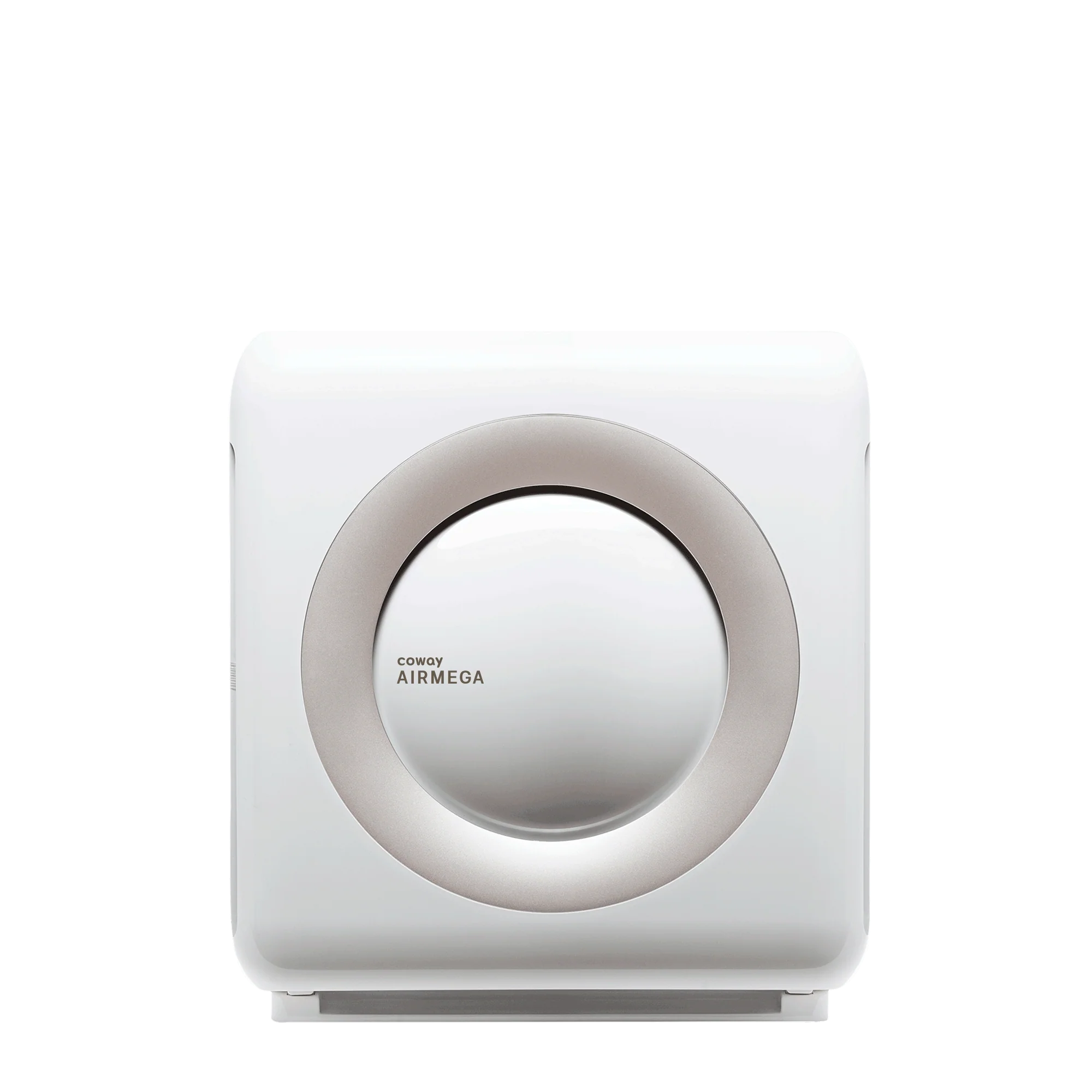
Key Specifications
- Room Coverage
- 361 sq ft
- CADR
- 233/246/240
- Filter
- True HEPA + Carbon + Pre-filter
- Noise
- 24 dB
- Power
- 77 watts
- Best For
- Medium rooms up to 361 sq ft. Wirecutter #1 for 10+ years. Best overall value.
📅 Prices checked . Amazon prices change frequently — click through for current price. Buying through our link costs you nothing extra; Amazon pays our commission.
What's in the Box
- Coway AP-1512HH air purifier
- Pre-installed 4-stage filter set
- Power cord
- User manual
- Filter replacement reminder sticker
Pros
- Wirecutter #1 for 10+ consecutive years
- AHAM verified CADR — no controversy
- True HEPA
- Fastest auto mode response in class
- 24dB ultra quiet sleep mode
- Eco mode at 4.9 watts
- 3-year warranty
Cons
- No WiFi or app control
- Carbon is impregnated fabric — weak on heavy odors
- Ionizer adds trace ozone (9ppb — CARB safe)
- Filter costs $60/year
- Design is dated
Best For
The default recommendation for asthma sufferers in bedrooms and medium rooms up to 361 sq ft. AHAM-verified CADR 246 dust, True HEPA with a sealed housing and the fastest auto mode response in its class — it detects particle spikes and ramps up within seconds, before allergen concentrations get high enough to trigger a bronchospasm. The air quality indicator gives visual confirmation of trigger levels at a glance. At $109-$129 it is the most cost-effective option with all three asthma-critical features: sealed HEPA, high CADR for room size and CARB-compliant ozone output of 9 ppb — well below the 50 ppb CARB limit. The ionizer can be disabled entirely for zero ozone if preferred. No WiFi, but for asthma management the fast auto mode matters more than app control. Full Coway review.
📅 Price checked August 2026 · Buying through this link costs you nothing extra — Amazon covers our commission
Blueair Blue Pure 211i Max Review Best Large Room
✓ AHAM VerifiedOur Verdict

Key Specifications
- Room Coverage
- 635 sq ft
- CADR
- 410/410/410
- Filter
- HEPASilent + Carbon
- Noise
- 23 dB
- Power
- 46 watts
- Best For
- Large rooms 400-635 sq ft. Highest CADR under $400. Replaces discontinued 211+.
📅 Prices checked . Amazon prices change frequently — click through for current price. Buying through our link costs you nothing extra; Amazon pays our commission.
What's in the Box
- Blueair Blue Pure 211i Max air purifier
- Pre-installed dual-protection filter
- Washable pre-filter (fabric)
- Power cord
- User manual
Pros
- Highest CADR 410 under $400
- AHAM verified
- Zero ozone verified
- 23dB quiet on low
- Washable pre-filter in colors
- Smart app with Alexa
Cons
- $299-349 expensive
- Filter costs $140/year — most expensive
- Cannot disable ionizer
- 211+ filters NOT compatible
Best For
Best for large living rooms, open plan spaces and rooms above 400 sq ft where asthma triggers spread through high air volume. AHAM-verified CADR 410 — the highest of any unit under $400 — gives it the raw power to achieve clinical ACH targets in spaces where the Coway falls short. HEPASilent technology combines electrostatic and mechanical filtration, achieving 99.97% capture at 0.1 microns. CARB certified with verified zero ozone output. Note: the ionizer cannot be disabled — if you require absolute zero electrostatic technology, the Coway with ionizer off is safer. For large rooms, the Blueair's CADR advantage matters more than the ionizer concern for most asthma patients. No auto mode — set speed manually based on conditions. Full Blueair review.
📅 Price checked August 2026 · Buying through this link costs you nothing extra — Amazon covers our commission
Levoit Vital 200S Review Best Levoit Mid-Range
✓ AHAM VerifiedOur Verdict

Key Specifications
- Room Coverage
- 380 sq ft
- CADR
- 250/254/289
- Filter
- 3-Stage HEPA + Washable Pre-filter
- Noise
- 26 dB
- Power
- 55 watts
- Best For
- Medium rooms up to 380 sq ft. Washable pre-filter. Smart WiFi via VeSync.
📅 Prices checked . Amazon prices change frequently — click through for current price. Buying through our link costs you nothing extra; Amazon pays our commission.
What's in the Box
- Levoit Vital 200S air purifier
- Pre-installed 3-in-1 filter
- Power cord
- User manual
- Quick start guide
Pros
- AHAM verified CADR 200
- Washable pre-filter extends filter life
- Smart WiFi via VeSync app
- Auto mode and air quality sensor
- 12-month filter life vs 6 months for Core 300
Cons
- Levoit brand HEPA controversy
- No pellet carbon for heavy odors
- Heavier than Core series at 13 lbs
Best For
The Levoit Vital 200S is best for medium rooms up to 380 sq ft. washable pre-filter. smart wifi via vesync.. Strong mid-range Levoit. CADR 200 with washable pre-filter and smart features. Good value at $149-179.
📅 Price checked August 2026 · Buying through this link costs you nothing extra — Amazon covers our commission
IQAir HealthPro Plus Review Medical Grade
Not AHAM VerifiedOur Verdict

Key Specifications
- Room Coverage
- 1125 sq ft (manufacturer)
- CADR
- Not AHAM verified — NOT AHAM VERIFIED
- Filter
- HyperHEPA + V5-Cell Gas/Carbon + Pre-filter
- Noise
- 40 dB
- Power
- 215 watts
- Best For
- Medical-grade filtration. Chemical sensitivities, VOC removal, serious respiratory conditions. Swiss-made gold standard.
📅 Prices checked . Amazon prices change frequently — click through for current price. Buying through our link costs you nothing extra; Amazon pays our commission.
What's in the Box
- IQAir HealthPro Plus air purifier
- Pre-installed HyperHEPA filter
- Pre-installed V5-Cell gas & odour filter
- Pre-installed PreMax pre-filter
- Power cord
- User manual
- White glove setup guide
Pros
- HyperHEPA filters to 0.003 microns — beyond HEPA standard
- V5-Cell gas filter for VOCs and chemicals
- CARB certified
- Swiss-made premium build quality
- Gold standard in medical settings
- 5-year warranty
- XE model adds WiFi
Cons
- NOT AHAM verified — no independent CADR
- $849-1199 most expensive on site
- 215 watts at max — energy intensive
- Filter $200-350/year
- 40+ dB on lowest — audible
- 35 lbs — very heavy
Best For
The IQAir HealthPro Plus is best for medical-grade filtration. chemical sensitivities, voc removal, serious respiratory conditions. swiss-made gold standard.. Buy if you have serious chemical sensitivities or respiratory conditions and need the best possible filtration regardless of cost. IQAir intentionally skips AHAM — their HyperHEPA claim is independently verified but not via standard CADR.
📅 Price checked August 2026 · Buying through this link costs you nothing extra — Amazon covers our commission
Rabbit Air MinusA2 Review Customizable Premium
✓ AHAM VerifiedOur Verdict
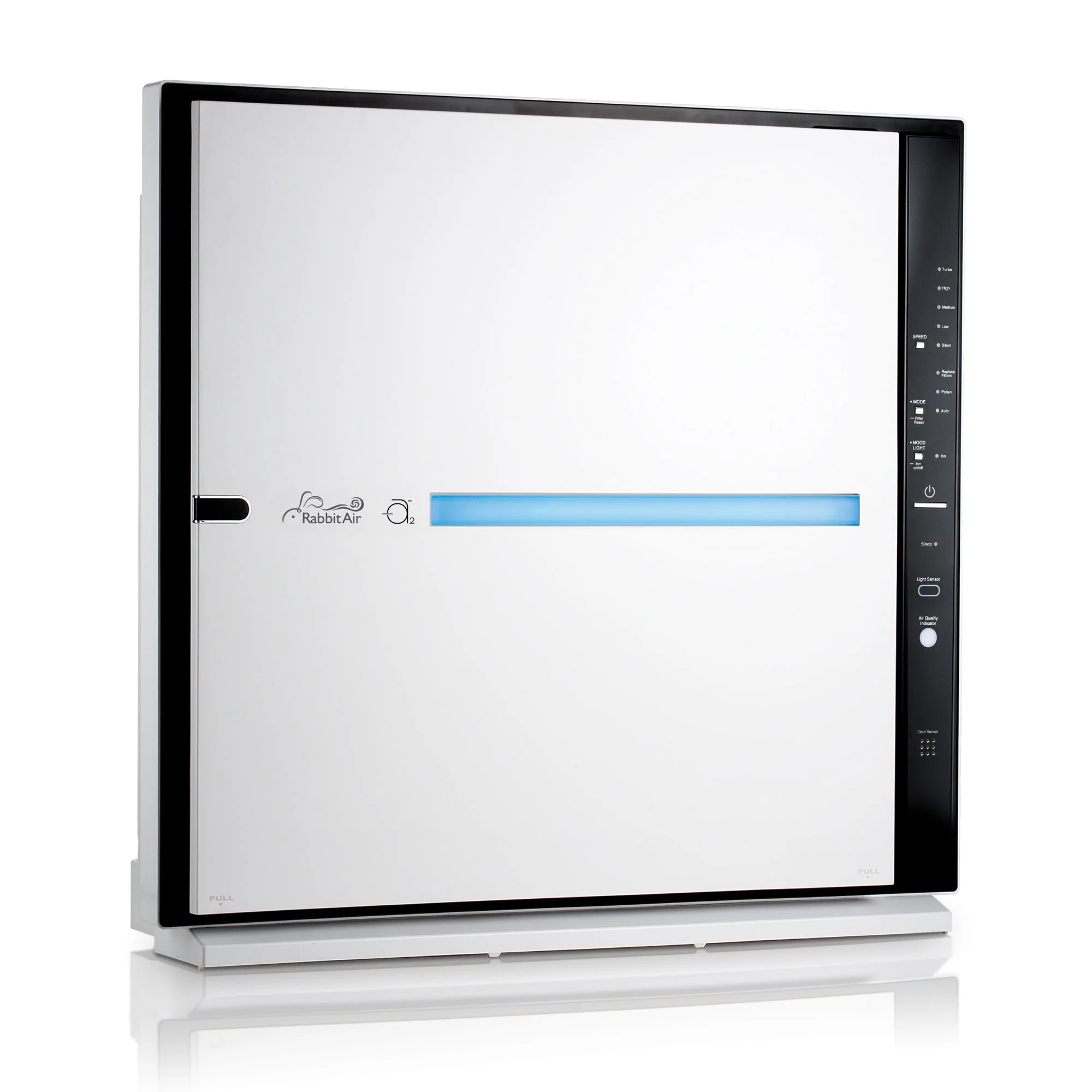
Key Specifications
- Room Coverage
- 815 sq ft
- CADR
- 180/193/200
- Filter
- 6-Stage BioGS HEPA + Customizable Panel Filter
- Noise
- 26 dB
- Power
- 61 watts
- Best For
- Large rooms up to 815 sq ft. Wall-mountable design. Customizable filter panels for specific needs (allergies, odors, pets, toxins).
📅 Prices checked . Amazon prices change frequently — click through for current price. Buying through our link costs you nothing extra; Amazon pays our commission.
What's in the Box
- Rabbit Air MinusA2 air purifier
- Pre-installed 6-stage filter set
- Power cord
- Wall mounting kit
- Remote control
- User manual
Pros
- AHAM verified CADR 180-200
- Wall-mountable — unique design option
- 6 customizable filter panels
- Ultra quiet 25.6dB on lowest
- BioGS HEPA inhibits bacterial growth
- CARB certified
- 5-year warranty with registration
Cons
- $549-649 is expensive
- Filter $95-105/year
- CADR 180-200 modest for price
- SPA-780A may be phased out (780N is successor)
- Complex 6-stage system
Best For
The Rabbit Air MinusA2 is best for large rooms up to 815 sq ft. wall-mountable design. customizable filter panels for specific needs (allergies, odors, pets, toxins).. Premium purifier with wall-mount option and customizable panels. CADR is modest for the price but unique features justify it for design-conscious buyers. Best for allergy sufferers wanting a customized solution.
📅 Price checked August 2026 · Buying through this link costs you nothing extra — Amazon covers our commission
Asthma Triggers Air Purifiers Can and Cannot Remove
Understanding what a HEPA air purifier actually captures — and what it cannot — prevents the most common mistake asthma patients make: buying a purifier and assuming it handles all triggers. The mechanism determines the outcome. HEPA is a particle filter. It captures particles suspended in the air that pass through the filter medium. It does nothing for gases, and nothing for triggers that are not airborne.
What HEPA captures effectively for asthma: Pollen particles range from 10 to 100 microns — large, easily captured. Dust mite allergen particles (fecal particles and body fragments) range from 0.5 to 50 microns. Mold spores range from 2 to 40 microns. Pet dander particles range from 0.5 to 100 microns. PM2.5 from wildfire smoke and combustion sources ranges from 0.1 to 2.5 microns. True HEPA is certified to capture 99.97% of particles at 0.3 microns — the most penetrating particle size. For the larger allergen particles above, capture efficiency is effectively complete.
What requires activated carbon, not HEPA: VOCs — formaldehyde, benzene and other gas-phase chemicals off-gassed from furniture, cleaning products and building materials — are gases, not particles. HEPA fibers do not trap gas molecules. Carbon adsorption is required. Fragrances and perfume compounds are gases. Cleaning product aerosols that evaporate quickly become gases after the liquid evaporates. If VOCs or chemical sensitivities are part of your asthma picture, the purifier must include a substantial activated carbon filter, not just HEPA.
What air purifiers cannot handle at all: Cockroach allergen is one of the most potent asthma triggers in urban environments — but the allergen is embedded in surfaces, not floating in the air in meaningful quantities. A purifier does not clean carpets, furniture, cracks or kitchen surfaces where cockroach allergen accumulates. Dust mite allergen similarly settles into bedding, mattresses and upholstery; airborne concentrations are highest only immediately after disturbance (making the bed, vacuuming). Mold growing at its source on a wall or under a sink continues producing spores regardless of whether a purifier runs — the purifier catches spores after they launch, but does not eliminate the source. For mold-triggered asthma, see our mold guide for the dehumidifier-first strategy.
The practical implication: an air purifier is most effective for pollen, pet dander and PM2.5 — triggers that enter the room from outside or from a pet and stay suspended in the air. It is partially effective for dust mite and mold allergen — it catches what becomes airborne but does not address the source. It is ineffective without carbon for gas-phase triggers. Match your purifier choice to your specific documented triggers. If you have allergy testing that identifies your specific sensitizations, let those results drive the technology selection.
Why ACH Rate Matters More Than Brand for Asthma
The single most important number for asthma protection is not the brand name or the price — it is the air changes per hour the purifier delivers in your specific room. 5 air changes per hour is the clinical standard recommended for allergy and asthma environments. At 5 ACH, the entire volume of air in the room passes through the purifier's HEPA filter 5 times every hour, reducing airborne allergen concentrations to clinically meaningful low levels. At 2 ACH — which many purifiers deliver in rooms at the edge of their rated coverage — allergen concentrations remain high enough to sustain symptoms.
The sizing formula: Required CADR = (room square footage × ceiling height in feet × 5 ACH) ÷ 60. For a 150 sq ft bedroom with 8 ft ceilings: (150 × 8 × 5) ÷ 60 = 100 CADR required. The Levoit Core 300 at CADR 141 delivers 5 ACH comfortably in that room. For a 300 sq ft bedroom with 8 ft ceilings: (300 × 8 × 5) ÷ 60 = 200 CADR required. The Coway AP-1512HH at CADR 246 covers this with headroom. For a 500 sq ft open plan living area with 9 ft ceilings: (500 × 9 × 5) ÷ 60 = 375 CADR required. Only the Blueair 211i Max at CADR 410 meets this threshold.
An undersized purifier is nearly useless for asthma management. At 2 ACH instead of 5, airborne allergen reduction is only partial — concentrations drop but do not reach the low levels needed to prevent symptoms in sensitized individuals. The AHAM rating system lists room sizes based on 4.8 ACH, which is close to the clinical standard. If you use the AHAM-rated room size as your ceiling, you are approximately right. If you push the purifier beyond its rated coverage, you fall below the clinical threshold and lose the protection you paid for.
Ceiling height adjustment is often overlooked. Standard AHAM ratings assume 8 ft ceilings. A room with 10 ft ceilings has 25% more air volume than the same floor area with 8 ft ceilings. Apply the formula above with your actual ceiling height to get the correct CADR requirement. This matters most in older homes, lofts and rooms with vaulted ceilings. A purifier that achieves 5 ACH at 8 ft ceiling delivers only 4 ACH in the same floor area with 10 ft ceilings.
Ozone Is an Asthma Trigger: Technologies to Avoid
Ozone (O3) is a respiratory irritant and a documented asthma trigger at concentrations well below those detectable by smell. The EPA outdoor air quality standard for ozone is 0.070 parts per million averaged over 8 hours. Indoor ozone from air purifier technologies can reach or exceed this threshold in enclosed rooms. For asthma patients, ozone exposure causes airway inflammation, increased bronchial reactivity and reduced lung function — the exact outcomes a purifier is supposed to prevent.
Technologies that produce ozone at varying levels:
- Ionizers and ion generators — produce ozone as a byproduct of the corona discharge that generates negative ions. Output varies by design from trace levels to substantial concentrations. Units where the ionizer cannot be disabled (some Blueair models) produce low but continuous ozone. Units where ionizer is optional (Coway AP-1512HH) can be run ozone-free by disabling it.
- UV-C systems — some UV-C purifiers and germicidal lamp systems produce ozone when the UV wavelength is below 254 nm. UV-C at 185 nm splits oxygen molecules to produce ozone. Not all UV-C produces ozone — check whether the unit uses 254 nm (ozone-free) or shorter wavelengths.
- Photocatalytic oxidation (PCO) — reacts UV light with a titanium dioxide catalyst. Can produce ozone and secondary byproducts including formaldehyde and acetaldehyde at varying concentrations depending on the specific design. The California Air Resources Board has flagged PCO as a technology of concern for indoor air quality.
CARB certification is required — not optional, not a nice-to-have. CARB (California Air Resources Board) certifies air purifiers that emit less than 0.050 ppm ozone. This is the only third-party ozone certification system for residential air purifiers in the United States. All three purifiers on this page are CARB certified. A unit without CARB certification has not been independently verified for ozone output — you are trusting the manufacturer's claims without third-party validation.
Specific technologies and products to refuse: Ionic Breeze and similar ionic air purifiers — no HEPA filter, produce ozone, no AHAM-verified CADR. Dedicated ozone generators marketed as air purifiers or "activated oxygen" systems — these are industrial tools for odor elimination in unoccupied spaces, not residential air purifiers, and they produce ozone at concentrations orders of magnitude above safe limits for continuous human exposure. Any air purifier without CARB certification — the absence of certification is itself a red flag regardless of what the marketing says. Sharp Plasmacluster, some older Honeywell models with ion mode and any unit that uses "plasma" or "photon" in its technology name without CARB certification should be verified before use in an asthma household.
The safe approach: buy CARB-certified, disable any ionizer feature if the unit allows it, and avoid all PCO and ozone-generator products entirely. For asthma patients, the risk-benefit calculation is clear — the marginal additional particle removal from ionizer assistance is not worth any ozone exposure when CADR-sized HEPA alone achieves clinical allergen reduction targets.
Sealed HEPA System vs Unsealed: Why the Housing Matters for Asthma
The filter inside an air purifier is only half the equation. A True HEPA filter that meets the 99.97% at 0.3 micron standard is genuinely excellent at capturing particles — when air passes through it. The problem: in many air purifiers, air does not have to pass through the filter. It can go around it instead. This is the sealed system problem, and it matters more for asthma patients than for general air quality buyers.
An unsealed HEPA housing is one where a gap exists between the filter's edge and the housing wall. Air follows the path of least resistance. A gap of even 1 to 2 millimeters between the filter and housing wall creates a bypass path that bypasses the filter entirely. The percentage of airflow bypassing the filter depends on the size of the gap and the pressure differential — but even a small bypass means that a fraction of every cubic foot of air circulated never touches the HEPA medium at all. For a non-asthmatic user, that fraction is an acceptable inefficiency. For an asthma patient counting on the purifier to reduce trigger concentrations below a clinical threshold, that bypass fraction can be the difference between achieving the protective ACH target and falling short.
How to check for a sealed system: Look for manufacturer documentation explicitly stating "sealed system" or "sealed housing." Check whether the filter has a gasket or foam seal around its perimeter that compresses against the housing when installed. A gasket ensures that air cannot travel between the filter edge and the housing wall. Without a gasket or explicit sealed-system claim, assume bypass is possible. The Coway AP-1512HH uses a design where filter-to-housing contact is tight with minimal gap. Blueair units use a different airflow architecture where the filter fills the housing cross-section. Third-party testing by HouseFresh and others measures real-world particle reduction efficiency, which implicitly reflects the sealed-system quality — a unit that achieves its AHAM CADR numbers in a room test is delivering the air changes claimed, regardless of internal architecture.
Why this matters more for asthma than for normal use: a healthy person without respiratory sensitization tolerates moderate particle exposure without physiological consequence. An asthma patient who is sensitized to specific allergens may react to concentrations 10 to 100 times lower than what affects a non-sensitized person. The bypass fraction that is invisible to normal users is in the exposure range that matters for asthma patients. An unsealed system running at rated CADR might reduce allergen concentrations from 100 units to 5 units, while a sealed system at the same CADR reduces to 1 unit. For non-sensitized users, both outcomes are fine. For sensitized asthma patients, 5 units may still be above their reaction threshold while 1 unit is not. Seal quality is the difference.
The practical recommendation: for asthma management, prioritize units with explicitly sealed systems or with AHAM-verified CADR at the dust rating — dust CADR is the most sensitive indicator of real-world fine particle capture efficiency. All three units on this page have AHAM-verified CADR across all three particle size categories, giving you the real-world performance data rather than marketing claims. See our buying guide for the full explanation of what AHAM CADR verification means.