Air Purifier for COVID-19: What the Evidence Shows
Tested by PurifierBeast Last tested: — 20+ hours of CDC/EPA/ASHRAE guidance review and peer-reviewed aerosol science
Disclosure: When you buy through links on this page, we earn a small commission from Amazon at no extra cost to you. It funds our independent research. We never recommend a product because it earns more commission.
COVID and Air Purifiers
SARS-CoV-2, the virus that causes COVID-19, spreads primarily through respiratory aerosols — virus-laden droplets under 5 microns that remain suspended in indoor air for minutes to hours. This is the mechanism that makes indoor crowded spaces high-risk, and it is the mechanism that an HEPA air purifier is actually positioned to address. True HEPA filtration captures particles at 0.3 microns, which is within the aerosol size range. Individual virions are smaller — around 0.1 microns — but they travel attached to respiratory aerosol particles, not as free-floating particles, so HEPA captures the carrier particle along with any virus it contains.
The key variable is not whether a purifier has a HEPA filter, but how many ACH it achieves in the specific room where it is used. A purifier that processes room air only twice per hour dilutes aerosol load gradually. A purifier achieving 5+ ACH — the threshold the CDC cites for high-risk settings — meaningfully reduces concentration far more quickly. Room size, ceiling height, and purifier CADR all factor into this calculation. Buying a purifier without sizing it to the room is the most common way people undermine its effectiveness.
The EPA and CDC both acknowledge portable HEPA air cleaners as a supplementary tool in their indoor air quality guidance for COVID-19. The ASHRAE similarly recommends filtration and ventilation together. The word "supplementary" is important: these agencies recommend air purifiers alongside ventilation, masking, and vaccination — not as a replacement for them. This page covers what the science supports, what the math looks like, and which purifiers are built to achieve meaningful ACH in real household rooms.
COVID and Air Purifiers — Quick Comparison
| Purifier | CADR Smoke | CADR Dust | Room Size | Filter | Score |
|---|---|---|---|---|---|
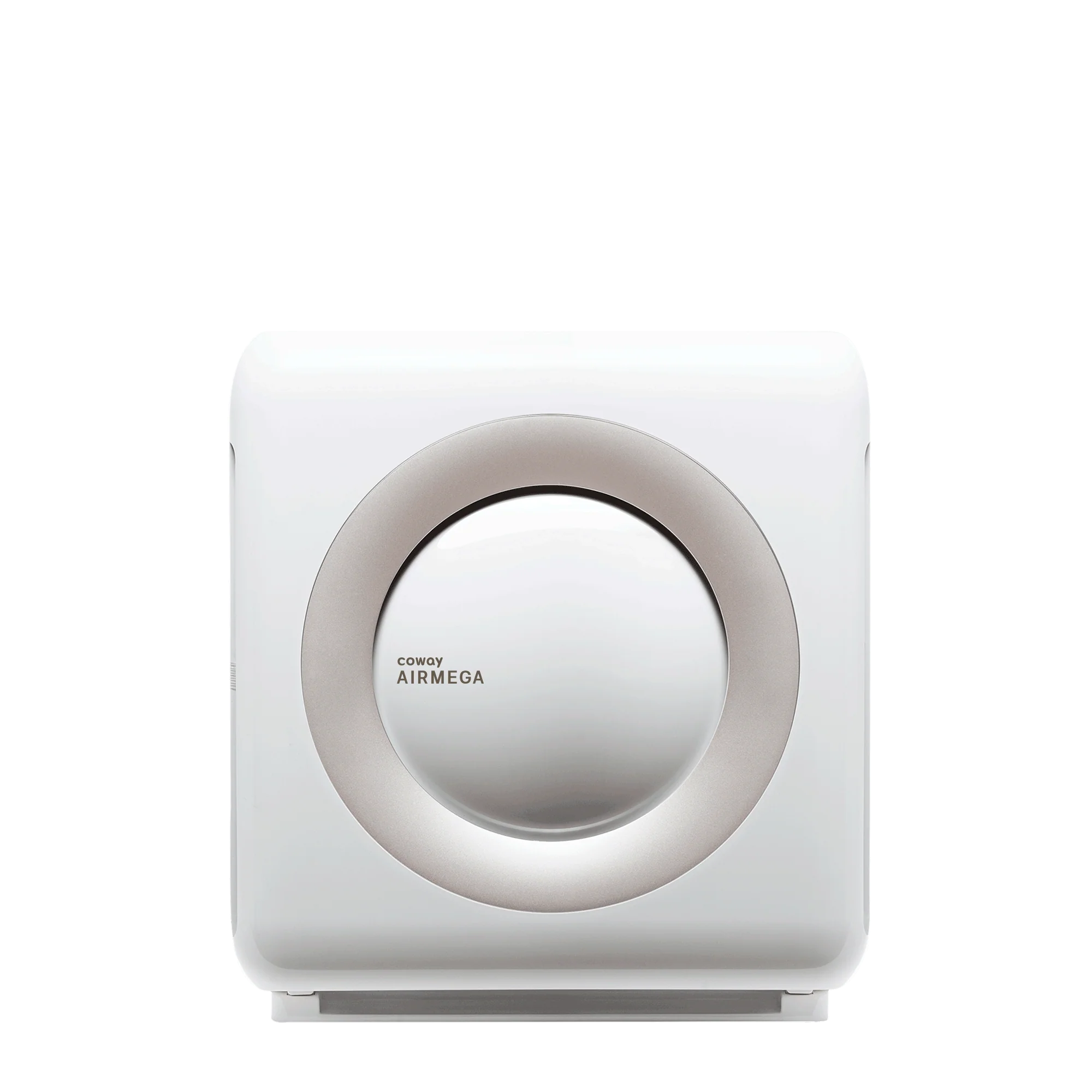
| Coway AP-1512HH Mighty | 233 | 246 | 361 sq ft | True HEPA + Carbon + Pre-filter | 9.5/10 |
| Blueair Blue Pure 211i Max | 410 | 410 | 635 sq ft | HEPASilent + Carbon | 9.4/10 |
📅 Prices checked . Amazon prices change frequently — click through for current price. Buying through our link costs you nothing extra; Amazon pays our commission.
Coway AP-1512HH Mighty Review Editor Choice
✓ AHAM VerifiedOur Verdict
Key Specifications
- Room Coverage
- 361 sq ft
- CADR
- 233/246/240
- Filter
- True HEPA + Carbon + Pre-filter
- Noise
- 24 dB
- Power
- 77 watts
- Best For
- Medium rooms up to 361 sq ft. Wirecutter #1 for 10+ years. Best overall value.
📅 Prices checked . Amazon prices change frequently — click through for current price. Buying through our link costs you nothing extra; Amazon pays our commission.
What's in the Box
- Coway AP-1512HH air purifier
- Pre-installed 4-stage filter set
- Power cord
- User manual
- Filter replacement reminder sticker
Pros
- Wirecutter #1 for 10+ consecutive years
- AHAM verified CADR — no controversy
- True HEPA
- Fastest auto mode response in class
- 24dB ultra quiet sleep mode
- Eco mode at 4.9 watts
- 3-year warranty
Cons
- No WiFi or app control
- Carbon is impregnated fabric — weak on heavy odors
- Ionizer adds trace ozone (9ppb — CARB safe)
- Filter costs $60/year
- Design is dated
Best For
The Coway AP-1512HH is the right choice for a dedicated bedroom or home office where a vulnerable household member sleeps or spends significant time. Its AHAM-verified CADR of 246 for dust exceeds the 167 CADR required for 5 ACH in a 250 sq ft bedroom. True HEPA, no controversy, fastest auto mode response in its class. If you are implementing a clean room strategy for one person, this is the most cost-efficient way to do it.
📅 Price checked August 2026 · Buying through this link costs you nothing extra — Amazon covers our commission
Blueair Blue Pure 211i Max Review Best Large Room
✓ AHAM VerifiedOur Verdict

Key Specifications
- Room Coverage
- 635 sq ft
- CADR
- 410/410/410
- Filter
- HEPASilent + Carbon
- Noise
- 23 dB
- Power
- 46 watts
- Best For
- Large rooms 400-635 sq ft. Highest CADR under $400. Replaces discontinued 211+.
📅 Prices checked . Amazon prices change frequently — click through for current price. Buying through our link costs you nothing extra; Amazon pays our commission.
What's in the Box
- Blueair Blue Pure 211i Max air purifier
- Pre-installed dual-protection filter
- Washable pre-filter (fabric)
- Power cord
- User manual
Pros
- Highest CADR 410 under $400
- AHAM verified
- Zero ozone verified
- 23dB quiet on low
- Washable pre-filter in colors
- Smart app with Alexa
Cons
- $299-349 expensive
- Filter costs $140/year — most expensive
- Cannot disable ionizer
- 211+ filters NOT compatible
Best For
The Blueair 211i Max is suited to larger common areas — living rooms, open-plan spaces, or situations where the goal is to maximize aerosol reduction across a bigger footprint. AHAM-verified CADR 410 achieves 5+ ACH in rooms up to 635 sq ft. HEPASilent technology captures particles at 0.1 microns — smaller than standard True HEPA minimum test size. The filter replacement cost at $140/year is the main trade-off.
📅 Price checked August 2026 · Buying through this link costs you nothing extra — Amazon covers our commission
How COVID-19 Spreads Indoors: The Aerosol Science
Indoor transmission of COVID-19 is dominated by aerosol spread — respiratory particles under 5 microns that are exhaled during breathing, talking, singing, coughing, and sneezing. Particles in the 0.1–5 micron range remain suspended in still indoor air for minutes to hours, drifting with air currents throughout a room and sometimes beyond it through HVAC systems.
Larger droplets — above 5 microns — follow a different pattern. These fall out of the air within approximately 2 meters of the source. They matter for close-contact transmission, which remains the highest-risk scenario, but they are not the particles an air purifier addresses. The distinction is relevant because a purifier does not reduce close-contact risk; it addresses the longer-range aerosol component that accumulates over time in enclosed spaces.
Crowded, poorly ventilated spaces amplify aerosol risk by two mechanisms: more people exhaling means higher aerosol generation, and low ventilation means aerosols accumulate rather than being diluted. Studies published in peer-reviewed journals including Science and The Lancet confirm that a large fraction of COVID-19 transmission events — particularly superspreader events — occurred in such settings. An air purifier acts as a supplementary dilution mechanism when ventilation is inadequate.
Close contact remains the highest individual risk scenario regardless of room-level aerosol management. An air purifier does not create a safety perimeter around any individual; it reduces the background aerosol concentration in the room as a whole.
What a HEPA Air Purifier Actually Does for COVID Risk
A True HEPA filter (H13 grade) captures 99.97% of particles at 0.3 microns and above. This captures respiratory aerosol particles in the 0.1–5 micron range that carry SARS-CoV-2. Individual virions are approximately 0.1 microns — below the HEPA test threshold — but free-floating virions are not the transmission vector. Virus travels attached to respiratory aerosol particles, so HEPA captures the carrier and removes the virus along with it. This mechanism is supported by CDC guidance and peer-reviewed aerosol science.
ACH rate is the key operational variable. A purifier running at 2 ACH replaces the equivalent of the room air volume twice per hour — adequate background filtration but slow to respond to aerosol spikes. A purifier at 5+ ACH replaces room air every 12 minutes. The CDC recommends a minimum of 5 ACH for high-risk indoor settings in its ventilation guidance. The difference between 2 ACH and 5 ACH in aerosol reduction is not proportional — it is substantially nonlinear because higher ACH reduces steady-state aerosol concentration to a much lower baseline level.
The clean room strategy is the CDC and ASHRAE-aligned approach for household members who are immunocompromised or at elevated risk. Rather than trying to clean the entire home, designate one room — typically a bedroom — and run a properly sized purifier at the highest feasible ACH. This concentrates the filtration effect where it provides the most benefit.
CADR is the metric that determines ACH. CADR measures cubic feet of clean air delivered per minute. AHAM-verified CADR from independent laboratory testing is the only source of confirmed performance data — manufacturer claims without AHAM verification should be treated as unconfirmed. The VOC and odor reduction capability of activated carbon filters is separate from HEPA aerosol capture and is not relevant to COVID aerosol risk reduction.
The Clean Room Strategy: How to Maximize Effectiveness
The clean room strategy is the approach recommended by the CDC and ASHRAE for households with vulnerable members. The principle is to concentrate filtration resources in one room rather than diluting them across a whole house, achieving much higher ACH in that space than would otherwise be possible.
Implementation steps: Designate one room — typically the bedroom of the person at highest risk. Seal the gap under the door with a draft stopper. Close windows in that room when the purifier is running (ventilation and filtration are complementary at the building level but can partially work against each other at the room level if outdoor air is constantly replenishing aerosols). Run the purifier at maximum speed, especially during and immediately after the room is occupied by multiple people.
Sizing the purifier for the room: The formula for required CADR is: room square footage × ceiling height (in feet) × target ACH ÷ 60 = CADR required. For a 250 sq ft bedroom with 8 ft ceilings at 5 ACH: 250 × 8 × 5 ÷ 60 = CADR 167 required. The Coway AP-1512HH at AHAM-verified CADR 246 exceeds this comfortably, achieving approximately 7.5 ACH in that room. For a larger room of 400 sq ft with 8 ft ceilings at 5 ACH: 400 × 8 × 5 ÷ 60 = CADR 267 required — where the Blueair 211i Max at CADR 410 provides significant headroom.
The clean room does not require the purifier to run continuously at maximum speed 24 hours a day. Running at high speed for 30–60 minutes before the room is occupied, and maintaining it during occupancy, provides the most benefit. Running on auto mode or a lower speed overnight is reasonable once the room has reached a low aerosol baseline. The key is not allowing the room to be used as a gathering space by multiple people for extended periods without the purifier running at high ACH.
For people using this approach, our overall best air purifier guide includes sizing guidance for a wider range of room sizes and priorities.
What Air Purifiers Cannot Do for COVID-19
Clear limits matter here. Overstating air purifier effectiveness is common in product marketing and can lead people to substitute purifiers for more effective protective measures.
Air purifiers do not reduce close-contact transmission risk. If two people are within 1–2 meters of each other in conversation, a room-level air purifier running in the corner does not meaningfully reduce the aerosol exposure between them. High-filtration masks (N95 or equivalent) provide far more protection for individuals in close contact than any room air purifier.
Air purifiers do not replace ventilation. Opening windows and increasing fresh outdoor air supply is often more effective per unit of effort than additional purification, particularly in mild weather. Ventilation dilutes aerosols with outdoor air; purification recirculates and cleans indoor air. Both contribute; neither makes the other unnecessary. In buildings with adequate mechanical ventilation, adding a portable purifier provides incremental benefit. In poorly ventilated spaces, prioritizing ventilation first is usually more effective.
Air purifiers do not kill virus on surfaces. HEPA filtration is a mechanical capture mechanism — particles enter the filter and are physically trapped. The virus in those particles is not killed; it remains in the filter until it is replaced. This is not a practical concern — particles captured in a filter are not a transmission risk — but it means that air purifiers play no role in surface contamination, which is a separate (and less significant) COVID transmission pathway.
Ozone generators and ionizers marketed for COVID should be avoided. Ozone is a lung irritant. There is no credible peer-reviewed evidence that ozone generators or consumer-grade ionizers provide meaningful COVID-19 protection. Some produce harmful byproducts. The EPA and California Air Resources Board explicitly warn against using ozone generators as air cleaners indoors.
UV-C air purifiers in consumer units have insufficient evidence for COVID claims. Effective UV-C sterilization requires adequate exposure duration at the correct wavelength (254 nm). Air moving through a consumer purifier at 200+ CFM passes any UV-C lamp in a fraction of a second — far too brief for reliable pathogen inactivation. Commercial HVAC UV-C systems are engineered differently and are not comparable to the UV-C feature in a portable consumer air purifier.