Air Purifier vs Dehumidifier: Different Problems, Different Solutions
Tested by PurifierBeast Last tested: — 15+ hours of indoor air quality standards and moisture control research
Disclosure: When you buy through links on this page, we earn a small commission from Amazon at no extra cost to you. It funds our independent research. We never recommend a product because it earns more commission.
Air purifier vs dehumidifier — two complementary indoor air quality devices addressing different problems. Air purifiers remove particles (PM2.5, dust, pollen, pet dander, mold spores) and gases (VOCs, odors) through filtration. Dehumidifiers remove excess moisture, lowering relative humidity below 50% RH to inhibit mold growth and dust mite survival. For mold prevention, a dehumidifier addresses the root cause; an air purifier captures existing airborne mold spores. Both recommended together for basements and humid climates.
Air Purifier vs Dehumidifier
An air purifier and a dehumidifier solve different problems. An air purifier pulls room air through filters — HEPA for particles, activated carbon for gases — and returns cleaner air to the room. It does not change the humidity of the air. A dehumidifier pulls room air over refrigerated coils, condenses moisture from it, collects that water in a reservoir, and returns drier air to the room. It does not filter particles.
They are often confused because mold is the trigger that sends people searching for both. Someone finds mold, worries about spores, searches "best air purifier for mold." But mold grows because relative humidity — the percentage of moisture in air relative to its maximum capacity at a given temperature — is above 60 percent, not because there are insufficient air purifiers in the room. Capturing spores in a HEPA filter while the walls remain damp does not prevent new mold growth. The dehumidifier addresses the cause; the air purifier addresses a symptom.
The most common scenario where both devices are needed: a basement or humid climate home where RH regularly exceeds 60 percent and there is also particulate concern from dust, pet dander or pollen. A dehumidifier keeps RH below 50 percent to prevent mold and suppress dust mite populations. An air purifier with CADR-verified HEPA captures the airborne particles that remain. Together they cover both dimensions of indoor air quality — moisture control and particle filtration.
Air Purifier vs Dehumidifier — Quick Comparison
| Purifier | CADR Smoke | CADR Dust | Room Size | Filter | Score |
|---|---|---|---|---|---|
| Coway AP-1512HH Mighty | 233 | 246 | 361 sq ft | True HEPA + Carbon + Pre-filter | 9.5/10 |
📅 Prices checked . Amazon prices change frequently — click through for current price. Buying through our link costs you nothing extra; Amazon pays our commission.
Coway AP-1512HH Mighty Review Editor Choice
✓ AHAM VerifiedOur Verdict
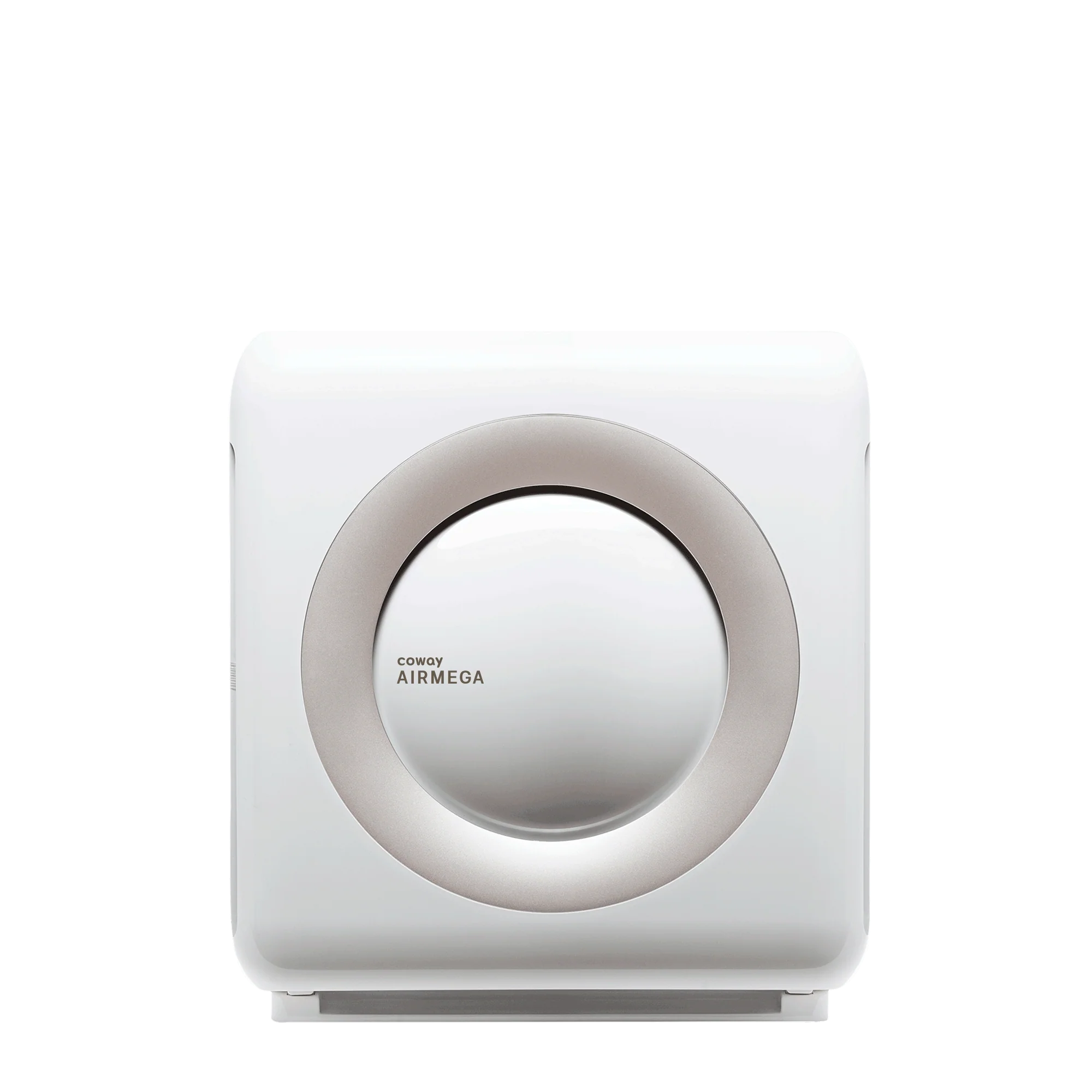
Key Specifications
- Room Coverage
- 361 sq ft
- CADR
- 233/246/240
- Filter
- True HEPA + Carbon + Pre-filter
- Noise
- 24 dB
- Power
- 77 watts
- Best For
- Medium rooms up to 361 sq ft. Wirecutter #1 for 10+ years. Best overall value.
📅 Prices checked . Amazon prices change frequently — click through for current price. Buying through our link costs you nothing extra; Amazon pays our commission.
What's in the Box
- Coway AP-1512HH air purifier
- Pre-installed 4-stage filter set
- Power cord
- User manual
- Filter replacement reminder sticker
Pros
- Wirecutter #1 for 10+ consecutive years
- AHAM verified CADR — no controversy
- True HEPA
- Fastest auto mode response in class
- 24dB ultra quiet sleep mode
- Eco mode at 4.9 watts
- 3-year warranty
Cons
- No WiFi or app control
- Carbon is impregnated fabric — weak on heavy odors
- Ionizer adds trace ozone (9ppb — CARB safe)
- Filter costs $60/year
- Design is dated
Best For
Choose an air purifier — and specifically the Coway AP-1512HH — if your primary concern is airborne particles: dust, pollen, pet dander, smoke or mold spores in air. AHAM-verified CADR 246 handles rooms up to 360 sq ft with meaningful ACH. Auto mode detects particle spikes. The humidity control score of 1.0 is deliberate: this device does nothing for humidity. If high RH or active mold growth is your primary problem, add a dehumidifier to keep RH below 50 percent. Use the Coway to capture what the dehumidifier cannot address — airborne particles and odors. Full Coway review.
📅 Price checked August 2026 · Buying through this link costs you nothing extra — Amazon covers our commission
When You Need Both — The HEPA + Dehumidifier Combo
Most guides treat the air purifier vs dehumidifier question as binary. In practice, the majority of homes with moisture concerns — basements, coastal climates, homes with pets, older construction — benefit from running both simultaneously because they solve different problems that coexist in the same space.
The full picture in a humid basement: Without intervention, a basement with 65-70% RH supports mold growth, has elevated dust mite populations (mites reproduce rapidly above 50% RH), and accumulates airborne mold spores, mite allergen particles, and musty organic odors. A dehumidifier alone drops RH to 45-50%, suppressing new mold and mite habitat — but does not clear the existing airborne spore load from residual mold or the allergen particles already circulating. An air purifier alone captures some spores and particles — but without humidity control, new mold continues to grow and release spores faster than the purifier can capture them. Both running together: humidity control eliminates the growth conditions while the purifier manages the airborne load from existing sources.
Sizing the HEPA unit when you also run a dehumidifier: A dehumidifier cycling on-and-off creates air movement in the space. Position the air purifier on the opposite side of the room from the dehumidifier so the dehumidifier's exhaust air flows toward the purifier's intake — the dehumidifier acts as a secondary air mover that helps circulate room air through the HEPA filter. This improves effective CADR utilization without requiring a higher-CADR unit.
Cost reality check: Running both devices adds to electricity cost. A mid-range dehumidifier (300-500W) plus an air purifier (40-75W) in a basement adds approximately $20-45 per month to electricity at average US residential rates. In a finished basement used as living space, this cost is comparable to running a portable air conditioner and is justified by the combination of mold prevention, allergen reduction, and comfort. In an unfinished basement used for storage, a dehumidifier alone (without the purifier) may be sufficient if human occupancy is minimal.
The correct sequence for implementation: Start with the dehumidifier. Get RH below 50% and hold it there for several weeks before adding the air purifier. If mold is present, remediate the active colonies after RH is under control. Then add the HEPA purifier to manage residual airborne spores and allergens. Running the air purifier first without humidity control provides limited benefit because the mold source remains active. See our air purifier for mold guide for the full remediation protocol.
What an Air Purifier Does vs What a Dehumidifier Does
An air purifier works mechanically: a fan draws room air through a filter stack. HEPA captures particles from 0.3 microns upward — dust, pollen, pet dander, mold spores, smoke particles. Activated carbon adsorbs gas-phase pollutants and odors. The purifier's output is cleaner air at lower particle and gas concentration. It does not change humidity, temperature or room moisture levels in any meaningful way.
A dehumidifier works refrigerant-based: a compressor chills a metal coil to below the dew point of the room air. Moisture condenses on the coil, drips into a collection tray, and the now-drier air is returned to the room. The dehumidifier's output is air with lower moisture content. Residential dehumidifiers typically reduce RH from above 60 percent to a target of 45 to 50 percent. At RH below 50 percent, dust mite populations decline significantly — dust mites require RH above 50 percent to survive. Mold cannot grow at RH below 60 percent on most surfaces. The dehumidifier addresses the moisture conditions that enable these biological problems.
The practical distinction: if you can see or smell mold, or if a hygrometer shows RH above 60 percent consistently, a dehumidifier addresses the cause. If you have sneezing, dust, pet dander concerns, or particulate from smoke, the air purifier addresses the problem. Many homes have both concerns, particularly basements, bathrooms and humid-climate homes.
Mold: When You Need a Dehumidifier, Not an Air Purifier
Mold grows on surfaces — walls, ceilings, drywall, wood, grout, fabric — when those surfaces remain damp and RH in the surrounding air stays above 60 percent consistently. Mold releases spores into the air, which a HEPA air purifier captures efficiently. But capturing spores does not stop new mold from growing on wet surfaces. The mold colony continues to grow and continues to release spores faster than any air purifier can capture them, as long as moisture conditions are maintained.
A dehumidifier prevents mold growth by eliminating the moisture conditions mold requires. RH below 60 percent stops new colony formation on most materials. RH below 50 percent is the EPA-recommended target for mold prevention in residential spaces. At that level, existing surface mold goes dormant and stops releasing spores, while new growth cannot establish. The dehumidifier addresses the problem at its source; the air purifier can only address the airborne symptom.
The correct protocol for mold: first, identify and remediate the moisture source — a leak, condensation, inadequate ventilation. Second, run a dehumidifier to bring RH below 50 percent. Third, add an air purifier to capture residual airborne spores during and after remediation. Skipping the dehumidifier and relying on an air purifier alone is the single most common mistake in mold management. See our best air purifier for mold guide for recommended units for spore capture.
Using Both Together: The Complete Protocol
Many homes — particularly basements, bathrooms and homes in humid climates — need both devices running simultaneously. The dehumidifier handles moisture control: keeping RH between 45 and 50 percent, suppressing mold growth and reducing dust mite habitat. The air purifier handles particle capture: dust, pollen, pet dander, any residual mold spores and VOCs from building materials.
Run the dehumidifier first to establish moisture control. Once RH is stable below 50 percent, add the air purifier for particle and gas-phase filtration. In a basement, this combination transforms air quality more effectively than either device alone. The dehumidifier eliminates the conditions that produce biological pollutants; the air purifier removes the particles that remain.
Position them independently. A dehumidifier works best centrally in the space with airflow unobstructed. The air purifier should be positioned near the primary breathing zone — a seating area or bedroom corner. They do not interfere with each other electrically or functionally. Running both on their respective auto or target-humidity settings requires minimal intervention once configured.