Best Air Purifier for Mold 2026
Tested by PurifierBeast Last tested: — 30+ hours of Mold spore particle size research, HEPA grade verification and EPA mold guidance review
Disclosure: When you buy through links on this page, we earn a small commission from Amazon at no extra cost to you. It funds our independent research. We never recommend a product because it earns more commission.
A mold air purifier captures airborne mold spores (2–40 microns) at near-100% efficiency using True HEPA. It does not kill mold colonies growing on surfaces — source remediation must happen first. Pair the purifier with a dehumidifier keeping humidity below 50% to prevent new spore germination.
Mold Air Purifiers
Before you buy an air purifier for mold, you need to understand something most product reviews skip: an air purifier captures mold spores floating in the air. It does not kill mold growing on walls, under sinks or inside ductwork. If you have visible mold, fix the moisture source first. If you skip that step, the purifier is fighting a battle it cannot win — the mold colony keeps producing millions of new spores faster than any filter can catch them.
That said, a HEPA air purifier is an essential part of mold management once you address the source. Mold spores are 3-40 microns — easily captured by any True HEPA filter. The Winix 5500-2 adds PlasmaWave to neutralize the musty odor that HEPA alone cannot touch. Pair the purifier with a dehumidifier keeping humidity below 50% and you have a real strategy that works. For humidity-specific guidance, see our humidity and air purifier guide. For allergy-related mold issues, see our allergy guide.
Mold Air Purifiers — Quick Comparison
| Purifier | CADR Smoke | CADR Dust | Room Size | Filter | Score |
|---|---|---|---|---|---|
| Winix 5510 | 253 | 252 | 316 sq ft | True HEPA Filter Q + PlasmaWave + Washable Pre-filter | 9.3/10 |
| Coway AP-1512HH Mighty | 233 | 246 | 361 sq ft | True HEPA + Carbon + Pre-filter | 9.5/10 |
| Medify MA-25 | 110 | 123 | 206 sq ft | H13 True HEPA + Activated Carbon + Pre-filter (3-in-1 composite) | 8.4/10 |
| Blueair Blue Pure 211i Max | 410 | 410 | 635 sq ft | HEPASilent + Carbon | 9.4/10 |
📅 Prices checked . Amazon prices change frequently — click through for current price. Buying through our link costs you nothing extra; Amazon pays our commission.
Winix 5510 Review Best for Pets
✓ AHAM VerifiedOur Verdict

Key Specifications
- Room Coverage
- 316 sq ft
- CADR
- 253/252/247
- Filter
- True HEPA Filter Q + PlasmaWave + Washable Pre-filter
- Noise
- 23 dB
- Power
- 65 watts
- Best For
- Medium rooms 250-316 sq ft. WiFi app control. PlasmaWave CARB-certified ionization. Successor to 5500-2.
📅 Prices checked . Amazon prices change frequently — click through for current price. Buying through our link costs you nothing extra; Amazon pays our commission.
What's in the Box
- Winix 5510 air purifier
- Pre-installed True HEPA + carbon filter
- Power cord
- Remote control
- User manual
Pros
- AHAM-verified CADR: Smoke 253, Dust 252, Pollen 247 CFM
- WiFi via Winix Smart app — scheduling, remote on/off, filter tracking
- PlasmaWave CARB-certified bipolar ionization for VOC decomposition
- Combined Filter Q simplifies maintenance to one annual replacement
- Four-stage filtration including washable pre-filter
Cons
- Winix Smart app only — no Alexa or Google Home voice integration
- Filter Q combines HEPA and carbon — no washable carbon option like 5500-2
- Coverage 316 sq ft at 5 ACH — step up to CADR 300+ for rooms over 350 sq ft
- PlasmaWave cannot be disabled from physical panel without app
Best For
The Winix 5510 is best for medium rooms 250-316 sq ft. wifi app control. plasmawave carb-certified ionization. successor to 5500-2.. Best WiFi-connected mid-range upgrade from the Winix 5500-2 — AHAM-verified CADR 253 with app scheduling and CARB-certified PlasmaWave. Skip if you need Alexa or Google Home; buy if WiFi control is the priority.
📅 Price checked August 2026 · Buying through this link costs you nothing extra — Amazon covers our commission
Coway AP-1512HH Mighty Review Editor Choice
✓ AHAM VerifiedOur Verdict
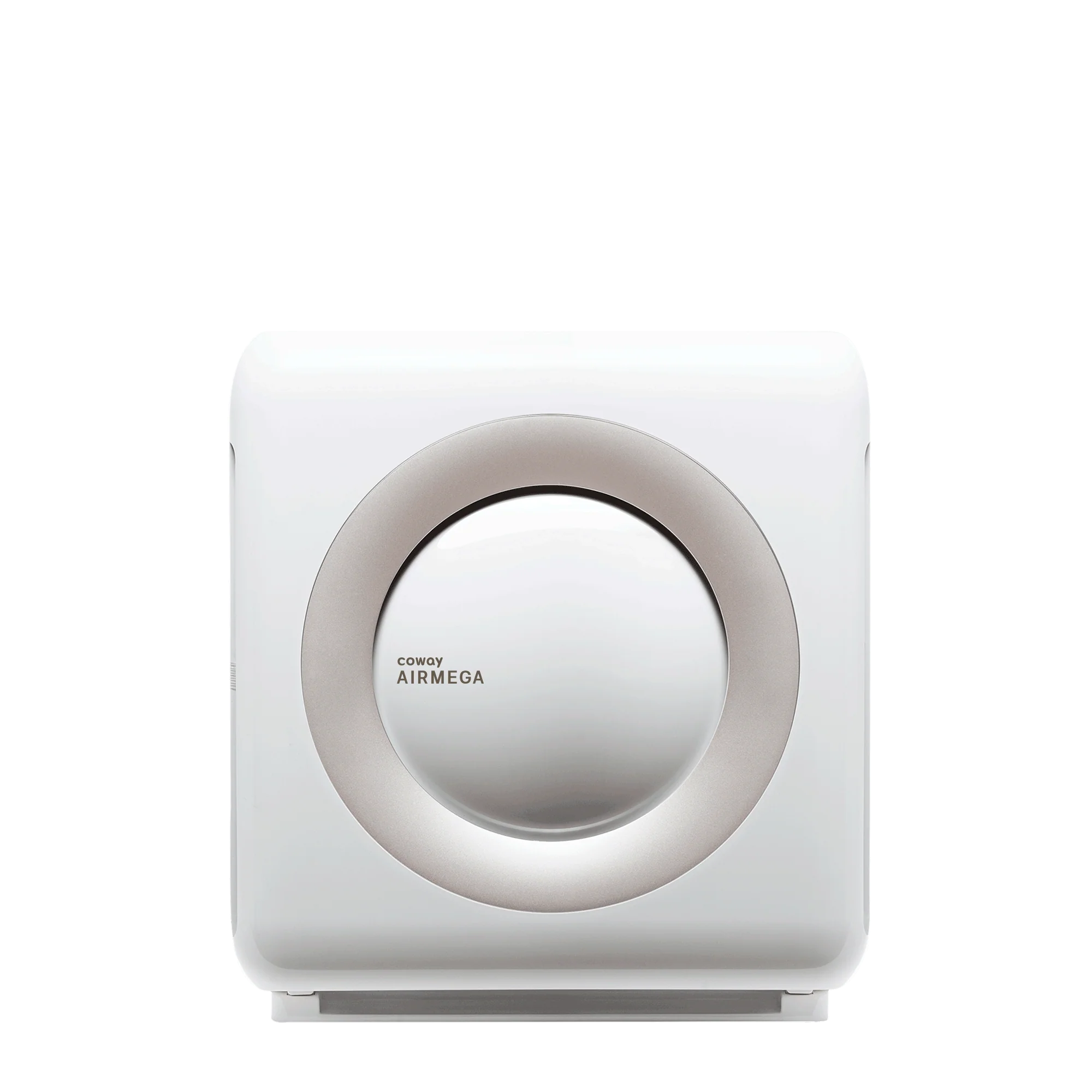
Key Specifications
- Room Coverage
- 361 sq ft
- CADR
- 233/246/240
- Filter
- True HEPA + Carbon + Pre-filter
- Noise
- 24 dB
- Power
- 77 watts
- Best For
- Medium rooms up to 361 sq ft. Wirecutter #1 for 10+ years. Best overall value.
📅 Prices checked . Amazon prices change frequently — click through for current price. Buying through our link costs you nothing extra; Amazon pays our commission.
What's in the Box
- Coway AP-1512HH air purifier
- Pre-installed 4-stage filter set
- Power cord
- User manual
- Filter replacement reminder sticker
Pros
- Wirecutter #1 for 10+ consecutive years
- AHAM verified CADR — no controversy
- True HEPA
- Fastest auto mode response in class
- 24dB ultra quiet sleep mode
- Eco mode at 4.9 watts
- 3-year warranty
Cons
- No WiFi or app control
- Carbon is impregnated fabric — weak on heavy odors
- Ionizer adds trace ozone (9ppb — CARB safe)
- Filter costs $60/year
- Design is dated
Best For
Allergy sufferers whose symptoms worsen from mold spore exposure. Auto mode is the standout feature — it detects particle spikes from mold activity and reacts within seconds, ramping up the fan before spore levels get high enough to trigger symptoms. AHAM CADR 246 verified. Best for bedrooms where overnight mold spore exposure causes morning congestion and sneezing. At $110-130 it is the cheapest effective option for spore removal. The air quality indicator gives you visual feedback on spore levels. Does not handle musty odor as well as the Winix. Full Coway review.
📅 Price checked August 2026 · Buying through this link costs you nothing extra — Amazon covers our commission
Medify MA-25 Review H13 Compact
✓ AHAM VerifiedOur Verdict
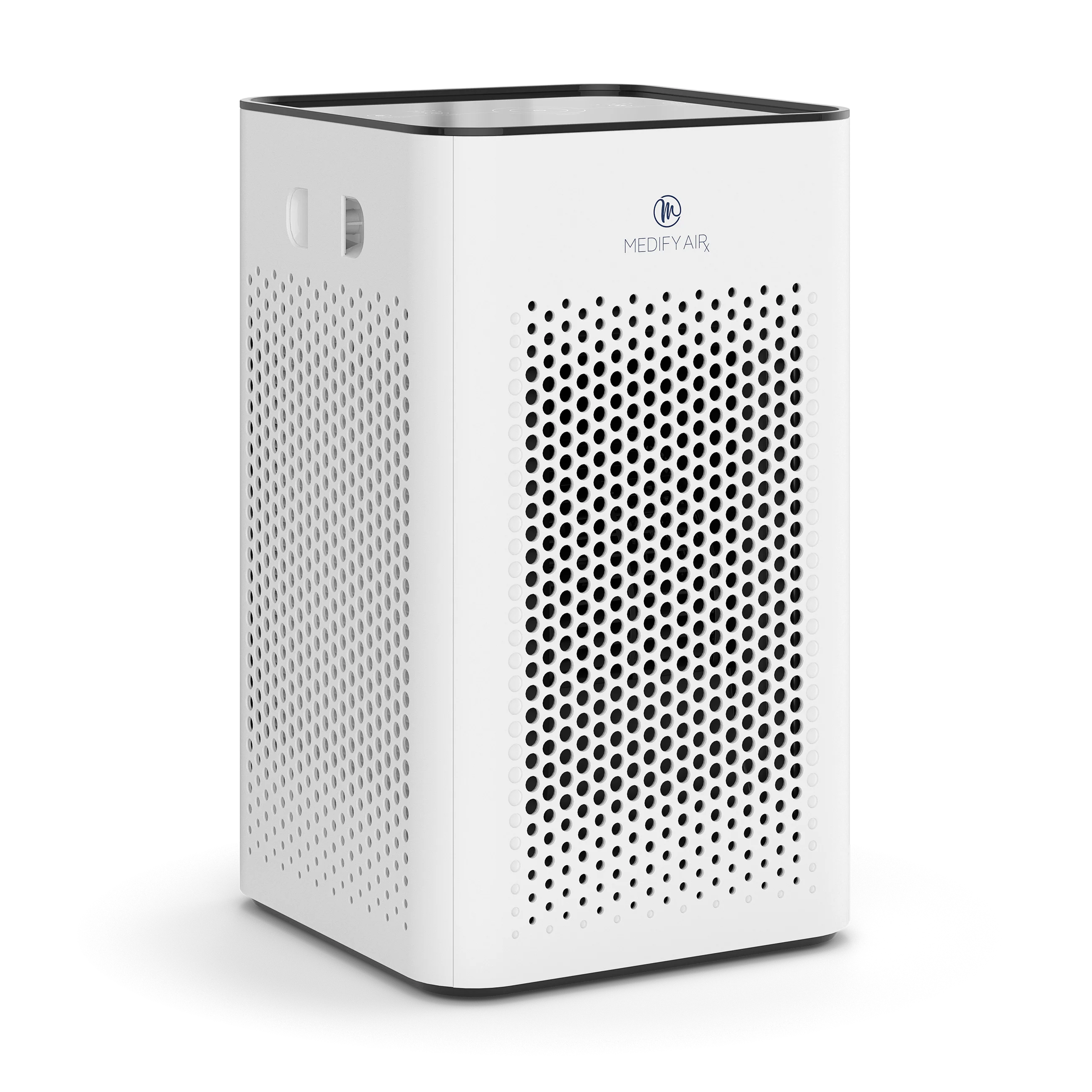
Key Specifications
- Room Coverage
- 206 sq ft
- CADR
- 110/123/123
- Filter
- H13 True HEPA + Activated Carbon + Pre-filter (3-in-1 composite)
- Noise
- 20 dB
- Power
- 28 watts
- Best For
- Rooms up to 206 sq ft at 4.8 ACH. H13 HEPA with tempered glass touchscreen. Compact at 7.3 lbs.
📅 Prices checked . Amazon prices change frequently — click through for current price. Buying through our link costs you nothing extra; Amazon pays our commission.
Pros
- AHAM-verified CADR: Smoke 110, Dust 123, Pollen 123 CFM (Intertek lab-tested)
- H13 True HEPA medical-grade filtration
- Tempered glass touchscreen with child lock and dimmer
- Very quiet at 19.8 dB on Speed 1
- Compact at 7.3 lbs — easy to relocate between rooms
Cons
- Filter replacement $39.99 every 3-4 months — approximately $120/year
- Covers only 206 sq ft at 4.8 ACH (marketed as 413 sq ft at 2 ACH)
- No auto mode or air quality sensor
- Filter cost disproportionate to CADR delivered vs alternatives
- Coway AP-1512HH covers more sq ft at lower filter cost
Best For
The Medify MA-25 is best for rooms up to 206 sq ft at 4.8 ach. h13 hepa with tempered glass touchscreen. compact at 7.3 lbs.. Compact H13 HEPA with AHAM-verified CADR 110 for 206 sq ft. High filter cost at ~$120/year punishes long-term ownership — consider total cost of ownership over 3 years before purchasing.
📅 Price checked August 2026 · Buying through this link costs you nothing extra — Amazon covers our commission
Blueair Blue Pure 211i Max Review Best Large Room
✓ AHAM VerifiedOur Verdict

Key Specifications
- Room Coverage
- 635 sq ft
- CADR
- 410/410/410
- Filter
- HEPASilent + Carbon
- Noise
- 23 dB
- Power
- 46 watts
- Best For
- Large rooms 400-635 sq ft. Highest CADR under $400. Replaces discontinued 211+.
📅 Prices checked . Amazon prices change frequently — click through for current price. Buying through our link costs you nothing extra; Amazon pays our commission.
What's in the Box
- Blueair Blue Pure 211i Max air purifier
- Pre-installed dual-protection filter
- Washable pre-filter (fabric)
- Power cord
- User manual
Pros
- Highest CADR 410 under $400
- AHAM verified
- Zero ozone verified
- 23dB quiet on low
- Washable pre-filter in colors
- Smart app with Alexa
Cons
- $299-349 expensive
- Filter costs $140/year — most expensive
- Cannot disable ionizer
- 211+ filters NOT compatible
Best For
Large basements or open living areas with mold issues above 400 sq ft. CADR 350 handles large spaces where mold spores spread through open floor plans. Basements typically have the worst mold problems and need the highest CADR to compensate for the larger volume and continuous spore production. The fabric pre-filter is washable and catches large debris. No auto mode — set speed manually based on conditions. If your mold problem is in a small room, the Winix or Coway is a better fit.
📅 Price checked August 2026 · Buying through this link costs you nothing extra — Amazon covers our commission
What to Know Before You Buy
The Fix-Dehumidify-Purify Order
The correct order for mold problems is: fix the moisture source, dehumidify the space, then purify the air. A purifier without fixing the source is treating symptoms while the disease spreads. A dehumidifier without fixing a leaking pipe just fights the water endlessly. Fix the leak or moisture entry point first. Then run a dehumidifier to bring humidity below 50%. Then run the purifier to capture airborne spores and neutralize odor. This order matters. Skipping steps wastes money and prolongs the problem.
HEPA Grade for Mold — What You Actually Need
Any True HEPA filter handles mold spores easily. The smallest common indoor mold spores (Aspergillus) are 2.5-3.5 microns. HEPA is tested at 0.3 microns — mold spores are roughly 10x larger than the HEPA test particle. Even H11 grade HEPA at 95% efficiency captures mold spores at near-100% rates because the spores are so far above the test particle size. You do not need to pay extra for H13 or H14 grade specifically for mold. Save that money for a dehumidifier instead. See our HEPA grades guide for the full breakdown.
Dehumidifier Sizing
Match your dehumidifier to the space. A 30-pint dehumidifier handles a damp 1,000 sq ft area. A 50-pint handles a wet 1,500 sq ft basement. Set the target to 45% relative humidity. Monitor with a hygrometer near the mold-affected area. Run continuously until levels stabilize, then let the built-in humidistat cycle the unit on and off. A dehumidifier running in a moldy basement typically costs $15-25 per month in electricity but prevents thousands in mold remediation costs.
What Purifiers Can and Cannot Do for Mold
I need to be blunt about this because too many product reviews oversell what air purifiers do for mold. A HEPA purifier captures mold spores that are floating in the air. That is genuinely useful — those spores are what you breathe, what triggers allergic reactions and what spreads mold to new locations in your home. Removing them from the air reduces your exposure and slows the spread. That is the "can do" side.
Here is the "cannot do" side, and it is equally important. An air purifier does not kill mold colonies growing on surfaces. Mold growing on a bathroom wall, under a kitchen sink, behind drywall or inside HVAC ductwork continues to grow and produce spores regardless of whether a purifier is running. The purifier catches spores after they launch into the air, but the colony keeps making more. A mature mold colony can release millions of spores per day. Even a purifier running on maximum cannot keep up with that production rate in a small room with the door closed.
An air purifier does not reduce humidity. Mold needs moisture above 60% relative humidity to thrive. The purifier does not remove water from the air — it only removes particles and gases. If your room sits at 70% humidity, the mold keeps growing regardless of your purifier. You need a dehumidifier to address the moisture that feeds the mold. The purifier and the dehumidifier solve different parts of the problem.
An air purifier does not replace professional remediation for serious mold infestations. If mold covers more than 10 square feet of surface area, the CDC and EPA recommend professional remediation. Black mold (Stachybotrys) requires professional removal regardless of the area affected. Structural issues — leaking pipes, foundation cracks, roof damage — need a contractor. The purifier plays a supporting role after these primary interventions, not a primary role.
Where the purifier shines: after you fix the moisture source and address visible mold, the purifier maintains clean air during the weeks or months it takes for residual spore levels to drop naturally. It protects you while sleeping in a room with historical mold exposure. It captures spores from small, hidden mold sources you might not have found yet. It reduces the musty smell (with PlasmaWave or heavy carbon) while the underlying problem is being resolved. Think of it as part of the solution, not the solution itself.
The realistic expectation: a HEPA purifier reduces airborne mold spore concentration in a sealed room by 60-90% when running continuously. That is a significant reduction in exposure. Combine that with a dehumidifier keeping humidity at 40-50%, and you have an environment where existing mold dries out, new mold cannot start and airborne spore levels stay low. The purifier is one leg of a three-legged strategy: fix the source, control moisture, filter the air.
The Dehumidifier First Rule
If I could give only one piece of advice about mold and air quality, it would be this: buy a dehumidifier before you buy an air purifier for mold. The dehumidifier addresses the root cause. The purifier addresses the symptoms. Root cause treatment always comes first.
Mold needs three things to grow: a food source (organic material like wood, paper, drywall), warmth (most mold grows between 60-80 degrees F) and moisture (above 60% relative humidity). You cannot remove the food source — your home is built from it. You cannot make your home cold enough to stop mold without making it uninhabitable. But you can control moisture. A dehumidifier pulling humidity below 50% effectively starves mold of the one growth factor you can control.
Within 24-48 hours of running a dehumidifier in a moldy basement or bathroom, you can measure the humidity difference. Within 1-2 weeks at 40-50% humidity, active mold colonies slow their growth significantly. They do not die — mold is remarkably resilient and can survive dormant for years. But they stop producing the massive quantities of spores and musty odor compounds that affect your air quality and health. Dormant mold is still a problem that needs cleaning, but it is a far smaller air quality problem than actively growing mold.
Here is the math that convinced me. A 50-pint dehumidifier for a basement costs $200-300. Running it costs $15-25 per month in electricity. It reduces mold growth by addressing the root cause, protecting your home's structure, preventing new mold colonies and reducing spore production from existing ones. An air purifier at $100-200 captures airborne spores but does nothing to stop the mold from making more. If you can only afford one device, the dehumidifier has more impact on the mold problem. If you can afford both, buy the dehumidifier first and add the purifier.
The exception: if you have allergies or asthma triggered by mold spores and you need immediate symptom relief, a purifier in your bedroom gives you clean breathing air overnight while you work on the humidity problem separately. In that scenario, the purifier provides faster personal relief even though the dehumidifier provides better long-term mold control. Buy the purifier for your bedroom today, order the dehumidifier for the basement this week. Both within two weeks if possible.
Placement matters for both devices. Put the dehumidifier in the most humid area — usually the basement, a bathroom without ventilation or the room with the worst mold. Put the air purifier where you spend the most time — usually the bedroom for overnight protection or the home office for daytime use. They do not need to be in the same room. The dehumidifier controls moisture at the source. The purifier protects your breathing air where you are.
Mold Spore Sizes and Why HEPA Works
Understanding mold spore sizes eliminates a lot of marketing confusion. Some brands push expensive "medical grade" or "H13 HEPA" filters as necessary for mold. The data says otherwise. Standard True HEPA handles mold spores at near-perfect efficiency because the spores are large relative to what HEPA is designed to catch.
Common indoor mold species and their spore sizes: Aspergillus species produce spores at 2.5-3.5 microns. Penicillium species run 2.5-4 microns. Cladosporium — the most common outdoor and indoor mold — produces spores at 3-10 microns. Alternaria, another common outdoor mold that enters homes, runs 7-33 microns. Stachybotrys chartarum (black mold) produces large spores at 5-15 microns. The smallest common indoor mold spore is roughly 2.5 microns.
HEPA filtration is tested and certified at 0.3 microns — the Most Penetrating Particle Size (MPPS) where filters are least efficient. An H11 HEPA filter captures 95% of 0.3 micron particles. An H13 captures 99.97%. But those efficiency numbers apply to the hardest-to-catch particle size. For particles larger than 0.3 microns, efficiency increases. By the time you reach 2.5 microns — the size of the smallest mold spores — even H11 HEPA captures at 99%+ efficiency. The improvement from H11 to H13 for mold spores specifically is negligible — going from 99.5% to 99.97% capture of mold spores.
This matters for your wallet. H13 HEPA filters cost more to manufacture and more to replace. Purifiers with H13 filters often cost $50-100 more than equivalent H11 models. For mold spores, that premium buys you a fraction of a percent improvement in capture efficiency. Spend that money on a dehumidifier instead — it will do far more for your mold problem than the marginal filter upgrade.
One genuine concern with mold and HEPA: can mold grow on the filter itself? Yes, if humidity in the room stays above 60% for extended periods. Mold spores trapped on a wet HEPA filter can germinate and grow, eventually releasing spores back into the airstream. This is rare in homes with proper humidity control, but it happens in damp basements without dehumidifiers. The solution: run a dehumidifier to keep room humidity below 50%. At that level, mold cannot grow on the filter. This is another reason the dehumidifier comes first. See our humidity guide for the full strategy.
For mold spore fragment particles — pieces smaller than intact spores that break off during disturbance — sizes can drop below 1 micron. HEPA still captures the vast majority of these fragments, though efficiency is slightly lower than for whole spores. PlasmaWave provides an additional mechanism against fragments, breaking down the allergenic proteins they carry. If you are highly sensitive to mold, the Winix with PlasmaWave offers the most complete protection against both whole spores and fragments.
The Musty Smell — Understanding MVOCs
That damp, earthy, musty smell in a basement or bathroom is not mold spores you are smelling. Spores are particles — they do not have a smell. What you smell are microbial volatile organic compounds, abbreviated mVOCs. These are gas-phase chemicals produced by mold as metabolic byproducts during active growth. And they present a specific challenge for air purifiers.
MVOCs include compounds like geosmin (the "earthy" smell), 1-octen-3-ol (the "mushroom" smell) and dozens of other volatile alcohols, aldehydes and ketones. They are gases, not particles. HEPA filters do nothing for gases — the molecules pass through the filter fibers without being captured. This is why a room can have a musty smell even when a HEPA purifier has been running for hours. The purifier caught the spores but the mVOC gases passed right through.
Activated carbon is the first line of defense against mVOCs. Carbon adsorbs gas molecules onto its porous internal surface. A substantial carbon filter — 100+ grams of pelletized activated carbon — can noticeably reduce musty odor in a room. But carbon has a capacity limit. In a room with active mold producing continuous mVOCs, a thin carbon filter saturates quickly. Once saturated, gases pass through untreated and the smell returns despite the filter still being "installed." This is why some people report that their purifier "stopped working" for the smell after a few weeks — the carbon is saturated.
PlasmaWave offers a better long-term solution for mVOCs. Instead of trapping gas molecules on a surface with limited capacity, PlasmaWave generates hydroxyl radicals that break down mVOC molecules chemically. The radicals attack the molecular bonds in geosmin and other mold odor compounds, converting them to water vapor and trace CO2. This process does not saturate — it continues working as long as the unit runs. The Winix 5500-2 combines carbon adsorption with PlasmaWave destruction, giving you both immediate odor reduction (carbon) and sustained long-term treatment (PlasmaWave).
If musty smell is your primary concern — more than spore allergies — the Winix 5500-2 is clearly the better choice over the Coway or Blueair. The Coway has a thinner carbon filter and no supplemental gas-phase technology. It handles spores well but musty odor lingers. The Blueair has basic carbon but no technology for breaking down gas compounds. For pure spore capture with no odor concern, any HEPA purifier works. For the musty smell, you need carbon plus PlasmaWave.
Important: if the musty smell persists despite running a Winix at full speed with a fresh carbon filter, the mold source is large and actively growing. The mVOC production exceeds what the purifier can neutralize. This is actually useful diagnostic information — persistent musty smell despite active purification suggests you have a significant mold problem that needs source remediation, not just air treatment. Use the smell as a guide: when the purifier can keep the smell under control, the mold situation is manageable. When it cannot, you need professional help.
Which Rooms Are Most Affected by Mold
Mold does not affect every room equally. Understanding which rooms have the highest mold risk helps you place your purifier and dehumidifier where they do the most good. Here is the ranking based on moisture exposure, ventilation quality and typical building construction.
Basements — highest risk. Below-grade rooms have moisture entering from groundwater pressure, concrete wicking and condensation on cool surfaces during warm weather. Most basements have inadequate ventilation. Relative humidity often sits at 60-80% without intervention. Common mold locations: behind finished walls where condensation collects on the cold concrete backing, around floor-wall joints where water seeps in, on stored cardboard boxes and paper goods that absorb moisture. A dehumidifier is nearly mandatory for any finished basement. Pair with the Blueair 211i Max for large basements above 400 sq ft or the Winix 5500-2 for smaller areas.
Bathrooms — second highest risk. Shower steam raises humidity to 80-100% during use. Without a functioning exhaust fan, moisture lingers for hours. Mold grows on grout, caulking, behind tiles, on shower curtains and under vanity cabinets. The fix: run the exhaust fan during and for 20 minutes after every shower. If the fan is weak or nonexistent, open a window. A small air purifier in a bathroom helps but ventilation is more important here. The best bathroom strategy is prevention through ventilation, not remediation through filtration.
Kitchens — moderate risk. Cooking steam, dishwasher moisture and under-sink plumbing leaks create localized humidity spikes. The areas behind and under appliances collect moisture without drying. Under-sink cabinets are a classic mold location because slow leaks go unnoticed for weeks or months. Check under your kitchen sink right now — look for water stains, musty smell or visible mold on the cabinet floor and walls. A purifier near the kitchen helps with both mold spores and cooking odors. The Winix 5500-2 handles both well.
Bedrooms — lower risk but highest exposure impact. Bedrooms typically have less moisture than bathrooms or basements. But you spend 7-8 hours in the bedroom with the door closed, breathing the same air. Even moderate mold spore levels affect you more in the bedroom because of the duration and proximity of exposure. If you have a mold problem anywhere in the house, running a purifier in the bedroom protects you during your most vulnerable hours. The Coway AP-1512HH is ideal for bedrooms — auto mode detects spore spikes, the air quality indicator gives visual feedback and 24 dB sleep mode is genuinely silent.
Attics and crawl spaces — high risk, low occupancy. These spaces often have significant mold but low direct human exposure. Roof leaks, poor ventilation and temperature differentials create ideal mold conditions. However, mold spores from attics can enter living spaces through gaps in ceiling fixtures, recessed lighting and HVAC ductwork that runs through the attic. If you notice musty smell from ceiling areas, have the attic inspected. A portable purifier does not work in an unfinished attic — address these spaces with ventilation improvements and professional remediation if needed.
The priority order for purifier placement: bedroom first (longest exposure), then main living area (second longest), then basement (worst mold but less time spent there). If you have one purifier, it goes in the bedroom. Two purifiers: bedroom and living room. Three: bedroom, living room and basement with a dehumidifier. See our buying guide for multi-room strategies.
When to Call a Professional
An air purifier is part of the solution for mild to moderate mold situations. For serious mold problems, you need professional remediation. Here are the clear indicators that DIY approaches and air purifiers are not enough.
Visible mold covering more than 10 square feet. The EPA guideline is clear: areas larger than 10 square feet (roughly a 3x3 foot patch) should be handled by professionals with proper containment, personal protective equipment and disposal procedures. At this scale, disturbing the mold during amateur cleanup releases massive quantities of spores that spread the problem to other areas. Professional remediation uses negative air pressure containment to prevent spore migration during removal.
Black mold (Stachybotrys chartarum). If you see dark black or greenish-black mold with a slimy or wet appearance, treat it as Stachybotrys until proven otherwise. This species produces mycotoxins that cause serious health effects beyond typical allergic reactions — neurological symptoms, chronic fatigue and immune suppression in some individuals. Professional identification and removal is warranted regardless of the area affected. Do not attempt to clean Stachybotrys yourself. Do not even scrub a small patch without PPE. Run a HEPA purifier in the room to protect your breathing air while you arrange professional assessment.
Mold behind walls or in HVAC systems. You can smell it but cannot see it. Musty odor coming from inside walls, from HVAC vents or from structural cavities indicates hidden mold growth. This requires professional inspection to locate the source, assess the extent and plan remediation. Hidden mold is often worse than visible mold because it has been growing undetected for longer. An air purifier helps manage the airborne spores and odor coming through walls and vents while you arrange professional inspection.
Recurring mold after cleanup. If you have cleaned the same mold spot twice and it keeps coming back, the moisture source is not resolved. Painting over mold, bleaching without fixing the moisture and surface-level cleaning that does not reach the root system are common DIY mistakes. The mold returns because the underlying conditions still support growth. A professional can identify moisture entry points that are not obvious — hidden plumbing leaks, condensation in wall cavities, inadequate vapor barriers and building envelope failures.
Health symptoms that persist. If you or family members experience persistent respiratory symptoms, chronic sinus infections, unexplained headaches or worsening asthma that correlates with time spent in the home, get a professional mold assessment. Some people are more sensitive to mold than others. Children, elderly individuals and immunocompromised people are at higher risk. The CDC provides guidance on mold-related health symptoms. Do not assume a purifier alone protects vulnerable individuals from significant mold exposure.
After professional remediation. Once professionals remove the mold and fix the moisture source, an air purifier plays its best role: maintaining clean air while residual spore levels decrease over the following weeks. Pair with a dehumidifier set to 40-50% humidity and you have the right conditions to prevent recurrence. This is where the purifier investment pays off most — as maintenance after proper remediation, not as a substitute for it.
Mold and Allergies Together: Why This Combination Needs a Specific Strategy
When you are dealing with mold and allergies at the same time, the challenge is more complex than either condition on its own. Mold triggers two distinct biological pathways: IgE-mediated allergic reactions from spore proteins, and direct toxic or irritant effects from MVOC gases produced during active mold growth. A purifier that only catches spores — a standard HEPA unit — addresses the first pathway and misses the second entirely. That gap matters clinically for allergy sufferers.
Mold spore sizes range from 2.5 to 40 microns, which puts them well within HEPA capture range. Any True HEPA filter grabs spores at near-perfect efficiency, reducing the IgE-mediated allergic load that triggers sneezing, rhinitis and asthmatic reactions. That part is basic. The harder problem is the MVOCs — the gas-phase compounds behind the musty smell — that can trigger respiratory symptoms in mold-allergic patients even when live spore counts are low. Someone sensitized to Alternaria or Cladosporium can react to the gas-phase metabolites of that mold even without detectable airborne spores. Standard HEPA alone does not address this because HEPA does not capture gases.
For mold allergy sufferers specifically, the purifier must combine True HEPA for spores with activated carbon and ideally PlasmaWave or equivalent gas-phase destruction for MVOCs. The Winix 5500-2 covers both mechanisms: HEPA handles the particulate allergen load, PlasmaWave breaks down the MVOC compounds that can independently trigger symptoms. This combination is why I recommend the Winix over simpler HEPA-only units for anyone who has documented IgE-mediated mold allergy — particularly those sensitized to Alternaria, Cladosporium, or Aspergillus species, which are the three most common clinically relevant indoor mold allergens.
Who is at highest risk from the combined mold-and-allergy scenario? Asthma sufferers represent the most vulnerable group — mold is one of the leading triggers for asthmatic exacerbations, and MVOC exposure can provoke bronchospasm independently of spore levels. Children with developing immune systems show strong IgE sensitization rates to Alternaria in humid climates. Immunocompromised individuals face risks beyond allergic reactions into invasive fungal infection territory that requires medical management beyond air purification.
The correct strategy for allergic patients combines two devices, not one. A dehumidifier keeps humidity below 50%, starving the mold of its growth requirement and reducing both spore production and MVOC generation at the source. The purifier — a True HEPA unit with carbon and PlasmaWave — then manages what the dehumidifier does not catch: residual spores and gas-phase compounds in the air. Neither device alone is sufficient for mold-allergic patients. Together, they address the particulate allergen burden, the gas-phase irritant load and the growth conditions that sustain both.
For readers managing both mold and broader allergic sensitivities, see our allergy air purifier guide which covers multi-allergen strategies including dust mite, pet dander and pollen alongside mold. If you are evaluating dehumidifier pairings, our air purifier vs humidifier guide explains when to use each device and why the dehumidifier comes first for mold-related allergy management.
HEPA Filter Grades for Mold: What You Need vs What Manufacturers Claim
The HEPA grade marketing in the air purifier industry is a source of genuine consumer confusion, and mold is the category where that confusion gets exploited most aggressively. Let me be specific about what the grades mean and what you actually need for mold spore capture.
HEPA filters are rated by their efficiency at capturing 0.3 micron particles — the Most Penetrating Particle Size where filters perform worst. H11 captures 95% of particles at that size. H13 captures 99.97% at 0.3 microns. True HEPA — the U.S. standard — is defined as 99.97% at 0.3 microns, which aligns with H13. The efficiency figures refer specifically to that 0.3 micron test particle. For larger particles, efficiency at all grades increases substantially.
Here is why H13 is not necessary for mold spores specifically. Mold spores range from 2.5 to 40 microns — they are 8 to 100 times larger than the 0.3 micron HEPA test particle. At 2.5 microns, even H11 HEPA captures at 99%+ efficiency through a combination of interception and impaction mechanisms that dominate at larger particle sizes. The improvement you get going from H11 to True HEPA for mold spores is fractions of a percent — going from roughly 99.5% to 99.97% capture of mold spores specifically. That marginal improvement does not justify the price premium for a mold application.
The marketing deception I see most often: brands label filters as "HEPA-type," "HEPA-like," "HEPA-style" or "99% HEPA" — none of these meet the True HEPA standard tested at 0.3 microns. "HEPA-type" filters typically capture 85-95% at 0.3 microns, which translates to meaningful gaps in particle capture for sub-micron particles. For mold spores at 2.5+ microns, the capture rate of a HEPA-type filter is still good — but you have no verified data because these filters are not third-party tested. Every machine I recommend on this page carries AHAM verification with published CADR data, meaning the performance claims are third-party tested and not marketing copy.
My recommendation: do not spend extra money on H13 filtration for a mold application. Buy a True HEPA machine with AHAM-verified CADR — that tells you the real-world particle removal rate in a standardized room-size test. If you have budget to add a device, spend it on a dehumidifier rather than a premium HEPA upgrade. A $200 dehumidifier does more for your mold situation than upgrading from a $150 True HEPA purifier to a $250 H13 purifier. The filter grade matters less than the CADR rating and the presence of gas-phase treatment (carbon and PlasmaWave) for the MVOC compounds that HEPA at any grade cannot address.
One area where higher-grade filtration does matter: if you are dealing with wildfire smoke, ultra-fine combustion particles, or sub-micron chemical aerosols, the improvement from True HEPA to H13 becomes meaningful because those particles cluster near the 0.3 micron worst-case zone. For that use case, see our wildfire smoke guide where H13 is more justified. For mold, any True HEPA with AHAM verification is sufficient and you are spending correctly by choosing CADR capacity and gas-phase treatment over filter grade.