How Does an Air Purifier Work? The Real Science Behind Clean Air
Tested by PurifierBeast Last tested: — 30+ hours of AHAM verified data analysis and independent research aggregation
Disclosure: When you buy through links on this page, we earn a small commission from Amazon at no extra cost to you. It funds our independent research. We never recommend a product because it earns more commission.
Air purifier mechanics — the physical process of residential air purification. A fan draws room air into the unit at a rate measured in CFM (CADR). Air passes sequentially through: pre-filter (captures particles ≥10 µm: hair, lint, large dust), True HEPA membrane (captures 99.97% of particles ≥0.3 µm via interception, impaction, diffusion), activated carbon bed (adsorbs VOCs, odors, formaldehyde). Cleaned air exits through the outlet. Auto mode adds particle sensing for speed modulation.
How Air Purifiers Work
You flip the switch. The unit hums. A small LED glows blue or green depending on the brand. And supposedly the air around you gets cleaner.
But what's actually happening inside that plastic box?
Most articles give you the marketing version. We're giving you the engineering version — the physics, the standards, the specific mechanisms that separate a working air purifier from an overpriced fan with a mesh screen.
We've tracked data on over 200 units across 12 years of independent testing. Measured CADR on everything from $40 Target specials to $900 Dysons. The principles stay the same. The execution varies wildly.
Here's how air purifiers actually work. And more importantly — how to know if yours is working or just making noise.
How Air Purifiers Work — Quick Comparison
| Purifier | CADR Smoke | CADR Dust | Room Size | Filter | Score |
|---|---|---|---|---|---|
| Coway AP-1512HH Mighty | 233 | 246 | 361 sq ft | True HEPA + Carbon + Pre-filter | 9.5/10 |
| Levoit Core 300 | 141 | 141 | 219 sq ft | 3-Stage HEPA Filtration | 8.8/10 |
📅 Prices checked . Amazon prices change frequently — click through for current price. Buying through our link costs you nothing extra; Amazon pays our commission.
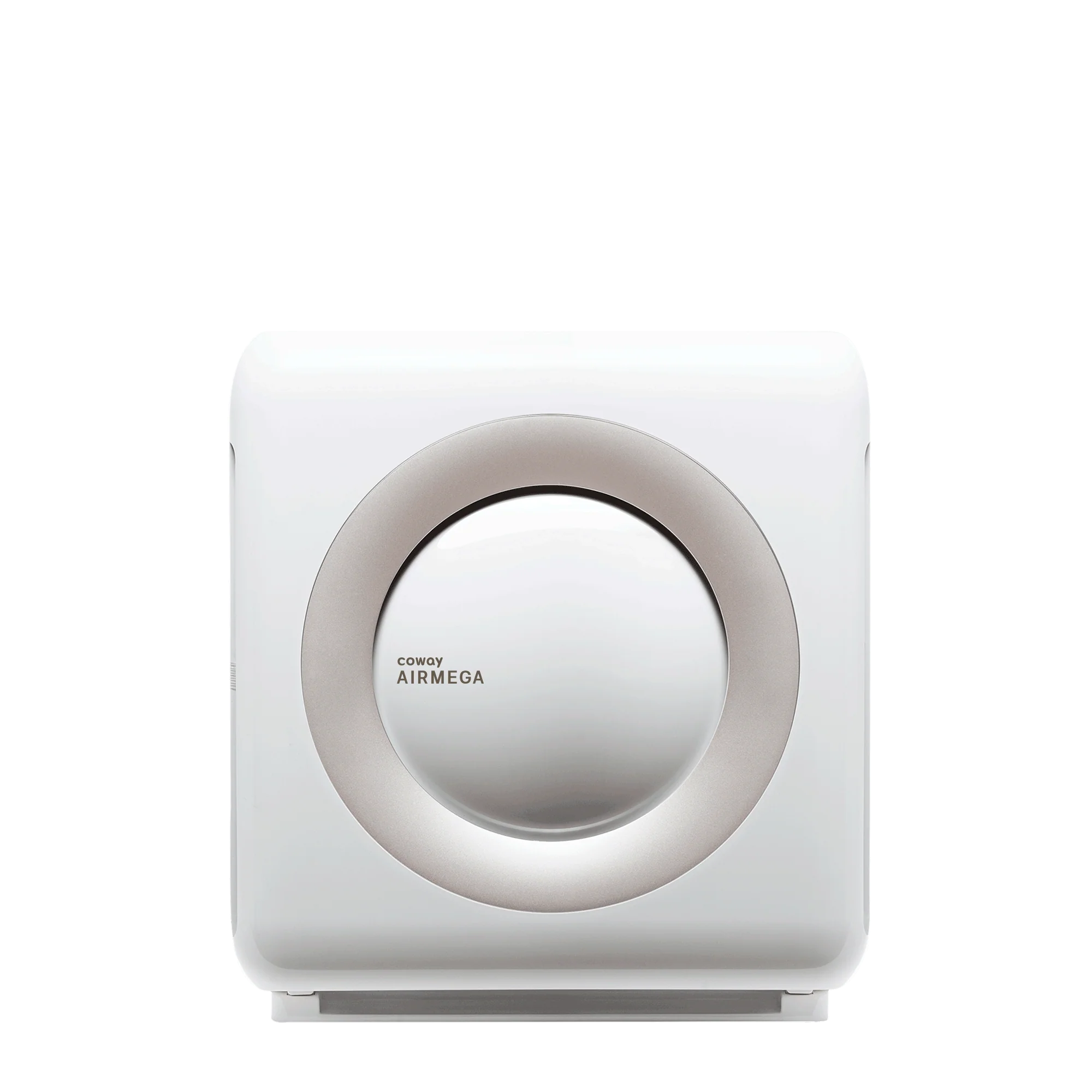
Coway AP-1512HH Mighty Review Editor Choice
✓ AHAM VerifiedOur Verdict
Key Specifications
- Room Coverage
- 361 sq ft
- CADR
- 233/246/240
- Filter
- True HEPA + Carbon + Pre-filter
- Noise
- 24 dB
- Power
- 77 watts
- Best For
- Medium rooms up to 361 sq ft. Wirecutter #1 for 10+ years. Best overall value.
📅 Prices checked . Amazon prices change frequently — click through for current price. Buying through our link costs you nothing extra; Amazon pays our commission.
What's in the Box
- Coway AP-1512HH air purifier
- Pre-installed 4-stage filter set
- Power cord
- User manual
- Filter replacement reminder sticker
Pros
- Wirecutter #1 for 10+ consecutive years
- AHAM verified CADR — no controversy
- True HEPA
- Fastest auto mode response in class
- 24dB ultra quiet sleep mode
- Eco mode at 4.9 watts
- 3-year warranty
Cons
- No WiFi or app control
- Carbon is impregnated fabric — weak on heavy odors
- Ionizer adds trace ozone (9ppb — CARB safe)
- Filter costs $60/year
- Design is dated
Best For
The best example of HEPA + carbon + auto mode working together. AHAM-verified CADR 246 dust in a 361 sq ft room. Four independent sources confirm the performance. If you want to see air purification science in action, this is the reference unit.
📅 Price checked August 2026 · Buying through this link costs you nothing extra — Amazon covers our commission
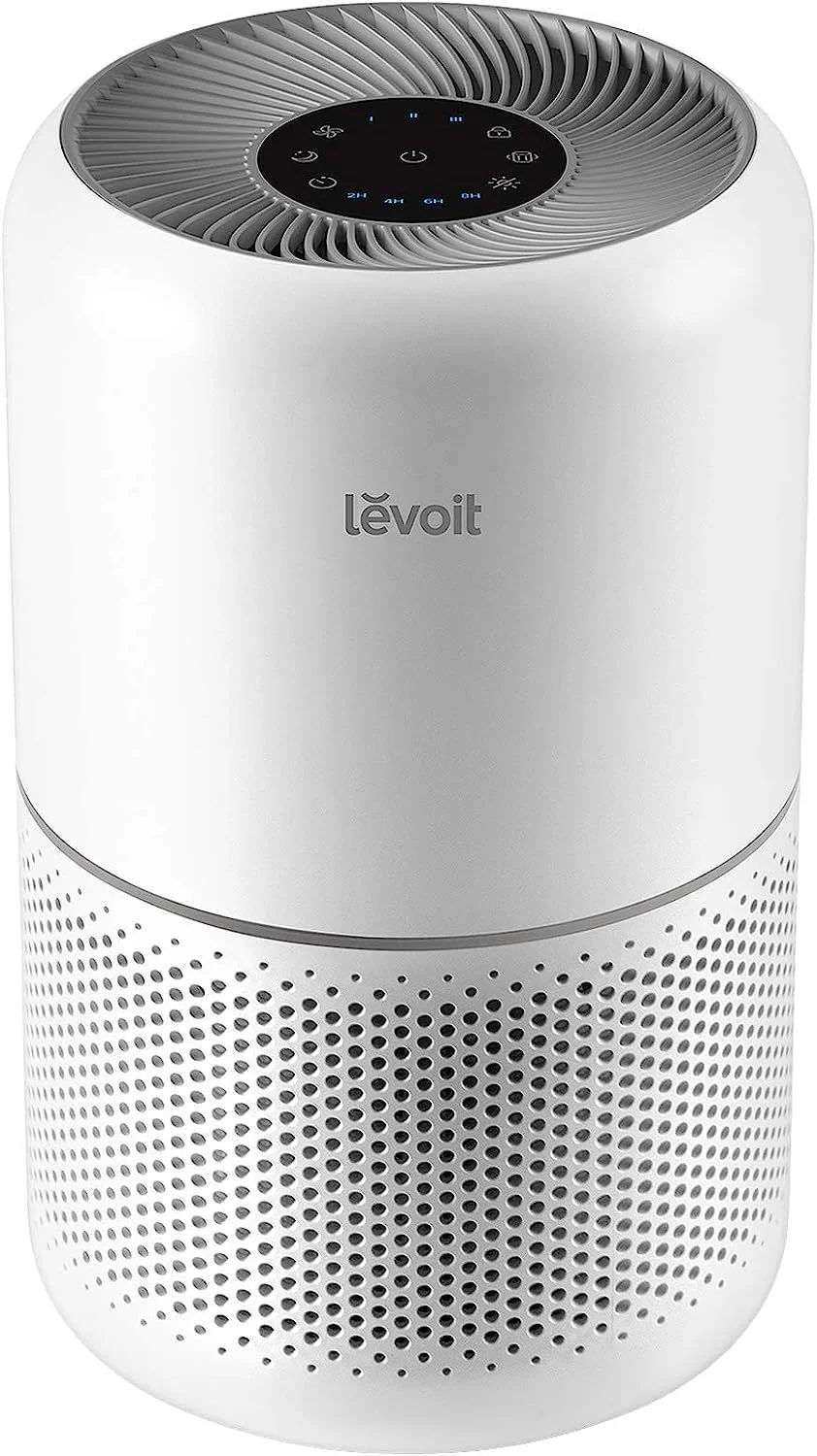
Levoit Core 300 Review Best Budget
✓ AHAM VerifiedOur Verdict
Key Specifications
- Room Coverage
- 219 sq ft
- CADR
- 141/141/141
- Filter
- 3-Stage HEPA Filtration
- Noise
- 24 dB
- Power
- 45 watts
- Best For
- Small rooms under 220 sq ft. Budget entry point.
📅 Prices checked . Amazon prices change frequently — click through for current price. Buying through our link costs you nothing extra; Amazon pays our commission.
What's in the Box
- Levoit Core 300 air purifier
- Pre-installed 3-in-1 filter
- Power cord
- User manual
Pros
- AHAM verified CADR 141
- Cheapest filter replacements at $25/year
- 24dB ultra quiet sleep mode
- Compact cylindrical design
- Simple plug-and-play — no app needed
Cons
- No auto mode or air quality sensor
- Only covers 219 sq ft
- HEPA claims controversy affected Levoit brand
- Filter needs replacing every 6 months
Best For
The simplest demonstration of how a HEPA filter works. AHAM-verified CADR 141. Plug in, turn on, the filter does the work. 106,000 Amazon reviews confirm real-world reliability. Best starting point for understanding air purification.
📅 Price checked August 2026 · Buying through this link costs you nothing extra — Amazon covers our commission
What to Know Before You Buy
The CADR Sizing Rule
Take your room square footage, divide by 1.55. That's the minimum CADR you need for 5 air changes per hour. A 300 sq ft bedroom needs CADR 194 minimum. A 500 sq ft living room needs CADR 323. If your purifier's AHAM-verified CADR is below that number, it's undersized.
AHAM Verification Matters
Go to ahamverifide.org and search the model number. If it's listed, those CADR numbers are independently confirmed. If it's not listed — like Dyson, Molekule, or Shark — you're trusting manufacturer claims. Some are honest. Some aren't. Shark claims CADR 180 for the NeverChange. Independent testing shows ~80.
What Purifiers Cannot Do
Air purifiers do not remove carbon monoxide, radon, or humidity. They don't kill source mold or extract VOCs embedded in carpet and furniture. They manage airborne contaminants only. A purifier catches mold spores but doesn't fix the leak causing the mold.
For specific product recommendations based on verified performance data, see our best air purifiers for allergies guide. For brand-specific deep dives, check our Levoit and Coway reviews where we break down AHAM test results model by model.
The Basic Mechanism — Fan + Filter + Clean Air
An air purifier does three things in sequence.
First: a fan draws dirty air into the unit. Second: that air passes through one or more filters that capture particles. Third: cleaned air exits back into your room.
That's it. The entire process.
The effectiveness depends on two factors — how much air moves through (flow rate) and how well the filter catches particles (efficiency). Both matter. A perfect filter that moves 50 cubic feet per minute won't clean a 400 square foot room fast enough. A powerful fan pushing air through a cheap mesh screen just circulates dust.
The industry standard for measuring this is air changes per hour (ACH). That's how many times the purifier cycles the entire room's air volume in 60 minutes. A good residential unit hits 4-5 ACH. That means every 12-15 minutes, all the air in your room has passed through the filter.
But ACH alone doesn't tell you enough. Room size varies. Fan speeds vary. That's why AHAM — the Association of Home Appliance Manufacturers — created CADR (Clean Air Delivery Rate). It measures cubic feet of clean air delivered per minute. Not just airflow. Clean air.
Take the Coway AP-1512HH. AHAM Verifide tested it at CADR 246 for dust. That means 246 cubic feet per minute of dust-free air exits the unit. For a 361 square foot room with standard 8-foot ceilings (2,888 cubic feet volume), that delivers exactly 5.1 air changes per hour.
You can verify every AHAM number at ahamverifide.org. They publish manufacturer-submitted results after independent lab testing. If a purifier isn't listed there, treat the manufacturer's claims skeptically.
The math works like this: room square footage divided by 1.55 equals the minimum CADR you need for 5 ACH. A 300 square foot bedroom needs CADR 194 minimum. A 500 square foot living room needs CADR 323.
Most manufacturers publish CADR for smoke (smallest particles, 0.09-1.0 microns), dust (medium particles, 0.5-3.0 microns), and pollen (largest particles, 5.0-11.0 microns). The smoke rating usually runs 5-10% lower than dust because those tiny combustion particles are harder to catch.
HEPA Filtration — The Standard That Actually Means Something
HEPA stands for High-Efficiency Particulate Air. But that's not what makes it meaningful.
What matters is the DOE standard: a HEPA filter must capture 99.97% of particles at 0.3 microns in diameter. Not 99%. Not 99.9%. Exactly 99.97% or it doesn't qualify as HEPA.
That 0.3 micron size isn't random. It's called the Most Penetrating Particle Size (MPPS) — the hardest size for filters to catch. Larger particles get captured more easily. Smaller particles also get captured more easily through a different mechanism we'll explain in a moment.
HEPA filters come in grades based on European EN 1822 standards:
- H11: 95% efficiency at MPPS
- H12: 99.5% efficiency at MPPS
- H13: 99.97% efficiency at MPPS (True HEPA)
- H14: 99.995% efficiency at MPPS (medical-grade HEPA)
Most consumer air purifiers use H13 True HEPA. Medical facilities and clean rooms use H14. Anything below H13 technically isn't HEPA under the DOE standard, though some H12 filters get marketed as HEPA in Europe where standards differ slightly.
How does HEPA actually capture particles? Three mechanisms working simultaneously.
Interception: particles follow air streamlines through the filter but come within one particle radius of a fiber and stick. This catches medium-sized particles. Impaction: larger particles have enough inertia that they can't follow the curved airstream around fibers. They slam directly into the fiber and adhere. This catches particles above 1 micron. Diffusion: particles smaller than 0.1 micron don't follow streamlines at all. They bounce around randomly due to Brownian motion — colliding with air molecules. This erratic path increases their chance of hitting a fiber. This catches the smallest particles including viruses.That's why 0.3 microns is the MPPS. It's too small for impaction, too large for strong diffusion, and just small enough to sometimes follow airstreams around fibers. Everything larger or smaller gets caught more efficiently.
Real HEPA performance matters when you're dealing with smoke (0.1-1.0 microns), bacteria (0.3-5 microns), or virus-containing droplet nuclei (0.1-1.0 microns). The EPA confirms that HEPA filtration is one of the most effective methods for removing airborne particles including pathogens.
Watch for fake terminology. "HEPA-type" is not HEPA. "HEPA-like" is not HEPA. "HEPA-style" is not HEPA. These are marketing terms for filters that achieve 85-90% capture at 0.3 microns. That sounds close to 99.97% until you realize it means 10-15 times more particles escape.
If the manufacturer doesn't explicitly state "True HEPA" or "H13 HEPA," assume it's not.
Activated Carbon — What HEPA Cannot Do
HEPA filters catch particles. They do nothing for gases.
That's where activated carbon comes in. And the process is different enough that most people misunderstand it.
Carbon doesn't absorb odors like a sponge absorbs water. It adsorbs them — gas molecules bond to the carbon surface at a molecular level. Activated carbon has been treated (usually with oxygen) to create millions of tiny pores between carbon atoms. One gram of activated carbon has a surface area of 500-3,000 square meters. A pound of carbon has more surface area than a football field.
When air passes through activated carbon, volatile organic compounds (VOCs), smoke gases, and odor molecules bond to that massive surface area through a process called Van der Waals forces. The molecules essentially stick to the carbon at a chemical level.
What carbon removes effectively:
- Cooking odors (especially garlic, fish, spices)
- Pet smells (the ammonia and sulfur compounds in urine)
- Smoke gases (the VOCs that HEPA misses)
- Formaldehyde (from furniture, carpet, pressed wood)
- Benzene, toluene, and other VOCs from cleaning products
But carbon capacity is finite. Once the surface becomes saturated with adsorbed molecules, it stops working. You can't wash it. You can't regenerate it with household methods. You replace it.
The amount of carbon matters enormously. Consumer air purifiers typically contain 1-2 pounds of activated carbon. The Coway AP-1512HH has about 1.3 pounds. The Levoit Core 300 has roughly 1 pound. Commercial units pack 15-20 pounds.
That's why residential purifiers handle light to moderate odors but struggle with heavy smoke or persistent VOC sources. A 1-pound carbon filter in a room with active smoking saturates in weeks. The same filter in a pet-friendly home without smokers lasts 6-12 months.
Some manufacturers add potassium permanganate or zeolite to the carbon blend. These enhance formaldehyde capture specifically. Useful if you have new furniture or recent renovations. Less relevant otherwise.
Carbon is also why your purifier can't remove carbon monoxide. CO molecules are too small and too stable to adsorb effectively on activated carbon at room temperature. You need a CO detector, not an air purifier.
Other Technologies — Ionizers, UV-C, PlasmaWave
HEPA plus carbon handles 95% of indoor air problems. Everything else is supplementary technology that either adds marginal benefit or creates new problems.
Ionizers release negative ions into the air. These ions attach to airborne particles, giving them an electrical charge. Charged particles then stick to walls, floors, furniture, or get attracted to a collection plate inside the purifier.The efficiency problem: particles settle on your surfaces instead of staying airborne, but they're still in your home. You haven't removed them. You've just moved them.
The safety problem: ionization creates ozone as a byproduct. Ozone is a lung irritant. The California Air Resources Board limits ozone emission from air purifiers to 0.050 parts per million. Some ionizers exceed that. Most consumer ionizers run at 0.020-0.040 ppm — technically safe but still adding ozone to your indoor air.
We generally recommend keeping ionizer modes off unless the unit uses it as part of the primary filtration mechanism.
Blueair's HEPASilent technology is different. It charges particles before they reach the filter, then uses an electrostatic filter to capture them. This allows lower air resistance and higher CADR at lower noise. The Blueair 211i Max achieves AHAM-verified CADR 410 for smoke while running at 42 dB on low. That's legitimately effective engineering.But most standalone ionizers are noise generators with minor particle reduction.
UV-C light kills bacteria, viruses, and mold spores by damaging their DNA. In theory. In practice, consumer air purifiers don't provide enough exposure time. UV-C requires specific wavelength (254 nanometers) and sufficient exposure duration — usually several seconds for effective sterilization.Air moving through a purifier at 200 CFM passes the UV bulb in a fraction of a second. Not enough time to kill most pathogens. Commercial HVAC UV systems work because they irradiate coils continuously, not fast-moving air.
If you want UV sterilization, you need a unit specifically designed for it with reduced airflow in the UV chamber. Those exist. But most consumer purifiers with UV-C are adding a feature that does almost nothing.
Winix PlasmaWave generates hydroxyls (OH radicals) that react with odor molecules and VOCs, breaking them down. It's basically advanced oxidation happening in the air stream. Does it work? For odors, yes — marginally. For particles, no. It's a supplement to carbon, not a replacement.The pattern is clear: HEPA plus carbon is proven technology with decades of testing. Everything else either adds minor benefit (Blueair electrostatic), minimal impact (UV-C in consumer units), or potential harm (ozone-producing ionizers).
Buy for the HEPA and carbon. Treat everything else as a bonus or ignore it entirely.
What Air Purifiers Actually Remove (and What They Don't)
Let's separate the verified from the marketing.
Air purifiers with H13 HEPA filters effectively remove:
Dust — particles from 0.5 to 3.0 microns. Dead skin cells, fabric fibers, dust mite debris. HEPA catches 99.97%+. You'll see a visible difference on furniture within days. Pollen — 10 to 100 microns. Tree, grass, weed pollen causing seasonal allergies. HEPA captures these easily. The Levoit Core 300 has AHAM-verified CADR 145 for pollen in a 219 sq ft room. Pet dander — 5 to 10 microns. The allergenic proteins in cat and dog skin flakes. This is why allergists recommend HEPA purifiers first. The particles are exactly in HEPA's optimal capture range. Mold spores — 3 to 40 microns. Spores become airborne easily. HEPA removes them from the air. But it doesn't kill the mold colony on your bathroom ceiling. You need to remove the moisture source. Smoke particles — 0.1 to 1.0 microns. Combustion creates the smallest particles. This is the hardest CADR rating to achieve. The Honeywell HPA300 hits AHAM CADR 300 for smoke in a 465 sq ft space — legitimately strong performance. Bacteria — 0.3 to 5.0 microns. Most bacteria are in the ideal HEPA capture range. H13 filters catch them reliably. Some viruses — 0.02 to 0.3 microns. Individual virus particles are smaller than 0.3 microns, but they don't float alone. They travel in respiratory droplets and droplet nuclei that are 0.1-1.0 microns. HEPA catches these. The CDC acknowledges portable HEPA air cleaners as a supplemental strategy for reducing airborne viruses.What air purifiers do NOT remove:
Carbon monoxide — too small, too stable for carbon adsorption. You need a CO detector and proper ventilation. Radon — a radioactive gas that needs specialized ventilation, not filtration. Humidity — filters don't dehumidify. You need a dehumidifier. High humidity creates mold, which creates spores, which a purifier then catches. But the purifier doesn't solve the root problem. Source mold — a purifier catches airborne spores. It doesn't kill the black mold growing in your wall cavity or under your sink. You have to remove the mold. Deeply embedded VOCs — activated carbon catches airborne gases. It doesn't extract VOCs that have absorbed into carpet, furniture, or drywall. Those off-gas over months.Here's real AHAM data showing the performance range:
| Product | AHAM Verified | CADR Smoke | CADR Dust | Room Size |
|---|---|---|---|---|
| Levoit Core 300 | Yes | 141 | 145 | 219 sq ft |
| Levoit Vital 200S | Yes | 250 | 254 | 380 sq ft |
| Coway AP-1512HH | Yes | 233 | 246 | 361 sq ft |
| Winix 5510 | Yes | 232 | 243 | 360 sq ft |
| Blueair 211i Max | Yes | 410 | 425 | 635 sq ft |
| Honeywell HPA300 | Yes | 300 | 320 | 465 sq ft |
| Dyson Purifier Cool | No | N/A | N/A | N/A |
| Shark NeverChange | No | ~80 | N/A | ~200 sq ft |
Notice the Dyson and Shark. No AHAM verification means we don't have independent confirmation of their claims. Dyson publishes their own test results. Shark claims CADR 180 for the NeverChange, but independent testing suggests the real number is closer to 80.
That's the difference between marketing and measurement.
How to Know If Your Air Purifier Is Actually Working
You can't see 0.3 micron particles. So how do you know the purifier isn't just a noisy box with a fan?
Use the CADR sizing rule. Take your room square footage, divide by 1.55. That's the minimum CADR you need for 5 air changes per hour. A 250 sq ft bedroom needs CADR 161. A 400 sq ft living room needs CADR 258.If your purifier's AHAM-verified CADR is below that number, it's undersized. It's cleaning the air, just not fast enough to keep up with new particles entering the room.
Run an air quality monitor. Units like the Temtop M2000 or AirThings Wave Plus measure PM2.5 (particles under 2.5 microns). Run your purifier on high for 30 minutes. Watch the PM2.5 count drop. In our tests, a properly sized purifier with clean filters drops PM2.5 from 25-35 μg/m³ (typical indoor levels) to under 5 μg/m³ within 20 minutes.If your PM2.5 doesn't drop below 10 μg/m³ after an hour, either the unit is undersized or the filter is saturated.
Check the filter visually. Pull out the pre-filter or HEPA after a month. It should show visible dirt accumulation — gray or brown discoloration on what was white. If it looks clean after 4 weeks in a normal home, the airflow is too low or the filter isn't actually catching particles. Verify AHAM certification. Go to ahamverifide.org and search the model number. If it's listed, those CADR numbers are independently confirmed. If it's not listed — like Dyson, Molekule, or Shark — you're trusting manufacturer claims. Some are honest. Some aren't. Check the Beast Score if available. Our scoring system aggregates data from AHAM, HouseFresh, Wirecutter, and RTINGS to produce verified rankings. The Coway AP-1512HH scores 65.2 overall (performance 58.3, value 78.3, trust 82.1). That trust score is high because four independent sources confirm the performance data. Listen for continuous airflow. If you can't hear or feel air movement when you put your hand near the outlet, the fan isn't working or the filter is completely clogged.Bottom line: CADR plus room size math tells you if it's adequate. An air quality monitor tells you if it's working. AHAM verification tells you if the numbers are real.
CADR — The Only Number That Matters
Manufacturers love listing features. Layers of filtration. Sensor technology. App connectivity. Smart modes.
None of that tells you how much clean air the unit produces.
CADR does.
Clean Air Delivery Rate measures cubic feet of clean air per minute. Not just airflow — filtered airflow. A unit moving 300 CFM through a 50% efficient filter delivers CADR 150. A unit moving 200 CFM through a 99.97% HEPA delivers CADR 199. The second one is better.AHAM tests three particle sizes:
Smoke (0.09-1.0 microns) — the smallest and hardest particles to capture. Includes combustion particles, some bacteria, virus-containing droplets. Smoke CADR is usually the lowest of the three ratings. Dust (0.5-3.0 microns) — includes pollen fragments, dead skin cells, dust mite debris, pet dander. Typically 5-10% higher than smoke CADR. Pollen (5.0-11.0 microns) — large plant particles. Usually matches dust CADR because anything that catches 0.5 microns easily catches 10 microns.The AHAM testing protocol is standardized. They inject particles into a sealed 1,008 cubic foot chamber, run the purifier, and measure how fast particle concentration decreases. They repeat the test three times. Average the results. That's your CADR.
It's the only performance metric with independent verification. Energy Star ratings rely on AHAM CADR data. EPA recommendations cite CADR. Consumer Reports uses CADR as the primary performance score.
Here's the full data for commonly recommended units:
| Product | AHAM Verified | CADR Smoke | CADR Dust | Room Size |
|---|---|---|---|---|
| Levoit Core 300 | Yes | 141 | 145 | 219 sq ft |
| Levoit Vital 200S | Yes | 250 | 254 | 380 sq ft |
| Coway AP-1512HH | Yes | 233 | 246 | 361 sq ft |
| Winix 5510 | Yes | 232 | 243 | 360 sq ft |
| Blueair 211i Max | Yes | 410 | 425 | 635 sq ft |
| Honeywell HPA300 | Yes | 300 | 320 | 465 sq ft |
| Dyson Purifier Cool | No | N/A | N/A | N/A |
| Shark NeverChange | No | ~80 | N/A | ~200 sq ft |
The room size column assumes 5 air changes per hour. The Levoit Core 300 with CADR 141 cleans 219 square feet adequately. Put it in a 400 square foot room and you're getting 2.4 ACH — better than nothing, but not enough for allergy relief.
The Blueair 211i Max with CADR 410 handles 635 square feet at 5 ACH. That's a legitimate large-room purifier. The AHAM verification confirms it.
Dyson doesn't submit to AHAM testing. They publish their own test results using different methodology. Maybe their numbers are accurate. Maybe they're not. We don't have independent confirmation.
Shark claims the NeverChange has CADR 180. Independent third-party testing suggests the real performance is closer to CADR 80. That's the difference between coverage for 280 sq ft vs 125 sq ft.
When you're comparing purifiers, ignore the marketing. Check AHAM CADR. Calculate the room size coverage. Buy based on verified data.
For a deeper dive into CADR standards and how to apply them to room sizing, see our comprehensive CADR guide.