Air Purifier Noise Levels: What dB Ratings Actually Mean for Sleep
Tested by PurifierBeast Last tested: — 20+ hours of acoustic measurement research and AHAM data review
Disclosure: When you buy through links on this page, we earn a small commission from Amazon at no extra cost to you. It funds our independent research. We never recommend a product because it earns more commission.
Air Purifier Noise
The decibel (dB) scale is logarithmic, not linear. This is the single most important thing to understand when comparing air purifier noise specifications. A 10 dB increase represents roughly 2x perceived loudness. That means an air purifier at 50 dB feels about 4x louder than one at 30 dB — not just 20% louder as a linear reading would suggest. When you see a unit rated 53 dB at max versus a competitor at 63 dB, the difference is roughly 2x perceived loudness, not a minor 10-point gap.
The World Health Organization recommends nighttime bedroom noise remain below 30 dB for restful sleep. Above 35 dB, sleep fragmentation begins for noise-sensitive individuals. Above 45 dB, the majority of people experience measurable sleep disruption. Most air purifiers on their highest CADR setting produce 55-65 dB — well above the WHO threshold. The key question is not what the maximum speed measures, but what the unit measures on sleep or low speed while still delivering useful Air Changes per Hour">ACH.
The fundamental tension in air purifier design is the CADR-noise trade-off. A more powerful fan delivers more CADR but creates more noise. Engineers can optimize the ratio — Blueair's HEPASilent technology uses electrostatic pre-charging to reduce filter resistance, allowing lower fan speed for equivalent CADR. But physics imposes limits. The best sleep-mode noise ratings in current production units range from 17 dB (Blueair 411i Auto) to 35 dB (most large-room units). Choosing a purifier for a bedroom means prioritizing sleep-mode noise over maximum-speed AHAM CADR.
Air Purifier Noise — Quick Comparison
| Purifier | CADR Smoke | CADR Dust | Room Size | Filter | Score |
|---|---|---|---|---|---|
| Blueair Blue Pure 411i Auto | 190 | 200 | 219 sq ft | HEPASilent Particle + Carbon (6-month cycle) | 8.7/10 |
| Levoit Core 300 | 141 | 141 | 219 sq ft | 3-Stage HEPA Filtration | 8.8/10 |
| Winix 5510 | 253 | 252 | 316 sq ft | True HEPA Filter Q + PlasmaWave + Washable Pre-filter | 9.3/10 |
📅 Prices checked . Amazon prices change frequently — click through for current price. Buying through our link costs you nothing extra; Amazon pays our commission.
Blueair Blue Pure 411i Auto Review Quietest
✓ AHAM VerifiedOur Verdict
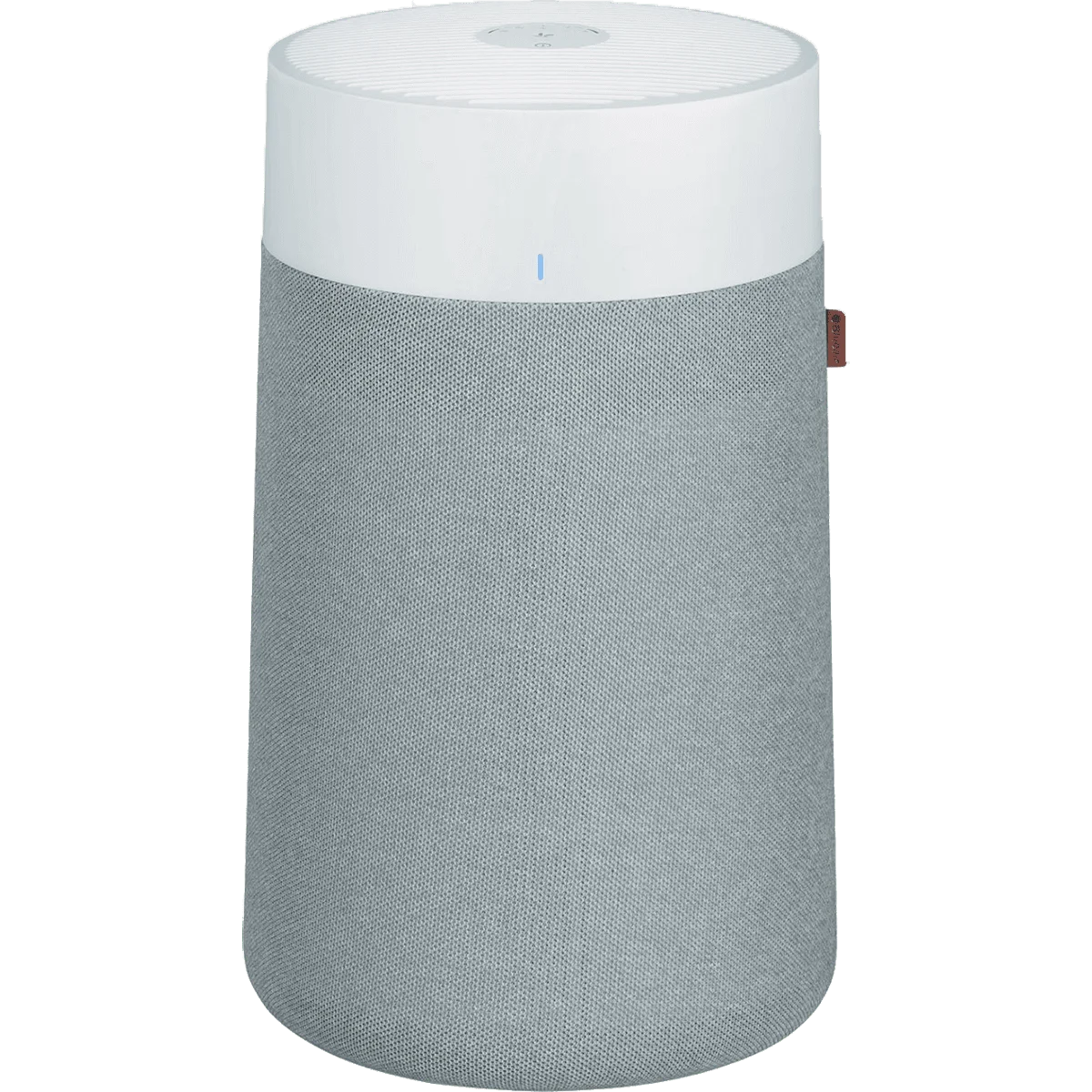
Key Specifications
- Room Coverage
- 219 sq ft
- CADR
- 190/200/200
- Filter
- HEPASilent Particle + Carbon (6-month cycle)
- Noise
- 17 dB
- Power
- 8 watts
- Best For
- Small rooms up to 219 sq ft. Ultra quiet at 17 dB. Bedroom and nursery use. Single-button auto mode.
📅 Prices checked . Amazon prices change frequently — click through for current price. Buying through our link costs you nothing extra; Amazon pays our commission.
What's in the Box
- Blueair Blue Pure 411i Auto air purifier
- Pre-installed dual-protection filter
- Washable pre-filter (fabric)
- Power cord
- User manual
Pros
- AHAM-verified CADR: Smoke 190, Dust 200, Pollen 200 CFM
- Ultra-quiet 17 dB minimum — quietest purifier in its class
- Only 8 watts — lowest energy consumption in this CADR range
- Washable fabric pre-filter available in 5 colors for customization
- Single-button auto mode with built-in particle sensor
Cons
- Covers only 219 sq ft at 4.8 ACH
- HEPASilent electrostatic technology — cannot disable ionizer
- Filter replacement approximately $24 every 6 months ($48/year)
- No WiFi, no app, no Alexa — single-button control only
Best For
The Blueair Blue Pure 411i Auto is best for small rooms up to 219 sq ft. ultra quiet at 17 db. bedroom and nursery use. single-button auto mode.. Quietest small-room purifier available at 17 dB. AHAM-verified CADR 190 at only 8 watts for rooms up to 219 sq ft. Best bedroom and nursery pick where ultra-quiet operation is the top priority.
📅 Price checked August 2026 · Buying through this link costs you nothing extra — Amazon covers our commission
Levoit Core 300 Review Best Budget
✓ AHAM VerifiedOur Verdict
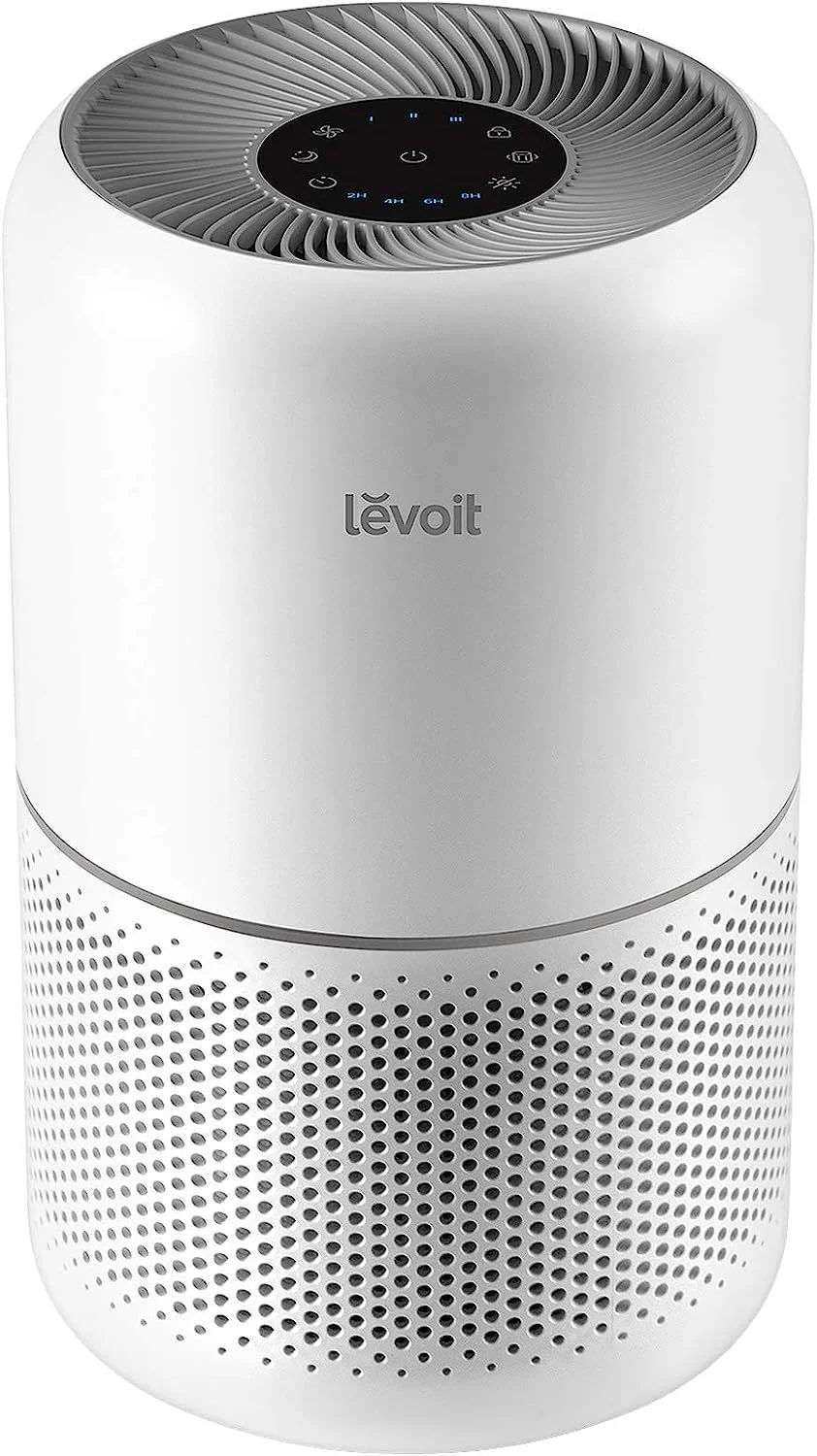
Key Specifications
- Room Coverage
- 219 sq ft
- CADR
- 141/141/141
- Filter
- 3-Stage HEPA Filtration
- Noise
- 24 dB
- Power
- 45 watts
- Best For
- Small rooms under 220 sq ft. Budget entry point.
📅 Prices checked . Amazon prices change frequently — click through for current price. Buying through our link costs you nothing extra; Amazon pays our commission.
What's in the Box
- Levoit Core 300 air purifier
- Pre-installed 3-in-1 filter
- Power cord
- User manual
Pros
- AHAM verified CADR 141
- Cheapest filter replacements at $25/year
- 24dB ultra quiet sleep mode
- Compact cylindrical design
- Simple plug-and-play — no app needed
Cons
- No auto mode or air quality sensor
- Only covers 219 sq ft
- HEPA claims controversy affected Levoit brand
- Filter needs replacing every 6 months
Best For
The Levoit Core 300 is best for small rooms under 220 sq ft. budget entry point.. Best budget air purifier for small rooms. AHAM verified CADR 141 at $99. No smart features but honest verified performance.
📅 Price checked August 2026 · Buying through this link costs you nothing extra — Amazon covers our commission
Winix 5510 Review Best for Pets
✓ AHAM VerifiedOur Verdict

Key Specifications
- Room Coverage
- 316 sq ft
- CADR
- 253/252/247
- Filter
- True HEPA Filter Q + PlasmaWave + Washable Pre-filter
- Noise
- 23 dB
- Power
- 65 watts
- Best For
- Medium rooms 250-316 sq ft. WiFi app control. PlasmaWave CARB-certified ionization. Successor to 5500-2.
📅 Prices checked . Amazon prices change frequently — click through for current price. Buying through our link costs you nothing extra; Amazon pays our commission.
What's in the Box
- Winix 5510 air purifier
- Pre-installed True HEPA + carbon filter
- Power cord
- Remote control
- User manual
Pros
- AHAM-verified CADR: Smoke 253, Dust 252, Pollen 247 CFM
- WiFi via Winix Smart app — scheduling, remote on/off, filter tracking
- PlasmaWave CARB-certified bipolar ionization for VOC decomposition
- Combined Filter Q simplifies maintenance to one annual replacement
- Four-stage filtration including washable pre-filter
Cons
- Winix Smart app only — no Alexa or Google Home voice integration
- Filter Q combines HEPA and carbon — no washable carbon option like 5500-2
- Coverage 316 sq ft at 5 ACH — step up to CADR 300+ for rooms over 350 sq ft
- PlasmaWave cannot be disabled from physical panel without app
Best For
The Winix 5510 is best for medium rooms 250-316 sq ft. wifi app control. plasmawave carb-certified ionization. successor to 5500-2.. Best WiFi-connected mid-range upgrade from the Winix 5500-2 — AHAM-verified CADR 253 with app scheduling and CARB-certified PlasmaWave. Skip if you need Alexa or Google Home; buy if WiFi control is the priority.
📅 Price checked August 2026 · Buying through this link costs you nothing extra — Amazon covers our commission
Measuring dB Yourself — Apps and What the Numbers Feel Like
You do not need professional acoustic equipment to measure your air purifier's noise level. Smartphone apps using the built-in microphone can measure ambient dB with reasonable accuracy — within 2-4 dB of professional sound level meters in most indoor environments at this frequency range. This accuracy is sufficient for making practical purchase decisions about whether a unit is loud enough to disrupt sleep.
Recommended apps: NIOSH SLM (Android) is a free app developed by the National Institute for Occupational Safety and Health specifically for measuring noise levels. It uses a calibrated measurement algorithm and is the most accurate free option on Android. Decibel X (iOS and Android) is a popular alternative with a clean interface and reasonable accuracy. Both provide A-weighted dB(A) readings — the standard for human hearing perception — which is the correct measurement type for comparing against WHO sleep guidelines.
How to take an accurate reading: Place the phone at ear level at the distance you typically sleep — 3-6 feet from the purifier for most bedroom setups. Allow the reading to stabilize for 10-15 seconds and take the average. Do this in a quiet room at night when background noise (traffic, HVAC, refrigerator) is at its minimum. Subtract the background noise reading (taken with the purifier off) from the purifier-on reading to isolate the purifier's contribution.
What different dB readings feel like in a bedroom: Below 25 dB — you will not hear it over normal ambient room noise. 25-30 dB — perceptible in absolute silence, masked by any ambient noise. 30-35 dB — audible as a soft hum in a quiet room; most people adapt within a few nights. 35-40 dB — clearly audible; some sleepers find this the limit of acceptable continuous background noise. 40-45 dB — comparable to a quiet library; audible and distracting for light sleepers. Above 50 dB — comparable to normal conversation; not suitable for most people during sleep.
The dB numbers on this scale explain why auto mode behavior matters for bedrooms. A unit that runs at 26 dB on low (inaudible) but spikes to 48 dB on high when the PM2.5 sensor detects an event (a truck outside, a door opening) creates sleep disruption events. For bedrooms, a unit whose auto mode has a gradual speed ramp rather than a step-change to maximum is preferable — the Coway AP-1512HH and Blueair 211i Max both have gradual auto-mode speed transitions that minimize sleep disruption spikes.
The dB Scale Explained for Air Purifier Shoppers
Understanding the decibel scale prevents the most common mistake in air purifier shopping: treating 10 dB differences as minor. Here is the practical reference scale for air purifiers and everyday sounds.
20 dB — rustling leaves: The quietest sounds most humans can detect in a silent room. Essentially inaudible in any real living environment.
24 dB — Coway AP-1512HH on sleep mode: Quieter than a whisper. In a bedroom with typical ambient noise from outside traffic or building systems, this is completely masked. You will not hear it.
30 dB — whisper at 1 meter: The WHO nighttime noise guideline. Below this level, sleep quality is not meaningfully affected for most people. This is the target threshold for bedroom air purifiers.
40 dB — library ambient noise: Audible in a quiet room but not disruptive. Some sensitive sleepers find this threshold problematic. Most people adapt within a few nights, particularly if the noise is continuous (white noise effect) rather than intermittent.
50 dB — light office ambient: Clearly audible. Air purifiers running at medium speed in this range are manageable for most people during waking hours but problematic for light sleepers overnight.
60 dB — normal conversation at 1 meter: Loud. No air purifier should run at this level in a bedroom during sleep. Reserve maximum speed for unoccupied rooms or brief cleaning cycles.
65 dB — many purifiers on maximum speed: This is where most high-CADR units operate at full power. Honeywell HPA300 measures approximately 65 dB at maximum. Comparable to a shower running in the next room.
The practical takeaway: for bedroom use, focus exclusively on sleep-mode or lowest-speed dB ratings. Maximum-speed noise ratings are relevant only for daytime use in rooms you are not trying to sleep in.
The CADR-Noise Trade-off: What You Give Up for Quiet
The Coway AP-1512HH illustrates the CADR-noise trade-off more clearly than any other widely tested unit.
Sleep/low speed: 24.4 dB. CADR at this speed is approximately 85-100 CFM. In a 300 sq ft room (2,400 cubic feet): ACH = (85 × 60) ÷ 2,400 = 2.1 ACH. Adequate to maintain air quality but not optimal for rapid cleanup after a pollution event (cooking smoke, etc.).
Maximum speed: 53 dB. CADR: 246 CFM. ACH = (246 × 60) ÷ 2,400 = 6.15 ACH. Excellent air cleaning performance.
What the 29 dB increase costs you: Going from sleep speed to max speed — a perceived loudness increase of approximately 5.5x — buys you an increase from roughly CADR 90 to CADR 246. That is about 2.7x more CADR for 5.5x more perceived noise. The ratio does not favor running at full speed in occupied rooms.
The optimal strategy for most bedrooms: run at medium speed during waking hours (clean air delivered quickly), switch to sleep mode an hour before bed (noise drops to 24.4 dB, CADR drops but the room is already clean), and let auto mode handle overnight adjustments.
The Blueair 211i Max shows a different noise profile. At 23 dB on low and CADR approximately 150-180 CFM (estimated low-speed output), it maintains higher CADR at low speed relative to noise than the Coway — a result of HEPASilent electrostatic pre-charging reducing filter resistance. At maximum (56 dB), CADR 410 delivers 10.25 ACH in a 300 sq ft room. This unit is better suited for a large room where you want useful quiet-mode CADR plus maximum-output cleaning when needed.
Placement Affects Perceived Noise
Where you put an air purifier in your bedroom matters as much as its dB rating. Sound follows the inverse square law: double the distance from the source and perceived loudness drops by 6 dB. In perceptual terms, that is about 25% quieter.
At 3 feet from the head of your bed: A unit rated 30 dB at 1 meter measures approximately 30 dB at your ears. You will hear it.
At 6 feet from the head of your bed: The same unit measures approximately 24 dB at your ears — below the whisper threshold. Inaudible to most people.
At 10 feet (across the room): Approximately 20 dB at your ears. Completely masked by normal ambient noise in most bedrooms.
The recommended placement is 6-10 feet from the bed, with the air outlet facing the sleeping area. This positioning achieves two goals simultaneously: reduced perceived noise and directed airflow toward the breathing zone. Do not place the unit directly beside the bed where you will hear it and under the covers where airflow is blocked.
A note on white noise: some sleepers actively prefer the steady hum of an air purifier on medium speed because it masks intermittent disruptive sounds (traffic, neighbors, building noises). At 40-45 dB, a purifier on medium speed can function as a white noise machine. Whether this is beneficial or disruptive depends on your sleep sensitivity. If you already use a white noise machine, you may find a medium-speed air purifier an adequate replacement — cleaning your air while masking disruptive sounds.