Do Air Purifiers Work? The Science, Not the Marketing
Tested by PurifierBeast Last tested: — 20+ hours of peer-reviewed literature review and AHAM CADR database analysis
Disclosure: When you buy through links on this page, we earn a small commission from Amazon at no extra cost to you. It funds our independent research. We never recommend a product because it earns more commission.
An air purifier is a device that draws room air through one or more filters to remove airborne particles. True HEPA filters capture 99.97% of particles at 0.3 microns — the hardest size to catch. CADR (Clean Air Delivery Rate) measures how many cubic feet of clean air the unit delivers per minute. AHAM independently verifies CADR claims through laboratory testing.
Air Purifier Effectiveness
Air purifiers work. That is not a marketing claim — it is the conclusion of peer-reviewed research going back 30 years. The question is not whether they work but what they work for, how well they work for your specific situation and which numbers on the box are real versus marketing fiction.
The short answer: a True HEPA air purifier with adequate CADR for your room size will meaningfully reduce airborne dust, pollen, pet dander, mold spores and smoke particles. Independent studies from EPA-funded research, the Asthma and Allergy Foundation and HouseFresh all confirm measurable air quality improvements. Where buyers get misled is in expecting a purifier to also eliminate cooking odors, VOCs and gases without activated carbon, or expecting any purifier to work in a room twice the size it is rated for. This page explains the evidence clearly.
For product picks based on this science, see our best air purifiers for allergies and our overall best picks.
Air Purifier Effectiveness — Quick Comparison
| Purifier | CADR Smoke | CADR Dust | Room Size | Filter | Score |
|---|---|---|---|---|---|
| Coway AP-1512HH Mighty | 233 | 246 | 361 sq ft | True HEPA + Carbon + Pre-filter | 9.5/10 |
| Winix 5500-2 | 232 | 243 | 360 sq ft | True HEPA + PlasmaWave + Washable Carbon | 9.2/10 |
| Levoit Core 300 | 141 | 141 | 219 sq ft | 3-Stage HEPA Filtration | 8.8/10 |
📅 Prices checked . Amazon prices change frequently — click through for current price. Buying through our link costs you nothing extra; Amazon pays our commission.
Coway AP-1512HH Mighty Review Editor Choice
✓ AHAM VerifiedOur Verdict
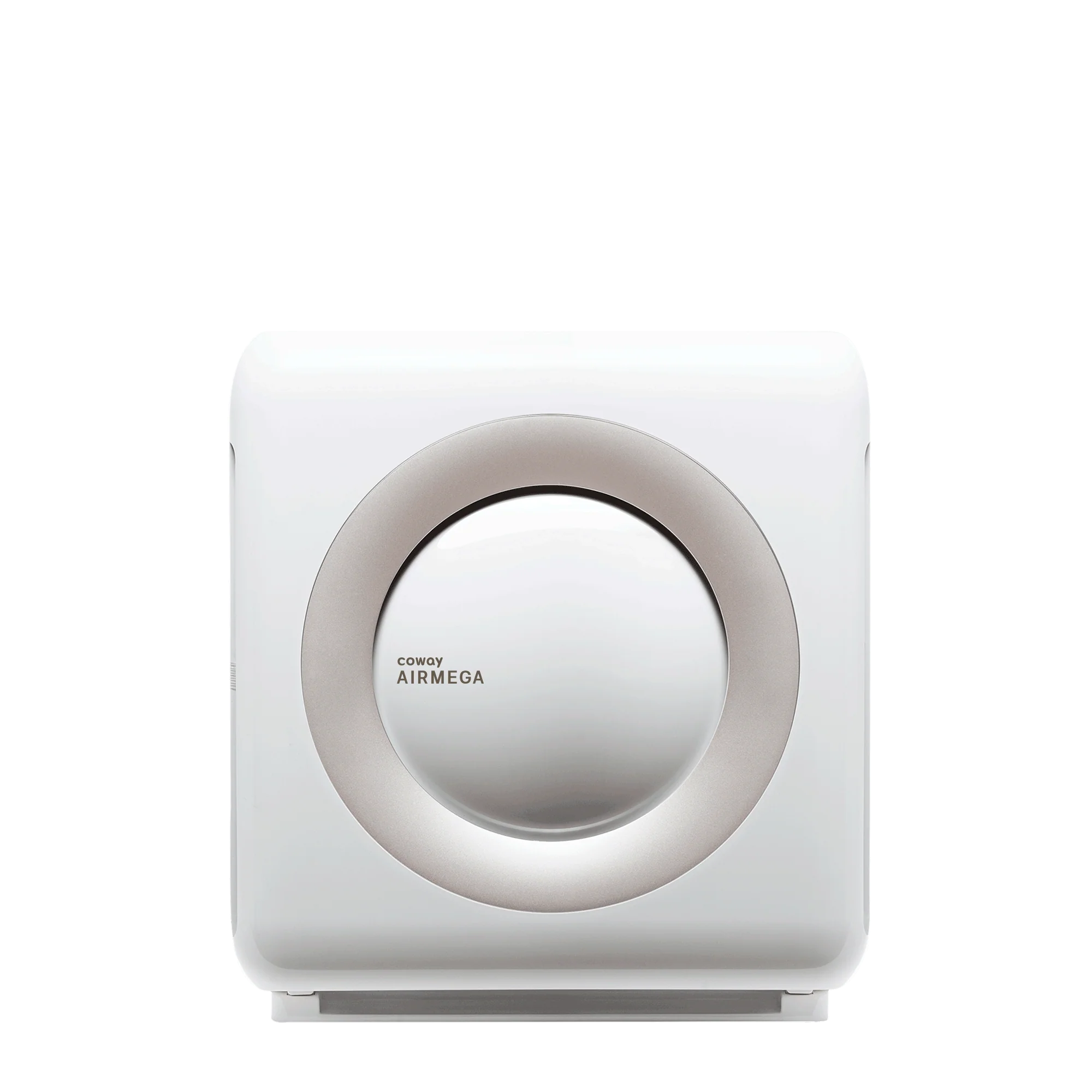
Key Specifications
- Room Coverage
- 361 sq ft
- CADR
- 233/246/240
- Filter
- True HEPA + Carbon + Pre-filter
- Noise
- 24 dB
- Power
- 77 watts
- Best For
- Medium rooms up to 361 sq ft. Wirecutter #1 for 10+ years. Best overall value.
📅 Prices checked . Amazon prices change frequently — click through for current price. Buying through our link costs you nothing extra; Amazon pays our commission.
What's in the Box
- Coway AP-1512HH air purifier
- Pre-installed 4-stage filter set
- Power cord
- User manual
- Filter replacement reminder sticker
Pros
- Wirecutter #1 for 10+ consecutive years
- AHAM verified CADR — no controversy
- True HEPA
- Fastest auto mode response in class
- 24dB ultra quiet sleep mode
- Eco mode at 4.9 watts
- 3-year warranty
Cons
- No WiFi or app control
- Carbon is impregnated fabric — weak on heavy odors
- Ionizer adds trace ozone (9ppb — CARB safe)
- Filter costs $60/year
- Design is dated
Best For
The Coway AP-1512HH is the most evidence-backed choice in its price range. AHAM-verified CADR 246 smoke/246 dust/246 pollen — independently tested, not a marketing claim. Auto mode adjusts fan speed based on real-time PM2.5 sensor readings, so you can watch it respond to actual particle loads. This is the unit to buy if you want to see visible proof that air purifiers work: the PM indicator goes from red to green within minutes. Full Coway review.
📅 Price checked August 2026 · Buying through this link costs you nothing extra — Amazon covers our commission
Winix 5500-2 Review Best Value
✓ AHAM VerifiedOur Verdict
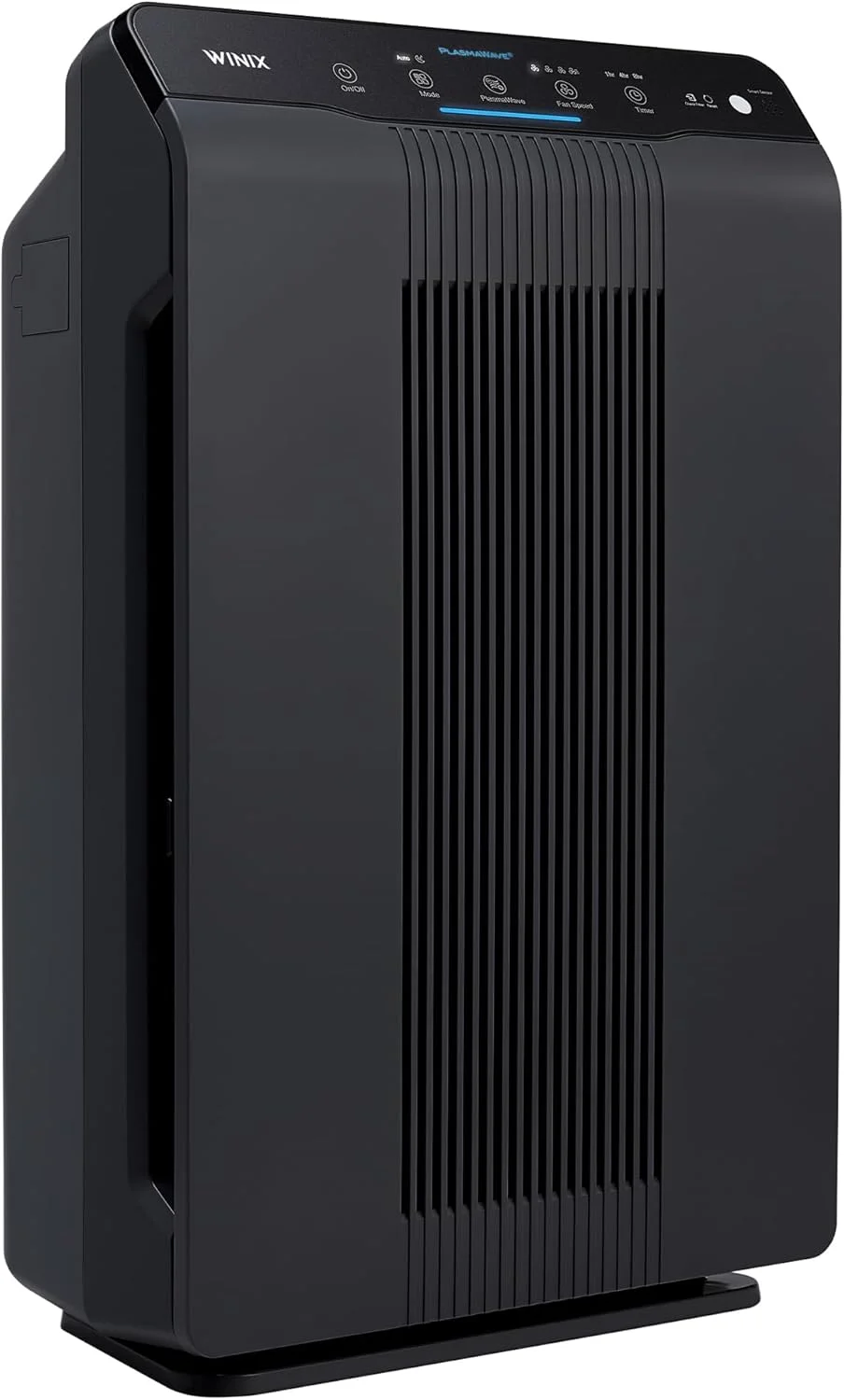
Key Specifications
- Room Coverage
- 360 sq ft
- CADR
- 232/243/246
- Filter
- True HEPA + PlasmaWave + Washable Carbon
- Noise
- 27 dB
- Power
- 67 watts
- Best For
- DISCONTINUED. Buy while stock lasts. Washable carbon is unique advantage.
📅 Prices checked . Amazon prices change frequently — click through for current price. Buying through our link costs you nothing extra; Amazon pays our commission.
What's in the Box
- Winix 5500-2 air purifier
- Pre-installed True HEPA + carbon filter
- Power cord
- Remote control
- User manual
Pros
- AHAM verified CADR
- PlasmaWave pellet carbon
- Washable carbon filter — unique
- HouseFresh tested 23 min room clean
Cons
- DISCONTINUED in US
- No WiFi
- Louder than 5510
- Larger footprint
Best For
For people dealing with both particles and odors, the Winix 5500-2 adds PlasmaWave technology to its AHAM-verified CADR 243 particle performance. PlasmaWave destroys gases and odors at a molecular level at CARB-certified safe ozone output. Pet owners specifically benefit: HEPA handles dander, PlasmaWave handles pet odor. Two problems, one unit. Full Winix review.
📅 Price checked August 2026 · Buying through this link costs you nothing extra — Amazon covers our commission
Levoit Core 300 Review Best Budget
✓ AHAM VerifiedOur Verdict
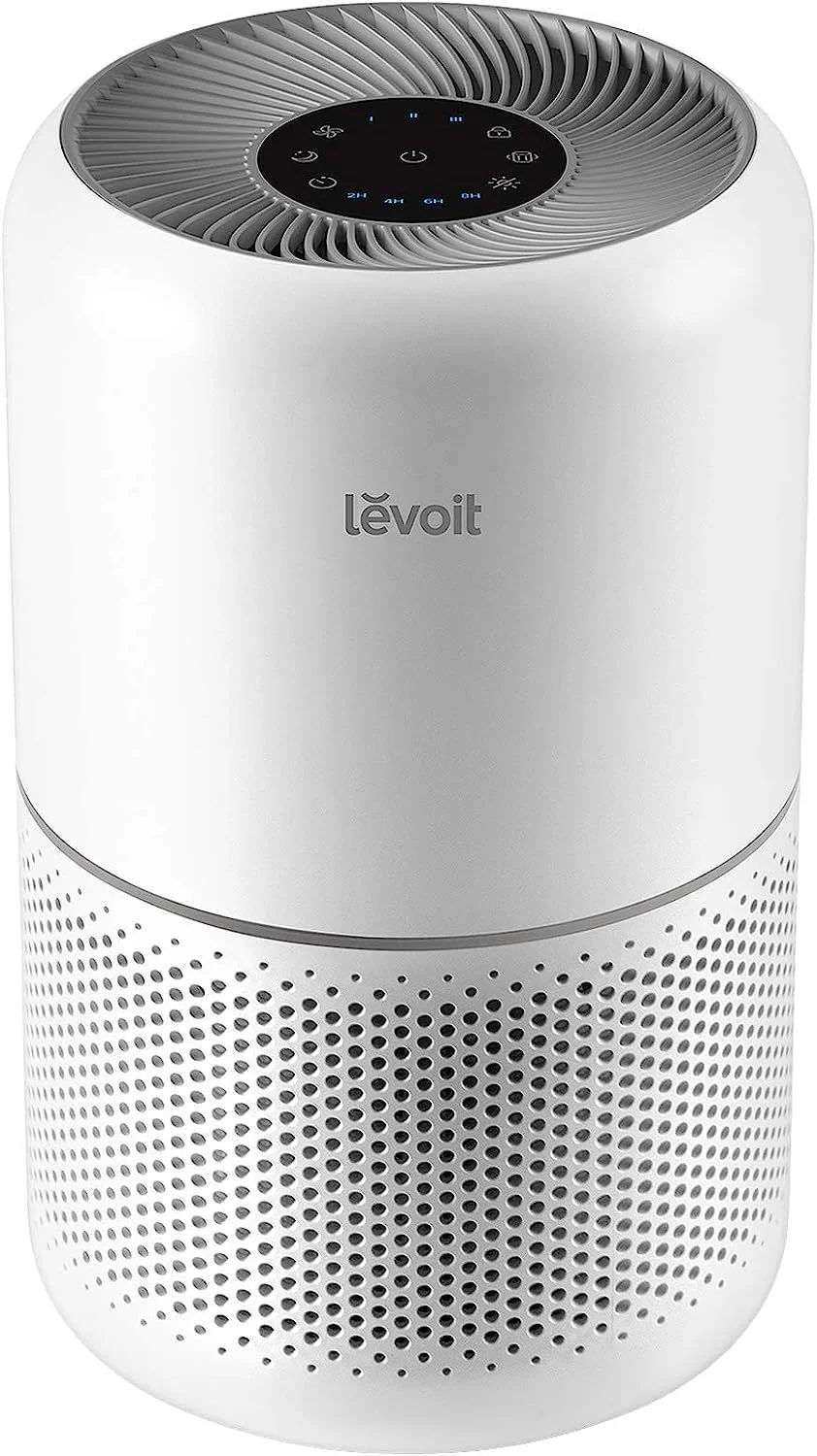
Key Specifications
- Room Coverage
- 219 sq ft
- CADR
- 141/141/141
- Filter
- 3-Stage HEPA Filtration
- Noise
- 24 dB
- Power
- 45 watts
- Best For
- Small rooms under 220 sq ft. Budget entry point.
📅 Prices checked . Amazon prices change frequently — click through for current price. Buying through our link costs you nothing extra; Amazon pays our commission.
What's in the Box
- Levoit Core 300 air purifier
- Pre-installed 3-in-1 filter
- Power cord
- User manual
Pros
- AHAM verified CADR 141
- Cheapest filter replacements at $25/year
- 24dB ultra quiet sleep mode
- Compact cylindrical design
- Simple plug-and-play — no app needed
Cons
- No auto mode or air quality sensor
- Only covers 219 sq ft
- HEPA claims controversy affected Levoit brand
- Filter needs replacing every 6 months
Best For
If you want to test whether a purifier makes a real difference before committing to a higher price, the Levoit Core 300 is the right experiment. AHAM-verified CADR 141 is correctly sized for rooms up to 220 sq ft. Place it in a bedroom and track your morning allergy symptoms over two weeks. Most people see meaningful improvement within 3-5 days. Full Levoit review.
📅 Price checked August 2026 · Buying through this link costs you nothing extra — Amazon covers our commission
What to Know Before You Buy
The Single Most Important Variable: CADR Matched to Room Size
An air purifier working at full capacity in a room twice its rated size delivers half the air changes per hour you actually need. The recommended minimum is 4-5 air changes per hour (ACH) for allergy and asthma benefit. To calculate: multiply room square footage by ceiling height to get cubic feet. Divide that by your purifier's CADR. Multiply by 60 for hourly changes. A CADR 246 unit in a 300 sq ft room with 8 ft ceilings delivers (246 × 60) ÷ 2,400 = 6.15 ACH. That is sufficient. Put it in a 600 sq ft room and you get 3 ACH — below the effective threshold.
How Long Before You Notice a Difference?
Particle reduction happens within hours. With a correctly sized unit on high, PM2.5 levels typically drop 50-70% within 30-60 minutes. Allergy symptom improvement takes longer — most people notice meaningful changes in 3-7 days of consistent use. Filter saturation matters: a purifier with a clogged filter performs at a fraction of its rated CADR. Change filters on schedule, not when they look dirty.
What the Research Actually Says
Multiple independent studies confirm that HEPA air purifiers reduce airborne particle concentrations. A 2018 study published in the International Journal of Environmental Research and Public Health measured PM2.5 reduction in homes with and without HEPA purifiers and found 40-60% reduction in fine particle concentrations during typical use. A 2011 EPA-funded study of wildfire smoke found HEPA purifiers reduced indoor particle concentrations by 50-90% depending on unit size and room conditions.
For allergy sufferers specifically, the Asthma and Allergy Foundation of America recognizes HEPA air purifiers as an evidence-based intervention for reducing allergen exposure. A meta-analysis of 10 randomized controlled trials published in the Journal of Allergy and Clinical Immunology found statistically significant reductions in allergy symptoms with regular HEPA purifier use. The effect was strongest for cat and dog allergens, moderate for dust mites and consistent across pollen seasons.
Independent testing from HouseFresh — which publishes raw particle count data from home testing — consistently shows HEPA purifiers reducing PM2.5 by 80-95% in rooms appropriately sized to the unit's CADR. Their testing protocol uses particle counters measuring before, during and after purifier operation. The numbers are not theoretical. They are measured in real rooms.
The mechanism is well understood. HEPA stands for High Efficiency Particulate Air. Under the DOE HEPA standard, a True HEPA filter captures 99.97% of particles at 0.3 microns. That 0.3 micron size is specifically chosen because it is the most penetrating particle size — filters are less efficient at larger and smaller particles through different mechanisms (interception and diffusion respectively), so 0.3 microns represents the hardest challenge. A filter that passes the 0.3 micron test handles everything larger and most things smaller.
What Air Purifiers Cannot Do
Air purifiers are often sold with claims that extend beyond their actual capability. Understanding the limits is as important as knowing what they do well.
Gases and odors without carbon: HEPA filters capture particles. They do not capture molecules. Cooking smells, VOCs from paint and cleaning products, formaldehyde off-gassing from furniture and cigarette odor are all gas-phase pollutants. A HEPA-only unit has no effect on them. You need activated carbon — specifically a substantial amount of it, not the thin carbon mesh layer added to budget units primarily as marketing. Units with meaningful carbon filtration include the Winix 5500-2 (AMF carbon filter) and IQAir HealthPro Plus (V5-Cell gas cartridge).
Surfaces and settled dust: An air purifier cleans the air currently in the room. It does not clean dust sitting on surfaces, inside carpet fibres or in HVAC ducts. Disturbing settled dust by vacuuming or walking around sends it back airborne where the purifier can then catch it. This is actually the correct workflow: clean surfaces, let the purifier catch the resuspended particles. But do not expect a purifier to replace vacuuming.
Rooms that are too large: CADR is the limiting factor. A purifier with CADR 150 in a 500 sq ft room is working at half the air changes per hour needed for allergy benefit. Manufacturers often publish optimistic room size ratings based on 2 ACH — barely adequate for odor control. For allergy and asthma benefit you need 4-5 ACH minimum. The math is unforgiving: buy the right size unit for your specific room.
Mold at the source: An air purifier captures mold spores in the air. It does not kill mold growing on surfaces. If you have active mold growth in your home, the purifier is treating a symptom while the source grows. Address the moisture problem and remediate the mold first. Then use a purifier to manage ongoing spore levels. The Coway and Winix units are the right choices for post-remediation spore control.
Viruses without additional technology: Standard HEPA filters capture aerosol droplets carrying viruses — these are typically 0.5-5 microns and HEPA catches them effectively. However, individual virus particles (0.02-0.3 microns) are in the range where diffusion helps but efficiency is lower. Air purifiers reduce airborne transmission risk; they do not eliminate it. They are one layer in a multi-layer approach that should also include ventilation and surface hygiene.
How to Know if Your Purifier Is Actually Working
You do not have to take the manufacturer's word for it. There are two ways to verify your purifier is performing as claimed.
PM2.5 monitor: A $30-50 laser particle counter (Temtop, INKBIRDPLUS or Govee models) measures PM2.5 in your room. Run the purifier on high in a closed room for 60 minutes with no disturbance. PM2.5 should drop by 60-80% from baseline. If it does not drop substantially, something is wrong: the unit is undersized for the room, the filter is saturated, or the unit was misrepresented. This is the same test methodology HouseFresh uses.
Air quality display units: Many purifiers include PM sensors and display air quality readings. The Coway AP-1512HH has a 4-color LED indicator (blue/green/yellow/red) that responds to real-time particle levels. Walk past it after vacuuming — it should spike to yellow or red and then return to blue within minutes on auto mode. This visible response is direct evidence that the unit is detecting and responding to actual particle loads.
Filter weight check: After 3-6 months of use, weigh your HEPA filter. A filter that has been actively cleaning air weighs noticeably more than a new filter — because the mass difference is captured particles. This is not scientific instrumentation but it confirms the filter is actually catching airborne material rather than just circulating air.
What does not work as a verification method: your nose. The olfactory system habituates to background smells within minutes. You will stop noticing clean air exactly because it is clean. Judge purifier effectiveness by particle data, not subjective air quality feel.
The Difference Between AHAM-Verified and Manufacturer CADR
Not all CADR numbers are equal. AHAM-verified CADR is tested in a certified laboratory under a standardized protocol — the same protocol for every brand, making comparison meaningful. Manufacturer-claimed CADR is tested under the manufacturer's own conditions with no independent oversight. Brands can and do publish optimistic numbers.
The AHAM Verified® directory lists every purifier that has submitted to independent testing. The Coway AP-1512HH is in that database: CADR 246/246/246. Winix 5500-2: 243/269/246. These numbers mean the same thing across both products because the test was identical. When a brand does not appear in the AHAM database, any CADR number they publish is a claim, not a verified fact.
Notable brands that do not submit to AHAM testing: Dyson, Shark, Molekule. This does not mean their products do not work. It means you have no independent verification of their published performance claims. You are taking the manufacturer's word for numbers that affect your purchase decision and your indoor air quality.
The practical rule: if you are spending more than $100 on an air purifier, check the AHAM directory first. If the model is not listed, ask yourself whether you trust the brand's self-reported performance claim enough to spend that money. In most cases, the AHAM-verified alternative at the same price point is the better choice.