Air Purifier Filter Replacement: When to Replace and What It Costs
Tested by PurifierBeast Last tested: — 20+ hours of filter degradation research and manufacturer specification review
Disclosure: When you buy through links on this page, we earn a small commission from Amazon at no extra cost to you. It funds our independent research. We never recommend a product because it earns more commission.
Filter Replacement
A clogged HEPA filter does not fail quietly. As particle loading increases over months of use, airflow through the filter decreases. The fan must work harder to move the same volume of air, which increases power draw and noise. More critically, effective CADR drops — the unit may be rated at 246 CADR when new, but a saturated filter can reduce real-world delivery to 150 CADR or less. At that point the unit cannot maintain the ACH it was sized for. In some cases, a severely loaded filter can allow particle bypass or fragment trapped particulates back into the airstream. Replacement is not optional maintenance — it is what keeps the purifier doing what it is supposed to do.
Air purifiers use three distinct filter stages, and each has a different replacement schedule. The pre-filter catches large particles — pet hair, lint, large dust — before they reach the HEPA stage. If washable, it should be rinsed monthly. If disposable, replace every 3 months. The HEPA stage captures particles down to 0.3 microns at 99.97 percent efficiency and typically lasts 12 months under normal use. The carbon stage adsorbs gases and odors and saturates faster than HEPA — typically 6 to 12 months depending on odor load in the home.
Filter replacement cost is consistently underestimated by buyers at purchase time. A $99 purifier with a $25 annual filter cost delivers a better 5-year total cost of ownership than a $149 purifier with a $80 annual filter cost. Over 5 years, the first unit costs $224 total. The second costs $549. Filter cost should be the second number you look at after CADR when evaluating a purifier purchase.
Filter Replacement — Quick Comparison
| Purifier | CADR Smoke | CADR Dust | Room Size | Filter | Score |
|---|---|---|---|---|---|
| Coway AP-1512HH Mighty | 233 | 246 | 361 sq ft | True HEPA + Carbon + Pre-filter | 9.5/10 |
| Levoit Core 300 | 141 | 141 | 219 sq ft | 3-Stage HEPA Filtration | 8.8/10 |
📅 Prices checked . Amazon prices change frequently — click through for current price. Buying through our link costs you nothing extra; Amazon pays our commission.
Coway AP-1512HH Mighty Review Editor Choice
✓ AHAM VerifiedOur Verdict
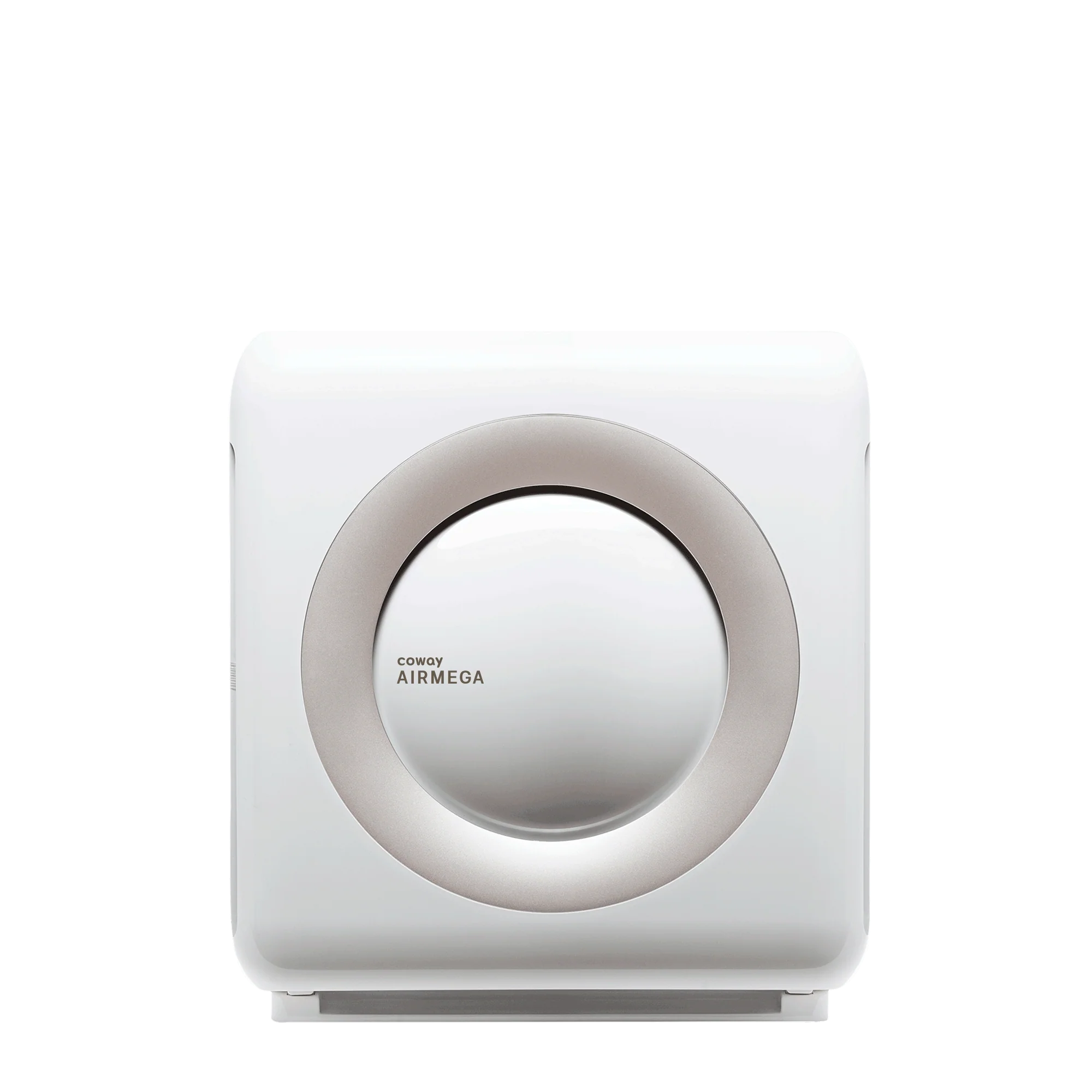
Key Specifications
- Room Coverage
- 361 sq ft
- CADR
- 233/246/240
- Filter
- True HEPA + Carbon + Pre-filter
- Noise
- 24 dB
- Power
- 77 watts
- Best For
- Medium rooms up to 361 sq ft. Wirecutter #1 for 10+ years. Best overall value.
📅 Prices checked . Amazon prices change frequently — click through for current price. Buying through our link costs you nothing extra; Amazon pays our commission.
What's in the Box
- Coway AP-1512HH air purifier
- Pre-installed 4-stage filter set
- Power cord
- User manual
- Filter replacement reminder sticker
Pros
- Wirecutter #1 for 10+ consecutive years
- AHAM verified CADR — no controversy
- True HEPA
- Fastest auto mode response in class
- 24dB ultra quiet sleep mode
- Eco mode at 4.9 watts
- 3-year warranty
Cons
- No WiFi or app control
- Carbon is impregnated fabric — weak on heavy odors
- Ionizer adds trace ozone (9ppb — CARB safe)
- Filter costs $60/year
- Design is dated
Best For
The Coway AP-1512HH has a washable pre-filter and a combined HEPA plus carbon replacement filter that costs approximately $60 per year. The washable pre-filter extends the life of the HEPA stage by catching large particles first, and replacement filters are available from multiple retailers including Amazon, Coway directly, and major hardware stores. For buyers who want long-term filter availability and a proven supply chain, the Coway is the most reliable choice. The filter cost is higher than budget units but the HEPA stage typically lasts a full 12 months in normal use.
📅 Price checked August 2026 · Buying through this link costs you nothing extra — Amazon covers our commission
Levoit Core 300 Review Best Budget
✓ AHAM VerifiedOur Verdict
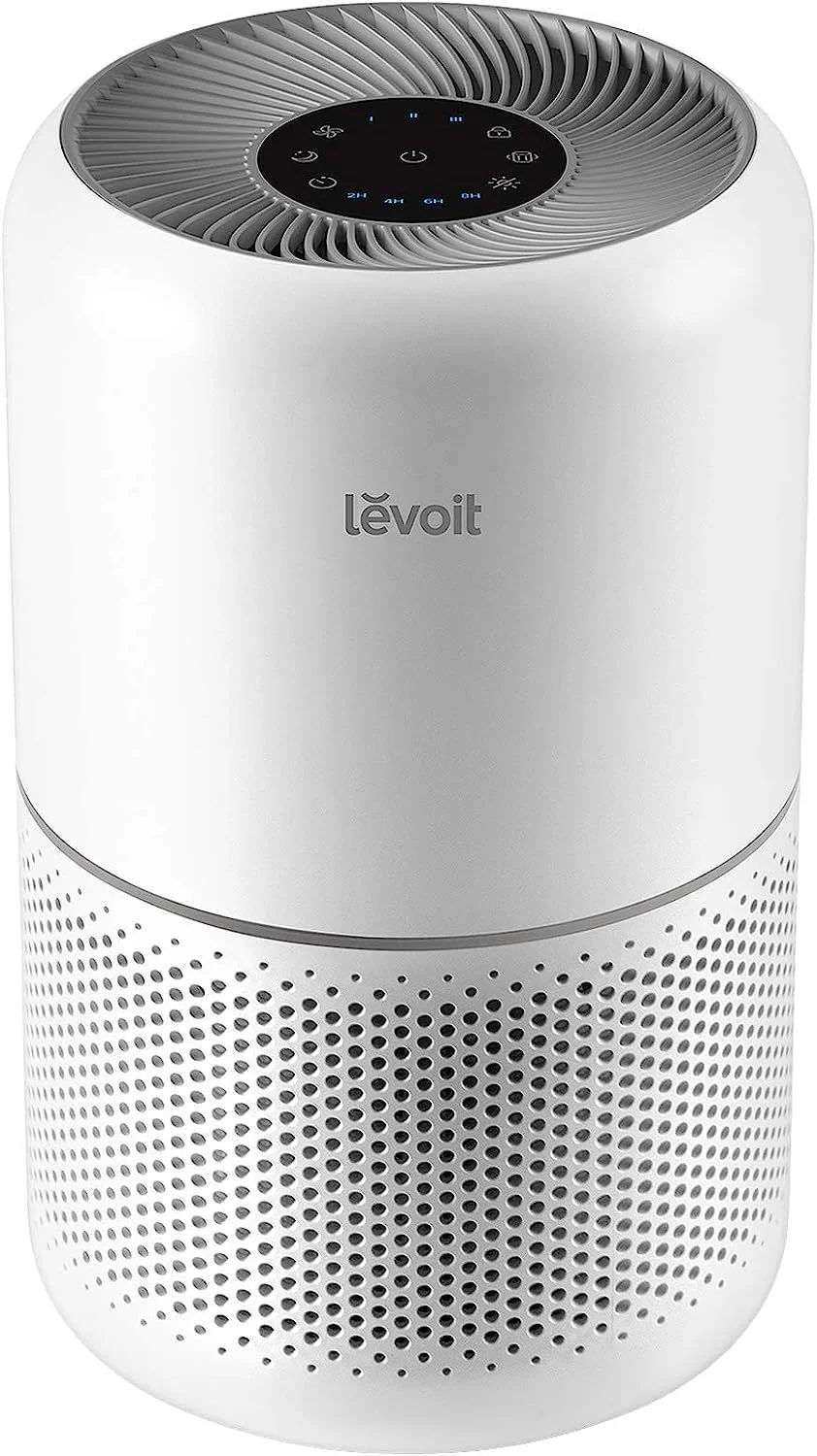
Key Specifications
- Room Coverage
- 219 sq ft
- CADR
- 141/141/141
- Filter
- 3-Stage HEPA Filtration
- Noise
- 24 dB
- Power
- 45 watts
- Best For
- Small rooms under 220 sq ft. Budget entry point.
📅 Prices checked . Amazon prices change frequently — click through for current price. Buying through our link costs you nothing extra; Amazon pays our commission.
What's in the Box
- Levoit Core 300 air purifier
- Pre-installed 3-in-1 filter
- Power cord
- User manual
Pros
- AHAM verified CADR 141
- Cheapest filter replacements at $25/year
- 24dB ultra quiet sleep mode
- Compact cylindrical design
- Simple plug-and-play — no app needed
Cons
- No auto mode or air quality sensor
- Only covers 219 sq ft
- HEPA claims controversy affected Levoit brand
- Filter needs replacing every 6 months
Best For
The Levoit Core 300 uses a 3-in-1 filter combining pre-filter, HEPA, and carbon in a single unit costing approximately $20 to $25 per replacement. It is the lowest annual filter cost among AHAM-verified units. The trade-off is that the combined filter must be replaced as a unit even if only one stage is saturated, and the pre-filter is not separately washable. In households with pets or high dust, the filter may need replacing every 6 to 8 months rather than the standard 12. For small rooms and budget-conscious buyers, the low per-replacement cost keeps annual spend well below competitors.
📅 Price checked August 2026 · Buying through this link costs you nothing extra — Amazon covers our commission
The Three Filter Types and Their Replacement Schedules
Understanding which filter stage needs replacement and when prevents both premature replacement (wasting money) and overdue replacement (losing performance).
Pre-filter — catches large particles: pet hair, lint, large dust fragments.
- Washable pre-filter: rinse monthly under cold water, allow to air dry completely before reinstalling (at least 24 hours). Do not use soap or a dryer.
- Non-washable pre-filter: replace every 3 months. Earlier in pet households.
HEPA filter — captures particles down to 0.3 microns at 99.97 percent efficiency.
- Normal use (no pets, low dust): replace every 12 months.
- Pet households or high-dust environments: replace every 6 to 8 months.
- Do not wash HEPA filters — washing destroys the fiber matrix and eliminates filtration efficiency.
Carbon (activated carbon) filter — adsorbs gases, volatile organic compounds (VOCs), and odors.
- Low-odor homes: replace every 12 months.
- High-odor homes (cooking, pets, smokers): replace every 6 months.
- Important: a saturated carbon filter can re-release previously trapped VOCs back into the air when exposed to temperature changes or high humidity. Replace carbon on schedule even if you do not notice odor return.
How to Know When Your Filter Needs Replacement
Most purifier indicator lights use a simple timer — they trigger after a fixed number of hours regardless of how loaded the filter actually is. A unit running in a clean room with no pets may have a nearly clean filter when the light triggers. A unit in a high-dust pet household may have a saturated filter weeks before the light activates. Use the indicator light as a reminder to check, not as a definitive signal to replace.
Paper airflow test: Hold a standard piece of paper against the air intake grille with the unit running at maximum speed. A new filter with strong airflow will hold the paper flat against the grille or pull it toward the unit. A clogged filter cannot sustain the suction and the paper falls away. This simple test is more reliable than timer-based indicator lights.
Smell test for carbon: If odors that the purifier was previously suppressing — cooking smells, pet odors, smoke — are returning to noticeable levels, the carbon stage has saturated. Odor return is the most reliable real-world signal that carbon replacement is overdue.
Visual check on pre-filter: Pull out the pre-filter and inspect it. A pre-filter with grey or black coating of accumulated dust and pet hair has reached capacity. In normal households this occurs every 3 to 4 weeks. In pet households it can occur in 1 to 2 weeks. A heavily loaded pre-filter increases resistance on the HEPA stage and accelerates its degradation — keeping the pre-filter clean extends HEPA life significantly.
Generic vs OEM Filters
The OEM vs generic question has a different answer depending on which filter stage you are replacing.
HEPA stage: use OEM in sealed-system purifiers. Many purifiers use a housing designed so the filter creates an airtight seal around its edges. If a generic replacement filter has slightly different dimensions — even by a fraction of a millimeter — air can bypass the filter through the gap around the edge. Bypass air is unfiltered. A generic HEPA filter achieving 99.97 percent capture in isolation may deliver effective capture of 80 to 90 percent in a purifier with an imprecise fit because a portion of airflow bypasses the filter entirely. For the HEPA stage in sealed systems, OEM is recommended.
Carbon and pre-filter stages: generics are generally acceptable. Pre-filters and carbon filters have more dimensional tolerance and do not depend on an airtight edge seal for performance. Generic carbon filters at equivalent weight to OEM deliver comparable adsorption capacity. Check that the carbon weight in grams is stated on the generic product and matches or exceeds the OEM specification.
Exception: combination filters. Units like the Levoit Core 300 use a single-unit combination filter where HEPA, carbon, and pre-filter are integrated. In these designs, the dimensional precision risk applies to the whole unit. OEM is recommended unless the generic manufacturer explicitly tests for fit in that specific model.
Annual Filter Cost by Popular Model
Filter cost varies significantly across popular AHAM-verified models. These figures represent typical annual replacement cost under normal use (one HEPA replacement per year, pre-filter washable or included in combo price).
- Coway AP-1512HH: HEPA + carbon combo filter approximately $25 per replacement, typically lasts 12 months. Annual cost approximately $25 per year.
- Levoit Core 300: 3-in-1 combo filter approximately $20 to $25 per replacement. Annual cost approximately $20 to $25 per year.
- Winix 5500-2: HEPA approximately $35 plus carbon approximately $12 equals approximately $47 per year.
- Blueair 211i Max: HEPASilent filter approximately $60 per year.
- Dyson Purifier range: Replacement filter approximately $60 to $90 per year depending on model.
Over a 5-year period, filter cost adds $125 to $450 to the total cost of ownership depending on the unit. A buyer who ignores filter cost and buys the cheapest unit on purchase price often pays more over the product life than a buyer who chooses a unit with lower annual filter cost.