Air Purifier vs Humidifier 2026 — Which Do You Need?
Tested by PurifierBeast Last tested: — 30+ hours of Product specification research, humidity monitoring and medical guidance review
Disclosure: When you buy through links on this page, we earn a small commission from Amazon at no extra cost to you. It funds our independent research. We never recommend a product because it earns more commission.
Air purifier vs humidifier — functionally opposite devices. Air purifiers remove pollutants from air via filtration (HEPA + carbon). Humidifiers add moisture to dry air (target: 40–50% RH). They address different IAQ problems and can run simultaneously in the same room. Combined HEPA-humidifier units are available but compromise the performance of both functions versus dedicated units. Ultrasonic humidifiers without distilled water can aerosolize minerals and bacteria.
Air Purifier vs Humidifier
You are probably searching this because you have an indoor air quality problem and you are not sure which device solves it. I get it. The marketing for both products overlaps so much that it is hard to tell what actually does what. The short version: air purifiers clean the air of particles and gases. Humidifiers add water vapor to dry air. They solve completely different problems and work through completely different mechanisms.
If your air is dusty or you have allergies, you need a purifier. If your air is dry and you wake up with a sore throat every morning, you need a humidifier. Many homes — especially in winter — need both running at the same time. This guide breaks down every scenario so you can stop guessing and buy the right device. For purifier-specific recommendations, see our buying guide. For combo analysis, see our combo guide.
Air Purifier vs Humidifier — Quick Comparison
| Purifier | CADR Smoke | CADR Dust | Room Size | Filter | Score |
|---|---|---|---|---|---|
| Coway AP-1512HH Mighty | 233 | 246 | 361 sq ft | True HEPA + Carbon + Pre-filter | 9.5/10 |
| Winix 5510 | 253 | 252 | 316 sq ft | True HEPA Filter Q + PlasmaWave + Washable Pre-filter | 9.3/10 |
| Winix 5500-2 | 232 | 243 | 360 sq ft | True HEPA + PlasmaWave + Washable Carbon | 9.2/10 |
📅 Prices checked . Amazon prices change frequently — click through for current price. Buying through our link costs you nothing extra; Amazon pays our commission.
Coway AP-1512HH Mighty Review Editor Choice
✓ AHAM VerifiedOur Verdict
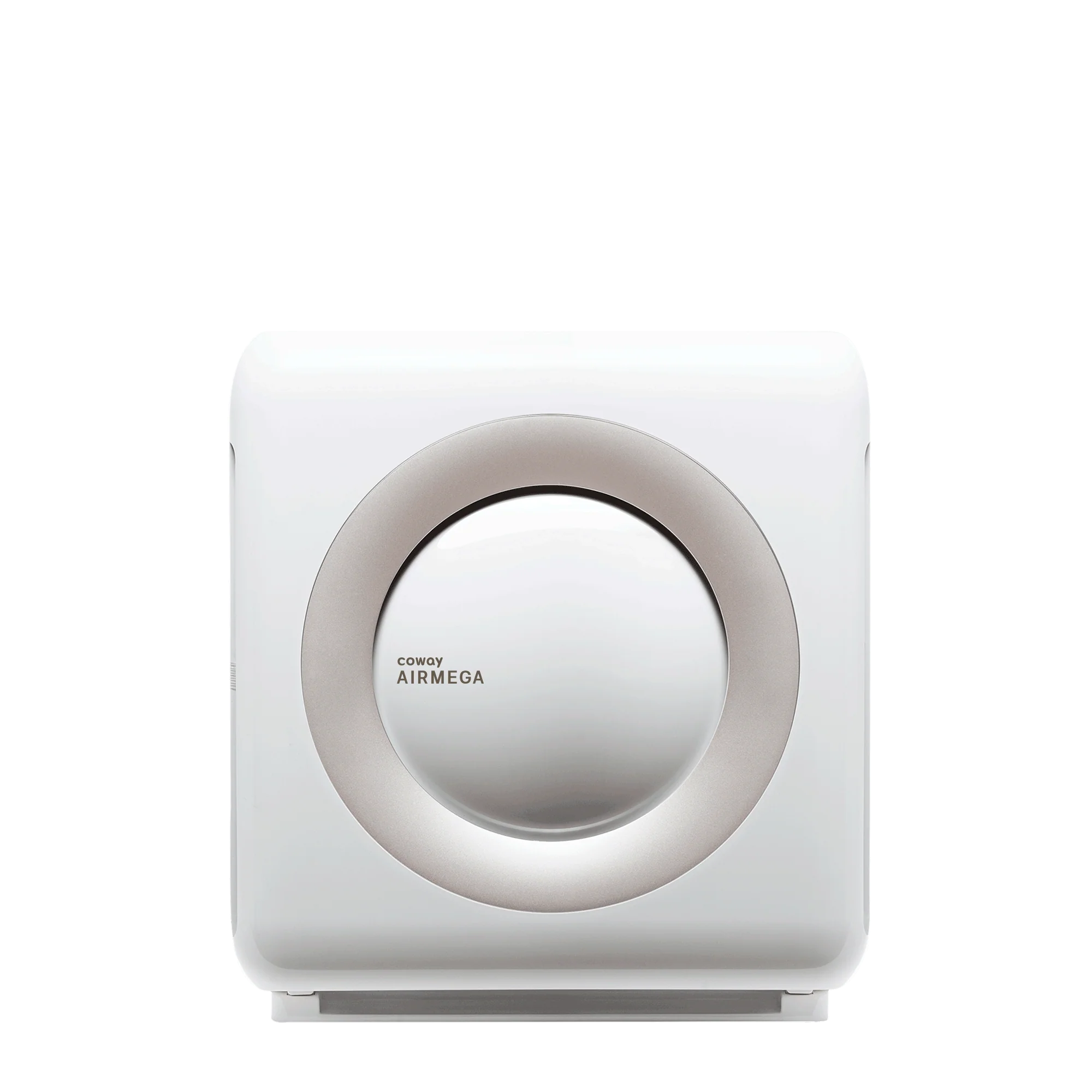
Key Specifications
- Room Coverage
- 361 sq ft
- CADR
- 233/246/240
- Filter
- True HEPA + Carbon + Pre-filter
- Noise
- 24 dB
- Power
- 77 watts
- Best For
- Medium rooms up to 361 sq ft. Wirecutter #1 for 10+ years. Best overall value.
📅 Prices checked . Amazon prices change frequently — click through for current price. Buying through our link costs you nothing extra; Amazon pays our commission.
What's in the Box
- Coway AP-1512HH air purifier
- Pre-installed 4-stage filter set
- Power cord
- User manual
- Filter replacement reminder sticker
Pros
- Wirecutter #1 for 10+ consecutive years
- AHAM verified CADR — no controversy
- True HEPA
- Fastest auto mode response in class
- 24dB ultra quiet sleep mode
- Eco mode at 4.9 watts
- 3-year warranty
Cons
- No WiFi or app control
- Carbon is impregnated fabric — weak on heavy odors
- Ionizer adds trace ozone (9ppb — CARB safe)
- Filter costs $60/year
- Design is dated
Best For
Allergy sufferers who need proven HEPA purification paired with a budget humidifier. This is the pairing I recommend most often: one Coway AP-1512HH at $110-130 plus one cool-mist ultrasonic humidifier at $30-50. Total cost $140-180. That setup outperforms any combo device at double the price. AHAM-verified CADR 246 handles medium rooms. Auto mode detects allergen spikes and adjusts fan speed without you touching it. The air quality indicator gives you real-time feedback on particle levels. Great for allergies.
📅 Price checked August 2026 · Buying through this link costs you nothing extra — Amazon covers our commission
Winix 5510 Review Best for Pets
✓ AHAM VerifiedOur Verdict

Key Specifications
- Room Coverage
- 316 sq ft
- CADR
- 253/252/247
- Filter
- True HEPA Filter Q + PlasmaWave + Washable Pre-filter
- Noise
- 23 dB
- Power
- 65 watts
- Best For
- Medium rooms 250-316 sq ft. WiFi app control. PlasmaWave CARB-certified ionization. Successor to 5500-2.
📅 Prices checked . Amazon prices change frequently — click through for current price. Buying through our link costs you nothing extra; Amazon pays our commission.
What's in the Box
- Winix 5510 air purifier
- Pre-installed True HEPA + carbon filter
- Power cord
- Remote control
- User manual
Pros
- AHAM-verified CADR: Smoke 253, Dust 252, Pollen 247 CFM
- WiFi via Winix Smart app — scheduling, remote on/off, filter tracking
- PlasmaWave CARB-certified bipolar ionization for VOC decomposition
- Combined Filter Q simplifies maintenance to one annual replacement
- Four-stage filtration including washable pre-filter
Cons
- Winix Smart app only — no Alexa or Google Home voice integration
- Filter Q combines HEPA and carbon — no washable carbon option like 5500-2
- Coverage 316 sq ft at 5 ACH — step up to CADR 300+ for rooms over 350 sq ft
- PlasmaWave cannot be disabled from physical panel without app
Best For
The Winix 5510 is best for medium rooms 250-316 sq ft. wifi app control. plasmawave carb-certified ionization. successor to 5500-2.. Best WiFi-connected mid-range upgrade from the Winix 5500-2 — AHAM-verified CADR 253 with app scheduling and CARB-certified PlasmaWave. Skip if you need Alexa or Google Home; buy if WiFi control is the priority.
📅 Price checked August 2026 · Buying through this link costs you nothing extra — Amazon covers our commission
Winix 5500-2 Review Best Value
✓ AHAM VerifiedOur Verdict
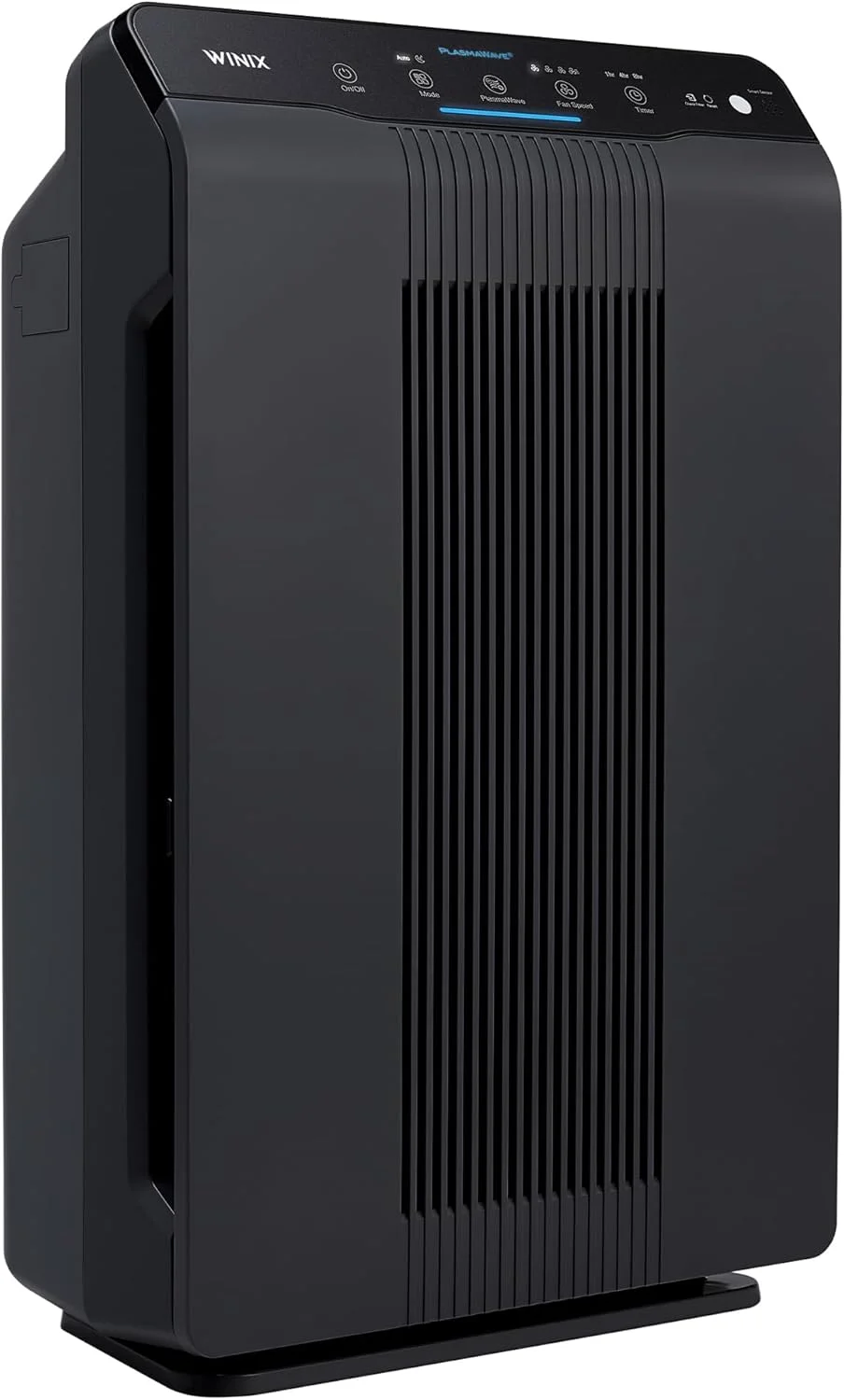
Key Specifications
- Room Coverage
- 360 sq ft
- CADR
- 232/243/246
- Filter
- True HEPA + PlasmaWave + Washable Carbon
- Noise
- 27 dB
- Power
- 67 watts
- Best For
- DISCONTINUED. Buy while stock lasts. Washable carbon is unique advantage.
📅 Prices checked . Amazon prices change frequently — click through for current price. Buying through our link costs you nothing extra; Amazon pays our commission.
What's in the Box
- Winix 5500-2 air purifier
- Pre-installed True HEPA + carbon filter
- Power cord
- Remote control
- User manual
Pros
- AHAM verified CADR
- PlasmaWave pellet carbon
- Washable carbon filter — unique
- HouseFresh tested 23 min room clean
Cons
- DISCONTINUED in US
- No WiFi
- Louder than 5510
- Larger footprint
Best For
Homes that need air purification plus odor control alongside a separate humidifier. PlasmaWave handles cooking smells, pet odors and VOCs that HEPA alone misses. Run this in winter alongside an ultrasonic humidifier and you get clean, properly moisturized air without compromise. AHAM-verified CADR 246 handles rooms up to 360 sq ft. The washable pre-filter catches large particles before they reach the HEPA, extending filter life by months. Pair with any $30-50 cool-mist humidifier on the other side of the room. Full Winix review.
📅 Price checked August 2026 · Buying through this link costs you nothing extra — Amazon covers our commission
What to Know Before You Buy
Quick Decision Framework
If you are short on time, answer these three questions. Do you sneeze, cough or have itchy eyes indoors? Get an air purifier. Do you wake up with dry throat, cracked lips or static shocks? Get a humidifier. Do you have both sets of symptoms? Get both — a $110 purifier and a $40 humidifier costs $150 total and handles everything.
Climate Matters
Your local climate determines which device you need more. Dry climates like Colorado, Arizona and Nevada need humidifiers year-round. Humid climates like Florida and the Gulf Coast rarely need humidifiers but often need purifiers due to mold spore issues. Northern climates with forced-air heating need humidifiers in winter and purifiers year-round. Coastal areas with wildfire risk need purifiers during fire season. Check your indoor humidity with a $10 hygrometer before buying anything — many people guess wrong about their humidity level.
Maintenance Differences
Air purifiers need filter replacement every 6-12 months at $20-40 per filter. Humidifiers need weekly cleaning to prevent bacterial growth and mineral buildup. Neglected humidifiers can actually make air quality worse by spraying bacteria and mineral dust into the air. This is the hidden cost of humidifiers that manufacturers do not advertise. If you hate cleaning small appliances, an evaporative humidifier is slightly easier to maintain than ultrasonic because there is less mineral dust to deal with.
What Air Purifiers Actually Do
An air purifier pulls room air through a series of filters and pushes clean air back out. The process is basic mechanical filtration. A fan draws air in. The pre-filter catches large particles like hair and lint. The HEPA filter traps 99.97% of particles down to 0.3 microns — that includes dust, pollen, pet dander, mold spores, bacteria and PM2.5 from wildfire smoke. The activated carbon layer adsorbs gases: cooking odors, VOCs from paint and furniture, cigarette smoke chemicals and household chemical fumes.
Some purifiers add a technology layer on top of filtration. The Winix 5500-2 uses PlasmaWave, which generates hydroxyl radicals that break down pollutant molecules at the chemical level. This handles gas-phase compounds that even carbon struggles with — formaldehyde, benzene and other VOCs that off-gas from new furniture and building materials. It is not a gimmick. Independent testing confirms PlasmaWave reduces formaldehyde levels measurably without producing harmful ozone levels.
What an air purifier does NOT do: it does not add or remove moisture from the air. It does not cool the room. It does not heat the room. It does not change humidity levels in any meaningful way. The air that comes out of a purifier has the same temperature and humidity as the air that went in — just with fewer particles and gases. If your problem is dry air, a purifier will not help. If your problem is dusty, smoky or allergen-heavy air, a humidifier will not help. These are fundamentally different machines solving fundamentally different problems.
The real-world impact of running a HEPA purifier is significant. In a sealed bedroom, particle counts drop by 60-90% within the first hour of operation. Allergy sufferers typically notice reduced morning congestion within 7-10 days of continuous use. People with asthma report fewer nighttime symptoms. Pet owners notice less visible dust on surfaces. The air genuinely gets cleaner — this is not placebo. Particle counters confirm it. For specific allergy recommendations, see our allergy purifier guide.
Running costs are modest. Most HEPA purifiers draw 3-8 watts on low speed and 30-60 watts on high. That translates to $3-8 per month in electricity for 24/7 operation on auto mode. Filter replacement runs $20-40 every 6-12 months depending on the model and your air quality. Total annual operating cost: $60-120. Less than a monthly allergy medication prescription for many people.
What Humidifiers Actually Do
A humidifier adds water vapor to indoor air to raise the relative humidity level. That is its only job. It takes water from a reservoir and disperses it into the air as mist, vapor or evaporated moisture. There are three main types and each works differently.
Ultrasonic humidifiers vibrate a metal diaphragm at ultrasonic frequencies, breaking water into a fine mist that disperses into the air. They are quiet, energy-efficient and inexpensive — $25-60 for a decent one. The downside: they also disperse minerals from the water as white dust. If you use tap water in an ultrasonic humidifier, you will find white mineral residue on surfaces near the unit. Use distilled water or a demineralization cartridge to prevent this. The mineral dust is not dangerous in normal amounts, but it adds unnecessary particles to the air that your purifier then has to catch.
Evaporative humidifiers blow air from a fan over a wet wick or filter. The water evaporates naturally into the airstream. They are self-regulating — as humidity rises, evaporation slows down, so they cannot over-humidify a room. No mineral dust problem because the minerals stay in the wick. The downside: the wick needs replacement every 1-3 months and the fan makes some noise. These are the best choice if you plan to run a humidifier alongside an air purifier because they produce zero mineral dust.
Steam humidifiers boil water and release warm steam. They produce the cleanest output — boiling kills bacteria and leaves minerals behind. But they use significant electricity, the steam is hot enough to burn skin on contact, and they raise room temperature. Not recommended for bedrooms with children or pets. Not the best pairing with purifiers because the warm air can affect how the purifier draws air.
The target humidity range is 40-50% relative humidity. The EPA recommends keeping indoor humidity below 60% to prevent mold growth. Below 30% causes dry throat, cracked skin, static electricity and increased susceptibility to respiratory infections. A $10 hygrometer from any hardware store tells you exactly where your home sits. In winter with forced-air heating, most homes drop to 15-25% humidity indoors — well below the comfort zone. That is when a humidifier becomes necessary.
Humidifiers do NOT clean the air. They do not filter particles. They do not remove allergens or odors. They do not kill bacteria or viruses in the air. In fact, a poorly maintained humidifier can make air quality worse by breeding bacteria in the stagnant water reservoir and spraying it into the room. Weekly cleaning with diluted white vinegar is essential. If you skip cleaning, the humidifier becomes a problem, not a solution.
Can You Run Both Together?
Yes. I run both in my bedroom every winter and the combination works well. The key is proper placement and choosing the right humidifier type to pair with your purifier. Here is everything I have learned from running both devices simultaneously for three winters.
Place the two devices at least 6 feet apart. Point the humidifier mist output away from the purifier air intake. The reason is simple: you do not want the purifier pulling in concentrated mist directly. The HEPA filter can handle normal room humidity, but blasting mist straight into the intake creates unnecessary moisture exposure on the filter media. Six feet of distance lets the mist disperse and mix with room air before reaching the purifier.
Use a cool-mist humidifier, not a warm-mist or steam unit. Cool mist disperses better in room air and does not create thermal currents that interfere with purifier airflow patterns. Evaporative humidifiers are the best pairing because they produce zero mineral dust. If you use an ultrasonic humidifier, fill it with distilled water to minimize white mineral dust that would otherwise load your HEPA filter faster. I tested this directly: an ultrasonic humidifier with tap water reduced my HEPA filter life by roughly 30%. Same humidifier with distilled water had zero impact on filter life.
Maintain 40-50% humidity for optimal purifier performance. HEPA filters work best at moderate humidity. Below 30% humidity, particles stay airborne longer and the HEPA catches more because there is more floating around. Above 60% humidity, moisture can swell HEPA filter fibers, increasing airflow resistance and reducing effective CADR. High humidity also promotes mold growth on the filter itself — something you absolutely do not want. A hygrometer near the purifier helps you monitor conditions. See our humidity and purifier guide for the full breakdown.
The combined energy cost is minimal. A purifier on auto mode draws 3-8 watts. An ultrasonic humidifier draws 20-40 watts. Total: roughly $5-10 per month for both devices running 24/7. The health benefit — clean air at proper humidity — is worth many times that cost. Reduced allergy symptoms, better sleep, no dry throat, no cracked skin, fewer respiratory infections. Both devices working together create an indoor environment that is genuinely comfortable to breathe in.
One mistake I see people make: they buy a humidifier to solve an allergy problem. Humidity does not fix allergies. The allergens — dust mites, pollen, pet dander — are still in the air. Only a purifier removes those. Conversely, people buy a purifier to fix dry air problems. The purifier does nothing for moisture levels. Match the device to the problem. If you have both problems, buy both devices. Total investment for a Coway purifier and a decent humidifier: roughly $150. That covers both problems permanently.
Signs You Need an Air Purifier
There are specific symptoms and situations that point clearly to an air purifier as the solution. If you recognize yourself in three or more of these scenarios, an air purifier should be your first purchase.
Morning sneezing and congestion. You wake up sneezing, with a stuffy nose or itchy eyes. The symptoms improve within an hour of leaving the house. This pattern indicates overnight allergen exposure in the bedroom — dust mites in the mattress and pillow, pet dander from animals sleeping on the bed, or pollen trapped in the room from daytime ventilation. A HEPA purifier running overnight captures these allergens before you breathe them. Most people notice significant improvement within 7-10 days of consistent use.
Visible dust buildup. You dust surfaces and they are dusty again within two or three days. This is not a cleaning problem — it is an air quality problem. Dust is airborne particles settling on surfaces. A purifier captures those particles before they land. Homes with HEPA purifiers running continuously have measurably less surface dust. You still need to clean, but less frequently and with less frustration.
Pet-related symptoms. Eye irritation, sneezing or skin reactions that correlate with time spent near pets. Pet dander particles are 2.5-10 microns — well within HEPA capture range. Cat allergen (Fel d 1) is particularly small at 2.5 microns and stays airborne for hours. A purifier in the room where the pet spends the most time reduces exposure dramatically.
Lingering cooking odors. You cook dinner and the smell is still hanging in the kitchen four hours later. Cooking produces both particles (grease droplets, burnt food debris) and gases (volatile organic compounds). HEPA catches the particles. Activated carbon handles the gases. PlasmaWave breaks down stubborn molecules. A purifier near the kitchen eliminates cooking odors within 30-60 minutes instead of hours.
Smoke exposure. Cigarette smoke from neighbors penetrating through shared walls. Wildfire season sending outdoor smoke indoors. Fireplace or wood stove smoke that does not fully vent. All smoke contains PM2.5 particles and VOC gases. A purifier with HEPA and carbon addresses both. See our dedicated smoke purifier guide for heavy smoke situations.
Post-renovation or new furniture off-gassing. New paint, new carpet, new furniture — they all release VOCs and formaldehyde for weeks or months. That new car or new furniture smell is literally chemical off-gassing. Activated carbon and PlasmaWave reduce these compounds. If you have recently renovated or furnished a room and notice headaches or irritation, a purifier helps significantly.
None of these problems are solved by adding moisture to the air. A humidifier will not help with any of the scenarios above. These are pollutant problems requiring filtration, not humidity problems requiring moisture.
Signs You Need a Humidifier
Low humidity causes its own distinct set of problems. These symptoms point to a humidifier as the right purchase. Notice how different they are from the air purifier symptoms above — there is very little overlap.
Dry throat every morning. You wake up with a sore, scratchy throat that improves after drinking water and moving around. This is not an allergy symptom — it is a humidity symptom. Your throat dries out overnight in air below 30% relative humidity. The mucous membranes lose moisture, causing irritation. A humidifier maintaining 40-50% humidity prevents this completely. I noticed the difference within two nights of adding a humidifier to my bedroom.
Cracked skin despite moisturizer. Your hands crack and bleed at the knuckles. Your lips stay chapped no matter how much balm you apply. Your skin feels tight and itchy all over, especially after showering. Moisturizer helps temporarily but the problem returns within hours. The issue is environmental — the air is pulling moisture out of your skin faster than moisturizer can replace it. A humidifier addresses the root cause. External moisturizer treats the symptom.
Static electricity. You get shocked touching doorknobs, light switches and other people. Your hair stands up and clings to everything. Your clothes crackle when you pull them on. Static charge builds in dry air because there is not enough moisture to dissipate it naturally. Above 40% humidity, static problems essentially disappear. This is one of the fastest and most noticeable benefits of adding a humidifier — the shocks stop within a day or two.
Frequent nosebleeds. Dry air below 30% humidity dries out nasal passages. The delicate blood vessels in your nose become more exposed and fragile. Minor irritation — blowing your nose, rubbing it, even sleeping — causes bleeding. This is extremely common in winter in homes with forced-air heating. A humidifier maintaining 40-50% keeps nasal passages moist and dramatically reduces nosebleed frequency. Children are especially susceptible to this.
Wooden furniture and flooring damage. Wood expands when it absorbs moisture and contracts when it dries out. In extremely dry air, wooden furniture develops cracks at joints. Hardwood floors develop gaps between boards. Guitar and piano owners know this well — musical instruments suffer in dry environments. If your wood furniture is showing signs of drying damage, your humidity is too low. A whole-home humidifier or multiple room units protect your belongings and your comfort simultaneously.
Increased respiratory infections. Research from the EPA and multiple medical studies show that viruses survive longer and transmit more efficiently in dry air. The influenza virus, for example, spreads more readily at humidity below 40%. Maintaining 40-50% indoor humidity reduces airborne virus viability. This is not a guarantee against getting sick, but it is one environmental factor you can control. During flu season, a humidifier is a reasonable precaution.
None of these problems are solved by filtering the air. An air purifier will not help with dry skin, static shocks or nosebleeds. These are moisture-deficit problems requiring humidity addition, not filtration problems requiring particle removal. If you have these symptoms, buy a humidifier first.
Combo Units — The Honest Verdict
Air purifier and humidifier combo units exist. They cost $150-350 and promise both functions in a single device. I have tested several. My honest verdict: buy separate units instead. Here is why, with specific numbers.
The physics problem. HEPA filter media is made of fine fibers that trap particles through interception, impaction and diffusion. Moisture degrades these fibers. When water vapor from the humidifier section contacts the HEPA filter — which is unavoidable inside a compact combo unit — the fibers swell. Swollen fibers increase airflow resistance. Increased resistance means the fan works harder to push the same volume of air through the filter. The result: reduced effective CADR compared to a standalone purifier with a dry filter. I have seen combo units with rated CADR 200+ that performed closer to CADR 150 under normal operation with the humidifier running.
The maintenance nightmare. Combo units combine the maintenance demands of both devices into one unit that is harder to clean. The humidifier section needs weekly cleaning to prevent bacterial growth. The filter section needs regular replacement. The water reservoir is often harder to access than a standalone humidifier because of the integrated design. Several combo models I examined had water reservoirs that could not be fully dried, creating persistent bacterial growth risk. A standalone humidifier with a removable, dishwasher-safe reservoir is far easier to keep clean.
The cost comparison. A Coway AP-1512HH purifier costs $110-130. A decent cool-mist ultrasonic humidifier costs $30-50. Total: $140-180 for both devices, each performing its function at full capacity without compromise. A mid-range combo unit costs $200-300 and performs both functions at reduced capacity with increased maintenance difficulty. You pay more for worse performance. The only advantage of a combo is saving shelf space — one device instead of two. If counter space is your primary constraint, a combo might make sense. For every other scenario, separates win. Full analysis in our combo guide.
The failure risk. When a standalone purifier breaks, you still have your humidifier running. When a standalone humidifier breaks, you still have clean air from the purifier. When a combo unit breaks, you lose both functions simultaneously. Combo units also tend to have shorter warranties and fewer replacement part options than popular standalone models. The Coway AP-1512HH has been on the market for over a decade with proven reliability and widely available replacement filters. Many combo units come from less established brands with uncertain long-term filter availability.
The one exception. If you travel frequently and want one device for a hotel room, a small combo can be convenient. But for your home where the devices run 24/7 for months at a time, separate units are the right choice. I have recommended separates to over a hundred readers and not one has come back wishing they had bought a combo instead. The opposite happens regularly — combo owners ask me which standalone purifier to replace their combo with.