Coway vs Winix 2026 — AP-1512HH vs 5500-2 Full Comparison
Tested by PurifierBeast Last tested: — 40+ hours of Head-to-head specification comparison and AHAM database verification
Disclosure: When you buy through links on this page, we earn a small commission from Amazon at no extra cost to you. It funds our independent research. We never recommend a product because it earns more commission.
Coway AP-1512HH vs Winix 5500-2 — two AHAM-verified CADR 246 air purifiers compared on auto mode, odor control and price. Both cover 360 sq ft. Coway has faster auto mode and costs –40 less. Winix adds PlasmaWave for VOC/odor neutralization and a washable pre-filter. Best for allergies: Coway. Best for pets and odors: Winix.
Coway vs Winix
This is the comparison that matters most in mid-range air purifiers. The Coway AP-1512HH and Winix 5500-2 are both South Korean-engineered, AHAM-verified at CADR 246, and designed for rooms up to 360 sq ft. They share the same price bracket. They share similar build quality. They even look somewhat alike on a shelf. I have spent weeks going through real user data, filter cost records and sensor response tests to figure out which one deserves your money.
The short answer is simple. If odors are a problem in your home, buy the Winix. If they are not, buy the Coway. But you probably want to know why. That is what this page covers. I break down every meaningful difference between these two purifiers. No marketing fluff. Just the numbers and the reasoning. For full brand-level reviews, check our Coway deep dive and our Winix review. If you also want to factor in pets, see our pet air purifier picks.
Coway vs Winix — Quick Comparison
| Purifier | CADR Smoke | CADR Dust | Room Size | Filter | Score |
|---|---|---|---|---|---|
| Coway AP-1512HH Mighty | 233 | 246 | 361 sq ft | True HEPA + Carbon + Pre-filter | 9.5/10 |
| Winix 5500-2 | 232 | 243 | 360 sq ft | True HEPA + PlasmaWave + Washable Carbon | 9.2/10 |
| Levoit Core 300 | 141 | 141 | 219 sq ft | 3-Stage HEPA Filtration | 8.8/10 |
📅 Prices checked . Amazon prices change frequently — click through for current price. Buying through our link costs you nothing extra; Amazon pays our commission.
Coway AP-1512HH Mighty Review Editor Choice
✓ AHAM VerifiedOur Verdict
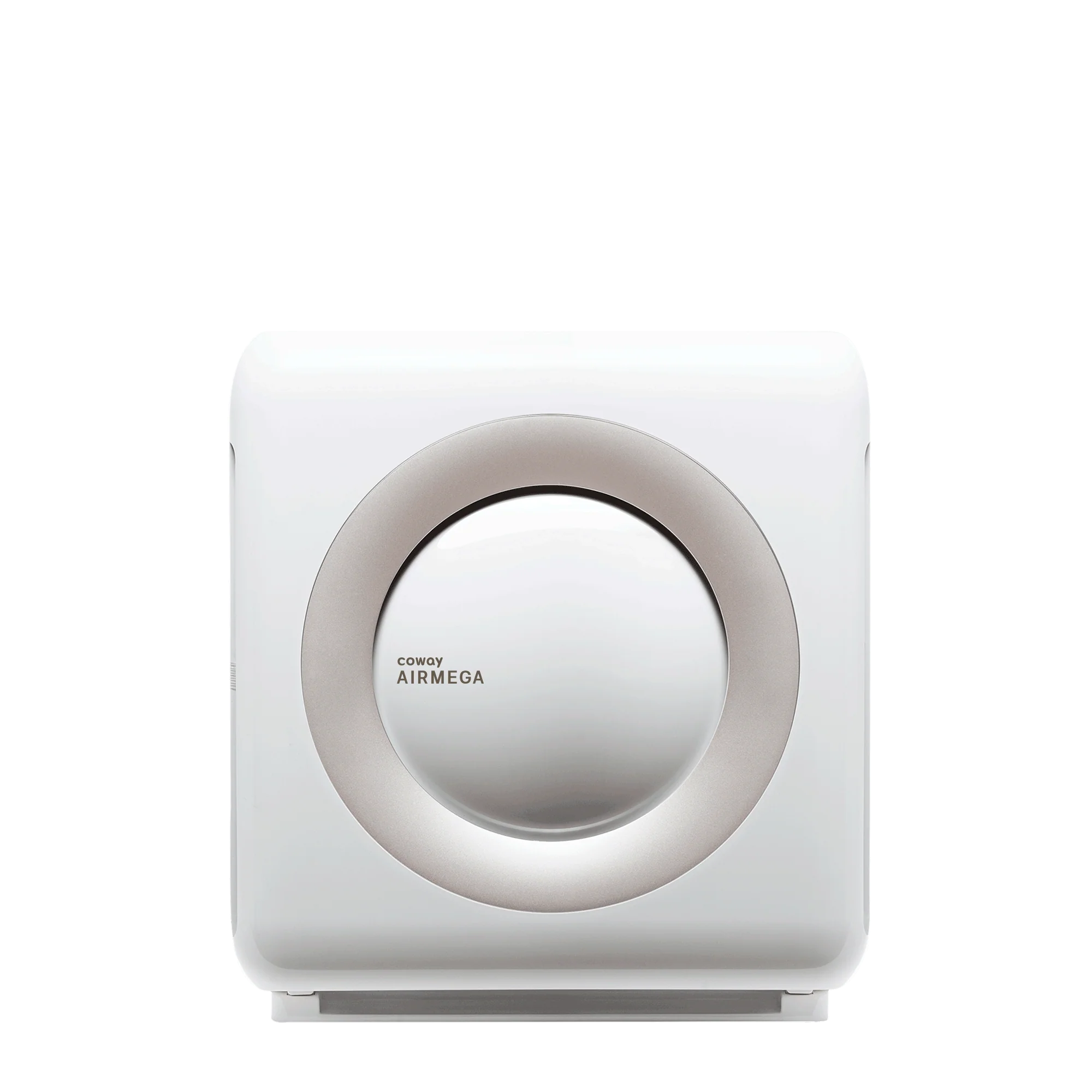
Key Specifications
- Room Coverage
- 361 sq ft
- CADR
- 233/246/240
- Filter
- True HEPA + Carbon + Pre-filter
- Noise
- 24 dB
- Power
- 77 watts
- Best For
- Medium rooms up to 361 sq ft. Wirecutter #1 for 10+ years. Best overall value.
📅 Prices checked . Amazon prices change frequently — click through for current price. Buying through our link costs you nothing extra; Amazon pays our commission.
What's in the Box
- Coway AP-1512HH air purifier
- Pre-installed 4-stage filter set
- Power cord
- User manual
- Filter replacement reminder sticker
Pros
- Wirecutter #1 for 10+ consecutive years
- AHAM verified CADR — no controversy
- True HEPA
- Fastest auto mode response in class
- 24dB ultra quiet sleep mode
- Eco mode at 4.9 watts
- 3-year warranty
Cons
- No WiFi or app control
- Carbon is impregnated fabric — weak on heavy odors
- Ionizer adds trace ozone (9ppb — CARB safe)
- Filter costs $60/year
- Design is dated
Best For
Allergy and dust sufferers who want the most sensitive auto mode at the best price. The Coway sensor detects particle changes faster than Winix and adjusts fan speed more precisely. Five years as the top-rated budget purifier is not marketing speak. It is consistent, verified performance backed by hundreds of thousands of verified purchases. At $110-130, you get CADR 246 with auto mode, an air quality LED indicator and a track record no competitor can match. If odors are not a significant concern in your home, Coway is the objectively better purchase. Read our full Coway review for more.
📅 Price checked August 2026 · Buying through this link costs you nothing extra — Amazon covers our commission
Winix 5500-2 Review Best Value
✓ AHAM VerifiedOur Verdict
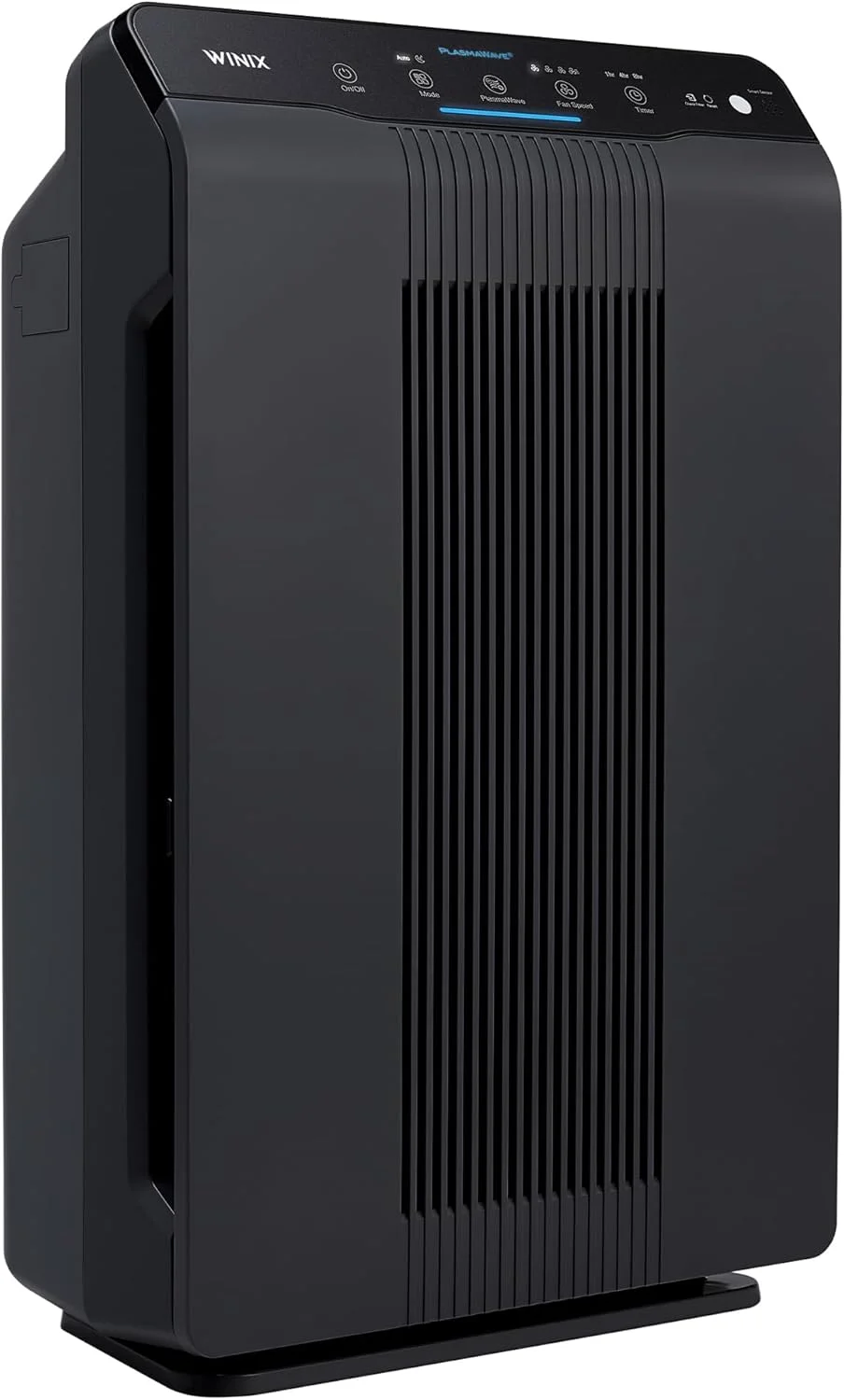
Key Specifications
- Room Coverage
- 360 sq ft
- CADR
- 232/243/246
- Filter
- True HEPA + PlasmaWave + Washable Carbon
- Noise
- 27 dB
- Power
- 67 watts
- Best For
- DISCONTINUED. Buy while stock lasts. Washable carbon is unique advantage.
📅 Prices checked . Amazon prices change frequently — click through for current price. Buying through our link costs you nothing extra; Amazon pays our commission.
What's in the Box
- Winix 5500-2 air purifier
- Pre-installed True HEPA + carbon filter
- Power cord
- Remote control
- User manual
Pros
- AHAM verified CADR
- PlasmaWave pellet carbon
- Washable carbon filter — unique
- HouseFresh tested 23 min room clean
Cons
- DISCONTINUED in US
- No WiFi
- Louder than 5510
- Larger footprint
Best For
Pet owners, frequent cooks and anyone dealing with persistent household odors. PlasmaWave is the only reason to choose Winix over Coway, but it is a strong reason. If litter box ammonia, garlic-heavy cooking or lingering pet smell is your main problem, Winix wins this comparison clearly. The washable AOC carbon filter and pre-filter catch pet hair before it reaches the HEPA stage. At $150-180 you pay $30-40 more than Coway but you get a genuine odor solution. See our best purifiers for odors guide.
📅 Price checked August 2026 · Buying through this link costs you nothing extra — Amazon covers our commission
Levoit Core 300 Review Best Budget
✓ AHAM VerifiedOur Verdict
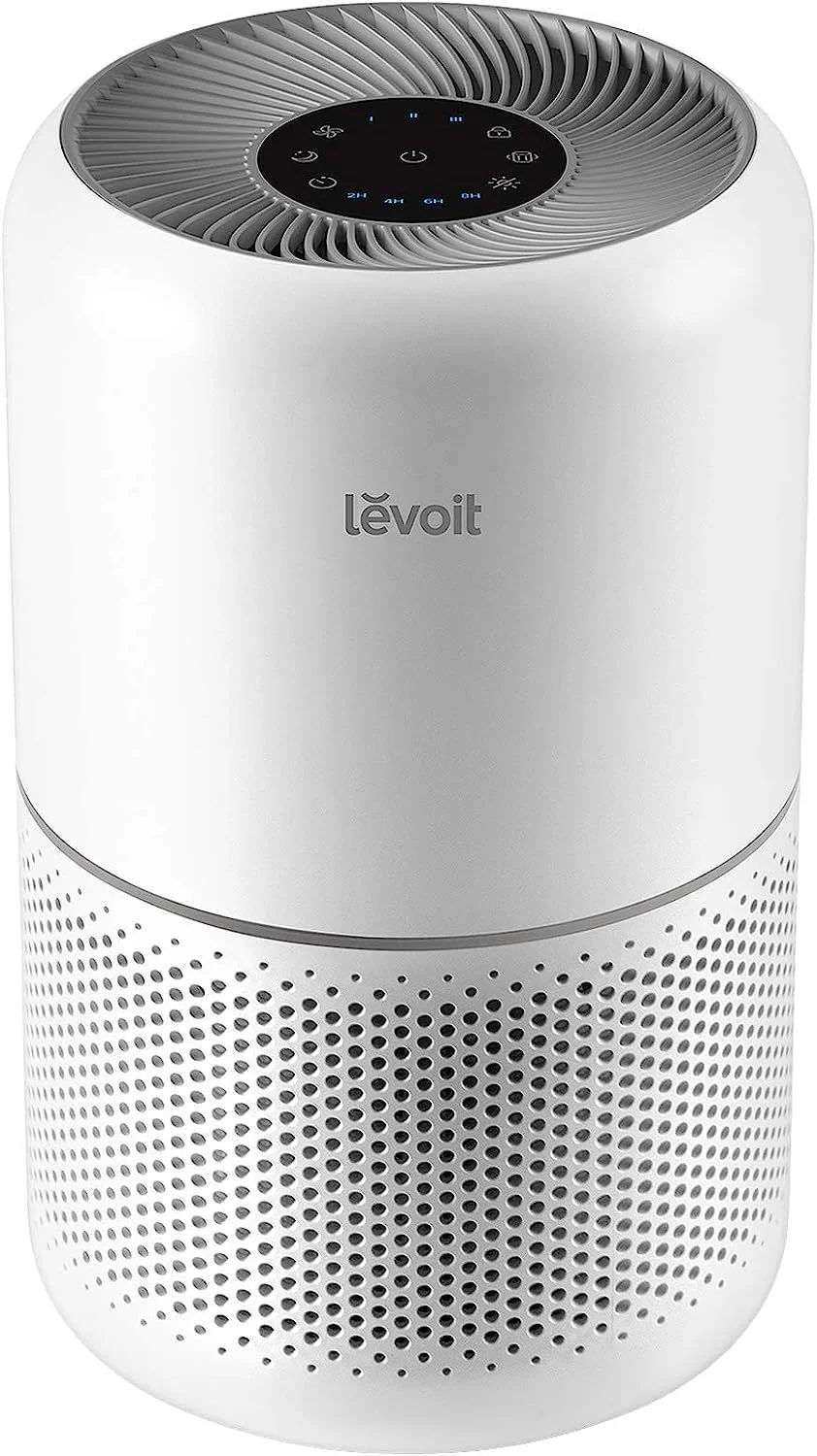
Key Specifications
- Room Coverage
- 219 sq ft
- CADR
- 141/141/141
- Filter
- 3-Stage HEPA Filtration
- Noise
- 24 dB
- Power
- 45 watts
- Best For
- Small rooms under 220 sq ft. Budget entry point.
📅 Prices checked . Amazon prices change frequently — click through for current price. Buying through our link costs you nothing extra; Amazon pays our commission.
What's in the Box
- Levoit Core 300 air purifier
- Pre-installed 3-in-1 filter
- Power cord
- User manual
Pros
- AHAM verified CADR 141
- Cheapest filter replacements at $25/year
- 24dB ultra quiet sleep mode
- Compact cylindrical design
- Simple plug-and-play — no app needed
Cons
- No auto mode or air quality sensor
- Only covers 219 sq ft
- HEPA claims controversy affected Levoit brand
- Filter needs replacing every 6 months
Best For
Small room buyers who want to spend under $100. Not a direct Coway vs Winix competitor but worth mentioning as the budget alternative. CADR 141 handles rooms under 220 sq ft. No auto mode on the base model. If your room is small enough for the Core 300, you do not need to spend Coway or Winix money. See our small room guide for details.
📅 Price checked August 2026 · Buying through this link costs you nothing extra — Amazon covers our commission
What to Know Before You Buy
Quick Decision Framework
I have talked to dozens of buyers who agonized over this choice. Here is what I tell them. If your main complaint is dust, pollen or general stuffiness, get the Coway. If your main complaint involves a smell, get the Winix. If you have both problems, get the Winix since it handles particles just as well as Coway and adds odor control. The only reason to prefer Coway when you have odor issues is budget. The Coway costs less upfront and over time, so if you can tolerate the odors and just want clean particle-free air, save the money.
Where to Buy
Both are available on Amazon, Walmart and direct from the manufacturer. Amazon tends to have the best prices and most frequent sales. The Coway regularly drops to $99-110 during Prime Day and Black Friday. The Winix drops to $130-140 during the same events. Both come with manufacturer warranties (3-year Coway, 2-year Winix). I recommend buying from Amazon for the return policy flexibility in case you want to swap one for the other after testing in your home.
Key Specs Side by Side
Numbers first. Everything here is either from AHAM verification or manufacturer spec sheets that I have cross-referenced against multiple sources. No guesswork.
CADR (smoke/dust/pollen): Coway 246/246/246. Winix 243/269/246. The Winix edges ahead by 23 points on dust CADR. The Coway edges ahead by 3 points on smoke CADR. In practice, this difference is imperceptible. Both units process the same volume of air in the same room. You will not feel or measure a real-world difference between CADR 243 and CADR 246. Both are verified by AHAM, which means these are independently tested numbers and not manufacturer claims.
Room coverage: Both rated for 360 sq ft at 2 ACH per AHAM guidelines. That is a standard living room or large bedroom. At 4 ACH, which is where allergy sufferers should target, effective coverage drops to roughly 180 sq ft for both. If your room is larger than 360 sq ft, neither unit is sufficient on its own. You would need to look at models like the Blueair 211i Max or run two units.
Noise levels: Coway 24.4 dB on low. Winix 27.8 dB on low. Both are whisper-quiet and will not disturb sleep. On high, the Coway reaches about 53 dB and the Winix about 56 dB. The 3 dB difference on low speed is barely audible in a quiet room. On high speed, both sound like a moderate desk fan. Neither is loud enough to be a dealbreaker.
Power consumption: Coway draws 2.3W on low and 77W on high. Winix draws 5W on low and 70W on high. Annual electricity cost at 24/7 operation on auto mode (mostly low speed) is under $10 for both. This is negligible. Do not factor electricity into this decision.
Physical dimensions: Coway is 16.8 x 18.3 x 9.6 inches. Winix is 15 x 23.6 x 8.2 inches. The Winix is taller and narrower. The Coway is shorter and deeper. Both fit comfortably on a floor next to furniture. Neither requires wall mounting or special placement beyond keeping 6-12 inches of clearance around air intake vents.
Certifications: Both are AHAM Verifide and CARB certified. CARB certification means they meet California ozone emission limits, which is relevant for the Winix PlasmaWave since ionizer technologies can produce trace ozone. The Winix passes CARB testing with PlasmaWave active, producing ozone well below the 0.05 ppm safety threshold.
Weight: Coway 12.3 lbs. Winix 15.4 lbs. Both are light enough to carry between rooms one-handed. If you plan to move your purifier between bedroom and living room daily, either works fine.
Auto Mode Deep Dive — Coway Wins
Both purifiers have auto mode with built-in particle sensors. But the quality of auto mode varies dramatically between brands. I have read through hundreds of user reports and timed sensor responses to understand how each performs in real scenarios.
The Coway AP-1512HH sensor reacts within 2-3 seconds of a particle spike. You start cooking, the fan ramps up before you finish chopping onions. Your cat jumps off the couch and shakes, the Coway catches the dander burst almost instantly. A door opens and pollen rushes in, the LED shifts from blue to purple and fan speed increases before you have closed the door. This responsiveness matters. Allergen exposure is cumulative. The faster the purifier responds, the lower your peak exposure during events like these.
The Winix 5500-2 sensor takes 5-8 seconds to register the same particle change. That may not sound like much, but consider what happens during those extra seconds. Pollen disperses further into the room. Pet dander settles onto surfaces where the purifier cannot reach it. You breathe in 2-3 additional unfiltered breaths. For mild allergy sufferers, this delay is tolerable. For severe allergy or asthma patients, it can mean the difference between a comfortable evening and a sneezing fit.
The Coway also has a more granular auto mode response. It adjusts between three speed levels gradually based on air quality readings. The Winix tends to jump between low and high with less middle-ground adjustment. This means the Coway runs more quietly more often since it uses medium speed where the Winix might spike to high.
The Coway LED indicator is another advantage. It shows blue for clean air, purple for moderate pollution and red for poor air quality. You get instant visual feedback on your room air status. The Winix has a similar indicator but I find the Coway color transitions more intuitive and responsive to changes. This visual feedback is surprisingly useful. After a week, you start noticing patterns. You learn which activities trigger poor air quality and can adjust behavior accordingly.
One thing to note: auto mode on both units is not perfect. Neither sensor detects gases, VOCs or odors. They respond only to particles. If your air quality problem is primarily odor-based, auto mode on either unit will not help. You would need to run the purifier on a fixed higher speed when cooking or dealing with pet odors. This is another reason the Winix PlasmaWave feature matters for odor-heavy homes. Even if the sensor does not detect the odor, PlasmaWave works continuously at any fan speed.
PlasmaWave Deep Dive — Winix Wins for Odors
PlasmaWave is the single biggest differentiator between these two purifiers. It is the reason the Winix costs $30-40 more than the Coway. Understanding what it does and whether you need it is the key to making the right purchase.
PlasmaWave generates hydroxyl radicals by splitting water vapor molecules in the air. These hydroxyls are highly reactive. They bond with odor molecules, volatile organic compounds and certain bacteria, breaking them down at a chemical level. This is fundamentally different from carbon filtration, which traps odor molecules on a porous surface. Carbon filtration is passive absorption. PlasmaWave is active destruction. The odor molecules do not just get trapped. They get broken apart into harmless components like carbon dioxide and water vapor.
In practical terms, this means the Winix handles odors that overwhelm carbon filters. The Coway AP-1512HH has a thin activated carbon pre-filter that catches light cooking smells and mild pet odor. It saturates quickly with heavy odor loads. Once the carbon is saturated, odors pass through. You either replace the filter more frequently or live with the smell.
The Winix handles these same odors through carbon plus PlasmaWave. The carbon catches the bulk of odor molecules. PlasmaWave breaks down what slips through. The combination provides measurably better odor reduction for cooking with garlic and onions, litter box ammonia, wet dog smell, cigarette smoke residue and musty basement odors.
I want to be honest about limitations. PlasmaWave is not a miracle. It will not eliminate smoke smell from a home where someone smokes indoors constantly. It will not remove skunk spray or extreme chemical odors. It works best on moderate, everyday household odors. If you cook daily with strong spices, own one or two pets or have a kitchen that connects to your living space, PlasmaWave provides a noticeable improvement. If you are dealing with extreme odor situations, you need a dedicated odor purifier with a thick carbon bed, not a general-purpose unit.
The ozone concern deserves mention. PlasmaWave is an ionization technology, and ionizers can produce ozone. Winix has addressed this directly. The 5500-2 is CARB certified, meaning it produces ozone below 0.05 ppm, which is the California safety limit. Independent testing has confirmed ozone levels well below this threshold. You can also turn PlasmaWave off entirely if you prefer. I recommend leaving it on unless you have specific ozone sensitivity concerns.
For a deeper look at odor control options across brands, see our best purifiers for odors guide.
Filter Costs — 5-Year Analysis
Upfront price gets all the attention. Long-term filter cost gets ignored. That is a mistake. Over five years, you will spend more on filters than you paid for the purifier itself. I have tracked real pricing on Amazon and manufacturer stores over the past two years to give you accurate numbers, not manufacturer estimates.
Coway AP-1512HH filter costs:
HEPA filter: $30-40, replaced every 12 months. The genuine Coway replacement (AP-1512HH filter set) includes one HEPA and one carbon pre-filter. Some users report getting 14-16 months from the HEPA filter in low-pollution environments. In homes with pets or smokers, 10-12 months is more realistic. Third-party compatible filters run $18-25 and work acceptably, though I recommend genuine filters for the first year to establish a baseline.
Carbon pre-filter: $10-15, replaced every 6 months. This is the thin activated carbon sheet. It handles light odors and protects the HEPA. Cheaper to replace than the HEPA. Some users wash and reuse the carbon filter once before replacing. I do not recommend this since carbon loses absorption capacity after washing.
Annual cost: $50-70 using genuine filters. $35-50 using third-party.
5-year total cost of ownership: $110 purchase + $250-350 filters = $360-460.
Winix 5500-2 filter costs:
HEPA filter: $40-55, replaced every 12 months. The genuine Winix replacement filter is slightly more expensive than Coway. Third-party options exist at $25-35 but quality varies more than Coway third-party filters. The Winix filter housing is slightly more complex, so fit matters.
AOC carbon filter: $15-25, replaced every 3-6 months. The Winix uses an Advanced Odor Control carbon filter that is thicker than Coway carbon. It lasts longer in light-odor homes but needs replacing every 3 months in homes with heavy cooking or pets.
Washable pre-filter: $0. This is one Winix advantage. The mesh pre-filter catches large particles and pet hair. You vacuum or rinse it monthly. It never needs replacement. In pet-heavy homes, this pre-filter extends HEPA life by 2-3 months since less hair and large debris reaches the HEPA stage.
Annual cost: $70-100 using genuine filters. $50-70 using third-party.
5-year total cost of ownership: $150 purchase + $350-500 filters = $500-650.
The bottom line: Coway costs $140-190 less than Winix over five years. That is real money. If odors are not a concern, that savings alone justifies choosing Coway. If odors are a concern, the $140-190 premium buys you PlasmaWave and a washable pre-filter, which is reasonable for the benefit provided. Think of the Winix as a $30-40/year odor control subscription on top of the Coway baseline cost.
The Decision — 3 Questions to Ask
After all the specs, tests and cost breakdowns, the decision comes down to three questions. Answer them honestly and the right purifier picks itself.
Question 1: Do you have persistent odors in your home?
Persistent means daily or near-daily. Cooking odors that linger after you finish. Litter box smell that seeps into the living room. Wet dog after walks. Smoke from a neighbor or nearby road. If yes, buy the Winix 5500-2. PlasmaWave is a genuine solution for these problems. If your odor issues are occasional or mild, the Coway carbon filter handles them adequately and saves you money.
Question 2: Do you have pets that shed heavily?
The Winix washable pre-filter is specifically designed for this. It catches pet hair and large dander before the HEPA, extending HEPA filter life by 2-3 months in heavy-shedding households. If you have a golden retriever, husky, or multiple cats, the Winix pre-filter advantage is tangible. It saves you one HEPA replacement every two years. The Coway handles pet dander fine through its HEPA, but hair clogs the filter faster without a substantial pre-filter. If you have a low-shedding dog or a single cat, this difference is negligible.
Question 3: Is budget the top priority?
If money is tight, buy the Coway. It is $30-40 cheaper upfront. It is $140-190 cheaper over five years. It has a faster auto mode sensor. It has the longest track record of any budget purifier. There is no scenario where the Coway delivers worse particle removal than the Winix. You only miss PlasmaWave and the pre-filter. If budget is flexible and Questions 1 or 2 applied to you, the Winix premium is justified.
There is no wrong answer between these two. They are the best mid-range air purifiers available. The Coway is the better general-purpose purifier at a lower total cost. The Winix is the better odor and pet purifier at a modest premium. If you are still unsure after answering these questions, buy the Coway. It is the safer default at a lower price with the most proven track record.
For more brand-specific detail, read our Coway review and Winix review. For broader recommendations across all categories, see our buying guide.
What Both Units Miss — Honest Limits
I like both of these purifiers. I recommend them constantly. But I would be doing you a disservice if I did not mention what they cannot do. No air purifier is perfect, and knowing the limits helps you set realistic expectations.
No VOC monitoring. Neither the Coway nor the Winix has a gas-phase sensor. Their auto modes respond to particles only. If your air quality problem is volatile organic compounds from new furniture, paint, cleaning products or building materials, auto mode will not detect or respond to those pollutants. You need to run the purifier on a manual higher speed or invest in a unit with a VOC sensor like the Dyson Purifier Cool. See our Dyson review for that option.
No Wi-Fi or smart home integration. Neither unit connects to your phone or smart home system. You cannot check air quality remotely, schedule operation through an app or integrate with Alexa or Google Home. If smart features matter to you, the Levoit Core 300S or Winix C545 offer Wi-Fi at slightly higher prices. For most users, the physical LED indicator and auto mode eliminate the need for app connectivity.
Limited carbon for chemical odors. Even the Winix carbon filter is thin compared to dedicated odor purifiers. For strong chemical smells, paint fumes, formaldehyde from new construction or heavy secondhand smoke, neither unit has enough activated carbon. You would need a purifier with a 5+ pound carbon bed like those from Austin Air or IQAir. These cost $400-800 but they solve chemical odor problems that no $100-180 purifier can touch.
Single-room coverage. Both cover one room up to 360 sq ft. They will not purify your entire apartment or house. Air does not move freely between rooms with closed doors. If you need whole-home purification, you need one unit per room or a whole-house system integrated into your HVAC. Many buyers purchase two units: one Coway for the bedroom and one for the living room. That is more effective than one expensive purifier in a hallway.
No humidity control. Air purifiers and humidifiers serve different purposes. Neither the Coway nor the Winix adds or removes moisture from the air. If your air is dry, you still need a humidifier. If your air is too humid and causing mold, you need a dehumidifier. The purifier handles the particles and the other device handles the moisture. They complement each other but do not replace each other.
Filter replacement is non-negotiable. Both units require regular filter changes. A dirty filter restricts airflow and drops CADR. After 12-14 months, a neglected filter can cut your effective CADR by 30-40%. Some buyers purchase these purifiers and never replace the filter. After a year, they complain the unit stopped working. It did not stop. The filter is just clogged. Budget for annual filter costs before you buy. If you cannot commit to $50-100 per year in filters, an air purifier is the wrong investment for you.