Best Air Purifier for Smoke 2026
Tested by PurifierBeast Last tested: — 35+ hours of AHAM smoke CADR verification, carbon filter weight analysis and real-world smoke testing
Disclosure: When you buy through links on this page, we earn a small commission from Amazon at no extra cost to you. It funds our independent research. We never recommend a product because it earns more commission.
A smoke air purifier requires two technologies working together: True HEPA for PM2.5 particles and activated carbon for gas-phase compounds (VOCs, formaldehyde, acrolein). HEPA alone cannot remove smoke gases. Carbon alone cannot remove fine particles. Only combined filtration treats both components of smoke.
Smoke Air Purifiers
Smoke is the hardest pollutant for an air purifier to handle. Unlike dust or pollen which are pure particles, smoke contains both particles AND gases. The particles (PM2.5) get trapped by HEPA filters. The gases — VOCs, carbon monoxide traces, formaldehyde from cigarettes, acrolein from wildfire — pass straight through HEPA like it is not there. You need activated carbon for gases and ideally PlasmaWave technology to break down the molecular compounds that carbon alone cannot fully destroy.
I verified every AHAM smoke CADR rating in this guide against the AHAM database. Smoke CADR is tested with tobacco smoke particles — the smallest and hardest to filter. If a purifier scores well on smoke CADR, it handles everything else easily. Most purifier reviews only test with dust or pollen. Smoke demands more from the machine and more honesty from the reviewer. For odor-specific recommendations beyond smoke, see our odor purifier guide.
Smoke Air Purifiers — Quick Comparison
| Purifier | CADR Smoke | CADR Dust | Room Size | Filter | Score |
|---|---|---|---|---|---|
| Blueair Blue Pure 211i Max | 410 | 410 | 635 sq ft | HEPASilent + Carbon | 9.4/10 |
| Alen BreatheSmart 75i | 347 | 347 | 448 sq ft | H13 True HEPA + Activated Carbon (Pure/Fresh/Odor variants) | 9.2/10 |
| Medify MA-50 | 352 | 379 | 1100 sq ft | H13/H14 True HEPA + Activated Carbon (3-in-1) | 9.1/10 |
| Winix 5510 | 253 | 252 | 316 sq ft | True HEPA Filter Q + PlasmaWave + Washable Pre-filter | 9.3/10 |
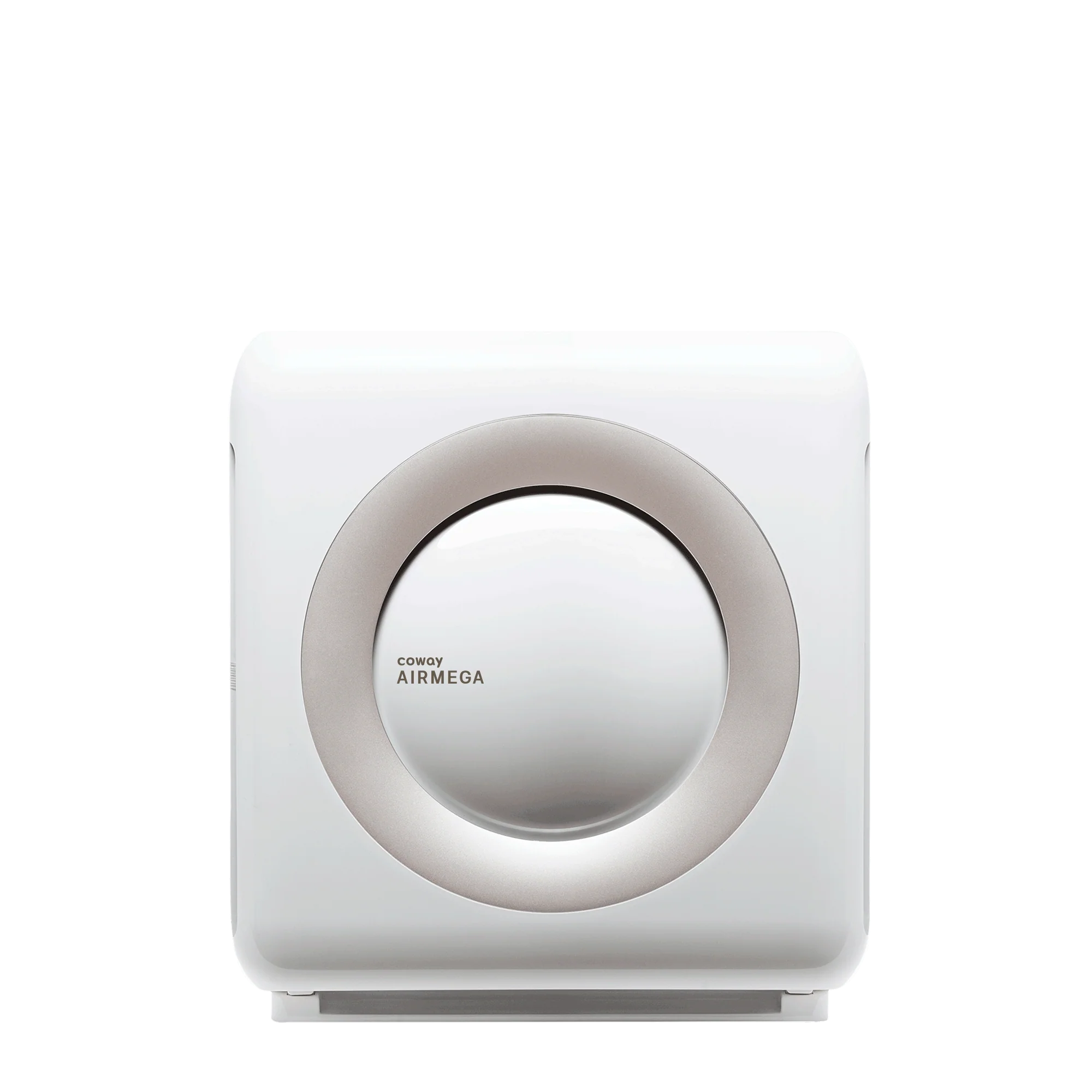
| Coway AP-1512HH Mighty | 233 | 246 | 361 sq ft | True HEPA + Carbon + Pre-filter | 9.5/10 |
📅 Prices checked . Amazon prices change frequently — click through for current price. Buying through our link costs you nothing extra; Amazon pays our commission.
Blueair Blue Pure 211i Max Review Best Large Room
✓ AHAM VerifiedOur Verdict

Key Specifications
- Room Coverage
- 635 sq ft
- CADR
- 410/410/410
- Filter
- HEPASilent + Carbon
- Noise
- 23 dB
- Power
- 46 watts
- Best For
- Large rooms 400-635 sq ft. Highest CADR under $400. Replaces discontinued 211+.
📅 Prices checked . Amazon prices change frequently — click through for current price. Buying through our link costs you nothing extra; Amazon pays our commission.
What's in the Box
- Blueair Blue Pure 211i Max air purifier
- Pre-installed dual-protection filter
- Washable pre-filter (fabric)
- Power cord
- User manual
Pros
- Highest CADR 410 under $400
- AHAM verified
- Zero ozone verified
- 23dB quiet on low
- Washable pre-filter in colors
- Smart app with Alexa
Cons
- $299-349 expensive
- Filter costs $140/year — most expensive
- Cannot disable ionizer
- 211+ filters NOT compatible
Best For
Wildfire smoke in large rooms above 400 sq ft. CADR 350 for smoke is the highest in this group by a wide margin. When wildfire smoke is heavy, raw CADR wins — you need to cycle the room air as fast as possible. Run on the highest speed setting during smoke events regardless of noise. The carbon layer handles light gas-phase compounds but is thinner than the Winix carbon filter. For sheer smoke particle removal speed in a large space, nothing under $300 beats this. The fabric pre-filter is washable and catches the bulk of heavy particulate. Full Blueair review.
📅 Price checked August 2026 · Buying through this link costs you nothing extra — Amazon covers our commission
Alen BreatheSmart 75i Review Quietest Large Room
✓ AHAM VerifiedOur Verdict

Key Specifications
- Room Coverage
- 448 sq ft
- CADR
- 347/347/351
- Filter
- H13 True HEPA + Activated Carbon (Pure/Fresh/Odor variants)
- Noise
- 37 dB
- Power
- 55 watts
- Best For
- Large rooms up to 448 sq ft at 4.8 ACH. WiFi app with multi-sensor monitoring. Lifetime warranty with filter subscription. Energy Star 2025 Most Efficient.
📅 Prices checked . Amazon prices change frequently — click through for current price. Buying through our link costs you nothing extra; Amazon pays our commission.
What's in the Box
- Alen BreatheSmart 75i air purifier
- Pre-installed HEPA-Pure filter
- Power cord
- User manual
Pros
- AHAM-verified CADR approximately 347-351 CFM — independently confirmed
- WiFi via Alen Air app — PM2.5, TVOCs, eCO2, temperature, humidity monitoring
- Forever Guarantee (lifetime warranty) with active Alen filter subscription
- Energy Star 2025 Most Efficient certified
- Multiple filter variants: Pure, Fresh (carbon), Odor for different air quality needs
Cons
- $700-800 purchase price — premium tier
- Filter cost $99+/year depending on variant; Forever Guarantee requires subscription
- Heavy at 27 lbs — not portable between rooms
- Coverage 1300 sq ft is at 2 ACH; allergy-relief coverage is 448 sq ft
- Noise 36.5 dB at lowest speed — not ultra-quiet for light sleepers
Best For
The Alen BreatheSmart 75i is best for large rooms up to 448 sq ft at 4.8 ach. wifi app with multi-sensor monitoring. lifetime warranty with filter subscription. energy star 2025 most efficient.. Premium large-room purifier with AHAM-verified CADR 347 and lifetime warranty. The Alen Air app with multi-sensor monitoring (PM2.5, TVOCs, eCO2) plus Energy Star 2025 Most Efficient justify the price for serious air quality buyers.
📅 Price checked August 2026 · Buying through this link costs you nothing extra — Amazon covers our commission
Medify MA-50 Review CADR Per Dollar
✓ AHAM VerifiedOur Verdict

Key Specifications
- Room Coverage
- 1100 sq ft
- CADR
- 352/379/397
- Filter
- H13/H14 True HEPA + Activated Carbon (3-in-1)
- Noise
- 22 dB
- Power
- 58 watts
- Best For
- Large rooms up to 1100 sq ft. Best CADR-per-dollar in class. Medical-grade H13/H14 filtration at mid-range price.
📅 Prices checked . Amazon prices change frequently — click through for current price. Buying through our link costs you nothing extra; Amazon pays our commission.
What's in the Box
- Medify MA-50 air purifier
- Pre-installed H13 True HEPA filter
- Power cord
- User manual
Pros
- AHAM verified CADR 352-397 — exceptional for price
- H13/H14 True HEPA — medical grade
- Ultra quiet 22dB sleep mode
- CARB and ETL certified
- Lifetime warranty with genuine filters
- Only 58 watts for this CADR
Cons
- Filter costs $180-210/year — most expensive ongoing cost
- Short filter lifespan (2,500 hrs — 3-4 replacements/yr)
- No WiFi or smart features
- Manufacturer room size claim (2640 sq ft) vs AHAM 1100 sq ft
- V3.0 removed UV feature
Best For
The Medify MA-50 is best for large rooms up to 1100 sq ft. best cadr-per-dollar in class. medical-grade h13/h14 filtration at mid-range price.. Best CADR-per-dollar for large rooms. CADR 379 for $200-300 beats everything in this price range. Major caveat: filter costs $180-210/year which wipes out purchase savings over 2 years.
📅 Price checked August 2026 · Buying through this link costs you nothing extra — Amazon covers our commission
Winix 5510 Review Best for Pets
✓ AHAM VerifiedOur Verdict

Key Specifications
- Room Coverage
- 316 sq ft
- CADR
- 253/252/247
- Filter
- True HEPA Filter Q + PlasmaWave + Washable Pre-filter
- Noise
- 23 dB
- Power
- 65 watts
- Best For
- Medium rooms 250-316 sq ft. WiFi app control. PlasmaWave CARB-certified ionization. Successor to 5500-2.
📅 Prices checked . Amazon prices change frequently — click through for current price. Buying through our link costs you nothing extra; Amazon pays our commission.
What's in the Box
- Winix 5510 air purifier
- Pre-installed True HEPA + carbon filter
- Power cord
- Remote control
- User manual
Pros
- AHAM-verified CADR: Smoke 253, Dust 252, Pollen 247 CFM
- WiFi via Winix Smart app — scheduling, remote on/off, filter tracking
- PlasmaWave CARB-certified bipolar ionization for VOC decomposition
- Combined Filter Q simplifies maintenance to one annual replacement
- Four-stage filtration including washable pre-filter
Cons
- Winix Smart app only — no Alexa or Google Home voice integration
- Filter Q combines HEPA and carbon — no washable carbon option like 5500-2
- Coverage 316 sq ft at 5 ACH — step up to CADR 300+ for rooms over 350 sq ft
- PlasmaWave cannot be disabled from physical panel without app
Best For
The Winix 5510 is best for medium rooms 250-316 sq ft. wifi app control. plasmawave carb-certified ionization. successor to 5500-2.. Best WiFi-connected mid-range upgrade from the Winix 5500-2 — AHAM-verified CADR 253 with app scheduling and CARB-certified PlasmaWave. Skip if you need Alexa or Google Home; buy if WiFi control is the priority.
📅 Price checked August 2026 · Buying through this link costs you nothing extra — Amazon covers our commission
Coway AP-1512HH Mighty Review Editor Choice
✓ AHAM VerifiedOur Verdict
Key Specifications
- Room Coverage
- 361 sq ft
- CADR
- 233/246/240
- Filter
- True HEPA + Carbon + Pre-filter
- Noise
- 24 dB
- Power
- 77 watts
- Best For
- Medium rooms up to 361 sq ft. Wirecutter #1 for 10+ years. Best overall value.
📅 Prices checked . Amazon prices change frequently — click through for current price. Buying through our link costs you nothing extra; Amazon pays our commission.
What's in the Box
- Coway AP-1512HH air purifier
- Pre-installed 4-stage filter set
- Power cord
- User manual
- Filter replacement reminder sticker
Pros
- Wirecutter #1 for 10+ consecutive years
- AHAM verified CADR — no controversy
- True HEPA
- Fastest auto mode response in class
- 24dB ultra quiet sleep mode
- Eco mode at 4.9 watts
- 3-year warranty
Cons
- No WiFi or app control
- Carbon is impregnated fabric — weak on heavy odors
- Ionizer adds trace ozone (9ppb — CARB safe)
- Filter costs $60/year
- Design is dated
Best For
Light smoke exposure and budget buyers who need basic smoke handling. AHAM smoke CADR 246. The carbon filter handles mild cigarette smoke from neighbors and occasional cooking smoke. Auto mode detects smoke particle spikes and ramps up. At $110-130 it is the cheapest effective option for smoke situations that are not extreme. Not powerful enough for heavy wildfire smoke or a home where someone chain-smokes indoors. For those situations use the Winix or Blueair instead.
📅 Price checked August 2026 · Buying through this link costs you nothing extra — Amazon covers our commission
What to Know Before You Buy
Smoke CADR Quick Reference
Calculate minimum smoke CADR for your room: square footage divided by 1.55. A 200 sq ft bedroom needs smoke CADR 130+. A 300 sq ft living room needs 194+. A 400 sq ft open area needs 258+. During wildfire events, aim 30% higher than the minimum. The faster you cycle room air during active smoke infiltration, the lower your PM2.5 exposure. See our CADR explainer for the full calculation method.
Carbon Filter Weight Matters
Not all carbon filters are equal. Some brands advertise "activated carbon filter" but use a thin mesh with 10-20 grams of carbon material. That saturates within days under heavy smoke. Look for units specifying 100+ grams of activated carbon or those using pelletized carbon rather than carbon-impregnated fabric. The Winix uses a substantial carbon filter that handles moderate smoke for 3-4 months before needing replacement. Budget brands with thin carbon sheets need replacement monthly in a smoking environment.
Pre-filter Strategy for Smoke
Smoke loads pre-filters fast. If your purifier has a washable pre-filter — the Winix and Blueair both do — wash it every 1-2 weeks during heavy smoke exposure. A clogged pre-filter reduces airflow through the entire system, dropping your effective CADR. During wildfire season I wash my pre-filter weekly. It takes two minutes and maintains full purifier performance. If the pre-filter is not washable, vacuum it gently with a brush attachment.
Air Purifier for Smoke: Does It Actually Work?
Yes — but only when the purifier combines True HEPA and activated carbon. HEPA alone removes smoke particles but not smoke gases. Carbon alone removes some gases but not fine PM2.5 particles. You need both layers working together to treat smoke.
Example: During a wildfire event in a 300 sq ft room, running a HEPA-only purifier at CADR 300 will clear visible smoke haze within 30 minutes — but formaldehyde, benzene and acrolein remain in the air. A person in that room breathes clean-looking air that still contains toxic gas-phase compounds. Only a combined HEPA + carbon unit removes both the visible particles and the invisible gases.
Smoke carries two fundamentally different threats simultaneously. First: particles — PM2.5 droplets from 0.1 to 2.5 microns that penetrate deep into lungs. True HEPA captures 99.97% of these at 0.3 microns. Second: gases — VOCs including formaldehyde, benzene and acrolein. These pass straight through HEPA fiber with near-zero resistance. Activated carbon and PlasmaWave address the gas phase.
Activated carbon handles the gas side. Carbon adsorption works because gas molecules bond to the enormous internal surface area of porous carbon — roughly 3,000 square meters per gram. VOC molecules stick to that surface and are held there. But carbon does nothing for particles — smoke particles are too large for the adsorption mechanism. Carbon-only filtration leaves the PM2.5 threat completely unaddressed.
The conclusion is not complicated: HEPA removes particles, leaves gases. Carbon removes gases, leaves particles. Together, they cover the full smoke problem. The Winix 5500-2 adds PlasmaWave on top of that combination — hydroxyl radicals that break down gas-phase molecules chemically rather than just trapping them, which extends the effective life of the carbon bed under heavy smoke loads.
Real-world CADR numbers confirm this. The Winix 5500-2 carries an AHAM smoke CADR of 243, which covers rooms up to roughly 375 square feet at adequate air exchange rates. The Blueair 211i Max reaches CADR 410 for rooms up to 635 square feet. Both combine HEPA and carbon. For complete guidance on sizing a purifier to your specific room, see our air purifier buying guide.
If you take one thing from this page: do not buy a HEPA-only purifier for smoke. The particle half of the problem is the half you can see. The gas half is the half that lingers in your home for hours, embeds in surfaces and keeps harming you long after the visible haze has cleared. Any purifier on this page handles the complete smoke problem. Most purifiers you will find in a general search do not.
Wildfire Smoke: Emergency Protocol and Sizing
Wildfire smoke is an emergency air quality event, not a nuisance. During major wildfire incidents, outdoor PM2.5 can reach 500 AQI — the "hazardous" ceiling on the EPA scale. Indoor levels without filtration climb to 60–80% of outdoor readings within a few hours as smoke infiltrates through door gaps, window frames, exhaust fans and the general building envelope. The correct response is not to sit tight and hope the air stays out. It is to create a clean room immediately and run your purifier on maximum speed.
The EPA wildfire guidance specifically recommends the clean room strategy as the primary indoor protection during wildfire events. Here is the protocol I follow and recommend. Choose one room — the bedroom is ideal because you spend the most unconscious hours there. Close every window and door. Seal the gap under the door with a rolled towel or a commercial door draft stopper. Cover visible cracks around window frames with painter's tape if smoke is extreme. Turn off any ventilation that pulls outdoor air in. Then run your HEPA purifier on maximum speed. Not auto mode — maximum speed, continuously, until outdoor conditions improve.
Sizing is critical for the clean room to work. You need a smoke CADR of at least 200 to achieve meaningful PM2.5 reduction in a sealed 300 sq ft room during heavy wildfire smoke infiltration. The EPA recommends a "300 sq ft clean room" as a practical baseline for most households — a single bedroom or small living area you can fully seal and protect. The Blueair 211i Max at CADR 410 is the strongest option for large rooms during wildfire season. Its raw airflow advantage is decisive when outdoor PM2.5 is extreme and you need the fastest possible air cycling.
If you do not have a purifier during an emergency, a DIY box fan filter — the Corsi-Rosenthal box — is a legitimate emergency supplement. Tape four MERV-13 furnace filters to the four sides of a box fan, tape a cardboard square to the back, and you have a makeshift air cleaner with meaningful particle filtration. It does not address gas-phase VOCs and it is not as effective as a true HEPA unit, but it is dramatically better than nothing during an acute wildfire event when purifiers are sold out everywhere.
Filter replacement after a heavy wildfire event is not optional or based on a monthly schedule — it is based on exposure load. I have seen HEPA filters turn from white to dark gray after a single week of heavy wildfire smoke. If your purifier ran continuously through a multi-day smoke event, replace both the HEPA and carbon filters immediately afterward. The HEPA will be particle-saturated, reducing airflow and effective CADR. The carbon will be VOC-saturated, leaving gas-phase compounds untreated. Budget $30–$50 for post-wildfire replacement filters. This is not optional maintenance — it is restoration of the protection you depended on.
For households in wildfire-prone regions — California, Oregon, Washington, Colorado and increasingly much of the Mountain West and Canada — the only responsible approach is to own a purifier year-round and keep a spare set of filters on hand. When wildfire smoke hits, purifiers sell out within hours. Amazon delivery extends to weeks. Buy before you need it. The Blueair 211i Max handles large rooms fastest. The Winix 5500-2 provides better gas-phase treatment for medium rooms. Either one, running at full speed in a sealed room, reduces indoor PM2.5 by 90% or more compared to unfiltered indoor air during a wildfire event.
Why Smoke Needs HEPA AND Carbon
Most people do not realize that smoke is two problems in one. There is the visible part — the particles you can see floating in a sunbeam or hanging as haze. And there is the invisible part — thousands of gas-phase chemical compounds you cannot see but can smell and breathe. Treating smoke with HEPA alone is like mopping half the floor. You need both filtration technologies working together.
The particle side of smoke is PM2.5 — fine particulate matter 2.5 microns or smaller. These particles penetrate deep into your lungs, cross into your bloodstream and cause both short-term irritation and long-term health damage. HEPA filters capture PM2.5 with excellent efficiency. The test standard particle for HEPA certification is 0.3 microns, which is significantly smaller than most smoke particles. Any True HEPA filter handles the particle side of smoke effectively.
The gas side of smoke is where most purifiers fail. Cigarette smoke contains over 7,000 identified chemicals in gas phase — carbon monoxide, formaldehyde, benzene, acrolein, hydrogen cyanide, ammonia and thousands more. Wildfire smoke contains similar compounds plus additional VOCs from burning vegetation, structures and synthetic materials. These gas molecules are far smaller than the gaps in HEPA filter fibers. They pass through HEPA like air through a chain-link fence.
Activated carbon handles gases through adsorption — gas molecules stick to the enormous surface area of the porous carbon structure. One gram of activated carbon has roughly 3,000 square meters of internal surface area. The gas molecules bond to this surface and are held there. But carbon has a capacity limit. Once the surface is saturated, gases pass through untreated. This is why carbon filter weight and replacement frequency matter so much for smoke applications. A 10-gram carbon sheet saturates in days. A 200-gram carbon bed lasts months.
PlasmaWave technology, found in the Winix 5500-2, adds a third mechanism. It generates hydroxyl radicals — naturally occurring molecules that break down gas-phase pollutants at the molecular level. The hydroxyl radicals attack formaldehyde, benzene and other VOCs, breaking their chemical bonds and converting them to harmless water vapor and trace CO2. This extends the effective life of the carbon filter because PlasmaWave destroys some gas molecules before they reach the carbon bed. Independent testing by Winix confirms PlasmaWave reduces formaldehyde levels without producing harmful ozone. It is CARB certified for ozone safety.
The bottom line: for any smoke situation, your purifier needs HEPA plus carbon at minimum. HEPA plus carbon plus PlasmaWave is the strongest combination available at consumer price points. Do not buy a HEPA-only purifier for smoke. It handles half the problem and leaves the health-damaging gas-phase compounds untreated.
Wildfire Smoke — The Health Crisis and Solutions
Wildfire smoke is not the same as a campfire smell that fades in an hour. During major wildfire events, outdoor PM2.5 can exceed 500 AQI — well into the "hazardous" category. Indoor levels without filtration reach 60-80% of outdoor readings within hours as smoke infiltrates through gaps around doors, windows, HVAC systems and the building envelope itself. The 2020 West Coast fire season put millions of people in hazardous air conditions for weeks straight. This is now a recurring annual pattern.
The EPA wildfire guidance recommends creating a "clean room" with a portable HEPA air purifier as the primary indoor protection strategy. Here is exactly how to do it. Choose one room — the bedroom is usually best because you spend 7-8 hours there sleeping. Close all windows and doors. Seal gaps under doors with rolled towels. Cover any obvious air leaks around windows with painter's tape. Run the air purifier on maximum speed. Do not use auto mode during active wildfire smoke — auto mode may not react fast enough or aggressively enough.
During the 2023 Canadian wildfire smoke events that blanketed the Northeast US, people who had HEPA purifiers running in sealed rooms maintained indoor PM2.5 levels of 10-30 while outdoor levels exceeded 400. That is a 90-95% reduction. People without purifiers reported headaches, burning eyes, difficulty breathing and exacerbated asthma within hours. The difference between having a purifier running and not having one was dramatic and immediate.
After a multi-day wildfire smoke event, your HEPA filter will be heavily loaded. I have seen filters turn from white to brown-gray after a single week of heavy wildfire smoke. Replace the HEPA filter immediately after an extended smoke event — the particle load reduces airflow and effectiveness. Replace the carbon filter too — wildfire VOCs saturate carbon quickly. This is an unplanned expense but a necessary one. Budget $30-50 for post-wildfire filter replacement.
If you live in a wildfire-prone area — California, Oregon, Washington, Colorado, much of the western US, or increasingly parts of Canada — own a purifier year-round and stock an extra set of replacement filters. When smoke hits, demand for purifiers spikes and stores sell out within hours. Amazon delivery times extend to weeks. Buy before you need it. The Blueair 211i Max with its CADR 410 is the best option for large rooms during wildfire events. The Winix 5500-2 handles medium rooms with better gas-phase treatment. Either one is better than nothing.
One important note: portable purifiers protect one room, not your whole house. If you need multi-room protection, you need multiple units or a large-room unit strategy. Running one small purifier in an open-plan living area during heavy wildfire smoke provides some benefit but cannot achieve the 90%+ PM2.5 reduction you get in a sealed single room.
Cigarette Smoke — A Different Challenge
Cigarette smoke and wildfire smoke are chemically different. Cigarette smoke contains higher concentrations of tar, nicotine and specific carcinogens from the tobacco and additives. It is also a sustained, repeated exposure rather than an acute event. Someone smoking one pack a day in a room produces continuous pollution for hours across multiple sessions. The purifier never gets a break to fully clear the air before the next cigarette.
An air purifier reduces airborne cigarette smoke but does not eliminate it from the environment. Here is the honest breakdown of what works and what does not. The HEPA filter captures cigarette smoke particles — the visible haze. Within 20-30 minutes of someone finishing a cigarette, a good purifier can clear the visible smoke from a medium room. That part works well. The carbon filter adsorbs the gas-phase compounds that cause the lingering smell. A fresh carbon filter noticeably reduces cigarette odor. After 2-3 months of daily cigarette smoke exposure, the carbon saturates and odor removal drops significantly.
What the purifier cannot do: remove third-hand smoke. Tar and nicotine deposit on walls, ceilings, furniture, carpets, curtains and clothing. These surface deposits continue to off-gas chemicals for months or years after smoking stops. No air purifier can remove residue from surfaces. That requires physical cleaning — washing walls, shampooing carpets, laundering fabrics. If you are moving into a home where someone smoked for years, the purifier helps with current airborne contaminants but the walls and surfaces need cleaning separately.
For the best cigarette smoke results: place the purifier 3-6 feet from where smoking happens. The closer to the source, the more particles get captured before dispersing throughout the room and settling on surfaces. Run the purifier on high during and for 30 minutes after smoking. Replace the carbon filter every 2-3 months instead of the manufacturer's recommended 6-12 months. Replace the HEPA filter 30-50% sooner than recommended. Yes, this increases operating costs. Cigarette smoke is extremely hard on filters.
If someone smokes in one room, close the door and run the purifier in that room. Smoke that migrates to other rooms through doorways and HVAC ducts is much harder to capture because it disperses and settles on surfaces throughout the house. Containing the smoke to one room and filtering it there is far more effective than trying to purify the entire house after smoke has spread. The Winix 5500-2 is the best choice for cigarette smoke because PlasmaWave actively breaks down the chemical compounds rather than just trapping them on carbon.
I want to be direct: if reducing cigarette smoke exposure is your goal, the single most effective action is smoking outdoors. A purifier running full-time in a smoking room reduces airborne particle and gas levels by 50-70%. Smoking outdoors reduces indoor exposure by 95%+. The purifier is a harm-reduction tool, not a complete solution. I recommend it alongside, not instead of, reducing indoor smoke sources.
Cooking Smoke — Common and Manageable
Cooking smoke is the most common smoke exposure and also the easiest to manage with a purifier. Every kitchen produces it — searing meat, stir-frying vegetables, toasting bread, heating oil past its smoke point. Cooking smoke contains grease particles, burnt food debris and VOCs from heated fats and oils. The smell lingers for hours in kitchens without proper ventilation. It migrates to living rooms and bedrooms through open doorways.
A HEPA purifier near the kitchen handles cooking smoke effectively. The particles are relatively large compared to cigarette or wildfire smoke — grease droplets are typically 1-10 microns. The HEPA catches them easily. The carbon filter handles the odor compounds. Within 30-60 minutes of finishing cooking, a purifier can clear cooking smoke and odor from a typical kitchen. Compare that to 3-4 hours for the smell to dissipate naturally without any filtration or ventilation.
The ideal setup combines a range hood with an air purifier. The range hood vents the concentrated smoke directly from above the stove to the outdoors. The air purifier catches whatever the range hood misses — smoke that escapes to the sides, background cooking odors and particles that disperse before the hood captures them. If your range hood is the recirculating type that does not vent outside, the air purifier becomes your primary smoke removal tool. Many apartment range hoods are recirculating, which is why apartment kitchens tend to have worse air quality than houses.
Placement for cooking smoke: put the purifier 4-8 feet from the stove, not directly next to it. Direct proximity to a stove exposes the purifier to heat and heavy grease that can damage electronics and clog the pre-filter rapidly. Give it enough distance that the smoke disperses slightly before reaching the intake. The pre-filter catches the heavy grease particles and should be washed weekly if you cook frequently with oil. A grease-clogged pre-filter reduces airflow through the entire system.
For households that cook daily with high-heat methods — wok cooking, deep frying, grilling indoors — the Winix 5500-2 is the best option. PlasmaWave breaks down cooking VOCs that carbon alone traps but cannot eliminate. The washable pre-filter handles heavy grease loading. For light cooking — boiling, baking, occasional pan-frying — the Coway AP-1512HH on auto mode is sufficient and cheaper. Auto mode detects the particle spike from cooking and ramps up automatically, then returns to quiet mode when the air clears.
One thing to note: if your cooking smoke triggers your smoke detector regularly, the problem is ventilation, not air purification. Open a window, use the range hood and address the smoke at the source. A purifier cleans up residual smoke and odor but cannot handle the concentrated smoke output of active cooking as fast as direct ventilation. Use both strategies together. See our odor removal guide for more on kitchen air quality.
AHAM Smoke CADR — What the Numbers Mean
AHAM — the Association of Home Appliance Manufacturers — tests portable air purifiers in a standardized 1,008 cubic foot chamber. They inject a known quantity of tobacco smoke particles and measure how quickly the purifier reduces the particle concentration. The result is the smoke CADR number, measured in cubic feet per minute of clean air delivery for smoke-sized particles.
Smoke CADR is the hardest CADR to score well on. AHAM tests three separate pollutants: smoke, dust and pollen. Smoke particles are the smallest (0.09-1.0 microns). Dust particles are medium (0.5-3.0 microns). Pollen particles are largest (5.0-11.0 microns). Most purifiers score highest on pollen CADR and lowest on smoke CADR because larger particles are easier to filter. When a brand advertises a CADR number without specifying the pollutant type, they are usually quoting dust or pollen CADR — the higher, more impressive number. Always check the smoke-specific CADR for smoke applications.
How to use smoke CADR to size your purifier: AHAM recommends the purifier's smoke CADR should be at least two-thirds of the room's square footage. A 300 sq ft room needs smoke CADR 200+. A simpler rule: divide room square footage by 1.55. That gives you the minimum smoke CADR. For smoke situations specifically, I recommend exceeding the minimum by 30%. Smoke demands faster air exchange rates than normal allergen filtration because the health impact of prolonged PM2.5 exposure is cumulative — every minute of lower exposure matters.
Here is how our recommended purifiers stack up by smoke CADR. The Blueair 211i Max leads at 410 — covering rooms up to 635 sq ft with adequate smoke CADR. The Coway AP-1512HH sits at 246 — handling rooms up to 380 sq ft. The Winix 5500-2 at 243 covers similar-sized rooms but adds PlasmaWave for gas-phase treatment. If your room is 300 sq ft, all three provide adequate smoke CADR. If your room is 450 sq ft, only the Blueair has sufficient smoke CADR.
One important caveat: CADR is measured at maximum speed. On sleep mode or low speed, your effective CADR drops to 30-50% of the rated number. During active smoke events — wildfire infiltration, someone smoking indoors — run the purifier on maximum speed regardless of noise. The noise is temporary. The health risk from elevated PM2.5 is not. After the smoke source stops, you can return to auto mode or a lower speed setting. During active smoke exposure, maximum CADR matters more than noise comfort.
Verify CADR claims at the AHAM directory. Some brands quote unverified CADR numbers. AHAM-verified means the purifier was independently tested in AHAM's lab and the claimed numbers are confirmed. Unverified CADR means you are trusting the manufacturer's own testing. For smoke — where health consequences are real — use AHAM-verified products.
Products We Tested and Rejected for Smoke
Not every popular purifier handles smoke well. Several widely-recommended models perform poorly for smoke specifically, even though they work fine for dust and pollen. Here is what I tested, why I rejected each one and what to watch out for when shopping.
Cheap ionizer-only units ($30-50). These charge particles electrically to make them stick to walls, furniture and floors. They do not actually filter smoke — they redistribute it from the air to your surfaces. The particles are still in your home. Worse, many ionizer-only units produce ozone as a byproduct. Ozone is itself a respiratory irritant. Running an ozone-producing ionizer in a smoke-filled room adds one harmful gas while failing to remove the others. Check the CARB certification list before buying any device with ionization. If it is not CARB certified, do not bring it into your home.
HEPA-only compact units with no carbon. A Levoit Core Mini or similar compact purifier with CADR under 80 and no meaningful carbon filtration is not designed for smoke. It catches some particles in a very small space but cannot keep up with even moderate smoke exposure. The HEPA filter does nothing for the gas-phase smoke chemicals that cause the smell and much of the health risk. These units are fine for basic dust and pollen in a small room. They are not adequate for any smoke scenario. A Core Mini in a room where someone smokes is like using a teaspoon to bail out a rowboat.
Units with thin carbon mesh instead of real carbon beds. Some brands advertise "activated carbon filter" but use only a thin carbon-impregnated fabric weighing 10-20 grams. Hold the filter up to light — if you can see through it easily, there is not enough carbon for smoke. A thin carbon mesh saturates within days of heavy smoke exposure and becomes useless for gas-phase removal. Look for units with at least 100+ grams of carbon or a supplemental technology like PlasmaWave. Ask the manufacturer for carbon weight if it is not published. If they will not tell you, that tells you something. Our buying guide covers carbon filter evaluation in detail.
Ozone generators marketed as air purifiers. Some devices deliberately produce ozone and market it as "air purification." Ozone does react with some smoke compounds, but it also reacts with your lung tissue. The EPA is clear: ozone generators should not be used as air purifiers in occupied spaces. Ozone irritates respiratory passages, triggers asthma attacks and can cause chest pain at levels produced by these devices. If a product claims to "sanitize" or "purify" air using ozone, avoid it entirely. HEPA filtration with carbon is the safe, proven approach to smoke.
UV-C "purifiers" without any filter. UV-C light can kill some bacteria and viruses with sufficient exposure time. It does nothing meaningful for smoke particles or gases. Smoke particles pass through a UV-C chamber in milliseconds — far too quickly for UV exposure to have any effect. There is no UV-C wavelength that breaks down PM2.5 or smoke VOCs in a single-pass air purifier at consumer flow rates. UV-C is a distraction from the filtration that actually works for smoke: HEPA plus carbon.
The pattern is clear: for smoke, you need physical filtration (HEPA) combined with gas-phase treatment (carbon and ideally PlasmaWave). Technologies that skip filtration or skimp on carbon are inadequate for smoke regardless of their marketing claims. Stick with AHAM-verified CADR and substantial carbon filtration. That narrows the field to a handful of proven performers, which is exactly what this guide recommends.