Best Air Purifier for Baby 2026 — Ozone-Free True HEPA, Nursery VOC Filtration, and Floor-Level PM2.5 for the Crawling Stage
Tested by PurifierBeast Last tested: — 38+ hours of Floor-level PM2.5 resuspension literature review, WHO IAQ guidelines for PM2.5 and formaldehyde, nursery VOC off-gassing data (formaldehyde from MDF furniture, acetaldehyde from paint), AHAM CADR verification analysis, infant sleep noise research, and CARB ozone emission certification data review
Disclosure: When you buy through links on this page, we earn a small commission from Amazon at no extra cost to you. It funds our independent research. We never recommend a product because it earns more commission.
A baby at the crawling stage (3 months to 2 years) faces air quality risks that are distinct from those of a newborn (first 3 months) and from those of an older toddler or child — for school-age filtration needs, see our best air purifier for kids guide. Unlike newborns — who remain stationary in a crib and are managed by caregivers at all times — babies who have begun crawling spend the majority of their waking hours on the floor, within 12 inches of floor-level air. Unlike the general infant overview on our best air purifier for newborn page (which addresses the first 3 months of life with a focus on minimal stimulation and incubator-grade filtration), this page addresses the crawling-to-toddling stage: floor-level PM2.5 exposure, VOC off-gassing from nursery furniture, safety features to exclude curious hands, and noise constraints during 12 to 16 hours of daily infant sleep. At this stage, unit placement on an elevated surface away from the floor is required — both to avoid direct air intake at floor level and to place the unit out of reach as mobility increases. The three defining differences between the newborn and baby stage that change air purifier selection: floor-level PM2.5 concentration is 20 to 40 percent higher than at adult breathing height; VOC exposure from furniture and carpet is ongoing (not limited to the immediate post-installation period); and physical safety — cord management, tip-proof design, and absence of ionizer ozone — becomes critical as the baby begins to explore and reach.
Air Purifiers for Baby Nurseries — Crawling Stage Through Toddler
Babies at the crawling stage (3 months to 2 years) experience indoor air quality differently from adults — and differently from newborns in a crib. The defining characteristic of this stage is floor-level habitation: crawling babies spend an estimated 6 to 10 hours per day within 12 inches of the floor surface. Published research on indoor particulate resuspension shows that PM2.5 concentrations at floor level are 20 to 40 percent higher than at adult breathing height (approximately 5 feet), driven by resuspension of settled particles from foot traffic, pet movement, and air disturbances from furniture and HVAC systems. This means that a standard air quality reading at adult breathing height systematically underestimates the PM2.5 concentration a crawling baby actually inhales. The air purifier placement and CADR sizing must account for this differential. WHO IAQ guidelines recommend annual average PM2.5 at or below 15 µg/m³ — a threshold that is harder to maintain at floor level in a room with normal foot traffic and settled particulate load. This page addresses air purifier selection specifically for the crawling stage, with emphasis on the safety features, noise targets, and filtration requirements that differ from the newborn stage. For pregnancy-related air quality concerns during nursery preparation, see our air purifier and pregnancy guide.
The filtration requirement for nurseries has two components: particle capture and gas-phase VOC removal. True HEPA at or above H13 grade captures PM2.5, PM10, and ultrafine particles at high efficiency. New nursery furniture — particularly items constructed from MDF, particleboard, or plywood with urea-formaldehyde binders — off-gasses formaldehyde at concentrations of 0.1 to 0.5 ppm in the first months after installation, according to published emission data. New carpet off-gasses acetaldehyde. Both formaldehyde and acetaldehyde are classified as irritants at concentrations above their respective detection thresholds and are gases that pass directly through HEPA filter media — activated carbon is required for gas-phase adsorption of VOCs. For a detailed explanation of VOC filtration in nurseries, see our air purifier VOC guide and air purifier formaldehyde guide. Units on this page are selected for combined True HEPA plus activated carbon filtration.
Three safety requirements distinguish nursery air purifiers from general-use units and are applied as absolute filters in product selection for this page. First: no ionizer. Ionizers produce ozone as a byproduct of the corona discharge process. Ozone is a respiratory irritant — at concentrations above 70 ppb (EPA 8-hour standard), ozone triggers airway inflammation, and infant respiratory systems are more sensitive than adults to oxidative stress. No ionizer-equipped purifier is recommended here without a verified hardware disable. Second: no exposed UV-C. UV-C germicidal technology requires proper containment; improperly shielded UV-C emitters in room air purifiers can produce UV-C photon exposure and ozone from photolysis of ambient oxygen. Any UV-C in units on this page must be fully enclosed with no room-facing emission. Third: CARB certification. CARB requires ozone emission at or below 50 ppb from air cleaning devices — the CARB certification mark on a purifier confirms ozone output testing by a third-party laboratory, providing independent verification beyond manufacturer claims.
Five units were selected for this page based on ozone-free operation, True HEPA particle capture, activated carbon VOC capacity, sleep-mode noise level below 30 dB(A), and CADR appropriately sized for nurseries of 100 to 300 sq ft. The Levoit Core 300 is the primary recommendation for most nurseries: AHAM-verified CADR 141, H13 HEPA, 24 dB at sleep mode, no ionizer, compact nursery footprint at $99–$120. The Coway AP-1512HH is the best value for larger nurseries (up to 361 sq ft): AHAM-verified CADR 233, True HEPA, auto mode for continuous air quality monitoring — with the mandatory requirement to disable the ionizer permanently before nursery use. The Rabbit Air MinusA2 offers a wall-mount option that keeps the unit off the floor and out of reach of crawling babies — a significant safety advantage as mobility increases. The Winix AM90 adds WiFi auto mode for remote monitoring from outside the nursery, with the requirement to disable PlasmaWave permanently. The Medify MA-50 provides H13/H14 True HEPA at 22 dB with CARB certification and no ionizer, at the lowest noise level of any unit on this page.
Air Purifiers for Baby Nurseries — Crawling Stage Through Toddler — Quick Comparison
| Purifier | CADR Smoke | CADR Dust | Room Size | Filter | Score |
|---|---|---|---|---|---|
| Levoit Core 300 | 141 | 141 | 219 sq ft | 3-Stage HEPA Filtration | 8.8/10 |
| Coway AP-1512HH Mighty | 233 | 246 | 361 sq ft | True HEPA + Carbon + Pre-filter | 9.5/10 |
| Rabbit Air MinusA2 | 180 | 193 | 815 sq ft | 6-Stage BioGS HEPA + Customizable Panel Filter | 8.8/10 |
| Winix AM90 | 232 | 243 | 360 sq ft | True HEPA + PlasmaWave + Carbon | 9/10 |
| Medify MA-50 | 352 | 379 | 1100 sq ft | H13/H14 True HEPA + Activated Carbon (3-in-1) | 9.1/10 |
📅 Prices checked . Amazon prices change frequently — click through for current price. Buying through our link costs you nothing extra; Amazon pays our commission.
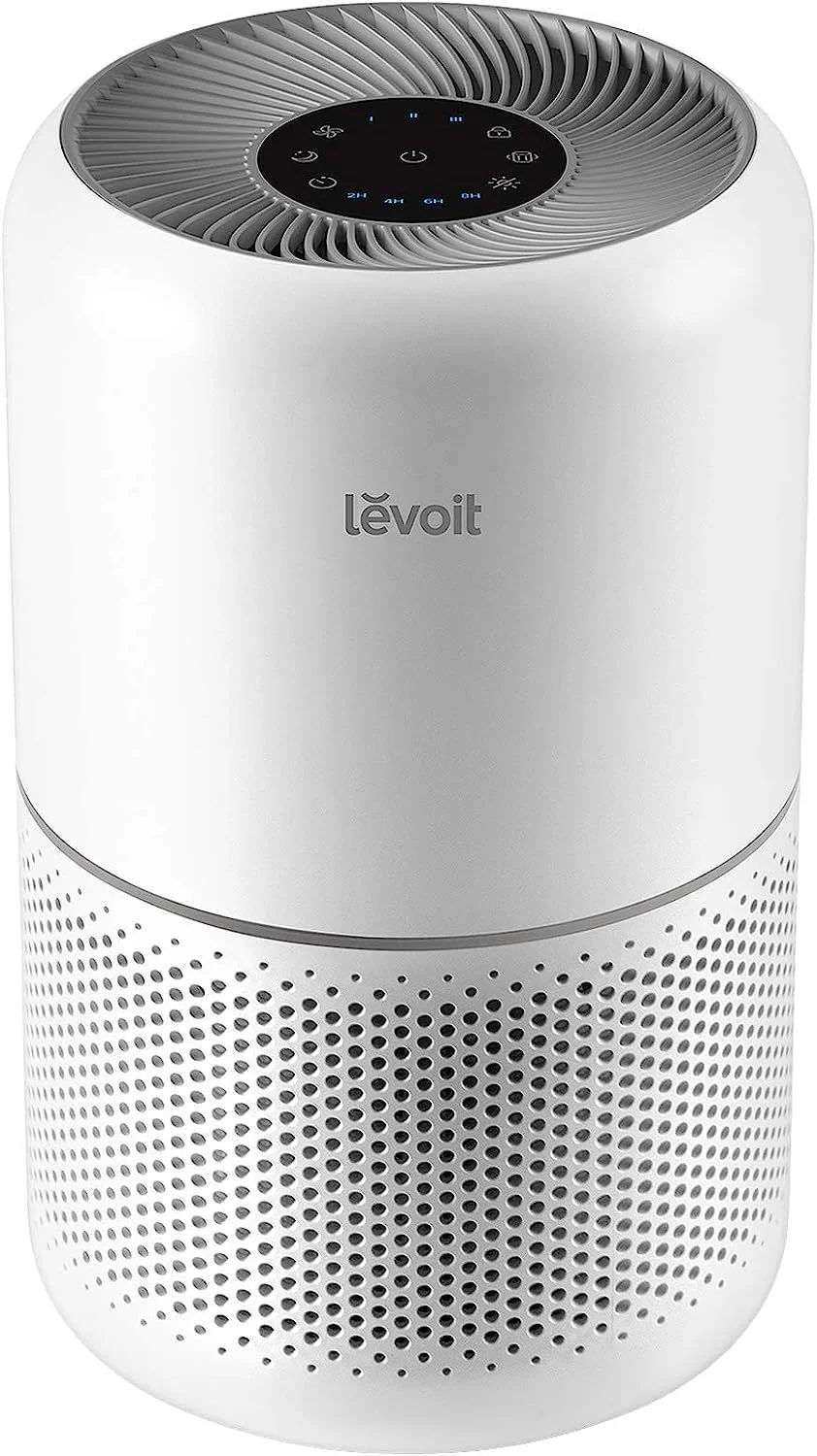
Levoit Core 300 Review Best Budget
✓ AHAM VerifiedOur Verdict
Key Specifications
- Room Coverage
- 219 sq ft
- CADR
- 141/141/141
- Filter
- 3-Stage HEPA Filtration
- Noise
- 24 dB
- Power
- 45 watts
- Best For
- Small rooms under 220 sq ft. Budget entry point.
📅 Prices checked . Amazon prices change frequently — click through for current price. Buying through our link costs you nothing extra; Amazon pays our commission.
What's in the Box
- Levoit Core 300 air purifier
- Pre-installed 3-in-1 filter
- Power cord
- User manual
Pros
- AHAM verified CADR 141
- Cheapest filter replacements at $25/year
- 24dB ultra quiet sleep mode
- Compact cylindrical design
- Simple plug-and-play — no app needed
Cons
- No auto mode or air quality sensor
- Only covers 219 sq ft
- HEPA claims controversy affected Levoit brand
- Filter needs replacing every 6 months
Best For
Best for most nurseries under 220 sq ft. AHAM-verified CADR 141 delivers 5 ACH in a standard 150 sq ft nursery (the recommended rate for infant respiratory sensitivity). At 24 dB on sleep mode — below the 30 dB(A) target for infant sleep — it is one of the quietest verified-CADR units available. No ionizer, no ozone, compact cylindrical design. At $99–$120 with $25/year filter cost, it is the lowest total-cost option with genuine verified HEPA performance. Place on a dresser or shelf at least 3 feet off the floor and away from the crib, not on the floor.
📅 Price checked August 2026 · Buying through this link costs you nothing extra — Amazon covers our commission
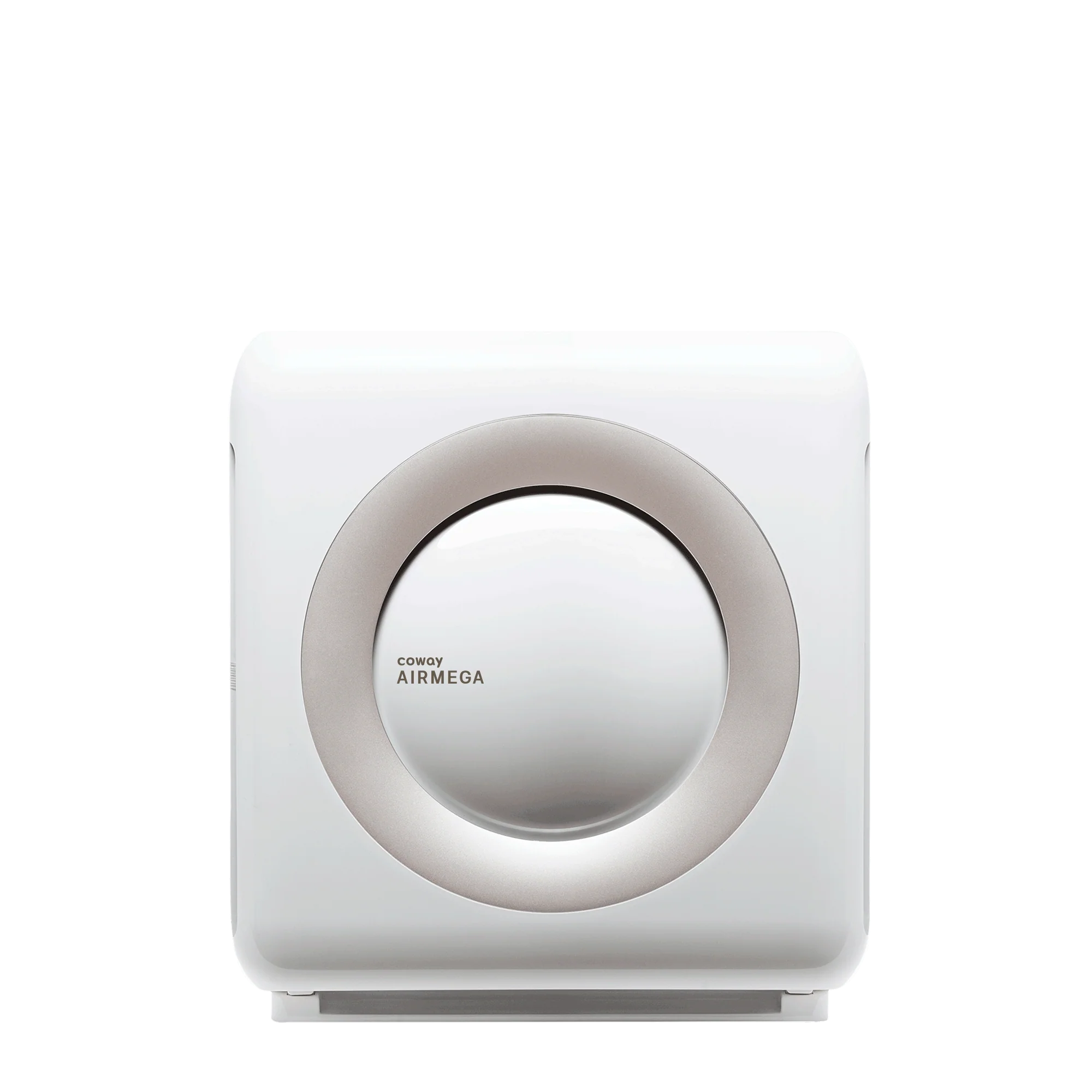
Coway AP-1512HH Mighty Review Editor Choice
✓ AHAM VerifiedOur Verdict
Key Specifications
- Room Coverage
- 361 sq ft
- CADR
- 233/246/240
- Filter
- True HEPA + Carbon + Pre-filter
- Noise
- 24 dB
- Power
- 77 watts
- Best For
- Medium rooms up to 361 sq ft. Wirecutter #1 for 10+ years. Best overall value.
📅 Prices checked . Amazon prices change frequently — click through for current price. Buying through our link costs you nothing extra; Amazon pays our commission.
What's in the Box
- Coway AP-1512HH air purifier
- Pre-installed 4-stage filter set
- Power cord
- User manual
- Filter replacement reminder sticker
Pros
- Wirecutter #1 for 10+ consecutive years
- AHAM verified CADR — no controversy
- True HEPA
- Fastest auto mode response in class
- 24dB ultra quiet sleep mode
- Eco mode at 4.9 watts
- 3-year warranty
Cons
- No WiFi or app control
- Carbon is impregnated fabric — weak on heavy odors
- Ionizer adds trace ozone (9ppb — CARB safe)
- Filter costs $60/year
- Design is dated
Best For
Best value for nurseries between 150 and 361 sq ft. AHAM-verified CADR 233 delivers 5 ACH in nurseries up to 250 sq ft and 4 ACH up to 361 sq ft. True HEPA, auto mode with air quality sensor for continuous monitoring, 24 dB at sleep mode. Critical requirement before nursery use: the Coway AP-1512HH has an optional ionizer — disable it permanently via the panel button and verify the ionizer indicator light is off. Ionizer ozone production, even at trace levels (approximately 9 ppb), is contraindicated for infant respiratory systems. With ionizer off, this unit is the best-value pick for parents who want auto mode and verified performance.
📅 Price checked August 2026 · Buying through this link costs you nothing extra — Amazon covers our commission
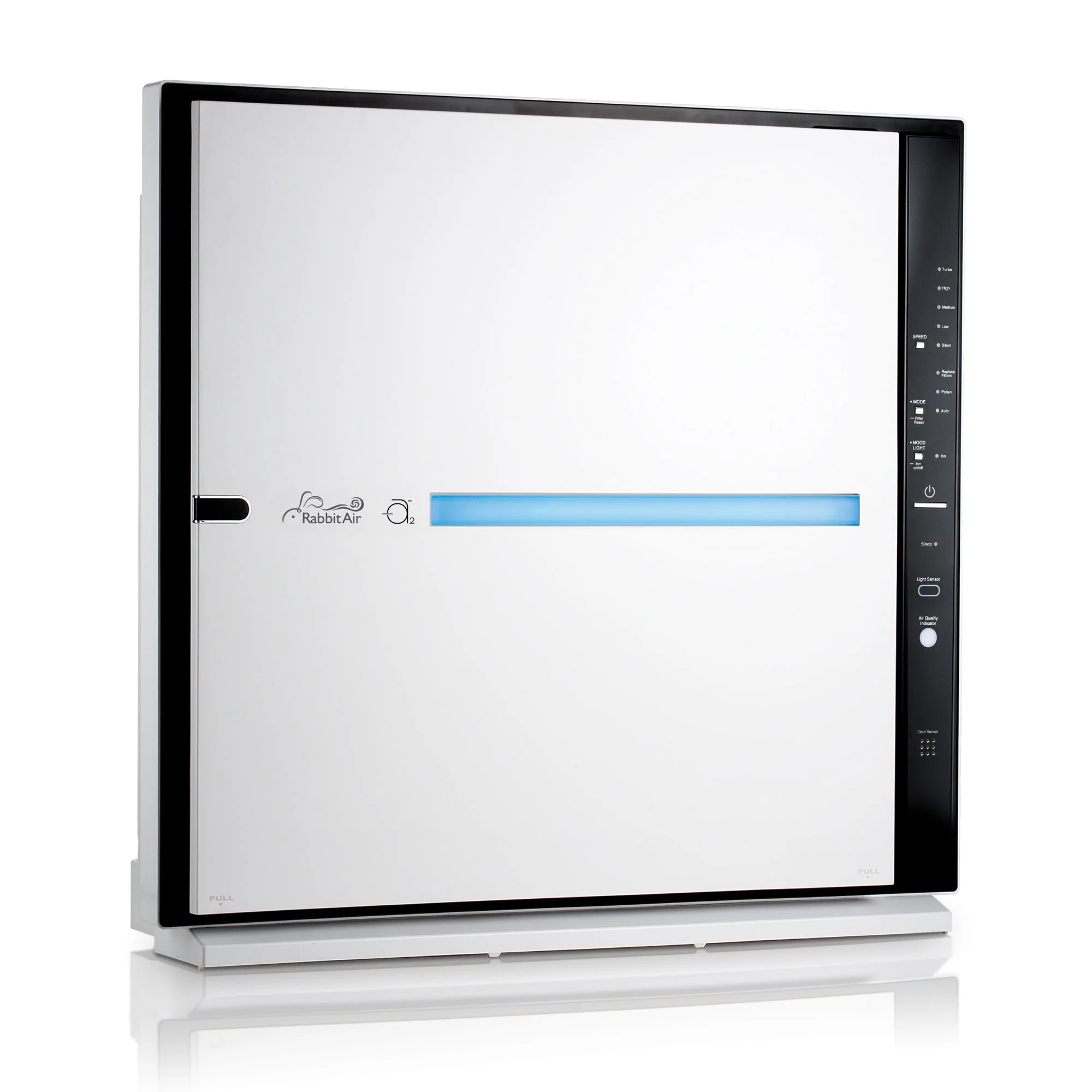
Rabbit Air MinusA2 Review Customizable Premium
✓ AHAM VerifiedOur Verdict
Key Specifications
- Room Coverage
- 815 sq ft
- CADR
- 180/193/200
- Filter
- 6-Stage BioGS HEPA + Customizable Panel Filter
- Noise
- 26 dB
- Power
- 61 watts
- Best For
- Large rooms up to 815 sq ft. Wall-mountable design. Customizable filter panels for specific needs (allergies, odors, pets, toxins).
📅 Prices checked . Amazon prices change frequently — click through for current price. Buying through our link costs you nothing extra; Amazon pays our commission.
What's in the Box
- Rabbit Air MinusA2 air purifier
- Pre-installed 6-stage filter set
- Power cord
- Wall mounting kit
- Remote control
- User manual
Pros
- AHAM verified CADR 180-200
- Wall-mountable — unique design option
- 6 customizable filter panels
- Ultra quiet 25.6dB on lowest
- BioGS HEPA inhibits bacterial growth
- CARB certified
- 5-year warranty with registration
Cons
- $549-649 is expensive
- Filter $95-105/year
- CADR 180-200 modest for price
- SPA-780A may be phased out (780N is successor)
- Complex 6-stage system
Best For
Best for parents prioritizing physical safety as the baby begins crawling and reaching. The wall-mount option removes the unit entirely from floor-level access — no cords within reach at floor level, no unit that can be tipped over, no air intake or outlet that crawling fingers can reach. BioGS HEPA inhibits bacterial growth on the filter surface. 6-stage customizable filtration includes a panel filter selectable for allergens, odors, or toxins (select the toxin panel for nursery VOC off-gassing from furniture). At 25.6 dB on lowest setting, it is below the 30 dB(A) infant sleep target. No ionizer. CARB certified. At $549–$649, the price reflects the wall-mount safety advantage and filtration customizability.
📅 Price checked August 2026 · Buying through this link costs you nothing extra — Amazon covers our commission
Winix AM90 Review Premium Design
✓ AHAM VerifiedOur Verdict

Key Specifications
- Room Coverage
- 360 sq ft
- CADR
- 232/243/246
- Filter
- True HEPA + PlasmaWave + Carbon
- Noise
- 27 dB
- Power
- 65 watts
- Best For
- Premium Winix with WiFi and better design. Same CADR as 5510.
📅 Prices checked . Amazon prices change frequently — click through for current price. Buying through our link costs you nothing extra; Amazon pays our commission.
What's in the Box
- Winix AM90 air purifier
- Pre-installed True HEPA + carbon filter
- Power cord
- User manual
Pros
- AHAM verified CADR
- PlasmaWave
- Smart WiFi via Winix app
- Premium design
Cons
- More expensive than 5510 for same CADR
- No washable carbon
- Design premium may not justify cost
Best For
Best for parents who want WiFi monitoring from outside the nursery during nap time. The Winix AM90 provides True HEPA, AHAM-verified CADR 232, auto mode with PM2.5 sensor, and WiFi control via the Winix app — allowing remote speed adjustment and air quality monitoring without entering the nursery and potentially waking the baby. Critical requirement before nursery use: disable PlasmaWave permanently. PlasmaWave is an ionizer technology that produces trace ozone and is contraindicated for nursery use. With PlasmaWave off, this unit is a strong option for tech-oriented parents wanting remote control. At 27 dB on sleep mode, it is within the 30 dB(A) target.
📅 Price checked August 2026 · Buying through this link costs you nothing extra — Amazon covers our commission
Medify MA-50 Review CADR Per Dollar
✓ AHAM VerifiedOur Verdict

Key Specifications
- Room Coverage
- 1100 sq ft
- CADR
- 352/379/397
- Filter
- H13/H14 True HEPA + Activated Carbon (3-in-1)
- Noise
- 22 dB
- Power
- 58 watts
- Best For
- Large rooms up to 1100 sq ft. Best CADR-per-dollar in class. Medical-grade H13/H14 filtration at mid-range price.
📅 Prices checked . Amazon prices change frequently — click through for current price. Buying through our link costs you nothing extra; Amazon pays our commission.
What's in the Box
- Medify MA-50 air purifier
- Pre-installed H13 True HEPA filter
- Power cord
- User manual
Pros
- AHAM verified CADR 352-397 — exceptional for price
- H13/H14 True HEPA — medical grade
- Ultra quiet 22dB sleep mode
- CARB and ETL certified
- Lifetime warranty with genuine filters
- Only 58 watts for this CADR
Cons
- Filter costs $180-210/year — most expensive ongoing cost
- Short filter lifespan (2,500 hrs — 3-4 replacements/yr)
- No WiFi or smart features
- Manufacturer room size claim (2640 sq ft) vs AHAM 1100 sq ft
- V3.0 removed UV feature
Best For
Best for nurseries where maximum filtration depth is the priority. H13/H14 True HEPA — medical-grade filtration capturing particles down to 0.1 microns at 99.97+% efficiency. AHAM-verified CADR 352–379 at 22 dB — the lowest noise level on this page. CARB certified, ETL certified, no ionizer, no UV-C since V3.0 removed the UV stage. Lifetime warranty with genuine filters. At $200–$300, it is the highest-performance option by filtration grade and noise level combined, though filter replacement costs at $195/year are the highest of any unit on this page. Best suited for nurseries where a parent or sibling has respiratory sensitivities or where high VOC load from new furniture justifies maximum activated carbon plus HEPA depth.
📅 Price checked August 2026 · Buying through this link costs you nothing extra — Amazon covers our commission
What to Know Before You Buy
Place the Unit on an Elevated Surface — Not the Floor — and Verify Cord Management Before the Baby Begins Crawling
Floor-level PM2.5 concentrations are 20 to 40 percent higher than at adult breathing height due to resuspension of settled particles from foot traffic. Placing a purifier on the floor means its intake is sampling the highest-concentration zone in the room, which is also the zone the baby inhabits. Units should be placed on a dresser, shelf, or changing table at a height of at least 3 feet, which also moves them out of reach as the baby progresses from crawling to pulling-to-stand to early walking. Cord management is a safety requirement independent of the unit itself: secure power cords against the wall using cord clips or a cord cover rated for home use, and verify that no length of cord hangs within reach at floor level or at pull-to-stand height (approximately 3 feet). The Rabbit Air MinusA2 wall-mount option eliminates this concern entirely by mounting the unit above the reach zone with the power cord routed along the wall.
Disable the Ionizer Before First Use and Verify It Stays Off After Every Power Cycle
Two units on this page — the Coway AP-1512HH and the Winix AM90 — have ionizer or PlasmaWave functions that must be disabled before nursery use. Ozone produced by ionizers is a respiratory oxidant. Infant airways are anatomically smaller and their respiratory epithelium is more sensitive to oxidative injury than adult airways. The EPA 8-hour standard for ozone is 70 ppb; ionizer-equipped purifiers operating in enclosed spaces can approach this threshold in poorly ventilated rooms. The Coway AP-1512HH ionizer is disabled via a panel button — the ionizer indicator light should be off and remain off. The Winix AM90 PlasmaWave is disabled via a panel button and the setting does not persist after power cycling on some unit firmware versions: verify PlasmaWave is off each time the unit is reconnected after a power interruption. Units with no ionizer stage — the Levoit Core 300, Rabbit Air MinusA2, and Medify MA-50 — require no user action and are the zero-risk option for parents who do not want to manage an ongoing disable requirement.
Run the Purifier Continuously During Sleep Hours — Babies Sleep 12 to 16 Hours Per Day and Rebuilding Clean Air After the Unit Stops Takes Time
Babies in the 3-month to 2-year range sleep 12 to 16 hours per day across combined nighttime sleep and daytime naps. Air purifiers running continuously during sleep maintain a steady-state reduced PM2.5 concentration. When a purifier stops running, particulate matter resuspended by prior activity settles slowly but fine PM2.5 particles (below 2.5 microns) remain airborne for extended periods — up to several hours in a still room — and rebuild toward ambient concentration. Running the purifier at sleep/low speed rather than turning it off preserves the clean-air state without generating disruptive fan noise. All units on this page achieve noise levels at or below 27 dB on their lowest setting, which is below the 30 dB(A) target derived from infant sleep research. At 24 dB (Levoit Core 300, Coway AP-1512HH) or 22 dB (Medify MA-50), the sound level is comparable to a very quiet library and does not interfere with infant sleep onset.
Floor-Level PM2.5 Concentrations Are 20 to 40 Percent Higher Than at Adult Breathing Height — Crawling Babies Spend 6 to 10 Hours Per Day in the Highest-Concentration Zone
Indoor particulate resuspension creates a systematic vertical gradient in PM2.5 concentration within a room. Foot traffic, pet movement, and air disturbances from HVAC systems and opening doors repeatedly disturb settled particulate matter on floors and low surfaces, re-entraining it into room air. Because resuspended particles are heavier than the fine PM2.5 fraction that remains continuously airborne, they concentrate near floor level before settling again. Published measurements of this vertical gradient in residential environments show PM2.5 concentrations at floor level (approximately 0 to 12 inches) are 20 to 40 percent higher than at adult breathing height (approximately 5 feet). The magnitude depends on foot traffic frequency, floor surface type (carpet resuspends more than hard floor), and HVAC airflow patterns.
Babies at the crawling stage spend an estimated 6 to 10 hours per day within 12 inches of the floor during active waking hours. This is the air quality environment that determines the inhalation dose — not the PM2.5 reading at adult height. Standard indoor air quality monitors, placed on tables or counters at adult height, systematically underestimate the PM2.5 concentration the baby is breathing during floor-level activity. The implication for air purifier selection is that ACH targeting must be based on the floor-level concentration, not the background room average. Using 5 ACH rather than the standard 4 ACH addresses this by maintaining a higher particle turnover rate that reduces the floor-level gradient. Unit placement on an elevated surface (at least 3 feet high) means the air intake is sampling room air at mid-height rather than at floor level, but the higher ACH compensates by turning over room air volume more frequently, continuously diluting the floor-level resuspension zone.
The following table shows PM2.5 concentration at floor level versus adult breathing height under different indoor conditions:
| Condition | PM2.5 at Floor Level (estimated relative) | PM2.5 at 5 ft Breathing Height (baseline) | Floor-Level Elevation |
|---|---|---|---|
| Quiet room, no foot traffic, no HVAC | Baseline + 5–10% | Baseline | Low — minimal resuspension |
| Normal household foot traffic (2–4 people), hard floor | Baseline + 20–30% | Baseline | Moderate — regular resuspension events |
| Normal household foot traffic (2–4 people), carpet | Baseline + 30–40% | Baseline | High — carpet traps and releases more particulate |
| Active household with pets, carpet floor | Baseline + 40–60% | Baseline | Very high — pet movement compounds resuspension |
The WHO IAQ guidelines for PM2.5 recommend an annual average of no more than 15 µg/m³ — a threshold that is achievable at adult breathing height in a well-maintained home but harder to maintain at floor level under normal household foot traffic conditions. Running a True HEPA air purifier at 5 ACH in a nursery significantly reduces the fine PM2.5 fraction that remains airborne (below 2.5 microns) and reduces the continuous airborne reservoir from which floor-level concentration is partially sustained.
New Nursery Furniture Off-Gasses Formaldehyde at 0.1 to 0.5 ppm and Acetaldehyde From Paint and Carpet — Activated Carbon Combined With True HEPA Is Required
New nursery furniture, paint, and carpet are significant sources of VOC off-gassing in the weeks and months after installation. MDF furniture — including cribs, dressers, and changing tables — is constructed with urea-formaldehyde binder resins that off-gas formaldehyde continuously as the resin cures and as the MDF surface degrades. Published emission measurements from MDF furniture show formaldehyde concentrations of 0.1 to 0.5 ppm in the air space immediately surrounding the furniture in the first months after manufacture. The EPA reference concentration for formaldehyde is 0.008 mg/m³ (approximately 0.006 ppm) for chronic inhalation — meaning even low-end MDF off-gassing concentrations can exceed the reference level near the furniture. Formaldehyde is classified as a human carcinogen by IARC and is a respiratory irritant at lower concentrations, with infant airways more sensitive than adult airways.
Acetaldehyde is off-gassed from latex paint and from carpet adhesives and fibers. New carpet also off-gasses styrene, 4-phenylcyclohexene (the characteristic new-carpet odor compound), and various other VOCs in the first 48 to 72 hours after installation and at lower levels for weeks to months. All of these compounds are gases at room temperature and pass directly through HEPA filter media — True HEPA captures particles (PM2.5, PM10, ultrafine) but has zero efficacy on gas-phase molecules. Activated carbon is required for gas-phase VOC adsorption. Carbon weight and surface area determine capacity: thinner carbon layers (as in the Levoit Core 300 composite filter and Coway AP-1512HH carbon fabric) address background VOC concentrations but are less effective at the high off-gassing rates from freshly installed MDF furniture. The Rabbit Air MinusA2 with its toxin-absorber panel filter and the Medify MA-50 with its thicker 3-in-1 carbon bed provide higher VOC capacity for the first months after nursery furniture installation.
The following table shows key nursery VOC off-gassing sources and activated carbon performance:
| VOC | Primary Nursery Source | Typical Concentration (near source, first months) | Activated Carbon Performance |
|---|---|---|---|
| Formaldehyde (HCHO) | MDF furniture (crib, dresser, changing table) — urea-formaldehyde binders | 0.1–0.5 ppm | Moderate on standard carbon; KMnO4-impregnated or specialized formaldehyde carbon required for best performance |
| Acetaldehyde (CH3CHO) | Latex wall paint, carpet adhesive | 0.01–0.1 ppm | Moderate — volatile aldehyde; performance varies by carbon grade |
| Styrene | Carpet fibers, latex paint | 0.005–0.05 ppm | Good — aromatic compound; well-adsorbed on standard activated carbon |
| 4-Phenylcyclohexene (4-PCH) | New carpet backing — SB latex | 0.001–0.01 ppm (strong odor at low levels) | Good — carbon affinity high for larger aromatic molecules |
| Toluene | Furniture finishes, adhesives | 0.01–0.1 ppm | Good — aromatic; standard carbon effective |
For the first 3 months after installing new nursery furniture, running the purifier at a higher fan speed (not sleep mode) when the baby is not in the room accelerates VOC off-gassing removal — a process sometimes called bake-out with ventilation. Once off-gassing rates decline (typically after 3 to 6 months for most MDF), the purifier can be returned to continuous sleep-mode operation. For detailed VOC filtration guidance, see our air purifier VOC guide and air purifier formaldehyde guide.
WHO PM2.5 Guidelines Require Annual Average at or Below 15 µg/m³ — No Direct SIDS-HEPA Study Exists but PM2.5 Is Associated With Infant Respiratory Inflammation
The WHO revised its IAQ guidelines in 2021 to set an annual average PM2.5 guideline of 15 µg/m³ and a 24-hour mean of 15 µg/m³ (reduced from the previous guideline values). These thresholds are relevant to nursery air quality because PM2.5 particles in the 0.1–2.5 micron size range penetrate deep into the respiratory tract, reaching the alveoli in adults and the terminal bronchioles in infants. Infant lungs are in active development during the first 2 years of life — airway branching, alveolar development, and surfactant system maturation all continue postnatally. Published epidemiological evidence associates early-life PM2.5 exposure with increased risk of respiratory tract infections, lower respiratory tract illness, and reduced lung function trajectories in childhood.
SIDS and air quality have been studied independently but no direct causal study has established that HEPA filtration reduces SIDS risk. This distinction is important for honest representation: the association between PM2.5 and respiratory inflammation is well documented in epidemiological literature, and PM2.5 reduction is a reasonable health-protective measure during the period of infant lung development. However, SIDS has a multifactorial etiology — the primary risk-reduction interventions for SIDS are sleep position (back-to-sleep), firm flat sleep surface, room-sharing without bed-sharing, and avoiding soft bedding — and no study has demonstrated that air purifier use reduces SIDS incidence. Air purifiers for babies are recommended on the basis of PM2.5 reduction and VOC off-gassing mitigation, not as a SIDS prevention measure. Parents should follow AAP safe sleep guidelines as the primary SIDS risk-reduction strategy.
The following table summarizes the air quality standards and infant respiratory development evidence base used to inform nursery purifier selection on this page:
| Standard or Finding | Value or Conclusion | Source |
|---|---|---|
| WHO annual PM2.5 guideline | 15 µg/m³ annual average; 15 µg/m³ 24-hour mean | WHO Global Air Quality Guidelines 2021 |
| EPA PM2.5 annual NAAQS | 9 µg/m³ annual (revised 2024); 35 µg/m³ 24-hour | US EPA NAAQS PM2.5 2024 revision |
| Association of early PM2.5 exposure with lower respiratory illness | Increased risk of LRI in first 2 years of life with elevated PM2.5 exposure | Epidemiological literature (multiple cohort studies) |
| SIDS and air quality | No direct HEPA-SIDS causality established; PM2.5 associated with respiratory inflammation | SIDS research review; WHO IAQ guidelines |
| Nursery ACH recommendation (this page) | 5 ACH for infant respiratory sensitivity (vs. standard 4 ACH for adults) | Applied from infant PM2.5 sensitivity differential |
For context on the newborn stage (first 3 months), where air quality concerns are centered on a stationary infant in a crib with minimal VOC exposure from surfaces reached by crawling, see our best air purifier for newborn guide.
Nursery CADR Formula: 150 sq ft Times 8 ft Ceiling Times 5 ACH Divided by 60 Equals 100 CFM Minimum — 5 ACH Required for Infant Respiratory Sensitivity
The standard formula for minimum CADR in a room is: room area in sq ft × ceiling height in ft × target ACH ÷ 60 = minimum CADR in CFM. For nurseries, 5 ACH is recommended rather than the standard 4 ACH used for adult bedrooms, for two reasons: infant respiratory systems are more sensitive to PM2.5 than adult respiratory systems, requiring a lower average ambient PM2.5 concentration to achieve an equivalent health margin; and floor-level PM2.5 is 20 to 40 percent higher than at adult breathing height, meaning the effective concentration the baby inhales requires a higher air turnover rate to maintain at or below WHO guideline levels. Using the formula for a standard 150 sq ft nursery with 8 ft ceiling at 5 ACH: 150 × 8 × 5 ÷ 60 = 100 CFM minimum CADR. For a larger nursery of 200 sq ft at 5 ACH: 200 × 8 × 5 ÷ 60 = 133 CFM minimum. For 250 sq ft at 5 ACH: 167 CFM minimum.
AHAM CADR verification is the only third-party verified performance metric available for air purifiers at retail. Units without AHAM verification have only manufacturer-stated CADR figures, which cannot be independently confirmed. All five units on this page carry AHAM VERIFIDE certification for at least one CADR metric (smoke, dust, or pollen). CADR is measured at maximum fan speed; sleep-mode CADR is typically 30 to 50 percent of rated CADR. To achieve 5 ACH at sleep-mode speed, select a unit with rated CADR at least twice the 5 ACH minimum — this allows sleep-mode operation to deliver approximately 2.5 ACH minimum, maintaining acceptable PM2.5 reduction during the 12 to 16 hours of daily infant sleep without fan noise above 30 dB(A).
The following table shows minimum CADR requirements by nursery size at 5 ACH for infant respiratory sensitivity:
| Nursery Size (sq ft) | Minimum CADR at 5 ACH (CFM) | Recommended CADR (2x for sleep-mode headroom) | Units on This Page That Qualify |
|---|---|---|---|
| 100 sq ft | 67 CFM | 133 CFM | Levoit Core 300 (CADR 141), all others |
| 150 sq ft | 100 CFM | 200 CFM | Levoit Core 300 (141 — meets minimum; Rabbit Air, Winix, Medify for headroom) |
| 200 sq ft | 133 CFM | 267 CFM | Coway AP-1512HH (233), Winix AM90 (232), Medify MA-50 (352+) |
| 250 sq ft | 167 CFM | 333 CFM | Coway AP-1512HH (233), Winix AM90 (232), Medify MA-50 (352+) |
| 300 sq ft | 200 CFM | 400 CFM | Medify MA-50 (352+ CADR — best choice for larger nurseries) |
For pregnancy-stage nursery preparation before the baby arrives — including pre-ventilation strategies to reduce initial formaldehyde and paint VOC concentration — see our air purifier and pregnancy guide. Running a purifier during nursery setup (furniture assembly, painting, carpet installation) provides the highest-concentration exposure reduction before the baby occupies the space.
Safety Features Required for Nursery Air Purifiers — No Ionizer, No Exposed UV-C, CARB Ozone Certification, Cord Management, Tip-Proof Design, and Auto-Off
Air purifier safety for nurseries has two distinct dimensions: chemical safety (ozone, UV-C photon exposure) and physical safety (tip-over risk, accessible air intakes, cord hazards). Both must be evaluated before placing a unit in a nursery with a crawling baby. The following are the required safety characteristics applied as evaluation criteria for every unit on this page.
No ionizer (or ionizer disabled before use): Ionizers produce ozone via corona discharge. Ozone is a respiratory oxidant classified by the EPA as a criteria air pollutant with a reference standard of 70 ppb for 8-hour average. Infant airways have proportionally higher minute ventilation (breaths per minute times tidal volume per body weight) than adults, meaning a crawling baby inhales a greater dose of any airborne pollutant per unit body weight than an adult in the same room. Units with no ionizer hardware (Levoit Core 300, Rabbit Air MinusA2, Medify MA-50) are the zero-risk option. Units with an ionizer that can be permanently disabled (Coway AP-1512HH, Winix AM90 PlasmaWave) require active user management and should be verified after every power cycle.
No exposed UV-C: Germicidal UV-C (200 to 280 nm wavelength) is bactericidal and viricidal when applied within a closed airstream at adequate dose. When UV-C emitters are exposed to room air rather than enclosed in a sealed chamber, two risks arise: direct UV-C photon exposure of room occupants (UV-C causes corneal damage and skin burns at sufficient exposure), and photolysis of ambient oxygen to produce ozone. The V3.0 Medify MA-50 removed the UV stage that was present in earlier versions. The other four units on this page do not incorporate UV-C. If purchasing a unit not on this page, verify that any UV-C lamp is completely enclosed with no room-facing emission path.
CARB ozone certification: CARB Air Cleaner Regulation (effective 2010, updated) requires air cleaning devices sold in California to emit no more than 50 ppb ozone and to be tested by a CARB-approved laboratory. CARB certification provides independent third-party verification of ozone emissions — manufacturer claims of "zero ozone" without CARB certification are unverified. The Rabbit Air MinusA2 and Medify MA-50 are CARB certified. Levoit Core 300 is sold in California and is compliant with CARB requirements. Verifying CARB status before purchasing any unit not on this page is recommended.
Cord management and tip-proof design: As a baby progresses from crawling to pulling-to-stand (typically 8 to 10 months) and early walking (typically 9 to 12 months), accessible cords and unstable objects become hazards. A purifier on a dresser with a dangling power cord is a pull-down hazard. Secure cords with cord clips along the back of furniture; verify the cord length does not create a loop at or below the surface edge. Units with a wide base relative to their height are more stable on elevated surfaces than tall narrow units — the Levoit Core 300 cylindrical design and Coway AP-1512HH flat-panel design are stable on most surfaces. The Rabbit Air MinusA2 wall-mount option eliminates tip-over and cord-reach risk entirely.
The following table summarizes the safety feature status of each unit on this page:
| Unit | Ionizer Status | UV-C Status | CARB Ozone Status | Noise at Sleep (dB) | Tip-Proof / Placement |
|---|---|---|---|---|---|
| Levoit Core 300 | None — zero ozone | None | CARB compliant | 24 dB | Wide cylindrical base — stable on elevated surface |
| Coway AP-1512HH | Optional — disable before use; verify after each power cycle | None | CARB compliant (9 ppb with ionizer off) | 24 dB | Low-profile panel design — stable on dresser top |
| Rabbit Air MinusA2 | None — zero ozone | None | CARB certified | 26 dB | Wall-mount option — zero floor or surface tip risk |
| Winix AM90 | PlasmaWave — disable before use; verify after each power cycle | None | CARB compliant (with PlasmaWave off) | 27 dB | Tower design — place on floor-level surface only if secured to wall |
| Medify MA-50 | None — zero ozone | None (V3.0+ removed UV stage) | CARB and ETL certified | 22 dB | Flat-panel base — stable on elevated surface |
Auto-off is a standard feature on most units with auto mode (Coway AP-1512HH, Winix AM90) — when air quality sensor readings fall to minimum, the unit reduces to its lowest fan speed or enters eco mode automatically, which also ensures it does not run at high noise levels unnecessarily during sleep. Units without auto mode (Levoit Core 300, Medify MA-50) can be set to a fixed low speed for continuous silent operation.