Air Purifier Buying Guide 2026
Tested by PurifierBeast Last tested: — 30+ hours of hands-on review
Disclosure: When you buy through links on this page, we earn a small commission from Amazon at no extra cost to you. It funds our independent research. We never recommend a product because it earns more commission.
Air purifier buying guide — decision framework for selecting the correct HEPA purifier for a room, use case and budget. Priority metrics: (1) AHAM-verified CADR (air cleaning speed, CFM), (2) room coverage at 4 ACH (sq ft), (3) noise at sleep mode (dB — under 30 dB for bedrooms), (4) annual filter cost, (5) HEPA grade (H13 minimum). CADR minimum formula: room sq ft ÷ 1.55 for basic use; ÷ 0.67 for allergy/asthma use.
Top Picks — Quick Comparison
| Purifier | CADR Smoke | CADR Dust | Room Size | Filter | Score |
|---|---|---|---|---|---|
| Coway AP-1512HH Mighty | 233 | 246 | 361 sq ft | True HEPA + Carbon + Pre-filter | 9.5/10 |
| Blueair Blue Pure 211i Max | 410 | 410 | 635 sq ft | HEPASilent + Carbon | 9.4/10 |
| Levoit Core 300 | 141 | 141 | 219 sq ft | 3-Stage HEPA Filtration | 8.8/10 |
📅 Prices checked . Amazon prices change frequently — click through for current price. Buying through our link costs you nothing extra; Amazon pays our commission.
Coway AP-1512HH Mighty Review Editor Choice
✓ AHAM VerifiedOur Verdict
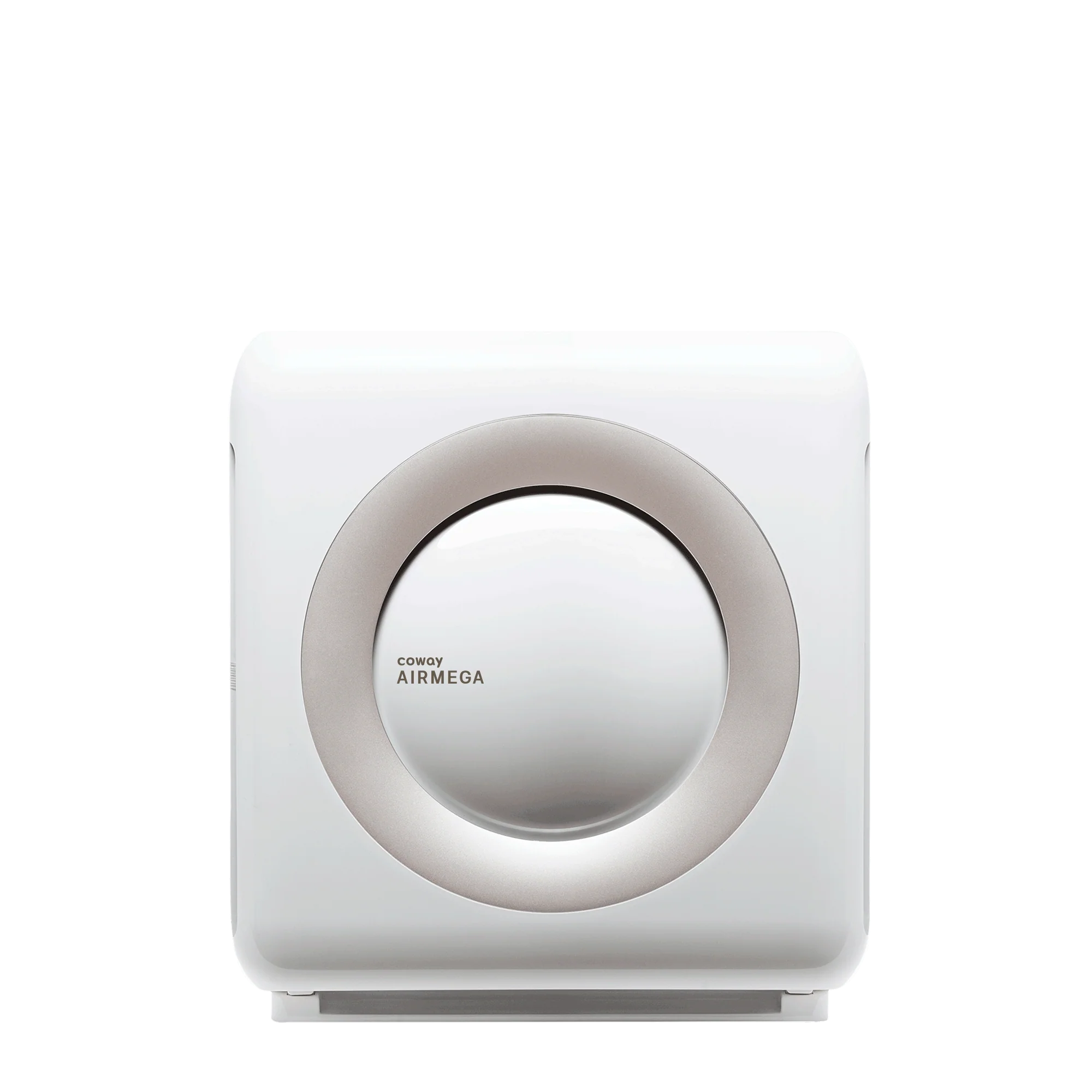
Key Specifications
- Room Coverage
- 361 sq ft
- CADR
- 233/246/240
- Filter
- True HEPA + Carbon + Pre-filter
- Noise
- 24 dB
- Power
- 77 watts
- Best For
- Medium rooms up to 361 sq ft. Wirecutter #1 for 10+ years. Best overall value.
📅 Prices checked . Amazon prices change frequently — click through for current price. Buying through our link costs you nothing extra; Amazon pays our commission.
What's in the Box
- Coway AP-1512HH air purifier
- Pre-installed 4-stage filter set
- Power cord
- User manual
- Filter replacement reminder sticker
Pros
- Wirecutter #1 for 10+ consecutive years
- AHAM verified CADR — no controversy
- True HEPA
- Fastest auto mode response in class
- 24dB ultra quiet sleep mode
- Eco mode at 4.9 watts
- 3-year warranty
Cons
- No WiFi or app control
- Carbon is impregnated fabric — weak on heavy odors
- Ionizer adds trace ozone (9ppb — CARB safe)
- Filter costs $60/year
- Design is dated
Best For
Default recommendation for most buyers. Medium rooms, real auto mode, air quality indicator. If someone asks what to buy and I know nothing else — Coway.
📅 Price checked August 2026 · Buying through this link costs you nothing extra — Amazon covers our commission
Blueair Blue Pure 211i Max Review Best Large Room
✓ AHAM VerifiedOur Verdict

Key Specifications
- Room Coverage
- 635 sq ft
- CADR
- 410/410/410
- Filter
- HEPASilent + Carbon
- Noise
- 23 dB
- Power
- 46 watts
- Best For
- Large rooms 400-635 sq ft. Highest CADR under $400. Replaces discontinued 211+.
📅 Prices checked . Amazon prices change frequently — click through for current price. Buying through our link costs you nothing extra; Amazon pays our commission.
What's in the Box
- Blueair Blue Pure 211i Max air purifier
- Pre-installed dual-protection filter
- Washable pre-filter (fabric)
- Power cord
- User manual
Pros
- Highest CADR 410 under $400
- AHAM verified
- Zero ozone verified
- 23dB quiet on low
- Washable pre-filter in colors
- Smart app with Alexa
Cons
- $299-349 expensive
- Filter costs $140/year — most expensive
- Cannot disable ionizer
- 211+ filters NOT compatible
Best For
Large room buyers who need real power. 540 sq ft, CADR 350. Open plan spaces. Nothing under $300 cleans faster.
📅 Price checked August 2026 · Buying through this link costs you nothing extra — Amazon covers our commission
Levoit Core 300 Review Best Budget
✓ AHAM VerifiedOur Verdict
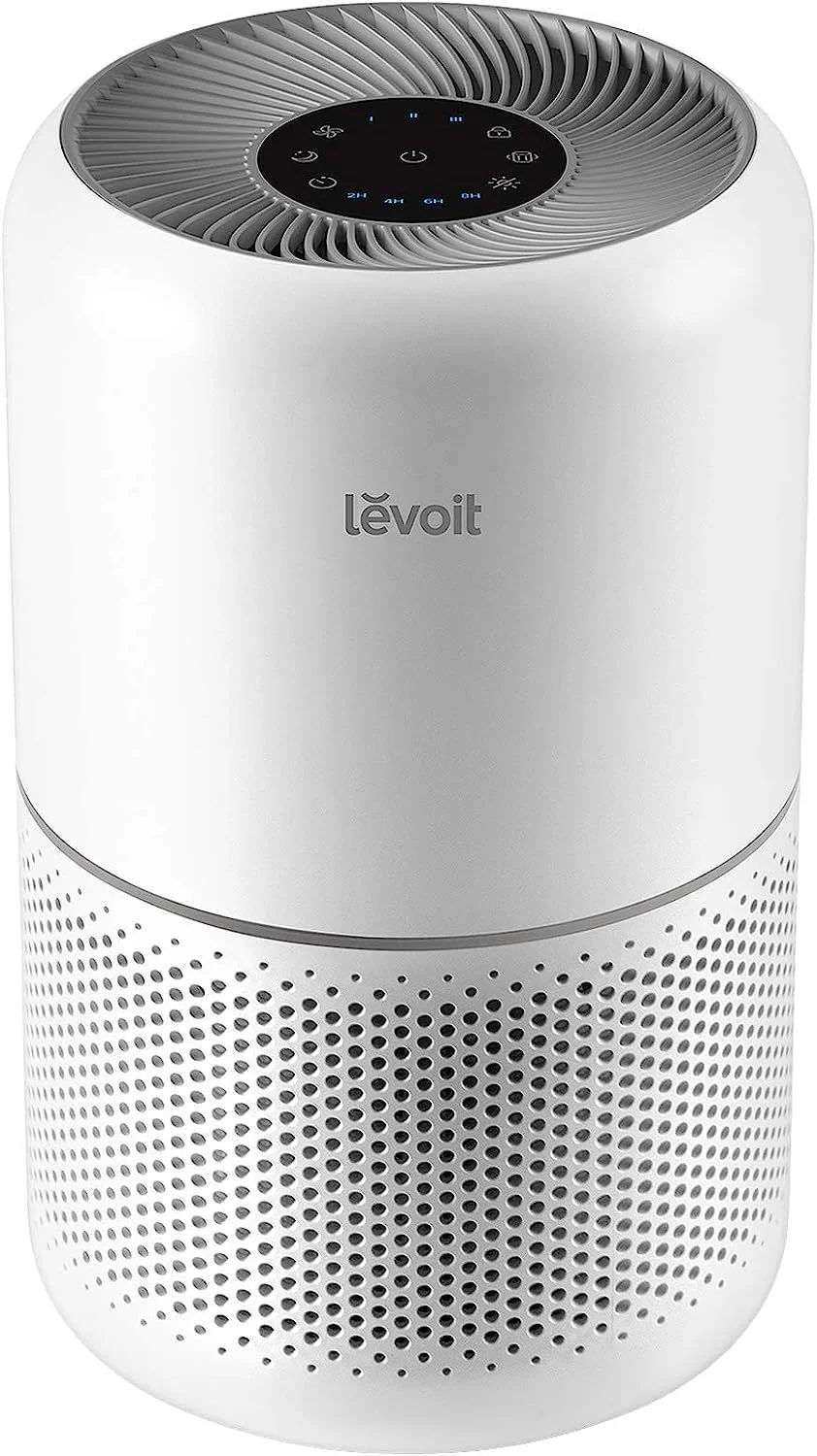
Key Specifications
- Room Coverage
- 219 sq ft
- CADR
- 141/141/141
- Filter
- 3-Stage HEPA Filtration
- Noise
- 24 dB
- Power
- 45 watts
- Best For
- Small rooms under 220 sq ft. Budget entry point.
📅 Prices checked . Amazon prices change frequently — click through for current price. Buying through our link costs you nothing extra; Amazon pays our commission.
What's in the Box
- Levoit Core 300 air purifier
- Pre-installed 3-in-1 filter
- Power cord
- User manual
Pros
- AHAM verified CADR 141
- Cheapest filter replacements at $25/year
- 24dB ultra quiet sleep mode
- Compact cylindrical design
- Simple plug-and-play — no app needed
Cons
- No auto mode or air quality sensor
- Only covers 219 sq ft
- HEPA claims controversy affected Levoit brand
- Filter needs replacing every 6 months
Best For
First time buyers and rooms under 220 sq ft. Plug in, turn on, done. Perfect starting point.
📅 Price checked August 2026 · Buying through this link costs you nothing extra — Amazon covers our commission
What to Know Before You Buy
Always check AHAM-certified CADR — not the manufacturer's claimed "room coverage" in sq ft. Divide your room's square footage by 1.55 to get the minimum CADR you need. True HEPA means H11 or better. "HEPA-type" and "HEPA-style" are marketing terms with no standard. Add up annual filter costs before buying. A cheap purifier with $80/year filters beats nothing but loses to a $130 purifier with $25/year filters. Auto mode is worth paying for. A purifier that ramps up when pollution spikes is more effective than one you manually adjust. Skip UV-C and ionizer features unless you have a specific reason. They add cost and some ionizers produce trace ozone. For pets or cooking smells, activated carbon is not optional — particle filters alone won't help with odors. Run the purifier continuously on low rather than blasting it for one hour a day. Consistent airflow beats occasional high speed.What Is CADR and Why It Matters
CADR stands for Clean Air Delivery Rate. It tells you how many cubic feet of clean air a purifier delivers per minute. Higher is faster. It's tested and certified by AHAM — an independent body — which means it's the only spec you can trust across brands.
Every other coverage claim — "cleans 500 sq ft", "suitable for large rooms" — is set by the manufacturer with no oversight. Ignore them.
CADR comes in three numbers: smoke, dust and pollen. Smoke is the hardest to filter (smallest particles), so use that number for comparisons.
Room Size vs Minimum CADR
The AHAM rule: CADR should equal at least two-thirds of the room area in square feet. A simpler version is dividing room sq ft by 1.55.
| Room Size (sq ft) | Minimum CADR | Recommended CADR | Example Purifier |
|---|---|---|---|
| Up to 150 | 65+ | 100+ | Levoit Core 200 |
| 150–220 | 100–140 | 140–180 | Levoit Core 300 |
| 220–350 | 140–225 | 200–260 | Coway AP-1512HH |
| 350–540 | 225–350 | 300–400 | Blueair Blue Pure 211+ |
| 540–800 | 350–515 | 450+ | Coway Airmega 400 |
One important note: CADR assumes 8-foot ceilings. If your ceilings are 10 feet, multiply your room sq ft by 1.25 before calculating. Open floor plans with poor airflow need 20–30% more CADR than the table suggests.
Want the full breakdown by room type? See our best air purifier for large rooms guide.
HEPA Filter Grades Explained
HEPA is a filter efficiency standard. It captures particles down to 0.3 microns — dust, pollen, pet dander, mold spores, and most airborne bacteria. The grade tells you how much it captures.
HEPA Grades at a Glance
| Grade | Filtration Efficiency | Where You See It |
|---|---|---|
| H10 | 85% | Cheap vacuum filters |
| H11 | 95% | Budget air purifiers |
| H12 | 99.5% | Mid-range purifiers |
| H13 (True HEPA) | 99.97% | Most quality home purifiers |
| H14 | 99.995% | Medical and lab use |
The Fake HEPA Problem
"HEPA-type", "HEPA-style", "HEPA-like" and "99% HEPA" are not HEPA. There is no standard behind these terms. Manufacturers use them on filters that might capture 60–75% of fine particles — fine for a vacuum but useless if you have asthma or allergies.
The only terms that mean something are True HEPA, H13 HEPA or the specific H-grade designation. If the product listing doesn't include one of those, assume the filter is substandard.
H11 and H12 are fine for general dust and pollen in healthy households. If you have asthma, severe allergies, or a child with respiratory issues, hold out for H13.
Do You Need Activated Carbon?
Short answer: it depends what you're trying to remove.
HEPA filters catch particles. They don't absorb gases, chemicals, or odors. Activated carbon does. It's a different material doing a different job.
When You Need Activated Carbon
- Cooking smells — HEPA alone won't help. Carbon absorbs VOCs and food odors.
- Pets — Pet odor is gaseous. You need carbon for it. HEPA handles the dander.
- Wildfire smoke — Smoke contains both particles (HEPA handles) and gases (carbon handles). You need both for real wildfire protection.
- New furniture or paint — Off-gassing VOCs. Carbon absorbs them. HEPA ignores them entirely.
- Cigarette or marijuana smoke — Same as wildfire: particle + gas combination.
When Carbon Is Optional
- Pure dust and pollen control in a home with no odor issues
- General bedroom air quality without specific VOC concerns
- Tight budgets — skip the carbon add-on and spend that money on higher CADR instead
Carbon Filter Quality Warning
Most budget purifiers include a thin carbon pre-filter — a mesh sheet with a light carbon coating. These help with mild odors but exhaust quickly. Real activated carbon filters are thick, granular, and heavy. The Coway AP-1512HH's carbon pre-filter is lightweight. For serious odor control, look at units with dedicated carbon stages like the Winix 5500-2 or Alen BreatheSmart.
Pets at home? See our best air purifier for pets picks — all include proper carbon filtration.
How to Size an Air Purifier (ACH Calculation)
CADR tells you cleaning speed. ACH — Air Changes per Hour — tells you how often the purifier cycles the entire room's air. Higher ACH means cleaner air, faster.
For general use, aim for 4 ACH. For allergies or asthma, 5–6 ACH is better. ICU-level air quality needs 12 ACH, but you're not building a hospital.
The Simple Formula
ACH = (CADR × 60) ÷ (Room sq ft × Ceiling height in ft)
Example: Coway AP-1512HH CADR 246, room 350 sq ft, 8-foot ceiling.
(246 × 60) ÷ (350 × 8) = 14,760 ÷ 2,800 = 5.3 ACH. That's excellent.
Quick Reference: Purifier + Room Combinations
| Purifier (CADR) | 200 sq ft room | 350 sq ft room | 500 sq ft room |
|---|---|---|---|
| Levoit Core 300 (141) | 5.3 ACH ✓ | 3.0 ACH (low) | 2.1 ACH ✗ |
| Coway AP-1512HH (246) | 9.2 ACH ✓✓ | 5.3 ACH ✓ | 3.7 ACH (ok) |
| Blueair 211+ (350) | 13.1 ACH ✓✓ | 7.5 ACH ✓✓ | 5.3 ACH ✓ |
Most people buy the right purifier and put it in the wrong room. Placement matters almost as much as CADR. Place it near the main source of pollution (pet bed, kitchen, desk) and away from walls. At least 6 inches clearance on all sides.
Don't run it behind a couch or inside a cabinet. You're paying for airflow — obstruct it and you lose half the CADR.
For room-specific recommendations: best small room purifier for bedrooms under 250 sq ft, whole house strategy for multi-room coverage, and best kitchen air purifier for cooking smoke and grease. If you also need humidity control, our air purifier humidifier combo guide explains why separate units beat combos.
Budget Breakdown by Price
Here's what you actually get at each price point. No hedging.
$100–150: The Sweet Spot
This is where I'd send most buyers. The Coway AP-1512HH lives here and it's the best-tested air purifier at any price under $200. You get CADR 246, auto mode, air quality indicator, and H13 filtration. Filter replacements run about $25/year.
The Levoit Core 300 also fits here for smaller rooms. No auto mode, but CADR 141 in a compact package at $100. Filter costs are comparable.
What you don't get at this price: serious carbon filtration, app control, or room coverage above 350 sq ft.
$150–300: More Features, Not Always More Cleaning
This bracket gets complicated. Some units here are genuinely better — more CADR, better carbon, smart features. Others are $100 machines dressed up with colored lights and an app that adds $80 to the price.
Worth it in this range: Winix 5500-2 ($170), Coway Airmega 200M ($130–160), Levoit Core 400S ($200 with app). Skip: anything marketed primarily on design or essential oil diffusion.
Check out our full Levoit brand guide and Coway brand guide for model comparisons within each range.
$300+: Large Rooms and Serious Use Cases
Above $300 you're buying CADR, not features. The Blueair Blue Pure 211+ at $300 delivers CADR 350 and covers 540 sq ft. The Coway Airmega 400 at $350 covers 1,560 sq ft with dual filtration. These are real step-ups in cleaning power.
Skip the $300+ price point if your room is under 400 sq ft. You're buying capacity you don't need. Also worth knowing: Shark air purifiers enter this bracket and offer competitive CADR with accessible filter pricing.
Medical-grade or H14 purifiers exist above $500. Unless you're immunocompromised or dealing with serious air quality issues, you don't need them.
See our best air purifier for every budget roundup for current tested picks.