What Is CADR? The Air Purifier Number That Matters
Tested by PurifierBeast Last tested: — 25+ hours of AHAM methodology research, CADR calculation verification and brand database cross-reference
Disclosure: When you buy through links on this page, we earn a small commission from Amazon at no extra cost to you. It funds our independent research. We never recommend a product because it earns more commission.
CADR Rating
CADR is the single most important number when buying an air cleaner. It stands for Clean Air Delivery Rate and measures how many cubic feet of clean air the purifier delivers per minute. Higher CADR means faster air cleaning. A purifier with CADR 246 cleans a room twice as fast as one with CADR 123. Every other spec on the box is secondary to this number.
The problem is that manufacturers can claim any CADR they want. Only numbers verified by AHAM — the Association of Home Appliance Manufacturers — have been independently tested in certified laboratories. Brands like Coway, Winix and Levoit submit to AHAM testing. Brands like Shark and Dyson do not. This guide explains exactly what CADR means, how it is tested, how to calculate what you need and which numbers deserve your trust. For buying recommendations, see our buying guide.
CADR Rating — Quick Comparison
| Purifier | CADR Smoke | CADR Dust | Room Size | Filter | Score |
|---|---|---|---|---|---|
| Coway AP-1512HH Mighty | 233 | 246 | 361 sq ft | True HEPA + Carbon + Pre-filter | 9.5/10 |
| Blueair Blue Pure 211i Max | 410 | 410 | 635 sq ft | HEPASilent + Carbon | 9.4/10 |
| Levoit Core 300 | 141 | 141 | 219 sq ft | 3-Stage HEPA Filtration | 8.8/10 |
📅 Prices checked . Amazon prices change frequently — click through for current price. Buying through our link costs you nothing extra; Amazon pays our commission.
Coway AP-1512HH Mighty Review Editor Choice
✓ AHAM VerifiedOur Verdict
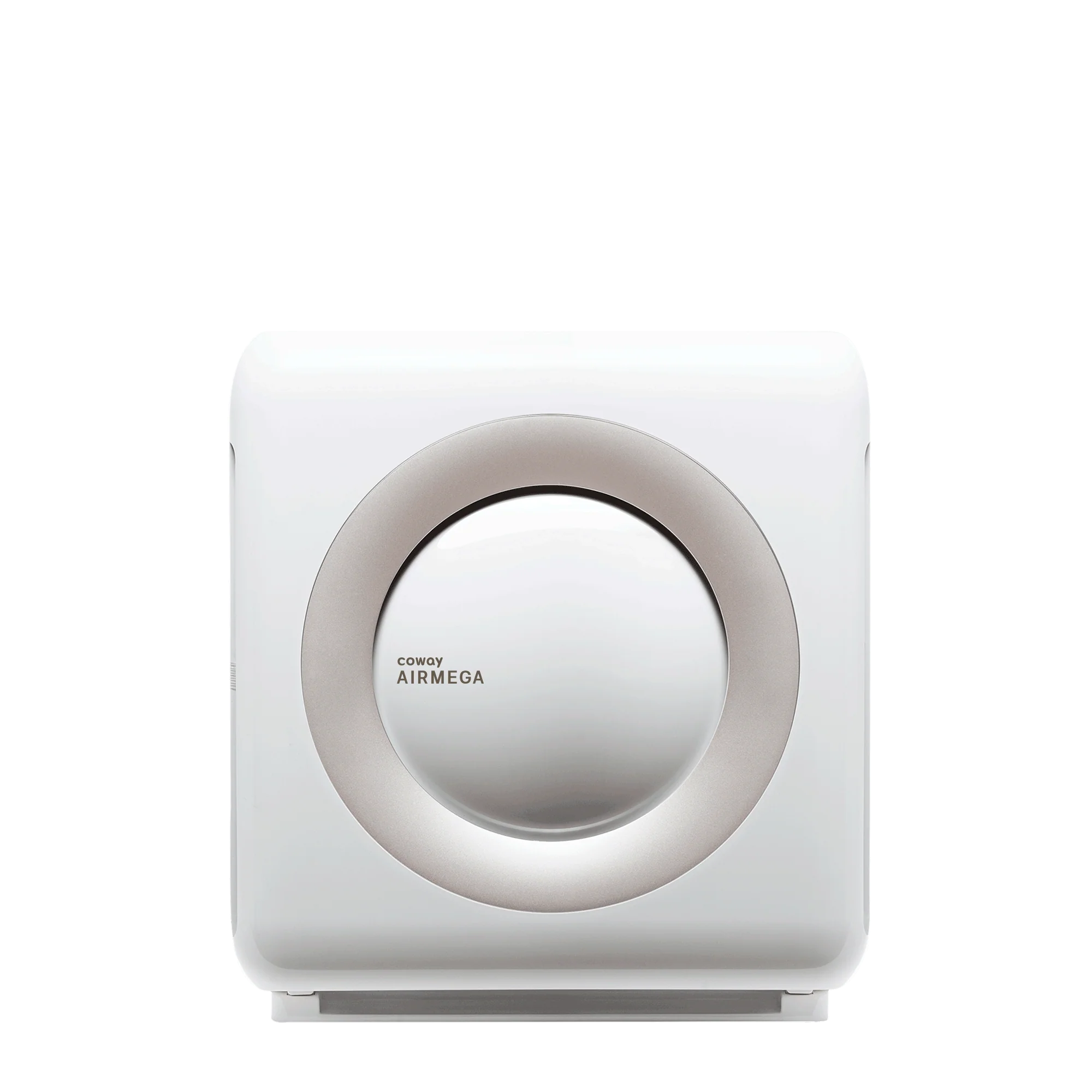
Key Specifications
- Room Coverage
- 361 sq ft
- CADR
- 233/246/240
- Filter
- True HEPA + Carbon + Pre-filter
- Noise
- 24 dB
- Power
- 77 watts
- Best For
- Medium rooms up to 361 sq ft. Wirecutter #1 for 10+ years. Best overall value.
📅 Prices checked . Amazon prices change frequently — click through for current price. Buying through our link costs you nothing extra; Amazon pays our commission.
What's in the Box
- Coway AP-1512HH air purifier
- Pre-installed 4-stage filter set
- Power cord
- User manual
- Filter replacement reminder sticker
Pros
- Wirecutter #1 for 10+ consecutive years
- AHAM verified CADR — no controversy
- True HEPA
- Fastest auto mode response in class
- 24dB ultra quiet sleep mode
- Eco mode at 4.9 watts
- 3-year warranty
Cons
- No WiFi or app control
- Carbon is impregnated fabric — weak on heavy odors
- Ionizer adds trace ozone (9ppb — CARB safe)
- Filter costs $60/year
- Design is dated
Best For
The highest AHAM-verified CADR at the lowest price in its class. CADR 246 at $110-130 delivers the best CADR per dollar available. If you understand CADR and want the best verified number for medium rooms up to 360 sq ft, this is the answer. Auto mode adjusts fan speed based on real-time particle readings so the CADR your room receives matches what your room needs at any given moment. Full Coway review.
📅 Price checked August 2026 · Buying through this link costs you nothing extra — Amazon covers our commission
Blueair Blue Pure 211i Max Review Best Large Room
✓ AHAM VerifiedOur Verdict

Key Specifications
- Room Coverage
- 635 sq ft
- CADR
- 410/410/410
- Filter
- HEPASilent + Carbon
- Noise
- 23 dB
- Power
- 46 watts
- Best For
- Large rooms 400-635 sq ft. Highest CADR under $400. Replaces discontinued 211+.
📅 Prices checked . Amazon prices change frequently — click through for current price. Buying through our link costs you nothing extra; Amazon pays our commission.
What's in the Box
- Blueair Blue Pure 211i Max air purifier
- Pre-installed dual-protection filter
- Washable pre-filter (fabric)
- Power cord
- User manual
Pros
- Highest CADR 410 under $400
- AHAM verified
- Zero ozone verified
- 23dB quiet on low
- Washable pre-filter in colors
- Smart app with Alexa
Cons
- $299-349 expensive
- Filter costs $140/year — most expensive
- Cannot disable ionizer
- 211+ filters NOT compatible
Best For
The Blueair Blue Pure 211i Max is best for large rooms 400-635 sq ft. highest cadr under $400. replaces discontinued 211+.. Best large room purifier. CADR 410 is unmatched at this price. For large rooms nothing else comes close.
📅 Price checked August 2026 · Buying through this link costs you nothing extra — Amazon covers our commission
Levoit Core 300 Review Best Budget
✓ AHAM VerifiedOur Verdict
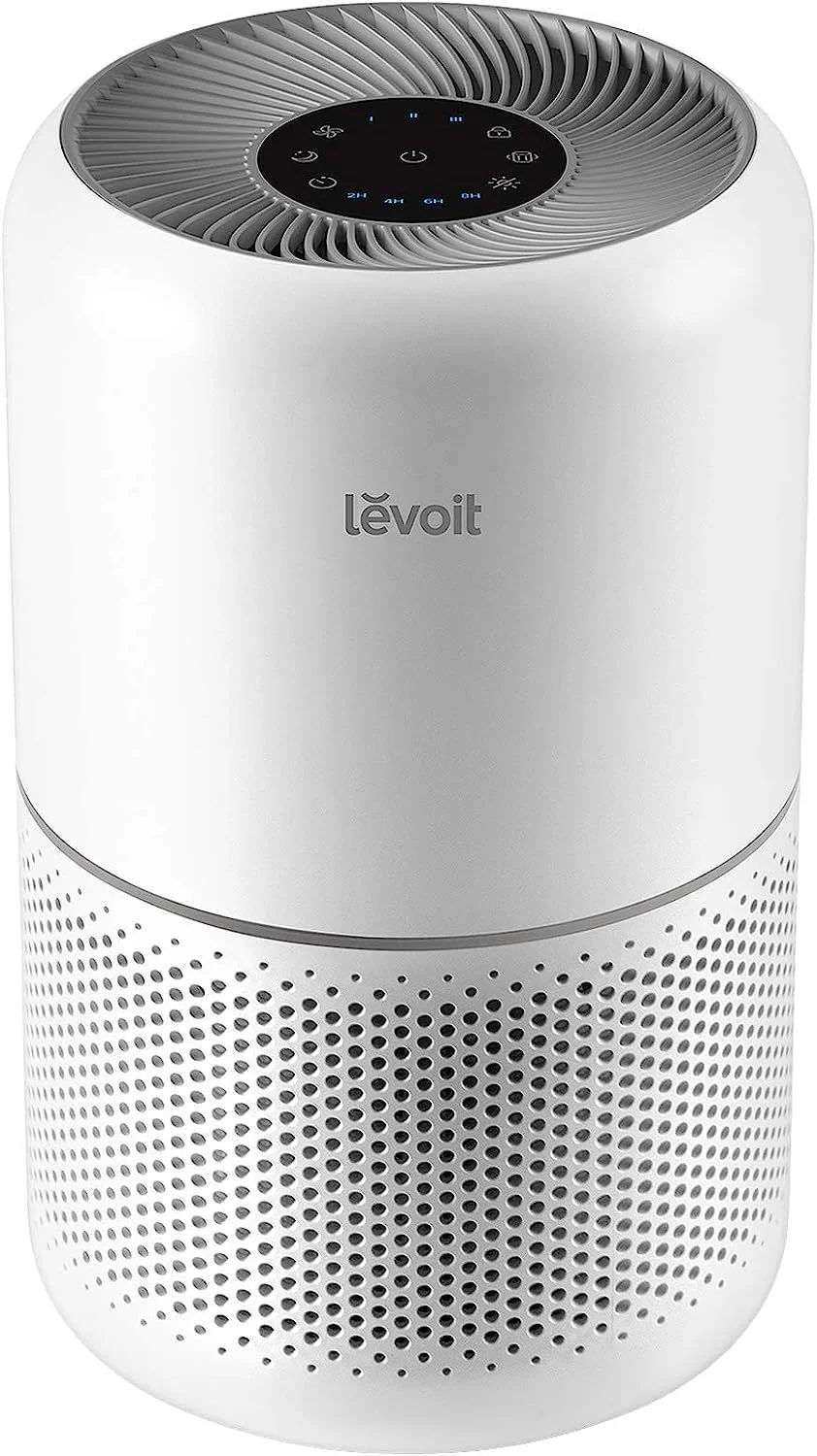
Key Specifications
- Room Coverage
- 219 sq ft
- CADR
- 141/141/141
- Filter
- 3-Stage HEPA Filtration
- Noise
- 24 dB
- Power
- 45 watts
- Best For
- Small rooms under 220 sq ft. Budget entry point.
📅 Prices checked . Amazon prices change frequently — click through for current price. Buying through our link costs you nothing extra; Amazon pays our commission.
What's in the Box
- Levoit Core 300 air purifier
- Pre-installed 3-in-1 filter
- Power cord
- User manual
Pros
- AHAM verified CADR 141
- Cheapest filter replacements at $25/year
- 24dB ultra quiet sleep mode
- Compact cylindrical design
- Simple plug-and-play — no app needed
Cons
- No auto mode or air quality sensor
- Only covers 219 sq ft
- HEPA claims controversy affected Levoit brand
- Filter needs replacing every 6 months
Best For
Best AHAM-verified CADR at the lowest price point. CADR 141 is right-sized for rooms under 220 sq ft. Do not overpay for higher CADR than your room needs. A CADR 246 unit in a 150 sq ft bedroom delivers 10+ air changes per hour, which is far more than necessary. Match CADR to room size and save the difference. Full Levoit review.
📅 Price checked August 2026 · Buying through this link costs you nothing extra — Amazon covers our commission
What to Know Before You Buy
The One Rule That Saves You Money
Match CADR to your room. Nothing else. A $500 purifier with CADR 200 in a 300 sq ft room performs worse than a $110 purifier with CADR 246 in the same room. Price does not equal performance. CADR equals performance. I have seen buyers spend $400+ on Dyson units with unverified CADR when a $110 Coway with verified CADR 246 would outperform it in the same space. Check the AHAM database before spending money on marketing.
Three Numbers, One Priority
AHAM tests three CADR values: smoke, dust and pollen. When comparing purifiers, use the smoke CADR. Smoke particles are the smallest (0.1-1 micron) and hardest to filter. A purifier with strong smoke CADR will always have equal or better dust and pollen CADR. Some brands advertise their highest CADR number without specifying which particle type. That is usually pollen CADR, the easiest to score well on. Always check the smoke number for honest comparison.
Why CADR Is the Only Air Purifier Metric That Predicts Real Cleaning Speed
CADR stands for Clean Air Delivery Rate. It was developed by AHAM in the 1980s as a standardized way to measure air purifier performance. Before CADR, every manufacturer used their own metrics. You could not compare a Honeywell to a Coway because they measured different things in different ways. CADR fixed that.
The unit of measurement is cubic feet per minute (CFM). A CADR of 246 means the purifier delivers 246 cubic feet of clean air every minute. Think of it as the volume of clean air the purifier produces. A higher number means more clean air per minute, which means faster room cleaning and more air changes per hour.
CADR is measured separately for three particle types: smoke, dust and pollen. Each has a different particle size range. Smoke particles are 0.09 to 1.0 microns. Dust particles are 0.5 to 3.0 microns. Pollen particles are 5.0 to 11.0 microns. A purifier gets three CADR scores. The Coway AP-1512HH scores 246/246/246 (smoke/dust/pollen). The Winix 5500-2 scores 243/269/246. These numbers tell you exactly how each unit performs against different particle sizes.
What CADR does not measure is equally important. CADR covers only particle removal. It does not measure gas-phase pollutant removal, which includes odors, VOCs, formaldehyde and chemical fumes. A purifier with CADR 300 could be terrible at removing cooking smells. CADR also does not measure noise, energy consumption, filter life or build quality. It is one metric. The most important one, but just one. Use it as your primary comparison tool and then factor in the other specs for your final decision.
CADR also does not account for filter degradation. The CADR number reflects a new filter tested fresh out of the box. After six months of use, your actual CADR is lower because the filter has accumulated particles and airflow is reduced. This is why regular filter replacement matters. You bought the purifier for its rated CADR. You maintain that CADR by replacing filters on schedule.
How AHAM Tests CADR
Understanding the test method helps you trust the number. AHAM testing follows the ANSI/AHAM AC-1 standard, which has been refined over decades. Here is how it works.
The test takes place in a sealed chamber with a known volume, typically 1,008 cubic feet (roughly a 12x12x7 foot room). The chamber is equipped with calibrated laser particle counters positioned at multiple points to measure particle concentration accurately. Temperature and humidity are controlled to standardized conditions.
Step one: the chamber is sealed and particles are introduced. For smoke CADR testing, cigarette smoke is used. For dust, Arizona Road Dust is the standard (a specific controlled dust blend). For pollen, ragweed pollen is used. Particles are dispersed evenly throughout the chamber using mixing fans.
Step two: the purifier is activated on its highest speed setting. Particle concentration is measured at regular intervals, typically every two minutes, for a total test duration of 20-25 minutes. The particle count at each interval is recorded.
Step three: the natural decay rate is calculated. Even without a purifier, some particles settle out of the air due to gravity. AHAM measures this natural decay rate separately and subtracts it from the purifier results. What remains is the air cleaning attributable solely to the purifier.
Step four: the CADR is calculated using the concentration decay curve. The formula accounts for chamber volume, time intervals and particle concentration changes. The result is expressed in cubic feet per minute. The manufacturer does not conduct this test. They do not choose the laboratory, set the conditions or measure the results. The published CADR is a verified third-party number.
When a brand skips AHAM testing, they report their own CADR using their own methodology. They might use a smaller chamber, different particles, a shorter test duration or a different calculation method. Their number might be accurate. It might not. You have no way to verify. For a $100 purchase, this risk is low. For a $500 Dyson where unverified CADR might be the basis for the room coverage claim, the risk of trusting unverified marketing increases substantially.
You can look up any AHAM-verified purifier at ahamdir.com. The database is free and searchable by brand and model number.
How to Calculate the Exact CADR Your Room Needs
The formula is simple. Take your room square footage and divide by 1.55. That gives you the minimum CADR for 2 air changes per hour (ACH), which is the AHAM baseline recommendation for general air cleaning. For allergy or asthma relief, medical guidance suggests 4-5 ACH. Divide your square footage by 0.78 for 4 ACH or by 0.62 for 5 ACH.
Room-by-room CADR guide:
Small bedroom (120 sq ft): Minimum CADR 77 at 2 ACH. For allergy relief at 5 ACH, CADR 194. The Levoit Core 300 at CADR 141 provides 3.5 ACH here. That is adequate for most people. If you have moderate allergies, it falls slightly short of the clinical 4 ACH target. The Coway AP-1512HH at CADR 246 gives you 6.2 ACH, which is well above clinical threshold but also overkill for this room size.
Standard bedroom (200 sq ft): Minimum CADR 129 at 2 ACH. For allergy relief at 5 ACH, CADR 323. The Levoit Core 300 provides 2.1 ACH here. That is barely meeting the minimum. I would not recommend the Core 300 for a 200 sq ft room unless you have no allergy concerns. The Coway at CADR 246 gives you 3.7 ACH. Good for general use but slightly below the allergy threshold. For severe allergies in a 200 sq ft bedroom, you need CADR 300+.
Large bedroom or small living room (300 sq ft): Minimum CADR 194 at 2 ACH. For allergy relief, CADR 484. At this room size, both the Coway and Winix at CADR 246 deliver 2.5 ACH. That meets the minimum but provides no allergy-grade air cleaning. You either need a higher-CADR unit or two units running simultaneously.
Standard living room (400 sq ft): Minimum CADR 258. Neither Coway nor Winix meets this minimum. The Blueair 211+ at CADR 350 handles this room comfortably at 2.6 ACH. For allergy relief in a 400 sq ft room, you need CADR 645, which means running two high-CADR units.
Open-plan space (600+ sq ft): Minimum CADR 387. No single consumer purifier handles this at adequate ACH. You need multiple units positioned strategically. Two Coway units would give you combined CADR 492, providing 2.5 ACH for the total space. This is the practical solution most people overlook. Two $110 purifiers outperform one $500 purifier in a large open space.
The key insight: buy CADR for your room, not the most expensive unit. A $110 Coway with CADR 246 in a 200 sq ft bedroom outperforms a $550 Dyson with unverified CADR claims in the same room. The numbers do not lie when they are verified.
ACH — Air Changes Per Hour
ACH is the practical way to understand CADR. It tells you how many times per hour your purifier completely replaces the air in your room with clean air. More air changes per hour means cleaner air and faster pollutant removal.
The formula: ACH = (CADR x 60) / (room area x ceiling height). For standard 8-foot ceilings, this simplifies to ACH = (CADR x 60) / (sq ft x 8). Let me work through some real examples with actual products so you can see how this plays out.
Coway AP-1512HH (CADR 246) in a 250 sq ft room with 8-foot ceilings: ACH = (246 x 60) / (250 x 8) = 14,760 / 2,000 = 7.4 ACH. That is excellent. The air in your room gets completely replaced with clean air 7.4 times every hour. Allergens and particles barely have time to accumulate.
Levoit Core 300 (CADR 141) in the same 250 sq ft room: ACH = (141 x 60) / (250 x 8) = 8,460 / 2,000 = 4.2 ACH. That just meets the clinical threshold for allergy relief. Any larger room and the Levoit falls below the target.
Why does ACH matter for health? Research from allergists and the EPA suggests that 4-5 ACH provides measurable symptom reduction for allergy and asthma patients. Below 2 ACH, the purifier is not keeping up with pollutant generation in a room with typical activity — doors opening, people moving, pets walking around. Above 5 ACH, you get diminishing returns. The air is already quite clean and additional exchanges improve it only marginally.
There is a sweet spot. For general air quality improvement, 2-3 ACH is sufficient. For allergy relief, target 4-5 ACH. For smoke or wildfire events, you want as much ACH as possible since pollutant generation is extreme and continuous. During California wildfire seasons, I recommend running purifiers on high speed continuously, which maximizes CADR and ACH regardless of auto mode readings.
One thing manufacturers do not tell you: ACH assumes the room is sealed. Every time you open a door or window, outside air enters and your effective ACH drops. In homes with leaky windows or frequent door openings, your real-world ACH is 20-40% lower than the calculated number. Account for this by targeting the higher end of the ACH range if your home is not tightly sealed.
For tall ceilings (9-10 feet), your ACH drops because there is more air volume to clean. A 250 sq ft room with 10-foot ceilings has 25% more air volume than one with 8-foot ceilings. Your Coway ACH drops from 7.4 to 5.9 in that scenario. Still good, but the difference matters if you are on the edge of the clinical threshold.
How CADR and Room Size Work Together to Determine Air Change Rate
This is where manufacturers get creative. Every purifier box has a "room coverage" claim. The Coway says 361 sq ft. The Winix says 360 sq ft. The Levoit Core 300 says 219 sq ft. These numbers look precise and trustworthy. They are technically accurate. They are also potentially misleading depending on your needs.
Room coverage claims are based on 2 ACH, which is the AHAM baseline. At 2 ACH, the purifier replaces the room air twice per hour. That is adequate for general air freshening. But it is below the 4-5 ACH threshold that allergists recommend for symptom relief. So when the Coway says it covers 361 sq ft, what it means is: in a 361 sq ft room, this purifier provides 2 air changes per hour.
For allergy sufferers at 4 ACH, the effective coverage is half that number. The Coway effectively covers 180 sq ft for allergy-grade air cleaning. The Levoit Core 300 effectively covers 110 sq ft. The manufacturer is not lying. They are using the most favorable math allowed by AHAM guidelines. You need to recalculate based on your actual needs.
Some brands go beyond even the 2 ACH generous interpretation. I have seen purifiers claim 500 sq ft coverage when their CADR supports only 300 sq ft at 2 ACH. They might be calculating at 1.5 ACH or using room volume assumptions that differ from AHAM standards. Without AHAM verification, there is no accountability for these claims.
The worst offenders are brands that do not publish CADR at all. They list "suitable for rooms up to 800 sq ft" without any performance metric to back it up. How many air changes per hour? At what speed setting? With a new filter or an old one? These questions go unanswered because there is no verifiable CADR to calculate from.
My advice: ignore room coverage claims entirely. Look up the AHAM-verified CADR. Calculate the ACH for your specific room using the formula I provided. If the result is below 2 ACH, the purifier is too small. If it is 2-3 ACH, it handles general air cleaning. If it is 4-5 ACH, it provides allergy relief. Above 5 ACH, you are paying for capacity you will not meaningfully benefit from.
The CADR number tells the truth regardless of how the manufacturer spins room coverage. CADR 246 always delivers 246 cubic feet of clean air per minute no matter what the box says about room size. Trust the number, not the marketing. For the full breakdown on choosing the right purifier, see our buying guide.
Coway AP-1512HH is often marketed for its highest-coverage figure. The table below shows the same CADR at three air-changes-per-hour (ACH) levels. Most manufacturers use 1× ACH. Allergy and asthma guidelines recommend 4.8× ACH.
| Air Changes / Hour | Effective Room Size | Use Case |
|---|---|---|
| 1× ACH | 1845 sq ft | Manufacturer claim (bare minimum) |
| 2× ACH | 923 sq ft | General everyday use |
| 4.8× ACH | 384 sq ft | Allergy & asthma sufferers (recommended) |
Formula: (CADR × 60) ÷ (ceiling height × ACH). Assumes 8 ft ceilings. CADR source: AHAM-verified.
Blueair 211i Max is often marketed for its highest-coverage figure. The table below shows the same CADR at three air-changes-per-hour (ACH) levels. Most manufacturers use 1× ACH. Allergy and asthma guidelines recommend 4.8× ACH.
| Air Changes / Hour | Effective Room Size | Use Case |
|---|---|---|
| 1× ACH | 3075 sq ft | Manufacturer claim (bare minimum) |
| 2× ACH | 1538 sq ft | General everyday use |
| 4.8× ACH | 641 sq ft | Allergy & asthma sufferers (recommended) |
Formula: (CADR × 60) ÷ (ceiling height × ACH). Assumes 8 ft ceilings. CADR source: AHAM-verified.
Which Brands Publish Verified CADR
This is the trust question. I have spent hours cross-referencing the AHAM database against the most popular air purifier brands sold in the US market. Here is where each brand stands on CADR transparency.
AHAM-verified brands:
Coway: All consumer models are AHAM-verified. The AP-1512HH has been in the AHAM database for years with consistent CADR 246. Coway has the best track record for CADR transparency among budget brands. You can look up every model at ahamdir.com and the numbers have never been challenged.
Winix: All major consumer models are AHAM-verified. The 5500-2 shows CADR 243/269/246. Winix also publishes the three separate CADR scores (smoke, dust, pollen) prominently in their marketing materials, which not all AHAM brands do. Honest presentation.
Levoit: Most popular models are AHAM-verified, including the Core 300 (CADR 141) and several other Core series models. However, Levoit faced a 2024 HEPA labeling controversy where certain models were challenged for marketing as "True HEPA" without meeting the H13 EN1822 standard. The CADR numbers themselves were not challenged since AHAM verification is separate from HEPA grade claims. But the incident raised trust questions about Levoit marketing practices.
Blueair: AHAM-verified across the full product line. Blueair is particularly transparent, publishing detailed test data and methodology information. The 211+ at CADR 350 is one of the highest-verified mid-range models available.
Honeywell: AHAM-verified on all models. Long history with the AHAM program. Reliable CADR data. However, Honeywell consumer purifiers have become less competitive on CADR-per-dollar compared to Coway and Winix in recent years.
Brands that do NOT submit to AHAM:
Shark: Does not submit to AHAM testing. Publishes internal CADR numbers that cannot be independently verified. Shark purifiers may perform well but you are trusting the manufacturer, not an independent lab. Their room coverage claims should be treated with extra skepticism without AHAM backing.
Dyson: Does not submit to AHAM testing. Dyson publishes extensive internal test data and has well-equipped laboratories. Their testing is likely rigorous. But it is not independently verified. For purifiers costing $400-600, the absence of third-party verification is a significant gap. Dyson argues their testing methodology is superior to AHAM AC-1. That may be true but it makes cross-brand comparison impossible.
Most Chinese brands on Amazon: Small brands selling $30-80 purifiers rarely submit to AHAM. Their CADR claims range from plausible to fantasy. I have seen units claim CADR 200 in a housing the size of a water bottle. Without AHAM verification, treat these claims as marketing rather than data.
My recommendation: for your primary home purifier, buy AHAM-verified. The CADR database at ahamdir.com is free and searchable. Spend 30 seconds looking up any model before purchasing. If it is not in the database, the CADR claim is unverified and should factor into your risk assessment accordingly.