Best Place to Put an Air Purifier: Room-by-Room Placement Guide
Tested by PurifierBeast Last tested: — 20+ hours of airflow physics analysis, EPA indoor air quality guidance, AHAM sizing standards
Disclosure: When you buy through links on this page, we earn a small commission from Amazon at no extra cost to you. It funds our independent research. We never recommend a product because it earns more commission.
Air purifier placement — optimal positioning for maximum air purification efficiency. Rules: (1) place in the room where you spend the most time, (2) elevate 18–36 inches off the floor, (3) position near the primary pollution source, (4) maintain 2+ ft clearance on all sides for airflow, (5) avoid corners and enclosed furniture. Bedroom: near the bed for 4 ACH during sleep. Do not block inlet or outlet. Do not place inside closets or cabinets.
Air Purifier Placement
You bought the right purifier. AHAM-verified CADR, sealed True HEPA, adequate coverage for your room. And then you put it on the floor in the corner because there was nowhere else to put it.
Bad placement can reduce a purifier's effective CADR by 30–50%. A corner is the worst position in any room — air enters from all sides but corners have the lowest natural circulation. A purifier on the floor in a corner is working against the room's airflow patterns instead of with them.
The physics here are not complicated but they are specific. Air circulation in a room follows predictable patterns driven by temperature gradients, HVAC vents, and door/window position. Placing a purifier where those patterns already move air toward it — instead of fighting them — dramatically increases how much of the room's air it actually processes.
This guide covers every common room type with exact placement recommendations based on airflow science, not aesthetic preference. We also cover what to avoid, common mistakes, and how placement interacts with room size and CADR requirements.
Air Purifier Placement — Quick Comparison
| Purifier | CADR Smoke | CADR Dust | Room Size | Filter | Score |
|---|---|---|---|---|---|
| Coway AP-1512HH Mighty | 233 | 246 | 361 sq ft | True HEPA + Carbon + Pre-filter | 9.5/10 |
| Levoit Vital 200S | 250 | 254 | 380 sq ft | 3-Stage HEPA + Washable Pre-filter | 9/10 |
📅 Prices checked . Amazon prices change frequently — click through for current price. Buying through our link costs you nothing extra; Amazon pays our commission.
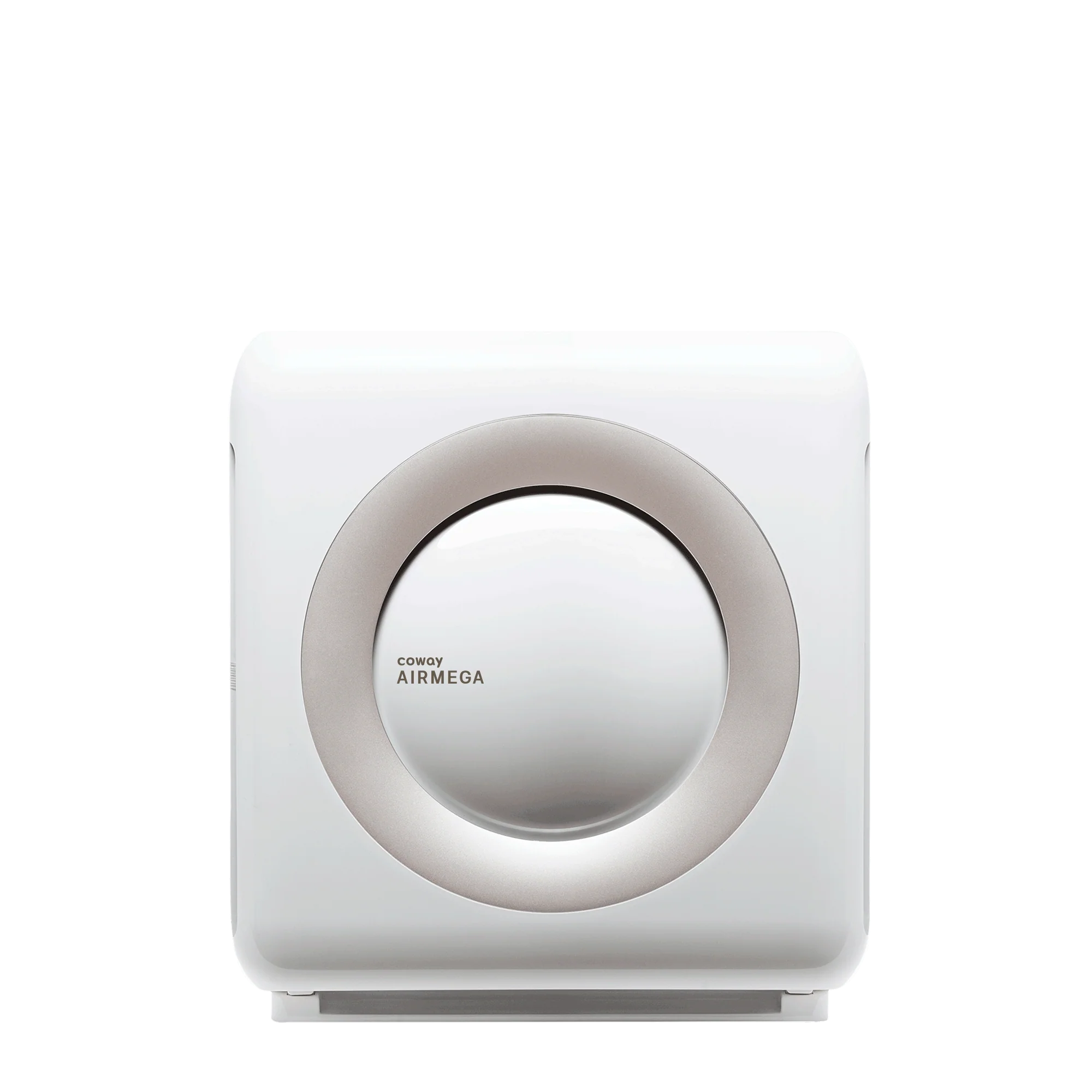
Coway AP-1512HH Mighty Review Editor Choice
✓ AHAM VerifiedOur Verdict
Key Specifications
- Room Coverage
- 361 sq ft
- CADR
- 233/246/240
- Filter
- True HEPA + Carbon + Pre-filter
- Noise
- 24 dB
- Power
- 77 watts
- Best For
- Medium rooms up to 361 sq ft. Wirecutter #1 for 10+ years. Best overall value.
📅 Prices checked . Amazon prices change frequently — click through for current price. Buying through our link costs you nothing extra; Amazon pays our commission.
What's in the Box
- Coway AP-1512HH air purifier
- Pre-installed 4-stage filter set
- Power cord
- User manual
- Filter replacement reminder sticker
Pros
- Wirecutter #1 for 10+ consecutive years
- AHAM verified CADR — no controversy
- True HEPA
- Fastest auto mode response in class
- 24dB ultra quiet sleep mode
- Eco mode at 4.9 watts
- 3-year warranty
Cons
- No WiFi or app control
- Carbon is impregnated fabric — weak on heavy odors
- Ionizer adds trace ozone (9ppb — CARB safe)
- Filter costs $60/year
- Design is dated
Best For
The Coway AP-1512HH has a 360-degree intake — it draws air from all sides equally, which makes it the most placement-flexible purifier in its price range. Whether you put it on a nightstand, desk, or floor (when necessary), its circular design does not penalize you for sub-optimal positioning the way rear-intake units do.
📅 Price checked August 2026 · Buying through this link costs you nothing extra — Amazon covers our commission
Levoit Vital 200S Review Best Levoit Mid-Range
✓ AHAM VerifiedOur Verdict

Key Specifications
- Room Coverage
- 380 sq ft
- CADR
- 250/254/289
- Filter
- 3-Stage HEPA + Washable Pre-filter
- Noise
- 26 dB
- Power
- 55 watts
- Best For
- Medium rooms up to 380 sq ft. Washable pre-filter. Smart WiFi via VeSync.
📅 Prices checked . Amazon prices change frequently — click through for current price. Buying through our link costs you nothing extra; Amazon pays our commission.
What's in the Box
- Levoit Vital 200S air purifier
- Pre-installed 3-in-1 filter
- Power cord
- User manual
- Quick start guide
Pros
- AHAM verified CADR 200
- Washable pre-filter extends filter life
- Smart WiFi via VeSync app
- Auto mode and air quality sensor
- 12-month filter life vs 6 months for Core 300
Cons
- Levoit brand HEPA controversy
- No pellet carbon for heavy odors
- Heavier than Core series at 13 lbs
Best For
The Levoit Vital 200S is compact enough to place on most surfaces without dominating the room, which matters in bedrooms where floor space and nightstand space compete. Its top-discharge design works well on floor placement since clean air exits upward and circulates naturally.
📅 Price checked August 2026 · Buying through this link costs you nothing extra — Amazon covers our commission
The Four Placement Principles That Apply to Every Room
Before room-specific guidance, four physics-based rules apply everywhere:
-
Elevation: 18–36 inches above the floor.
Particles are not evenly distributed by height. Heavier particles (dust, pollen, pet dander) settle toward the floor but are re-suspended at human breathing height by foot traffic and air movement. Positioning the purifier at breathing height captures particles before they settle rather than after. Floor-level placement also puts the intake in the boundary layer — the slow-moving air right above the floor where circulation is lowest. -
Clearance: minimum 12 inches on all sides.
Air purifiers need unrestricted intake airflow. Placing a unit against a wall reduces effective intake on that side. Placing it in a corner reduces two sides. Most CADR lab tests are conducted with 18 inches of clearance on all sides — real-world CADR drops when you reduce that. Leave at least 12 inches; 18 is better. -
Proximity to source, not to you.
Common instinct is to put the purifier next to your chair or bed. More effective: put it near the source of pollution (a pet's sleeping area, a doorway where outdoor air enters, a cooking area). The purifier captures particles entering the breathing zone rather than cleaning air that has already circulated past you. -
Work with HVAC airflow, not against it.
HVAC vents create the dominant air movement pattern in most rooms. Placing an air purifier on the opposite side of the room from the HVAC return creates a loop — purified air moves toward the return vent, pulling dirty air past the purifier intake on its way. This is the ideal placement relative to your HVAC system.
Bedroom Placement: Where to Put Your Air Purifier for Sleep
The bedroom is the highest-priority room for most people because you spend 7–9 hours per night breathing the same air. Cumulative particle exposure during sleep is significant — especially for allergy and asthma sufferers.
Optimal bedroom position: On a nightstand or dresser, 6–10 feet from the head of the bed. This distance matters. Placing the purifier directly beside your head puts you in the turbulent airstream of the fan output, which can be disruptive to sleep and does not necessarily mean cleaner air at your breathing zone.
Why not the floor? A bedroom purifier on the floor operates in the lowest-circulation zone of the room. It also sits below mattress height, meaning particles suspended at breathing level while you sleep are not being captured efficiently. If floor placement is unavoidable, choose a purifier with top-discharge (clean air exits upward) rather than side-discharge.
Near the doorway vs near the bed: If your bedroom door is left open, placing the purifier near the doorway intercepts particles entering from the rest of the house — a better strategy for reducing total particle load than positioning it closer to where you sleep. If the door stays closed, near-door placement matters less.
Noise consideration: At 6–10 feet, a purifier running at 24–28 dB (sleep mode) is inaudible to most people. Closer than 3 feet, even 24 dB becomes perceptible. Measure from the unit to where your ears rest on the pillow, not from the unit to the bed frame.
See our bedroom air purifier guide for model-specific sleep mode CADR data and noise measurements.
Living Room Placement: Open-Plan Airflow Strategy
Living rooms present the most complex placement challenge because they are typically the largest room, often open-plan, and contain the highest variety of pollution sources: foot traffic bringing outdoor particles, cooking odors from adjacent kitchens, pet traffic, upholstered furniture off-gassing VOCs.
Single purifier in a large open-plan space: Position near the most-used seating area, elevated to coffee-table height or above. The goal is to capture particles in the breathing zone of the primary occupant, not to try to clean the entire floor plan. A single unit with 300 CADR cannot effectively clean a 700 sq ft open plan — it will clean the zone it occupies well and leave distant areas less treated.
Two-purifier strategy for large open-plan: One unit near the kitchen/cooking area to capture cooking particles as they generate, and one near the primary seating. This is more effective than one high-CADR unit in the middle of the space.
Position relative to the TV: Avoid placing the purifier directly in front of a TV or behind furniture where airflow is blocked. Purifiers positioned between the sofa and the primary doorway intercept particles being brought in by foot traffic — a consistent source in high-traffic homes.
For large room purifier selection, see our large room guide with CADR requirements by sq ft.
Kitchen Placement: Special Rules for Cooking Pollution
Kitchen air purifier placement is governed by a different primary concern: cooking produces particles in bursts, not continuously. A pan of sauteed garlic at high heat generates more PM2.5 in 5 minutes than a full day of background dust accumulation. The purifier needs to be positioned to capture particles before they migrate to the rest of the house.
Position near the stove, not away from it. This seems counterintuitive — stove heat rises and you worry about the purifier overheating. In practice, kitchen air purifiers are not damaged by normal cooking heat. The fan intake should be positioned toward the cooking zone, at counter height if possible, to capture cooking smoke at the source.
The range hood interaction: If your kitchen has a vented range hood, the hood's airflow dominates the kitchen environment during cooking. The purifier is most useful for residual particles after cooking ends — position it to clean the remaining air, not to compete with the range hood during active cooking.
Grease pre-filter requirement: Kitchen purifiers need a grease-rated pre-filter or washable pre-filter. Cooking oil aerosolizes and coats HEPA filters, permanently reducing their efficiency and potentially creating a fire risk in extreme cases. Position where grease deposition on the filter is manageable (not directly above the stove).
See our kitchen air purifier guide for models with grease-resistant pre-filters.
Office and Desk Placement: Optimizing for Breathing Zone
Office placement has one overriding priority: put the purifier at the same height as your breathing zone while seated at your desk. Seated breathing height is approximately 44–52 inches from the floor for most adults. A purifier on the floor under the desk operates 30–40 inches below your breathing zone, in a dead zone of slow-moving air.
Desk-side placement: On a corner of the desk, bookshelf beside the desk, or a small stand at desk height. The purifier intake should face toward you, not toward a wall. Side-intake purifiers (like the Coway AP-1512HH's 360-degree intake) work well in this configuration.
Printer placement interaction: Laser printers generate ultrafine particles (UFPs) during every print job. If you use a laser printer, position the air purifier between the printer and your breathing zone — not on the opposite side of the desk.
Single occupant vs shared office: In a shared office, placement near the primary doorway captures particles entering from hallways and other spaces. In a home office used by one person, placement beside the desk at breathing height outperforms any other position.
What to Avoid: Common Placement Mistakes That Cut Performance
- Corners. A corner reduces intake airflow on two sides. Combined with the naturally low circulation of corners in any room, this can cut effective CADR by 30–50%. Never place a purifier in a corner unless no other option exists.
- Behind furniture. A sofa, bookshelf, or curtain that blocks the intake cuts the unit off from the room's air entirely. The purifier recirculates the small pocket of air behind the furniture rather than cleaning the room.
- On the floor in a carpeted room. Carpet acts as a particle reservoir at floor level. A purifier on carpet pulls fibres and trapped dust into itself continuously. This accelerates filter clogging without cleaning the breathing-height air where occupants actually inhale particles.
- Near an open window. Placing a purifier next to an open window forces it to clean outdoor air continuously — an impossible task. It will max out its CADR on incoming outdoor particles while neglecting the indoor environment. Close windows when the purifier is running or position it away from active airflow entry points.
- Directly beside a heating vent or radiator. Heat convection near a heating source creates upward airflow that disrupts the purifier's intake pattern. It also stresses the filter material over time. Maintain at least 24 inches from any heat source.
- Inside a cabinet or enclosed space. Some buyers try to hide purifiers inside furniture to reduce visual clutter. Any enclosure that restricts airflow converts the purifier into an expensive fan with a gradually degrading filter.
How Many Air Purifiers Do You Need? Room Count vs CADR
The honest answer: one purifier per occupied room is the correct standard. Air purifiers do not clean air in rooms they are not in. A single high-CADR purifier in the living room does not reduce particle levels in bedrooms with closed doors.
Priority order for adding units:
- Bedroom first — where you spend the most hours and where air quality directly affects sleep and recovery
- Primary living area second — where you spend waking hours and where pollution sources are highest
- Kitchen third — if cooking smoke or odors are a regular concern
- Additional bedrooms as budget allows
Portable vs whole-house: Moving one purifier between rooms is less effective than it sounds. Particle levels in a closed room rise within 30–60 minutes of removing the purifier. If budget allows, a dedicated unit per bedroom costs less over three years than you might expect — a Levoit Core 300 at $60 with $20/year in filters is $120 total over three years.
See our whole-house air purifier guide for multi-room strategies and our full ranked list for budget-matched recommendations by room size.
Does Air Purifier Placement Change for Specific Pollutants?
Yes. The dominant pollutant in your space changes the optimal placement strategy:
Pet dander: Dander particles are light and stay airborne for hours. They settle on horizontal surfaces and re-suspend with foot traffic. For pet households, place the purifier in the room where the pet spends the most time — not where you sleep. Capturing dander at the source before it migrates to bedrooms reduces the total particle load you encounter. See our pet air purifier guide.
Mold spores: Mold spores are heavier than dander and settle faster. In a basement or bathroom with active mold, position the purifier at mid-height (24–36 inches) and point the intake toward the highest-moisture area. Spores are released in bursts when disturbed — the purifier needs to be running and positioned to capture them quickly. See our mold air purifier guide.
Wildfire smoke and outdoor PM2.5: During wildfire events, the goal is to maintain a clean room — one designated room where particles are actively filtered. Close all doors and windows in that room. Position the purifier in the centre or toward the primary air leakage point (typically the doorway). Run on maximum speed. See our smoke air purifier guide.
Cooking odors and VOCs: Carbon filter effectiveness is distance-sensitive — VOC molecules need dwell time inside the carbon to adsorb. Odor-focused purifiers work best placed near the odor source rather than at a distance. See our odor guide for carbon weight and placement interaction.