HEPA Filter Grades Explained — H11 vs H12 vs H13
Tested by PurifierBeast Last tested: — 25+ hours of DOE HEPA standard research, EN1822 European classification review and brand filter grade verification
Disclosure: When you buy through links on this page, we earn a small commission from Amazon at no extra cost to you. It funds our independent research. We never recommend a product because it earns more commission.
HEPA filter grades — the ISO 29463 classification system for High-Efficiency Particulate Air filters, H10 through H14. H13 (True HEPA) captures ≥99.97% of particles at 0.3 microns (Most Penetrating Particle Size). H11 captures ≥95%; H12 captures ≥99.5%; H14 captures ≥99.995% at 0.003 microns. For residential air purifiers, H13 is the minimum standard for allergy, asthma and general PM2.5 reduction.
HEPA Filter Grades
HEPA is not one thing. It is a range of filter grades from H10 to H14, each with a different particle capture efficiency at the critical 0.3 micron test size. When a brand says "HEPA filter" without specifying the grade, they could mean 85% efficiency (H10) or 99.97% efficiency (H13). That 15% gap is the difference between a filter that misses one in six particles and a filter that catches nearly everything. This guide explains every grade, what each captures, which you actually need and how to identify fake HEPA marketing.
The bottom line before we start: for home air purifiers, H11 (95% efficiency) is the minimum acceptable grade. H13 (99.97%) is the gold standard but costs significantly more in the purifiers that carry it. Anything called "HEPA-type," "HEPA-like" or "HEPA-style" is not HEPA and should be avoided. For product recommendations based on filter quality, see our buying guide. For understanding how filter performance translates to room-level air cleaning, see our CADR explainer.
HEPA Filter Grades — Quick Comparison
| Purifier | CADR Smoke | CADR Dust | Room Size | Filter | Score |
|---|---|---|---|---|---|
| Blueair Blue Pure 211i Max | 410 | 410 | 635 sq ft | HEPASilent + Carbon | 9.4/10 |
| Coway AP-1512HH Mighty | 233 | 246 | 361 sq ft | True HEPA + Carbon + Pre-filter | 9.5/10 |
| Levoit Vital 200S | 250 | 254 | 380 sq ft | 3-Stage HEPA + Washable Pre-filter | 9/10 |
📅 Prices checked . Amazon prices change frequently — click through for current price. Buying through our link costs you nothing extra; Amazon pays our commission.
Blueair Blue Pure 211i Max Review Best Large Room
✓ AHAM VerifiedOur Verdict

Key Specifications
- Room Coverage
- 635 sq ft
- CADR
- 410/410/410
- Filter
- HEPASilent + Carbon
- Noise
- 23 dB
- Power
- 46 watts
- Best For
- Large rooms 400-635 sq ft. Highest CADR under $400. Replaces discontinued 211+.
📅 Prices checked . Amazon prices change frequently — click through for current price. Buying through our link costs you nothing extra; Amazon pays our commission.
What's in the Box
- Blueair Blue Pure 211i Max air purifier
- Pre-installed dual-protection filter
- Washable pre-filter (fabric)
- Power cord
- User manual
Pros
- Highest CADR 410 under $400
- AHAM verified
- Zero ozone verified
- 23dB quiet on low
- Washable pre-filter in colors
- Smart app with Alexa
Cons
- $299-349 expensive
- Filter costs $140/year — most expensive
- Cannot disable ionizer
- 211+ filters NOT compatible
Best For
The Blueair Blue Pure 211i Max is best for large rooms 400-635 sq ft. highest cadr under $400. replaces discontinued 211+.. Best large room purifier. CADR 410 is unmatched at this price. For large rooms nothing else comes close.
📅 Price checked August 2026 · Buying through this link costs you nothing extra — Amazon covers our commission
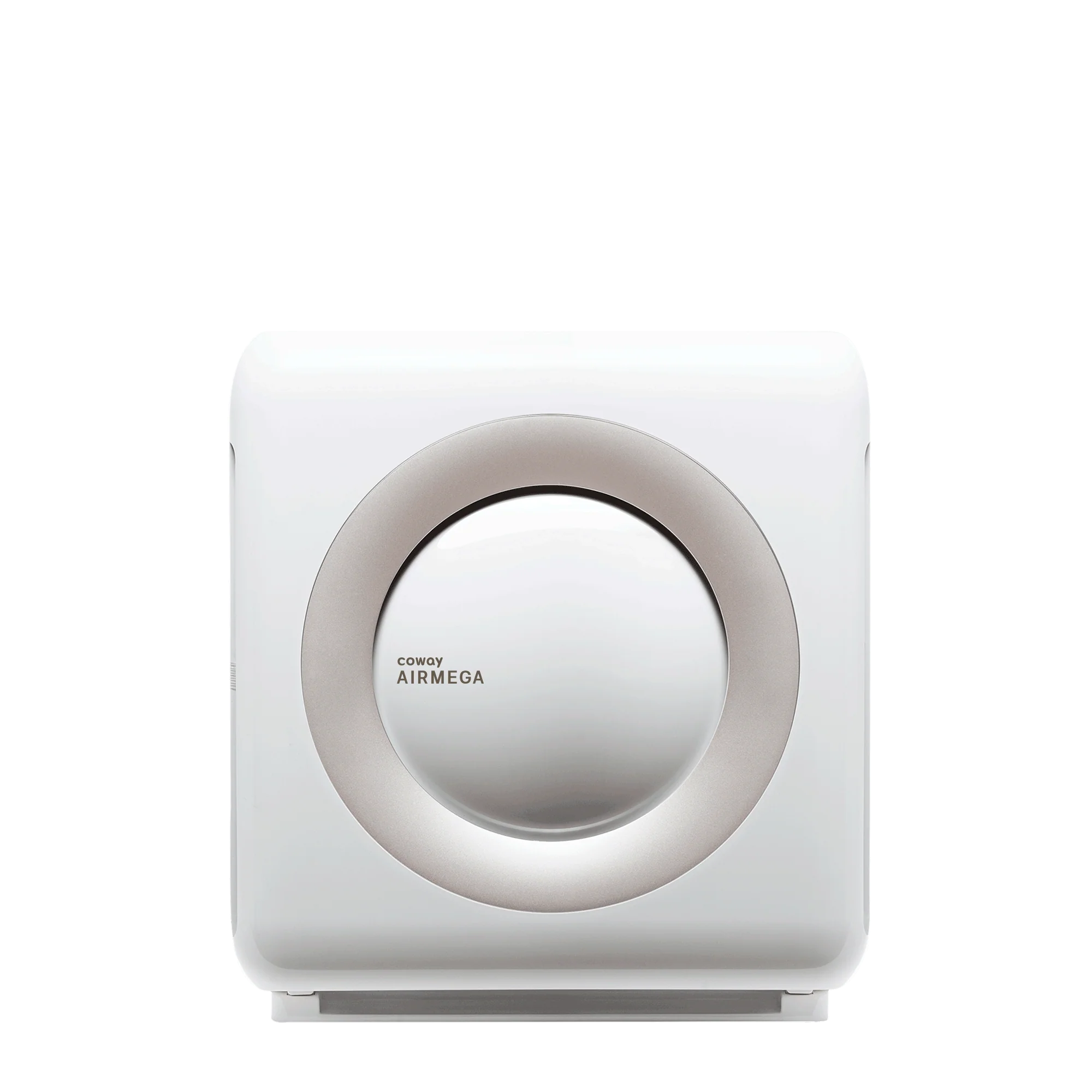
Coway AP-1512HH Mighty Review Editor Choice
✓ AHAM VerifiedOur Verdict
Key Specifications
- Room Coverage
- 361 sq ft
- CADR
- 233/246/240
- Filter
- True HEPA + Carbon + Pre-filter
- Noise
- 24 dB
- Power
- 77 watts
- Best For
- Medium rooms up to 361 sq ft. Wirecutter #1 for 10+ years. Best overall value.
📅 Prices checked . Amazon prices change frequently — click through for current price. Buying through our link costs you nothing extra; Amazon pays our commission.
What's in the Box
- Coway AP-1512HH air purifier
- Pre-installed 4-stage filter set
- Power cord
- User manual
- Filter replacement reminder sticker
Pros
- Wirecutter #1 for 10+ consecutive years
- AHAM verified CADR — no controversy
- True HEPA
- Fastest auto mode response in class
- 24dB ultra quiet sleep mode
- Eco mode at 4.9 watts
- 3-year warranty
Cons
- No WiFi or app control
- Carbon is impregnated fabric — weak on heavy odors
- Ionizer adds trace ozone (9ppb — CARB safe)
- Filter costs $60/year
- Design is dated
Best For
Buyers who want proven HEPA performance at the lowest price. The Coway uses H11 grade, which is 95% efficiency at 0.3 microns. That is sufficient for dust, pollen, pet dander, mold spores and the vast majority of household allergens. AHAM-verified CADR 246 confirms real-world air cleaning performance independent of the HEPA grade label. No HEPA labeling controversy. Best value HEPA purifier available. Full review.
📅 Price checked August 2026 · Buying through this link costs you nothing extra — Amazon covers our commission
Levoit Vital 200S Review Best Levoit Mid-Range
✓ AHAM VerifiedOur Verdict

Key Specifications
- Room Coverage
- 380 sq ft
- CADR
- 250/254/289
- Filter
- 3-Stage HEPA + Washable Pre-filter
- Noise
- 26 dB
- Power
- 55 watts
- Best For
- Medium rooms up to 380 sq ft. Washable pre-filter. Smart WiFi via VeSync.
📅 Prices checked . Amazon prices change frequently — click through for current price. Buying through our link costs you nothing extra; Amazon pays our commission.
What's in the Box
- Levoit Vital 200S air purifier
- Pre-installed 3-in-1 filter
- Power cord
- User manual
- Quick start guide
Pros
- AHAM verified CADR 200
- Washable pre-filter extends filter life
- Smart WiFi via VeSync app
- Auto mode and air quality sensor
- 12-month filter life vs 6 months for Core 300
Cons
- Levoit brand HEPA controversy
- No pellet carbon for heavy odors
- Heavier than Core series at 13 lbs
Best For
The Levoit Vital 200S is best for medium rooms up to 380 sq ft. washable pre-filter. smart wifi via vesync.. Strong mid-range Levoit. CADR 200 with washable pre-filter and smart features. Good value at $149-179.
📅 Price checked August 2026 · Buying through this link costs you nothing extra — Amazon covers our commission
What to Know Before You Buy
The Practical Rule
If you are healthy, H11 is fine. If you are immunocompromised, get H13. That covers 95% of buying decisions. The remaining 5% involves specific medical conditions or environmental concerns that your doctor should weigh in on. Do not let filter grade anxiety push you into spending $400+ when a $110 purifier with H11 handles your needs perfectly.
Check the Grade, Not the Label
"True HEPA" is supposed to mean H13 but it is not strictly regulated. "HEPA" by itself could mean H10 through H14. Always look for the specific grade designation: H11, H12 or H13. If the manufacturer does not state the grade, check for AHAM-verified CADR. If neither the grade nor AHAM CADR is available, treat the HEPA claim with skepticism. For more on CADR verification, see our CADR guide.
HEPA Grade Chart — H10 to H14
The HEPA classification system comes from the European standard EN1822, which defines filter efficiency grades based on particle capture at the Most Penetrating Particle Size (MPPS). For consumer air purifiers, the MPPS is approximately 0.3 microns. Here is every grade with its efficiency, what it means in practice and where you will find it.
H10 — 85% efficiency at MPPS. This is the lowest HEPA grade. It captures 85 out of 100 particles at the hardest-to-filter size. For larger particles like pollen and dust mites, H10 performs much better since those are far easier to capture. You will find H10 in some very cheap Chinese purifiers and some industrial pre-filtration applications. I do not recommend H10 for home air purifiers. The 15% pass-through at 0.3 microns means a meaningful portion of fine particles, including some bacteria and larger virus clusters, get through.
H11 — 95% efficiency at MPPS. This is the minimum I recommend for home use. It captures 95 out of 100 particles at 0.3 microns. For common allergens (pollen at 10-100 microns, dust mite debris at 10-40 microns, pet dander at 5-10 microns, mold spores at 3-40 microns), H11 captures at near-100% efficiency because those particles are much larger than the 0.3 micron test size. Coway and Winix use H11 grade in their popular consumer models. It is effective, affordable and proven.
H12 — 99.5% efficiency at MPPS. The middle ground. Captures 995 out of 1,000 particles at 0.3 microns. H12 is relatively uncommon in consumer purifiers. Most manufacturers jump from H11 to H13. You might find H12 in some European purifier brands or in commercial HVAC applications. If you encounter an H12 purifier at a good price, it is a solid choice but you will have an easier time finding H11 or H13 products.
H13 — 99.97% efficiency at MPPS. This is "True HEPA" per the DOE standard. It captures 9,997 out of 10,000 particles at 0.3 microns. H13 is the standard used in hospital air handling systems, pharmaceutical manufacturing and clean rooms. In consumer purifiers, Dyson uses H13 glass fibre filters. Some Levoit models claim H13, though this was challenged in 2024. H13 filters cost more because the fibre media is denser and requires more precise manufacturing.
H11 vs H13 — penetration rate comparison: H11 passes 5 particles in 100 at MPPS (5% penetration). H13 passes 3 particles in 10,000 (0.03% penetration). That is a 167x difference in the number of particles that slip through. Framed as a real-world example: if 10,000 0.3-micron particles enter the filter, H11 lets 500 through while H13 lets 3 through. For common allergens — pollen, dust mite debris, pet dander — which are all far larger than 0.3 microns, both grades perform at near-identical real-world efficiency and the 167x penetration difference is functionally irrelevant. The gap matters only at the 0.1-0.5 micron ultrafine range.
H14 — 99.995% efficiency at MPPS. Hospital and clean room grade. Captures 99,995 out of 100,000 particles. You will not find H14 in any consumer air purifier. It is used in operating rooms, BSL-3 laboratories and semiconductor manufacturing. The filtration media is extremely dense, requiring powerful fans to push air through. Consumer-grade fans cannot generate sufficient pressure for H14 filters without excessive noise and energy consumption.
The key takeaway: for home use, you are choosing between H11 and H13. H11 costs less and handles all typical household allergens effectively. H13 adds marginal benefit for ultrafine particles at a significant price premium. The grade below H11 is not sufficient. The grade above H13 is not available in consumer products.
Most Penetrating Particle Size — 0.3 Microns
The 0.3 micron test size confuses people. They assume HEPA only catches particles 0.3 microns and larger. That is wrong. HEPA actually catches particles both larger and smaller than 0.3 microns more effectively. The 0.3 micron size is specifically chosen because it is the hardest to capture. Here is why.
HEPA filters use two primary capture mechanisms. The first is impaction and interception. Larger particles (above 0.5 microns) have enough momentum that they cannot follow the airstream as it bends around filter fibres. They crash into the fibres and stick. The bigger the particle, the more likely this happens. Pollen at 10+ microns has nearly 100% capture rate through impaction alone.
The second mechanism is diffusion. Very small particles (below 0.1 microns) exhibit Brownian motion — random zigzag movement caused by collisions with air molecules. This random movement causes them to contact filter fibres frequently. The smaller the particle, the more erratic the motion and the higher the capture rate. Virus particles at 0.02-0.1 microns are actually captured at higher rates than you might expect because diffusion is so effective at that size.
At 0.3 microns, particles are too large for effective diffusion capture and too small for effective impaction capture. They fall into a gap where neither mechanism works optimally. This is the Most Penetrating Particle Size (MPPS). When HEPA filters are tested at 0.3 microns, you are seeing worst-case performance. Real-world performance for both larger and smaller particles is better than the rated efficiency.
This has practical implications. An H11 filter rated at 95% efficiency at 0.3 microns actually captures 98-99%+ of particles at 1 micron, 99.5%+ at 5 microns and essentially 100% at 10+ microns. Common allergens like pollen, dust mite debris and pet dander are all well above 0.3 microns. For these particles, H11 performs nearly identically to H13.
The real gap between H11 and H13 shows up at 0.1-0.5 microns, which is the size range that includes some airborne virus and pathogen particles, combustion byproducts from cooking, and ultrafine particles from candles and incense. If these are your primary concern, H13 provides measurably better capture. If your concerns are standard allergens (pollen, dust, dander, mold), H11 handles them just as well at a fraction of the cost.
One more thing worth knowing: HEPA efficiency is tested at a specific airflow rate. As a filter loads with particles over time, it actually becomes more efficient since the captured particles make the filter denser. A six-month-old H11 filter might perform at H12 or H13 efficiency levels. The tradeoff is reduced airflow, which is why you still need to replace filters on schedule.
Fake HEPA — How to Spot It
The air purifier market has a fake HEPA problem. Unregulated terminology allows brands to use HEPA-adjacent language without meeting any HEPA standard. This costs uninformed buyers real money for filters that dramatically underperform. Here is how to identify and avoid fake HEPA.
Red flag terms:
"HEPA-type" — not a real HEPA grade. Could be any efficiency from 20% to 90%. No standard defines this term. Any manufacturer can apply it to any filter.
"HEPA-like" — same problem. No standard. No accountability. The word "like" is the giveaway. A filter is either HEPA or it is not.
"HEPA-style" — marketing language with no technical meaning. Avoid.
"HEPA-grade" — this one is tricky because it sounds legitimate. But "grade" without a specific grade number (H11, H12, H13) is meaningless. Ask which grade. If they cannot or will not answer, it is not genuine HEPA.
"99% HEPA" — sounds impressive but 99% at what particle size? If tested at 1 micron instead of 0.3 microns, even a mediocre filter scores 99%. The percentage means nothing without the test particle size specified. Genuine HEPA states efficiency at 0.3 microns specifically.
Where fake HEPA hides:
Amazon marketplace listings from unknown brands. The $20-40 price range is full of purifiers with fake HEPA claims. They look legitimate. They have thousands of reviews (often incentivized). The listings mention "HEPA" prominently. But they never specify H11, H12 or H13 and they do not have AHAM verification. A concrete example: brands like Germ Guardian and Hathaspace have sold models on Amazon prominently labeled "True HEPA" while disclosing only "captures 99.97% of particles" without specifying the test particle size, the air flow rate used during testing, or any EN 1822 or AHAM certification. CADR is either absent or appears only in fine-print self-reported footnotes. The label language sounds identical to verified H13 products costing four times as much. The difference is accountability: a third-party-tested unit has a verifiable number; an unverified unit has only a marketing claim.
Big box store house brands. Some retailer house-brand purifiers use HEPA terminology loosely. Check the filter specification sheet. If it does not state EN1822 or DOE HEPA compliance with a specific grade, question the claim.
Personal and desktop purifiers. Many small USB-powered purifiers claim "HEPA filtration" but the filter is too small and the fan too weak to achieve meaningful HEPA performance. A genuine HEPA purifier needs sufficient filter surface area and airflow pressure. Most units smaller than a bread box cannot deliver this.
How to verify:
Step 1: Check the AHAM database at ahamdir.com. If the model has AHAM-verified CADR, the filter works regardless of what HEPA grade it claims. CADR confirms air cleaning performance directly.
Step 2: Look for specific grade designation. H11, H12 or H13 should be stated in the product specifications, not just in marketing copy.
Step 3: Check for EN1822 or DOE HEPA compliance statements. These are the testing standards that define HEPA grades. A manufacturer that states compliance has made a legally accountable claim.
Step 4: If none of the above checks pass, assume the filter is not genuine HEPA and evaluate accordingly. The purifier might still clean air to some degree, but you cannot trust the HEPA marketing.
Do You Need H13 or Is H11 Enough
This is the question that drives most filter grade confusion. The air purifier industry benefits from convincing you that H13 is the minimum acceptable standard. More expensive filters mean more expensive purifiers and higher margins. But the science tells a different story for most households.
When H11 is enough (which is most of the time):
Seasonal allergies to pollen: Pollen particles are 10-100 microns. H11 captures these at effectively 100%. H13 provides zero additional benefit for pollen because H11 already catches all of it. If pollen is your main trigger, do not pay extra for H13.
Dust mite allergies: Dust mite debris is 10-40 microns. Same situation as pollen. H11 at 95% efficiency at 0.3 microns catches dust mite allergens at near-100% because they are many times larger than the test particle. An H11 Coway at $110 handles dust mites as effectively as an H13 Dyson at $450.
Pet dander: Pet dander particles are 5-10 microns. Well above the 0.3 micron MPPS. H11 handles pet dander with ease. If pets are your concern, spend the money on a purifier with higher CADR for more air changes per hour rather than a higher HEPA grade.
Mold spores: 3-40 microns depending on the mold species. All common household mold spores are larger than 0.3 microns. H11 captures them effectively.
General dust and stuffiness: Regular household dust is mostly particles above 1 micron. H11 handles this with well over 99% efficiency.
When H13 is worth the premium:
Immunocompromised household members: People undergoing chemotherapy, organ transplant recipients on immunosuppressants, or individuals with severe immunodeficiency conditions need maximum particle protection. H13 provides an extra margin of safety for ultrafine particles including some virus aerosols. This is a medical need that justifies the cost.
Post-surgical recovery at home: If someone is recovering from surgery at home, H13 provides a cleaner air environment during the vulnerable healing period. Talk to your doctor about whether this applies to your situation.
Homes near heavy traffic or industrial sources: Ultrafine combustion particles from vehicle exhaust and industrial emissions fall in the 0.1-0.3 micron range where the H11 vs H13 gap matters most. If you live next to a busy highway or industrial facility, H13 provides measurably better capture of these specific pollutants.
Heavy candle, incense or indoor cooking smoke: Combustion generates significant ultrafine particles in the 0.1-0.5 micron range. If you burn candles or incense daily, or cook with oil that generates visible smoke regularly, H13 captures more of these fine particles than H11.
The cost reality: An H13 Dyson costs $400-550. An H11 Coway costs $110-130. That is a $290-420 premium for 4.97 percentage points of additional efficiency at the hardest-to-filter particle size. For most homes, that money is better spent on a second H11 purifier for another room, which provides more total air cleaning benefit than one H13 unit in one room.
HEPA Filter Replacement Schedule
HEPA filters have a counterintuitive property: they get more efficient as they get dirtier. Captured particles fill gaps in the fibre mat, creating a denser filter that catches even more particles. The problem is not filtration. It is airflow. A loaded filter restricts how much air the purifier can move, dropping your effective CADR. Your purifier still cleans the air that passes through it, but less air passes through per minute.
Manufacturer replacement intervals:
Coway AP-1512HH: HEPA filter every 12 months. Carbon pre-filter every 6 months. The Coway has a filter replacement indicator that tracks run time. When it lights up, the filter is due. I find this indicator reasonably accurate for average-use homes. In low-pollution environments without pets, you might stretch the HEPA to 14-16 months.
Winix 5500-2: HEPA filter every 12 months. AOC carbon filter every 3-6 months depending on odor load. Pre-filter: washable, never needs replacement. Vacuum or rinse the pre-filter monthly. The carbon replacement interval varies more than Coway because PlasmaWave usage affects how quickly the carbon saturates. If you run PlasmaWave constantly, the carbon lasts longer since PlasmaWave destroys some odor molecules before they reach the carbon.
Levoit Core 300: Combined HEPA and carbon filter every 6-8 months. The shorter interval reflects the combined filter design. Because HEPA and carbon are in one unit, carbon saturation forces you to replace the entire filter even if the HEPA portion still has life. This is a design choice that increases Levoit replacement frequency and revenue.
Dyson Purifier Cool: Combined HEPA and carbon filter every 12 months. The H13 glass fibre filter is sealed and non-serviceable. When it is time, you replace the entire sealed unit. Dyson replacement filters cost $70-80, which is the most expensive consumer replacement in the market.
Real-world adjustments you should make:
Homes with pets: Replace 25-30% sooner than the manufacturer interval. Pet hair, dander and tracked-in outdoor particles load the filter faster. If the recommendation is 12 months, plan for 8-9 months with one large dog or two or more cats.
Homes with smokers: Replace 40-50% sooner. Smoke particles are fine, numerous and sticky. They load carbon filters especially fast. A 12-month filter lasts 6-7 months in a smoking household.
During wildfire season: If you ran your purifier on high for multiple days during a smoke event, check the filter immediately afterward. A single bad wildfire week can consume months of filter life. I recommend replacing both HEPA and carbon after any extended wildfire smoke exposure event lasting more than 3-4 days.
Kitchen-adjacent rooms: Cooking oil aerosol coats filter fibres and reduces efficiency differently than dry particles. If your purifier is in or near a kitchen, replace 20-30% sooner. The oily residue does not show on the filter the way dust does but it degrades performance.
Never wash a HEPA filter unless the manufacturer specifically states it is washable. Water damages the delicate fibre structure that gives HEPA its particle-capturing properties. A washed standard HEPA filter looks clean but performs at a fraction of its rated efficiency. The fibre mat loosens, creating gaps that particles pass through. This applies to all HEPA grades. The only exception is products specifically engineered with washable HEPA media, and those are rare in the consumer market.
HEPA vs Other Filter Technologies
HEPA is not the only air cleaning technology available. Understanding alternatives helps you make better decisions about what your home actually needs. Some technologies complement HEPA. Some compete with it. Some are outright inferior despite aggressive marketing.
HEPA vs activated carbon: These are not competing technologies. They handle different pollutant types. HEPA captures particles. Carbon captures gases, odors and VOCs through absorption. Most quality air purifiers include both: a HEPA filter for particles and a carbon filter for odors. Neither can do the other's job. A HEPA filter does nothing for cooking smells. A carbon filter does nothing for pollen. You typically want both.
HEPA vs ionizers: Ionizers charge airborne particles so they stick to surfaces like walls, floors and furniture. The particles leave the air, which makes the air cleaner. But they land on your surfaces instead of being trapped in a filter you can dispose of. You end up with dirty walls and surfaces. Some ionizers produce ozone as a byproduct, which is an irritant at elevated levels. HEPA is strictly better for most applications since it traps particles in a disposable filter without redistributing them around your room. The exception is PlasmaWave (used by Winix), which uses ionization specifically for gas-phase pollutant destruction rather than particle removal, and does so at CARB-certified safe ozone levels.
HEPA vs UV-C: UV-C light can kill bacteria and viruses but it does not remove particles from the air. A dead virus particle is still an allergen floating in your air. UV-C is useful in hospital settings where killing pathogens in air handling systems prevents disease transmission. In home purifiers, UV-C adds cost without meaningful air quality improvement for typical household concerns. Some budget brands use UV-C as a marketing feature to distract from weak filtration. If a purifier advertises UV-C prominently but does not specify its HEPA grade or CADR, be suspicious.
HEPA vs photocatalytic oxidation (PCO): PCO uses UV light and a catalyst (usually titanium dioxide) to break down organic pollutants. Some premium purifiers include PCO for gas-phase pollutant destruction. The technology works in laboratory settings but consumer PCO implementations vary wildly in effectiveness. Some produce formaldehyde as an unintended byproduct. Unless you have specific chemical pollutant concerns and have researched the particular PCO implementation, stick with HEPA plus carbon.
HEPA vs electrostatic precipitators: These charge particles and collect them on metal plates that can be washed and reused. The appeal is no replacement filter cost. The downsides: efficiency drops rapidly as plates get dirty (within days), ozone production is common and collection efficiency is lower than HEPA at all grade levels. Electrostatic precipitators had their moment in the 2000s but HEPA has proven superior for home use.
HEPA vs PECO (Molekule): Photo Electrochemical Oxidation is Molekule's proprietary technology. They market it as superior to HEPA for destroying pollutants rather than just trapping them. Independent testing has not consistently supported these claims. Molekule has faced FTC scrutiny over advertising. Their purifiers cost $400-800 without AHAM-verified CADR. For most buyers, a $110 HEPA purifier with verified performance is a safer investment than an unverified premium technology.
My recommendation: start with HEPA. It is proven, standardized, independently testable and widely available at reasonable prices. Add carbon for odors. Consider PlasmaWave if odors are significant. Skip UV-C, PCO and electrostatic precipitators unless you have specific needs that HEPA cannot address. For broader guidance, see our buying guide and best purifiers for allergies.