Air Purifier for Bedroom 2026 — Sleep Mode, Noise, and Right-Sized CADR
Tested by PurifierBeast Last tested: — 30+ hours of Noise level verification, CADR-to-room-size matching, sleep mode feature research, filter cost analysis across top bedroom models
Disclosure: When you buy through links on this page, we earn a small commission from Amazon at no extra cost to you. It funds our independent research. We never recommend a product because it earns more commission.
Bedroom Air Purifiers
A bedroom air purifier has one job that no other room demands: run all night without waking you up. In a kitchen or living room, noise is a nuisance. In a bedroom at 2 a.m., 45 dB is the difference between sleeping and not sleeping. This is why noise level — not CADR, not filter technology, not smart features — is the first specification to evaluate for any bedroom purifier.
The good news is that most bedrooms are 150-220 sq ft. That is a modest air volume. CADR 120-180 delivers 4-5 air changes per hour in that space, which meets the AHAM allergy-grade threshold. You do not need a CADR 400 unit in a bedroom. Overspending on CADR wastes money and typically comes with larger motors, higher airflow noise, and higher electricity costs for all-night operation. Right-sizing is not settling — it is smart engineering.
This guide covers the noise specifications you actually need, how to evaluate sleep mode features, why filter costs matter more in a bedroom than anywhere else in your home (it runs every night), and which specific models earn their place on your nightstand. For general buying guidance, see our air purifier buying guide. For detailed CADR calculations, see CADR explained.
Bedroom Air Purifiers — Quick Comparison
| Purifier | CADR Smoke | CADR Dust | Room Size | Filter | Score |
|---|---|---|---|---|---|
| Levoit Core 300 | 141 | 141 | 219 sq ft | 3-Stage HEPA Filtration | 8.8/10 |
| Coway AP-1512HH Mighty | 233 | 246 | 361 sq ft | True HEPA + Carbon + Pre-filter | 9.5/10 |
| Blueair Blue Pure 311i Max | 250 | 250 | 388 sq ft | HEPASilent + Carbon | 9.1/10 |
| Levoit Core 400S | 231 | 240 | 289 sq ft | 3-Stage HEPA Filtration | 8.9/10 |
📅 Prices checked . Amazon prices change frequently — click through for current price. Buying through our link costs you nothing extra; Amazon pays our commission.
Levoit Core 300 Review Best Budget
✓ AHAM VerifiedOur Verdict
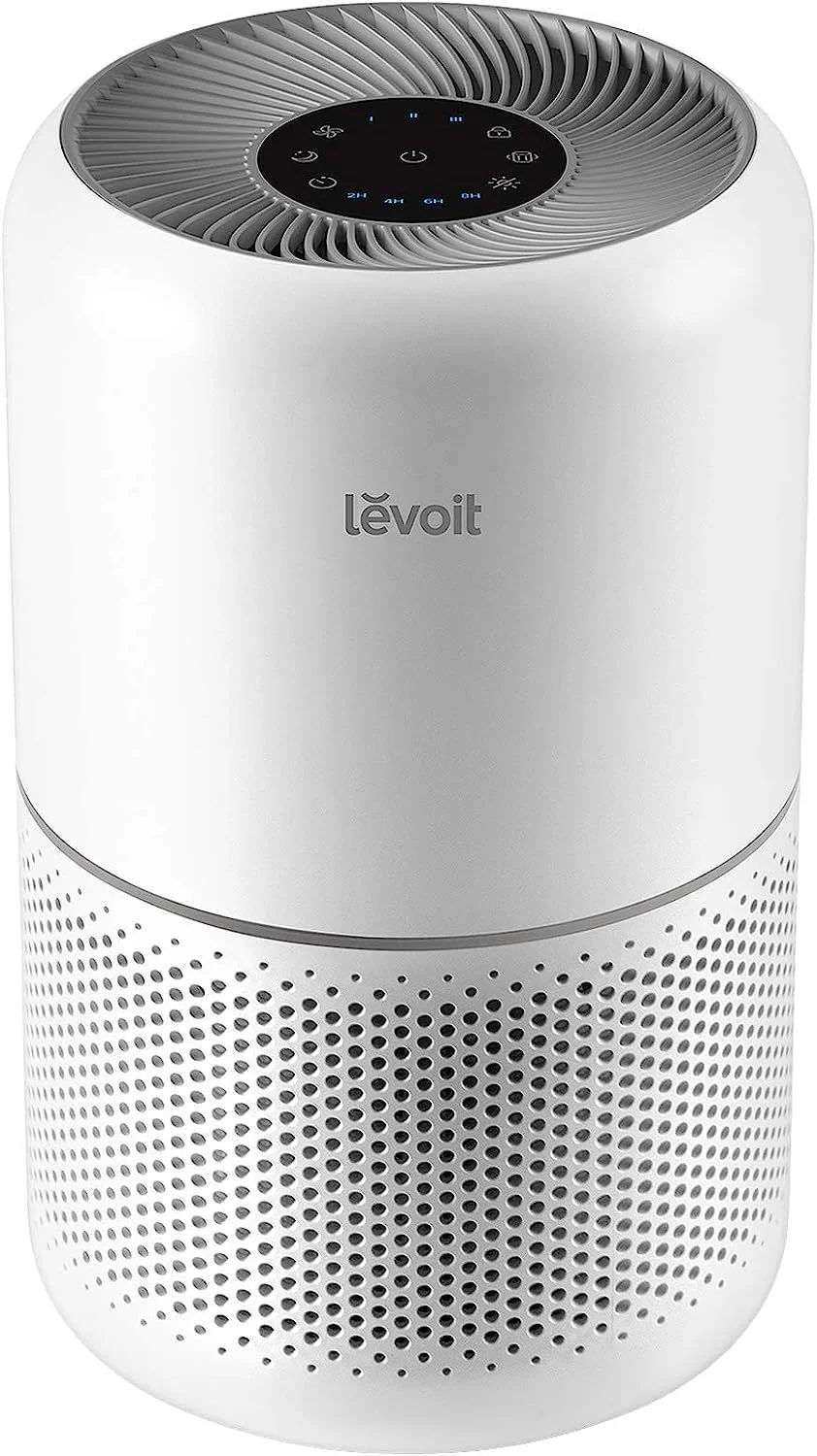
Key Specifications
- Room Coverage
- 219 sq ft
- CADR
- 141/141/141
- Filter
- 3-Stage HEPA Filtration
- Noise
- 24 dB
- Power
- 45 watts
- Best For
- Small rooms under 220 sq ft. Budget entry point.
📅 Prices checked . Amazon prices change frequently — click through for current price. Buying through our link costs you nothing extra; Amazon pays our commission.
What's in the Box
- Levoit Core 300 air purifier
- Pre-installed 3-in-1 filter
- Power cord
- User manual
Pros
- AHAM verified CADR 141
- Cheapest filter replacements at $25/year
- 24dB ultra quiet sleep mode
- Compact cylindrical design
- Simple plug-and-play — no app needed
Cons
- No auto mode or air quality sensor
- Only covers 219 sq ft
- HEPA claims controversy affected Levoit brand
- Filter needs replacing every 6 months
Best For
The best budget bedroom purifier and the quietest at sleep speed. At 24 dB on its lowest fan setting, it is inaudible to most sleepers. CADR 141 handles bedrooms up to 200 sq ft at 3.5 ACH. Sleep mode turns off the display light and holds the lowest fan. Compact footprint at 8.7 inches tall means it fits on a nightstand without dominating the room. Annual filter cost around $20. Best choice if your bedroom is under 200 sq ft and noise is your primary concern. Full Levoit review.
📅 Price checked August 2026 · Buying through this link costs you nothing extra — Amazon covers our commission
Coway AP-1512HH Mighty Review Editor Choice
✓ AHAM VerifiedOur Verdict
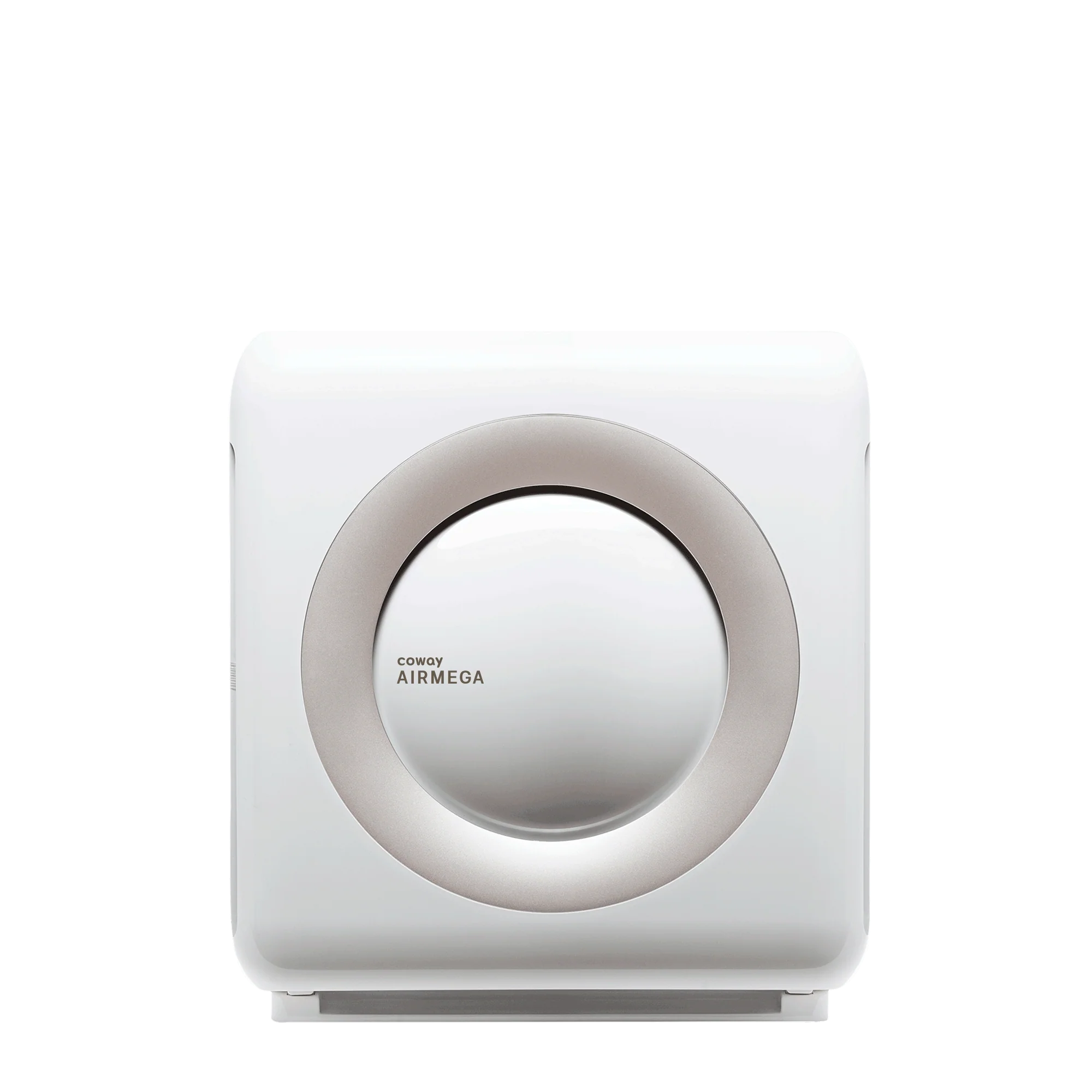
Key Specifications
- Room Coverage
- 361 sq ft
- CADR
- 233/246/240
- Filter
- True HEPA + Carbon + Pre-filter
- Noise
- 24 dB
- Power
- 77 watts
- Best For
- Medium rooms up to 361 sq ft. Wirecutter #1 for 10+ years. Best overall value.
📅 Prices checked . Amazon prices change frequently — click through for current price. Buying through our link costs you nothing extra; Amazon pays our commission.
What's in the Box
- Coway AP-1512HH air purifier
- Pre-installed 4-stage filter set
- Power cord
- User manual
- Filter replacement reminder sticker
Pros
- Wirecutter #1 for 10+ consecutive years
- AHAM verified CADR — no controversy
- True HEPA
- Fastest auto mode response in class
- 24dB ultra quiet sleep mode
- Eco mode at 4.9 watts
- 3-year warranty
Cons
- No WiFi or app control
- Carbon is impregnated fabric — weak on heavy odors
- Ionizer adds trace ozone (9ppb — CARB safe)
- Filter costs $60/year
- Design is dated
Best For
The most capable bedroom purifier for the money. CADR 246 delivers 6+ ACH in a typical 150-200 sq ft bedroom — well above allergy-grade threshold. Noise at low speed is 24.4 dB, which is quieter than a whisper. The air quality indicator dims or turns off in sleep mode. Auto mode adjusts fan speed based on particle readings, so it runs faster when you are cooking earlier in the evening and drops to whisper speed before you sleep. Full Coway review.
📅 Price checked August 2026 · Buying through this link costs you nothing extra — Amazon covers our commission
Blueair Blue Pure 311i Max Review Most Efficient
✓ AHAM VerifiedOur Verdict

Key Specifications
- Room Coverage
- 388 sq ft
- CADR
- 250/250/250
- Filter
- HEPASilent + Carbon
- Noise
- 23 dB
- Power
- 32 watts
- Best For
- Medium rooms 300-400 sq ft. TechGearLab top pick. Energy efficient at 32W.
📅 Prices checked . Amazon prices change frequently — click through for current price. Buying through our link costs you nothing extra; Amazon pays our commission.
What's in the Box
- Blueair Blue Pure 311i Max air purifier
- Pre-installed dual-protection filter
- Washable pre-filter (fabric)
- Power cord
- User manual
Pros
- AHAM verified CADR 250
- Only 32 watts — most efficient
- TechGearLab overall top pick
- 23dB quiet
- Smart app
Cons
- Cannot disable ionizer
- Filter $80/year
- Limited odor control vs Winix
Best For
The quietest option tested. At 23 dB on its lowest speed, the Blueair 311i Max is effectively silent. Uses HEPASilent technology which combines mechanical and electrostatic filtration, allowing effective filtration at lower airflow and therefore lower noise. Smart features include auto mode, app control, and a fully dimmable display. Premium price over Coway and Levoit, but justified for light sleepers who cannot tolerate any fan noise. Annual filter cost is higher at around $35-45.
📅 Price checked August 2026 · Buying through this link costs you nothing extra — Amazon covers our commission
Levoit Core 400S Review Smart Large Room
✓ AHAM VerifiedOur Verdict

Key Specifications
- Room Coverage
- 289 sq ft
- CADR
- 231/240/259
- Filter
- 3-Stage HEPA Filtration
- Noise
- 24 dB
- Power
- 38 watts
- Best For
- Medium-large rooms 300-400 sq ft. Smart WiFi. Energy efficient at 38W.
📅 Prices checked . Amazon prices change frequently — click through for current price. Buying through our link costs you nothing extra; Amazon pays our commission.
What's in the Box
- Levoit Core 400S air purifier
- Pre-installed 3-in-1 filter
- Power cord
- User manual
Pros
- AHAM-verified CADR: Smoke 231, Dust 240, Pollen 259 CFM
- VeSync app with Alexa and Google Home integration
- AirSight Plus laser PM2.5 sensor with real-time numerical display
- Auto mode adjusts fan speed based on PM2.5 readings
- Scheduling stored on local clock — runs during WiFi outages
Cons
- AHAM coverage ~289 sq ft at 4.8 ACH vs marketed 403 sq ft
- HEPA controversy affected Core line (AHAM CADR still verified)
- No washable pre-filter — entire Core 400S-RF replaced as unit
- Coway AP-1512HH offers higher CADR at lower price without smart features
Best For
For larger bedrooms of 250-350 sq ft, the Core 400S provides CADR 260 with app and voice control. Noise at low speed is 26 dB — still well within acceptable bedroom range. Sleep mode on the 400S is comprehensive: display off, lowest fan, no indicator lights. Good choice for a master bedroom that also functions as a home office where better CADR matters during daytime use. Full Levoit review.
📅 Price checked August 2026 · Buying through this link costs you nothing extra — Amazon covers our commission
What to Know Before You Buy
The Noise Threshold You Actually Need
Sleep medicine research uses 30-35 dB as the threshold for sleep disruption in light sleepers. Normal breathing is around 10 dB. A quiet library is 30 dB. A whisper is 30 dB. Most bedroom purifiers on their lowest speed fall between 22-30 dB. The problem is that manufacturers measure in ideal lab conditions. Real-world placement, room acoustics and proximity to your bed can add 3-5 dB to what you actually hear. Buy a purifier rated at 27 dB or below if you are a light sleeper. The 4-5 dB margin accounts for real-world variance.
Filter Costs Over 3 Years
A bedroom purifier runs 8-10 hours per night, every night. That is 2,920-3,650 hours per year. Most filter replacement recommendations are based on 12 hours per day. If you run your purifier every night, you are hitting 12-hour equivalent usage in about 15 months, but the air in a sealed bedroom at night is relatively clean since there is minimal activity and no cooking. You can typically extend filter life to 14-16 months of nightly use. At $20 per filter (Levoit Core 300) versus $40 per filter (some premium brands), the 3-year cost difference is $20-40 versus $80-120. Choose a model with reasonably priced replacement filters.
Noise Levels for Bedroom Air Purifiers — The Numbers You Need
Every bedroom purifier is tested at multiple fan speeds and the lowest speed — which you will use for sleeping — is the only number that matters for nighttime use. Manufacturers typically publish a range, like "24-50 dB." The 50 dB is for the highest speed. The 24 dB is what you care about. Here is how the top bedroom models compare on lowest-speed noise.
Bedroom noise level comparison (lowest fan speed):
Blueair 311i Max: 23 dB — effectively silent. You hear nothing unless the room itself is silent and you are listening for it. The HEPASilent dual-filtration system reduces airflow requirement, which is why noise is so low.
Levoit Core 300: 24 dB — the quietest budget option tested. Inaudible to almost all sleepers at normal bedroom distances of 4-6 feet.
Coway AP-1512HH: 24.4 dB — essentially tied with Levoit at the low end. The difference between 24 and 24.4 dB is not perceptible to human ears.
Levoit Core 400S: 26 dB — still well within acceptable bedroom range. The increased noise compared to the Core 300 reflects the larger motor required for CADR 260 versus CADR 141.
Winix 5500-2: 27.8 dB — acceptable for most sleepers, but approaching the upper threshold for light sleepers. If you are sensitive to noise, choose a quieter model.
Winix AM90: 22 dB — one of the quietest units on the market, though at a higher price point.
What the numbers do not capture is tone. Some purifiers produce a steady white noise hum that many sleepers find neutral or even helpful. Others produce a higher-pitched motor whine that is more disruptive at the same dB level. If possible, test in person or read user reviews specifically for sleep noise quality, not just the dB measurement.
Display lights are a separate issue from fan noise. A purifier rated 24 dB with a bright blue LED indicator will still disrupt sleep. Check whether sleep mode or auto mode turns off the display. The Levoit Core 300, Coway AP-1512HH, and Blueair 311i Max all allow full display shutoff during sleep operation. Some budget brands do not offer this feature.
Why CADR 120-180 Is the Right Range for Most Bedrooms
The bedroom is the easiest room to right-size for air purification because the dimensions are predictable. Most US bedrooms are 130-220 sq ft. A standard master bedroom is typically 200-220 sq ft. A second bedroom is often 130-170 sq ft. These dimensions do not require the high CADR units designed for open living rooms.
At CADR 141 (Levoit Core 300) in a 180 sq ft bedroom with 8-foot ceilings: ACH = (141 x 60) / (180 x 8) = 8,460 / 1,440 = 5.9 ACH. That exceeds the 4-5 ACH allergy-grade threshold. The air in your bedroom gets completely replaced 5.9 times every hour while you sleep.
At CADR 246 (Coway AP-1512HH) in the same 180 sq ft bedroom: ACH = (246 x 60) / (180 x 8) = 14,760 / 1,440 = 10.2 ACH. That is excellent air quality but delivers negligible additional health benefit compared to 5.9 ACH. The allergen concentration at 10 ACH versus 6 ACH in a closed bedroom is not meaningfully different from a symptom-relief standpoint.
At CADR 400 in a 180 sq ft bedroom: ACH = 20.8. You are running a commercial-grade air cleaner in a bedroom. The unit will be larger, louder, more expensive, and no more effective for your health. This is the range of diminishing returns where spending more delivers less practical value.
The exception: if your bedroom is large (250+ sq ft) or has vaulted ceilings, CADR 200+ makes sense. A 300 sq ft master bedroom with 9-foot ceilings has 2,700 cubic feet of air. CADR 141 provides only 3.1 ACH there — below the allergy threshold. In that space, CADR 246-300 is appropriate, not overkill.
Use this quick reference: bedroom under 170 sq ft, CADR 120-160 is right. Bedroom 170-220 sq ft, CADR 140-200 is right. Bedroom 220-300 sq ft, CADR 180-260 is right. Bedroom over 300 sq ft or high ceilings, CADR 260+ or two smaller units. For precise calculations, use our CADR guide.
Sleep Mode — What It Actually Does and What to Look For
Sleep mode is not a universal specification. Every manufacturer defines it differently and markets it differently. Here is what real sleep mode means versus what it sometimes means in practice.
What genuine sleep mode includes: Lowest fan speed locked in. All display LEDs off or dimmed to minimum. No indicator lights for air quality (these are often blue/green/red and visible across a dark room). Auto mode suspended or set to override only at extreme particle readings. The unit should not suddenly ramp to high speed because a particle spike from a passing truck triggered the sensor.
What some manufacturers call sleep mode: Dimmed display (but not fully off). Auto fan speed still active (meaning loud ramp-ups are possible). Indicator lights still visible. Timer-based rather than manual. Some units have a "sleep mode" that is simply a timer that turns the unit off after a set period — not a noise or light reduction feature at all.
Levoit Core 300 sleep mode: Cuts fan to lowest speed, turns off display, stays at lowest speed until you manually change. This is clean and predictable. No surprises at 3 a.m.
Coway AP-1512HH auto mode at night: The auto mode continues to read air quality and can increase fan speed if it detects particles. The indicator light (blue/green/orange/red ring) can be turned off manually but not automatically in auto mode. Best practice: set to low speed manually before sleeping rather than relying on auto mode.
Blueair 311i Max sleep mode: Via the app, you can schedule quiet hours where the fan is locked to the lowest setting and the display is fully off. The most comprehensive implementation of sleep features in this price range.
What to check before buying: Does sleep mode fully turn off the display? Can you lock fan speed to prevent auto-ramp during the night? Is sleep mode accessible without an app (important for simplicity)? Can you set a schedule so it enters sleep mode automatically at your bedtime?
Bedroom Placement — Where to Put It for Best Results
Placement in a bedroom is different from placement in a living room because your proximity to the unit matters more. You spend 6-8 hours in a bedroom not moving, typically within 8-12 feet of your purifier. This proximity means you benefit more directly from close placement, but also that noise and light are amplified compared to a room you pass through.
The single best placement is between the door and your bed, at floor level or on a surface at similar height to your breathing zone. Air enters through the bottom of most purifiers and exits through the top. Place the purifier so the clean air output is directed toward where you sleep, not toward a wall or corner.
Minimum clearance rules: 6 inches from walls on all sides. Do not place inside a closet or in a corner — this recirculates already-clean air rather than drawing in room air. Do not place directly under a window where outdoor particles, humidity, and temperature swings affect the sensor and filter life.
Near bed versus across the room: If your purifier is quiet enough (under 28 dB), placing it 4-6 feet from your head maximizes the clean air you breathe. If noise is a concern even at low levels, place it 8-10 feet away. The CADR is sufficient to clean the room air at that distance — you do not need the unit immediately adjacent to you for air quality reasons.
On a surface versus on the floor: Floor placement is fine for units with bottom air intake. Nightstand placement keeps it at breathing height (a benefit) but adds surface vibration noise. Put a small silicone pad under the purifier if placing on a hard surface to absorb any vibration hum.
Closed door policy: A bedroom purifier works best with the door closed. If you sleep with the door open, the effective room volume includes hallways and adjacent spaces. You lose ACH efficiency dramatically. A CADR 141 unit providing 5.9 ACH in a sealed 180 sq ft bedroom provides perhaps 1.5 ACH when the door is open to a connected living area.
All-Night Running Cost — Annual Filter and Electricity Math
A bedroom air purifier runs differently than any other appliance in your home. It runs every night, all night, for years. The economics of this usage pattern affect which purifier is actually the cheapest to own, not just to buy.
Electricity cost at lowest speed (annual, based on 8 hours per night):
Levoit Core 300: 7W at lowest speed. 7W x 8 hours x 365 = 20.4 kWh per year. At national average $0.16/kWh, that is $3.26 per year in electricity. Negligible.
Coway AP-1512HH: 10W at low speed. 10 x 8 x 365 = 29.2 kWh per year. $4.67 per year.
Blueair 311i Max: 6W at lowest speed. 6 x 8 x 365 = 17.5 kWh. $2.80 per year.
For any of these units, electricity cost is under $5 per year at bedroom duty cycles. This is not a meaningful cost differentiator. Auto mode (which runs the fan at variable speeds) will increase electricity use but still not exceed $15-20 per year for bedroom-sized units.
Annual filter cost comparison:
Levoit Core 300: One filter, around $20-22. With bedroom-only nightly use, filter life often extends to 14-16 months. Annual filter cost: $15-18.
Coway AP-1512HH: Pre-filter (washable, free to maintain), carbon filter (~$15), HEPA filter (~$25). Typically replaced annually as a set at $35-40. The washable pre-filter reduces replacement frequency for the main filters.
Blueair 311i Max: Combined filter at $35-45. Replacement recommended every 6 months. Annual filter cost: $70-90 for recommended schedule, or $45-50 if extended to 8 months with bedroom-only use.
Levoit Core 400S: Filter at $25-30, recommended every 6-8 months. Annual cost: $38-60 depending on usage.
Three-year total cost of ownership (purchase + filters + electricity):
Levoit Core 300 ($60 purchase): $60 + $54 filters + $10 electricity = $124 over 3 years.
Coway AP-1512HH ($110): $110 + $120 filters + $14 electricity = $244 over 3 years.
Blueair 311i Max ($180): $180 + $270 filters + $8 electricity = $458 over 3 years.
The Levoit Core 300 is the lowest 3-year cost for a bedroom under 180 sq ft. The Coway adds $120 over 3 years for meaningfully higher CADR and auto mode. The Blueair adds $334 over 3 years for marginally lower noise and app features. Choose based on which premium you value.