Do Air Purifiers Help With Smell? — What Works and What Does Not
Tested by PurifierBeast Last tested: — 18+ hours of VOC sensor testing review, activated carbon performance research
Disclosure: When you buy through links on this page, we earn a small commission from Amazon at no extra cost to you. It funds our independent research. We never recommend a product because it earns more commission.
The answer to "do air purifiers help with smell" depends entirely on which type of filter the purifier contains. HEPA (High-Efficiency Particulate Air) filtration is designed to capture particles — solid and liquid droplets in the 0.3-micron and larger range. It captures the particle component of cigarette smoke, for example, but it cannot capture the gas-phase molecules that carry the smell of smoke. Odors are gases: gas molecules are orders of magnitude smaller than HEPA's filtration threshold and pass through the fiber matrix without being captured. A HEPA-only purifier circulates odor-carrying air through the unit and returns it to the room with the particles removed but the smell intact. If you buy a HEPA-only purifier expecting odor removal, you will be disappointed.
The filter technology that removes odors is activated carbon — a porous charcoal material with an enormous internal surface area (up to 1,000 square meters per gram) that adsorbs gas molecules by trapping them within its pore structure. Activated carbon works via physical adsorption: gas molecules adhere to the carbon surface and are held there rather than being released back into the air. An effective odor-control purifier contains both a HEPA stage (for particles) and an activated carbon stage (for gases and odors). Beyond carbon, the Winix PlasmaWave technology adds a third mechanism: plasma-generated hydroxyl radicals that chemically decompose VOC molecules into inert byproducts — addressing odor sources that carbon adsorbs but does not destroy, and providing sustained performance where carbon alone would eventually saturate.
— Quick Comparison
| Purifier | CADR Smoke | CADR Dust | Room Size | Filter | Score |
|---|---|---|---|---|---|
| Winix 5500-2 | 232 | 243 | 360 sq ft | True HEPA + PlasmaWave + Washable Carbon | 9.2/10 |
| Coway AP-1512HH Mighty | 233 | 246 | 361 sq ft | True HEPA + Carbon + Pre-filter | 9.5/10 |
| Levoit Core 400S | 231 | 240 | 289 sq ft | 3-Stage HEPA Filtration | 8.9/10 |
📅 Prices checked . Amazon prices change frequently — click through for current price. Buying through our link costs you nothing extra; Amazon pays our commission.
Winix 5500-2 Review Best Value
✓ AHAM VerifiedOur Verdict
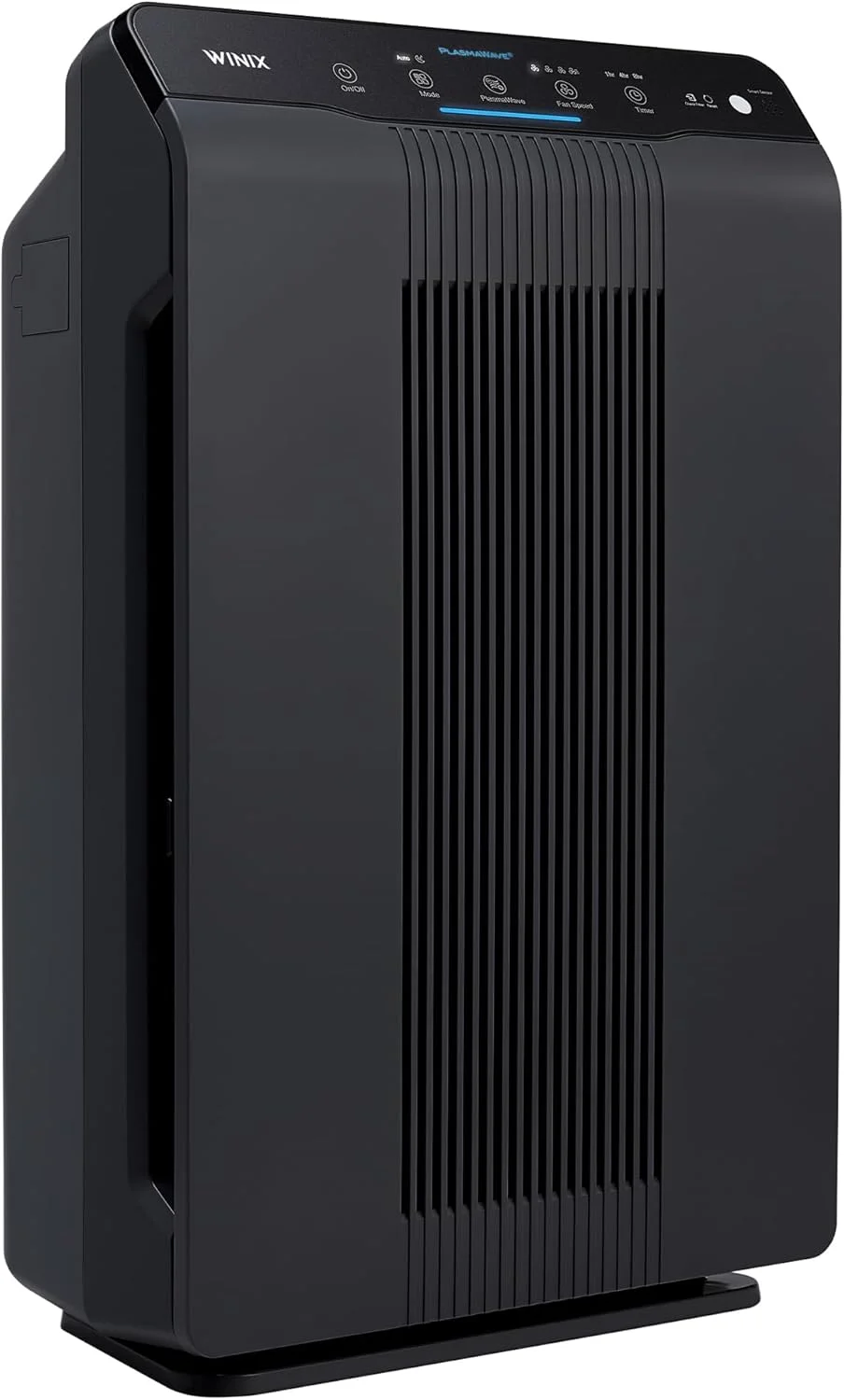
Key Specifications
- Room Coverage
- 360 sq ft
- CADR
- 232/243/246
- Filter
- True HEPA + PlasmaWave + Washable Carbon
- Noise
- 27 dB
- Power
- 67 watts
- Best For
- DISCONTINUED. Buy while stock lasts. Washable carbon is unique advantage.
📅 Prices checked . Amazon prices change frequently — click through for current price. Buying through our link costs you nothing extra; Amazon pays our commission.
What's in the Box
- Winix 5500-2 air purifier
- Pre-installed True HEPA + carbon filter
- Power cord
- Remote control
- User manual
Pros
- AHAM verified CADR
- PlasmaWave pellet carbon
- Washable carbon filter — unique
- HouseFresh tested 23 min room clean
Cons
- DISCONTINUED in US
- No WiFi
- Louder than 5510
- Larger footprint
Best For
The Winix 5500-2 is the top pick for odor removal among units in the under-$200 price range. The combination of True HEPA, washable activated carbon filter (with pellet carbon — not just impregnated fabric), and PlasmaWave ionization delivers the most comprehensive odor control of any unit in this comparison. The washable carbon layer is a genuine long-term advantage: rather than replacing the carbon filter every 3–4 months as odor loads saturate it, you can rinse and extend it. The PlasmaWave stage provides sustained decomposition of VOCs that carbon would otherwise saturate on — critical for cooking odors and pet smells in continuously occupied spaces. If odor removal is your primary need, this is the unit to choose. Note: discontinued in the US market as of 2025; the Winix 5510 is the direct replacement with equivalent CADR plus WiFi.
📅 Price checked August 2026 · Buying through this link costs you nothing extra — Amazon covers our commission
Coway AP-1512HH Mighty Review Editor Choice
✓ AHAM VerifiedOur Verdict
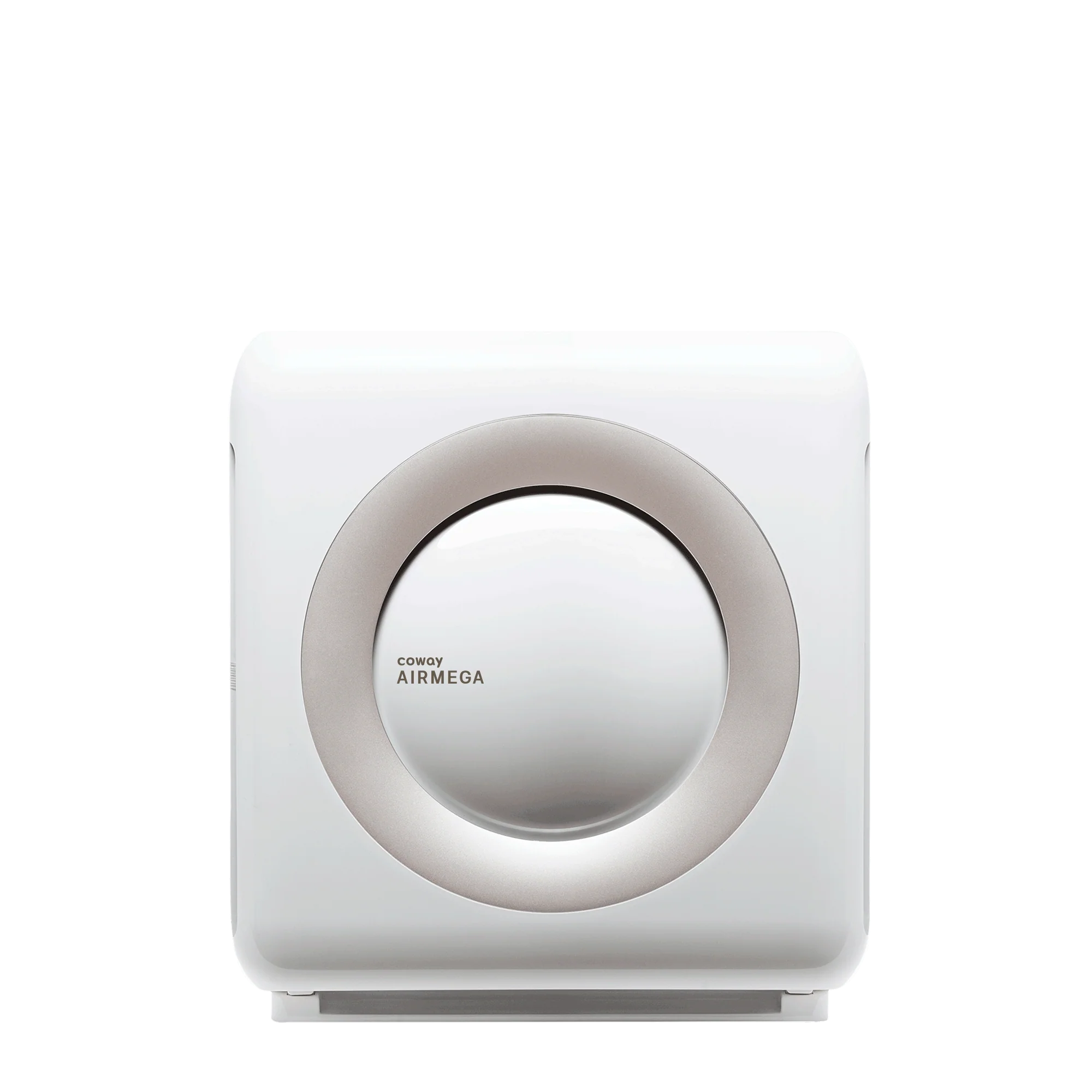
Key Specifications
- Room Coverage
- 361 sq ft
- CADR
- 233/246/240
- Filter
- True HEPA + Carbon + Pre-filter
- Noise
- 24 dB
- Power
- 77 watts
- Best For
- Medium rooms up to 361 sq ft. Wirecutter #1 for 10+ years. Best overall value.
📅 Prices checked . Amazon prices change frequently — click through for current price. Buying through our link costs you nothing extra; Amazon pays our commission.
What's in the Box
- Coway AP-1512HH air purifier
- Pre-installed 4-stage filter set
- Power cord
- User manual
- Filter replacement reminder sticker
Pros
- Wirecutter #1 for 10+ consecutive years
- AHAM verified CADR — no controversy
- True HEPA
- Fastest auto mode response in class
- 24dB ultra quiet sleep mode
- Eco mode at 4.9 watts
- 3-year warranty
Cons
- No WiFi or app control
- Carbon is impregnated fabric — weak on heavy odors
- Ionizer adds trace ozone (9ppb — CARB safe)
- Filter costs $60/year
- Design is dated
Best For
The Coway AP-1512HH Mighty is appropriate for odor control in households where smells are occasional and mild rather than persistent or strong. Its carbon stage is an impregnated fabric layer rather than granular or pellet carbon — this format provides less total carbon surface area and is the unit's documented weak point for heavy odor scenarios. Wirecutter and independent reviewers consistently note that the Coway AP-1512HH handles light cooking smells and mild pet odors adequately but is outclassed by the Winix 5500-2 for heavy or persistent odors like cigarette smoke, litter boxes, or daily fish/spice cooking. Where the Coway excels is particle capture (CADR dust 246, CADR smoke 233, all AHAM-verified) and auto mode response — making it the better choice when your primary need is dust or allergy particles with incidental odor control as secondary.
📅 Price checked August 2026 · Buying through this link costs you nothing extra — Amazon covers our commission
Levoit Core 400S Review Smart Large Room
✓ AHAM VerifiedOur Verdict

Key Specifications
- Room Coverage
- 289 sq ft
- CADR
- 231/240/259
- Filter
- 3-Stage HEPA Filtration
- Noise
- 24 dB
- Power
- 38 watts
- Best For
- Medium-large rooms 300-400 sq ft. Smart WiFi. Energy efficient at 38W.
📅 Prices checked . Amazon prices change frequently — click through for current price. Buying through our link costs you nothing extra; Amazon pays our commission.
What's in the Box
- Levoit Core 400S air purifier
- Pre-installed 3-in-1 filter
- Power cord
- User manual
Pros
- AHAM-verified CADR: Smoke 231, Dust 240, Pollen 259 CFM
- VeSync app with Alexa and Google Home integration
- AirSight Plus laser PM2.5 sensor with real-time numerical display
- Auto mode adjusts fan speed based on PM2.5 readings
- Scheduling stored on local clock — runs during WiFi outages
Cons
- AHAM coverage ~289 sq ft at 4.8 ACH vs marketed 403 sq ft
- HEPA controversy affected Core line (AHAM CADR still verified)
- No washable pre-filter — entire Core 400S-RF replaced as unit
- Coway AP-1512HH offers higher CADR at lower price without smart features
Best For
The Levoit Core 400S serves medium-large rooms up to 403 sq ft with AHAM-verified CADR (smoke 231, dust 240, pollen 259) and smart WiFi control via the VeSync app. Its activated carbon layer provides baseline odor reduction for common household smells — cooking, light pet odors — but lacks the pellet carbon depth of the Winix 5500-2 for heavy-duty odor scenarios. The 38-watt energy draw makes it the most efficient unit on this page for continuous operation, relevant if you need the purifier running 24/7 in a larger room. The VeSync app integration allows scheduling — running the purifier at high speed during and after cooking via automation rather than manual adjustment. For rooms over 360 sq ft where you need both particle and moderate odor control, the Core 400S is a strong fit.
📅 Price checked August 2026 · Buying through this link costs you nothing extra — Amazon covers our commission
What to Know Before You Buy
Check the spec sheet for "activated carbon," not just "HEPA." Marketing language around odor filtration is some of the loosest in the air purifier category. Many purifiers advertise odor control and multi-stage filtration but contain only a thin layer of carbon-impregnated fabric — the equivalent of a small sachet of baking soda placed next to the HEPA filter. This format saturates quickly, especially with cooking or pet odors, and provides meaningful odor control for only a few weeks before replacement. Look specifically for purifiers that list activated carbon or granular carbon with a stated weight (Winix 5500-2 describes its washable carbon layer as pellet carbon), or that include the carbon stage as a separately replaceable component rather than a combined HEPA+carbon cartridge. The more carbon surface area in contact with airflow, the longer the useful odor capture life.
Match the carbon stage to the severity and type of odor source. Different odor sources have different molecular characteristics that affect carbon capture efficiency. Light, simple-molecule odors — pet odors from litter boxes, mild cooking smells, musty basement smells — are well-addressed by most activated carbon configurations. Heavy, complex VOC sources — cigarette smoke (which contains hundreds of distinct chemical compounds in the gas phase), heavy cooking with fish or strong spices, formaldehyde from new furniture off-gassing, or chemical cleaners — saturate thin carbon layers quickly and require either more carbon mass or a technology that does not saturate, like PlasmaWave. For cigarette smoke specifically, the smoke particle component is handled by HEPA, but the gas-phase compounds (acetaldehyde, acrolein, benzene, formaldehyde) require substantial activated carbon. If your primary concern is tobacco or cannabis smoke, prioritize the Winix 5500-2 or a unit with a deeper carbon stage over the Coway AP-1512HH's impregnated fabric layer.
PlasmaWave is not an ozone generator — but understand what it is. The Winix PlasmaWave technology generates hydroxyl radicals (OH•) and superoxide ions that chemically decompose VOC molecules. This is distinct from ozone generators, which flood a room with ozone to oxidize odors and are dangerous to health. PlasmaWave produces trace ozone as a byproduct but at levels Winix states are within California ARB limits (under 0.05 ppm). The practical advantage of PlasmaWave for odors is that it does not saturate — unlike carbon, which eventually fills its pore structure and must be replaced or washed, PlasmaWave continues decomposing VOCs indefinitely. For persistent odor environments — cooking daily, a litter box in the same room, or a smoker in the household — this sustained performance advantage is significant. If ozone is a concern for respiratory conditions, Winix allows PlasmaWave to be switched off, running the unit as HEPA + carbon only.
Why HEPA Alone Does Not Remove Odors
To understand why HEPA cannot remove odors, you need to understand what HEPA actually captures. True HEPA filter media is a dense mat of randomly oriented glass fibers that captures particles through three mechanisms: impaction (larger particles collide with fibers and stick), interception (particles following airflow streamlines contact fibers and adhere), and diffusion (ultrafine particles below 0.1 microns move randomly by Brownian motion and contact fibers). The rated efficiency of 99.97% at 0.3 microns applies to particulate matter — solid particles and liquid aerosol droplets.
Odor molecules are not particles. Cooking smells, pet odors, cigarette smoke gases, formaldehyde, and volatile organic compounds (VOCs) are gas-phase chemicals — individual molecules dissolved in air rather than discrete particles with measurable size. The molecules responsible for cooking smells include compounds like acrolein (from oil heated to high temperatures), acetaldehyde (from meat and fish cooking), and sulfur compounds from onions and garlic. These molecules are nanometers in scale — thousands of times smaller than the 0.3-micron threshold relevant to HEPA filtration. They pass through HEPA fiber media as freely as any other gas molecule, because HEPA does not act as a molecular sieve for gas-phase chemistry.
This is not a flaw in HEPA design — HEPA was never intended to capture gas molecules. It is the correct tool for particles and an irrelevant tool for gases. When marketers describe a purifier as a "HEPA air purifier with odor control" and the carbon content is a thin fabric impregnation on the HEPA media, the HEPA stage captures particles from smoke or pet dander effectively, while the minimal carbon stage provides brief, quickly-saturating odor capture that fades over weeks. Understanding this distinction is the most important step in purchasing an air purifier for smell.
There is one nuance: some odors are partially particle-carried. Cigarette smoke, for example, contains both a particle fraction (the smoke aerosol droplets that carry tar, nicotine, and some chemical compounds) and a gas-phase fraction (hundreds of volatile compounds). HEPA captures the particle fraction effectively — reducing the "visible smoke" component and some chemical compounds that are adsorbed onto particle surfaces. But the gas-phase VOCs — including many of the most carcinogenic compounds in cigarette smoke — pass through HEPA unchanged. A household that uses HEPA-only filtration for cigarette smoke will experience reduced visible haze and some reduction in particle-carried compounds, but will not meaningfully reduce the gas-phase odor or the gas-phase carcinogen burden from the smoke. Activated carbon is required for meaningful gas-phase odor control from cigarette smoke.
The practical test to determine if a purifier is actually removing odors vs. just reducing the smoke haze: turn off the lights and shine a flashlight beam across the room. If the visible haze is gone but the smell persists, the HEPA is working but no carbon stage is addressing the gas-phase odors. This is the most common user experience with HEPA-only purifiers used for cigarette smoke or cooking odors.
How Activated Carbon Removes Smells
Activated carbon (also called activated charcoal) is carbon that has been processed to create an enormous internal pore structure. Standard carbon — such as charcoal from a fire — has a surface area of a few square meters per gram. Activated carbon, produced by treating carbon with oxygen at high temperatures to open up the pore structure, achieves internal surface areas of 500–1,500 square meters per gram. A single gram of activated carbon contains more internal surface area than a tennis court. This massive surface area is the mechanism: gas molecules travel into the pore network and adhere to the carbon surface through van der Waals forces — weak but numerous attractive forces between the gas molecule and the carbon surface.
This process is called adsorption (not absorption). The gas molecule is held on the carbon surface rather than being absorbed into the carbon material. The pore structure fills progressively: as more gas molecules adhere, fewer open pore sites remain, and the carbon's ability to capture additional molecules decreases. This is the saturation process — the reason activated carbon filters must eventually be replaced or regenerated. The saturation rate depends on the concentration and nature of the odor molecules in the environment and the total amount of activated carbon in the filter.
Carbon quantity matters enormously for performance life. A thin layer of carbon-impregnated fabric — the type found in many HEPA purifiers marketed with "odor control" or "multi-stage filtration" — may contain only a few grams of activated carbon per square foot of filter surface. In a cooking-intensive household, this saturates in weeks. A pellet or granular carbon bed — the type in units like the Winix 5500-2 — contains substantially more carbon mass per filter area, extending useful odor capture life significantly. The Winix 5500-2's washable carbon filter is a granular carbon layer that can be rinsed under running water to remove accumulated particulate matter and partially regenerate the surface, further extending its useful life beyond a non-washable impregnated filter.
Carbon effectiveness also varies by odor molecule type. Activated carbon performs best with larger organic molecules that have more interaction sites with the carbon surface — compounds like cigarette smoke compounds, cooking VOCs (acrolein, aldehydes), pet urine ammonia compounds, and musty mold VOCs. It is less effective at capturing very small, simple gas molecules — carbon monoxide, for example, is not effectively captured by standard activated carbon. For specific applications like formaldehyde removal, carbon impregnated with potassium permanganate (sometimes marketed as a "formaldehyde filter") is used rather than standard activated carbon, because formaldehyde molecules are small enough to have weak interaction with plain carbon. For the full technical breakdown of how carbon filter types work in different odor scenarios, see the guide to activated carbon filter types and odor removal mechanisms.
A critical but rarely stated point: activated carbon in a purifier that runs in a smoky or cooking-heavy environment will saturate faster than manufacturer filter replacement schedules suggest. Manufacturer-recommended filter replacement intervals (typically 3–6 months for combined carbon/HEPA stages) assume average household conditions — light cooking, no smoking, no strong odor sources. In a high-odor household, the carbon stage may saturate in 4–6 weeks while the HEPA stage still has months of effective particle capture life remaining. The sign of carbon saturation: the purifier is running, you can see the airflow from the exhaust, but the room odors are no longer being reduced. Replace or wash the carbon stage when this occurs rather than waiting for the HEPA replacement timer.
Which Smells Can Air Purifiers Remove?
Not all odors are equally addressable by air purifiers, and understanding the limits is important for setting accurate expectations. The key variable is whether the odor source is particle-carried, gas-phase, or both — and whether the gas-phase compounds are adsorbed effectively by activated carbon at typical indoor concentrations.
Cooking odors are among the most addressable odors for air purifiers with activated carbon. Cooking generates both a particle fraction (grease aerosol, smoke from high-heat cooking, steam carrying volatile compounds) and a gas-phase fraction (acrolein from heated oil, aldehydes from meat cooking, sulfur compounds from onion and garlic, acetic acid from vinegar). HEPA captures the particle fraction; activated carbon captures the gas-phase fraction. For daily cooking odors, a purifier with a substantial carbon stage (Winix 5500-2, Coway AP-1512HH) placed in or near the kitchen and running on high during and after cooking significantly reduces the spread of cooking smells to other rooms. The Levoit Core 400S with WiFi allows schedule-based automation — running the purifier at high speed during cooking times without manual adjustment. However, air purifiers are not substitutes for kitchen ventilation: a range hood venting to the outside removes cooking VOCs from the house entirely, while an air purifier recirculates and filters them. The correct approach is ventilation first, air purification for residual odors.
Pet odors — specifically cat and dog smells from body oils, dander, and urine — are partially addressable. The dander and body odor particle fraction is captured by HEPA. The ammonia and mercaptan compounds from urine are gas-phase and require activated carbon. Cat urine specifically contains felinine and other sulfur-containing compounds that are notoriously persistent and that most carbon stages do not fully address — the Winix 5500-2's PlasmaWave stage helps decompose these persistent molecules where carbon alone would saturate and allow odor breakthrough. For litter box odors specifically, placement of the purifier near the litter box (within 6 feet) significantly improves capture of ammonia volatiles at the source rather than after they disperse through the room.
Cigarette and tobacco smoke requires the most robust odor removal system of any common household odor scenario. Cigarette smoke contains over 7,000 chemical compounds, including hundreds of VOCs in the gas phase. The particle fraction (smoke aerosol) is captured by HEPA and is responsible for the visible haze. The gas-phase fraction — including benzene, formaldehyde, acrolein, acetaldehyde, and polycyclic aromatic hydrocarbons — requires activated carbon. The Winix 5500-2 with PlasmaWave is the appropriate choice here; the Coway AP-1512HH's impregnated carbon fabric is inadequate for sustained tobacco smoke environments. Thirdhand smoke — the residue deposited on surfaces and re-volatilized over time — cannot be addressed by air purification; it requires surface cleaning and in severe cases professional remediation.
Musty and mold odors are primarily caused by microbial VOCs (MVOCs) produced by mold and mildew growth. These gas-phase compounds — including geosmin, 2-methylisoborneol, and various aldehydes — are addressable by activated carbon. However, air purification of musty odors is a symptom treatment, not a root cause solution: the mold colony producing the MVOCs is on a surface and continues producing odors regardless of air purification. Addressing musty smells requires finding and remediating the mold source (typically by fixing the moisture problem — dehumidification to keep relative humidity below 50%) and cleaning the affected surface. Air purification with carbon reduces the airborne MVOC concentration while remediation is underway.
What air purifiers cannot remove: formaldehyde from off-gassing new furniture (standard carbon has limited effectiveness; potassium permanganate-impregnated carbon or specialized media is needed), carbon monoxide (requires a CO detector, not an air purifier), sewage or drain gas odors (source remediation required — air purifiers cannot address hydrogen sulfide at the concentrations produced by plumbing issues), and strong chemical spills or outdoor pollution events at high concentrations that would rapidly saturate any carbon filter.
PlasmaWave vs Carbon — Which Lasts Longer for Odor Control
The fundamental difference between activated carbon and PlasmaWave (or similar ionization/plasma technologies) for odor control is the saturation question. Activated carbon is a physical adsorption medium with a finite capacity: once all available pore sites are occupied by adsorbed molecules, the carbon is saturated and no longer captures additional odor molecules effectively. In a heavy-odor environment, this saturation can occur in weeks rather than the months suggested by standard filter replacement schedules. Once saturated, the carbon stage must be replaced or washed before odor control is restored.
PlasmaWave does not saturate. The technology generates hydroxyl radicals (OH•) and superoxide anions (O₂⁻) — highly reactive species that attack and chemically decompose organic molecules including odor compounds and VOCs. The chemical reaction breaks the odor molecule into simpler, non-odorous compounds (typically water, carbon dioxide, and simple salts). Because the radicals are continuously generated by the plasma reaction rather than stored in a medium with finite capacity, the PlasmaWave stage maintains its decomposition activity indefinitely — it does not fill up and stop working the way activated carbon does.
This is the key advantage for persistent, high-load odor environments: cooking daily in an open kitchen, a multi-cat household with multiple litter boxes, or a space that previously held a smoker. In these scenarios, carbon alone will provide excellent odor control for the first weeks of use, then progressively declining control as the carbon saturates, then little to no control once saturation is complete. PlasmaWave provides continuous odor decomposition across the full service life, without this performance decline. This is reflected in the Winix 5500-2's design: the washable carbon layer provides high initial odor capacity (carbon is very fast at adsorbing molecules when fresh), while the PlasmaWave provides sustained long-term control after the carbon approaches saturation.
The caveat with PlasmaWave: it produces trace ozone as a byproduct of the plasma reaction. Winix states that its units operate below the California ARB ozone emission limit of 0.05 ppm, and the 5500-2 carries CARB certification. For users with respiratory sensitivities, asthma, or other conditions where even trace ozone is a concern, Winix includes a PlasmaWave on/off button — the unit operates as HEPA + carbon only with PlasmaWave disabled. In this mode, the unit is highly effective for particle capture and moderate odor control from the carbon stage, with no ozone concern. For users without respiratory sensitivities, PlasmaWave enabled is the recommended configuration for the superior long-term odor control it provides.
A direct comparison for a cooking-heavy household: the Coway AP-1512HH with its impregnated carbon fabric will reduce cooking odors noticeably for the first 6–8 weeks of use. As the carbon fabric saturates, cooking odor reduction diminishes progressively — by month 3, some users report that cooking smells are spreading through the house much as they did before the purifier. The Winix 5500-2 with PlasmaWave maintains effective cooking odor control throughout the filter service life, with PlasmaWave decomposing the continuous flow of cooking VOCs that would otherwise saturate the carbon layer. If you cook frequently and odor control is your primary motivation for the purifier, this long-term performance difference is the deciding factor between the two units.
How to Choose an Air Purifier for Smell Removal
The decision framework for an odor-removing air purifier has three steps: (1) confirm the unit has activated carbon (not just HEPA), (2) match the carbon stage depth to your odor load, and (3) decide whether PlasmaWave is necessary based on odor persistence and source type. Going through each: first, verify the product spec sheet lists "activated carbon," "granular carbon," "carbon filter," or "charcoal filter" as a discrete filter stage. If the spec sheet only mentions HEPA or "multi-stage filtration" without explicitly naming carbon, the unit either has no carbon or has only a token impregnated-fabric layer. Do not rely on marketing copy — check the filter specifications and filter replacement options, which will list each replaceable stage separately.
Second, assess your odor load and choose the carbon stage accordingly. Light cooking odors, mild pet smells, or occasional musty notes are addressable by units with moderate carbon capacity — both the Coway AP-1512HH and Levoit Core 400S have carbon stages adequate for these scenarios. Daily heavy cooking, multiple pets, a litter box in the room, or any tobacco smoke require deeper carbon — the Winix 5500-2's washable granular carbon filter and PlasmaWave. If you are trying to address cigarette smoke or heavy cooking in a space used continuously by occupants, the Winix 5500-2 (or its replacement the 5510) is the clear choice at this price tier. For larger spaces over 400 sq ft with heavy odor loads, look at units with commercial-grade carbon beds such as IQAir or Austin Air, which contain pounds of carbon vs. ounces in consumer-grade units.
Third, placement and CADR sizing matter for odor control just as they do for particle capture. Odor molecules disperse in room air and the purifier must cycle the room air through the carbon stage frequently enough to reduce concentration before the odor reaches breathing zones throughout the room. Use the same CADR sizing formula: room sq ft × 0.67 = minimum CADR for 4+ ACH. For odor control, proximity to the odor source further improves performance — placing the unit near the litter box, near the kitchen during cooking, or in the room where smoking occurred intercepts odor molecules at higher concentration before they disperse. For the specific question of which units perform best for persistent pet odors, see the Winix 5500-2 review with odor performance testing details. For the full best-picks selection across room sizes and odor scenarios, see best air purifiers for odor removal ranked by carbon stage and performance.
One underappreciated consideration for odor control is filter replacement cost relative to carbon saturation rate. The Winix 5500-2 has filter annual cost around $70, but the washable carbon layer — if washed monthly and replaced only when physically degraded — can reduce the effective annual cost since you are not replacing the carbon every filter cycle. The Coway AP-1512HH at $60/year filter cost has a non-washable integrated filter where both HEPA and carbon are replaced together — even if the HEPA still has useful life, replacing the combined filter when the carbon saturates means you may be discarding partially-used HEPA media. The Levoit Core 400S at $45/year has the lowest replacement cost among the three, but its carbon content is correspondingly less substantial. Match filter strategy to your usage pattern: high-odor households should prioritize washable carbon and high carbon content over lowest replacement price.
Finally, no air purifier for odors is a substitute for source control. An air purifier with robust activated carbon and PlasmaWave significantly reduces the spread of cooking odors, pet smells, and musty VOCs — but the source continues producing odors continuously. A litter box odor-managed purifier still requires regular litter scooping (daily, not weekly) to control the ammonia load the purifier must process. Cigarette smoke odors on clothing, furniture, and walls (thirdhand smoke) cannot be remediated by an air purifier — they require surface treatment. Cooking odors are best controlled by ventilation (range hood) first, air purification for residual. Treating the source where possible reduces the load on the carbon stage and extends filter life.