Dehumidifier vs Air Purifier — Which Fixes Your Air Problem?
Tested by PurifierBeast Last tested: — 20+ hours of Humidity testing data review, mold prevention research
Disclosure: When you buy through links on this page, we earn a small commission from Amazon at no extra cost to you. It funds our independent research. We never recommend a product because it earns more commission.
Dehumidifier vs Air Purifier
If you are searching "dehumidifier vs air purifier," you are probably dealing with high humidity — a damp basement, a humid climate home, a bathroom with ventilation issues, or the aftermath of a water event. High humidity is a two-layer problem. The first layer is the moisture itself: relative humidity above 60% creates conditions where mold grows on surfaces and dust mite populations explode. The dehumidifier addresses this layer by pulling moisture out of the air directly. No moisture, no mold growth. Dust mites cannot survive below 50% RH. The dehumidifier attacks the problem at its source.
The second layer is what is already airborne once high humidity has done its damage: mold spores released from surface colonies, dust mite waste particles stirred up from carpets and bedding, and the general allergen load that a high-humidity environment amplifies. A dehumidifier does not filter these airborne particles — it only removes moisture. An air purifier with True HEPA filtration captures mold spores (3-12 microns), dust mite particles (10-40 microns), and other allergens that are already suspended in the air. For complete protection in a high-humidity home, the sequence is: dehumidifier first to stop the problem at its source, then an air purifier to clean up what is already airborne. Our guide to how to choose an air purifier covers CADR sizing and filter selection in detail.
Dehumidifier vs Air Purifier — Quick Comparison
| Purifier | CADR Smoke | CADR Dust | Room Size | Filter | Score |
|---|---|---|---|---|---|
| Coway AP-1512HH Mighty | 233 | 246 | 361 sq ft | True HEPA + Carbon + Pre-filter | 9.5/10 |
| Levoit Core 400S | 231 | 240 | 289 sq ft | 3-Stage HEPA Filtration | 8.9/10 |
📅 Prices checked . Amazon prices change frequently — click through for current price. Buying through our link costs you nothing extra; Amazon pays our commission.
Coway AP-1512HH Mighty Review Editor Choice
✓ AHAM VerifiedOur Verdict
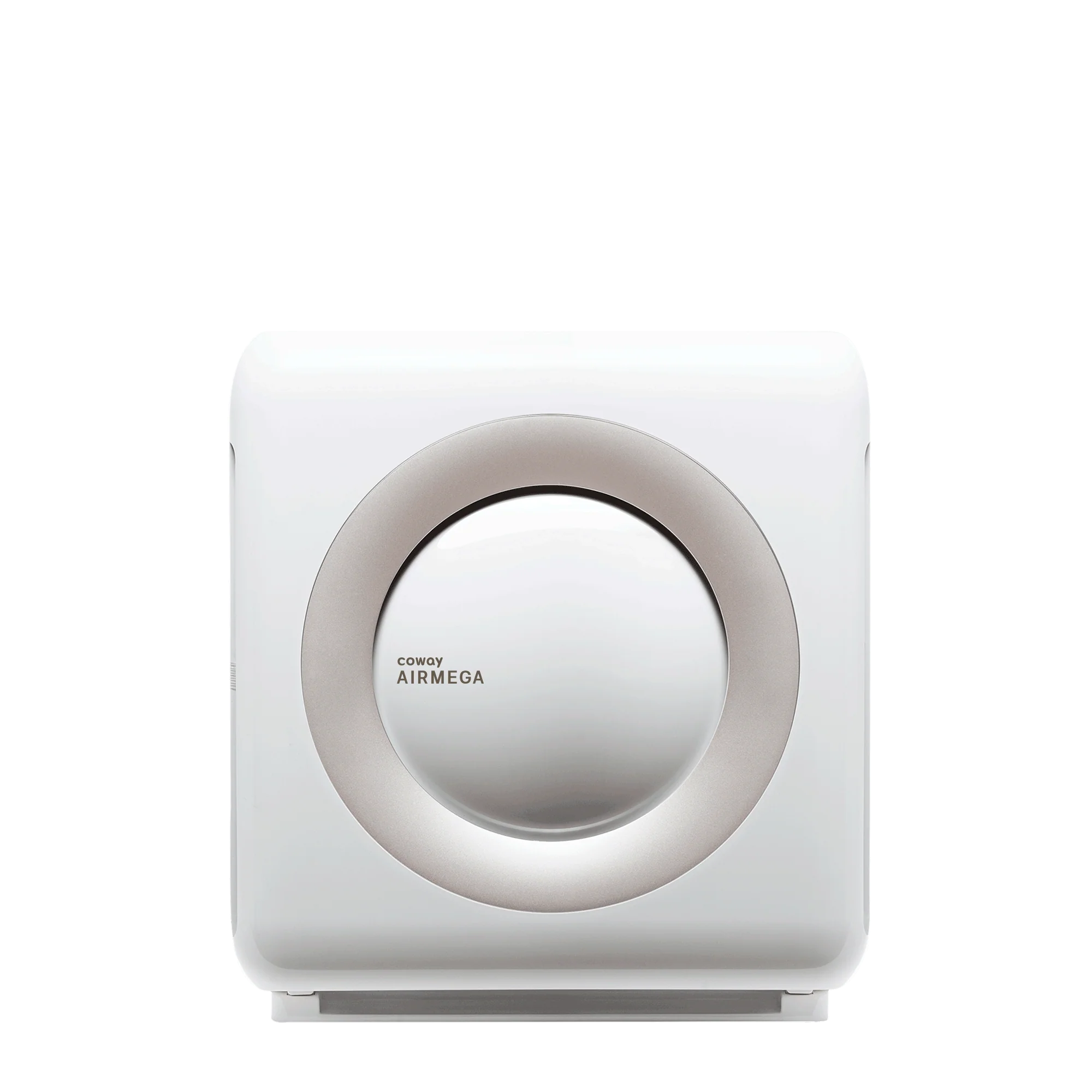
Key Specifications
- Room Coverage
- 361 sq ft
- CADR
- 233/246/240
- Filter
- True HEPA + Carbon + Pre-filter
- Noise
- 24 dB
- Power
- 77 watts
- Best For
- Medium rooms up to 361 sq ft. Wirecutter #1 for 10+ years. Best overall value.
📅 Prices checked . Amazon prices change frequently — click through for current price. Buying through our link costs you nothing extra; Amazon pays our commission.
What's in the Box
- Coway AP-1512HH air purifier
- Pre-installed 4-stage filter set
- Power cord
- User manual
- Filter replacement reminder sticker
Pros
- Wirecutter #1 for 10+ consecutive years
- AHAM verified CADR — no controversy
- True HEPA
- Fastest auto mode response in class
- 24dB ultra quiet sleep mode
- Eco mode at 4.9 watts
- 3-year warranty
Cons
- No WiFi or app control
- Carbon is impregnated fabric — weak on heavy odors
- Ionizer adds trace ozone (9ppb — CARB safe)
- Filter costs $60/year
- Design is dated
Best For
The Coway AP-1512HH is the recommended air purifier pairing for high-humidity homes dealing with mold spores and dust mite allergens. AHAM-verified CADR 246 handles rooms up to 360 sq ft at the 4-5 ACH range that medical guidelines recommend for effective allergen management. The 4-stage filtration (pre-filter, deodorization filter, True HEPA, ionizer) captures mold spores in the 3-12 micron range at 99.97% efficiency. Auto mode with a particle sensor means it ramps up during mold spore events — when someone opens a dusty closet or basement door and spores enter the living area. At $110-130, it pairs ideally with a dehumidifier for a complete two-device humidity and particle solution. Full Coway lineup review.
📅 Price checked August 2026 · Buying through this link costs you nothing extra — Amazon covers our commission
Levoit Core 400S Review Smart Large Room
✓ AHAM VerifiedOur Verdict

Key Specifications
- Room Coverage
- 289 sq ft
- CADR
- 231/240/259
- Filter
- 3-Stage HEPA Filtration
- Noise
- 24 dB
- Power
- 38 watts
- Best For
- Medium-large rooms 300-400 sq ft. Smart WiFi. Energy efficient at 38W.
📅 Prices checked . Amazon prices change frequently — click through for current price. Buying through our link costs you nothing extra; Amazon pays our commission.
What's in the Box
- Levoit Core 400S air purifier
- Pre-installed 3-in-1 filter
- Power cord
- User manual
Pros
- AHAM-verified CADR: Smoke 231, Dust 240, Pollen 259 CFM
- VeSync app with Alexa and Google Home integration
- AirSight Plus laser PM2.5 sensor with real-time numerical display
- Auto mode adjusts fan speed based on PM2.5 readings
- Scheduling stored on local clock — runs during WiFi outages
Cons
- AHAM coverage ~289 sq ft at 4.8 ACH vs marketed 403 sq ft
- HEPA controversy affected Core line (AHAM CADR still verified)
- No washable pre-filter — entire Core 400S-RF replaced as unit
- Coway AP-1512HH offers higher CADR at lower price without smart features
Best For
The Levoit Core 400S is the better choice for larger high-humidity living spaces — open-plan living rooms or combined kitchen-dining areas in humid climate homes — where you need more coverage than a single 360 sq ft unit can provide. AHAM-verified CADR 260 covers rooms up to 403 sq ft, and smart app control lets you monitor air quality remotely and create schedules that align with dehumidifier operation cycles. The VortexAir 3.0 design draws air from 360 degrees, which is particularly useful in open spaces where particle distribution is less predictable. Filter replacement at around $25-35 per year is competitive for this CADR class. Pair with a basement or whole-floor dehumidifier set to maintain 45-50% RH for complete mold and allergen control in larger spaces.
📅 Price checked August 2026 · Buying through this link costs you nothing extra — Amazon covers our commission
What to Know Before You Buy
Buy the Dehumidifier First
In a high-humidity home — any space regularly above 60% RH — the dehumidifier must come first. An air purifier captures mold spores that are airborne, but it cannot prevent new mold from growing on the damp wall behind your bookcase while the humidity remains elevated. Mold is a moisture problem before it is an air quality problem. Drop RH to 45-50% consistently with a dehumidifier, and the mold growth stops. Dust mite populations collapse below 50% RH within weeks. Then — and this is the key — run an air purifier to capture the spores and allergens that are already in the air from existing contamination, and to maintain clean air going forward. The order matters: dehumidifier first, purifier second.
Size Both Devices to Your Space
Dehumidifiers are rated in pints per day (ppd) of moisture removed. A 30-pint dehumidifier handles a moderately damp 1,000-1,500 sq ft basement. A 50-pint unit handles very damp spaces up to 2,500 sq ft. For air purifiers, AHAM CADR is the metric: aim for CADR that provides at least 4 air changes per hour in your target room. For a 300 sq ft bedroom, CADR 200+ is sufficient. For a 400 sq ft living area, CADR 250+ is more appropriate. Running an undersized purifier in a damp environment is particularly ineffective — mold spores shed continuously from surface colonies, and a low-CADR unit simply cannot process the room air fast enough to maintain meaningful spore reduction.
Budget for Both and Run Them Together
A capable 30-pint dehumidifier runs $180-250. A quality HEPA purifier sized for a bedroom runs $110-180. Total for a complete solution: $290-430 depending on models chosen. This may seem like more than a single device, but there is no single device that does what these two do together — dehumidifiers do not filter particles and air purifiers do not remove moisture. Annual running costs: dehumidifiers draw 300-700 watts and typically run 6-12 hours per day in humid conditions, adding $8-20 per month in electricity. Purifiers on auto mode add $4-8 per month. Filter replacement for the purifier adds $25-35 per year. Total annual operating cost for the pair: $200-350 depending on local electricity rates and use intensity. For mold-sensitive households, this is a significant quality-of-life and health investment with measurable air quality benefits.
Dehumidifier vs Air Purifier — Core Difference
Understanding the mechanical difference between a dehumidifier and an air purifier is essential to buying the right device for your situation. They interact with air in fundamentally different ways, targeting different variables in the indoor environment. Buying the wrong one for your specific problem is both expensive and ineffective.
A dehumidifier works by pulling room air across refrigerated coils. When warm, humid air contacts the cold coil surface, moisture condenses out of the air — the same process that forms water droplets on a cold glass on a humid day. The condensed water drips into a collection reservoir that you empty periodically, or through a drain hose to a floor drain for continuous operation. The air exits the dehumidifier warmer and drier than when it entered. The dehumidifier does not filter any particles or gases from the air. It changes only the moisture content.
An air purifier draws room air through a stack of filter media using a motor-driven fan. The pre-filter removes large debris. The True HEPA filter — tested to 99.97% efficiency at 0.3 microns — captures particles in the range that matters most: PM2.5 particles from combustion and traffic (0.3-2.5 microns), mold spores (3-12 microns), dust mite waste particles (10-40 microns), pollen (10-100 microns), pet dander (2.5-10 microns) and bacteria (0.5-5 microns). The activated carbon layer adsorbs gas-phase pollutants: musty mold odors (the MVOCs — microbial volatile organic compounds — that mold colonies release), VOCs from building materials and household products, cooking odors and more. The purifier exits air with the same humidity as it entered — only particle and gas loads are reduced.
The CADR (Clean Air Delivery Rate) metric governs purifier performance and is independently verified by AHAM. A CADR of 246 means the unit delivers 246 cubic feet of cleaned air per minute. For context: a 300 sq ft room with 8-foot ceilings contains 2,400 cubic feet of air. A CADR 246 purifier achieves 6.1 air changes per hour (ACH) — above the 4-5 ACH threshold the ACAAI recommends for allergen-sensitive occupants. Dehumidifiers have their own metric — pints per day of moisture removed — but there is no direct equivalent to CADR that accounts for room size and moisture load the same way.
The practical takeaway: in a high-humidity home, you have two separate but related problems. The dehumidifier addresses the humidity itself — preventing mold growth conditions and dust mite habitat. The air purifier addresses what the humidity has already put into the air — the mold spores, dust mite allergens and musty MVOCs that persist even after you bring the RH under control. Both devices are solving real, distinct problems. Neither one substitutes for the other.
What a Dehumidifier Does
A dehumidifier's defining capability is moisture removal from room air. In a humid environment, the dehumidifier is the primary defense against two of the most significant indoor allergen sources: mold and dust mites. Understanding why requires understanding the biology of both.
Mold is a fungus that reproduces by releasing spores into the air. Mold colonies grow on surfaces — walls, ceilings, subflooring, fabric, wood — when three conditions are simultaneously met: moisture (typically RH above 60%), organic material (which is essentially every surface in a home), and a temperature between 40-100°F. The EPA states clearly that controlling indoor moisture is the most effective way to control mold. A dehumidifier that maintains RH below 50% consistently removes the critical variable — moisture — and mold cannot grow regardless of what surfaces are available. This is the only way to actually stop new mold from forming. An air purifier captures spores but does nothing to prevent the colony from generating more.
Dust mites are microscopic arachnids that live in bedding, carpets, upholstered furniture and curtains. They feed on shed skin cells and require high humidity to survive — specifically, RH above 50%. Below 50% RH, dust mites dehydrate and die. Their populations collapse within 2-4 weeks when indoor RH is held below 50% consistently. This is significant because dust mite allergens (Der p 1 and Der f 1) are among the most potent indoor allergens and a primary trigger for perennial allergic rhinitis and asthma. A dehumidifier maintaining 45% RH attacks the dust mite population at the source. An air purifier captures the waste particles already airborne but does nothing to reduce the population generating them.
Modern dehumidifiers are available in portable, whole-home (ducted into HVAC) and mini (for small spaces like closets or bathrooms) configurations. For a typical damp basement of 800-1,500 sq ft, a 30-pint portable dehumidifier ($180-250) is the right starting point. Severely damp basements or whole-home applications in humid climates like Florida, Louisiana, the Gulf Coast and Southeast generally benefit from 50-pint units or whole-home systems. The target is sustained RH of 45-50% measured by a hygrometer placed in the middle of the space. Running the dehumidifier to empty cycle (which shuts off due to full reservoir before the room is adequately dehumidified) is a common setup error — connect a drain hose for continuous operation in high-humidity environments.
What a dehumidifier does not do: it does not filter particles from the air. Mold spores that are already airborne remain airborne after a dehumidifier runs — the dehumidifier did not capture them, it only prevented new spores from being produced by stopping colony growth. It does not remove odors from MVOC gases that existing mold has already released. It does not address pet dander, pollen or dust from non-biological sources. For complete indoor air quality management in a high-humidity home, the dehumidifier handles the moisture and its biological consequences; the air purifier handles the airborne particles and gases that result.
What an Air Purifier Does
In a high-humidity home context, an air purifier's primary role is capturing the airborne particles and gases that result from or accompany elevated humidity — mold spores, dust mite allergens, musty MVOCs and general allergen load. It is the second line of defense, operating in parallel with a dehumidifier rather than substituting for it.
Mold spores are well within HEPA capture range. Spores from common indoor molds — Aspergillus and Penicillium (3-5 microns), Cladosporium (3-7 microns), Alternaria (6-30 microns) and Stachybotrys (6-12 microns, the infamous black mold) — are all significantly larger than the 0.3-micron HEPA certification threshold. A True HEPA filter captures them at near-100% efficiency at those sizes (HEPA filtration efficiency is actually higher for particles larger than 0.3 microns due to the interception and impaction mechanisms that dominate at larger particle sizes). When a mold colony releases a burst of spores — triggered by disturbance, airflow or humidity fluctuations — a running purifier captures them before they can be inhaled or settle and colonize new surfaces.
Musty odors in high-humidity environments come from MVOCs (microbial volatile organic compounds) released by mold metabolism. Geosmin, 1-octen-3-ol, 2-methylisoborneol and dozens of other compounds produce the characteristic musty smell. These are gas-phase compounds — activated carbon in the purifier adsorbs them effectively. A purifier with a substantial carbon layer (not just a thin carbon pre-filter coating, but a dedicated carbon stage with meaningful depth) noticeably reduces musty odors within hours of operation in a room where surface mold exists. Note that odor reduction does not mean the mold source has been addressed — the carbon is capturing MVOCs continuously as long as the mold colony is producing them.
CADR sizing matters significantly in high-humidity environments because the allergen burden is typically higher than in dry-climate homes. When mold spores and dust mite particles are being generated continuously by active colonies and populations, the purifier must achieve higher air change rates to stay ahead of the particle generation rate. Aim for 5+ ACH in the primary affected rooms. For a 250 sq ft bedroom, CADR 200 achieves this. For a 400 sq ft living area or open-plan space, CADR 260+ is needed. The Coway AP-1512HH at CADR 246 and Levoit Core 400S at CADR 260 both meet this standard for their respective room sizes.
One limitation to be explicit about: an air purifier cannot prevent surface mold from growing. It can only capture spores that become airborne. If you run a HEPA purifier in a basement with 75% RH and visible mold on the walls, you are capturing some spores but the mold is continuing to grow and produce more. The purifier is providing partial protection while the real problem — the moisture — is unaddressed. This is why the dehumidifier must come first in high-humidity situations. Once RH is controlled, the air purifier operates in a stable environment where it can genuinely maintain clean air rather than fighting a continuously worsening particle source.
Mold — Which Device Helps More?
Mold is the question that sends most people searching for dehumidifier vs air purifier comparisons, and the answer is nuanced but ultimately clear: the dehumidifier helps more for mold prevention and remediation, and the air purifier helps more for mold exposure reduction. They address different phases of the mold problem and work best in combination.
For mold prevention — stopping mold from growing in the first place — the dehumidifier is the correct device. The EPA, the CDC and ASHRAE all identify moisture control as the primary strategy for mold prevention. Mold cannot grow without moisture. An air purifier captures spores but does not prevent the conditions that allow them to germinate and form colonies. If you have never had a mold problem but live in a humid climate or have a basement that regularly reaches 65-70% RH in summer, a dehumidifier prevents the problem from starting. An air purifier alone, in this scenario, would be addressing a consequence (airborne spores) that the dehumidifier would eliminate by eliminating the cause (mold growth conditions).
For existing mold — surface colonies that are already growing — the sequence is: professional or DIY mold remediation first, dehumidifier second to prevent regrowth, air purifier third to capture spores released during and after remediation. During active mold remediation, disturbing mold colonies releases enormous quantities of spores into the air. A running HEPA purifier during remediation significantly reduces the spore counts inhaled by occupants and prevents spores from settling on new surfaces. After remediation, the dehumidifier maintains conditions that prevent regrowth; the purifier captures any remaining airborne spores from incompletely removed colonies or reintroduction from outdoor sources.
For mold exposure reduction when remediation is not immediately possible — a rental property where you cannot address the structural moisture issue, or during the period before a contractor appointment — an air purifier provides meaningful protection against spore inhalation. It will not solve the problem, but it meaningfully reduces the health impact while you wait. Run the purifier continuously on medium or auto. Keep the intake clear and away from the mold source if possible. Replace the filter more frequently than the manufacturer schedule (every 6-8 months rather than 12) because the high spore load will load the HEPA faster. Check filter pressure drop by monitoring noise and airflow — a loaded filter reduces CADR and should be replaced promptly.
The mold health concern driving urgency is significant. Mold spores trigger allergic reactions in sensitized individuals at airborne concentrations above 500-2,000 spores per cubic meter (counts vary by species and individual sensitivity). Some molds produce mycotoxins — Stachybotrys and Aspergillus species particularly — that have documented health effects beyond simple allergic response. The ACAAI recommends that mold-sensitive asthma patients take active steps to reduce indoor mold exposure, specifically including HEPA air purifiers and humidity control measures. For a detailed guide to the best air purifiers for mold with full CADR and filter analysis, see our dedicated page.
One common misconception: ozone generators and UV purifiers are sometimes marketed for mold. Ozone generators at concentrations that might affect mold growth are dangerous to human health — the CPSC, EPA and CARB all warn against using ozone generators in occupied spaces. UV-C light built into purifiers can reduce mold spore viability but requires sustained exposure time that is difficult to achieve in a flowing airstream. UV is a supplementary technology at best, not a substitute for HEPA filtration and humidity control. Stick to HEPA plus dehumidifier as the evidence-based approach.
Do You Need Both in High-Humidity Climates?
In genuinely high-humidity climates — Florida, the Gulf Coast, coastal Southeast, Hawaii, parts of the Pacific Northwest — running both a dehumidifier and an air purifier is not over-engineering. It is the appropriate response to the environmental conditions. These climates regularly produce outdoor relative humidity above 80% in summer. Without active humidity control, indoor RH in non-air-conditioned spaces tracks outdoor RH closely, creating year-round mold growth conditions. Even with air conditioning, certain areas — basements, closets, bathrooms, rooms with inadequate A/C circulation — frequently reach 60-70% RH.
The two-device strategy in high-humidity climates works like this. The dehumidifier runs continuously in the basement or throughout the main floor to hold RH at 45-50%. This is the primary intervention — it eliminates the conditions that allow mold to grow and dust mites to thrive. Annual summer dehumidification in a typical Florida home requires a 50-pint unit running 8-14 hours per day during peak humidity months (June through September), consuming roughly 500-600 watts. This is a meaningful but manageable electricity cost for the health protection it provides. In air-conditioned spaces, the A/C system removes some moisture already; a dehumidifier supplements this during high-load periods or in rooms with limited A/C coverage.
The air purifier handles the airborne particulate side: mold spores infiltrating from outdoors (high-humidity climates have high outdoor mold spore counts year-round, not just seasonally), dust mite allergens from established populations in fabric and carpet, pollen from the extended growing seasons in warm climates, and the general higher allergen load that humidity supports. In Florida, for example, outdoor mold spore counts are among the highest in the country — Alternaria and Cladosporium are perennial outdoor molds that infiltrate whenever doors and windows open. A running HEPA purifier in the bedroom provides a low-spore refuge during sleep hours when allergen exposure has the most concentrated health impact (6-8 continuous hours of exposure reduction).
Budget the two-device setup as a system. A 30-50 pint dehumidifier runs $180-280. A HEPA purifier with AHAM-verified CADR adequate for your bedroom (typically CADR 200-260 for 250-400 sq ft) runs $110-180. Total investment: $290-460. For the primary living area and bedroom, this is the right allocation. Annual running costs in a humid climate are higher than in dry climates because the dehumidifier runs more hours: expect $180-280/year in electricity for the dehumidifier plus $50-100/year for the purifier plus $25-35/year in replacement filters. Total annual system cost: $255-415. Compare that to the health costs, structural damage costs and comfort costs of living with uncontrolled humidity and elevated mold exposure.
For households with allergy or asthma patients in high-humidity climates, both devices should be treated as medical equipment, not optional comfort appliances. The clinical evidence for HEPA purifiers in allergen management is strong and consistent — the ACAAI, AAAAI and American Lung Association all recommend them. The evidence for humidity control in reducing dust mite and mold allergen exposure is equally strong and incorporated into mainstream allergy treatment guidelines. Running both devices together in a high-humidity home addresses the two most important controllable variables in indoor allergen management. See our complete guide to the best air purifiers for allergies for product selections matched to specific allergen concerns and room sizes.