Do Air Purifiers Help With Dust? — The Evidence-Based Answer
Tested by PurifierBeast Last tested: — 18+ hours of Particle counter data review, AHAM CADR verification research
Disclosure: When you buy through links on this page, we earn a small commission from Amazon at no extra cost to you. It funds our independent research. We never recommend a product because it earns more commission.
Do air purifiers help with dust — True HEPA air purifiers capture household dust particles (0.5–100 µm) at 99.97% efficiency, reducing indoor dust concentration by 60–90% in properly sized rooms. Dust CADR is independently verified by AHAM. A washable pre-filter captures large dust and hair, extending HEPA filter life. Limitation: air purifiers address airborne dust only — floor and surface dust requires HEPA-filter vacuuming; re-suspension from disturbed surfaces temporarily spikes airborne readings.
Household dust is not one substance — it is a mixture of particles ranging from large visible PM10 fragments (2.5–10 microns in diameter) down to fine PM2.5 particles (below 2.5 microns) and ultrafine PM1 particles (below 1 micron). PM10 is the visible dust you see settling on furniture after vacuuming — gravity pulls these particles down within minutes. PM2.5 is the fine fraction that stays suspended in room air for hours, traveling deeper into your lungs when inhaled. PM1 ultrafine particles are largely from combustion sources and stay airborne longest. A True HEPA filter captures all three fractions at 99.97% efficiency at the most penetrating particle size (0.3 microns), which means particles both larger and smaller than that threshold are captured at equal or higher efficiency.
There is an important limitation that every honest dust guide must state upfront: air purifiers only capture airborne particles. Dust that has already settled onto furniture, floors, shelving, and carpet is not removed by the purifier — it sits outside the filtration loop until a disturbance event (foot traffic, HVAC cycling, someone sitting on the sofa) re-aerosolizes it. This means that both air filtration and surface cleaning are necessary for effective dust control. An air purifier captures airborne particles before they settle, reduces the rate of surface dust accumulation over time, and handles the fine PM2.5 fraction that stays suspended — but it does not replace vacuuming. The two work together: the purifier handles the air, the HEPA vacuum handles surfaces.
— Quick Comparison
| Purifier | CADR Smoke | CADR Dust | Room Size | Filter | Score |
|---|---|---|---|---|---|
| Coway AP-1512HH Mighty | 233 | 246 | 361 sq ft | True HEPA + Carbon + Pre-filter | 9.5/10 |
| Winix 5500-2 | 232 | 243 | 360 sq ft | True HEPA + PlasmaWave + Washable Carbon | 9.2/10 |
| Levoit Core 300 | 141 | 141 | 219 sq ft | 3-Stage HEPA Filtration | 8.8/10 |
📅 Prices checked . Amazon prices change frequently — click through for current price. Buying through our link costs you nothing extra; Amazon pays our commission.
Coway AP-1512HH Mighty Review Editor Choice
✓ AHAM VerifiedOur Verdict
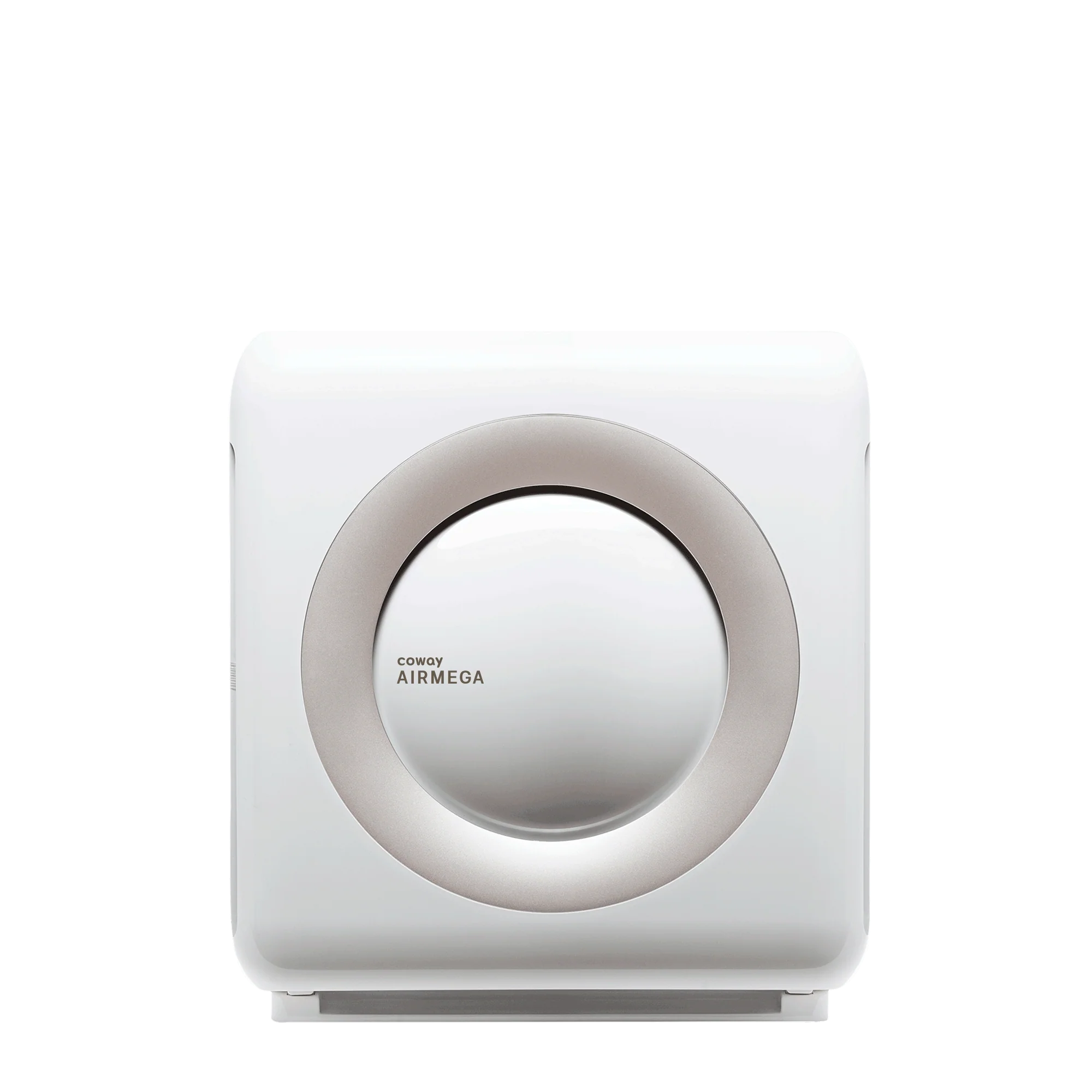
Key Specifications
- Room Coverage
- 361 sq ft
- CADR
- 233/246/240
- Filter
- True HEPA + Carbon + Pre-filter
- Noise
- 24 dB
- Power
- 77 watts
- Best For
- Medium rooms up to 361 sq ft. Wirecutter #1 for 10+ years. Best overall value.
📅 Prices checked . Amazon prices change frequently — click through for current price. Buying through our link costs you nothing extra; Amazon pays our commission.
What's in the Box
- Coway AP-1512HH air purifier
- Pre-installed 4-stage filter set
- Power cord
- User manual
- Filter replacement reminder sticker
Pros
- Wirecutter #1 for 10+ consecutive years
- AHAM verified CADR — no controversy
- True HEPA
- Fastest auto mode response in class
- 24dB ultra quiet sleep mode
- Eco mode at 4.9 watts
- 3-year warranty
Cons
- No WiFi or app control
- Carbon is impregnated fabric — weak on heavy odors
- Ionizer adds trace ozone (9ppb — CARB safe)
- Filter costs $60/year
- Design is dated
Best For
The Coway AP-1512HH Mighty is the default recommendation for dust control in rooms up to 361 sq ft. Its AHAM-verified dust CADR of 246 — one of the highest in its price class — means it consistently delivers 4+ ACH in bedrooms and mid-size living spaces. The auto mode uses a particle sensor to ramp fan speed in response to dust events like vacuuming or HVAC startup, making it hands-off for daily dust management. If you want a proven, no-controversy True HEPA unit for household dust at a price under $130, this is the pick.
📅 Price checked August 2026 · Buying through this link costs you nothing extra — Amazon covers our commission
Winix 5500-2 Review Best Value
✓ AHAM VerifiedOur Verdict
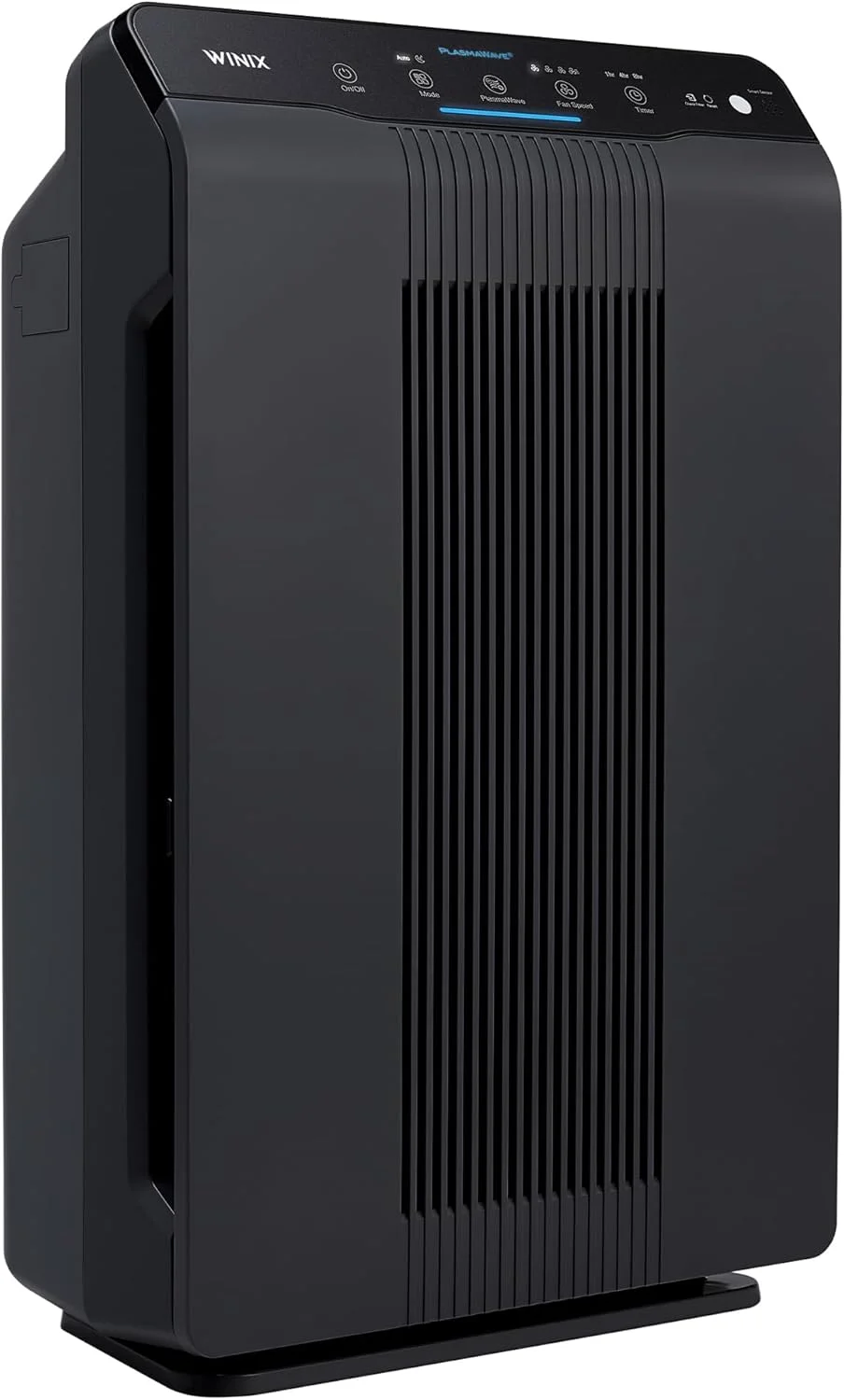
Key Specifications
- Room Coverage
- 360 sq ft
- CADR
- 232/243/246
- Filter
- True HEPA + PlasmaWave + Washable Carbon
- Noise
- 27 dB
- Power
- 67 watts
- Best For
- DISCONTINUED. Buy while stock lasts. Washable carbon is unique advantage.
📅 Prices checked . Amazon prices change frequently — click through for current price. Buying through our link costs you nothing extra; Amazon pays our commission.
What's in the Box
- Winix 5500-2 air purifier
- Pre-installed True HEPA + carbon filter
- Power cord
- Remote control
- User manual
Pros
- AHAM verified CADR
- PlasmaWave pellet carbon
- Washable carbon filter — unique
- HouseFresh tested 23 min room clean
Cons
- DISCONTINUED in US
- No WiFi
- Louder than 5510
- Larger footprint
Best For
The Winix 5500-2 is the top choice for dust-heavy households that also deal with odors or pet dander alongside general dust load. Its True HEPA stage captures dust at an AHAM-verified CADR of 243 while the washable carbon filter and PlasmaWave stage handle secondary contaminants. The washable pre-filter is particularly well-suited for high-dust environments — cleaning it monthly rather than replacing it reduces ongoing cost. Note that the 5500-2 is discontinued in the US; buy while stock lasts or consider the Winix 5510 as the direct replacement.
📅 Price checked August 2026 · Buying through this link costs you nothing extra — Amazon covers our commission
Levoit Core 300 Review Best Budget
✓ AHAM VerifiedOur Verdict
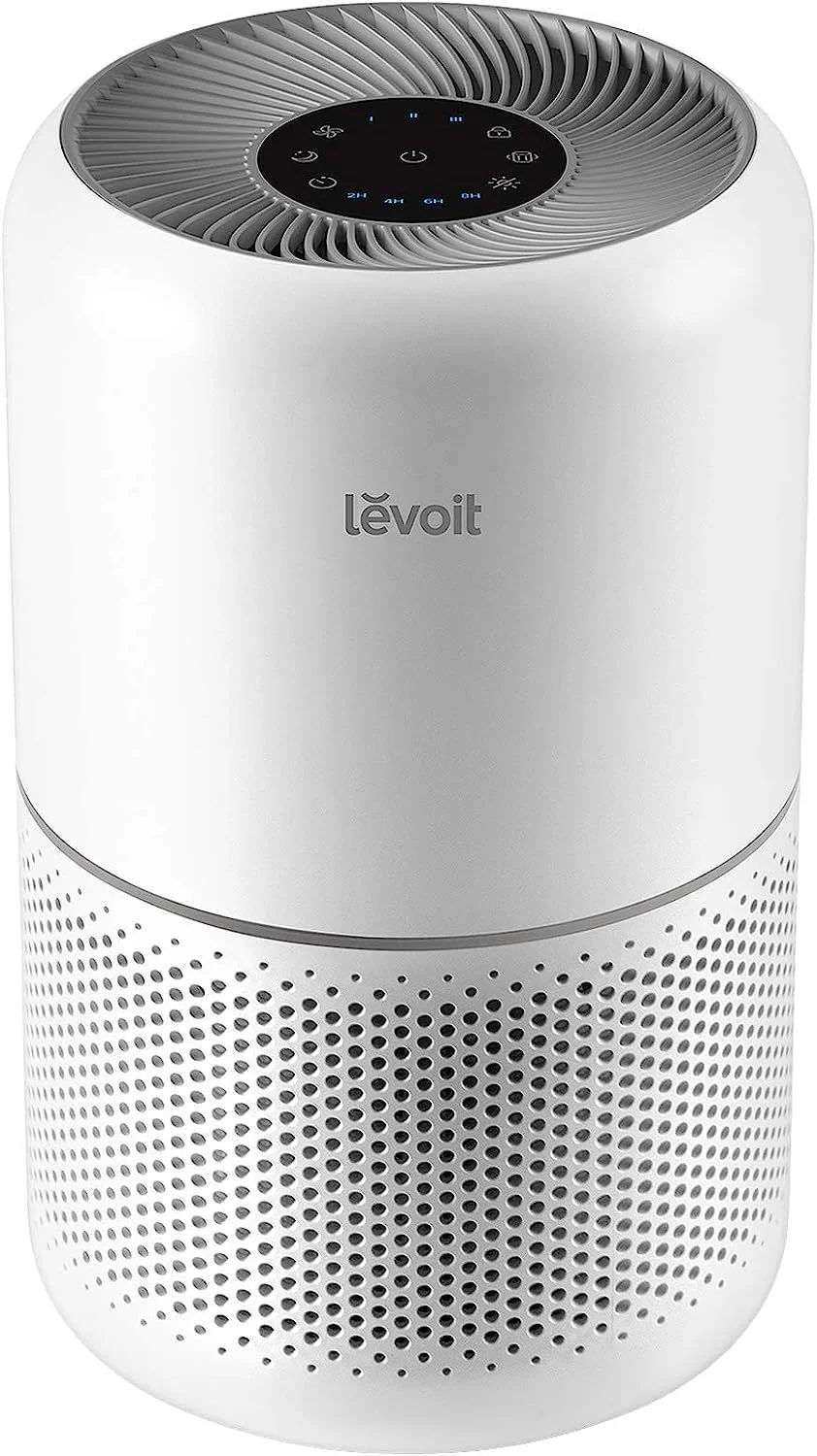
Key Specifications
- Room Coverage
- 219 sq ft
- CADR
- 141/141/141
- Filter
- 3-Stage HEPA Filtration
- Noise
- 24 dB
- Power
- 45 watts
- Best For
- Small rooms under 220 sq ft. Budget entry point.
📅 Prices checked . Amazon prices change frequently — click through for current price. Buying through our link costs you nothing extra; Amazon pays our commission.
What's in the Box
- Levoit Core 300 air purifier
- Pre-installed 3-in-1 filter
- Power cord
- User manual
Pros
- AHAM verified CADR 141
- Cheapest filter replacements at $25/year
- 24dB ultra quiet sleep mode
- Compact cylindrical design
- Simple plug-and-play — no app needed
Cons
- No auto mode or air quality sensor
- Only covers 219 sq ft
- HEPA claims controversy affected Levoit brand
- Filter needs replacing every 6 months
Best For
The Levoit Core 300 is best for small rooms under 220 sq ft where budget is the primary constraint. Its AHAM-verified dust CADR of 141 is adequate for a bedroom at 4+ ACH, and filter replacements at $25/year are the lowest in this comparison. The Core 300 lacks an auto mode and particle sensor, so it must be run manually — set it to medium speed continuously for dust control rather than relying on speed adjustment. For larger rooms or households with high dust loads, size up to the Coway or Winix.
📅 Price checked August 2026 · Buying through this link costs you nothing extra — Amazon covers our commission
What to Know Before You Buy
Size for your room dust load, not just room size. The standard AHAM formula (room sq ft × 0.67 = minimum dust CADR) assumes average household dust conditions. If your home has wall-to-wall carpet, multiple occupants, pets, or is near a high-traffic road, apply a 1.5× multiplier to that baseline. A 300 sq ft carpeted bedroom with a dog needs dust CADR around 300 — not the baseline 200. The three units on this page cover rooms from 219 sq ft (Levoit Core 300, CADR 141) to 361 sq ft (Coway AP-1512HH, CADR 246). For larger rooms or heavily dusty environments, look at higher-CADR units like the Levoit Core 400S (CADR dust 240, 403 sq ft) or Coway Airmega 350 (CADR 350).
Pre-filter maintenance is the highest-leverage dust task. In a dusty home, the pre-filter catches the bulk of large PM10 particles before they reach the HEPA media. A loaded pre-filter restricts airflow, reduces effective CADR, and causes the main HEPA media to load faster than necessary. In a high-dust environment, clean or vacuum the pre-filter every 30 days rather than the standard 60-day schedule. For the Winix 5500-2 specifically, the washable pre-filter can be rinsed under water monthly — a genuine advantage over units with non-washable pre-filters that must be replaced. The Coway AP-1512HH has a washable pre-filter as well, making both strong choices for sustained dust performance.
Run continuously — especially through HVAC cycles and vacuuming. Dust re-enters the airborne state at predictable times: when the HVAC system starts up and carries duct particles into the room, during and immediately after vacuuming (standard vacuums without sealed HEPA exhaust re-aerosolize fine PM2.5 while cleaning coarse floor dust), and after foot traffic across carpet. Running the purifier at medium or high speed during these events captures the dust event at its peak concentration. If your unit has auto mode with a particle sensor — the Coway AP-1512HH has the fastest auto-mode response in this class — it will increase fan speed automatically. Units without auto mode (Levoit Core 300) should be manually set to high speed before you vacuum and kept there for 30 minutes after.
What Types of Dust Does a HEPA Air Purifier Capture?
True HEPA filtration captures airborne particles at 99.97% efficiency at 0.3 microns — the most penetrating particle size for the fiber-based filter mechanism. Because this is the hardest size to capture, particles both larger and smaller are captured at equal or higher efficiency. This means that all three primary fractions of household airborne dust are within HEPA's capture range: PM10 (2.5–10 microns), PM2.5 (below 2.5 microns), and PM1 ultrafine particles (below 1 micron).
PM10 particles — the visible settling dust from skin cells, textile fibers, soil tracked indoors, and insect fragments — range from 2.5 to 10 microns. These are well above the 0.3-micron HEPA efficiency threshold and are captured with essentially 100% efficiency when airborne. The practical limit with PM10 is that gravity pulls these large particles onto surfaces quickly — a 10-micron particle settles from a 9-foot ceiling to the floor in roughly 3 minutes under still air conditions. This means the window for air purifier capture is short, but high-CADR units running at 4+ ACH will intercept a large fraction of this settling dust before it reaches surfaces.
PM2.5 fine particles — the fraction from combustion sources, fragmented biological material, and fine soil — stay airborne for hours because their mass is too low for gravity to pull them down quickly. These particles include fine pollen fragments, diesel exhaust particulates tracked in from outdoors, cooking emissions, and fine mineral dust. This is the fraction most relevant to health outcomes: PM2.5 reaches deep into the alveoli of the lungs and is classified by the EPA as the more dangerous particulate fraction for cardiovascular and respiratory disease. HEPA captures this fraction via diffusion and interception mechanisms at 99.97%+ efficiency.
PM1 ultrafine particles (below 1 micron) from combustion and secondary aerosol formation are captured by HEPA via diffusion — as particles this small move randomly by Brownian motion, the probability of contacting a filter fiber increases. HEPA is actually more efficient below 0.3 microns for this reason. PM1 particles from candles, gas cooking, and infiltrated outdoor pollution (diesel exhaust ranges from 0.05 to 1 micron) are captured effectively.
What HEPA does not capture: gas-phase molecules — odors, VOCs, carbon monoxide, formaldehyde. These require a separate activated carbon stage. If your dust concern is specifically about construction dust containing crystalline silica, note that silica particles are in the respirable PM2.5–PM4 range and are captured by HEPA. However, construction dust loads are typically 10–50× higher than household dust, loading pre-filters rapidly and requiring more frequent maintenance during and after renovation work.
How Fast Do Air Purifiers Reduce Dust in a Room?
The rate at which an air purifier reduces airborne dust concentration in a room is determined primarily by CADR and room volume — not the purifier brand or marketing claims. The formula is straightforward: CADR ÷ (room volume ÷ 60) = air changes per hour (ACH). At 4 ACH, the entire room air volume passes through the purifier every 15 minutes. Each pass through a True HEPA filter removes approximately 99.97% of particles — so after a single air change cycle, dust concentration in the air is reduced by 99.97% of the fraction that passed through the filter. In practice, room air is not perfectly mixed and not all air passes through the unit uniformly, so real-world reduction rates are somewhat lower than theoretical maximum.
Empirical testing with particle counters in sealed rooms documents the practical outcome: at 4–5 ACH, airborne dust concentrations fall 60–90% within 60–90 minutes of starting the purifier following a dust disturbance event. At 2 ACH (a common result of using a purifier rated for twice the room size), the same reduction takes 2–3 hours. This is why sizing matters: a unit running at 2 ACH is not "half as effective" — it takes exponentially longer to achieve the same air quality improvement because the concentration decay is not linear.
For the Coway AP-1512HH with CADR dust 246 in a 300 sq ft room with 9-foot ceilings (volume: 2,700 cubic feet): ACH = 246 ÷ (2700 ÷ 60) = 246 ÷ 45 = 5.5 ACH. At this rate, significant airborne dust reduction is achieved within 45–60 minutes of a disturbance event. For the Levoit Core 300 with CADR dust 141 in the same room: ACH = 141 ÷ 45 = 3.1 ACH — below the 4 ACH threshold for efficient dust control. This is why the Core 300 is listed as appropriate for rooms under 220 sq ft, not 300 sq ft.
The auto mode on particle-sensor-equipped units like the Coway AP-1512HH speeds up dust reduction after events. When the sensor detects a PM2.5 spike from vacuuming or foot traffic, it ramps to high speed automatically, increasing effective CADR during peak dust periods and reducing fan speed (and noise) during low-dust periods. HouseFresh's independent testing documented the Winix 5500-2 cleaning a room in 23 minutes under controlled conditions — a result that reflects both its CADR 243 performance and the room conditions of the test.
One important nuance: the 60–90% reduction in airborne dust is the reduction in the fine PM2.5 fraction that stays suspended. Coarse PM10 dust (the visible settling fraction) falls out of suspension onto surfaces on its own within minutes regardless of the purifier. The air purifier intercepts some of this settling dust as it passes through the unit's intake zone, but the primary mechanism for dust-on-furniture reduction is capturing the fine fraction before it re-settles after disturbance events, not intercepting falling large particles in mid-air.
How to Size an Air Purifier for Dust Control
CADR (Clean Air Delivery Rate) is the single most important specification for dust control effectiveness, and it must be AHAM-verified to be meaningful. Manufacturer-claimed CADR numbers are not standardized and frequently overstate actual performance. AHAM verification means the CADR was tested in a sealed chamber under standardized conditions by an independent lab — the Coway AP-1512HH (CADR dust 246), Winix 5500-2 (CADR dust 243), and Levoit Core 300 (CADR dust 141) all carry AHAM VERIFIDE certification. For a detailed explanation of how CADR is tested and why it matters, see the guide to CADR sizing formula and air changes per hour calculation.
The baseline sizing formula from AHAM is: room sq ft × 0.67 = minimum dust CADR. This gives you the CADR needed to deliver approximately 4.8 ACH in a room with standard 8-foot ceilings. Examples: 150 sq ft needs CADR 100 minimum; 250 sq ft needs CADR 168; 350 sq ft needs CADR 234; 500 sq ft needs CADR 335. The three products on this page cover rooms from 219 sq ft (Levoit Core 300) to 361 sq ft (Coway AP-1512HH and Winix 5500-2).
For dusty households — defined by carpet throughout, multiple occupants, pets, or location near a high-traffic road or construction — apply a 1.5× multiplier to the baseline. A 300 sq ft carpeted bedroom occupied by two people with a dog needs dust CADR around 300 (baseline 200 × 1.5). Neither the Levoit Core 300 nor the standard Coway AP-1512HH will adequately serve this room at 4+ ACH; you need a higher-CADR unit. The Winix 5500-2 (CADR dust 243) is marginal here — the Levoit Core 400S (CADR dust 240 with 403 sq ft coverage) or Levoit Vital 200S would be better fits for larger dusty rooms.
For rooms with ceilings above 8 feet, adjust the CADR target for actual room volume. At 10-foot ceilings, the room volume is 25% larger than the 8-foot assumption in the AHAM formula. A 300 sq ft room with 10-foot ceilings has 3,000 cubic feet of air volume vs. 2,400 with 8-foot ceilings — the same CADR delivers proportionally fewer ACH. Divide CADR by (room volume ÷ 60) to calculate actual ACH for your specific room dimensions.
The bedroom is the highest-priority room for dust control. Adults spend 7–8 hours per night in the bedroom, and the resuspension events from getting in and out of bed, from HVAC cycling through the night, and from bedding movement distribute fine dust throughout the breathing zone at bed level. Starting with the bedroom and sizing it correctly for 4–5 ACH delivers the highest total exposure reduction of any single placement decision. After the bedroom, the main living area — where foot traffic across carpet and HVAC activity generates the most daytime resuspension events — is the second priority.
Air Purifier vs Vacuuming — What Each Does for Dust
A common misconception is that an air purifier can replace regular vacuuming in a dusty home. It cannot, and understanding why clarifies how to use the two together for maximum dust control. An air purifier and a HEPA vacuum target different dust reservoirs: the purifier addresses airborne dust; the vacuum addresses surface-settled dust. Both reservoirs are large and continuously replenished, and neither tool eliminates the need for the other.
Surface-settled dust — the layer on floors, carpet, furniture, shelving, and baseboards — represents the majority of the total household dust mass. This settled reservoir is untouched by the air purifier until it is mechanically disturbed. When foot traffic, HVAC cycling, or vacuuming activity re-aerolizes the settled layer, it enters the airborne pool where the purifier can capture it. An air purifier in a room with a high settled-dust reservoir will be continuously re-challenged as resuspension events occur throughout the day, operating at high load continuously even if the airborne concentration appears controlled between events.
Standard vacuums without a sealed HEPA exhaust create a significant problem in dusty homes: while the brush roll collects large particles from floors and carpet, the exhaust releases fine PM2.5 particles that were previously settled but are now aerosolized by the vacuum motor and expelled through the bag or bin. Studies have shown some non-HEPA vacuums increase PM2.5 airborne concentration by 20–100% during use compared to pre-vacuuming levels. Running an air purifier during and immediately after vacuuming directly addresses this: the purifier operates at high CADR when the PM2.5 concentration spike from vacuuming occurs, intercepting the re-aerosolized fine fraction before it settles on distant surfaces.
The correct protocol for a dusty home is: (1) Run the air purifier on high during vacuuming. (2) Vacuum from the far end of the room toward the door, finishing at the exit, so you don't walk back through the disturbed dust. (3) Leave the purifier running on high for 30–45 minutes after vacuuming. (4) Damp-wipe hard surfaces after vacuuming rather than dry-dusting — dry-dusting simply re-aerosolizes surface dust for the air purifier to recapture, while damp-wiping removes it. This combined approach — vacuuming removes the surface reservoir; the air purifier handles the re-aerosolized fine fraction — is substantially more effective than either method alone.
The frequency signal for whether your purifier is adequately sized is furniture dust accumulation rate. If you need to dust furniture every 3–4 days despite running an air purifier continuously, the purifier is likely undersized, poorly positioned, or operating at too low a fan speed. A correctly sized unit running at 4+ ACH in a well-sealed room should extend the furniture dusting interval to 7–14 days in average household conditions.
Which Air Purifiers Are Best for Dust?
For dust control specifically, the filter technology hierarchy is: True HEPA (highest particle capture efficiency, no ozone byproduct) > H13 HEPA-grade filtration (similar efficiency, minor marketing controversy on some brands) > HEPA-type filters (not independently standardized, efficiency varies widely) > electrostatic precipitators (effective but subject to resuspension from collector plates and ozone emission). For dust, the True HEPA units on this page are the recommended choice because captured particles stay captured in the fiber media — there is no plate-cleaning cycle and no resuspension risk from the filter itself.
The Coway AP-1512HH Mighty is the top pick for dust control at its price point. At CADR dust 246 — AHAM-verified — it delivers 5.5 ACH in a 300 sq ft room and 4.1 ACH in a 360 sq ft room. Its True HEPA designation has no controversy (unlike some Levoit products following the 2024 BBB NAD challenge). The auto mode responds to PM2.5 events faster than any comparable unit in the under-$150 price range, making it effectively hands-off for dust management. Pre-filter is washable, which matters in high-dust environments. Wirecutter has ranked it #1 for 10+ consecutive years specifically because its real-world dust performance remains consistent over time — a key metric for dusty households where the unit must perform reliably for years, not just in a controlled test.
The Winix 5500-2 is the runner-up for dust, with AHAM-verified dust CADR of 243 — nearly identical to the Coway — plus a washable carbon filter that extends filter life in households where dust accompanies pet odors or cooking smells. Its washable pre-filter is the key advantage for high-dust environments: cleaning it monthly under running water rather than replacing it reduces annual filter costs and ensures airflow is maintained even in heavy-use conditions. HouseFresh's independent testing (23-minute room clean time) validates its real-world dust performance. The discontinuation in the US market is a practical concern; if you need certainty of future filter availability, the Winix 5510 is the current-production replacement with same CADR plus WiFi.
The Levoit Core 300 is appropriate for small rooms under 220 sq ft where budget is the primary concern. CADR dust 141 with AHAM verification delivers adequate ACH in a small bedroom. The lack of auto mode or particle sensor means it must be run at a fixed speed continuously — medium speed 24/7 is the correct operating approach for dust control in a small room. Filter replacement costs of $25/year are the lowest in this comparison, making it the most affordable long-term option. For rooms over 220 sq ft, the Core 300 will be undersized and the Coway or Winix should be chosen instead. For the best-performing units across all dust control scenarios and room sizes, see the best air purifiers for dust ranked by CADR.
Key specifications to verify when evaluating any dust air purifier: (1) Look for AHAM VERIFIDE on the product packaging or the AHAM directory at ahamdir.com — this is independent verification, not a manufacturer claim. (2) Check the dust CADR specifically (some units have different CADR values for smoke, dust, and pollen; use the dust number for dust sizing). (3) Confirm True HEPA or H13 HEPA-grade filtration — not "HEPA-type" or "HEPA-like," which have no standardized efficiency requirement. (4) Pre-filter washability matters in high-dust homes — a washable pre-filter reduces the cost and frequency of filter maintenance. For the technical explanation of HEPA filter grades and why True HEPA vs HEPA-type matters, see HEPA filter grades and efficiency standards explained.