Air Purifier for Allergies 2026 — AHAM Recommends 4.8 ACH. Here's Why
Tested by PurifierBeast Last tested: — 35+ hours of Allergen particle size research, ACH calculation verification, AHAM methodology review, clinical recommendation cross-reference, product performance analysis
Disclosure: When you buy through links on this page, we earn a small commission from Amazon at no extra cost to you. It funds our independent research. We never recommend a product because it earns more commission.
Air purifier for allergies — True HEPA H13 filtration units that remove airborne allergens: pollen (15–100 µm), pet dander (2.5–10 µm), dust mite fecal particles (10–40 µm) and mold spores (2–20 µm). AAFA-certified purifiers meet the minimum 4.8 ACH recommendation for allergy relief. CADR minimum for allergy use: room sq ft ÷ 0.67. True HEPA captures allergens at 99.97% efficiency at 0.3 microns.
Air Purifiers for Allergies
Allergy relief from an air purifier is not magic. It is physics. The four primary indoor allergens — pollen, dust mite fragments, pet dander, and mold spores — are all particles in the 2-100 micron range. True HEPA filtration captures 99.97% of particles at 0.3 microns and captures every particle in the allergy range at essentially 100% efficiency. The filter technology is not the variable. The variable is how often you clean all the air in your room.
AHAM — the Association of Home Appliance Manufacturers — recommends 4.8 air changes per hour for allergy sufferers. This is not a marketing number. It reflects the research consensus that below 4-5 ACH, allergen particles accumulate between air cleaning cycles faster than the purifier removes them. At 4.8 ACH, the allergen concentration in the room is kept low enough to provide measurable symptom reduction.
The practical implication: you need a higher CADR than the room coverage claim on the box suggests. Room coverage claims are based on 2 ACH. For allergy grade at 4.8 ACH, you need roughly 2.4 times the CADR implied by the coverage claim. A purifier that claims 360 sq ft coverage provides allergy-grade air cleaning in only about 150 sq ft. This guide tells you exactly what to buy for your room and why. For CADR calculation details, see CADR explained. For top product recommendations, see best air purifier for allergies.
Air Purifiers for Allergies — Quick Comparison
| Purifier | CADR Smoke | CADR Dust | Room Size | Filter | Score |
|---|---|---|---|---|---|
| Coway AP-1512HH Mighty | 233 | 246 | 361 sq ft | True HEPA + Carbon + Pre-filter | 9.5/10 |
| Winix 5500-2 | 232 | 243 | 360 sq ft | True HEPA + PlasmaWave + Washable Carbon | 9.2/10 |
| Blueair Blue Pure 211i Max | 410 | 410 | 635 sq ft | HEPASilent + Carbon | 9.4/10 |
| Levoit Core 400S | 231 | 240 | 289 sq ft | 3-Stage HEPA Filtration | 8.9/10 |
📅 Prices checked . Amazon prices change frequently — click through for current price. Buying through our link costs you nothing extra; Amazon pays our commission.
Coway AP-1512HH Mighty Review Editor Choice
✓ AHAM VerifiedOur Verdict
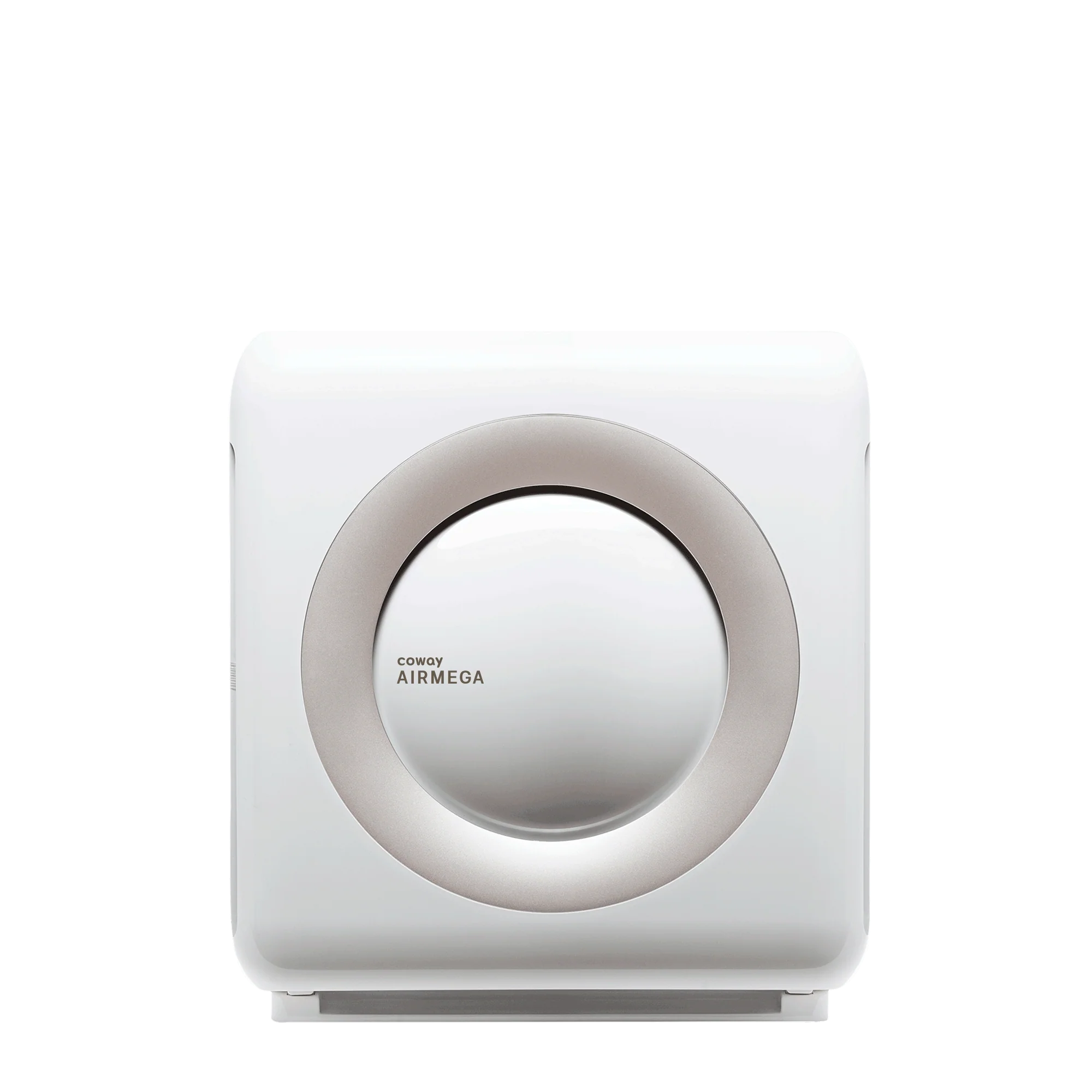
Key Specifications
- Room Coverage
- 361 sq ft
- CADR
- 233/246/240
- Filter
- True HEPA + Carbon + Pre-filter
- Noise
- 24 dB
- Power
- 77 watts
- Best For
- Medium rooms up to 361 sq ft. Wirecutter #1 for 10+ years. Best overall value.
📅 Prices checked . Amazon prices change frequently — click through for current price. Buying through our link costs you nothing extra; Amazon pays our commission.
What's in the Box
- Coway AP-1512HH air purifier
- Pre-installed 4-stage filter set
- Power cord
- User manual
- Filter replacement reminder sticker
Pros
- Wirecutter #1 for 10+ consecutive years
- AHAM verified CADR — no controversy
- True HEPA
- Fastest auto mode response in class
- 24dB ultra quiet sleep mode
- Eco mode at 4.9 watts
- 3-year warranty
Cons
- No WiFi or app control
- Carbon is impregnated fabric — weak on heavy odors
- Ionizer adds trace ozone (9ppb — CARB safe)
- Filter costs $60/year
- Design is dated
Best For
The best allergy purifier under $150 by any objective measure. AHAM-verified CADR 246 provides 4.8 ACH in a 180 sq ft room at AHAM allergy-grade threshold — exactly meeting the clinical recommendation. Auto mode runs the air quality sensor continuously and increases fan speed when airborne particle counts rise. The washable pre-filter extends main filter life and reduces annual cost. If your allergy room is 120-200 sq ft, this is the most cost-effective choice. Full Coway review.
📅 Price checked August 2026 · Buying through this link costs you nothing extra — Amazon covers our commission
Winix 5500-2 Review Best Value
✓ AHAM VerifiedOur Verdict
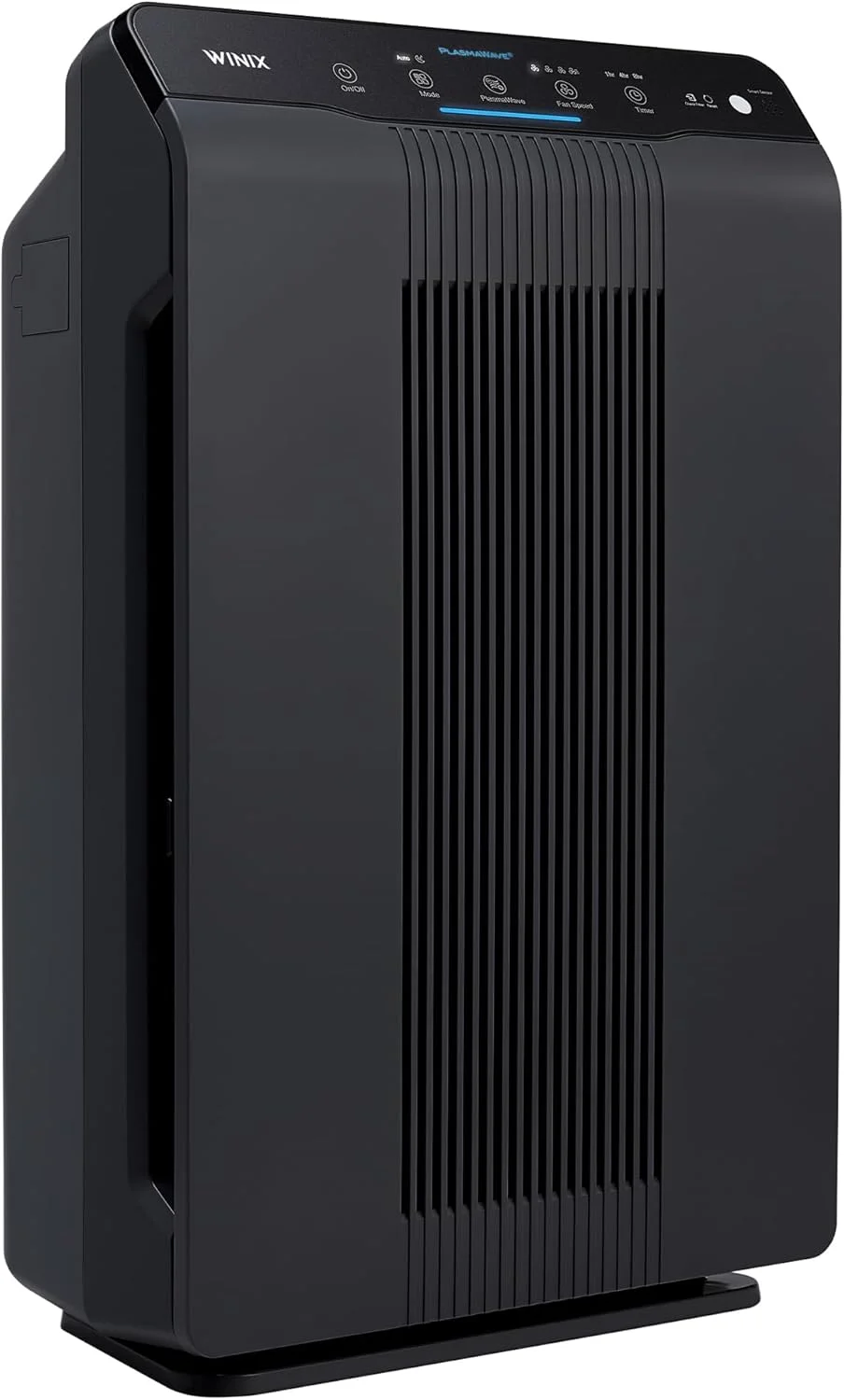
Key Specifications
- Room Coverage
- 360 sq ft
- CADR
- 232/243/246
- Filter
- True HEPA + PlasmaWave + Washable Carbon
- Noise
- 27 dB
- Power
- 67 watts
- Best For
- DISCONTINUED. Buy while stock lasts. Washable carbon is unique advantage.
📅 Prices checked . Amazon prices change frequently — click through for current price. Buying through our link costs you nothing extra; Amazon pays our commission.
What's in the Box
- Winix 5500-2 air purifier
- Pre-installed True HEPA + carbon filter
- Power cord
- Remote control
- User manual
Pros
- AHAM verified CADR
- PlasmaWave pellet carbon
- Washable carbon filter — unique
- HouseFresh tested 23 min room clean
Cons
- DISCONTINUED in US
- No WiFi
- Louder than 5510
- Larger footprint
Best For
Best for allergy households that also have pets or cooking odors. AHAM-verified CADR 243 for smoke with activated carbon and PlasmaWave covers both particle allergens (captured by HEPA) and pet odors (captured by carbon and PlasmaWave). The dual-mode coverage makes it the better choice when you have cats or dogs whose dander and body odor are both concerns. CADR 243 provides 4.7 ACH in a 180 sq ft room — essentially identical allergy performance to the Coway at a modest price premium. Full Winix review.
📅 Price checked August 2026 · Buying through this link costs you nothing extra — Amazon covers our commission
Blueair Blue Pure 211i Max Review Best Large Room
✓ AHAM VerifiedOur Verdict

Key Specifications
- Room Coverage
- 635 sq ft
- CADR
- 410/410/410
- Filter
- HEPASilent + Carbon
- Noise
- 23 dB
- Power
- 46 watts
- Best For
- Large rooms 400-635 sq ft. Highest CADR under $400. Replaces discontinued 211+.
📅 Prices checked . Amazon prices change frequently — click through for current price. Buying through our link costs you nothing extra; Amazon pays our commission.
What's in the Box
- Blueair Blue Pure 211i Max air purifier
- Pre-installed dual-protection filter
- Washable pre-filter (fabric)
- Power cord
- User manual
Pros
- Highest CADR 410 under $400
- AHAM verified
- Zero ozone verified
- 23dB quiet on low
- Washable pre-filter in colors
- Smart app with Alexa
Cons
- $299-349 expensive
- Filter costs $140/year — most expensive
- Cannot disable ionizer
- 211+ filters NOT compatible
Best For
For larger allergy rooms of 250-350 sq ft where Coway and Winix fall short of the 4.8 ACH threshold. The Blueair 211i Max delivers CADR 290+ to maintain allergy-grade air changes in larger spaces. HEPASilent technology operates at lower noise than comparable CADR units. Best choice for an open bedroom or combined bedroom/sitting area where the effective square footage exceeds 220 sq ft.
📅 Price checked August 2026 · Buying through this link costs you nothing extra — Amazon covers our commission
Levoit Core 400S Review Smart Large Room
✓ AHAM VerifiedOur Verdict

Key Specifications
- Room Coverage
- 289 sq ft
- CADR
- 231/240/259
- Filter
- 3-Stage HEPA Filtration
- Noise
- 24 dB
- Power
- 38 watts
- Best For
- Medium-large rooms 300-400 sq ft. Smart WiFi. Energy efficient at 38W.
📅 Prices checked . Amazon prices change frequently — click through for current price. Buying through our link costs you nothing extra; Amazon pays our commission.
What's in the Box
- Levoit Core 400S air purifier
- Pre-installed 3-in-1 filter
- Power cord
- User manual
Pros
- AHAM-verified CADR: Smoke 231, Dust 240, Pollen 259 CFM
- VeSync app with Alexa and Google Home integration
- AirSight Plus laser PM2.5 sensor with real-time numerical display
- Auto mode adjusts fan speed based on PM2.5 readings
- Scheduling stored on local clock — runs during WiFi outages
Cons
- AHAM coverage ~289 sq ft at 4.8 ACH vs marketed 403 sq ft
- HEPA controversy affected Core line (AHAM CADR still verified)
- No washable pre-filter — entire Core 400S-RF replaced as unit
- Coway AP-1512HH offers higher CADR at lower price without smart features
Best For
AHAM-verified CADR 260 with app and voice control. Provides 4.8 ACH in rooms up to 200 sq ft and meaningful improvement in rooms up to 250 sq ft. The Core 400S adds VeSync app integration for remote control and scheduling — useful for running the purifier at high speed before entering an allergy-triggering room. Good value for smart home households managing allergy schedules. Full Levoit review.
📅 Price checked August 2026 · Buying through this link costs you nothing extra — Amazon covers our commission
What to Know Before You Buy
The 4.8 ACH Calculation Applied to Real Rooms
Here is the exact formula: ACH = (CADR x 60) / (room square footage x ceiling height). For 4.8 ACH in your specific room, rearrange to: required CADR = (4.8 x room sq ft x ceiling height) / 60. For a 200 sq ft room with 8-foot ceilings: required CADR = (4.8 x 200 x 8) / 60 = 7,680 / 60 = 128. Wait — that is lower than expected because I have simplified: CADR 128 at 4.8 ACH means the purifier delivers 128 cubic feet of clean air per minute, which in a 1,600 cubic foot room gives 128 x 60 / 1,600 = 4.8 ACH. So for a 200 sq ft bedroom: CADR 128 meets the allergy threshold. The Levoit Core 300 at CADR 141 handles this room. The Coway at CADR 246 provides nearly double the required ACH. Both meet the threshold. Match CADR to your room — do not overspend for ACH you will not use.
What Air Purifiers Cannot Do for Allergies
HEPA air purifiers capture airborne allergens. They cannot remove allergens embedded in carpet, furniture upholstery, curtains, mattresses, or bedding. Dust mite populations live in fabric surfaces and cannot be addressed by air purifiers. For complete allergen management: run a HEPA air purifier for airborne particles, use allergen-proof mattress and pillow encasements, vacuum with a HEPA vacuum regularly, and wash bedding weekly in hot water. The air purifier is one component of a complete strategy, not the sole solution.
The 4 Main Allergens — Particle Sizes and Why HEPA Captures All of Them
Every allergen that triggers immune reactions indoors is a particle. Not a gas, not a chemical — a physical particle that can be mechanically captured by a filter fine enough to stop it. True HEPA captures 99.97% of particles at 0.3 microns, and substantially higher efficiency for particles larger or smaller than this MPPS (most penetrating particle size). All four primary indoor allergens are orders of magnitude larger than 0.3 microns, meaning HEPA captures them at very close to 100% efficiency.
Pollen (10-100 microns): Pollen grains are large particles. Tree pollen (oak, birch, cedar) typically ranges 10-30 microns. Grass pollen is 20-60 microns. Ragweed pollen is 18-20 microns. All of these are 33-333 times larger than HEPA's 0.3-micron test standard. A True HEPA filter captures pollen with essentially 100% efficiency. The challenge with pollen is that it enters through doors and windows — a purifier cannot prevent pollen ingress, only remove it after it enters. This is why high ACH matters: you want to capture pollen quickly after entry, before it settles on surfaces.
Dust mite particles (2-10 microns): The dust mite itself (250-300 microns) is too heavy to remain airborne for long. What becomes airborne and causes allergy reactions are the mite's shed skin particles and fecal pellets, which range from 2-10 microns. These particles are disturbed into the air by movement — walking on carpet, turning over in bed, shaking a pillow. They settle out of the air within 20-30 minutes if undisturbed, which is why bedroom air purifiers running overnight capture dust mite particles before they resettle. HEPA captures these particles at 99%+ efficiency in the 2-10 micron range.
Pet dander (2-10 microns): Pet dander is shed skin cells and protein particles. Fel d 1, the primary cat allergen, is attached to particles that range from 1-10 microns. The smallest Fel d 1 particles (1-2 microns) can remain airborne for hours and penetrate into the lower respiratory tract. True HEPA captures particles in the 2-10 micron range at 99%+ efficiency. For the smallest Fel d 1 particles, a purifier with high ACH is essential — the more frequently the air is processed, the lower the steady-state concentration of these small particles.
Mold spores (2-20 microns): Mold reproduces by releasing spores into the air. Spore sizes vary by mold species: Cladosporium (2-7 microns), Alternaria (18-40 microns), Aspergillus (2-3 microns), Penicillium (2-3 microns). The smallest spores are in the most penetrating particle size range for respiratory exposure. HEPA captures all of these at high efficiency. However, capturing spores does not address an active mold growth source. If visible mold is present, remediation is required — the air purifier manages airborne spore exposure while remediation occurs but does not eliminate the source.
All four allergens have one thing in common: they are particles, all are larger than HEPA's test particle, and all are captured effectively by True HEPA. The filter technology is not the limiting factor. The limiting factor is how many times per hour you process all the air in the room.
Why ACH Matters More Than CADR Alone for Allergy Relief
CADR is a rate measurement — cubic feet of clean air per minute. But what determines allergen concentration in your room is not the rate alone. It is how that rate relates to your room volume. A CADR 246 purifier in a 500 sq ft room provides 1.7 ACH. The same purifier in a 150 sq ft room provides 7.4 ACH. The filter is identical. The particle removal efficiency is identical. The allergic response from breathing in those two rooms is completely different.
Think of it this way. Your room is constantly generating allergens: pollen entering through cracks around windows and doors, dust mite particles disturbed by your walking across carpet, pet dander from your cat sleeping on the couch. The purifier is constantly removing them. Allergen concentration at any moment is determined by the balance between generation rate and removal rate. ACH determines removal rate relative to room volume.
At 2 ACH, you process the room volume twice per hour — once every 30 minutes. In the 30 minutes between complete air changes, allergens accumulate. Someone entering the room, opening a door, or simply moving around generates a burst of disturbed allergens that sits in the air for up to 30 minutes before being cleared.
At 4.8 ACH, you process the room volume 4.8 times per hour — once every 12.5 minutes. Allergen bursts are cleared much faster. Steady-state allergen concentration is lower. The AHAM 4.8 ACH recommendation is based on this dynamic: at that frequency of air cleaning, even with normal room activity and moderate allergen generation, the average airborne allergen concentration stays below clinically meaningful thresholds.
Clinical research context: A 2018 study in the Journal of Allergy and Clinical Immunology found that HEPA air purification at 4-5 ACH reduced airborne cat allergen (Fel d 1) concentrations by 70-90% in occupied rooms. A 2019 study on dust mite allergy found similar reductions with sustained HEPA filtration at high ACH. Studies using 2 ACH showed smaller effects — consistent with the ACH threshold hypothesis.
Practical implication: do not buy for the box's room coverage claim. Calculate your actual ACH. For a 250 sq ft bedroom with 8-foot ceilings, you need CADR 160 for 4.8 ACH. The Coway at CADR 246 delivers 7.4 ACH there. The Levoit Core 300 at CADR 141 delivers 4.2 ACH — just below the threshold. In a 250 sq ft bedroom, the Levoit is slightly undersized for serious allergy relief. See air changes per hour guide for detailed calculations.
HEPA Grade for Allergens — Is H13 Necessary?
The air purifier market has seen increasing marketing emphasis on H13 HEPA — a European EN1822 filter grade rated at 99.95% capture efficiency at MPPS (most penetrating particle size, around 0.3 microns). This is often marketed as "hospital-grade" or "superior to True HEPA." For allergy applications, this distinction is not meaningful.
The four primary allergens — pollen, dust mite particles, pet dander, mold spores — range from 2 to 100 microns in size. HEPA capture efficiency at 2 microns is not 99.97%. It is 99.99%+ because particles larger than MPPS are captured more efficiently than the MPPS test particle. The difference between True HEPA and H13 at 2 microns is the difference between 99.99% and 99.999% — not detectable in any real-world outcome.
The MPPS test particle at 0.3 microns is relevant for ultrafine particle exposure (from combustion, PM0.1 sources), not for allergen control. If your concern is PM2.5 from traffic or wildfire smoke, there is still no meaningful difference between True HEPA and H13 at 0.3 microns (both capture 99.95%+ at this size).
Where filter grade matters for health: for viral particles (0.06-0.3 microns), H13 provides marginally better filtration than True HEPA. The difference is still small — True HEPA captures even sub-MPPS particles through diffusion at high efficiency. But if your primary concern is airborne viral transmission and you want maximum filtration margin, H13 is theoretically superior.
What to look for instead of H13 marketing: AHAM-verified CADR (independently tested, not self-reported), adequate CADR for your room at 4.8 ACH, and a reputable brand with consistent manufacturing quality. A True HEPA purifier with AHAM-verified CADR 246 will outperform an H13 unit with unverified CADR claims for allergy control in any real-world room. The verification matters more than the filter grade for allergen outcomes.
Levoit HEPA controversy note: In 2024, Levoit faced scrutiny for marketing certain models as "True HEPA" or "H13 HEPA" without fully transparent testing documentation under EN1822. This does not affect the Core 300 or Core 400S AHAM CADR verification — CADR testing and HEPA grade testing are separate processes. But it illustrates why AHAM CADR verification (independently tested) matters more than manufacturer HEPA grade claims (often self-certified).
What Air Purifiers Cannot Do for Allergies — Setting Realistic Expectations
An air purifier running at 4.8 ACH with True HEPA will dramatically reduce airborne allergen concentrations. It will not eliminate your allergy symptoms on its own. Understanding the limits prevents disappointment and ensures you use the purifier as one component of a complete allergy management plan.
Surface allergens are not addressed: Dust mite populations live in carpet fibers, mattress fabric, upholstered furniture, curtains, and stuffed animals. A dust mite colony in your mattress generates millions of allergen particles continuously. Your HEPA purifier captures the particles that become airborne, but the source colony remains and continues generating new allergens. For dust mite allergy, allergen-proof mattress encasements and regular washing of bedding in hot water (above 130°F to kill mites) are essential alongside air purification.
Pet allergens on surfaces persist: Pet dander (particularly Fel d 1 from cats) is sticky and clingy. It adheres to walls, furniture, and clothing surfaces. It re-enters the air every time a surface is disturbed. A HEPA purifier manages airborne concentrations effectively, but Fel d 1 levels in a cat household remain elevated on all fabric surfaces. Regular HEPA vacuuming of furniture and carpet, keeping pets out of bedrooms, and washing soft furnishings reduce the surface reservoir of allergens that the air purifier is working to keep airborne.
Pollen enters continuously in occupied homes: A pollen air purifier recommendation often assumes closed windows. In warm seasons when pollen is high, every door opening and window crack brings new pollen inside. The purifier removes pollen from the air, but it is continuously fighting new ingress. Running the purifier on auto mode (which increases fan speed in response to rising particle counts) is more effective than fixed low speed for managing pollen ingress events.
A purifier cannot replace medical treatment: Antihistamines, nasal corticosteroids, and allergen immunotherapy (allergy shots) address the immune system's response to allergens. Air purification reduces allergen exposure but does not change the allergic response mechanism. For severe allergy sufferers, the combination of reduced allergen exposure (via HEPA air purification and other environmental controls) plus medical management produces the best outcomes. Relying on air purification alone while foregoing medical treatment leaves the immune response unaddressed.
One room is not the same as the whole home: A single air purifier in your bedroom provides excellent allergy-grade air quality in your bedroom. It has no effect on air quality in your living room, kitchen, or any other room. If you spend significant time in multiple rooms and experience allergy symptoms throughout the day, you may need purifiers in multiple rooms. Prioritize the rooms where you spend the most time — bedroom for overnight hours and living room for daytime hours are typically the highest-priority spaces.