What Is PM2.5? The Particle That Determines Whether You Need an Air Purifier
Tested by PurifierBeast Last tested: — 35+ hours of EPA, WHO and peer-reviewed epidemiology research review; indoor PM2.5 monitoring and purifier testing
Disclosure: When you buy through links on this page, we earn a small commission from Amazon at no extra cost to you. It funds our independent research. We never recommend a product because it earns more commission.
PM2.5 — fine particulate matter with an aerodynamic diameter ≤2.5 microns, approximately 30 times finer than a human hair. PM2.5 penetrates the alveoli and enters the bloodstream. Major sources: vehicle combustion, cooking, tobacco smoke, wildfire smoke, secondary atmospheric formation. EPA 24-hour AQI standard: 35 µg/m³. True HEPA H13 captures PM2.5 at 99.97% efficiency. PM2.5 is the pollutant most strongly linked to cardiovascular and respiratory health outcomes.
PM2.5 Particulate Matter
PM2.5 is the reason air purifiers exist. The abbreviation stands for Particulate Matter 2.5 — the class of airborne particles with a diameter of 2.5 microns or smaller. To put that in perspective, a human hair is roughly 70 microns wide. PM2.5 particles are 30 times finer. They stay suspended in the air for hours or days, travel deep into the smallest airways of your lungs, and in sufficient concentrations pass through lung tissue into the bloodstream. No other common indoor air pollutant carries the same weight of epidemiological evidence for cardiovascular and respiratory harm.
The EPA and WHO do not set guidelines for PM2.5 arbitrarily. Decades of population-scale studies link sustained PM2.5 exposure to increased rates of heart attack, stroke, asthma attacks, and premature death. The WHO revised its 24-hour guideline downward to 15 µg/m³ in 2021 — lower than even many wealthy nations routinely achieve outdoors. Indoors, the story is often worse: cooking on a gas stove, burning candles, or having a wildfire nearby can spike indoor PM2.5 to levels that exceed outdoor pollution on the worst urban days.
A True HEPA air purifier is the most effective tool for reducing indoor PM2.5. It captures particles at 0.3 microns — well below the PM2.5 threshold — at 99.97% efficiency. No other consumer-grade technology comes close. This guide explains what PM2.5 is, where it comes from, what it does to your health, and how to choose a purifier that genuinely reduces your exposure. For filter mechanics, see our HEPA filter guide. For room sizing, see CADR explained.
PM2.5 Particulate Matter — Quick Comparison
| Purifier | CADR Smoke | CADR Dust | Room Size | Filter | Score |
|---|---|---|---|---|---|
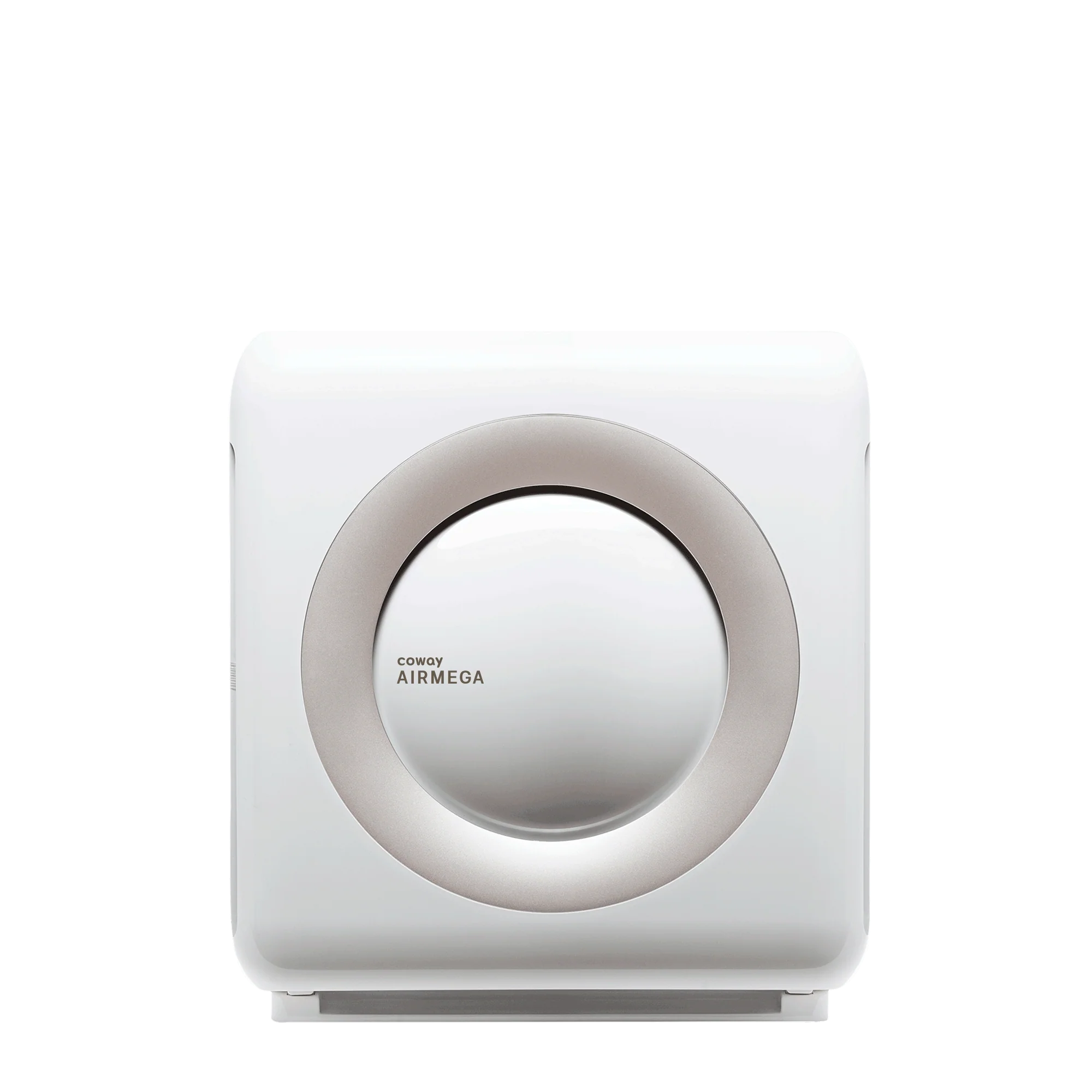
| Coway AP-1512HH Mighty | 233 | 246 | 361 sq ft | True HEPA + Carbon + Pre-filter | 9.5/10 |
| Blueair Blue Pure 211i Max | 410 | 410 | 635 sq ft | HEPASilent + Carbon | 9.4/10 |
| IQAir HealthPro Plus | 300 | 300 | 1125 sq ft (manufacturer) | HyperHEPA + V5-Cell Gas/Carbon + Pre-filter | 8.5/10 |
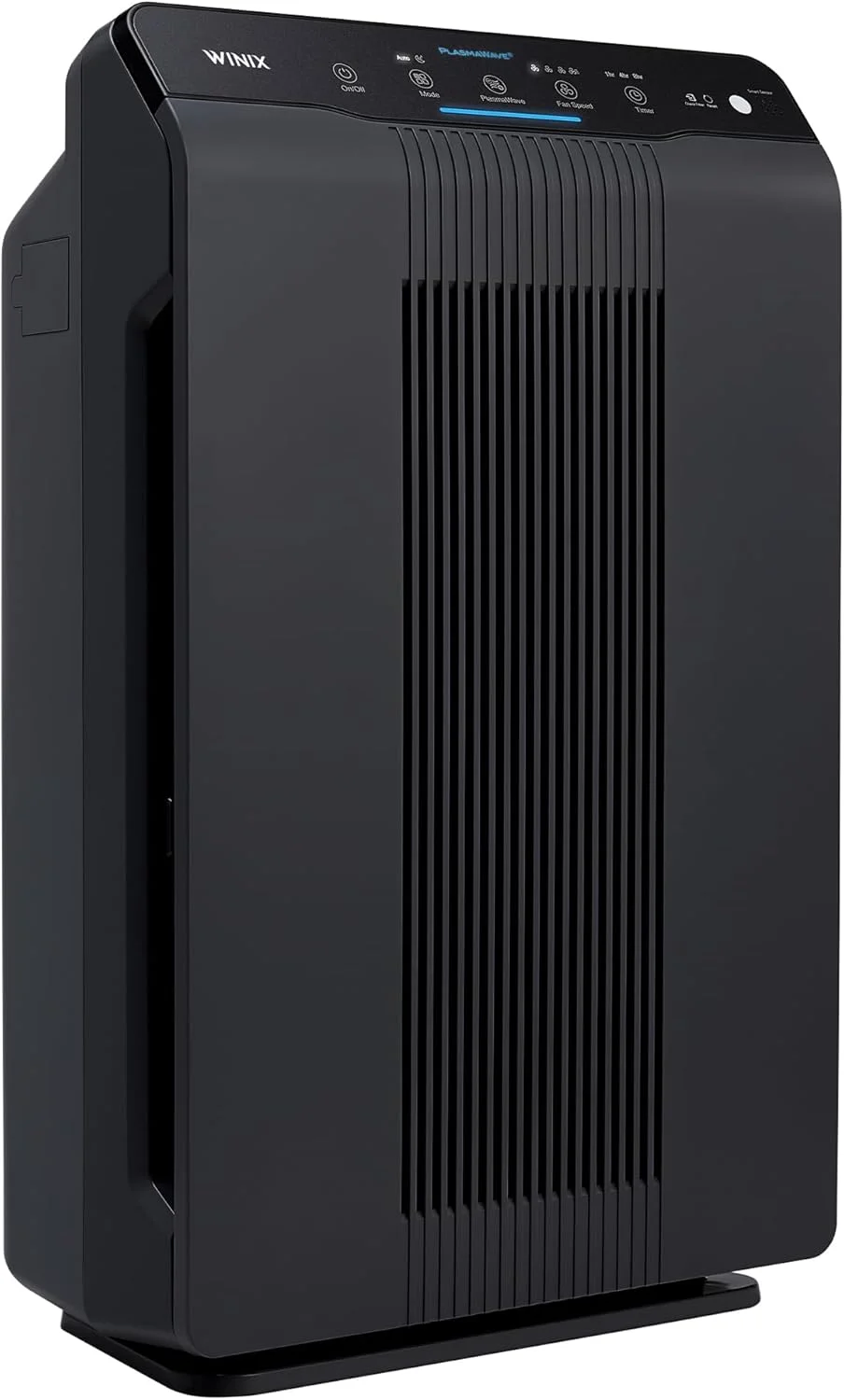
| Winix 5500-2 | 232 | 243 | 360 sq ft | True HEPA + PlasmaWave + Washable Carbon | 9.2/10 |
📅 Prices checked . Amazon prices change frequently — click through for current price. Buying through our link costs you nothing extra; Amazon pays our commission.
Coway AP-1512HH Mighty Review Editor Choice
✓ AHAM VerifiedOur Verdict
Key Specifications
- Room Coverage
- 361 sq ft
- CADR
- 233/246/240
- Filter
- True HEPA + Carbon + Pre-filter
- Noise
- 24 dB
- Power
- 77 watts
- Best For
- Medium rooms up to 361 sq ft. Wirecutter #1 for 10+ years. Best overall value.
📅 Prices checked . Amazon prices change frequently — click through for current price. Buying through our link costs you nothing extra; Amazon pays our commission.
What's in the Box
- Coway AP-1512HH air purifier
- Pre-installed 4-stage filter set
- Power cord
- User manual
- Filter replacement reminder sticker
Pros
- Wirecutter #1 for 10+ consecutive years
- AHAM verified CADR — no controversy
- True HEPA
- Fastest auto mode response in class
- 24dB ultra quiet sleep mode
- Eco mode at 4.9 watts
- 3-year warranty
Cons
- No WiFi or app control
- Carbon is impregnated fabric — weak on heavy odors
- Ionizer adds trace ozone (9ppb — CARB safe)
- Filter costs $60/year
- Design is dated
Best For
The gold-standard PM2.5 purifier at a budget price. AHAM-verified CADR 246 smoke in a sealed True HEPA housing. The built-in pollution indicator changes colour in real time as PM2.5 levels shift — a practical feature for understanding when your indoor air is actually dirty. For bedrooms and rooms up to 360 sq ft, this is the highest CADR-per-dollar available for PM2.5 management. Full Coway review.
📅 Price checked August 2026 · Buying through this link costs you nothing extra — Amazon covers our commission
Blueair Blue Pure 211i Max Review Best Large Room
✓ AHAM VerifiedOur Verdict

Key Specifications
- Room Coverage
- 635 sq ft
- CADR
- 410/410/410
- Filter
- HEPASilent + Carbon
- Noise
- 23 dB
- Power
- 46 watts
- Best For
- Large rooms 400-635 sq ft. Highest CADR under $400. Replaces discontinued 211+.
📅 Prices checked . Amazon prices change frequently — click through for current price. Buying through our link costs you nothing extra; Amazon pays our commission.
What's in the Box
- Blueair Blue Pure 211i Max air purifier
- Pre-installed dual-protection filter
- Washable pre-filter (fabric)
- Power cord
- User manual
Pros
- Highest CADR 410 under $400
- AHAM verified
- Zero ozone verified
- 23dB quiet on low
- Washable pre-filter in colors
- Smart app with Alexa
Cons
- $299-349 expensive
- Filter costs $140/year — most expensive
- Cannot disable ionizer
- 211+ filters NOT compatible
Best For
AHAM-verified CADR 410 smoke makes this the best single-unit option for large living rooms and open-plan spaces where PM2.5 from cooking, candles, or outdoor infiltration is the primary concern. HEPASilent technology maintains very low noise even at high fan speeds — relevant for spaces where the purifier runs continuously. Full Blueair review.
📅 Price checked August 2026 · Buying through this link costs you nothing extra — Amazon covers our commission
IQAir HealthPro Plus Review Medical Grade
Not AHAM VerifiedOur Verdict

Key Specifications
- Room Coverage
- 1125 sq ft (manufacturer)
- CADR
- Not AHAM verified — NOT AHAM VERIFIED
- Filter
- HyperHEPA + V5-Cell Gas/Carbon + Pre-filter
- Noise
- 40 dB
- Power
- 215 watts
- Best For
- Medical-grade filtration. Chemical sensitivities, VOC removal, serious respiratory conditions. Swiss-made gold standard.
📅 Prices checked . Amazon prices change frequently — click through for current price. Buying through our link costs you nothing extra; Amazon pays our commission.
What's in the Box
- IQAir HealthPro Plus air purifier
- Pre-installed HyperHEPA filter
- Pre-installed V5-Cell gas & odour filter
- Pre-installed PreMax pre-filter
- Power cord
- User manual
- White glove setup guide
Pros
- HyperHEPA filters to 0.003 microns — beyond HEPA standard
- V5-Cell gas filter for VOCs and chemicals
- CARB certified
- Swiss-made premium build quality
- Gold standard in medical settings
- 5-year warranty
- XE model adds WiFi
Cons
- NOT AHAM verified — no independent CADR
- $849-1199 most expensive on site
- 215 watts at max — energy intensive
- Filter $200-350/year
- 40+ dB on lowest — audible
- 35 lbs — very heavy
Best For
The clinical-grade option. HyperHEPA filtration captures particles down to 0.003 microns — far below the PM2.5 threshold. Specified for hospital waiting rooms, allergy clinics, and spaces where someone has severe respiratory disease. The price premium is substantial and unnecessary for most homes, but if you have a household member with compromised lung function, the IQAir represents the highest independently tested PM2.5 performance available in a consumer unit.
📅 Price checked August 2026 · Buying through this link costs you nothing extra — Amazon covers our commission
Winix 5500-2 Review Best Value
✓ AHAM VerifiedOur Verdict
Key Specifications
- Room Coverage
- 360 sq ft
- CADR
- 232/243/246
- Filter
- True HEPA + PlasmaWave + Washable Carbon
- Noise
- 27 dB
- Power
- 67 watts
- Best For
- DISCONTINUED. Buy while stock lasts. Washable carbon is unique advantage.
📅 Prices checked . Amazon prices change frequently — click through for current price. Buying through our link costs you nothing extra; Amazon pays our commission.
What's in the Box
- Winix 5500-2 air purifier
- Pre-installed True HEPA + carbon filter
- Power cord
- Remote control
- User manual
Pros
- AHAM verified CADR
- PlasmaWave pellet carbon
- Washable carbon filter — unique
- HouseFresh tested 23 min room clean
Cons
- DISCONTINUED in US
- No WiFi
- Louder than 5510
- Larger footprint
Best For
AHAM-verified CADR 243 smoke with a real-time PlasmaWave-equipped auto mode that responds to PM2.5 spikes from cooking or outdoor infiltration. The onboard air quality sensor speeds up the fan automatically when PM2.5 rises, then reduces noise when levels normalise. Best for households where PM2.5 comes from intermittent sources like cooking or candles. Full Winix review.
📅 Price checked August 2026 · Buying through this link costs you nothing extra — Amazon covers our commission
PM2.5 vs PM10 — What the Numbers Actually Mean
Particulate matter is classified by aerodynamic diameter — the size of the particles measured in micrometres (µm, or microns). The two most regulated categories are PM10 and PM2.5, and the distinction between them matters enormously for health effects and filtration requirements.
PM10 includes all particles with a diameter of 10 microns or smaller. This covers dust, pollen, mould spores, and larger combustion particles. PM10 is the "coarse" fraction. Because these particles are relatively large, the human body has evolved defences against them: nose hairs trap the largest, the mucous lining of the upper airways catches the medium-sized, and cilia sweep the captured material upward to be expelled. Most people with healthy airways clear PM10 effectively.
PM2.5 is the sub-fraction — particles 2.5 microns and smaller. This is the "fine" fraction. These particles bypass the upper airway defences and reach the deep lung — the alveoli where gas exchange occurs. Some PM2.5 particles are small enough to cross the alveolar membrane into the bloodstream. Ultrafine particles below 0.1 microns (PM0.1) are the smallest sub-fraction and are associated with the highest per-unit health risk, though they are harder to measure.
The practical filtration implication: HEPA filters capture PM2.5 more easily than PM10, not less. Larger particles are captured by impaction; they carry enough inertia to collide with filter fibres. The challenge is in the PM0.1–PM1 range — the MPPS zone around 0.3 microns. True HEPA is certified specifically to capture these hardest-to-filter sizes at 99.97% efficiency. No separate PM2.5 vs PM10 filter exists — a True HEPA captures both.
WHO guidelines for reference:
- PM2.5 annual mean: 5 µg/m³ (2021 guideline)
- PM2.5 24-hour mean: 15 µg/m³ (2021 guideline)
- PM10 annual mean: 15 µg/m³
- PM10 24-hour mean: 45 µg/m³
US EPA NAAQS (National Ambient Air Quality Standard) is less strict: annual PM2.5 at 12 µg/m³ and 24-hour at 35 µg/m³. The WHO 2021 revision brought the guidelines into alignment with the latest epidemiological evidence, and most major US cities do not consistently meet even the older EPA standard on bad air quality days.
Health Effects of PM2.5 — Cardiovascular, Respiratory, and Long-Term
The health research on PM2.5 is among the most robust in environmental epidemiology. The evidence is not disputed — only the specific dose-response thresholds are debated. At concentrations routinely encountered in urban homes and during wildfire events, PM2.5 causes measurable biological harm.
Short-term effects (hours to days): Elevated PM2.5 triggers airway inflammation in people with asthma, increasing rescue inhaler use and ER visits. It reduces lung function transiently — even in healthy adults, a few hours of high PM2.5 exposure measurably reduces FEV1 (the volume exhaled in one second, a standard lung function measure). People with ischemic heart disease experience increased risk of cardiac events within 24 hours of PM2.5 spikes. Children show measurable reductions in peak expiratory flow on high-PM2.5 days at school.
Long-term effects (months to years): Sustained PM2.5 exposure accelerates atherosclerosis — the buildup of plaques in arteries. A landmark 2002 study in the New England Journal of Medicine found that each 10 µg/m³ increase in long-term PM2.5 exposure was associated with a 6% increase in cardiopulmonary mortality and a 8% increase in lung cancer mortality. These associations have been replicated in dozens of subsequent cohort studies across multiple continents.
Mechanism of cardiovascular damage: Fine particles that reach the alveoli trigger an oxidative stress response. Inflammatory mediators — cytokines, reactive oxygen species — are released locally in the lung and then enter systemic circulation. These promote endothelial dysfunction (damage to artery wall cells), increase blood coagulability, and destabilise arterial plaques. The link between lung exposure and heart attack is indirect but well-established mechanically and epidemiologically.
Sensitive populations: The highest-risk groups are the elderly, children under 5, people with pre-existing cardiovascular or respiratory disease, and pregnant women (PM2.5 exposure is associated with adverse birth outcomes including preterm birth and low birthweight). For these populations, the WHO 24-hour guideline of 15 µg/m³ is the appropriate target. Healthy adults in their thirties may tolerate short-term exposures above this threshold with minimal acute effect, but no population benefits from sustained PM2.5 elevation.
Indoor air purification is one of the few modifiable exposures in this equation. You cannot easily change your city's outdoor air quality. You can reduce indoor PM2.5 to near-zero in your sleeping and living spaces with a correctly sized True HEPA purifier.
PM2.5 Sources — Wildfire Smoke, Cooking, Traffic, and Tobacco
Understanding where PM2.5 comes from is the first step in reducing it. Sources vary dramatically in intensity, duration, and controllability. The major sources and the concentrations they generate indoors are broken down below.
Wildfire smoke: The highest acute indoor PM2.5 source for millions of people in the western US, Canada, and Australia. During active wildfire events, outdoor PM2.5 can reach 500–2000 µg/m³. Buildings are not airtight — infiltration rates vary, but in a typical home, indoor PM2.5 can reach 50–30% of outdoor levels without any mitigation. During the 2020 California wildfires, indoor PM2.5 in non-purified homes in affected areas averaged over 150 µg/m³ for days at a time. A True HEPA purifier running on high in a closed room can reduce wildfire smoke PM2.5 by 80–90% compared to an unpurified room. See our best air purifiers for smoke.
Cooking: The most overlooked source of indoor PM2.5. Frying on a gas stove can generate indoor readings of 300–600 µg/m³ within minutes. Even toasting bread or roasting vegetables generates particle spikes measurable on a PM2.5 monitor. Gas stoves are significantly higher emitters than electric or induction equivalents. Range hood ventilation, if it exhausts outdoors rather than recirculating, removes a portion of cooking PM2.5. A purifier in the kitchen or open-plan living area handles what the hood misses and manages residual particles after cooking ends.
Traffic and outdoor pollution: Particles from diesel exhaust, brake dust, and tyre wear infiltrate through windows, gaps, and HVAC systems. In homes within 150 metres of a major highway, traffic-sourced PM2.5 contributes meaningfully to baseline indoor levels. This is a continuous, low-level source best addressed by running a purifier consistently rather than reactively.
Tobacco and cannabis smoke: Secondhand smoke contains PM2.5 at concentrations of 25–175 µg/m³ in a typical room. This is among the most harmful forms of PM2.5 due to the additional chemical load (benzene, formaldehyde, acrolein) carried with the particles. A HEPA purifier removes the particle fraction but not the gas-phase carcinogens — for tobacco smoke environments, a purifier with substantial activated carbon in addition to HEPA is necessary. HEPA-only is insufficient for heavy tobacco smoke exposures.
Candles and incense: Burning candles, especially paraffin wax varieties, generates soot — ultrafine particles well within the PM2.5 range. A single candle burning in a sealed room can elevate PM2.5 to 50–100 µg/m³. Incense is worse — stick incense generates some of the highest indoor PM2.5 readings of any common household activity. Beeswax candles produce less soot than paraffin. Running a purifier while burning candles reduces exposure substantially.
Printers and photocopiers: Laser printers emit ultrafine toner particles during printing. In home offices with limited ventilation, this source can contribute meaningfully to baseline PM2.5 levels over a working day. A purifier placed near the printer handles this source effectively.
How HEPA Captures PM2.5 — The Filtration Mechanism
PM2.5 spans the most challenging portion of the particle size spectrum for filtration. Particles from 0.1 to 1.0 microns sit in the zone around the MPPS (Most Penetrating Particle Size) where neither the diffusion mechanism nor the impaction mechanism dominates. This is precisely why the HEPA standard is tested at 0.3 microns — the worst case within the PM2.5 range.
A True HEPA filter is a dense matrix of borosilicate glass fibres arranged in random orientations and depths. Air is forced through this matrix by the purifier fan. As particles travel through the fibre matrix, three mechanisms capture them:
Diffusion captures the smallest sub-PM2.5 particles (below 0.1 microns). These particles are light enough to be deflected by collisions with individual air molecules — Brownian motion. Rather than travelling in a straight line, they bounce erratically through the filter, dramatically increasing the chance of fibre contact and capture. Ultrafine particles from combustion sources are captured at efficiencies exceeding 99.97% by a True HEPA filter — counter-intuitively, these tiny particles are easier to capture than 0.3 micron particles.
Interception captures particles in the mid-PM2.5 range (0.1–1.0 microns). These particles follow airflow streamlines but come within one particle radius of a fibre surface and adhere through van der Waals forces. This is the weakest mechanism but operates continuously across the full PM2.5 range.
Impaction captures larger PM2.5 and PM10 particles (above 1.0 micron). These particles carry enough inertia that when airflow curves around a filter fibre, the particle cannot change direction fast enough and collides directly with the fibre.
True HEPA certification requires that the combined effect of all three mechanisms achieves at least 99.97% capture at the MPPS. This guarantee means a True HEPA filter captures PM2.5 across the entire 2.5 micron range at efficiency equal to or better than the MPPS figure. In practice, tested True HEPA filters typically exceed this minimum. See HEPA filter explained for the full technical breakdown.
The critical caveat: HEPA captures particles. It does not capture PM2.5-associated gas-phase pollutants such as benzene, formaldehyde, or PAHs (polycyclic aromatic hydrocarbons) from combustion. For wildfire smoke or tobacco smoke environments, a purifier with both True HEPA and substantial activated carbon is the appropriate choice.
AQI and PM2.5 — Reading the Scale
The Air Quality Index (AQI) is the EPA's communication tool for translating PM2.5 concentrations into a public health message. The scale runs from 0 to 500, broken into colour-coded categories that correspond to health action levels.
| AQI Range | Category | PM2.5 (µg/m³) | Air Purifier Action |
|---|---|---|---|
| 0–50 | Good | 0–12 | None required |
| 51–100 | Moderate | 12.1–35.4 | Run on low if sensitive |
| 101–150 | Unhealthy for Sensitive Groups | 35.5–55.4 | Run on medium |
| 151–200 | Unhealthy | 55.5–150.4 | Run on high, close windows |
| 201–300 | Very Unhealthy | 150.5–250.4 | High, multiple units, seal gaps |
| 301–500 | Hazardous | 250.5+ | Maximum response, N95 indoors |
The AQI is calculated from several pollutants (PM2.5, PM10, ozone, NO2, SO2, CO) and the overall AQI figure represents the highest single-pollutant sub-index. On most days and in most regions, PM2.5 is the pollutant driving the AQI reading. You can check the current AQI for your location at AirNow.gov (EPA), the IQAir app, or PurpleAir (crowdsourced sensors).
A critical nuance: outdoor AQI and indoor PM2.5 are not the same number. If your outdoor AQI is 150 (Unhealthy) and you are running a True HEPA purifier in a closed room, your indoor PM2.5 may be below 10 µg/m³ — within the WHO annual guideline. The purifier creates a clean air zone regardless of outdoor conditions. This is the practical case for running purifiers based on outdoor AQI even if you cannot smell anything inside.
Indoor vs Outdoor PM2.5 — When Your Home Is the Problem
Most people assume outdoor air is dirty and indoor air is safe. In terms of PM2.5, the relationship is more complicated — and in some homes, indoor PM2.5 regularly exceeds outdoor levels.
The ratio of indoor to outdoor PM2.5 depends on two factors: infiltration rate (how much outdoor air enters) and indoor sources. In a well-sealed modern building, outdoor PM2.5 infiltration is lower, but cooking, candles, and cleaning generate indoor PM2.5 independently of what is happening outside. In a leaky older home in a rural area with clean outdoor air, indoor PM2.5 can still spike to 200+ µg/m³ during cooking.
Studies monitoring PM2.5 in US homes consistently find that cooking is the dominant source for most households on most days. One Stanford study measured real-time indoor PM2.5 in 350 California homes and found that gas stove cooking drove the highest PM2.5 peaks — higher than outdoor pollution on most days. The median peak during cooking exceeded 100 µg/m³.
The implication for purifier use: do not wait for a wildfire event or a bad AQI day to run your purifier. The most significant PM2.5 exposure for most people happens in their own kitchen, every day, during routine meal preparation. Running a purifier on auto mode continuously — especially in or near the kitchen — addresses this chronic source rather than only responding to acute events.
How to Measure Indoor PM2.5 — Air Quality Monitors
You cannot see, smell, or taste PM2.5 at concentrations that cause health effects. The only way to know your indoor levels is to measure them. Air quality monitors range from basic consumer sensors to research-grade instruments, and the differences matter for how you interpret the readings.
Consumer laser particle counters ($20–$100): Most entry-level air quality monitors use a laser to count particles in a sample volume of air and estimate PM2.5 mass concentration. Examples include the Govee and Inkbird monitors. These devices provide useful trend data and are sensitive enough to detect cooking spikes and wildfire events. They are not calibrated to EPA reference standards and should not be used to verify compliance with regulatory thresholds. For household decision-making — when to run your purifier, when to open windows, whether cooking is elevating PM2.5 — they are adequate.
Mid-tier monitors ($100–$300): Devices like the IQAir AirVisual Pro, Airthings View Plus, and Temtop LKC-1000S provide more sophisticated laser particle sensing with better temperature and humidity compensation. At high humidity, uncorrected particle counters overcount PM2.5 because water droplets scatter laser light similarly to particles. These mid-tier units apply humidity correction algorithms. More reliable for real-world use, especially in humid climates.
PurpleAir sensors: The PA-II sensor uses dual laser counters for redundancy and submits readings to the public PurpleAir map. PurpleAir readings are typically 25–35% higher than EPA reference measurements at high concentrations due to factory calibration settings. The EPA and AirNow apply a correction factor when displaying PurpleAir data on the AirNow Fire and Smoke map. For comparative use (is my purifier working?), raw PurpleAir readings are useful. For absolute concentration values, use the EPA-corrected reading.
Using a monitor with your purifier: Place the monitor in the same room as the purifier, away from direct airflow from the unit (direct sensor placement near the outlet overestimates purifier effectiveness). Run the purifier for 30 minutes on high speed from a baseline reading and compare. A properly sized True HEPA unit in a closed room should reduce PM2.5 by 80–95% from the starting level. If reduction is below 60%, either the filter is clogged, the purifier is undersized for the room, or there is a significant ongoing source.
How This Changes Your Buying Decision
PM2.5 knowledge changes how you evaluate every purifier spec on the box.
- Ignore "99.97%" filtration claims. Focus on CADR. True HEPA capturing 99.97% of PM2.5 in a room too large for its airflow changes nothing. The metric that predicts real PM2.5 reduction is CADR — how many cubic feet of PM2.5-free air the purifier delivers per minute. Divide your room square footage by 1.55 for the minimum CADR. For health-grade PM2.5 reduction at 4–5 ACH, divide by 0.78.
- Know your PM2.5 source before buying. Cooking: place the purifier in the kitchen or adjacent room, not across the house. Wildfire infiltration: you need a unit in every occupied room simultaneously — one central unit is not enough. Traffic or outdoor infiltration: a single well-placed unit with consistent runtime handles it.
- The built-in PM2.5 sensor is a trigger, not a measurement. Budget purifiers use uncalibrated laser-particle counters. Trust the auto mode to respond to changes — do not trust the readout as an accurate µg/m³ figure. For precise indoor PM2.5 data, use a dedicated monitor (IQAir AirVisual Pro, Purple Air Indoor).
- During wildfire or smoke events, run on high continuously. Auto mode targets comfort, not health-grade PM2.5 reduction. During AQI 150+, set purifiers to maximum fan speed regardless of the sensor reading — you need every CFM of CADR the unit can deliver.
Where to go next: CADR explained — calculate exactly what you need for your room. Wildfire smoke guide — PM2.5 sizing during smoke events. Best air purifiers ranked by verified CADR.