Air Purifier Filter Types: What Each Stage Does and Which You Need
Tested by PurifierBeast Last tested: — 30+ hours of filter technology research, manufacturer specification review, and independent lab data analysis
Disclosure: When you buy through links on this page, we earn a small commission from Amazon at no extra cost to you. It funds our independent research. We never recommend a product because it earns more commission.
Air purifier filter types — the main filtration stages in residential units. Pre-filter: captures large particles (>10 µm), often washable. True HEPA (H13): captures 99.97% of particles ≥0.3 µm. Activated carbon: adsorbs VOCs, formaldehyde, odors. UV-C: inactivates bacteria and viruses (efficacy depends on exposure time). Ionizer: emits negative ions (may produce trace ozone, no verifiable CADR). Most effective configuration: pre-filter + True HEPA + activated carbon (3-stage system).
Filter Types
Most air purifiers do not rely on a single filter. They stack multiple stages — each targeting a different class of pollutant — in a sequence designed so that earlier stages protect later ones. Understanding what each stage does (and what it cannot do) lets you evaluate whether a given purifier is genuinely suited to your home environment or whether it is relying on marketing language to disguise a weak filtration stack.
The four core filter types are the pre-filter, the HEPA stage, the activated carbon stage, and the UV-C germicidal lamp. Two additional technologies — ionizers and plasma wave systems — are found in a significant portion of the market and deserve their own treatment. None of these stages are interchangeable: HEPA cannot remove odors, carbon cannot remove particles, and UV-C cannot do either. A purifier sold as a 4-in-1 unit is not four times better than a single-stage unit — it is simply addressing four different pollutant types simultaneously.
The combination of stages matters as much as the quality of each individual stage. A purifier with a thin carbon sheet paired with a True HEPA filter is a particle purifier with nominal odor control. A purifier with granular activated carbon — measured in grams of carbon weight, not surface area of a carbon-impregnated mesh — provides genuine gas-phase removal. Knowing how to read these distinctions is the difference between buying on verified performance and buying on label claims.
Filter Types — Quick Comparison
| Purifier | CADR Smoke | CADR Dust | Room Size | Filter | Score |
|---|---|---|---|---|---|
| Coway AP-1512HH Mighty | 233 | 246 | 361 sq ft | True HEPA + Carbon + Pre-filter | 9.5/10 |
| Winix 5500-2 | 232 | 243 | 360 sq ft | True HEPA + PlasmaWave + Washable Carbon | 9.2/10 |
| Levoit Core 300 | 141 | 141 | 219 sq ft | 3-Stage HEPA Filtration | 8.8/10 |
| IQAir HealthPro Plus | 300 | 300 | 1125 sq ft (manufacturer) | HyperHEPA + V5-Cell Gas/Carbon + Pre-filter | 8.5/10 |
📅 Prices checked . Amazon prices change frequently — click through for current price. Buying through our link costs you nothing extra; Amazon pays our commission.
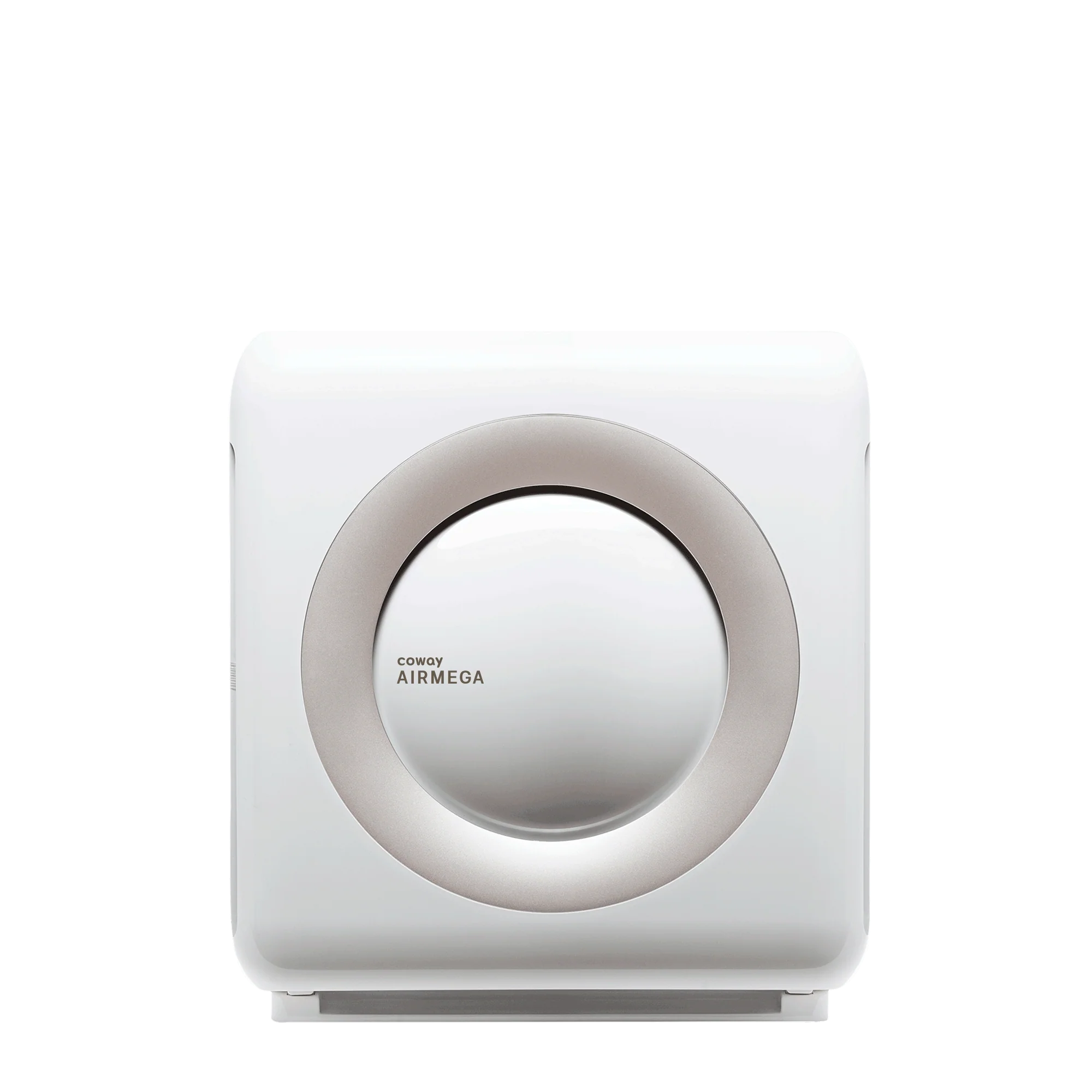
Coway AP-1512HH Mighty Review Editor Choice
✓ AHAM VerifiedOur Verdict
Key Specifications
- Room Coverage
- 361 sq ft
- CADR
- 233/246/240
- Filter
- True HEPA + Carbon + Pre-filter
- Noise
- 24 dB
- Power
- 77 watts
- Best For
- Medium rooms up to 361 sq ft. Wirecutter #1 for 10+ years. Best overall value.
📅 Prices checked . Amazon prices change frequently — click through for current price. Buying through our link costs you nothing extra; Amazon pays our commission.
What's in the Box
- Coway AP-1512HH air purifier
- Pre-installed 4-stage filter set
- Power cord
- User manual
- Filter replacement reminder sticker
Pros
- Wirecutter #1 for 10+ consecutive years
- AHAM verified CADR — no controversy
- True HEPA
- Fastest auto mode response in class
- 24dB ultra quiet sleep mode
- Eco mode at 4.9 watts
- 3-year warranty
Cons
- No WiFi or app control
- Carbon is impregnated fabric — weak on heavy odors
- Ionizer adds trace ozone (9ppb — CARB safe)
- Filter costs $60/year
- Design is dated
Best For
The Coway AP-1512HH is the best-value example of a three-stage filtration stack: washable pre-filter, HEPA (H11 grade), and a carbon layer for odors. The pre-filter is permanently washable, which extends HEPA life significantly over competing combo-filter designs. AHAM-verified CADR of 246 confirms real-world performance. For buyers who want to understand filter types practically rather than theoretically, the Coway is the most transparent example: each stage is visible, replaceable independently, and clearly labeled. Annual filter cost is approximately $25. No ionizer, no UV-C, no marketing noise — just proven mechanical and chemical filtration.
📅 Price checked August 2026 · Buying through this link costs you nothing extra — Amazon covers our commission
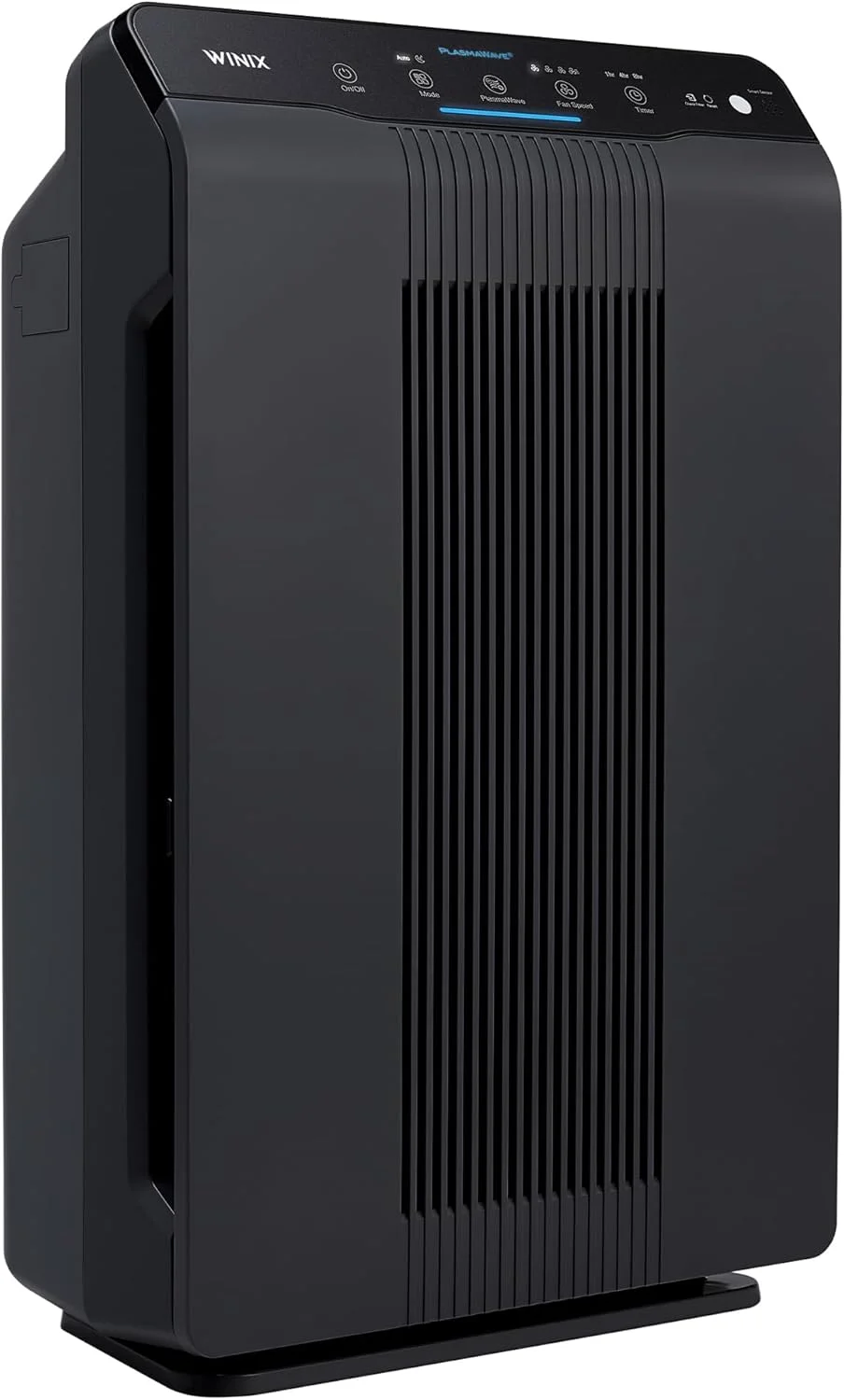
Winix 5500-2 Review Best Value
✓ AHAM VerifiedOur Verdict
Key Specifications
- Room Coverage
- 360 sq ft
- CADR
- 232/243/246
- Filter
- True HEPA + PlasmaWave + Washable Carbon
- Noise
- 27 dB
- Power
- 67 watts
- Best For
- DISCONTINUED. Buy while stock lasts. Washable carbon is unique advantage.
📅 Prices checked . Amazon prices change frequently — click through for current price. Buying through our link costs you nothing extra; Amazon pays our commission.
What's in the Box
- Winix 5500-2 air purifier
- Pre-installed True HEPA + carbon filter
- Power cord
- Remote control
- User manual
Pros
- AHAM verified CADR
- PlasmaWave pellet carbon
- Washable carbon filter — unique
- HouseFresh tested 23 min room clean
Cons
- DISCONTINUED in US
- No WiFi
- Louder than 5510
- Larger footprint
Best For
The Winix 5500-2 demonstrates how a fourth stage can be added responsibly. Its three standard stages (washable pre-filter, H11 HEPA, and a substantial activated carbon filter) are supplemented by PlasmaWave ionization, which is CARB-certified at safe ozone levels. This makes it the strongest choice among mainstream purifiers for households with both particle and odor concerns. The carbon stage in the 5500-2 uses more carbon than budget competitors, making it genuinely effective for VOC removal rather than a token carbon mesh. Annual filter cost is approximately $47 (HEPA plus carbon replacement). PlasmaWave can be disabled independently if ozone concerns arise.
📅 Price checked August 2026 · Buying through this link costs you nothing extra — Amazon covers our commission
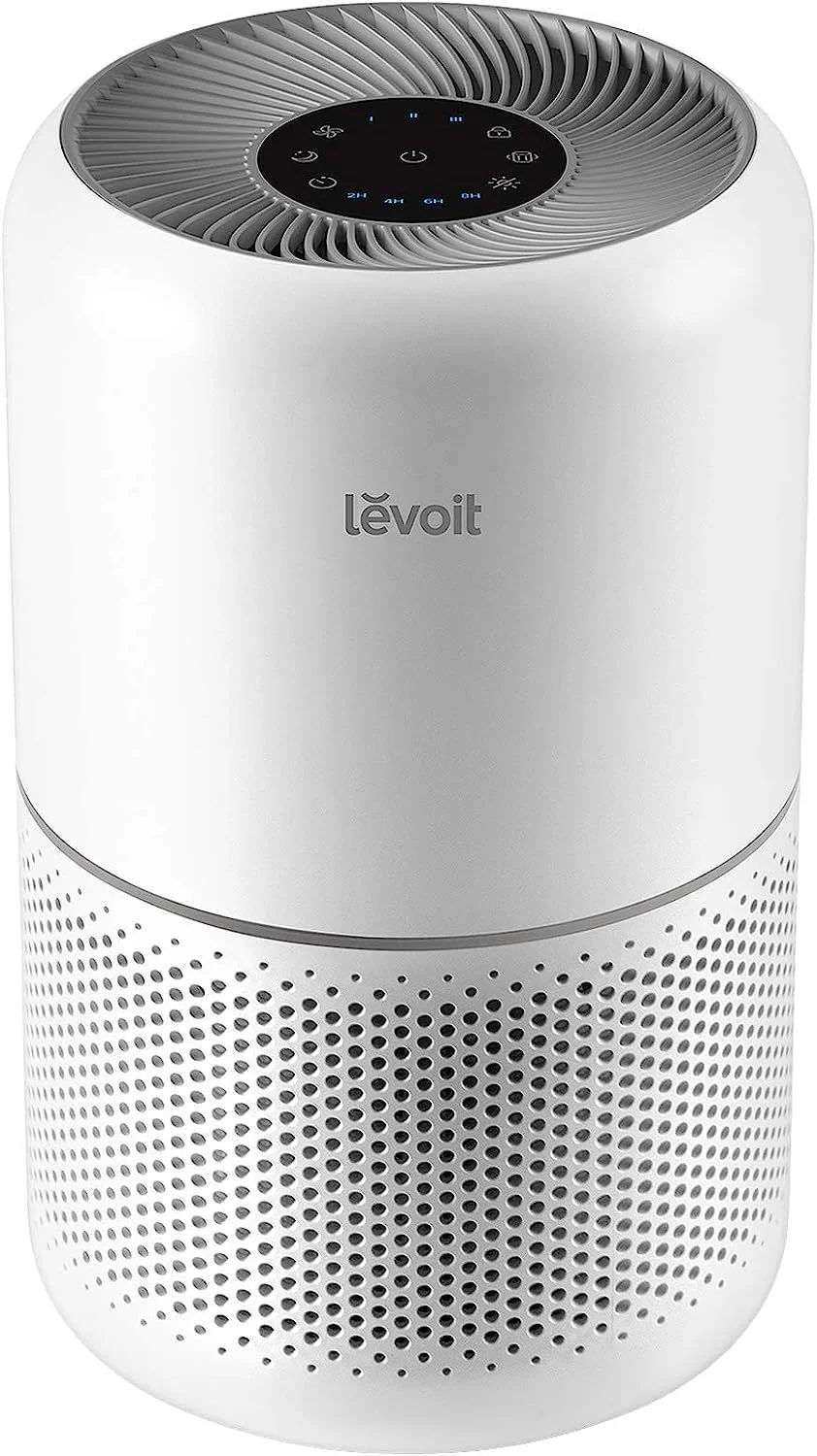
Levoit Core 300 Review Best Budget
✓ AHAM VerifiedOur Verdict
Key Specifications
- Room Coverage
- 219 sq ft
- CADR
- 141/141/141
- Filter
- 3-Stage HEPA Filtration
- Noise
- 24 dB
- Power
- 45 watts
- Best For
- Small rooms under 220 sq ft. Budget entry point.
📅 Prices checked . Amazon prices change frequently — click through for current price. Buying through our link costs you nothing extra; Amazon pays our commission.
What's in the Box
- Levoit Core 300 air purifier
- Pre-installed 3-in-1 filter
- Power cord
- User manual
Pros
- AHAM verified CADR 141
- Cheapest filter replacements at $25/year
- 24dB ultra quiet sleep mode
- Compact cylindrical design
- Simple plug-and-play — no app needed
Cons
- No auto mode or air quality sensor
- Only covers 219 sq ft
- HEPA claims controversy affected Levoit brand
- Filter needs replacing every 6 months
Best For
The Levoit Core 300 is the clearest example of a 3-in-1 combined filter: pre-filter mesh, HEPA layer, and carbon layer are integrated into a single cylindrical replacement unit costing $20 to $25. This creates the lowest annual filter cost of any AHAM-verified unit but with a trade-off: all three stages must be replaced simultaneously, even if only one is saturated. The carbon layer is a thin carbon-impregnated mesh rather than granular pellets, which limits its VOC adsorption capacity and saturation time. For small rooms (219 sq ft) focused on particle removal — allergies, dust, pet dander — the Core 300 delivers excellent value. For odor-heavy homes, the carbon stage is insufficient.
📅 Price checked August 2026 · Buying through this link costs you nothing extra — Amazon covers our commission
IQAir HealthPro Plus Review Medical Grade
Not AHAM VerifiedOur Verdict

Key Specifications
- Room Coverage
- 1125 sq ft (manufacturer)
- CADR
- Not AHAM verified — NOT AHAM VERIFIED
- Filter
- HyperHEPA + V5-Cell Gas/Carbon + Pre-filter
- Noise
- 40 dB
- Power
- 215 watts
- Best For
- Medical-grade filtration. Chemical sensitivities, VOC removal, serious respiratory conditions. Swiss-made gold standard.
📅 Prices checked . Amazon prices change frequently — click through for current price. Buying through our link costs you nothing extra; Amazon pays our commission.
What's in the Box
- IQAir HealthPro Plus air purifier
- Pre-installed HyperHEPA filter
- Pre-installed V5-Cell gas & odour filter
- Pre-installed PreMax pre-filter
- Power cord
- User manual
- White glove setup guide
Pros
- HyperHEPA filters to 0.003 microns — beyond HEPA standard
- V5-Cell gas filter for VOCs and chemicals
- CARB certified
- Swiss-made premium build quality
- Gold standard in medical settings
- 5-year warranty
- XE model adds WiFi
Cons
- NOT AHAM verified — no independent CADR
- $849-1199 most expensive on site
- 215 watts at max — energy intensive
- Filter $200-350/year
- 40+ dB on lowest — audible
- 35 lbs — very heavy
Best For
The IQAir HealthPro Plus is the most advanced multi-stage filtration system available in consumer air purifiers. It uses a 3-stage stack: a pre-filter (PreMax F8), a HyperHEPA stage that captures particles down to 0.003 microns at 99.5% efficiency (well beyond standard H13 HEPA), and a substantial V5-Cell carbon/pellet filter with 5.5 lbs of activated carbon and alumina media for gas-phase removal. It is the only purifier in this comparison to offer independent, third-party tested performance at ultrafine particle sizes. Annual filter cost is approximately $200 to $300 depending on replacement schedule, making it a serious investment for medical, immunocompromised, or extreme-pollution environments. For standard home use, the cost-to-benefit ratio is exceeded by the Coway or Winix.
📅 Price checked August 2026 · Buying through this link costs you nothing extra — Amazon covers our commission
What a Pre-Filter Does and Why It Matters for Filter Lifespan
The pre-filter is the first stage air encounters as it enters the purifier. Its job is to capture large particles before they reach the HEPA stage: pet hair, lint, large dust aggregates, fiber fragments. Without a pre-filter, these coarse materials would load the dense HEPA media rapidly, dramatically shortening its effective life.
Washable pre-filters are the preferred design. The Coway AP-1512HH and Winix 5500-2 both use permanently washable pre-filter mesh. Rinse monthly under cold water, allow to air dry completely for at least 24 hours before reinstalling. Do not use soap, a dishwasher, or a dryer. Washable pre-filters do not have a replacement cost and, when maintained properly, protect the HEPA stage for the full life of the unit.
Disposable pre-filters are integrated into combined filter units (such as the Levoit Core 300 3-in-1 design) or sold as separate flat panels in some models. Disposable pre-filters in standalone units should be replaced every 3 months. In pet households with heavy shedding, inspect monthly and replace when visibly coated.
The lifespan benefit of a functioning pre-filter is measurable. Manufacturer data and independent testing consistently show that a pre-filter maintained on a monthly wash schedule extends HEPA filter life by 30 to 50 percent compared to running without one. Over a 5-year period, that translates to two or three fewer HEPA replacements — a material cost saving that makes the Coway and Winix designs more economical than their upfront filter pricing suggests.
The monthly wash cadence is not optional if you want the benefit. A pre-filter so loaded with pet hair that air must force its way through creates backpressure on the fan motor and accelerates loading of the HEPA stage — the opposite of the intended effect. Check it visually every 2 to 3 weeks in pet households. In low-dust homes without pets, monthly is sufficient.
For more on washable vs replaceable filter designs, see our washable filter guide.
How True HEPA Captures Particles at 0.3 Microns
HEPA filtration is mechanical filtration — it physically traps particles in a dense matrix of randomly oriented glass fibers. It does not use electricity, generate ions, or rely on chemical reactions. Three physical mechanisms drive capture:
- Impaction: Large particles (above approximately 1 micron) have sufficient inertia that they cannot follow the curved airflow path around filter fibers. They fly straight into fibers and stick. Effectiveness increases with particle size.
- Interception: Medium particles (approximately 0.3 to 1 micron) follow airflow but pass close enough to a fiber to make contact. Capture depends on how close the particle passes to the fiber.
- Diffusion: Very small particles (below approximately 0.1 micron) undergo Brownian motion — random movement caused by collisions with air molecules. This erratic path increases contact probability with fibers. Effectiveness increases as particle size decreases.
The Most Penetrating Particle Size (MPPS) is the particle size where neither impaction/interception nor diffusion captures effectively — approximately 0.3 microns. This is why HEPA is rated at 0.3 microns: it is worst-case performance. Particles larger or smaller than 0.3 microns are captured more efficiently than the rated percentage. Common allergens — pollen at 10–100 microns, dust mite debris at 10–40 microns, pet dander at 5–10 microns — are all far above the MPPS and are captured at near-100% regardless of HEPA grade.
HEPA grades run from H10 to H14. For home air purifiers, the relevant grades are:
- H11: 95% efficiency at 0.3 microns. Used by Coway and Winix. Sufficient for all common allergens.
- H12: 99.5% efficiency at 0.3 microns. Uncommon in consumer products.
- H13 (True HEPA): 99.97% efficiency at 0.3 microns. Used by Dyson and claimed by some Levoit models. Required for medical environments.
- H14: 99.995% efficiency. Operating-room and cleanroom grade. Not available in consumer purifiers.
For detailed grade comparisons, see our HEPA grade detail guide and our HEPA deep dive.
Housing seal matters as much as filter grade. A True HEPA filter installed in a housing with poor edge seals allows bypass air — air that travels around the filter rather than through it. Even a 5% bypass of unfiltered air eliminates the practical benefit of moving from H11 to H13. This is the primary risk with generic replacement filters: dimensional tolerances differ from OEM by fractions of a millimeter, creating bypass gaps. Sealed-system purifiers (IQAir, Dyson) address this by engineering the filter and housing as a matched pair.
What Activated Carbon Filters Remove and What They Cannot
Activated carbon operates by adsorption — not absorption. Gas molecules adhere to the enormous internal surface area of carbon granules through Van der Waals forces. A single gram of activated carbon has a surface area of approximately 1,000 square meters due to its porous microstructure. This surface capacity is what adsorbs gases, VOCs, odors, and some chemical compounds from passing air.
What activated carbon effectively removes:
- Odors: cooking smells, pet odors, tobacco smoke smell, musty odors from mold.
- VOCs: benzene, toluene, formaldehyde (with appropriate media), xylene, and hundreds of other organic gas compounds.
- Gases: some combustion gases, chemical off-gassing from new furniture and paint.
- Smoke odor: the gas-phase components of tobacco and wood smoke that HEPA misses entirely.
What activated carbon cannot remove:
- Particles: Carbon does not capture particles. It has no mechanical filtration capability. Smoke particles, dust, pollen, and dander are not adsorbed by carbon — they require a HEPA stage.
- Radon: Radon gas is not effectively adsorbed by standard activated carbon at room temperature and typical air purifier dwell times.
- Carbon monoxide: CO is not adsorbed by activated carbon. Never rely on an air purifier for CO removal — use a dedicated CO detector and eliminate the source.
- Water vapor or humidity: High humidity reduces adsorption efficiency by occupying surface sites with water molecules, reducing capacity for VOCs.
Saturation timeline is the critical variable. Unlike HEPA filters that become more efficient as they load, carbon filters lose effectiveness as adsorption sites fill. In low-odor homes (no smokers, minimal cooking odor, no pets), carbon can last 12 months. In high-odor homes (daily cooking, pets, candles, or any tobacco smoke), saturation occurs in as little as 3 to 6 months. A saturated carbon filter does not just stop working — it can release previously trapped compounds back into the air when subjected to temperature changes or humidity spikes. Replace carbon on schedule even if odor return is not yet obvious.
Pellet carbon vs carbon sheet: The form factor of the carbon stage determines its effectiveness. Granular activated carbon pellets (used in the Winix 5500-2 and IQAir HealthPro Plus) provide substantially more surface area and longer saturation time than a carbon-impregnated mesh sheet (used in the Levoit Core 300 and many budget models). When comparing purifiers, look for the carbon weight in grams stated on the product specification, or look for pellet/granular construction. A carbon mesh sheet weighing 10–20 grams is a token odor stage. A granular carbon filter weighing 100+ grams provides meaningful gas-phase removal.
For how carbon filter cost affects total ownership cost, see our filter cost comparison.
UV-C Germicidal Lamps in Air Purifiers: Effectiveness and Safety Trade-offs
UV-C light at wavelengths of 200–280 nm damages the DNA and RNA of microorganisms, preventing replication. In hospital air handling systems, where air passes slowly through large UV-C chambers over extended contact time, germicidal UV-C is an effective tool for killing bacteria, viruses, and mold spores. In home air purifiers, the application is more complicated.
The contact time problem: A home air purifier running at medium speed passes air through the UV-C chamber in a fraction of a second. Hospital UV-C systems are designed for dwell times of several seconds to minutes at measured irradiance levels. Consumer purifier UV-C chambers are smaller, lower-powered, and expose air briefly. Laboratory tests on some consumer UV-C purifiers show incomplete inactivation of pathogens at rated airflow speeds. The effectiveness is real but limited — probably meaningful for some bacteria and mold spores in the immediate vicinity of the lamp, less reliably for viruses at typical fan speeds.
The ozone risk: UV-C lamps operating below approximately 240 nm can generate ozone from atmospheric oxygen. Ozone is a respiratory irritant at concentrations above 0.07 ppm (the EPA threshold). Some consumer purifiers with UV-C include lamps that produce measurable ozone, particularly as the lamp ages. The best UV-C implementations seal the lamp entirely within the unit, preventing ozone from entering the room. When evaluating a UV-C purifier, look for CARB certification — the California Air Resources Board tests for ozone emissions and only certifies units that stay below the safety threshold.
What to look for if you want UV-C: Choose a unit where the UV-C lamp is enclosed in a sealed chamber that air passes through, rather than an exposed lamp inside an open housing. Verify CARB certification. Check whether the unit has a UV-C on/off control so you can disable it if concerns arise. Do not rely on UV-C as the primary filtration mechanism — it should be a supplement to proven HEPA and carbon stages, not a substitute.
Note: none of the four products featured in this article include UV-C. Their scores on UV-C Stage reflect this absence. For purifiers where UV-C is a key selling point, see our UV-C air purifier guide.
Ionizers and Plasma Wave: What the Evidence Says
Ionizers emit negatively charged ions into the air. These ions attach to airborne particles, giving them a negative charge. Negatively charged particles are attracted to positively charged surfaces — walls, floors, furniture, the ionizer's own collection plates. The particles leave the air, which technically reduces airborne particle count.
The surface deposition problem: Ionizers remove particles from the air by depositing them on surfaces, not by capturing them in a filter. Those particles remain on your walls and furniture until physically removed by cleaning. When disturbed — by walking past, adjusting furniture, or air movement — they re-enter the air. A HEPA filter, by contrast, physically traps particles in a medium that is disposed of on replacement. For households with respiratory sensitivities, surface deposition is a meaningful limitation.
Ozone risk at higher concentrations: Many ionizers generate ozone as a byproduct of their ion-generation process. At low concentrations, this is not clinically significant. At higher concentrations — particularly from high-output ionic generators marketed as "ozone air purifiers" — ozone is a respiratory irritant that worsens asthma and lung conditions. California has banned the sale of air purifiers that produce ozone above CARB's 0.05 ppm limit. This ban eliminated several aggressively marketed ionic purifier models from the California market.
PlasmaWave (Winix): Winix's PlasmaWave technology is a proprietary bipolar ionization system that generates both positive and negative ions. These ions interact with airborne VOCs, bacteria, and viruses, breaking them down into harmless components (water, CO₂, etc.). Unlike particle-collecting ionizers, PlasmaWave is designed for gas-phase pollutant destruction rather than particle removal — the HEPA stage handles particles. Winix publishes CARB certification for PlasmaWave, and independent testing has not found ozone levels above the safety threshold at standard operating conditions. The Winix 5500-2 allows PlasmaWave to be switched off independently, addressing the ozone concern for users who prefer to disable it.
For ionizer-specific evidence and risk analysis, see our ionizer air purifiers guide.
How to Read a 3-in-1 or 4-in-1 Filter Label
Purifier marketing frequently uses combined filter designations — "3-in-1" or "4-in-1" — to describe a single physical filter housing that contains multiple filtration layers. This labeling is not inherently misleading, but it obscures important trade-offs that affect performance and ongoing cost.
What combined filters mean: A 3-in-1 filter (such as the Levoit Core 300 design) integrates pre-filter mesh, HEPA layer, and carbon layer into a single cylindrical unit. A 4-in-1 adds an additional stage — often a UV-C or ionizer element — to that core stack. All stages are housed in one component that is replaced as a unit.
Trade-off: replace all at once vs. replace independently. The primary limitation of combined filters is that replacement is all-or-nothing. If the carbon layer saturates at 6 months but the HEPA layer still has 6 months of life remaining, you must still replace the entire unit. With separate stage designs (Coway, Winix), you replace each stage on its own schedule: carbon at 6 months, HEPA at 12 months, pre-filter never (washable). Over a 5-year period in a high-odor home, the separate-stage design can be meaningfully cheaper even if the per-unit price of the combined filter looks lower at purchase time.
Stages inside one shell — what to verify:
- Is the HEPA layer independently tested at a stated grade (H11, H12, H13), or is it described generically as "HEPA filtration"?
- What is the carbon weight in grams? A token carbon layer in a combined filter may be as little as 5–15 grams, providing minimal odor control compared to a dedicated granular carbon stage at 100+ grams.
- Does the combined filter have AHAM-verified CADR? CADR confirms that the full assembly actually delivers the claimed performance, independent of what the individual stages are rated at.
The combined filter design is not inferior by default — the Levoit Core 300 is a legitimate, well-performing purifier for small rooms. The key is understanding what you are getting: a cost-optimized integrated unit with a lower per-replacement price but a replacement interval driven by whichever stage saturates first, not whichever stage you specifically need to replace.
For filter replacement timing and scheduling by stage type, see our filter replacement guide.