Charcoal Air Purifier — Bags vs HEPA Carbon Filters Explained
Tested by PurifierBeast Last tested: — 16+ hours of Activated carbon chemistry review, bamboo charcoal bag adsorption capacity analysis, HEPA + carbon filter combination performance assessment, VOC adsorption comparison between carbon pre-filter and thick carbon layer designs, activated carbon surface area analysis, carbon regeneration science review
Disclosure: When you buy through links on this page, we earn a small commission from Amazon at no extra cost to you. It funds our independent research. We never recommend a product because it earns more commission.
A charcoal air purifier refers to either bamboo charcoal odor-absorbing bags or (more commonly) HEPA air purifiers that include an activated carbon filter stage. "Charcoal" and "activated carbon" are the same material: carbon processed to maximize surface area through high-temperature activation. Activated carbon removes VOCs, odors, and gaseous pollutants through adsorption — molecules bind to the carbon surface. It cannot remove particles, allergens, mold spores, or airborne pathogens. For complete air purification (particles + odors), a HEPA purifier with an integrated activated carbon filter is required.
Activated Carbon Filtration Science
Activated carbon is one of the most misunderstood materials in air purification marketing. It is sold as bamboo charcoal bags that promise to purify a room without any power source, and it appears as a thin pre-filter layer in HEPA purifiers and as thick granular carbon beds in premium gas-phase filtration units. The performance difference between a 10-gram activated carbon pre-filter and a 5-pound granular carbon bed is enormous — yet both are marketed using the same "activated carbon" or "charcoal" terminology. Understanding what charcoal actually does (and what it cannot do) explains why some carbon-containing products work well and others are marketing theater.
The core chemistry: activated carbon has a surface area of 1,000-3,000 square meters per gram — a teaspoon of activated carbon contains more surface area than a football field. VOC molecules and odor compounds are attracted to this surface and adsorb (physically bind) to it. When the surface is saturated, no more adsorption occurs and the carbon stage is exhausted. This is why carbon filter weight matters: more carbon means more surface area, which means more adsorption capacity before saturation. A thin activated carbon pre-filter saturates in weeks in a high-VOC environment; a thick granular carbon bed can last months. Charcoal bags saturated with VOCs and not regenerated become a source, not a sink — re-releasing VOCs into the room when temperature increases.
This guide covers the science of charcoal air purification, when bamboo charcoal bags are appropriate, what activated carbon stages in HEPA purifiers actually accomplish, and how to evaluate carbon filter quality in any air purifier. For VOC removal specifically, see our air purifier for VOC guide and activated carbon filter deep dive.
Activated Carbon Filtration Science — Quick Comparison
| Purifier | CADR Smoke | CADR Dust | Room Size | Filter | Score |
|---|---|---|---|---|---|
| Coway AP-1512HH Mighty | 233 | 246 | 361 sq ft | True HEPA + Carbon + Pre-filter | 9.5/10 |
| Winix 5500-2 | 232 | 243 | 360 sq ft | True HEPA + PlasmaWave + Washable Carbon | 9.2/10 |
📅 Prices checked . Amazon prices change frequently — click through for current price. Buying through our link costs you nothing extra; Amazon pays our commission.
Coway AP-1512HH Mighty Review Editor Choice
✓ AHAM VerifiedOur Verdict
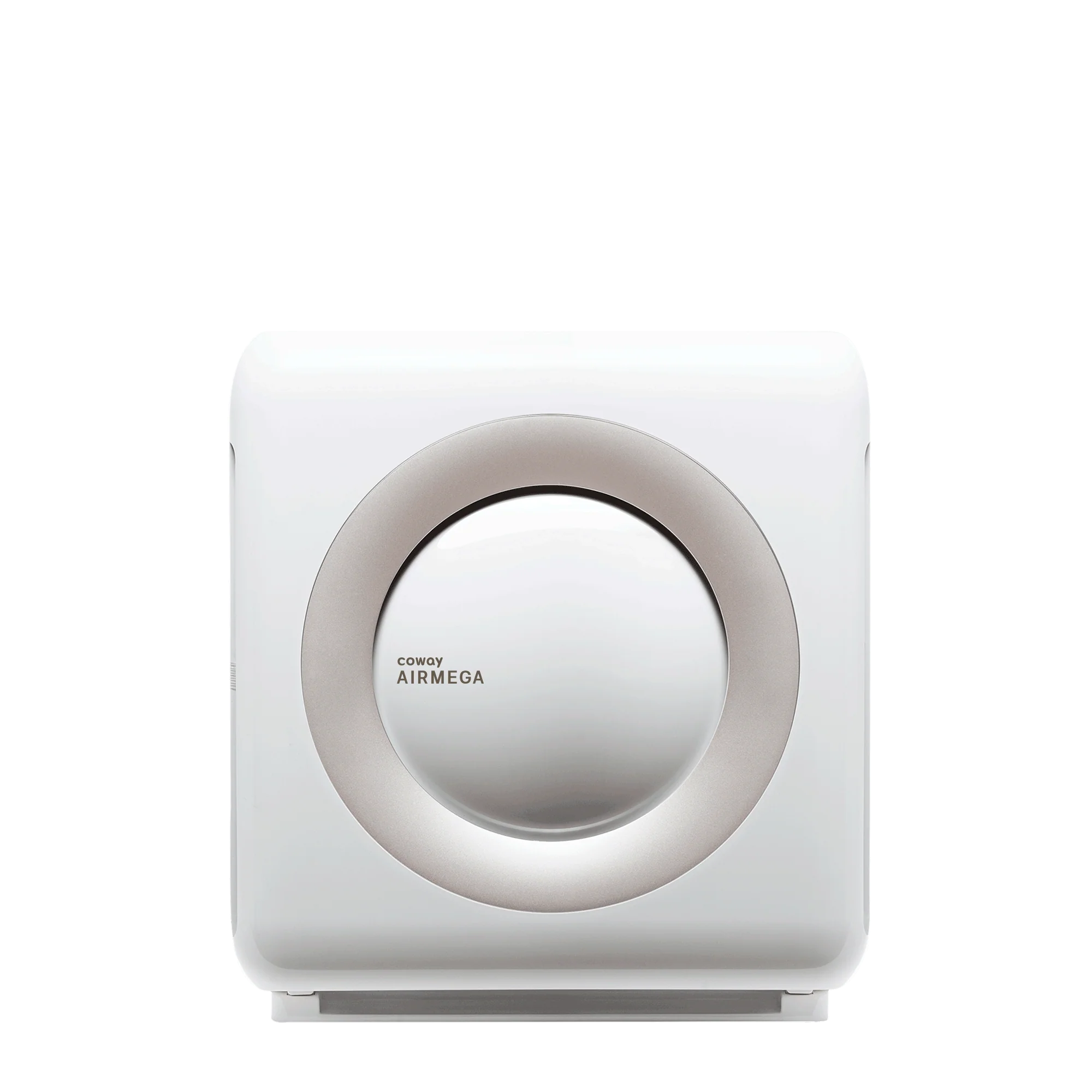
Key Specifications
- Room Coverage
- 361 sq ft
- CADR
- 233/246/240
- Filter
- True HEPA + Carbon + Pre-filter
- Noise
- 24 dB
- Power
- 77 watts
- Best For
- Medium rooms up to 361 sq ft. Wirecutter #1 for 10+ years. Best overall value.
📅 Prices checked . Amazon prices change frequently — click through for current price. Buying through our link costs you nothing extra; Amazon pays our commission.
What's in the Box
- Coway AP-1512HH air purifier
- Pre-installed 4-stage filter set
- Power cord
- User manual
- Filter replacement reminder sticker
Pros
- Wirecutter #1 for 10+ consecutive years
- AHAM verified CADR — no controversy
- True HEPA
- Fastest auto mode response in class
- 24dB ultra quiet sleep mode
- Eco mode at 4.9 watts
- 3-year warranty
Cons
- No WiFi or app control
- Carbon is impregnated fabric — weak on heavy odors
- Ionizer adds trace ozone (9ppb — CARB safe)
- Filter costs $60/year
- Design is dated
Best For
The Coway AP-1512HH is the correct choice when particle removal is the primary goal and odor control is secondary. The carbon pre-filter provides a meaningful first-stage capture of larger VOC particles and extends HEPA filter life, but it is not a thick carbon bed — it is not the right unit for heavy cooking odors, pet odor control, or high-VOC environments. For light odor management alongside excellent particle filtration at the best price point, the Mighty is the right pick.
📅 Price checked August 2026 · Buying through this link costs you nothing extra — Amazon covers our commission
Winix 5500-2 Review Best Value
✓ AHAM VerifiedOur Verdict
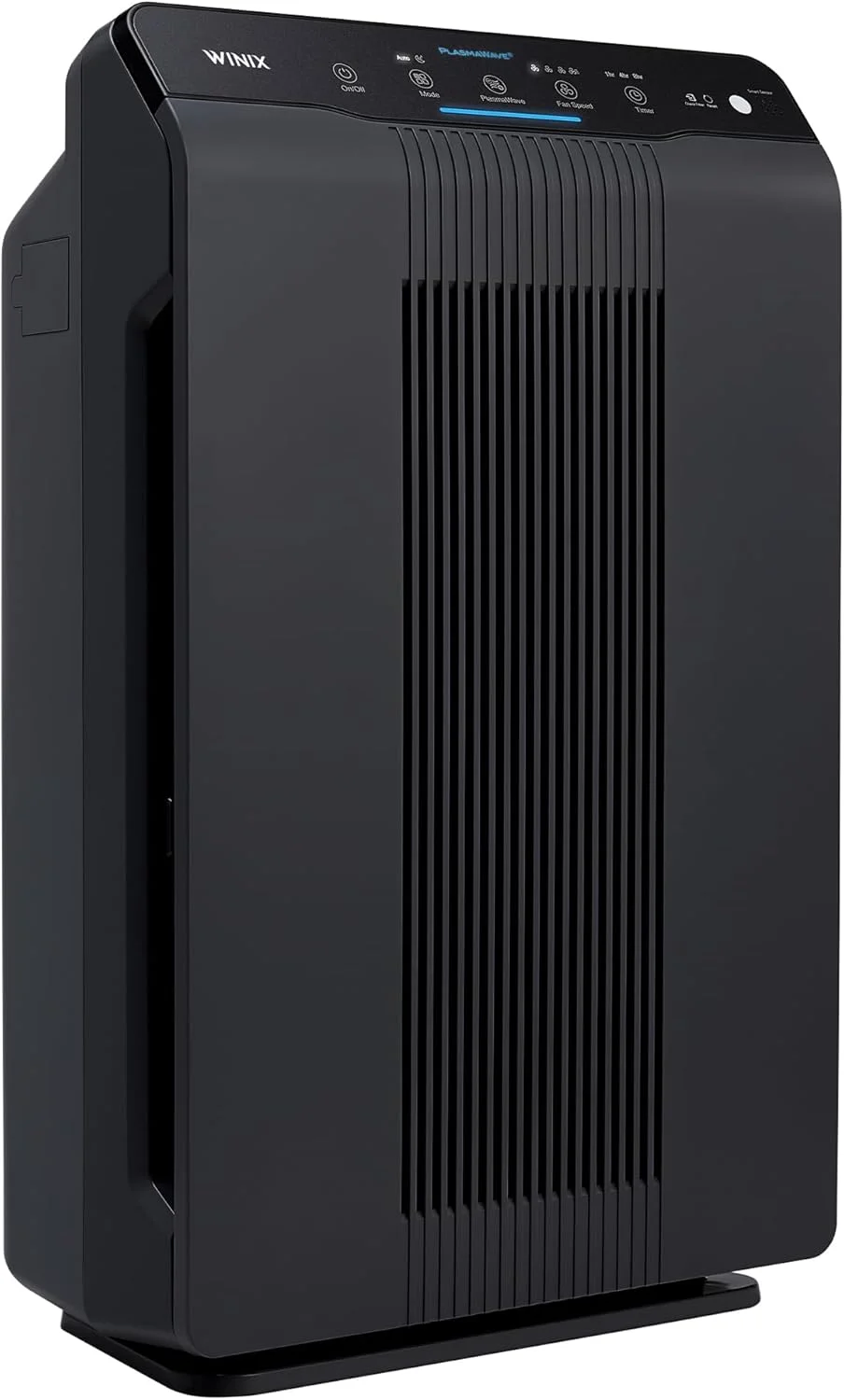
Key Specifications
- Room Coverage
- 360 sq ft
- CADR
- 232/243/246
- Filter
- True HEPA + PlasmaWave + Washable Carbon
- Noise
- 27 dB
- Power
- 67 watts
- Best For
- DISCONTINUED. Buy while stock lasts. Washable carbon is unique advantage.
📅 Prices checked . Amazon prices change frequently — click through for current price. Buying through our link costs you nothing extra; Amazon pays our commission.
What's in the Box
- Winix 5500-2 air purifier
- Pre-installed True HEPA + carbon filter
- Power cord
- Remote control
- User manual
Pros
- AHAM verified CADR
- PlasmaWave pellet carbon
- Washable carbon filter — unique
- HouseFresh tested 23 min room clean
Cons
- DISCONTINUED in US
- No WiFi
- Louder than 5510
- Larger footprint
Best For
The Winix 5500-2 is the correct choice when both particle removal and odor/VOC control are priorities. The Winix carbon filter stage is thicker and more capable than the Coway's pre-filter, providing meaningful activated carbon adsorption of cooking odors, pet smells, and VOCs. For buyers who want charcoal air purification that addresses both particle pollution and household odors in a room up to 360 sq ft, the 5500-2 is the more complete charcoal + HEPA system.
📅 Price checked August 2026 · Buying through this link costs you nothing extra — Amazon covers our commission
What to Know Before You Buy
Bamboo Charcoal Bags — What They Do and What They Cannot Do
Bamboo charcoal bags ($10-30 for a set) are passive activated carbon bags designed to be placed in closets, cars, refrigerators, and small spaces to adsorb odors and VOCs. They do not have a fan and therefore do not filter airborne particles — no allergens, no mold spores, no PM2.5 capture. They work by contact adsorption: air molecules that diffuse to the bag surface and contact the activated carbon are adsorbed. This passive process is slow and limited to the area immediately surrounding the bag. A bamboo charcoal bag in a bedroom does not purify bedroom air — it can modestly reduce odors in its immediate vicinity. Regeneration: charcoal bags require monthly sun exposure (direct UV light) to drive off adsorbed VOCs and reactivate the carbon surface. Without monthly regeneration and annual replacement, they become saturated and stop working. Bamboo charcoal bags are a legitimate deodorizer for enclosed small spaces (closets, drawers, shoes, car interiors). They are not air purifiers.
Activated Carbon Filter Quality — Why Weight and Granule Form Matter
In HEPA purifiers with carbon stages, the quality of the carbon filter determines how much VOC adsorption capacity the unit has. Key indicators: 1) Weight — a 0.5 lb activated carbon filter has roughly 12× less adsorption capacity than a 6 lb carbon filter. Budget purifiers use thin carbon-impregnated mesh weighing 50-100 grams. Premium units like the Austin Air HealthMate use 15 pounds of granular activated carbon. The difference is months of effective VOC adsorption vs weeks. 2) Granular vs impregnated: granular activated carbon in a loose bed has higher surface area utilization than carbon impregnated onto a fiber mesh, because air flows through the granules and contacts more carbon surface. 3) Carbon type: standard activated carbon adsorbs general VOCs and odors. Impregnated carbon (KMnO4, activated alumina) can adsorb specific gases like formaldehyde and hydrogen sulfide that standard carbon handles less efficiently. For light household odors, any carbon stage in a HEPA purifier helps. For chemical sensitivity, paint fumes, or formaldehyde concerns, verify the carbon weight and whether impregnated carbon is used. See our activated carbon filter guide and carbon filter air purifier comparison.
When Charcoal Bags Are Appropriate vs When HEPA + Carbon Is Required
Charcoal bags are appropriate for: closet odor control, car interiors, refrigerators, small bathroom odors, shoe storage, and any enclosed space where passive deodorization is the only goal and particle removal is not needed. HEPA + carbon purifiers are required when: the goal is reducing airborne allergens, PM2.5, pet dander, or mold spores (particles that charcoal bags cannot capture); when the space has ongoing VOC sources (cooking, cleaning products, furniture off-gassing) that require continuous powered air movement through carbon media; or when the environment has any respiratory health concern (asthma, allergies, chemical sensitivity) that requires certified filtration performance. Never substitute a bamboo charcoal bag for a HEPA purifier in a health-application context — they address completely different problems.
What Is Activated Carbon and How Does Charcoal Adsorption Work?
Activated carbon is produced by heating organic material (wood, coconut shells, bamboo, coal) to 800-1,000°C in a low-oxygen environment, then "activating" the resulting char through chemical treatment or steam. The activation process creates a vast internal pore structure — each gram of activated carbon contains 1,000-3,000 square meters of internal surface area. This enormous surface area is what makes activated carbon effective as an adsorption medium.
Adsorption is a physical process — different from absorption. In absorption, a material is taken into the volume of another (like water absorbed by a sponge). In adsorption, molecules adhere to the surface of the adsorbent through van der Waals forces and other weak molecular interactions. VOC molecules (volatile organic compounds), odor compounds, and gaseous pollutants are physically attracted to the carbon surface and bind to it when they contact it. The binding is reversible — at high temperatures or low concentrations, adsorbed molecules desorb and re-enter the air. This is why charcoal bags require sun exposure to regenerate and why a hot car releases more VOC from an old saturated carbon filter than it removes.
What activated carbon adsorbs well: most VOCs (benzene, toluene, formaldehyde at low concentrations), odor compounds (from cooking, pets, smoke, mold), and many common indoor gas-phase pollutants. What it adsorbs poorly or not at all: carbon monoxide (CO), nitrogen dioxide (NO2), ozone (except at low concentrations), water vapor, and fine particles. Particles pass directly through carbon media without being captured — this is why HEPA filtration is required in addition to activated carbon for complete air purification.
Bamboo Charcoal Bags vs HEPA + Carbon Purifiers — Performance Comparison
Understanding what each product type can and cannot do prevents the common mistake of using the wrong product for the actual air quality problem.
Bamboo charcoal bags: Passive adsorption only. No fan, no particle capture, no HEPA filtration. Air circulation to the bag occurs only by natural convection and diffusion — extremely slow at room scale. Effective radius: approximately 1-3 feet from the bag surface. Carbon capacity: depends on bag weight (typical 200g bag) and VOC concentration, but saturation occurs within weeks in a high-VOC environment. Regeneration: required monthly (1 hour direct sunlight). Replacement: annually. Best application: closets, cars, drawers, lockers, shoes — small enclosed spaces where the bag is close to the odor source. Not appropriate for room-level air purification of any kind.
HEPA purifier with activated carbon pre-filter (thin layer): The Coway AP-1512HH style — a carbon-impregnated mesh pre-filter that captures large particles and some VOCs before air reaches the HEPA stage. Carbon weight: approximately 50-150 grams. Adsorption capacity: modest — suitable for light household odors. Limitation: the thin carbon layer saturates relatively quickly in high-VOC environments. Primary value of the pre-filter: extending HEPA filter life by catching large particles before they reach the HEPA stage. Secondary value: light VOC and odor pre-treatment.
HEPA purifier with dedicated carbon filter stage (thicker layer): The Winix 5500-2 and similar models include a separate carbon filter stage with more carbon media than a pre-filter design. Greater adsorption capacity for cooking odors, pet smells, and general VOCs. Better performance for ongoing odor sources in rooms up to the unit's CADR rating. Replacement frequency: the carbon filter stage typically requires replacement every 3-6 months when odor control is the application, compared to 6-12 months for the HEPA stage.
Dedicated carbon/gas-phase purifiers: Units like the Austin Air HealthMate (15 lbs granular carbon), IQAir GC MultiGas, and Blueair units with heavy carbon stages are designed for chemical sensitivity, industrial VOC exposure, or high-odor environments. These are specialized tools, not general-purpose air purifiers.
What Does a Charcoal Air Purifier Remove — and What Are Its Limits?
Activated carbon in air purifiers removes gas-phase pollutants through adsorption. The complete list of what it addresses and its limits:
Removes effectively: Cooking odors (from frying, fish, spices), pet odors (dander off-gassing, litter box compounds), tobacco smoke odors (particulate is captured by HEPA; odor compounds are adsorbed by carbon), VOCs from cleaning products, paints, and solvents at typical indoor concentrations, furniture and flooring off-gassing (formaldehyde at low to moderate concentrations), musty/mold odors (from mold off-gassing compounds), and general household odors.
Does not remove: Particles, allergens, mold spores, dust, pet dander (particle form), PM2.5 — these require HEPA filtration. Carbon monoxide: activated carbon does not effectively adsorb CO. Carbon dioxide: CO2 is not adsorbed by activated carbon at typical concentrations. Radon gas: carbon can adsorb radon temporarily but is not an effective radon mitigation strategy. High-concentration formaldehyde: at high concentrations (renovation off-gassing, new construction), standard activated carbon saturates rapidly and impregnated carbon or dedicated formaldehyde filters are required.
Critical limitation — carbon saturation: Once carbon is saturated, it stops adsorbing and can begin desorbing — releasing previously captured compounds back into the air, especially when temperatures increase. A saturated carbon filter in a warm room may increase VOC concentrations rather than reducing them. Monitor carbon filter replacement schedules based on your odor environment, not just time. In high-VOC environments (daily cooking, heavy pet presence, new furniture off-gassing), replace the carbon stage every 3-4 months. See our air purifier VOC removal guide for carbon filter sizing by VOC load.
Carbon Filter Regeneration — Do Charcoal Filters Last Longer With Maintenance?
Bamboo charcoal bag regeneration by sun exposure is real: UV light and heat drive off some adsorbed VOC molecules, partially restoring adsorption capacity. This is why manufacturers recommend monthly 1-hour sun exposure for charcoal bags. The regeneration is partial — after each cycle, the bag retains some permanently bound VOCs that do not desorb under normal sunlight conditions. After approximately 12 months, regeneration no longer meaningfully restores capacity and replacement is required.
Activated carbon filters in air purifiers cannot be regenerated at home under normal conditions. The adsorbed VOCs require higher temperatures (typically 800°C in an inert atmosphere) for complete carbon regeneration — conditions achievable only in industrial carbon reactivation furnaces. Attempting to regenerate air purifier carbon filters with an oven, sunlight, or heating is not effective and can release the adsorbed VOCs back into your home. Air purifier carbon filter replacement is required when the stage is exhausted.
How to know when the carbon stage is exhausted: The primary indicator is odor breakthrough — when odors you previously did not notice from the purifier's output become perceptible, the carbon is saturated. Some smart air purifiers with VOC sensors can detect breakthrough by monitoring air quality at the unit's output. A unit with an auto mode that runs at higher speed when VOC levels are elevated may paradoxically run less on auto (because less VOC is being captured) when the carbon is saturated and passing VOCs through — this counter-intuitive behavior can mask carbon saturation in sensor-equipped units. Manual carbon filter tracking by replacement date is more reliable than sensor-based detection for carbon stage monitoring.