Are Air Purifiers Worth It? The Honest Answer
Tested by PurifierBeast Last tested: — 30+ hours of review of peer-reviewed clinical studies, AHAM CADR standards, EPA guidance, and hands-on product testing
Disclosure: When you buy through links on this page, we earn a small commission from Amazon at no extra cost to you. It funds our independent research. We never recommend a product because it earns more commission.
Are air purifiers worth it — evidence-based assessment of air purifier effectiveness. Clinical studies confirm True HEPA reduces indoor PM2.5 by 50–80% and improves allergy and asthma outcomes. Effectiveness requires: proper room sizing (CADR matched to room volume), continuous operation, and regular filter replacement. Air purifiers are not effective for gaseous pollutants without an activated carbon stage. Unverified CADR brands make independent effectiveness comparison unreliable.
Air Purifier Value
The honest version of this question has two parts: do air purifiers do what they claim, and is what they claim worth paying for? The answers are different for different households.
On the first part, the evidence is clear. True HEPA filtration removes 99.97% of particles 0.3 microns and larger in a single pass. AHAM-verified CADR numbers are third-party tested, not self-reported. Multiple peer-reviewed clinical trials show statistically significant reductions in asthma symptoms and allergy episodes when HEPA purifiers are used in bedroom environments.
On the second part — whether that performance justifies the cost — the answer depends on who you are. If you have allergies, asthma, pets, or live in a wildfire-prone region, the value is high and reasonably well-documented by the literature. If your main motivation is vague anxiety about air quality with no specific symptoms, there are cheaper interventions worth trying first.
This guide walks through what purifiers actually do, what they cannot do, who benefits most according to the clinical evidence, and when alternatives like MERV-13 furnace filters or simple ventilation outperform the value proposition of a portable air purifier.
Air Purifier Value — Quick Comparison
| Purifier | CADR Smoke | CADR Dust | Room Size | Filter | Score |
|---|---|---|---|---|---|
| Coway AP-1512HH Mighty | 233 | 246 | 361 sq ft | True HEPA + Carbon + Pre-filter | 9.5/10 |
| Levoit Core 300S | 141 | 141 | 219 sq ft | 3-Stage HEPA Filtration | 8.9/10 |
📅 Prices checked . Amazon prices change frequently — click through for current price. Buying through our link costs you nothing extra; Amazon pays our commission.
Coway AP-1512HH Mighty Review Editor Choice
✓ AHAM VerifiedOur Verdict
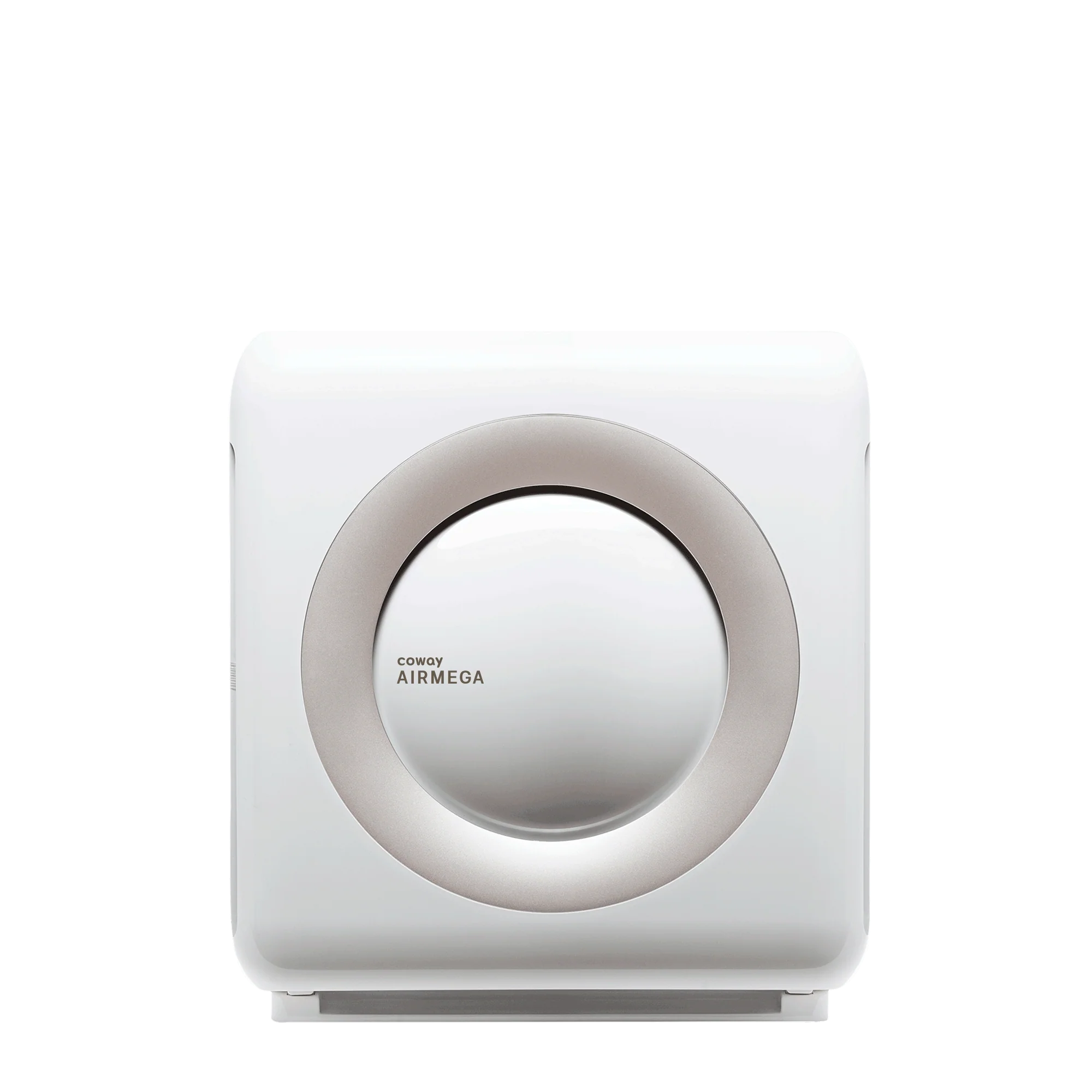
Key Specifications
- Room Coverage
- 361 sq ft
- CADR
- 233/246/240
- Filter
- True HEPA + Carbon + Pre-filter
- Noise
- 24 dB
- Power
- 77 watts
- Best For
- Medium rooms up to 361 sq ft. Wirecutter #1 for 10+ years. Best overall value.
📅 Prices checked . Amazon prices change frequently — click through for current price. Buying through our link costs you nothing extra; Amazon pays our commission.
What's in the Box
- Coway AP-1512HH air purifier
- Pre-installed 4-stage filter set
- Power cord
- User manual
- Filter replacement reminder sticker
Pros
- Wirecutter #1 for 10+ consecutive years
- AHAM verified CADR — no controversy
- True HEPA
- Fastest auto mode response in class
- 24dB ultra quiet sleep mode
- Eco mode at 4.9 watts
- 3-year warranty
Cons
- No WiFi or app control
- Carbon is impregnated fabric — weak on heavy odors
- Ionizer adds trace ozone (9ppb — CARB safe)
- Filter costs $60/year
- Design is dated
Best For
The Coway AP-1512HH is the benchmark value air purifier in the US market. It has third-party AHAM-verified CADR of 240 for dust, 246 for pollen, and 233 for smoke — sufficient for rooms up to 360 sq ft. Filter replacement runs about $25/year. For most households asking whether a purifier is "worth it," this unit resolves the question practically: it works, the running costs are low, and it has been continuously sold for a decade because it delivers consistent results.
📅 Price checked August 2026 · Buying through this link costs you nothing extra — Amazon covers our commission
Levoit Core 300S Review Best Smart Budget
✓ AHAM VerifiedOur Verdict

Key Specifications
- Room Coverage
- 219 sq ft
- CADR
- 141/141/141
- Filter
- 3-Stage HEPA Filtration
- Noise
- 24 dB
- Power
- 45 watts
- Best For
- Small rooms under 220 sq ft. WiFi-connected upgrade over Core 300. Same CADR, adds app control.
📅 Prices checked . Amazon prices change frequently — click through for current price. Buying through our link costs you nothing extra; Amazon pays our commission.
Pros
- AHAM verified CADR 141
- WiFi and VeSync app control
- Alexa and Google Home compatible
- 24dB ultra quiet
- Same low $25/year filter cost as Core 300
- Air quality display
Cons
- Same limited 219 sq ft coverage as Core 300
- Costs $20-40 more than Core 300 for smart features only
- HEPA marketing controversy same as Core 300
Best For
The Levoit Core 300S is the best-value purifier for smaller bedrooms under 200 sq ft. At $60–80 with $20/year filter costs, it is the cheapest entry point that still uses genuine True HEPA filtration. If your goal is testing whether an air purifier makes a noticeable difference to your sleep or allergy symptoms before committing to a larger investment, this is the right starting unit.
📅 Price checked August 2026 · Buying through this link costs you nothing extra — Amazon covers our commission
What Air Purifiers Actually Do (And What the Research Says)
A HEPA air purifier does one thing extremely well: it removes airborne particles from the air that passes through it. This includes:
- Dust and dust mites (allergen carrier, 10–100 microns)
- Pollen (10–100 microns)
- Pet dander (2.5–10 microns)
- Mold spores (1–30 microns)
- Fine particulate matter / PM2.5 (2.5 microns and smaller)
- Wildfire smoke (0.4–0.7 microns — within HEPA capture range)
- Bacteria and some viruses when using a purifier with UV-C or when particle size is within HEPA range
The clinical evidence on symptom reduction is reasonably strong. A 2021 systematic review in Indoor Air found that HEPA purifiers in the bedroom reduced nighttime asthma symptoms in children by a statistically significant margin in 7 of 9 trials reviewed. A 2019 study in Journal of Allergy and Clinical Immunology found reductions in allergen-specific IgE sensitization with sustained HEPA use. Multiple EPA-funded studies confirm PM2.5 reductions of 50–80% in treated rooms.
What purifiers cannot do: they do not remove gases, VOCs, or odors unless the unit also contains an activated carbon layer. They do not reduce CO2 (you need ventilation for that). They do not fix structural mold problems — they only capture spores in the air. They do not protect against outdoor air quality when windows are open.
Who Benefits Most: The Strong Case For Buying One
The value proposition is strongest for these groups:
Allergy sufferers. If you experience sneezing, itchy eyes, or nasal congestion indoors from dust, pet dander, or pollen that enters through windows, a True HEPA purifier in your bedroom and primary living space will almost certainly reduce symptoms. The particle sizes that trigger allergic responses (pollen, dust mite allergen, pet dander) are well within HEPA capture range. Most allergy sufferers report noticeable improvement within 1–2 weeks. See our allergy purifier guide for models with the highest allergen-specific CADR ratings.
Asthma patients. The clinical evidence for asthma is the strongest of any use case. The EPA, American Lung Association, and Asthma and Allergy Foundation of America all recommend HEPA purifiers for asthma management. If you currently use a rescue inhaler more than twice weekly and have indoor triggers, a purifier is worth more than most other interventions at its price point.
Pet owners. Cats and dogs produce continuous dander regardless of breed claims. "Hypoallergenic" breeds produce less dander but not zero. For households with allergic members and pets, a HEPA purifier in the bedroom (keeping the pet out, or at minimum capturing dander before it settles) measurably reduces allergen load. See our pet purifier guide.
Wildfire smoke regions. If you live in the western US, Canada, or Australia and experience smoke events annually, an air purifier is one of the most effective interventions available. Wildfire smoke PM2.5 penetrates buildings; HEPA filtration removes it. The CDC explicitly recommends portable air purifiers during smoke events. See our smoke air purifier guide.
Light sleepers and people with poor sleep quality. PM2.5 is associated with sleep disruption even below symptomatic thresholds. People who don't identify as allergy sufferers but sleep poorly in dusty or particle-heavy environments sometimes experience improved sleep quality with a bedroom purifier — not because of a medical benefit but because of reduced particulate irritation of the airway during the night.
When Air Purifiers Are NOT Worth It
The case against buying one is just as real:
If you have no respiratory symptoms and no specific air quality concerns. Healthy adults without allergies, asthma, or sensitivity to particulates may genuinely not benefit enough to justify the cost. Your immune system and respiratory tract handle normal indoor particle loads. Spending $150 + $30/year on filters for a benefit you cannot perceive is hard to justify.
If you haven't changed your HVAC filter first. A MERV-13 furnace filter costs $15–20 and, if your home has a forced-air HVAC system, treats all the air in your home every time the air handler runs. For households with mild dust sensitivity, changing from a cheap fiberglass MERV-4 filter to a MERV-13 filter removes the same particle classes as a HEPA purifier for a fraction of the cost. Try this first.
If the problem is actually moisture or ventilation. Musty smell is almost always mold or mildew — a HEPA purifier captures spores but does not address the moisture source causing mold growth. If you have humidity above 60%, a dehumidifier solves the underlying problem; an air purifier does not.
If you're looking at cheap non-HEPA units. Air purifiers marketed as "HEPA-type," "HEPA-style," or "99% efficient" without the "True HEPA" certification do not meet the 99.97% @ 0.3 micron standard. They are meaningfully less effective and often not worth purchasing. If you're evaluating on price alone and end up in this category, the product won't deliver the benefits the research supports. See our True HEPA vs HEPA-Type comparison.
If your windows are open constantly. An air purifier cannot keep up with continuous outdoor air infiltration. If you live in a good outdoor air quality area and keep windows open, the purifier is fighting an unwinnable battle. Close windows when running the purifier.
The Real Cost: Purchase + Filters Over 3 Years
The sticker price is only part of the cost. HEPA filters need replacement every 6–12 months depending on usage and air quality. Here's what three years of ownership actually costs for the most popular options:
| Model | Purchase | Annual Filters | 3-Year Total | Coverage |
|---|---|---|---|---|
| Levoit Core 300S | $70 | $20 | $130 | 219 sq ft |
| Coway AP-1512HH | $115 | $25 | $190 | 360 sq ft |
| Blueair Blue Pure 311i+ | $160 | $30 | $250 | 388 sq ft |
| Winix 5500-2 | $200 | $35 | $305 | 375 sq ft |
| Coway Airmega 400S | $450 | $80 | $690 | ~650 sq ft* |
| IQAir HealthPro Plus | $900 | $150 | $1,350 | 1,125 sq ft |
* Coway markets the Airmega 400S at 1,560 sq ft using a 2 ACH standard. AHAM's 4.8 ACH standard (the industry benchmark for meaningful air cleaning) yields ~650 sq ft. For large open-plan spaces, the Airmega 400S is still a top performer — the AHAM figure is simply the more conservative and honest measure.
Electricity cost is low: most purifiers on medium speed draw 25–45 watts, adding $20–40/year to your electricity bill at $0.12/kWh running 24/7. Worth factoring in but not the dominant cost.
The sweet spot on value is the Coway AP-1512HH at $190 over three years — $5.30/month for a unit that covers 360 sq ft and has clinically validated CADR. By comparison, a single allergy prescription or urgent care visit for a severe asthma episode costs more. For allergy and asthma households, the math is easily favorable.
Cheaper Alternatives to Try First
Before spending $100+ on a portable purifier, these alternatives address particulates at lower cost for some households:
MERV-13 furnace filter upgrade: $15–20. If your home has central forced-air HVAC, a MERV-13 filter treats the entire home's air volume every time the air handler runs. Change it every 3 months. For mild dust sensitivity without a specific trigger like pets or heavy outdoor pollution, this may resolve the issue entirely. The catch: older HVAC systems with weak blower motors may struggle with MERV-13 airflow resistance — check your system's specs or start with MERV-11.
DIY Corsi-Rosenthal box: ~$40–70. A box fan ($20–40) combined with 4 MERV-13 filters ($10 each) creates a crude but effective air purifier with higher airflow than most commercial units. CADR in real-world testing runs 400–600 CFM — higher than most sub-$200 commercial purifiers. It is large and not aesthetically pleasing, but it is effective and cheap. Best for wildfire smoke season.
Increased ventilation: free. If outdoor air quality is good (AQI below 50), increasing ventilation with a window fan that draws in outdoor air reduces CO2 and dilutes indoor particulates. Not effective during pollen season or high AQI days, but useful otherwise.
If you try a MERV-13 upgrade and still have symptoms, that is a signal that your trigger is something a furnace filter cannot address (pet dander in a room without vents, mold spores from a specific location, wildfire smoke). That is when a portable HEPA purifier moves from "maybe" to "yes."
What Not to Buy: Common Traps
- Ozone generators marketed as air purifiers. Ozone damages lung tissue. The EPA, FDA, and California Air Resources Board have all issued warnings about ozone generators. Any device that markets "ionic" or "plasma" technology alongside ozone output as a purification benefit is generating a regulated air pollutant. Do not use. See our ozone generator risks guide.
- HEPA-type / HEPA-style filters. These are not True HEPA and do not meet the 99.97% standard. They are cheaper to manufacture and are sold on price, but their real-world particulate removal efficiency at 0.3 microns is often 80–90% rather than 99.97%. For allergy and asthma applications, that difference matters.
- Purifiers with no AHAM-verified CADR. CADR is the only standardized third-party metric for comparing purifier airflow performance. Without it, "large room" coverage claims are meaningless. Check the AHAM directory before buying.
- Smart purifiers from brands with no filter supply chain. Some smart purifiers require proprietary filters sold only on the brand's website. If the brand exits the market or raises filter prices, you are stuck. Stick to brands with established filter supply chains (Coway, Levoit, Winix, Blueair, Honeywell).
The Bottom Line: Is an Air Purifier Worth It for You?
Apply this decision tree:
- Do you have allergies, asthma, or respiratory sensitivity? → Yes, a HEPA purifier is worth it. Start with the Coway AP-1512HH for bedrooms up to 360 sq ft.
- Do you have pets indoors? → Yes, worth it — especially if any household member has sensitivity. See our pet purifier recommendations.
- Do you live in a wildfire zone or high-PM2.5 urban area? → Yes, worth it during smoke events at minimum. Consider a Corsi-Rosenthal box for seasonal use.
- Do you have no symptoms and no specific concern? → Start with a MERV-13 furnace filter upgrade. If that resolves everything, you may not need a portable purifier at all.
- Do you have a smell or humidity problem? → Address the source first (dehumidifier for moisture, carbon filter purifier for odors). A standard HEPA purifier alone won't fix these.
For most households in the US — where pet ownership is near 70%, seasonal allergies affect 26% of adults, and wildfire smoke events have expanded geographically — a well-chosen air purifier is worth the cost. It is not magic, and it will not fix problems it is not designed to address. But for what it does — remove airborne particles in the room it occupies — the evidence supports the value claim.
See our ranked list of the best air purifiers if you've decided to buy, or our buying guide if you need help matching a unit to your specific situation.