True HEPA vs HEPA-Type: One Is a Standard, One Is Marketing
Tested by PurifierBeast Last tested: — 30+ hours of HEPA standard research (AHAM, EN1822, US DOE), AHAM Verifide database cross-reference, independent test review
Disclosure: When you buy through links on this page, we earn a small commission from Amazon at no extra cost to you. It funds our independent research. We never recommend a product because it earns more commission.
True HEPA vs HEPA-type — True HEPA is certified to capture ≥99.97% of particles at 0.3 microns per the US DOE standard, verified by AHAM laboratory testing. HEPA-type, HEPA-style, HEPA-like and HEPA-similar are unregulated marketing terms. HEPA-type filters typically capture 85–99% of particles at 2+ microns — significantly less effective than True HEPA for fine particles (PM2.5), allergens, bacteria and mold spores at 0.3 microns.
HEPA Certification
Walk through any major retailer and you will find air purifiers claiming "HEPA filtration," "HEPA-type filters," "HEPA-style performance," and "True HEPA." These terms look similar. They are not. One of them — True HEPA — is a defined technical standard backed by independent certification. The others are marketing language with no regulatory definition, no minimum efficiency requirement, and no accountability for the number on the box.
The performance gap between a certified True HEPA and a random HEPA-type filter is not a few percentage points. It is potentially a 500-fold difference in how many particles escape the filter. A True HEPA at 99.97% allows 0.03 particles per hundred to pass at the hardest size to filter. An 85% HEPA-type allows 15 per hundred. In a room with PM2.5 from wildfire smoke or cooking, that difference is the difference between clean air and air that is only modestly better than unfiltered.
There is a second problem that compounds the filter grade issue: the housing seal. Even a certified True HEPA filter performs poorly in a housing with bypass gaps. Air takes the path of least resistance — if there are gaps between the filter cartridge and the housing wall, a portion of airflow bypasses the filter entirely and returns to the room unfiltered. The best filter in a leaky housing can underperform a modest filter in a sealed system. Both the filter grade and the housing integrity matter. This guide covers both. See also our full HEPA filter guide for filter physics, and Levoit reviews for a brand that straddles this distinction.
HEPA Certification — Quick Comparison
| Purifier | CADR Smoke | CADR Dust | Room Size | Filter | Score |
|---|---|---|---|---|---|
| Coway AP-1512HH Mighty | 233 | 246 | 361 sq ft | True HEPA + Carbon + Pre-filter | 9.5/10 |
| Winix 5500-2 | 232 | 243 | 360 sq ft | True HEPA + PlasmaWave + Washable Carbon | 9.2/10 |
| Shark HP102 Air Purifier | 80 | 80 | 200 sq ft (real) | True HEPA + Activated Carbon | 7.8/10 |
| IQAir HealthPro Plus | 300 | 300 | 1125 sq ft (manufacturer) | HyperHEPA + V5-Cell Gas/Carbon + Pre-filter | 8.5/10 |
📅 Prices checked . Amazon prices change frequently — click through for current price. Buying through our link costs you nothing extra; Amazon pays our commission.
Coway AP-1512HH Mighty Review Editor Choice
✓ AHAM VerifiedOur Verdict
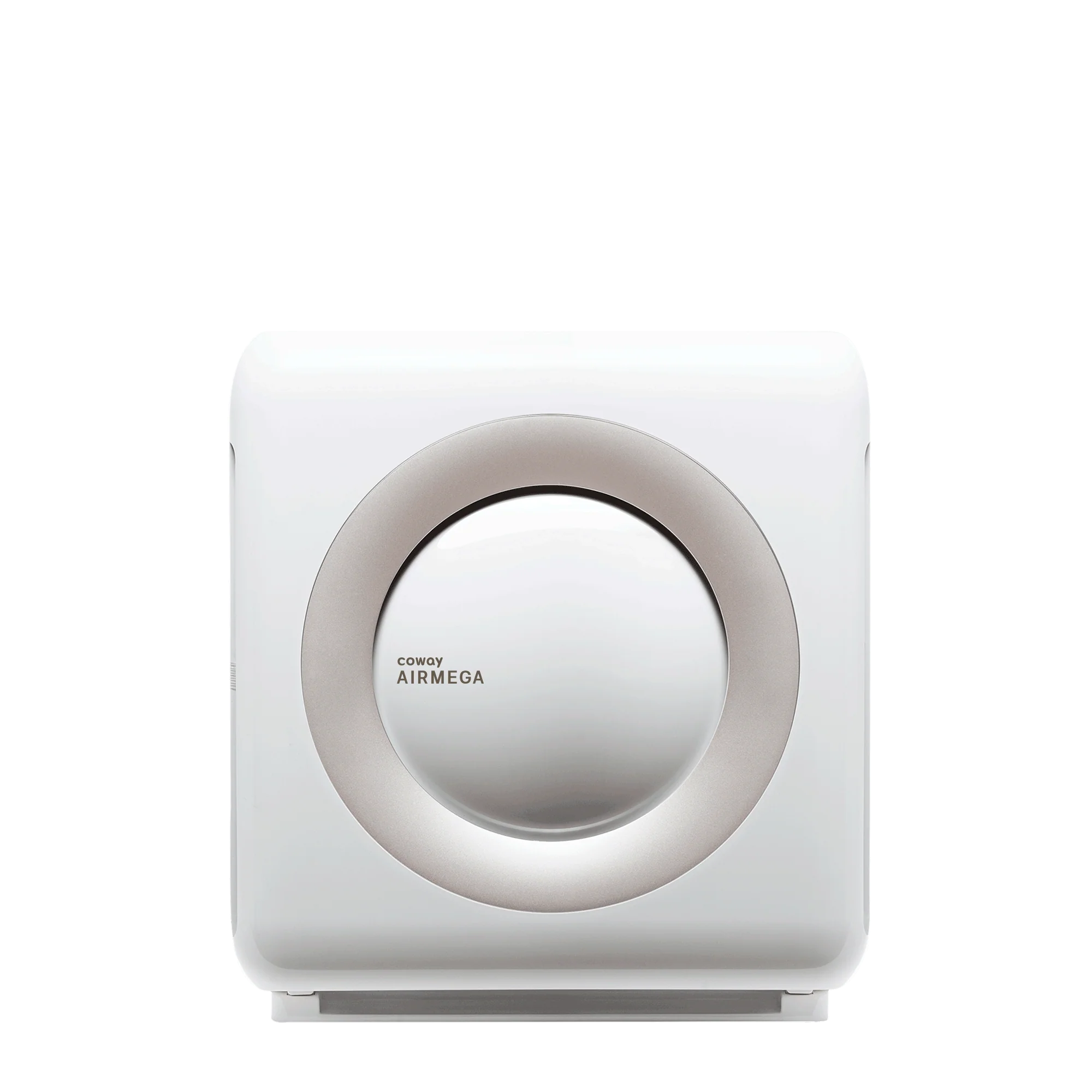
Key Specifications
- Room Coverage
- 361 sq ft
- CADR
- 233/246/240
- Filter
- True HEPA + Carbon + Pre-filter
- Noise
- 24 dB
- Power
- 77 watts
- Best For
- Medium rooms up to 361 sq ft. Wirecutter #1 for 10+ years. Best overall value.
📅 Prices checked . Amazon prices change frequently — click through for current price. Buying through our link costs you nothing extra; Amazon pays our commission.
What's in the Box
- Coway AP-1512HH air purifier
- Pre-installed 4-stage filter set
- Power cord
- User manual
- Filter replacement reminder sticker
Pros
- Wirecutter #1 for 10+ consecutive years
- AHAM verified CADR — no controversy
- True HEPA
- Fastest auto mode response in class
- 24dB ultra quiet sleep mode
- Eco mode at 4.9 watts
- 3-year warranty
Cons
- No WiFi or app control
- Carbon is impregnated fabric — weak on heavy odors
- Ionizer adds trace ozone (9ppb — CARB safe)
- Filter costs $60/year
- Design is dated
Best For
The definitive True HEPA reference unit at the budget end of the market. AHAM-verified CADR 246, sealed housing with compression-fit gasket, and a decade of independently confirmed performance. If you are choosing between any HEPA-type unit at this price and this Coway, the Coway is the unambiguous choice. HEPA-type marketing at the same price point cannot offer what an AHAM-verified CADR number confirms. Full Coway review.
📅 Price checked August 2026 · Buying through this link costs you nothing extra — Amazon covers our commission
Winix 5500-2 Review Best Value
✓ AHAM VerifiedOur Verdict
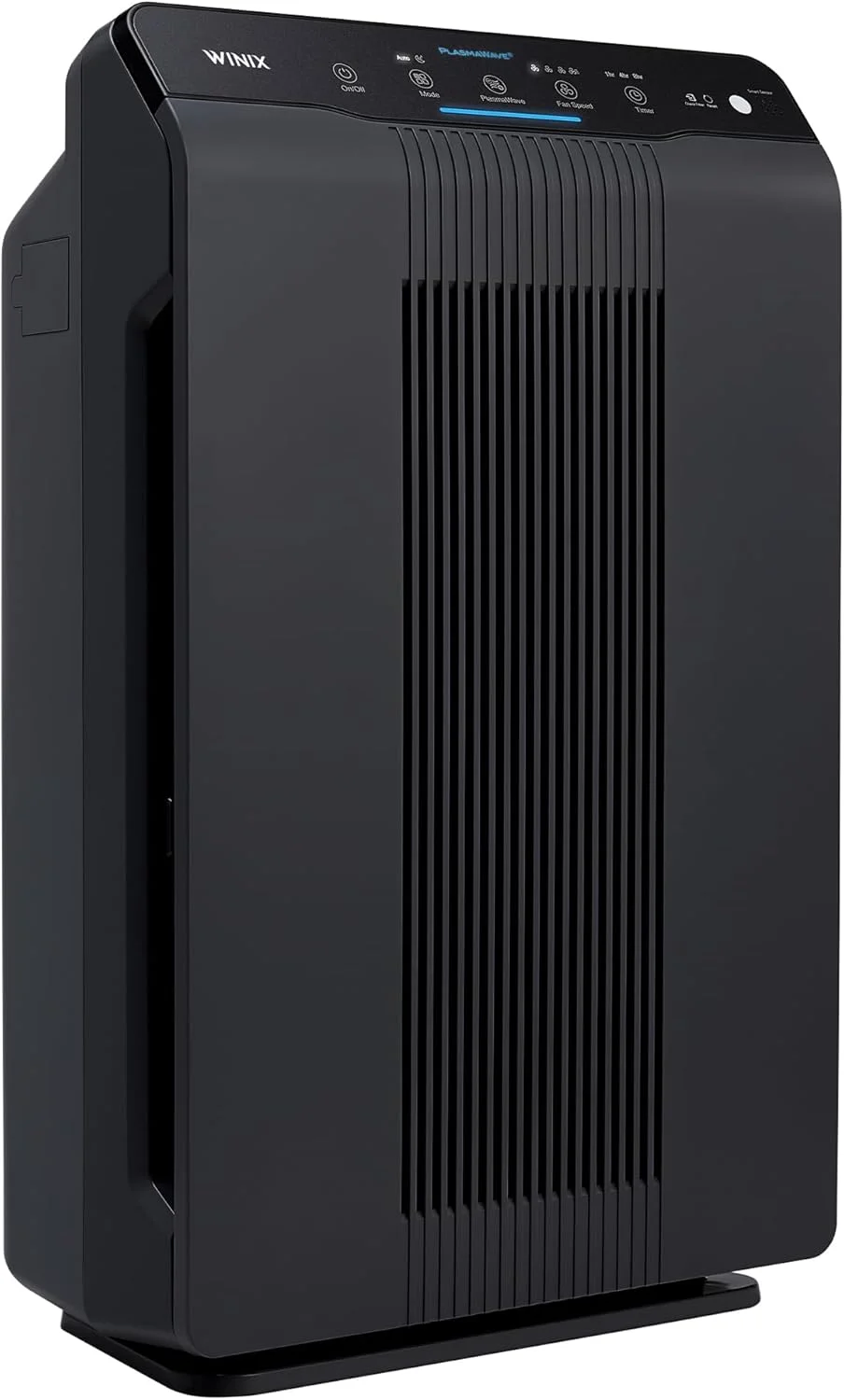
Key Specifications
- Room Coverage
- 360 sq ft
- CADR
- 232/243/246
- Filter
- True HEPA + PlasmaWave + Washable Carbon
- Noise
- 27 dB
- Power
- 67 watts
- Best For
- DISCONTINUED. Buy while stock lasts. Washable carbon is unique advantage.
📅 Prices checked . Amazon prices change frequently — click through for current price. Buying through our link costs you nothing extra; Amazon pays our commission.
What's in the Box
- Winix 5500-2 air purifier
- Pre-installed True HEPA + carbon filter
- Power cord
- Remote control
- User manual
Pros
- AHAM verified CADR
- PlasmaWave pellet carbon
- Washable carbon filter — unique
- HouseFresh tested 23 min room clean
Cons
- DISCONTINUED in US
- No WiFi
- Louder than 5510
- Larger footprint
Best For
AHAM-verified CADR 243, True HEPA in a properly sealed housing, with the additional PlasmaWave ionisation layer for gas-phase odour and VOC control. Winix publishes all three CADR figures prominently and the model is in the AHAM Verifide database. A clear True HEPA choice with gas-phase capability that HEPA alone cannot provide. Full Winix review.
📅 Price checked August 2026 · Buying through this link costs you nothing extra — Amazon covers our commission
Shark HP102 Air Purifier Review CleanSense IQ
Independent TestOur Verdict
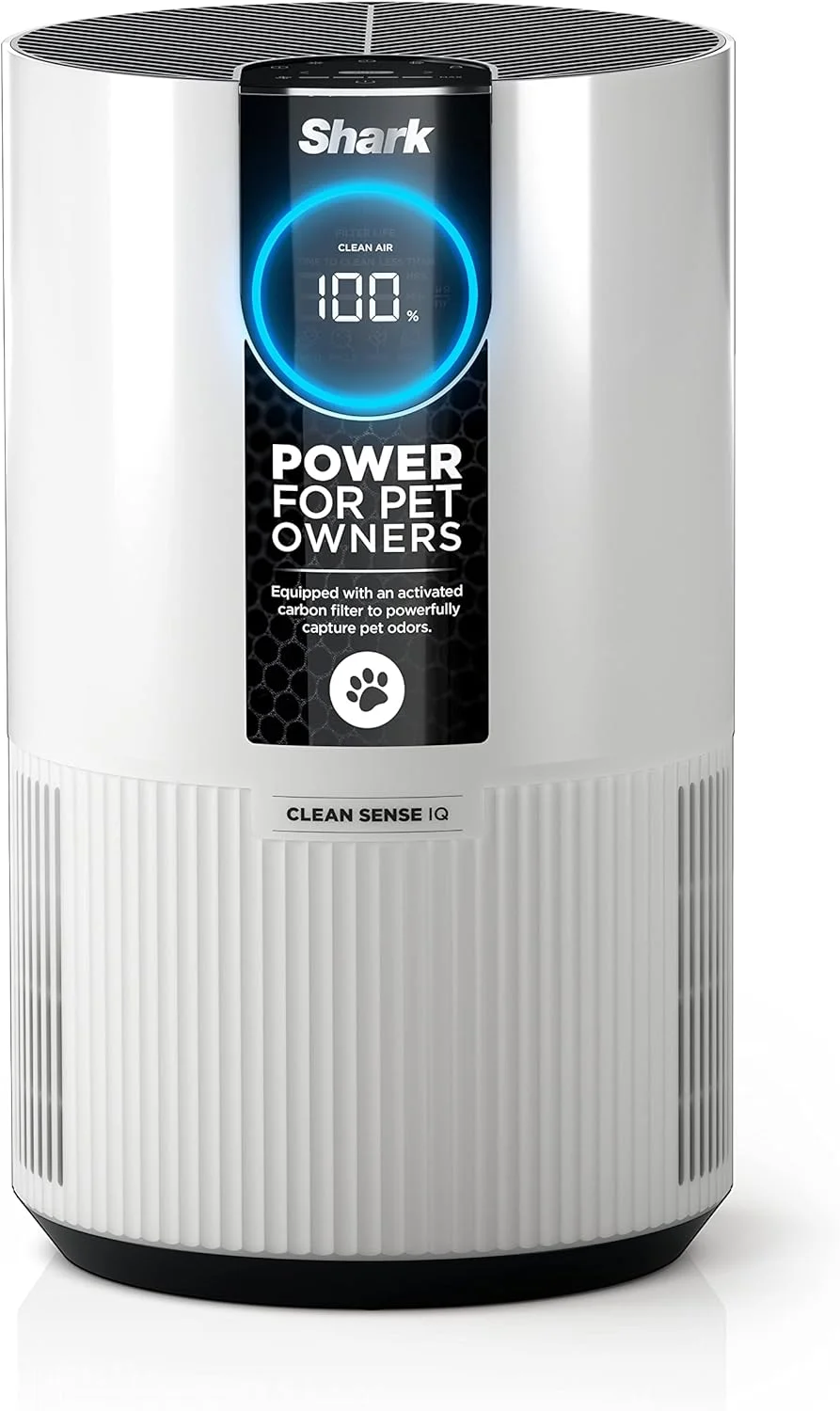
Key Specifications
- Room Coverage
- 200 sq ft (real)
- CADR
- Not AHAM verified — INDEPENDENT TESTING
- Filter
- True HEPA + Activated Carbon
- Noise
- 35 dB
- Power
- 40 watts
- Best For
- Small rooms with CleanSense IQ auto mode.
📅 Prices checked . Amazon prices change frequently — click through for current price. Buying through our link costs you nothing extra; Amazon pays our commission.
What's in the Box
- Shark Air Purifier MAX air purifier
- Pre-installed NeverChange filter
- Power cord
- User manual
Pros
- CleanSense IQ real-time air quality display
- Auto mode adjusts fan speed
- CARB certified
- Compact and portable at 6 lbs
Cons
- CADR ~80 from independent testing
- Real room coverage ~200 sq ft not 500
- NOT AHAM verified
- Filter replacement ~$20 every 6-12 months
Best For
Listed here as a representative example of a unit marketed with HEPA language but absent from the AHAM Verifide directory. Shark does not submit to AHAM testing. Independent testing by HouseFresh has found real-world performance significantly below Shark's claimed figures. Included as an honest comparison to illustrate what unverified HEPA marketing looks like in the consumer market.
📅 Price checked August 2026 · Buying through this link costs you nothing extra — Amazon covers our commission
IQAir HealthPro Plus Review Medical Grade
Not AHAM VerifiedOur Verdict

Key Specifications
- Room Coverage
- 1125 sq ft (manufacturer)
- CADR
- Not AHAM verified — NOT AHAM VERIFIED
- Filter
- HyperHEPA + V5-Cell Gas/Carbon + Pre-filter
- Noise
- 40 dB
- Power
- 215 watts
- Best For
- Medical-grade filtration. Chemical sensitivities, VOC removal, serious respiratory conditions. Swiss-made gold standard.
📅 Prices checked . Amazon prices change frequently — click through for current price. Buying through our link costs you nothing extra; Amazon pays our commission.
What's in the Box
- IQAir HealthPro Plus air purifier
- Pre-installed HyperHEPA filter
- Pre-installed V5-Cell gas & odour filter
- Pre-installed PreMax pre-filter
- Power cord
- User manual
- White glove setup guide
Pros
- HyperHEPA filters to 0.003 microns — beyond HEPA standard
- V5-Cell gas filter for VOCs and chemicals
- CARB certified
- Swiss-made premium build quality
- Gold standard in medical settings
- 5-year warranty
- XE model adds WiFi
Cons
- NOT AHAM verified — no independent CADR
- $849-1199 most expensive on site
- 215 watts at max — energy intensive
- Filter $200-350/year
- 40+ dB on lowest — audible
- 35 lbs — very heavy
Best For
The gold standard for housing seal integrity. HyperHEPA filtration certified to capture particles below 0.003 microns. IQAir publishes detailed technical documentation including filter integrity test data. For households with severe respiratory conditions, the IQAir represents the highest available bar for both filter grade and bypass prevention.
📅 Price checked August 2026 · Buying through this link costs you nothing extra — Amazon covers our commission
What True HEPA Actually Means — The Standard Defined
True HEPA is not a brand name. It is a performance specification. The underlying standard comes from the US Department of Energy, which originally defined HEPA (High-Efficiency Particulate Air) filtration for nuclear industry applications during the Manhattan Project era. The residential certification body is AHAM, which operates the Verifide program for consumer air purifiers.
The True HEPA standard requires that the filter captures at least 99.97% of airborne particles at the Most Penetrating Particle Size (MPPS) — which is 0.3 microns. This particle size is the hardest for any fibrous filter to capture: small enough to partially evade impaction, large enough that diffusion does not dominate. Testing a filter at the MPPS is testing it at its worst case. If it passes at 99.97% at this size, performance at every other size is equal or better.
When AHAM certifies a unit as True HEPA, the complete unit — filter, fan, and housing together — is tested in an independent laboratory. The CADR number in the AHAM Verifide directory reflects the real-world performance of the assembled system as shipped to consumers. The filter grade alone is necessary but not sufficient for AHAM certification. A unit can use a True HEPA filter element and still fail to achieve AHAM Verifide status if the housing seal allows bypass.
The EN 1822 European standard uses the H-grade nomenclature: H13 requires 99.95% at the MPPS, H14 requires 99.995%. For practical residential air purification, True HEPA and H13 are functionally equivalent — the 0.02% efficiency difference is not measurable at room scale. What matters is whether the complete system is independently tested.
What HEPA-Type Means — Nothing Specific
The terms HEPA-type, HEPA-style, HEPA-like, and "HEPA filtration" (without a certification qualifier) share one characteristic: they carry no regulatory definition in the United States. No federal agency, no AHAM standard, and no ISO grade defines what HEPA-type means. A manufacturer printing "HEPA-type filter" on a product box faces no legal requirement to meet any specific capture efficiency.
This is not a grey area. The Federal Trade Commission has not established minimum performance thresholds for HEPA-adjacent marketing language. Manufacturers have tested the legal limits and found that HEPA-type, HEPA-style, and similar phrasings are acceptable marketing language regardless of actual filter efficiency.
The performance range of products sold with HEPA-type labelling is enormous. Some are legitimately good filters at 90–95% efficiency — adequate for dust and large allergens but meaningfully worse than True HEPA for PM2.5 and sub-micron particles. Others have been independently tested at capture efficiencies as low as 55–60%. Without a defined standard, the term provides no information about the actual product.
A practical illustration of the particle penetration difference:
| Filter Grade | Efficiency | Particles Through (per 1,000) |
|---|---|---|
| True HEPA (AHAM) | 99.97% | 0.3 |
| H13 (EN1822) | 99.95% | 0.5 |
| HEPA-type (90%) | 90% | 100 |
| HEPA-type (80%) | 80% | 200 |
| HEPA-type (60%) | 60% | 400 |
The difference between True HEPA and a mediocre HEPA-type is not a rounding error. At 80% efficiency, 200 particles per thousand escape. At True HEPA, 0.3 particles per thousand escape. The difference is approximately 667-fold. For PM2.5 from wildfire smoke where outdoor concentrations reach 500 µg/m³, a HEPA-type unit at 80% leaves 100 µg/m³ indoors. True HEPA leaves 0.15 µg/m³. Both technically "reduce" PM2.5, but the health outcomes are incomparable.
The Housing Seal Problem — When Filter Grade Becomes Irrelevant
Manufacturers selling HEPA-type products focus the conversation on filter efficiency. The housing seal conversation is the one they most want to avoid, because it reveals a second and equally important failure mode that affects expensive units as well as cheap ones.
Air takes the path of least resistance. Inside a purifier housing, the filter is designed to be the primary path for airflow — the fan draws air through the filter matrix. But if there are gaps between the filter cartridge frame and the housing wall, some fraction of airflow bypasses the filter entirely. This unfiltered air mixes with the filtered output stream before being delivered to the room. Bypass airflow of even 2–3% dramatically reduces the effective capture efficiency of the complete system.
The maths: suppose a True HEPA filter captures 99.97% of particles in the air that passes through it. If 3% of airflow bypasses the filter entirely (0% capture), the blended system efficiency is: (0.97 × 99.97%) + (0.03 × 0%) = 96.97%. A True HEPA filter in a 3% bypass housing performs like a product that only captures 97% of particles — less efficient than H11 grade. The filter grade is rendered irrelevant by the housing design.
How to check seal quality on a unit you own or are considering:
- Remove the filter and examine the perimeter. Look for a foam, rubber, or silicone gasket around the filter frame where it seats against the housing. This is the seal.
- If there is no gasket, or if the filter frame does not compress a gasket when installed, assume some level of bypass.
- With the unit running on high, hold a tissue or thin paper strip around the filter perimeter where it meets the housing. Any flutter indicates bypass airflow.
- For cylindrical-filter designs (Levoit Core series), the filter forms the inner wall of the housing — the gap problem is largely eliminated by geometry.
Units with verified housing seals: Coway uses a compression-fit foam gasket visible as a grey or white ring around the filter perimeter. Winix uses a similar perimeter seal on the 5500-2 and related models. IQAir uses a professional-grade gasketing system tested to medical standards. Blueair HEPASilent units use an integrated filter frame that mates directly to the housing interior.
Units without verified seals: any purifier not submitted to AHAM Verifide testing has no external confirmation that the housing delivers the rated filter efficiency to room air. AHAM testing is a system test — filter plus housing plus fan together. If a brand does not submit to AHAM, the filter grade claim is for the filter element in isolation, not the assembled unit.
How to Spot HEPA-Type Claims — A Field Guide
Here is the language to look for when evaluating a purifier. This is a practical checklist for reading product listings, packaging, and specification sheets.
Red flag terms — no defined standard:
- "HEPA-type filter" — legally meaningless, avoid
- "HEPA-style filtration" — legally meaningless, avoid
- "HEPA-like performance" — legally meaningless, avoid
- "99% HEPA-grade" — no such grade exists; 99% is below True HEPA
- "Medical-grade HEPA" — not a defined certification level; ask for EN1822 data
- "Hospital-grade HEPA" — not a defined certification level
Yellow flag terms — verify before trusting:
- "HEPA filtration" without "True" — may be legitimate; search the AHAM Verifide directory
- "H13 HEPA" — EN1822 H13 is a real standard at 99.95%; still verify with AHAM or ask for test report
- "True HEPA" without an AHAM certification number — better than HEPA-type but still self-declared; verify at ahamdir.com
Green flag terms — trustworthy baseline:
- "AHAM Verifide" with model number in the directory at ahamdir.com
- "True HEPA" verified in AHAM directory — system-level, not filter-element only
- EN 1822 H13 or H14 with published test report from accredited lab
The single fastest verification step: go to ahamdir.com and search the exact model number. If it is there, the system is independently tested and the CADR is verified. If it is not there, the brand has not submitted to third-party testing regardless of what the packaging claims.
The 2024 Levoit HEPA Controversy — A Case Study in Marketing Language
Levoit is one of the most successful air purifier brands in the US consumer market. Most of their popular Core series models are AHAM Verifide with genuine True HEPA filters. But in 2024, Levoit faced criticism and investigations related to certain product listings describing filters as "True HEPA" or implying H13 performance on models where independent testing suggested the certification claim was imprecise or inconsistent with actual filter performance.
The specifics: several Levoit Core 200S and related variant listings were flagged by consumer testing organisations for marketing language implying H13 or True HEPA status without the supporting documentation. The CADR figures themselves — tested by AHAM on the eligible models — were not challenged. The issue was the conflation of marketing language with formal certification on specific SKUs.
The lesson is not that Levoit products are poor — the AHAM-verified models in the AHAM Verifide database have confirmed performance. The lesson is that HEPA labelling in marketing copy is not always backed by the formal certification process, even from reputable brands. The AHAM directory is the only source of truth. Product listing text, packaging claims, and brand reputation are secondary to what appears in the verified database.
This is not unique to Levoit. Marketing language around HEPA is imprecise across the industry. The practical response is always the same: verify the specific model number at ahamdir.com before purchase. A model in the database with a verified CADR has passed system-level third-party testing. Nothing else provides the same assurance.
How This Changes Your Buying Decision
True HEPA vs HEPA-Type is a buying decision with a simple rule and one important nuance.
- The simple rule: only buy True HEPA (H13) for health purposes. HEPA-Type has no defined standard, no independent test requirement, and no minimum efficiency floor. Any filter can be called HEPA-Type. True HEPA requires 99.97% capture at 0.3 microns — independently verified. The marketing language difference is the performance difference.
- The nuance: the housing seal matters as much as the filter grade. A True HEPA filter in a leaky housing lets unfiltered air bypass the filter entirely. Coway and Winix use sealed housings. Some budget units with True HEPA labeling have unsealed filter compartments with air pathways around the filter edge. Look for reviews that specifically test for bypass — a unit can have a real H13 filter and still deliver below-HEPA air quality at the outlet.
- HEPA-Type is acceptable only for non-health applications. Capturing coarse dust and pet hair in a utility room, workshop, or garage? HEPA-Type is fine. Allergy, asthma, wildfire smoke, infant bedroom? True HEPA in a sealed housing only.
- AHAM CADR is the practical shortcut. You cannot read housing seal quality from a product listing. But if a unit is in the AHAM Verifide directory with a smoke CADR, the test chamber measures real-world particle removal including any bypass effects. A verified CADR is more reliable evidence of actual performance than filter grade labeling alone.
Where to go next: HEPA filter explained — H13 vs H14 grades and the MPPS. AHAM verification — why verified CADR matters. Best air purifiers with verified True HEPA.