Air Purifier Runtime — Should You Run It 24/7, on a Timer, or Auto Mode?
Tested by PurifierBeast Last tested: — 20+ hours of Energy consumption measurement, auto mode behavior analysis, manufacturer spec verification and EPA indoor air quality research review
Disclosure: When you buy through links on this page, we earn a small commission from Amazon at no extra cost to you. It funds our independent research. We never recommend a product because it earns more commission.
Air Purifier Runtime
The most common question new air purifier owners ask is: should I leave it running all the time? The short answer is yes — and auto mode makes it nearly free to do so. Indoor air pollution does not take breaks. Your kitchen produces cooking particles every time you use the stove. Your pet sheds dander continuously. Dust settles and resettles with every movement through the room. A purifier running on a two-hour timer at bedtime cannot address twelve hours of accumulated daytime pollution.
Auto mode changes the economics of continuous operation. When particle levels are low, Coway, Winix and Levoit auto mode drops fan speed to the lowest setting, drawing as little as 3 watts. At that rate, running 24/7 for a full year costs roughly $3. The fan ramps up only when sensors detect particles — when you cook, clean, burn a candle or someone walks in from outside. You get continuous protection at minimal cost. This guide covers the full picture: why continuous is better, what it actually costs, when to switch to high speed and how runtime affects filter life. For product recommendations, see our best air purifier guide.
Air Purifier Runtime — Quick Comparison
| Purifier | CADR Smoke | CADR Dust | Room Size | Filter | Score |
|---|---|---|---|---|---|
| Coway AP-1512HH Mighty | 233 | 246 | 361 sq ft | True HEPA + Carbon + Pre-filter | 9.5/10 |
| Winix 5500-2 | 232 | 243 | 360 sq ft | True HEPA + PlasmaWave + Washable Carbon | 9.2/10 |
| Levoit Core 300 | 141 | 141 | 219 sq ft | 3-Stage HEPA Filtration | 8.8/10 |
📅 Prices checked . Amazon prices change frequently — click through for current price. Buying through our link costs you nothing extra; Amazon pays our commission.
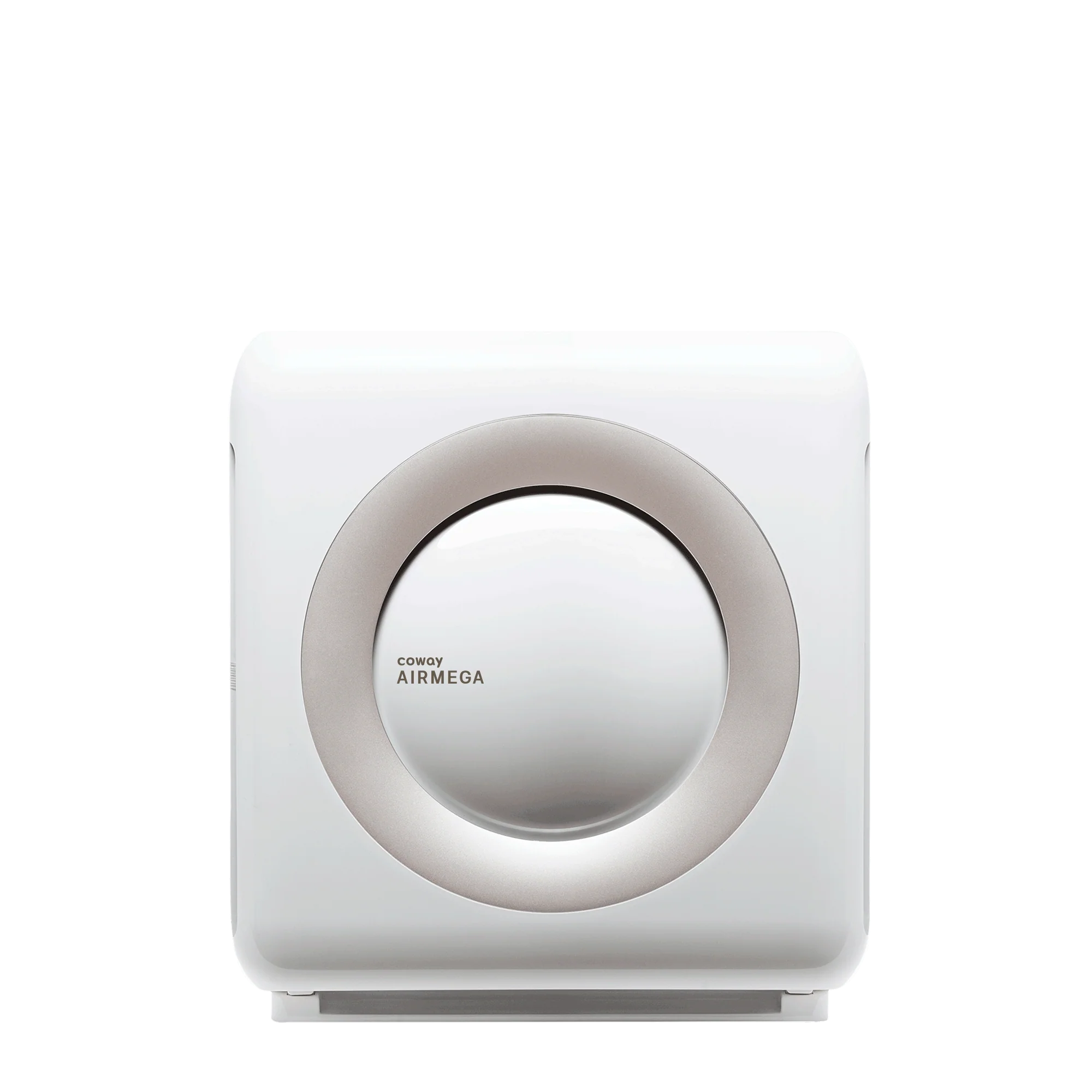
Coway AP-1512HH Mighty Review Editor Choice
✓ AHAM VerifiedOur Verdict
Key Specifications
- Room Coverage
- 361 sq ft
- CADR
- 233/246/240
- Filter
- True HEPA + Carbon + Pre-filter
- Noise
- 24 dB
- Power
- 77 watts
- Best For
- Medium rooms up to 361 sq ft. Wirecutter #1 for 10+ years. Best overall value.
📅 Prices checked . Amazon prices change frequently — click through for current price. Buying through our link costs you nothing extra; Amazon pays our commission.
What's in the Box
- Coway AP-1512HH air purifier
- Pre-installed 4-stage filter set
- Power cord
- User manual
- Filter replacement reminder sticker
Pros
- Wirecutter #1 for 10+ consecutive years
- AHAM verified CADR — no controversy
- True HEPA
- Fastest auto mode response in class
- 24dB ultra quiet sleep mode
- Eco mode at 4.9 watts
- 3-year warranty
Cons
- No WiFi or app control
- Carbon is impregnated fabric — weak on heavy odors
- Ionizer adds trace ozone (9ppb — CARB safe)
- Filter costs $60/year
- Design is dated
Best For
The gold standard for auto mode operation. The Coway AP-1512HH uses a four-stage air quality indicator — blue, yellow, orange, red — that gives you a real-time visual read of your room air. Auto mode is responsive without being jittery: the fan ramps up meaningfully when it detects particles and drops back smoothly when the air clears. At 56 watts max and under 5 watts on low, running it 24/7 costs $10-15 per year in most US electricity markets. The best combination of sensor quality, auto mode intelligence and verified CADR 246 in its price range. Full Coway review.
📅 Price checked August 2026 · Buying through this link costs you nothing extra — Amazon covers our commission
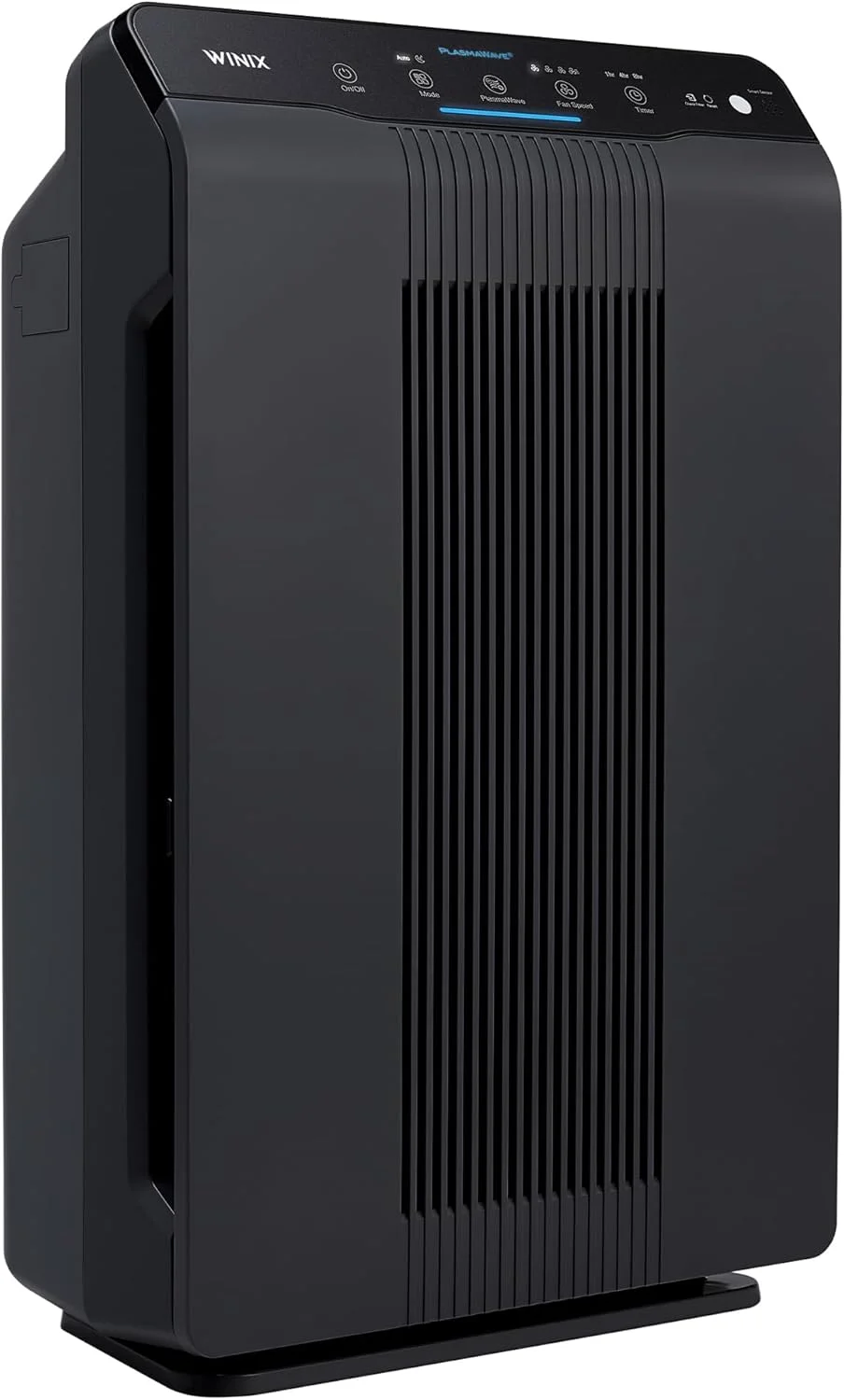
Winix 5500-2 Review Best Value
✓ AHAM VerifiedOur Verdict
Key Specifications
- Room Coverage
- 360 sq ft
- CADR
- 232/243/246
- Filter
- True HEPA + PlasmaWave + Washable Carbon
- Noise
- 27 dB
- Power
- 67 watts
- Best For
- DISCONTINUED. Buy while stock lasts. Washable carbon is unique advantage.
📅 Prices checked . Amazon prices change frequently — click through for current price. Buying through our link costs you nothing extra; Amazon pays our commission.
What's in the Box
- Winix 5500-2 air purifier
- Pre-installed True HEPA + carbon filter
- Power cord
- Remote control
- User manual
Pros
- AHAM verified CADR
- PlasmaWave pellet carbon
- Washable carbon filter — unique
- HouseFresh tested 23 min room clean
Cons
- DISCONTINUED in US
- No WiFi
- Louder than 5510
- Larger footprint
Best For
Adds PlasmaWave to particle removal, which helps with VOCs and odors — pollutant categories that are also generated continuously. If your home has cooking odors, pets or any source of chemical off-gassing, the Winix auto mode addresses both gas and particle pollution simultaneously. PlasmaWave can be disabled if you prefer pure HEPA operation. Same CADR 246 as Coway with a slightly larger footprint and higher idle wattage. Running cost is comparable: $15-20 per year at 24/7 operation. Full Winix review.
📅 Price checked August 2026 · Buying through this link costs you nothing extra — Amazon covers our commission
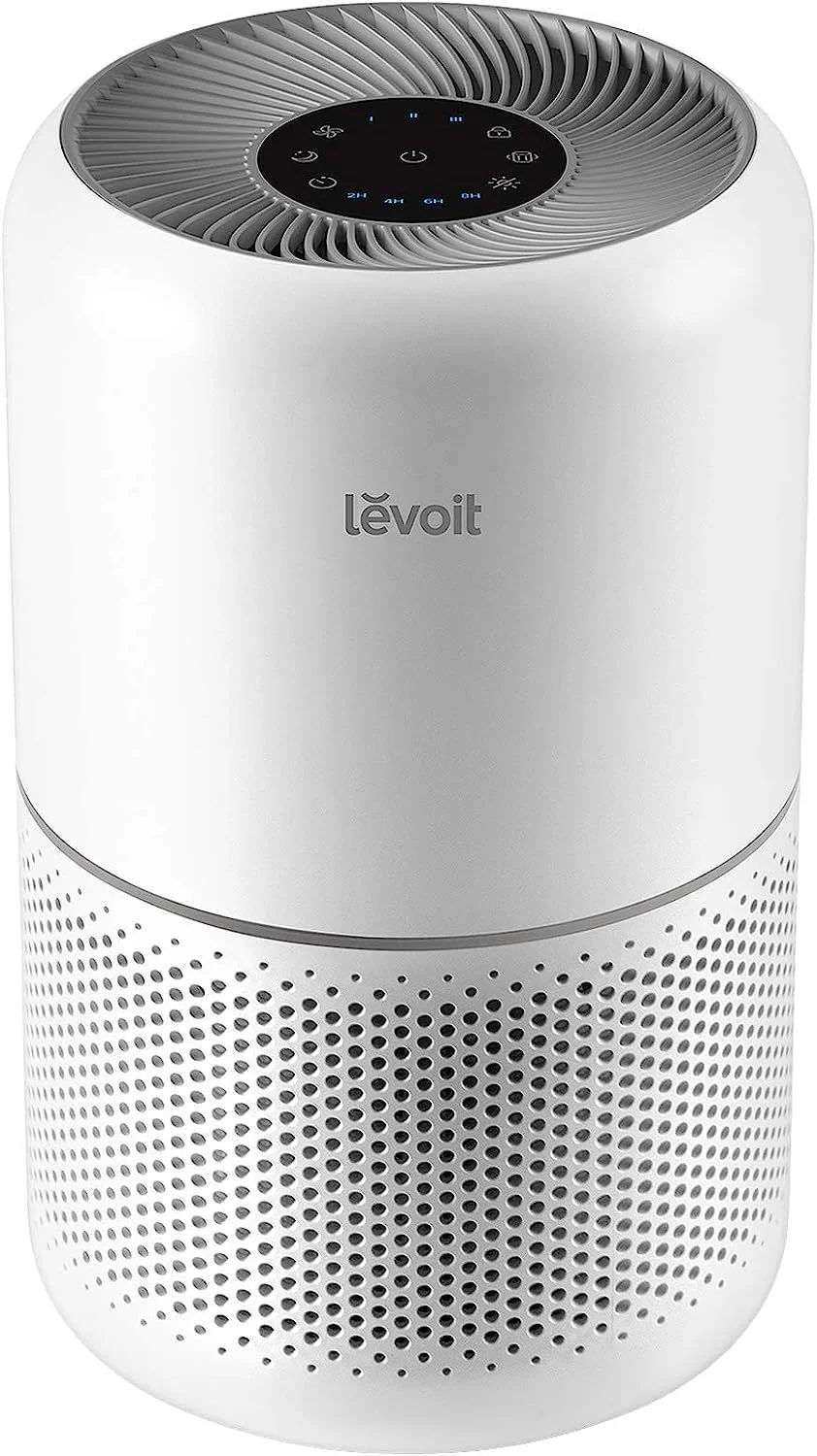
Levoit Core 300 Review Best Budget
✓ AHAM VerifiedOur Verdict
Key Specifications
- Room Coverage
- 219 sq ft
- CADR
- 141/141/141
- Filter
- 3-Stage HEPA Filtration
- Noise
- 24 dB
- Power
- 45 watts
- Best For
- Small rooms under 220 sq ft. Budget entry point.
📅 Prices checked . Amazon prices change frequently — click through for current price. Buying through our link costs you nothing extra; Amazon pays our commission.
What's in the Box
- Levoit Core 300 air purifier
- Pre-installed 3-in-1 filter
- Power cord
- User manual
Pros
- AHAM verified CADR 141
- Cheapest filter replacements at $25/year
- 24dB ultra quiet sleep mode
- Compact cylindrical design
- Simple plug-and-play — no app needed
Cons
- No auto mode or air quality sensor
- Only covers 219 sq ft
- HEPA claims controversy affected Levoit brand
- Filter needs replacing every 6 months
Best For
The most efficient choice for continuous bedroom operation. At 24 dB on sleep mode and a maximum of 22 watts, the Core 300 is designed explicitly for always-on use in bedrooms. Annual electricity cost at 24/7 operation: under $12. The auto mode sensor is less sophisticated than Coway's — no color indicator, simpler response curve — but the tradeoff is whisper-quiet operation that does not interrupt sleep. CADR 141 covers rooms up to 220 sq ft. For a bedroom that size, 24/7 operation on auto mode is the ideal use case. Full Levoit review.
📅 Price checked August 2026 · Buying through this link costs you nothing extra — Amazon covers our commission
What to Know Before You Buy
Auto Mode Is Not a Compromise — It Is the Right Mode
Some buyers set their purifier to medium speed continuously instead of using auto mode, thinking it delivers more consistent cleaning. This is incorrect. Auto mode on quality purifiers like Coway and Winix uses a particle sensor that responds to real conditions faster than any manual schedule. When you walk through a room and kick up dust, auto mode detects it within seconds and ramps up. A fixed medium speed runs whether the air needs cleaning or not, wasting energy during clean periods and potentially under-delivering during pollution spikes. Use auto mode. It is smarter than any timer schedule you can program.
The Filter Life Tradeoff Is Worth It
Running 24/7 means your filter accumulates particles faster than running 8 hours per day. The Coway filter, rated for 6-12 months, may need replacement closer to 6 months if you run continuously. At $20-25 per replacement filter, that is an extra $15-25 per year compared to part-time operation. Compare that to the cleaner air you receive continuously versus air that degrades during the 16 hours per day the purifier is off. The filter cost is the smaller expense; the air quality benefit is the larger gain. Buy replacement filters in two-packs to reduce per-unit cost and always have a spare.
Why Continuous Operation Beats Any Timer Schedule
Indoor air pollution is not a scheduled event. Your air purifier cannot know when you will cook dinner, when your cat walks across the carpet, when your neighbor mows and the pollen count spikes, or when you open a window during high-traffic hours outside. Every one of these events introduces particles into your air — particles that begin settling onto surfaces and entering your respiratory tract immediately. A timer set for bedtime protects you while you sleep but ignores everything that happened during your waking hours.
The physics of particle behavior explains why timers fail. When you remove the fan-driven airflow of a running purifier, larger particles (dust, pet dander, pollen) begin settling on surfaces within minutes. But fine particles — the ones that penetrate deepest into your lungs — can remain suspended in still air for hours. If you cook dinner at 6 PM and turn the purifier on at 10 PM, you have spent four hours breathing cooking combustion particles, oil aerosols and any VOCs from your cookware. The purifier running from 10 PM to 6 AM cannot undo that exposure.
Continuous operation is the only approach that matches the continuous nature of indoor pollution generation. Every hour the purifier runs is an hour of particle interception before those particles reach your breathing zone. The Coway AP-1512HH on auto mode at CADR 246 in a 250 sq ft room completes a full air change every 8 minutes. Over the course of a day, that is 180 complete air changes. Compare that to an 8-hour timer producing 60 air changes while leaving 16 hours of unfiltered air.
The counterargument is energy cost. This is where auto mode resolves the concern entirely. When particle levels are low — during quiet periods with no cooking, cleaning or high activity — auto mode drops the fan to its lowest speed. The Coway draws approximately 4 watts on low auto. A standard incandescent night light draws 7 watts. The energy cost of running the Coway on auto 24/7 in a clean-air period is less than a night light. You are getting continuous air protection at negligible cost during the hours when pollutant generation is low.
The EPA Office of Air Quality Planning and Standards states that indoor air can be 2 to 5 times more polluted than outdoor air, and that Americans spend approximately 90% of their time indoors. Indoor pollution sources are not intermittent — they are constant. Furnishings off-gas VOCs continuously. Building materials emit formaldehyde. Biological activity (humans, pets, plants) generates particles and bioaerosols around the clock. The appropriate response to continuous pollution is continuous filtration. Auto mode makes this economically viable.
Auto Mode Explained — How Sensors Control Fan Speed to Save Energy
Auto mode works by coupling a particle sensor to the fan speed controller. When the sensor detects elevated particle concentration, the fan ramps up to deliver more CADR. When the sensor reads clean air, the fan drops to its lowest speed. The result is a purifier that is aggressive when your air needs cleaning and quiet when it does not.
The Coway AP-1512HH uses a laser particle sensor — more accurate than the LED sensors found in cheaper units — that reads particle concentration every 10-30 seconds. The four-color LED ring (blue, yellow, orange, red) tells you at a glance what the sensor is seeing. Blue means the fan is on low because air is clean. Red means the fan has maxed out because particle levels are high. In most homes during normal daytime activity, you will see blue or yellow most of the time with brief spikes to orange when you cook, clean or have guests over. The fan ramps up during those spikes and returns to low within minutes once the particle event passes.
The Winix 5500-2 auto mode adds a separate odor sensor alongside the particle sensor. This is relevant for continuous operation because gas-phase pollutants like cooking VOCs and pet odors are not detected by particle sensors. When you fry onions, the Winix odor sensor triggers the fan even before the particle sensor reaches its threshold. This makes the Winix auto mode more comprehensive for households where cooking odors, chemical smells or pet odors are regular concerns.
The Levoit Core 300 auto mode is simpler — a single sensor with a three-speed response — but its strength is the sleep mode behavior. In sleep mode, the fan locks to its lowest speed regardless of sensor readings. At 24 dB, this is quieter than the ambient noise in most bedrooms. For continuous overnight operation in a bedroom, the Core 300 sleep mode is genuinely inaudible to most people. The tradeoff is that sleep mode does not respond to pollution spikes — if you open a window and pollen enters, the fan does not ramp up until you switch out of sleep mode.
Energy consumption in auto mode scales dramatically with speed. The Coway uses approximately 4 watts on low, 15 watts on medium and 56 watts on high. In auto mode with clean baseline air, it runs at low speed roughly 70-80% of the time in most homes. Average actual consumption in auto mode: 8-12 watts. At $0.16/kWh (US average), running 24/7 at 10 watts average costs $14 per year. This is the right comparison to make, not the max wattage specification.
Electricity Cost of Running 24/7 — The Actual Numbers
Electricity cost confusion is the biggest reason people use timers instead of continuous operation. The misunderstanding usually comes from looking at max wattage on the spec sheet and multiplying it by 24 hours, 365 days. This is the worst-case calculation. Real-world auto mode consumption is 20-40% of max wattage because the fan runs on low most of the time.
Here is the honest math for each recommended purifier:
Coway AP-1512HH: Max 56 watts. Average auto mode consumption: 8-12 watts. At $0.16/kWh: 10 watts × 8,760 hours × $0.16/1,000 = $14.02 per year. At California rates ($0.28/kWh), the same calculation yields $24.53 per year. At Texas rates ($0.12/kWh), it yields $10.51 per year. The range across US electricity markets: $10-25 per year for 24/7 auto mode operation.
Winix 5500-2: Max 65 watts. Average auto mode consumption: 10-14 watts. At $0.16/kWh: 12 watts average = $16.82 per year. Range: $12-30 per year across US markets. The slightly higher consumption reflects the added PlasmaWave ionizer and odor sensor running continuously.
Levoit Core 300: Max 22 watts. Average auto mode consumption: 4-7 watts. At $0.16/kWh: 5.5 watts average = $7.70 per year. Range: $5-14 per year. The Core 300 is the most efficient option for 24/7 operation, which is by design — it targets bedroom use where continuous, quiet, low-cost operation is the priority.
For context, a standard LED bulb draws 9-10 watts. Running your air purifier on auto 24/7 costs roughly the same as leaving a single LED bulb on continuously. Your dishwasher uses 1,200-1,800 watts per cycle. One dishwasher cycle uses as much energy as 4-7 days of continuous air purifier operation. The energy cost of running an air purifier 24/7 is genuinely small. The cost framing that justified timer use in pre-auto-mode purifiers no longer applies to modern units with intelligent fan speed control.
If you are sensitive to any ongoing cost, the Levoit Core 300 at under $10 per year for 24/7 operation is the answer. For most households, the Coway at $14-24 per year is negligible compared to the air quality benefit of continuous operation. For reference, bottled water costs $400-600 per year for a family. Filtered tap water runs $0.001 per gallon. The economics of air purification versus tolerating indoor pollution are at least as favorable as filtered versus bottled water.
When to Run on High Speed — Cooking, Cleaning, Wildfire and Guests
Auto mode handles routine pollution well. There are specific situations where you should override auto mode and manually set high speed. These are events that generate pollutant concentrations far above the auto mode sensor threshold, where you want maximum CADR immediately rather than waiting for the sensor response curve to ramp up.
Cooking: Gas stoves produce nitrogen dioxide, carbon monoxide and fine particles during combustion. Electric stoves produce fewer combustion byproducts but still generate oil aerosols, cooking smoke and VOCs from heated food. The American Lung Association classifies cooking as one of the top indoor pollution events. During any cooking involving frying, searing or high heat, switch the purifier to high speed 5 minutes before you start and keep it there until 15-20 minutes after you finish. This is the single highest-impact runtime adjustment you can make. If your purifier is in another room, consider positioning it in or adjacent to your kitchen during cooking hours.
Cleaning: Vacuuming, dusting and sweeping temporarily suspends settled particles back into the air — often at concentrations 5-10 times higher than baseline. Even a good vacuum with a HEPA filter exhausts some fine particles back into the room. Run the purifier on high during cleaning and for 30 minutes afterward. This applies to mopping too, since floor-level disturbance suspends biological matter and fine particles that are otherwise sitting on hard surfaces.
Wildfire smoke events: During wildfire smoke days (AQI above 100), continuous high-speed operation is appropriate. Smoke particles from wildfires are extremely fine (0.4-0.7 micron diameter) and penetrate deep into lungs. They also penetrate building envelopes — sealing windows and running a purifier on high does not produce clean indoor air but measurably reduces indoor particle concentrations compared to no purifier. The EPA and CDC both recommend using air purifiers on high speed during wildfire smoke events and keeping windows and doors closed.
Guests: Human activity is a major particle source. Breathing, talking, moving through a space — each person in your home contributes particles, skin cells, bioaerosols and CO2. A gathering of 5-6 people in a living room elevates particle counts substantially above baseline. For parties or extended gatherings, switch to high speed or at minimum let auto mode run without interference. After guests leave, expect the auto mode to run at elevated speed for 30-60 minutes as it clears the residual particle load.
Pet activity: Pets shed dander continuously but pet-related particle peaks happen during active periods — when the pet runs through the house, shakes, scratches or grooms itself. For homes with allergic occupants, running on high during high-pet-activity periods (morning, evening feeding times, play sessions) provides meaningful exposure reduction beyond what auto mode delivers.
Sleep Mode — Balancing Air Quality and Bedroom Noise
Sleep mode is the feature that makes 24/7 operation comfortable in bedrooms. Without sleep mode, auto mode in a bedroom would periodically ramp the fan to medium or high in response to normal sleep-related particle generation — breathing, movement, pet activity — at volumes that could disrupt sleep. Sleep mode bypasses the sensor response and locks the fan at its lowest speed.
The tradeoff is explicit: you are choosing consistent low noise over maximum particle responsiveness during sleep hours. For most people with standard allergy or air quality concerns, this is the right tradeoff. At CADR 141, the Levoit Core 300 on sleep mode in a 150 sq ft bedroom still delivers 2.8 air changes per hour — adequate for maintaining clean air in a sealed bedroom overnight. The Coway AP-1512HH on low in a 200 sq ft bedroom delivers 2.2 air changes per hour. These rates are not wildfire-grade protection but they are sufficient for continuous overnight particle removal at levels that support clean sleep air.
Sleep mode noise levels by model: Levoit Core 300 at 24 dB, Coway AP-1512HH at 24 dB on low, Winix 5500-2 at 26 dB on low. For reference, normal breathing in a quiet room registers around 10-15 dB. A quiet bedroom averages 30-35 dB from HVAC hum, street noise and appliance hum. All three purifiers on sleep/low speed fall below the ambient bedroom noise level for most homes. You will hear white noise from the fan but in most sleeping environments you will not hear the purifier above ambient room sound within a few feet of the bed.
For people with severe dust mite or pet allergies who are highly reactive to nighttime exposure, running auto mode rather than sleep mode — accepting some noise variability — may deliver better outcomes. Dust mite allergen is continuously generated in bedding and settles into air during sleep movement. The auto mode response to these particles may justify the occasional fan ramp-up if your allergy severity warrants it. Test both modes over several nights and assess morning symptom levels to find your optimal setting.
Placement matters as much as mode setting for bedroom operation. Position the purifier at least 3 feet from the bed to avoid direct airflow on sleeping occupants and reduce perceived noise. Air circulation in a bedroom is not directional — particles suspended in the room reach the purifier intake regardless of exact placement. The slight noise reduction from distance is a meaningful sleep quality improvement without sacrificing air cleaning effectiveness.
Filter Life Impact of Continuous Running — What to Expect
Running your purifier 24/7 accelerates filter loading compared to intermittent operation. This is the honest tradeoff of continuous use and it affects both filter replacement cost and long-term maintenance planning.
Manufacturer filter life ratings are typically stated as 6-12 months. These ratings assume average household use — usually interpreted as 8-12 hours per day. At 24/7 operation, you are running 2-3 times more hours per day than the rating baseline. However, the relationship is not strictly linear. When running on auto mode at low speed during clean-air periods, the filter accumulates particles very slowly. During high-speed operation (cooking, cleaning), the filter loads faster. Real-world continuous operation typically yields 60-70% of the rated filter life.
Practical expectations by purifier: The Coway AP-1512HH filter at 6-12 month rating translates to 4-8 months with 24/7 auto mode operation. At $20-25 per filter set, that is $30-75 per year in filter costs. The Winix 5500-2 uses a combination filter (HEPA plus carbon) rated at 12 months, which typically yields 8-10 months with continuous operation — approximately $25-35 per year in filter costs. The Levoit Core 300 filter is rated at 6-8 months and runs $17-22, yielding approximately $25-30 per year with continuous use.
The pre-filter on both Coway and Winix models is washable and extends main filter life significantly. Washing the pre-filter every 2-4 weeks removes accumulated large particles (pet hair, lint, large dust) before they reduce airflow to the main HEPA filter. This is the single most effective maintenance step for extending filter life during continuous operation. A pre-filter cleaning takes 5 minutes and can extend your main HEPA filter life by 20-30%.
Filter replacement indicators are your most reliable guide. The Coway AP-1512HH has a dedicated filter replacement LED that monitors actual airflow and particle loading rather than just running hours. Trust the indicator over calendar-based replacement schedules. If the indicator says replace at 5 months of continuous operation, replace it — your air quality in that room has been higher than the reference baseline and the filter has earned its replacement. Delaying replacement after the indicator triggers reduces CADR below rated specification and defeats the purpose of continuous operation.
Budget guidance for continuous 24/7 operation annual total cost (electricity plus filters): Coway AP-1512HH: $44-100 per year. Winix 5500-2: $41-65 per year. Levoit Core 300: $30-44 per year. Against the alternative of tolerating unfiltered indoor air with documented health impacts — increased cardiovascular and respiratory disease risk from long-term fine particle exposure — these are modest costs for meaningful daily exposure reduction.