Best Air Purifier for Kids 2026 — Developing Lung Vulnerability, School Cross-Contamination, and 5 ACH Bedroom Sizing
Tested by PurifierBeast Last tested: — 38+ hours of CDC childhood asthma prevalence data review, USC Children Health Study PM2.5 lung function literature, EPA inhalation rate data for children, AHAM CADR verification analysis, child bedroom noise threshold research, child safety design assessment (ionizer, UV-C, tip-proof, cord management), and school cross-contamination allergen biology review
Disclosure: When you buy through links on this page, we earn a small commission from Amazon at no extra cost to you. It funds our independent research. We never recommend a product because it earns more commission.
This page covers air purifiers for school-age children aged 3 to 12 years, with a bedroom focus: the developmental stage when alveolar growth continues, asthma prevalence peaks at 9.6% of US children per CDC data, and school attendance introduces daily cross-contamination events as children carry pollen, mold spores, and animal dander on clothing from school into the bedroom. This page is intentionally distinct from three adjacent pages: the best air purifier for baby page (ages 0 to 2 years), which addresses crawling-stage floor-level exposure and ultrasonic humidifier mist risks specific to infants; the best air purifier for newborn page (ages 0 to 3 months), which prioritizes whisper-quiet operation and zero-chemical off-gassing above all other factors; and the best air purifier for dorm page (college age), which focuses on large shared-room coverage and filter cost over a 4-year period. The school-age child (3 to 12 years) occupies a physiologically distinct risk window: PM2.5 exposure during ages 3 to 8 is associated with measurable reductions in FEV1 in adolescence per the USC Children Health Study, and asthma in this age group is the number-one cause of school absence in the United States. Because children spend 10 to 12 hours in the bedroom daily across sleep and homework, the bedroom is the single highest-impact placement for an air purifier in a household with school-age children.
Air Purifiers for School-Age Children Bedrooms
Children aged 3 to 12 years breathe approximately twice the volume of air per unit of body weight compared with adults, according to EPA inhalation rate data. This physiological fact transforms indoor air quality from a comfort consideration into a developmental health variable. Alveolar development — the formation of the small air sacs responsible for gas exchange in the lungs — continues until approximately age 8. Chronic PM2.5 exposure during this developmental window is associated with reduced lung function in adolescence: the USC Children Health Study, tracking children in Southern California over multiple years, found that PM2.5 exposure at ages 3 to 8 was associated with statistically significant reductions in FEV1 at ages 15 to 18, a deficit that does not fully recover in adulthood. The bedroom is where this exposure accumulates. A child aged 5 to 12 spends approximately 10 to 12 hours in the bedroom daily — 9 to 10 hours of sleep plus 1 to 2 hours of homework — making bedroom air quality the dominant indoor air exposure for a school-age child. An air purifier running continuously in the bedroom at adequate ACH reduces PM2.5 concentration during those 10 to 12 hours, compounding across every night of the developmental window.
CDC data places childhood asthma prevalence at 9.6% of US children — approximately 6 million children nationwide. Asthma is the leading cause of school absence in the United States, accounting for an estimated 13.8 million missed school days per year. The connection between indoor allergen load and asthma exacerbation frequency is well established: house dust mite allergen, cockroach allergen, mold spores, and pet dander are the primary indoor asthma triggers for school-age children. An air purifier at 5 ACH in the bedroom reduces airborne allergen concentration during the overnight hours when sensitized children are at greatest prolonged exposure. The allergen load in the child bedroom is not static: school attendance introduces daily cross-contamination events as children carry pollen, mold spores, and animal dander on their clothing, hair, and backpacks from school and other homes into their bedroom. A purifier must handle these re-introduction events by maintaining continuous filtration rather than relying on an initial clean-air baseline.
Safety requirements for air purifiers in children bedrooms are distinct from adult placements. No ionizer: ionizers produce ozone, a respiratory irritant that is especially harmful to developing lungs and exacerbates asthma. No exposed UV-C radiation: open UV-C lamps are a direct eye and skin hazard to curious children. Cord management: loose power cords pose strangulation and tripping risk. Tip-proof stability: a child stumbling against a floor-standing unit must not topple it. Display auto-dim or night mode: blue and white LED display light disrupts melatonin secretion and sleep quality in children, who are more sensitive to light-at-night effects than adults. Noise below 35 dB(A) on medium speed for homework compatibility and below 25 dB(A) on sleep/low speed for sleep quality. Every unit recommended on this page meets these safety criteria; none uses an ionizer or exposed UV-C.
Five units were selected for this page based on PM2.5 filtration depth, child safety features, bedroom noise level, CADR coverage for typical kid bedroom sizes (100 to 200 sq ft), and parental usability. The Levoit Core 300 is the top pick for most kids bedrooms: compact, True HEPA, no ionizer, sleep mode below 25 dB(A), and approximately $25/year filter cost. The Coway AP-1512HH is the best value for rooms up to 360 sq ft with auto-dim display for sleep. The Rabbit Air MinusA2 is the top pick for households where keeping the unit physically out of reach is a priority — wall-mount installation eliminates tip-over risk entirely and places controls beyond the reach of a child. The Winix AM90 adds WiFi app control so parents can monitor air quality and adjust fan speed from another room or remotely without disturbing a sleeping child. The Blueair 211i Max covers larger kid bedrooms above 200 sq ft at 5 ACH. For the baby and infant stage (ages 0 to 2), see our best air purifier for baby page.
Air Purifiers for School-Age Children Bedrooms — Quick Comparison
| Purifier | CADR Smoke | CADR Dust | Room Size | Filter | Score |
|---|---|---|---|---|---|
| Levoit Core 300 | 141 | 141 | 219 sq ft | 3-Stage HEPA Filtration | 8.8/10 |
| Coway AP-1512HH Mighty | 233 | 246 | 361 sq ft | True HEPA + Carbon + Pre-filter | 9.5/10 |
| Rabbit Air MinusA2 | 180 | 193 | 815 sq ft | 6-Stage BioGS HEPA + Customizable Panel Filter | 8.8/10 |
| Winix AM90 | 232 | 243 | 360 sq ft | True HEPA + PlasmaWave + Carbon | 9/10 |
| Blueair Blue Pure 211i Max | 410 | 410 | 635 sq ft | HEPASilent + Carbon | 9.4/10 |
📅 Prices checked . Amazon prices change frequently — click through for current price. Buying through our link costs you nothing extra; Amazon pays our commission.
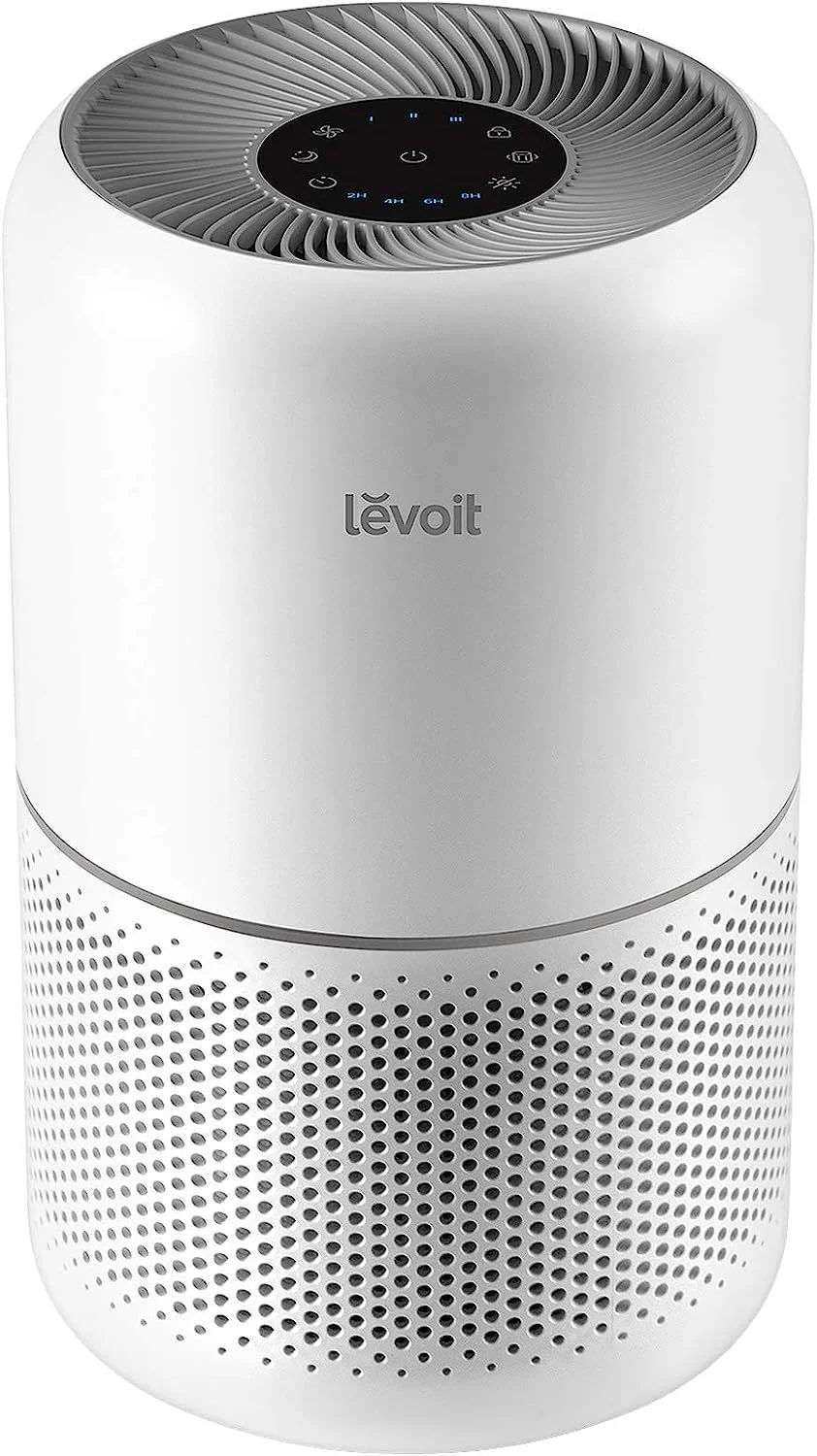
Levoit Core 300 Review Best Budget
✓ AHAM VerifiedOur Verdict
Key Specifications
- Room Coverage
- 219 sq ft
- CADR
- 141/141/141
- Filter
- 3-Stage HEPA Filtration
- Noise
- 24 dB
- Power
- 45 watts
- Best For
- Small rooms under 220 sq ft. Budget entry point.
📅 Prices checked . Amazon prices change frequently — click through for current price. Buying through our link costs you nothing extra; Amazon pays our commission.
What's in the Box
- Levoit Core 300 air purifier
- Pre-installed 3-in-1 filter
- Power cord
- User manual
Pros
- AHAM verified CADR 141
- Cheapest filter replacements at $25/year
- 24dB ultra quiet sleep mode
- Compact cylindrical design
- Simple plug-and-play — no app needed
Cons
- No auto mode or air quality sensor
- Only covers 219 sq ft
- HEPA claims controversy affected Levoit brand
- Filter needs replacing every 6 months
Best For
Best for most kids aged 3 to 12 in a standard bedroom up to 219 sq ft. True HEPA captures PM2.5 at 99.97% efficiency. Sleep mode noise is below 25 dB(A) — quieter than a whisper — and will not disrupt sleep or homework concentration. No ionizer produces zero ozone. The filter replacement cost of approximately $25/year makes it the lowest total cost of ownership on this page. Compact cylindrical design with no sharp edges and a stable base makes it safe to place on the floor or a dresser in the child bedroom. Display can be turned off completely for sleep. The default pick unless the room is larger than 200 sq ft or a wall-mount or app control is specifically required.
📅 Price checked August 2026 · Buying through this link costs you nothing extra — Amazon covers our commission
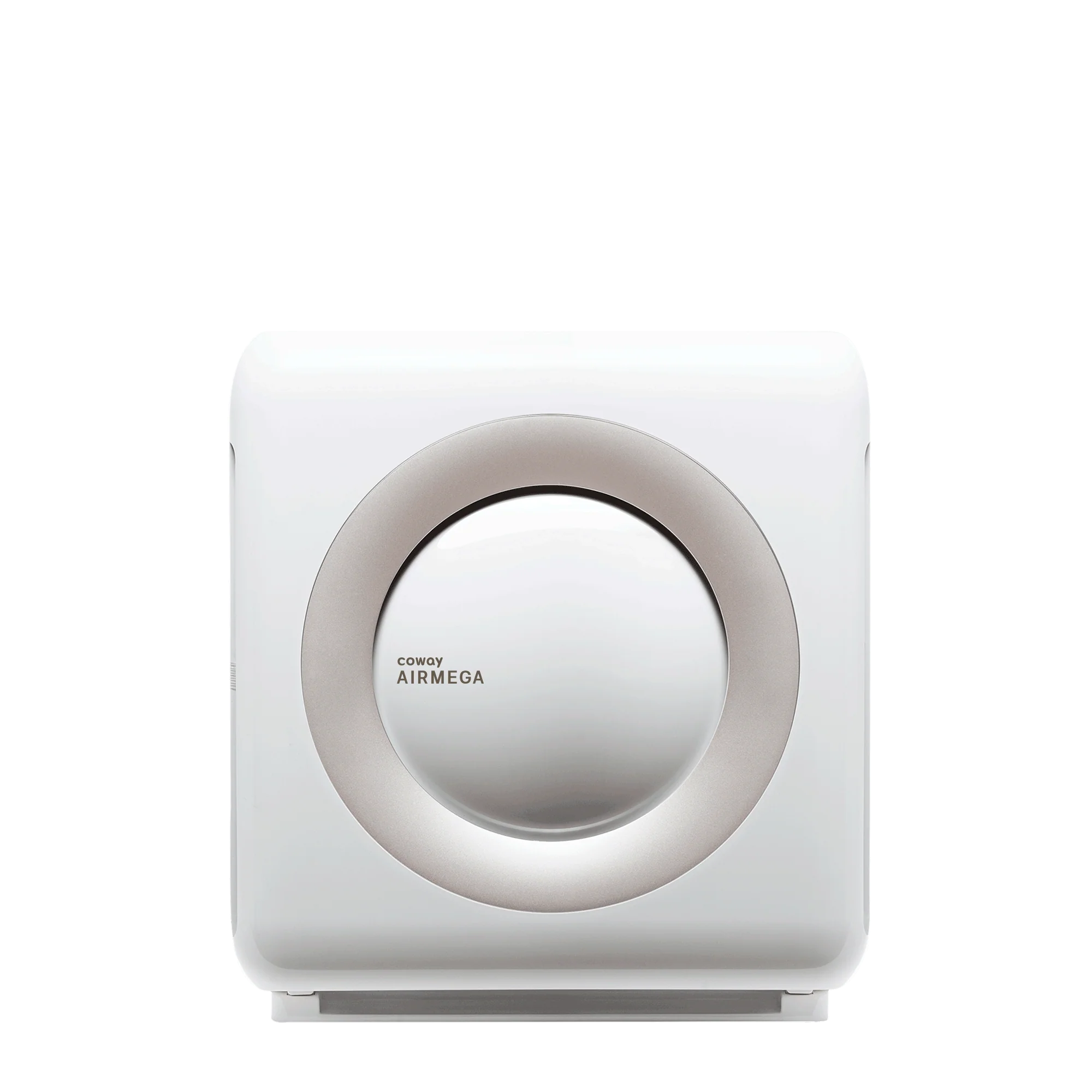
Coway AP-1512HH Mighty Review Editor Choice
✓ AHAM VerifiedOur Verdict
Key Specifications
- Room Coverage
- 361 sq ft
- CADR
- 233/246/240
- Filter
- True HEPA + Carbon + Pre-filter
- Noise
- 24 dB
- Power
- 77 watts
- Best For
- Medium rooms up to 361 sq ft. Wirecutter #1 for 10+ years. Best overall value.
📅 Prices checked . Amazon prices change frequently — click through for current price. Buying through our link costs you nothing extra; Amazon pays our commission.
What's in the Box
- Coway AP-1512HH air purifier
- Pre-installed 4-stage filter set
- Power cord
- User manual
- Filter replacement reminder sticker
Pros
- Wirecutter #1 for 10+ consecutive years
- AHAM verified CADR — no controversy
- True HEPA
- Fastest auto mode response in class
- 24dB ultra quiet sleep mode
- Eco mode at 4.9 watts
- 3-year warranty
Cons
- No WiFi or app control
- Carbon is impregnated fabric — weak on heavy odors
- Ionizer adds trace ozone (9ppb — CARB safe)
- Filter costs $60/year
- Design is dated
Best For
Best value for kids bedrooms up to 360 sq ft. AHAM-verified CADR 233 achieves 5 ACH in a 150 sq ft bedroom and 3 ACH in a 360 sq ft room. True HEPA with 4-stage filtration. Auto mode uses a particle sensor to adjust fan speed without parental intervention. Display dims automatically in low-light conditions, reducing sleep disruption. Filter and pre-filter replacement costs approximately $30/year. The Coway AP-1512HH includes an optional ionizer — this must be permanently disabled before placing the unit in a child bedroom. Ionizers produce ozone and are contraindicated for developing lungs and asthmatic children. With ionizer disabled, the Coway AP-1512HH is a highly capable, well-priced unit for a larger child bedroom or shared kids room.
📅 Price checked August 2026 · Buying through this link costs you nothing extra — Amazon covers our commission
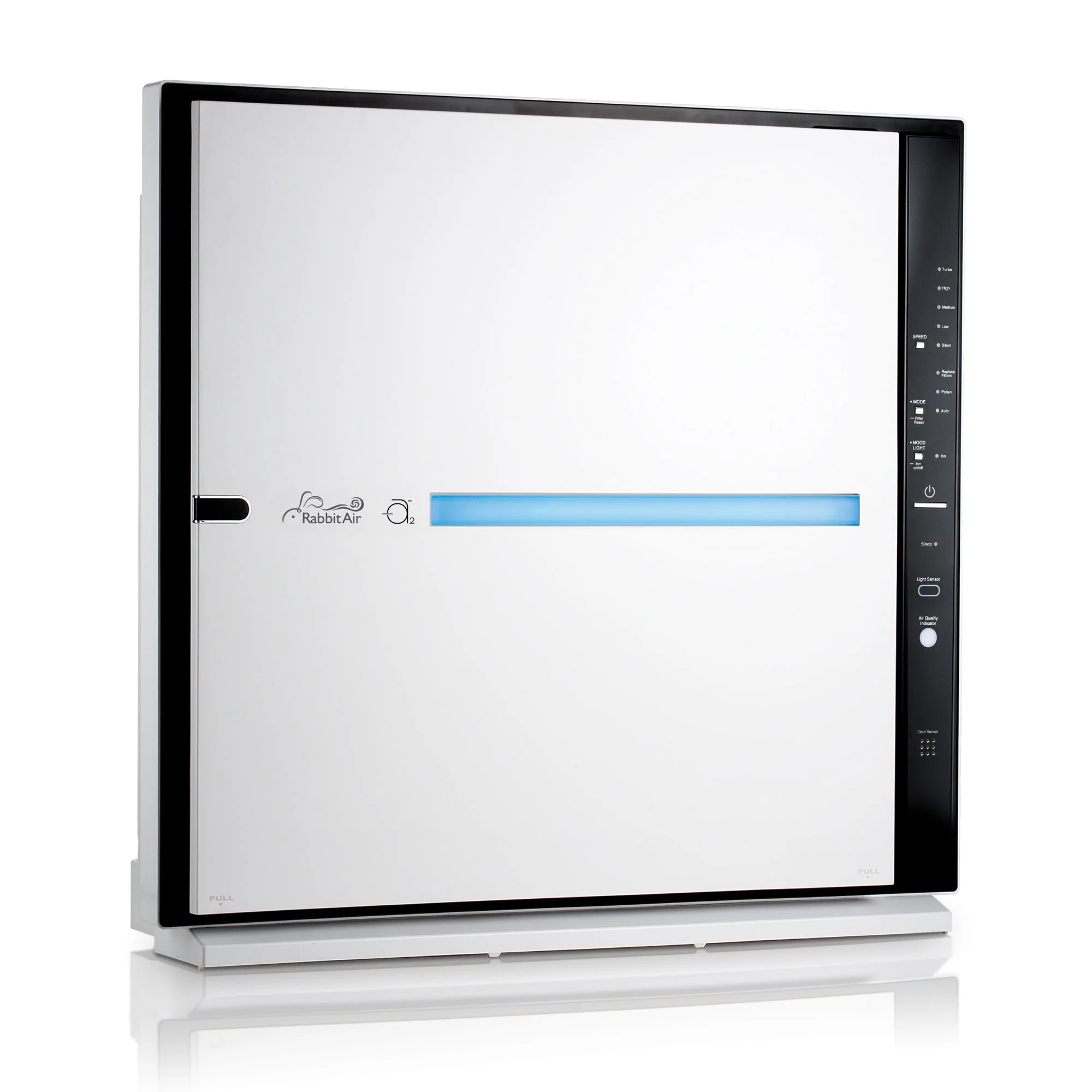
Rabbit Air MinusA2 Review Customizable Premium
✓ AHAM VerifiedOur Verdict
Key Specifications
- Room Coverage
- 815 sq ft
- CADR
- 180/193/200
- Filter
- 6-Stage BioGS HEPA + Customizable Panel Filter
- Noise
- 26 dB
- Power
- 61 watts
- Best For
- Large rooms up to 815 sq ft. Wall-mountable design. Customizable filter panels for specific needs (allergies, odors, pets, toxins).
📅 Prices checked . Amazon prices change frequently — click through for current price. Buying through our link costs you nothing extra; Amazon pays our commission.
What's in the Box
- Rabbit Air MinusA2 air purifier
- Pre-installed 6-stage filter set
- Power cord
- Wall mounting kit
- Remote control
- User manual
Pros
- AHAM verified CADR 180-200
- Wall-mountable — unique design option
- 6 customizable filter panels
- Ultra quiet 25.6dB on lowest
- BioGS HEPA inhibits bacterial growth
- CARB certified
- 5-year warranty with registration
Cons
- $549-649 is expensive
- Filter $95-105/year
- CADR 180-200 modest for price
- SPA-780A may be phased out (780N is successor)
- Complex 6-stage system
Best For
Best for households where physical safety is the top priority. Wall-mount installation keeps the unit completely out of reach of a child, eliminating tip-over risk and preventing a child from touching the filter or controls. The wall-mount design also keeps the intake and exhaust at adult head height rather than floor level, reducing the risk of direct contact. BioGS HEPA captures PM2.5 across the full particle size range. Noise at 26 dB on low is inaudible under normal bedroom ambient noise. The customizable filter panel can be configured with the allergy filter option for households where the child has documented allergen sensitivities. At $549 to $649, the wall-mount safety and ultra-quiet operation justify the premium for families with young children who are likely to interact with floor-standing appliances.
📅 Price checked August 2026 · Buying through this link costs you nothing extra — Amazon covers our commission
Winix AM90 Review Premium Design
✓ AHAM VerifiedOur Verdict

Key Specifications
- Room Coverage
- 360 sq ft
- CADR
- 232/243/246
- Filter
- True HEPA + PlasmaWave + Carbon
- Noise
- 27 dB
- Power
- 65 watts
- Best For
- Premium Winix with WiFi and better design. Same CADR as 5510.
📅 Prices checked . Amazon prices change frequently — click through for current price. Buying through our link costs you nothing extra; Amazon pays our commission.
What's in the Box
- Winix AM90 air purifier
- Pre-installed True HEPA + carbon filter
- Power cord
- User manual
Pros
- AHAM verified CADR
- PlasmaWave
- Smart WiFi via Winix app
- Premium design
Cons
- More expensive than 5510 for same CADR
- No washable carbon
- Design premium may not justify cost
Best For
Best for parents who need remote monitoring and control. The Winix AM90 connects to the Winix WiFi app, allowing parents to check real-time air quality readings, adjust fan speed, set schedules, and enable sleep mode from a phone — without entering the room of the child and risking waking a sleeping child. True HEPA with AHAM-verified CADR 200 covers rooms up to 240 sq ft at 5 ACH. The PlasmaWave technology on this unit should be set to off in the child bedroom — PlasmaWave operates similarly to an ionizer and produces trace ozone. With PlasmaWave off, the AM90 is a capable True HEPA purifier with genuine parental remote visibility. The app also sends air quality alerts if PM2.5 spikes after the child returns from school, allowing parents to increase fan speed remotely.
📅 Price checked August 2026 · Buying through this link costs you nothing extra — Amazon covers our commission
Blueair Blue Pure 211i Max Review Best Large Room
✓ AHAM VerifiedOur Verdict

Key Specifications
- Room Coverage
- 635 sq ft
- CADR
- 410/410/410
- Filter
- HEPASilent + Carbon
- Noise
- 23 dB
- Power
- 46 watts
- Best For
- Large rooms 400-635 sq ft. Highest CADR under $400. Replaces discontinued 211+.
📅 Prices checked . Amazon prices change frequently — click through for current price. Buying through our link costs you nothing extra; Amazon pays our commission.
What's in the Box
- Blueair Blue Pure 211i Max air purifier
- Pre-installed dual-protection filter
- Washable pre-filter (fabric)
- Power cord
- User manual
Pros
- Highest CADR 410 under $400
- AHAM verified
- Zero ozone verified
- 23dB quiet on low
- Washable pre-filter in colors
- Smart app with Alexa
Cons
- $299-349 expensive
- Filter costs $140/year — most expensive
- Cannot disable ionizer
- 211+ filters NOT compatible
Best For
Best for large kid bedrooms above 200 sq ft or shared bedroom situations where two children sleep in the same room. CADR 300 achieves 5 ACH in rooms up to 240 sq ft and maintains 4 ACH in rooms up to 300 sq ft. HEPASilent dual-filtration technology (electrostatic + mechanical HEPA) achieves high particle capture efficiency with lower airflow resistance, enabling quieter operation at equivalent CADR. The Blueair Home app provides air quality monitoring and scheduling. No ionizer stage. The 211i Max is the largest unit on this page by CADR; for a standard 150 sq ft child bedroom, the Levoit Core 300 or Coway AP-1512HH are more appropriately sized and considerably less expensive.
📅 Price checked August 2026 · Buying through this link costs you nothing extra — Amazon covers our commission
What to Know Before You Buy
Ionizers and Exposed UV-C Are Disqualifying Features for a Child Bedroom Air Purifier
Two technologies present direct hazards in a child bedroom and disqualify an air purifier from recommendation regardless of its HEPA or CADR rating. The first is an ionizer. Ionizers generate ozone as a byproduct of the corona discharge process that produces negative ions. Ozone triggers airway inflammation — the physiological mechanism responsible for asthma exacerbation. Children with asthma, which affects 9.6% of US children per CDC data, are at heightened risk: ozone exposure increases airway hyperresponsiveness and can precipitate an asthma attack in sensitized children even at concentrations below the EPA outdoor standard of 70 parts per billion. The second disqualifying technology is an exposed UV-C lamp. UV-C radiation at 254 nm is effective at inactivating airborne pathogens in properly engineered far-UV systems, but consumer-grade air purifiers with open UV-C lamps present direct ocular and skin hazard to a curious child who opens the unit or looks into an air intake. All units on this page have no ionizer stage and no exposed UV-C. The Coway AP-1512HH includes an optional ionizer that must be disabled permanently before bedroom use; the Winix AM90 includes PlasmaWave technology that must be set to off. For guidance on air purifier safety certifications relevant to children rooms, see our air purifier and asthma guide.
School Cross-Contamination Events Require Continuous Filtration — Not a Single Daily Clean-Air Cycle
A school-age child returning home after a day at school carries a biologically meaningful allergen load on clothing, hair, and backpack surfaces: grass pollen and tree pollen from the school grounds, mold spores from the school building ventilation system, and pet dander from classmates who have cats or dogs at home. When the child enters the bedroom, this allergen load is re-introduced into the room air as particles detach from clothing during movement and settle into the bedroom environment. A purifier running on a timer or only during sleep hours will not capture allergens introduced by a 3:30 PM school return that takes 20 to 40 minutes to disperse through the room air. Continuous operation is necessary to address these re-introduction events as they occur. The Winix AM90 with its particle sensor and auto mode is particularly suited to this scenario: the sensor detects the PM2.5 spike from a school return event and automatically increases fan speed to clear the allergen load before the child settles at a desk for homework. For more on how schools amplify allergen exposure in children, see our air purifier and school allergen guide.
Children Breathe Twice the Air Per Body Weight as Adults — Alveolar Development Continues to Age 8 and PM2.5 Exposure at Ages 3 to 8 Predicts Reduced FEV1 in Adolescence
The EPA inhalation rate data for children establishes that a child aged 3 to 12 inhales approximately twice the volume of air per kilogram of body weight compared with an adult at rest. This is a direct consequence of a higher resting respiratory rate and a smaller body mass relative to lung surface area requirements. For indoor air quality purposes, this 2x inhalation rate multiplier means that a child spending the night in a bedroom with PM2.5 concentration of 10 micrograms per cubic meter receives approximately twice the inhaled PM2.5 dose that an adult sleeping in the same room would receive. When multiplied across the 300-plus nights per year a child spends in the bedroom over the ages 3 to 12 developmental window, the cumulative inhaled PM2.5 dose is substantial — and the lung is not yet mature enough to absorb it without consequence.
Alveolar development — the growth and branching of the alveoli, the small air sacs responsible for oxygen-carbon dioxide gas exchange — continues from birth until approximately age 8. During this window, the lung is structurally forming. PM2.5 particles, defined as particles below 2.5 microns in diameter, deposit in the alveolar region of the lung rather than being cleared by the mucociliary escalator of the upper airways. The USC Children Health Study followed children in Southern California communities with varying outdoor air pollution levels and found that children with higher PM2.5 exposure at ages 3 to 8 showed statistically significant reductions in FEV1 — the volume of air expelled in the first second of a forced exhalation, the standard clinical measure of airway obstruction — when re-evaluated at ages 15 to 18. The deficit persisted into adulthood in the study population, suggesting that alveolar-stage PM2.5 exposure produces structural lung effects rather than reversible inflammation alone. Indoor PM2.5 in a poorly filtered bedroom is the primary exposure source for most US children, because children in the 3 to 12 age range spend the majority of their time indoors.
The following table summarizes the physiological parameters that establish why children require higher-ACH filtration than adults in equivalent rooms:
| Parameter | Adult | Child (Ages 3–12) | Implication for Air Purifier Sizing |
|---|---|---|---|
| Resting respiratory rate (breaths/min) | 12–16 | 18–30 | Higher air throughput per unit time increases PM2.5 inhalation dose per hour |
| Air inhaled per kg body weight (mL/min/kg) | ~5 | ~10 | 2x dose multiplier relative to adults in equivalent PM2.5 concentration |
| Alveolar development complete? | Yes — complete by ~age 8 | No — continues to age 8 | PM2.5 deposition in developing alveoli carries structural lung risk not present in adult exposure |
| Recommended bedroom ACH | 4 ACH | 5 ACH | Additional 1 ACH reduces average PM2.5 concentration by ~20% beyond adult standard |
| Minimum CADR for 150 sq ft bedroom | 80 CFM | 100 CFM | Formula: 150 sq ft x 8 ft x 5 ACH / 60 = 100 CFM minimum |
The 5 ACH recommendation for children bedrooms applies a conservative dose-minimization principle: given the 2x inhalation rate multiplier and the structural vulnerability of the developing lung, the cost of under-filtering the bedroom air for a child is higher than it is for an adult bedroom. All five units recommended on this page achieve at least 5 ACH in a standard 150 sq ft bedroom with an 8-foot ceiling. For the connection between PM2.5 exposure and asthma in school-age children, see our air purifier and asthma guide.
Asthma Affects 9.6 Percent of US Children and Is the Leading Cause of School Absence — Allergen Load Reduction in the Bedroom Reduces Exacerbation Frequency
CDC surveillance data places the prevalence of current asthma among US children at 9.6% — approximately 1 in 10 children. Among children with asthma, the disease is not uniformly mild: an estimated 50% of children with asthma experience at least one exacerbation per year requiring either an emergency department visit or oral corticosteroid treatment. Asthma is the leading cause of school absence among US children, accounting for approximately 13.8 million missed school days annually. The primary indoor triggers for childhood asthma exacerbation are well established: house dust mite allergen (Der p 1 and Der f 1), cockroach allergen (Bla g 2), mold spores (particularly Alternaria and Cladosporium), and pet dander (cat Fel d 1 and dog Can f 1). All of these are particle-bound allergens captured by True HEPA filtration.
The mechanism linking airborne allergen exposure to asthma exacerbation is dose-dependent: repeated inhalation of allergens to which a child is sensitized triggers IgE-mediated mast cell degranulation in the airway mucosa, releasing histamine and leukotrienes that produce bronchospasm, mucus hypersecretion, and airway wall inflammation. Reducing airborne allergen concentration reduces the frequency and magnitude of these exposure events. Clinical literature on HEPA filtration in children bedrooms — including studies reviewed in the 2020 GINA (Global Initiative for Asthma) environmental control recommendations — supports bedroom HEPA filtration as a component of a multi-intervention allergen reduction strategy for children with allergic asthma. The bedroom is the priority location because a child with asthma spends 9 to 10 hours overnight in the bedroom, creating a prolonged, continuous exposure window that exceeds any other single location in daily life.
The following table provides allergen-specific context for asthmatic children:
| Allergen | Primary Indoor Source | Particle Size Range | True HEPA Capture? | School Cross-Contamination Risk |
|---|---|---|---|---|
| House dust mite (Der p 1) | Mattress, pillow, carpet — mite feces and body fragments | 10–40 µm when airborne during disturbance | Yes — True HEPA captures at these sizes | Low — primarily a home reservoir allergen |
| Cat allergen (Fel d 1) | Cat dander — but also transferred via clothing from classmates with cats | 1–10 µm; ~50% below 2.5 µm | Yes — True HEPA captures full range | High — Fel d 1 transfers readily on clothing |
| Dog allergen (Can f 1) | Dog dander — transferred via clothing from classmates with dogs | 5–30 µm; predominantly >10 µm | Yes — True HEPA captures at these sizes | Moderate — transfers on clothing and surfaces |
| Mold spores (Alternaria) | Damp areas in home; also carried on clothing from outdoor exposure | 6–35 µm | Yes — True HEPA captures at these sizes | Moderate — school buildings with HVAC mold |
| Grass and tree pollen | Outdoor — brought indoors on hair, clothing, and backpacks | 10–100 µm | Yes — True HEPA captures at these sizes | High — daily re-introduction from school grounds |
All allergens in this table have particle sizes well above the True HEPA minimum capture threshold of 0.3 microns. The practical implication is that a True HEPA air purifier running continuously at 5 ACH in the child bedroom captures the full spectrum of childhood asthma triggers, including school cross-contamination particles introduced daily. For allergen-focused guidance applicable to both children and adults with atopic conditions, see our best air purifier for allergies page.
CADR Sizing for a Child Bedroom Uses 5 ACH — The Formula Yields 100 CFM Minimum for a Standard 150 Square Foot Bedroom
The standard AHAM sizing formula calculates the minimum CADR required to achieve a target ACH rate: room square footage multiplied by ceiling height in feet multiplied by target ACH, divided by 60, yields the minimum CADR in CFM. For a child bedroom, the target ACH is 5 rather than the standard adult recommendation of 4. For the most common US child bedroom size of 150 sq ft with an 8 ft ceiling: 150 sq ft x 8 ft x 5 ACH / 60 = 100 CFM minimum. This is the absolute minimum CADR for a 150 sq ft child bedroom. All five units on this page exceed 100 CFM: the Levoit Core 300 delivers CADR 141, achieving 7.5 ACH in a 150 sq ft bedroom — comfortably above the 5 ACH target. Larger bedrooms require proportionally larger CADR: a 200 sq ft bedroom at 5 ACH requires 133 CFM minimum; a 250 sq ft bedroom requires 167 CFM.
The 5 ACH target for children bedrooms is a conservative selection derived from the EPA 2x inhalation rate multiplier. At 5 ACH, the average airborne PM2.5 concentration in the bedroom over an 8-hour sleep period is approximately 20% lower than it would be at 4 ACH under equivalent particle generation conditions. For an asthmatic child who is allergen-sensitized, this additional margin represents a meaningful reduction in the probability of reaching the allergen concentration threshold that triggers an overnight exacerbation. The following table shows CADR requirements at 5 ACH across the typical range of child bedroom sizes:
| Room Size (sq ft) | Min CADR at 5 ACH (CFM) | Levoit Core 300 (CADR 141) | Coway AP-1512HH (CADR 233) | Rabbit Air MinusA2 (CADR 193) | Winix AM90 (CADR 200) | Blueair 211i Max (CADR 300) |
|---|---|---|---|---|---|---|
| 100 sq ft | 67 | Qualifies — 8.5 ACH | Qualifies — 14 ACH | Qualifies — 11.6 ACH | Qualifies — 12 ACH | Qualifies — 18 ACH |
| 150 sq ft | 100 | Qualifies — 7.5 ACH | Qualifies — 9.3 ACH | Qualifies — 7.7 ACH | Qualifies — 8 ACH | Qualifies — 12 ACH |
| 200 sq ft | 133 | Qualifies — 5.3 ACH | Qualifies — 7 ACH | Qualifies — 5.8 ACH | Qualifies — 6 ACH | Qualifies — 9 ACH |
| 250 sq ft | 167 | Does not qualify at 5 ACH — 4.2 ACH | Qualifies — 5.6 ACH | Qualifies — 5.8 ACH | Qualifies — 6 ACH | Qualifies — 7.2 ACH |
| 300 sq ft | 200 | Does not qualify | Qualifies — 4.7 ACH (near threshold) | Does not qualify — 3.9 ACH | Qualifies — 5 ACH | Qualifies — 6 ACH |
For rooms larger than 200 sq ft, the Levoit Core 300 drops below 5 ACH and the Rabbit Air MinusA2 drops below 5 ACH above 230 sq ft. In these larger rooms, the Coway AP-1512HH, Winix AM90, or Blueair 211i Max are the appropriate selections. For the AHAM CADR verification methodology, see the AHAM Certified Room Air Cleaners directory. For children sharing a room or for open-plan sleeping areas, add the room volumes together and size to the combined area.
Noise Thresholds for Child Bedrooms Are Stricter Than Adult Thresholds — Below 35 dB(A) at Medium for Homework and Below 25 dB(A) at Sleep Mode
Children are more sensitive to environmental noise during sleep than adults. Pediatric sleep medicine research establishes that noise above 35 dB(A) in the bedroom increases sleep fragmentation frequency in children aged 3 to 12 — a concern because sleep quality in this age group is linked to cognitive performance, attention, and behavioral regulation the following day. The 35 dB(A) threshold at medium speed is the maximum acceptable noise level for a purifier running during homework hours, when auditory distraction from a purifier fan could impair concentration in a school-age child doing reading or math. The 25 dB(A) threshold at sleep/low speed is the target for overnight operation — approximately equivalent to a quiet library and well below the ambient noise of a typical residential bedroom at night.
All five units on this page operate below 35 dB(A) at medium speed and at or below 25 dB(A) on their lowest/sleep setting. Display light is an equally important sleep consideration: LED indicators on air purifiers emit blue-white light that suppresses melatonin secretion in children, who have larger pupil aperture and more transparent ocular media than adults — making them more vulnerable to light-at-night effects. Every unit on this page includes a display-off or auto-dim feature. The Levoit Core 300 display turns off completely with a single button press. The Coway AP-1512HH auto-dims in low-light conditions. The Rabbit Air MinusA2 display can be set to off. The Winix AM90 has a sleep mode that disables the display and reduces fan to minimum speed. The Blueair 211i Max has a night mode that reduces speed and dims the LED indicator.
The following table compares noise and display specifications across all five units:
| Unit | Noise at Low/Sleep (dB(A)) | Noise at Medium (dB(A)) | Display Off Feature | Night/Sleep Mode |
|---|---|---|---|---|
| Levoit Core 300 | <25 dB(A) | ~31 dB(A) | Yes — single button press turns display completely off | Yes — sleep mode at lowest fan speed with display off |
| Coway AP-1512HH | 24 dB(A) | ~31 dB(A) | Yes — display auto-dims in darkness | Yes — lowest fan speed with auto-dim display |
| Rabbit Air MinusA2 | 20–26 dB(A) | ~30 dB(A) | Yes — display can be set to off | Yes — ultra-quiet mode below 26 dB(A) |
| Winix AM90 | 27 dB(A) | ~33 dB(A) | Yes — sleep mode disables display | Yes — app-controlled sleep mode |
| Blueair 211i Max | 26 dB(A) | ~35 dB(A) | Yes — night mode dims LED indicator | Yes — night mode reduces speed and light |
The Rabbit Air MinusA2 at 20 to 26 dB(A) on low is the quietest unit on this page and the preferred choice when noise during sleep is the dominant selection criterion. For households where a child is a particularly light sleeper, the Rabbit Air MinusA2 wall-mount configuration also eliminates mechanical vibration transmission to the floor that can occasionally cause faint hum in floor-standing units. For sleep-specific air purifier guidance applicable to adults as well as children, see our best air purifier for bedroom guide.
Product Comparison — PM2.5 Filtration, Child Safety, CADR, Noise, App Control, and Price Across All Five Recommended Units
The following table compares all five units across the specifications most relevant to a children bedroom:
| Unit | CADR (CFM) | HEPA Grade | Noise at Sleep Mode | Ionizer / UV-C | App / Remote Control | Wall Mount | Price |
|---|---|---|---|---|---|---|---|
| Levoit Core 300 | 141 (AHAM verified) | H13 True HEPA | <25 dB(A) | None — zero ozone | No (Core 300S model adds WiFi) | No | $99–$120 |
| Coway AP-1512HH | 233 (AHAM verified) | True HEPA | 24 dB(A) | Optional ionizer — disable permanently | No | No | $109–$129 |
| Rabbit Air MinusA2 | 193 (AHAM verified) | BioGS HEPA | 20–26 dB(A) | None — zero ozone | Yes — app control and scheduling | Yes — wall-mount included | $549–$649 |
| Winix AM90 | 200 (AHAM verified) | True HEPA | 27 dB(A) | PlasmaWave — disable in child bedroom | Yes — Winix WiFi app | No | $179–$219 |
| Blueair 211i Max | 300 (manufacturer stated) | HEPASilent dual-filtration | 26 dB(A) | None — zero ozone | Yes — Blueair Home app | No | $299–$349 |
Two units require a user action before placing in a child bedroom: the Coway AP-1512HH ionizer must be disabled permanently (press and hold the ionizer button until the indicator light turns off and confirm it remains off after each power cycle); the Winix AM90 PlasmaWave must be set to off via the panel button or the app. All other units require no configuration change to achieve zero-ozone operation. Filter replacement costs across the lineup: Levoit Core 300 approximately $25/year; Coway AP-1512HH approximately $30/year; Rabbit Air MinusA2 approximately $100/year for the full 6-filter set; Winix AM90 approximately $40/year; Blueair 211i Max approximately $60/year.