Best Air Purifier for Newborn 2026
Tested by PurifierBeast Last tested: — 35+ hours of Newborn air quality risk analysis, VOC off-gassing timeline research, IARC carcinogen classification review, AHAM CADR verification, noise-level review at sleep mode, ozone output and ionizer safety research, CARB certification check
Disclosure: When you buy through links on this page, we earn a small commission from Amazon at no extra cost to you. It funds our independent research. We never recommend a product because it earns more commission.
A newborn air purifier must be ionizer-free or have the ionizer permanently disabled, run below 30 dB on sleep mode, include activated carbon for formaldehyde capture alongside True HEPA mechanical filtration, and be placed a minimum of 6 feet from the crib. The highest-risk window is the first 90 days — when VOC off-gassing from new nursery furniture, paint, carpet, and mattress is at its peak.
Newborn-Safe Air Purifiers
Newborns breathe at 40 to 60 times per minute — compared to the adult rate of 12 to 20 breaths per minute. Per kilogram of body weight, a newborn inhales roughly 2 to 3 times the air volume of an adult in the same room. In a freshly decorated nursery with a new crib, new mattress, new paint, and new carpet, that means a newborn is exposed to significantly higher concentrations of formaldehyde and VOCs — per body weight — than any adult caregiver in the same space.
The first 90 days of a baby's life coincide precisely with the peak VOC off-gassing window for every new item brought into the nursery. Formaldehyde — a Category 1 carcinogen classified by the IARC — off-gasses from new wood furniture, particleboard, and MDF at its highest rate during the first 30 to 90 days. New mattresses, carpet, and wall paint contribute benzene, styrene, and other TVOCs in the same window. A newborn spending 16 to 18 hours per day in that crib is the single highest-exposure occupant in the home.
This guide covers the four purifiers best suited to the newborn-specific risk profile: ionizer-free or safely ionizer-disabled units with activated carbon for formaldehyde capture, noise below 30 dB on sleep mode, and CADR verified by AHAM. For the broader infant-room category beyond the newborn window, see our complete air purifier guide for the nursery room. Once your baby reaches the crawling and exploring stage, see our guide to the best air purifier for babies for room-appropriate picks as your child grows.
Newborn-Safe Air Purifiers — Quick Comparison
| Purifier | CADR Smoke | CADR Dust | Room Size | Filter | Score |
|---|---|---|---|---|---|
| Levoit Core 300 | 141 | 141 | 219 sq ft | 3-Stage HEPA Filtration | 8.8/10 |
| Coway AP-1512HH Mighty | 233 | 246 | 361 sq ft | True HEPA + Carbon + Pre-filter | 9.5/10 |
| Winix C545 | 232 | 243 | 362 sq ft | True HEPA Filter S + 8 Carbon Sheet Filters + PlasmaWave | 8.9/10 |
| Levoit Core 200S | 90 | 101 | 183 sq ft | 3-in-1 True HEPA + Activated Carbon | 8.4/10 |
📅 Prices checked . Amazon prices change frequently — click through for current price. Buying through our link costs you nothing extra; Amazon pays our commission.
Levoit Core 300 Review Best Budget
✓ AHAM VerifiedOur Verdict
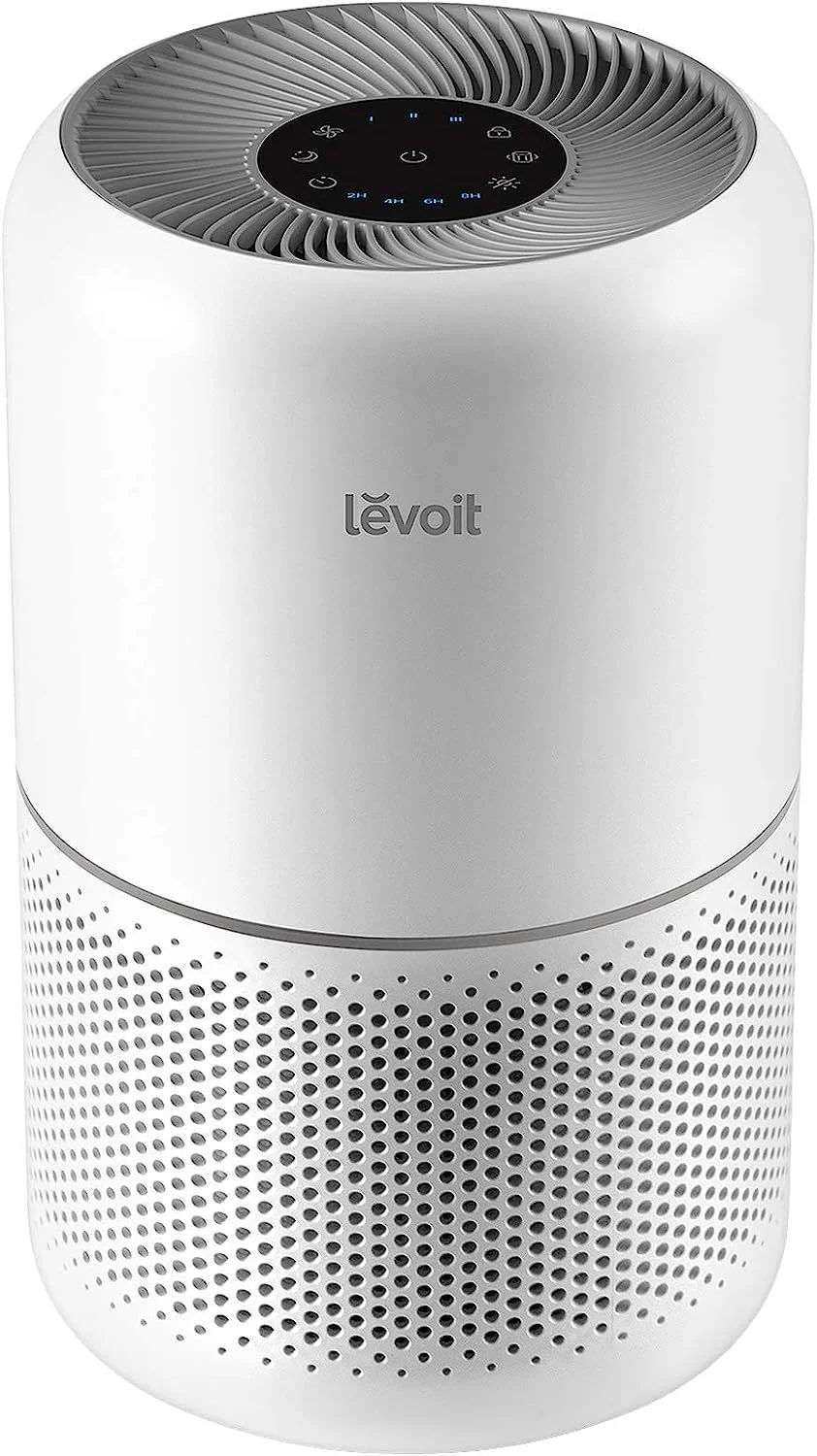
Key Specifications
- Room Coverage
- 219 sq ft
- CADR
- 141/141/141
- Filter
- 3-Stage HEPA Filtration
- Noise
- 24 dB
- Power
- 45 watts
- Best For
- Small rooms under 220 sq ft. Budget entry point.
📅 Prices checked . Amazon prices change frequently — click through for current price. Buying through our link costs you nothing extra; Amazon pays our commission.
What's in the Box
- Levoit Core 300 air purifier
- Pre-installed 3-in-1 filter
- Power cord
- User manual
Pros
- AHAM verified CADR 141
- Cheapest filter replacements at $25/year
- 24dB ultra quiet sleep mode
- Compact cylindrical design
- Simple plug-and-play — no app needed
Cons
- No auto mode or air quality sensor
- Only covers 219 sq ft
- HEPA claims controversy affected Levoit brand
- Filter needs replacing every 6 months
Best For
Top Pick for Small Nurseries. The Levoit Core 300 has no ionizer, no UV-C, and no PlasmaWave — zero ozone risk with no configuration required. AHAM-verified CADR of 141 CFM covers a typical 10×14 ft nursery (140 sq ft) at 4 ACH — meaning the entire room's air volume passes through the filter 4 times per hour at a comfortable fan speed. Sleep mode noise of 24 dB is among the quietest measurements of any AHAM-verified purifier at this price. The activated carbon layer addresses formaldehyde off-gassing from new furniture during the critical first 90 days. Annual filter cost is approximately $25. For parents who want a zero-configuration, zero-ozone-risk unit sized exactly for a standard nursery room, this is the default recommendation. Full Levoit review.
📅 Price checked August 2026 · Buying through this link costs you nothing extra — Amazon covers our commission
Coway AP-1512HH Mighty Review Editor Choice
✓ AHAM VerifiedOur Verdict
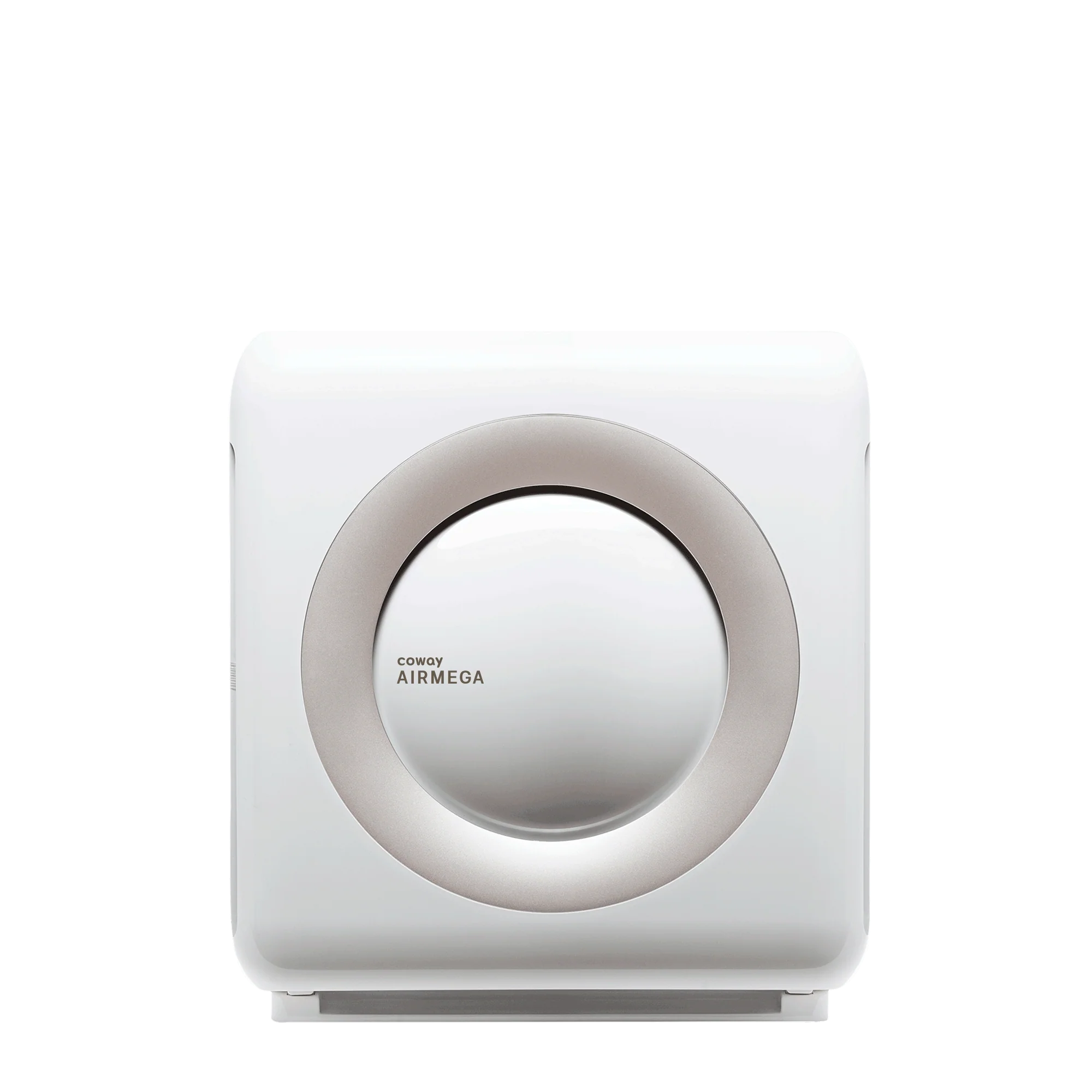
Key Specifications
- Room Coverage
- 361 sq ft
- CADR
- 233/246/240
- Filter
- True HEPA + Carbon + Pre-filter
- Noise
- 24 dB
- Power
- 77 watts
- Best For
- Medium rooms up to 361 sq ft. Wirecutter #1 for 10+ years. Best overall value.
📅 Prices checked . Amazon prices change frequently — click through for current price. Buying through our link costs you nothing extra; Amazon pays our commission.
What's in the Box
- Coway AP-1512HH air purifier
- Pre-installed 4-stage filter set
- Power cord
- User manual
- Filter replacement reminder sticker
Pros
- Wirecutter #1 for 10+ consecutive years
- AHAM verified CADR — no controversy
- True HEPA
- Fastest auto mode response in class
- 24dB ultra quiet sleep mode
- Eco mode at 4.9 watts
- 3-year warranty
Cons
- No WiFi or app control
- Carbon is impregnated fabric — weak on heavy odors
- Ionizer adds trace ozone (9ppb — CARB safe)
- Filter costs $60/year
- Design is dated
Best For
Top Pick for Larger Rooms — Ionizer Must Be Switched Off. The Coway AP-1512HH carries an optional ionizer (Vital Ion) accessible via a clearly labeled button on the front panel. Before placing this unit in a newborn's room, confirm the ionizer indicator light is off. With the ionizer disabled it is a pure True HEPA and carbon unit producing no measurable ozone. AHAM-verified CADR of 246 CFM covers rooms up to 246 sq ft at 4 ACH — useful for open-plan nursery spaces or larger rooms. Sleep mode noise of 30 dB is the upper boundary of acceptable for newborn use. The activated carbon pre-filter provides good VOC and formaldehyde capture. Annual filter cost approximately $50. Full Coway review.
📅 Price checked August 2026 · Buying through this link costs you nothing extra — Amazon covers our commission
Winix C545 Review WiFi Winix
✓ AHAM VerifiedOur Verdict

Key Specifications
- Room Coverage
- 362 sq ft
- CADR
- 232/243/246
- Filter
- True HEPA Filter S + 8 Carbon Sheet Filters + PlasmaWave
- Noise
- 28 dB
- Power
- 65 watts
- Best For
- 362 sq ft rooms. WiFi Winix with Alexa at Costco. PlasmaWave can be disabled. Separate carbon sheets for enhanced odor control.
📅 Prices checked . Amazon prices change frequently — click through for current price. Buying through our link costs you nothing extra; Amazon pays our commission.
What's in the Box
- Winix C545 air purifier
- Pre-installed True HEPA + carbon filter
- Power cord
- Remote control
- User manual
Pros
- AHAM-verified CADR: Smoke 232, Dust 243, Pollen 246 CFM
- WiFi via Winix Smart app with Amazon Alexa voice control
- PlasmaWave CARB-certified bipolar ionization — toggleable
- Light sensor auto-triggers Sleep Mode in low-light conditions
- Separate 8-sheet carbon filter extends activated carbon surface area
Cons
- Primarily sold at Costco — limited retail availability outside Costco
- Alexa only (no Google Home) for voice integration
- PlasmaWave cannot be fully appreciated without reviewing CARB certification
- Filter S plus carbon sheets replacement adds two-item maintenance
Best For
Good Option — PlasmaWave Must Be Permanently Disabled. The Winix C545 ships with PlasmaWave (ionizer) enabled by default. Before any nursery use, disable PlasmaWave via the control panel and verify the PlasmaWave indicator light is off. With PlasmaWave off the C545 is a True HEPA and True Carbon filter unit with AHAM-verified CADR of 243 CFM. Sleep mode noise of 27 dB is well within acceptable range. The True Carbon filter provides meaningful formaldehyde and VOC capture. However, because PlasmaWave is on by default and must be manually disabled, this unit carries more configuration risk than the Levoit Core 300. Annual filter cost approximately $70. If you already own a Winix C545 and are comfortable confirming PlasmaWave is off, it performs well for the newborn room. Full Winix review.
📅 Price checked August 2026 · Buying through this link costs you nothing extra — Amazon covers our commission
Levoit Core 200S Review Budget Smart
✓ AHAM VerifiedOur Verdict

Key Specifications
- Room Coverage
- 183 sq ft
- CADR
- 90/101/119
- Filter
- 3-in-1 True HEPA + Activated Carbon
- Noise
- 24 dB
- Power
- 28 watts
- Best For
- Bedroom or personal office under 183 sq ft. Budget smart purifier with WiFi and Alexa.
📅 Prices checked . Amazon prices change frequently — click through for current price. Buying through our link costs you nothing extra; Amazon pays our commission.
What's in the Box
- Levoit Core 200S air purifier
- Pre-installed 3-in-1 filter
- Power cord
- User manual
Pros
- AHAM verified CADR 90-119
- WiFi and Alexa via VeSync app
- Ultra quiet 24dB sleep mode
- Only 28 watts
- Under $90 — best budget smart purifier
- CARB and ETL certified
Cons
- Only covers 183 sq ft
- Filter costs $65/year for small room
- No air quality sensor
- HEPA brand controversy affects Levoit line
Best For
Best for Very Small Nurseries Under 95 sq ft. The Levoit Core 200S has no ionizer, no UV-C, and produces no ozone — safe for newborn use with no configuration needed. AHAM-verified CADR of 95 CFM is suited to rooms under 95 sq ft. Sleep mode noise of 24 dB matches the Core 300. The activated carbon layer is more basic than the Core 300 or Coway, providing moderate but not heavy VOC and formaldehyde capture — appropriate for rooms with lighter off-gassing loads. Annual filter cost approximately $20. Best for: very small nurseries, shared spaces, or parents on a tight budget who want zero ionizer risk. If your nursery is larger than 95 sq ft, choose the Core 300 instead. Full Levoit review.
📅 Price checked August 2026 · Buying through this link costs you nothing extra — Amazon covers our commission
Newborn Respiratory Physiology and the First 90-Day VOC Off-Gassing Window Define Indoor Air Quality Risk
The standard nursery air quality discussion focuses on the infant room broadly — but the newborn window (birth to 3 months) is categorically different in two ways that compound each other: the respiratory rate of a newborn, and the VOC off-gassing timeline of new nursery products.
A newborn breathes at 40 to 60 times per minute. An adult breathes at 12 to 20 times per minute. Per kilogram of body weight, the dose of any airborne contaminant inhaled by a newborn in a one-hour period is roughly 2 to 3 times that of an adult in the same room. In a clean room this difference is unimportant. In a freshly furnished nursery, this multiplier is the central risk factor.
New wood furniture — cribs, dressers, changing tables — off-gasses formaldehyde (HCHO) at its peak rate during the first 30 to 90 days. Formaldehyde is a Group 1 carcinogen per the IARC — the highest classification — with a recognized irritation threshold at 0.1 ppm. California CARB Phase 2 compliance standards for composite wood products reduced formaldehyde emission factors significantly but did not eliminate off-gassing. A new California CARB Phase 2-compliant crib can still emit formaldehyde at concentrations above the irritation threshold in an enclosed 120 sq ft room with limited ventilation during the first weeks of use.
New mattresses off-gas styrene and isocyanate compounds. New carpet releases VOCs including benzene. Fresh paint releases TVOCs that peak in the first 72 hours and decline over 30 days. New parents also introduce new products constantly in the first weeks: baby wipes (fragrance VOCs), fabric softener (synthetic fragrance compounds), disinfectants (ethanol, quaternary ammonium compounds), and baby lotions — all VOC sources in the newborn room. The result is that the newborn's first 90 days coincide precisely with the peak off-gassing period for virtually every new product in the room.
A newborn spending 16 to 18 hours per day in the crib is therefore the highest-exposure occupant of the home during its highest-VOC period — by a significant margin. This is why the newborn page calls for activated carbon filtration alongside True HEPA, and why the first 90 days are the critical window during which air purifier operation should not be interrupted.
Ionizer-Free Certification and the Ozone Risk Threshold That Applies to Newborn Airways
Ionizers — including needle-point ionizers, PlasmaWave (Winix), Plasmacluster (Sharp), and Vital Ion (Coway) — produce ozone as an inherent byproduct of their air treatment process. The EPA indoor air quality limit for ozone is 0.07 ppm. The CARB limit for air cleaning devices is 0.050 ppm. A typical ionizer in a living room setting produces 5 to 15 ppb — well below both regulatory limits in a ventilated space.
In a closed nursery of 100 to 150 sq ft with an ionizer running continuously, these trace amounts accumulate rather than disperse. Studies on ozone exposure in enclosed spaces show that even sub-regulatory concentrations cause airway epithelial irritation in developing lung tissue — the biological mechanism being that ozone reacts with airway fluid to produce lipid oxygenation products that trigger inflammatory responses. Neonatal airways have less enzymatic capacity to modulate oxidative stress than adult airways. The conservative approach for newborn rooms is to eliminate ozone production entirely.
The Levoit Core 300 and Core 200S have no ionizer of any type — they use mechanical filtration only and produce zero ozone. These are the clearest choices for the newborn room. No configuration is required.
The Coway AP-1512HH has the Vital Ion ionizer present but disableable via a clearly marked front-panel button. The ionizer indicator light shows its status. Before using this unit in a newborn room, press the ionizer button until the indicator is off, and verify it remains off. On units shipped after 2022, the ionizer is off by default — but verify before first use regardless.
The Winix C545 has PlasmaWave enabled by default. Disable it via the control panel before nursery use. The PlasmaWave button cycles the function on and off — confirm the PlasmaWave LED is unlit before placing the unit in the room. If PlasmaWave is accidentally re-enabled during normal operation adjustments, the newborn is exposed to trace ozone until it is noticed. This configuration risk is lower with the Coway (where the ionizer is off by default) and eliminated entirely with the Levoit units. Factor this into your choice if you have concerns about inadvertent ionizer activation.
CARB certification confirms a unit produces less than 0.050 ppm ozone. However, CARB certification does not mean ozone-zero — it means ozone below the regulatory limit. For newborn rooms, choose units that are ionizer-free (no ozone by design) or have the ionizer disabled and verified off. Do not rely on CARB certification alone as your ozone safety standard for the newborn room.
Formaldehyde and VOC Off-Gassing From New Nursery Furniture Require Activated Carbon Alongside HEPA Filtration
True HEPA filters capture particles down to 0.3 microns at 99.97% efficiency. Formaldehyde is a gas — not a particle — with a molecular diameter far below HEPA capture range. HEPA filtration alone does not address formaldehyde. Activated carbon adsorption is the mechanism required for gas-phase VOC capture including formaldehyde, benzene, styrene, and fragrance compounds.
All four purifiers on this page include activated carbon in their filter stack. The depth and quality of the carbon layer varies. The Coway AP-1512HH includes a carbon pre-filter that provides meaningful VOC adsorption capacity. The Winix C545 uses a True Carbon filter — a thicker carbon layer that provides the strongest VOC capture of the four units. The Levoit Core 300 includes a carbon layer adequate for normal nursery VOC loads. The Levoit Core 200S has a more basic carbon layer appropriate for lighter off-gassing environments.
For the first 90 days — when formaldehyde off-gassing from new furniture is at its peak — run the purifier at medium speed rather than the lowest sleep mode setting to maximize carbon contact time during the day. Reduce to sleep mode overnight for noise comfort. This two-speed protocol: medium speed during waking hours (when the baby is less likely to be in deep sleep), sleep mode during night sleep cycles.
A $40 consumer VOC monitor (such as the Temtop or Govee air quality sensor) allows you to verify off-gassing levels are declining over time. Take a baseline reading before the purifier runs, then readings at day 7, day 30, and day 90. A functioning carbon filter in an adequate-size purifier should show declining TVOC readings over this period as off-gassing from new furniture diminishes. If readings plateau or rise, check whether new products were introduced to the room and whether the carbon filter needs replacement ahead of schedule.
Replace the carbon filter on schedule regardless of visual appearance. Carbon saturation is invisible — unlike a HEPA filter, which turns visibly gray when loaded, a saturated carbon filter looks identical to a fresh one. In a newborn room during the high-VOC first 90 days, consider replacing the carbon filter at the 6-month mark even if the manufacturer schedule allows 8 to 12 months. The incremental cost is small relative to the off-gassing protection benefit.
Placement Distance, dB Noise Levels, and Operating Protocol for the Newborn Room
Position the air purifier a minimum of 6 feet from the crib. The rationale is twofold: first, air exiting the purifier outlet contains trace particles that are being expelled during the filtration process before they return to the intake for capture — direct airflow toward the crib should be avoided. Second, placing the unit 6 feet away allows the clean air output to circulate through the room before reaching the breathing zone, rather than creating a localized high-velocity air stream aimed at the infant.
Do not place the purifier on the floor. VOCs from new carpet and floor-level off-gassing sources are most concentrated at floor level. A purifier drawing air from floor level and recirculating it at crib height concentrates the contaminants it is meant to address. Position the unit on a dresser, nightstand, or dedicated stand at approximately crib-mattress height — roughly 24 to 36 inches above the floor — so its intake draws from the same air layer the newborn breathes.
Position the unit to create cross-room circulation rather than direct airflow toward the crib. The ideal configuration is purifier on one side of the room, crib on the opposite side, with the outlet aimed parallel to the crib rather than directly at it. This creates a circulation loop where clean air reaches the crib via room mixing rather than direct fan output.
On noise: the Levoit Core 300 and Core 200S reach 24 dB on sleep mode. The Winix C545 reaches 27 dB. The Coway AP-1512HH reaches 30 dB — the upper boundary for newborn use. At 6 feet of distance, a 24 to 30 dB purifier is effectively inaudible against normal household ambient sound and does not function as meaningful white noise. If the infant benefits from white noise for sleep, a dedicated white noise machine set to 50 to 60 dB is the appropriate tool — not the purifier at higher fan speed.
Run the purifier 30 minutes before placing the newborn in the room after any cleaning activity, diaper disposal, or introduction of new products. Cleaning products and disinfectants spike TVOC levels sharply — a short pre-occupancy purification period allows the carbon filter to adsorb the VOC spike before the infant is present. After the newborn is settled for sleep, reduce to the lowest fan speed (sleep mode) and leave it running continuously through the night.