Scented Air Purifier — What It Is and Why Fragrance + Filtration Usually Conflict
Tested by PurifierBeast Last tested: — 16+ hours of Fragrance chemistry and VOC classification review, aroma pad air purifier design analysis, carbon filter VOC adsorption mechanism review, fragrance safety literature review, ionizer plus scent product category assessment, diffuser vs purifier co-location strategy testing
Disclosure: When you buy through links on this page, we earn a small commission from Amazon at no extra cost to you. It funds our independent research. We never recommend a product because it earns more commission.
A scented air purifier is either a standard air purifier with an aroma pad or diffuser tray that adds fragrance to the output air, or a marketing term for ionizers and low-quality units that add scent to mask poor air quality. True HEPA purifiers with activated carbon stages remove fragrance molecules (VOCs) rather than adding them. Fragrance and effective air purification are fundamentally incompatible in the same unit — adding fragrance requires releasing VOCs, while carbon filtration removes VOCs. Units marketed as "scented air purifiers" typically sacrifice filtration performance for the fragrance feature.
Fragrance and Air Purification Science
The desire for a home that smells pleasant and has clean air is entirely reasonable. The problem is that these two goals partially conflict at the chemistry level. Fragrances — whether from essential oils, synthetic air fresheners, or the aromatic compounds in common household products — are volatile organic compounds (VOCs). VOCs evaporate at room temperature and become airborne molecules. A True HEPA purifier with an activated carbon stage is specifically designed to adsorb VOC molecules from air. The carbon stage captures fragrance compounds the same way it captures cooking odors and pet smells — they are the same class of molecules to the carbon surface.
This means a properly functioning HEPA + carbon purifier actively works against fragrance. The carbon removes fragrance faster than a small diffuser adds it. The result is neither strong fragrance nor complete removal — but the carbon filter saturates faster in the presence of constant fragrance introduction, reducing its capacity for the VOCs you actually want removed (cooking odors, formaldehyde, pet smells). Adding fragrance next to a running HEPA purifier wastes carbon filter capacity on pleasant-smelling VOCs instead of harmful ones.
Some budget air purifiers include aroma pads or diffuser trays that release fragrance directly into the output air. These products can function as air purifiers (if they have a real HEPA filter) and as scent diffusers simultaneously — but the fragrance output bypasses the carbon stage, meaning the pleasant smell you receive coexists with the VOCs from the fragrance entering your air without adsorption. This guide covers how to evaluate scented air purifier products honestly and how to get both fragrance and clean air without compromising either.
Fragrance and Air Purification Science — Quick Comparison
| Purifier | CADR Smoke | CADR Dust | Room Size | Filter | Score |
|---|---|---|---|---|---|
| Levoit Core 300S | 141 | 141 | 219 sq ft | 3-Stage HEPA Filtration | 8.9/10 |
| Winix 5500-2 | 232 | 243 | 360 sq ft | True HEPA + PlasmaWave + Washable Carbon | 9.2/10 |
📅 Prices checked . Amazon prices change frequently — click through for current price. Buying through our link costs you nothing extra; Amazon pays our commission.
Levoit Core 300S Review Best Smart Budget
✓ AHAM VerifiedOur Verdict

Key Specifications
- Room Coverage
- 219 sq ft
- CADR
- 141/141/141
- Filter
- 3-Stage HEPA Filtration
- Noise
- 24 dB
- Power
- 45 watts
- Best For
- Small rooms under 220 sq ft. WiFi-connected upgrade over Core 300. Same CADR, adds app control.
📅 Prices checked . Amazon prices change frequently — click through for current price. Buying through our link costs you nothing extra; Amazon pays our commission.
Pros
- AHAM verified CADR 141
- WiFi and VeSync app control
- Alexa and Google Home compatible
- 24dB ultra quiet
- Same low $25/year filter cost as Core 300
- Air quality display
Cons
- Same limited 219 sq ft coverage as Core 300
- Costs $20-40 more than Core 300 for smart features only
- HEPA marketing controversy same as Core 300
Best For
The Levoit Core 300S is the correct purifier for users who want fragrance alongside air purification without compromising either. It produces clean, odorless output air and is designed with no built-in aroma tray that would introduce VOCs into the filter stages. Run the Core 300S for air purification and use a separate diffuser at least 6 feet away to enjoy fragrance — the Core 300S will not aggressively compete with the diffuser at that distance. Its compact size makes it ideal for bedrooms where users want both clean air and aromatherapy.
📅 Price checked August 2026 · Buying through this link costs you nothing extra — Amazon covers our commission
Winix 5500-2 Review Best Value
✓ AHAM VerifiedOur Verdict
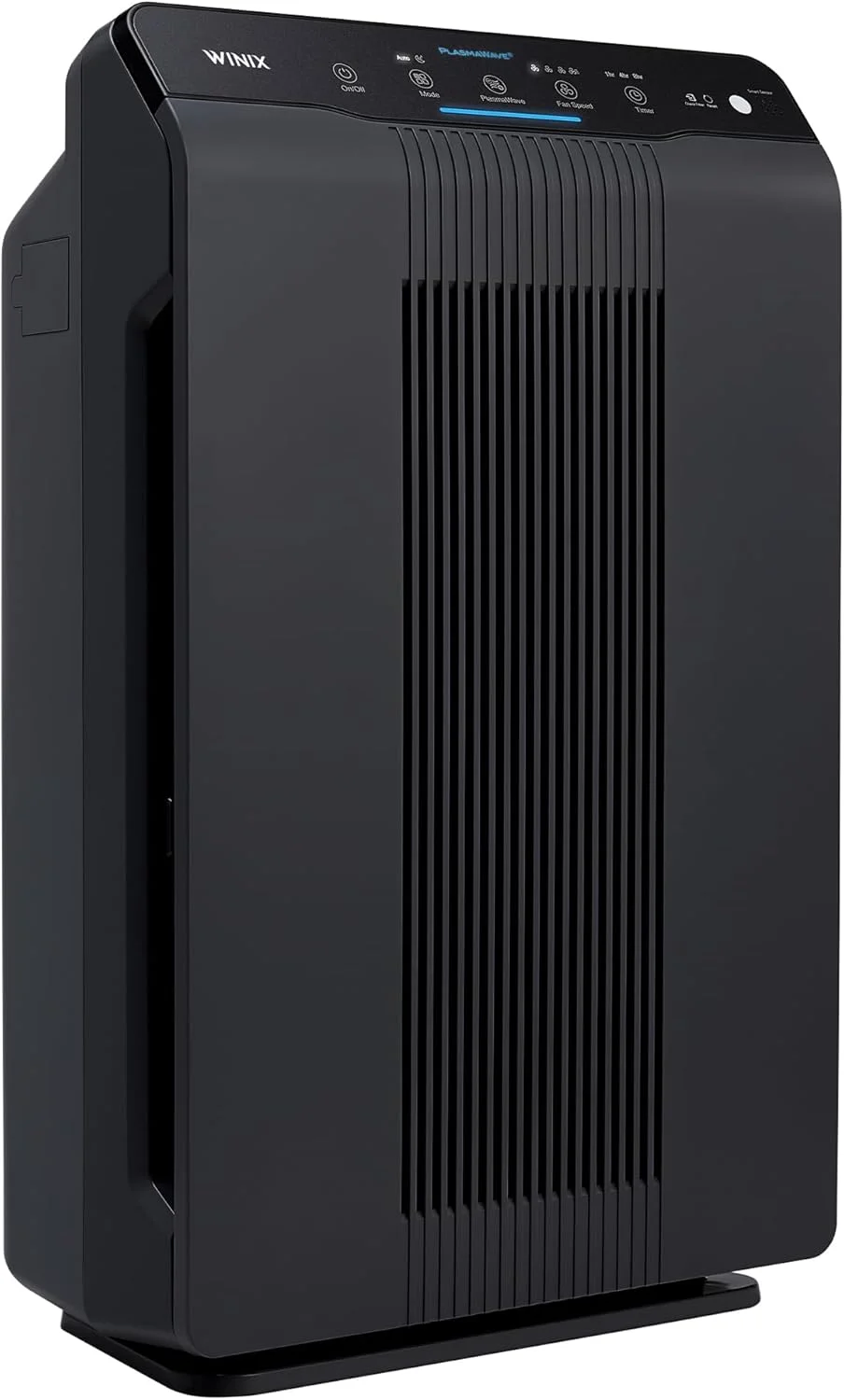
Key Specifications
- Room Coverage
- 360 sq ft
- CADR
- 232/243/246
- Filter
- True HEPA + PlasmaWave + Washable Carbon
- Noise
- 27 dB
- Power
- 67 watts
- Best For
- DISCONTINUED. Buy while stock lasts. Washable carbon is unique advantage.
📅 Prices checked . Amazon prices change frequently — click through for current price. Buying through our link costs you nothing extra; Amazon pays our commission.
What's in the Box
- Winix 5500-2 air purifier
- Pre-installed True HEPA + carbon filter
- Power cord
- Remote control
- User manual
Pros
- AHAM verified CADR
- PlasmaWave pellet carbon
- Washable carbon filter — unique
- HouseFresh tested 23 min room clean
Cons
- DISCONTINUED in US
- No WiFi
- Louder than 5510
- Larger footprint
Best For
The Winix 5500-2 is the correct purifier for users who want clean, fragrance-free odorless air in a room up to 360 sq ft. Its activated carbon stage removes VOCs and odors effectively — including any fragrance compounds — producing genuinely odorless output air. For users who have discovered that their current "scented air purifier" is simply masking poor air quality rather than improving it, the Winix 5500-2 demonstrates what a properly functioning air purifier output actually smells like: nothing.
📅 Price checked August 2026 · Buying through this link costs you nothing extra — Amazon covers our commission
What to Know Before You Buy
How to Identify a Real Air Purifier vs a Scented Ionizer
The air purifier market contains a category of products that are primarily scent diffusers or ionizers with minimal real filtration, marketed as "air purifiers" because they improve the perceived smell of a room. Red flags that a "scented air purifier" is primarily a fragrance device: 1) No CADR number listed — real purifiers publish this. 2) No True HEPA filter — only an ionizer or UV lamp. 3) Marketing emphasizes "fresh scent" or "aromatherapy" as primary benefits. 4) The unit is priced below $40 — adequate HEPA filtration at that price is not possible given filter media costs. 5) "Produces negative ions" with no HEPA filter — an ionizer deposits charged particles on surfaces rather than capturing them. These products may make a room smell better through fragrance addition, but they do not improve actual air quality in the measurable ways that a HEPA purifier does. If the product cannot show you an AHAM-verified CADR number, treat it as a room freshener, not an air purifier.
Aroma Pads in Air Purifiers — Which Brands Include Them and How They Work
Some legitimate air purifiers include optional aroma tray or pad features. Common examples: certain Levoit tower models, some GermGuardian tower units, and various budget brands include a small cavity where a few drops of essential oil can be placed. The output fan carries fragrance molecules into the output airstream. In units where the aroma tray is positioned downstream from the HEPA and carbon filters, the fragrance bypasses filtration — meaning you get fragrance released into already-filtered air. In units where the aroma tray is upstream, the fragrance molecules pass through the carbon filter and are partially adsorbed before output. Neither configuration is ideal. The downstream configuration adds VOCs back to filtered air; the upstream configuration loads the carbon filter with pleasant VOCs instead of harmful ones. For occasional fragrance enjoyment, downstream aroma trays on a HEPA-equipped purifier are the least harmful implementation. For ongoing fragrance use, a separate diffuser is always the better approach.
The Correct Strategy: HEPA Purifier + Separate Diffuser
The best approach for users who want fragrance and air purification: run the HEPA purifier for air quality; use a separate electric ultrasonic diffuser for fragrance, positioned at least 6-8 feet from the air purifier intake. At 6-8 feet distance, the diffuser output disperses in room air before reaching the purifier intake, giving you fragrance in the room while the purifier works on cooking odors, allergens, and VOC sources. The purifier will gradually adsorb some fragrance from room air — this is acceptable because the carbon stage is primarily loaded by higher-concentration sources (cooking, cleaning products, pet odors) rather than the low-concentration fragrance at 6 feet. If you notice your fragrance dissipating unusually fast, move the diffuser further from the purifier intake or run the purifier on a lower speed during active diffuser operation.
Why True HEPA Purifiers Remove Fragrance Instead of Adding It
Fragrances — from essential oils, synthetic air fresheners, candles, and scented cleaning products — are volatile organic compounds that evaporate at room temperature. The chemical structures that create pleasant scents (limonene from citrus, linalool from lavender, geraniol from rose) are the same class of molecules that activated carbon is designed to capture. To a carbon filter, linalool is indistinguishable from benzene or formaldehyde at the adsorption mechanism level — all are VOC molecules that bind to the carbon surface.
A True HEPA purifier with an activated carbon stage running near a diffuser will measurably reduce the fragrance concentration in the room by adsorbing fragrance VOCs as they pass through the carbon filter. The effect depends on the purifier CADR relative to room volume and the concentration of fragrance output. A high-CADR purifier running on high will adsorb fragrance quickly; a low-speed purifier in a large room may have minimal impact on fragrance perceived by occupants. The tradeoff is real either way: carbon filter capacity used on pleasant-smelling VOCs is capacity not available for the VOCs you actually want removed.
Additionally, some fragrance molecules — particularly synthetic fragrance compounds and certain essential oil constituents — react with ozone in indoor air to form secondary pollutants including formaldehyde and ultrafine particles. This is well-documented in indoor air chemistry research: d-limonene (found in citrus-scented products) reacts with ozone to form formaldehyde and sub-micron particles. Running a purifier eliminates much of this secondary chemistry by reducing both VOC concentrations and ozone levels — another reason to keep fragrance sources away from high-CADR purifier intakes. See our air purifier VOC guide for the complete indoor chemistry picture.
Scented Air Purifiers With Aroma Trays — Which Products Include This Feature
Several air purifier categories include aroma tray or fragrance pad features:
Levoit tower purifiers: Some Levoit tower-style models include a small aroma pad near the output vent where 2-3 drops of essential oil can be placed. The output air carries fragrance molecules. This is a downstream configuration — fragrance is added after filtration — so the carbon filter is not loaded with the added fragrance. The air output contains both filtered air and fragrance VOCs. For occasional fragrance use, this design is acceptable. For ongoing daily fragrance use, the fragrance VOCs you are intentionally adding to output air represent a VOC source you could be eliminating by positioning the diffuser separately.
GermGuardian tower models: Some GermGuardian tower units include similar fragrance pad locations. Quality of the HEPA filtration in these units varies by model — verify True HEPA vs HEPA-type before purchasing if filtration performance is a priority alongside the fragrance feature.
Budget "air purifier" products with aroma emphasis: Many sub-$40 products marketed as air purifiers have prominent aromatherapy features and minimal or no real HEPA filtration. These are essentially scented ionizers or USB fan + fragrance pad combinations. Do not purchase these if the goal is genuine particle filtration — the fragrance feature is the product, not a supplement to real purification. For small-space freshening without health application, these can serve a decorative purpose, but they should not be expected to reduce allergen, PM2.5, or VOC concentrations measurably.
For legitimate air purifiers with no fragrance features that produce clean, odorless output: Coway AP-1512HH, Winix 5500-2, Levoit Core 300S, Blueair models, and IQAir models are all fragrance-neutral designs that do not include aroma trays and produce odorless filtered air output.
Essential Oils and Air Purifiers — Safety Considerations
Essential oils are complex mixtures of VOCs, terpenes, and aromatic compounds. From an air quality perspective, they are VOC sources — the same category as cleaning products, paints, and off-gassing furniture. The health effects of essential oil diffusion depend on concentration, specific compounds, and the sensitivity of the occupants. Several considerations relevant to air purifier users:
Terpene-ozone chemistry: Common essential oil constituents (d-limonene, alpha-pinene, beta-myrcene) react with indoor ozone to form formaldehyde, ultrafine particles, and other secondary pollutants. If you run an ionizer (which can generate ozone) in the same space as an essential oil diffuser, the combination can increase formaldehyde concentrations above the WHO guideline of 0.1 mg/m³ in small, poorly-ventilated spaces. A True HEPA purifier with activated carbon does not generate ozone — it is the correct purifier type to pair with fragrance use because it adsorbs both the fragrance VOCs and any ozone that enters from outdoor sources, reducing the terpene-ozone reaction chemistry.
Respiratory sensitivity: For occupants with asthma, chemical sensitivity (MCS), or fragrance sensitivity, any added fragrance — including natural essential oils — can trigger symptoms. The fact that an oil is "natural" does not make it less likely to cause respiratory symptoms in sensitive individuals. For households with sensitive occupants, fragrance-free is the appropriate air quality goal. A HEPA + carbon purifier running without any added fragrance, in a fragrance-free cleaning and personal care product environment, produces the cleanest possible indoor air for sensitive occupants. See our air purifier for chemical sensitivity guide.
Diffuser water and ultrasonic mist: Ultrasonic diffusers disperse essential oil in a fine water mist that contains both the VOC components and water droplets. The water droplets are in the particle size range captured by HEPA filtration. Running an ultrasonic diffuser near a HEPA purifier will result in some water droplets being captured by the HEPA filter — this is not harmful to the filter but may shorten its effective life if running at high mist output continuously.
Clean Air Should Be Odorless — What a Properly Working Purifier Output Smells Like
A reliable indicator that a HEPA + carbon air purifier is working correctly is that its output air smells like nothing. Truly clean air has no identifiable odor because odors are chemical compounds — VOCs, particulate-bound odorants, and off-gassing molecules — that the purifier removes. When a purifier output smells "clean" or "fresh," there are two possibilities: either the air genuinely has no chemical odors and the purifier is performing correctly, or the purifier is adding a fragrance (from an aroma tray, ionizer output, or UV-generated ozone) that creates a pleasant but chemically meaningful odor.
Ozone has a distinctive "clean" or "electric" smell that many people associate with fresh air after a thunderstorm. Ionizers that produce ozone can create this smell in purifier output — but ozone is a respiratory irritant, not a purification benefit. The "clean" smell of an ozone-generating ionizer is the smell of the pollutant being produced, not evidence of clean air. A True HEPA purifier without ionization produces output air that is genuinely odorless because it has removed particles and some VOCs without adding any new compounds.
If your air purifier output smells of anything other than nothing, investigate what the smell is: plastic smell from a new unit (off-gassing that passes in days to weeks), ozone smell (check whether the unit has an ionizer that can be disabled), or a musty smell (indicating a wet or moldy filter that needs replacement). A properly operating HEPA + carbon purifier in a normal home environment produces output that smells completely neutral — the smell that makes you realize how many subtle odors were previously present in your room air that you had habituated to.