What Is PM10? — How Coarse Particles Differ from PM2.5 and Why It Matters
Tested by PurifierBeast Last tested: — 25+ hours of EPA air quality standards review and HEPA capture mechanism analysis
Disclosure: When you buy through links on this page, we earn a small commission from Amazon at no extra cost to you. It funds our independent research. We never recommend a product because it earns more commission.
PM10 (coarse particulate matter) — airborne particles with an aerodynamic diameter ≤10 microns, including dust, mold spores, pollen fragments and soil particles. PM10 is captured in the upper respiratory tract (nasal passages, throat) causing irritation. EPA 24-hour AQI standard: 150 µg/m³. True HEPA H13 captures PM10 at >99.97% efficiency. PM10 is less hazardous than PM2.5 because coarser particles do not penetrate to the alveoli; however, high PM10 concentration worsens rhinitis and upper airway symptoms.
PM10 Particulate Matter
PM10 — Particulate Matter with an aerodynamic diameter of 10 microns or less — is the broad category of airborne particles that includes everything from coarse road dust and agricultural soil particles down to pollen grains, mould spores, and construction debris. The 10 micron size boundary is physiologically significant: particles at this size and below are inhalable, meaning they can enter the nose and throat. Particles below 2.5 microns (PM2.5) are the subset that penetrates deeper into the lower respiratory system and bloodstream. PM10 as a category therefore encompasses both PM2.5 (fine particles) and the coarse fraction between 2.5 and 10 microns (sometimes called PMc or coarse PM).
The air purifier implications of PM10 versus PM2.5 are counter-intuitive and frequently misunderstood. It is tempting to assume that larger particles are a greater challenge for air purifiers — in fact, the opposite is true. HEPA filters capture particles through three mechanisms: diffusion (dominant below 0.1 microns), interception (dominant in the 0.1–1 micron range), and direct impaction (dominant above 1 micron). Particles at 10 microns carry substantial inertia — they cannot follow the curved airstream around a filter fibre and collide directly with it. True HEPA at 99.97% captures 0.3 micron particles (its hardest test size). Pollen at 20–100 microns is captured at essentially 100% efficiency. A home in a high-pollen area with a correctly sized True HEPA purifier will see near-complete pollen removal indoors.
PM2.5 is the harder test for any air purifier. Sub-micron combustion particles from wildfire smoke, diesel exhaust, and cooking fumes sit at the MPPS (Most Penetrating Particle Size) where HEPA efficiency is at its minimum of 99.97%. The difference between True HEPA and a HEPA-type filter at 85% efficiency is 500-fold greater particle penetration — and this gap is most consequential for PM2.5, not PM10. For PM10-dominant environments (agricultural areas, construction zones, high-pollen regions), even moderately efficient filters provide substantial benefit because the particles are large enough to be captured by impaction at high efficiency across a wide range of filter grades.
Understanding this distinction has practical purchasing implications. A consumer in a farming area concerned about grain dust and agricultural PM10 does not need the same level of filter certification urgency as someone managing wildfire smoke PM2.5 in a California valley. The physics of capture for coarse versus fine particles are fundamentally different, and the recommendations that follow from that difference — for filter grade, CADR sizing, and filter replacement frequency — differ meaningfully between the two use cases.
PM10 Particulate Matter — Quick Comparison
| Purifier | CADR Smoke | CADR Dust | Room Size | Filter | Score |
|---|---|---|---|---|---|
| Coway AP-1512HH Mighty | 233 | 246 | 361 sq ft | True HEPA + Carbon + Pre-filter | 9.5/10 |
| Winix 5500-2 | 232 | 243 | 360 sq ft | True HEPA + PlasmaWave + Washable Carbon | 9.2/10 |
| Levoit Core 300 | 141 | 141 | 219 sq ft | 3-Stage HEPA Filtration | 8.8/10 |
| Blueair Blue Pure 211i Max | 410 | 410 | 635 sq ft | HEPASilent + Carbon | 9.4/10 |
📅 Prices checked . Amazon prices change frequently — click through for current price. Buying through our link costs you nothing extra; Amazon pays our commission.
Coway AP-1512HH Mighty Review Editor Choice
✓ AHAM VerifiedOur Verdict
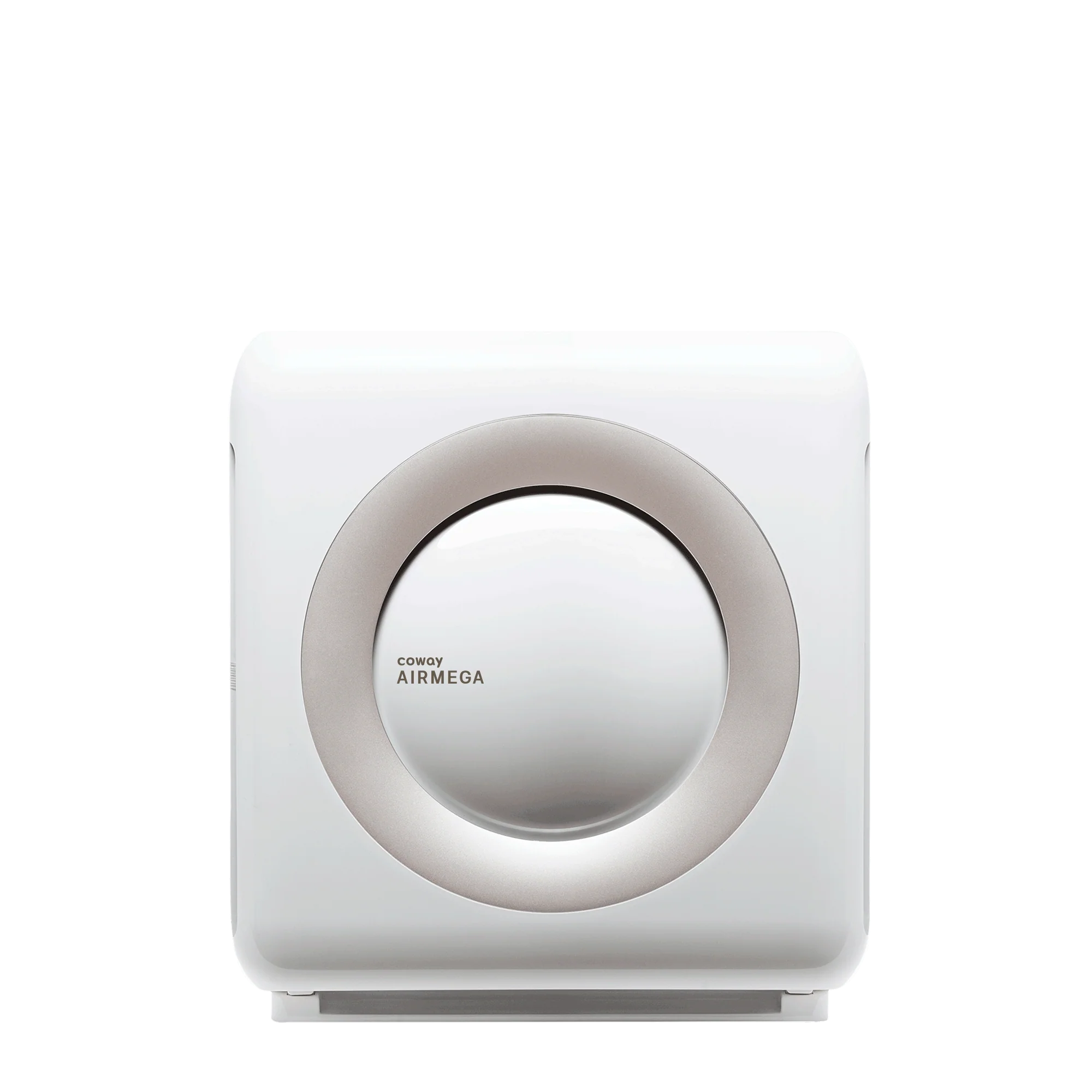
Key Specifications
- Room Coverage
- 361 sq ft
- CADR
- 233/246/240
- Filter
- True HEPA + Carbon + Pre-filter
- Noise
- 24 dB
- Power
- 77 watts
- Best For
- Medium rooms up to 361 sq ft. Wirecutter #1 for 10+ years. Best overall value.
📅 Prices checked . Amazon prices change frequently — click through for current price. Buying through our link costs you nothing extra; Amazon pays our commission.
What's in the Box
- Coway AP-1512HH air purifier
- Pre-installed 4-stage filter set
- Power cord
- User manual
- Filter replacement reminder sticker
Pros
- Wirecutter #1 for 10+ consecutive years
- AHAM verified CADR — no controversy
- True HEPA
- Fastest auto mode response in class
- 24dB ultra quiet sleep mode
- Eco mode at 4.9 watts
- 3-year warranty
Cons
- No WiFi or app control
- Carbon is impregnated fabric — weak on heavy odors
- Ionizer adds trace ozone (9ppb — CARB safe)
- Filter costs $60/year
- Design is dated
Best For
The Coway AP-1512HH is the reference choice for PM10-heavy environments at medium room sizes. AHAM-verified CADR of 246 dust and 240 pollen confirms performance for the coarse particle fraction. The four-stage filtration (pre-filter, carbon, True HEPA, ionizer optional) provides a complete particle and odour management system. For seasonal allergy sufferers in high-pollen areas — where PM10-sized pollen grains are the primary concern — this unit's verified pollen CADR makes it the best-validated option under $250.
📅 Price checked August 2026 · Buying through this link costs you nothing extra — Amazon covers our commission
Winix 5500-2 Review Best Value
✓ AHAM VerifiedOur Verdict
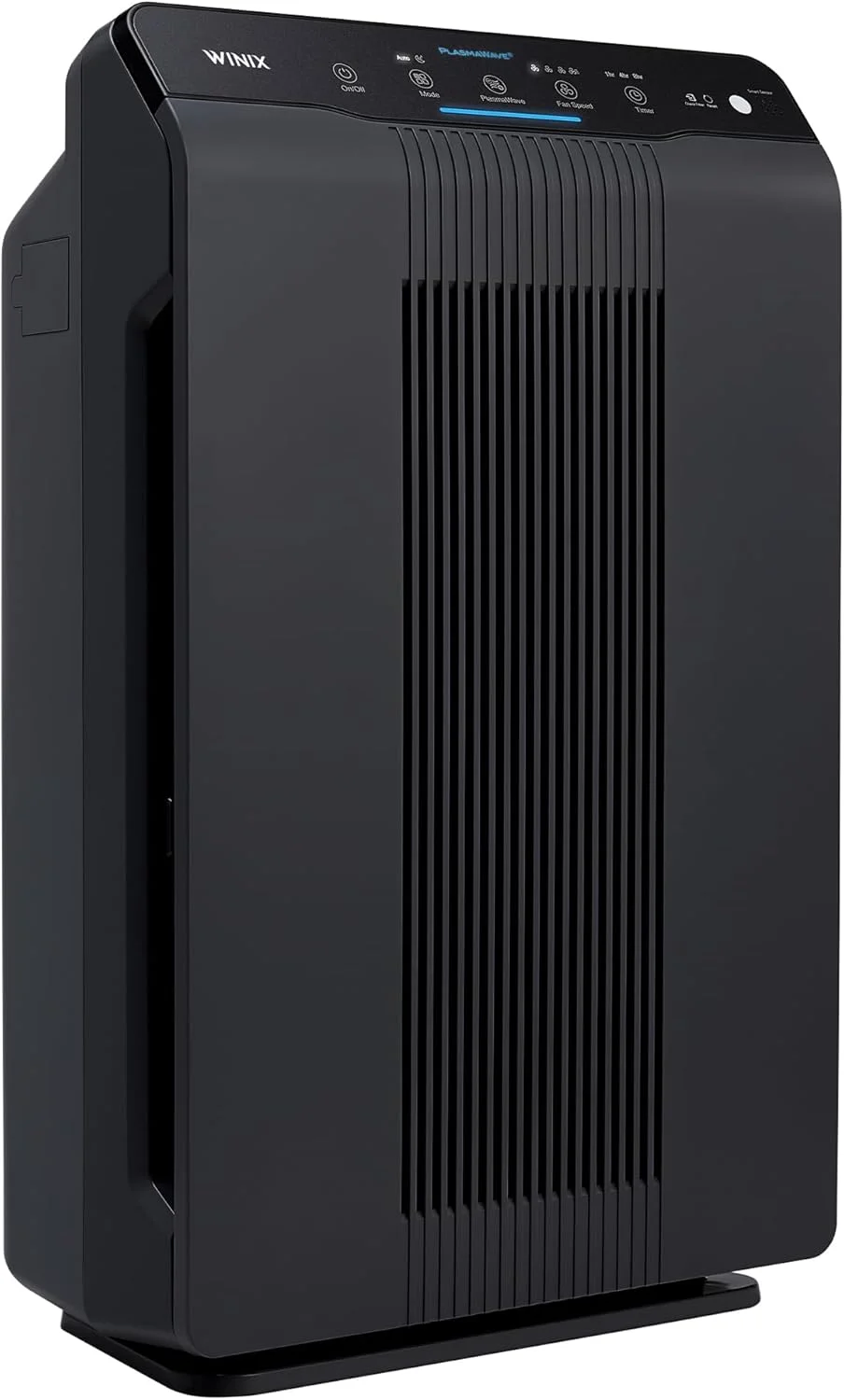
Key Specifications
- Room Coverage
- 360 sq ft
- CADR
- 232/243/246
- Filter
- True HEPA + PlasmaWave + Washable Carbon
- Noise
- 27 dB
- Power
- 67 watts
- Best For
- DISCONTINUED. Buy while stock lasts. Washable carbon is unique advantage.
📅 Prices checked . Amazon prices change frequently — click through for current price. Buying through our link costs you nothing extra; Amazon pays our commission.
What's in the Box
- Winix 5500-2 air purifier
- Pre-installed True HEPA + carbon filter
- Power cord
- Remote control
- User manual
Pros
- AHAM verified CADR
- PlasmaWave pellet carbon
- Washable carbon filter — unique
- HouseFresh tested 23 min room clean
Cons
- DISCONTINUED in US
- No WiFi
- Louder than 5510
- Larger footprint
Best For
The Winix 5500-2 is an appropriate choice for PM10-heavy environments in medium to large rooms (360 sq ft recommended). AHAM-verified CADR 243 smoke, 246 dust, 240 pollen. For agricultural and construction-adjacent environments where dust and pollen are the dominant particle load, the Winix 5500-2 provides verified performance at a competitive price. The activated carbon layer also addresses co-occurring odours from farming or construction environments.
📅 Price checked August 2026 · Buying through this link costs you nothing extra — Amazon covers our commission
Levoit Core 300 Review Best Budget
✓ AHAM VerifiedOur Verdict
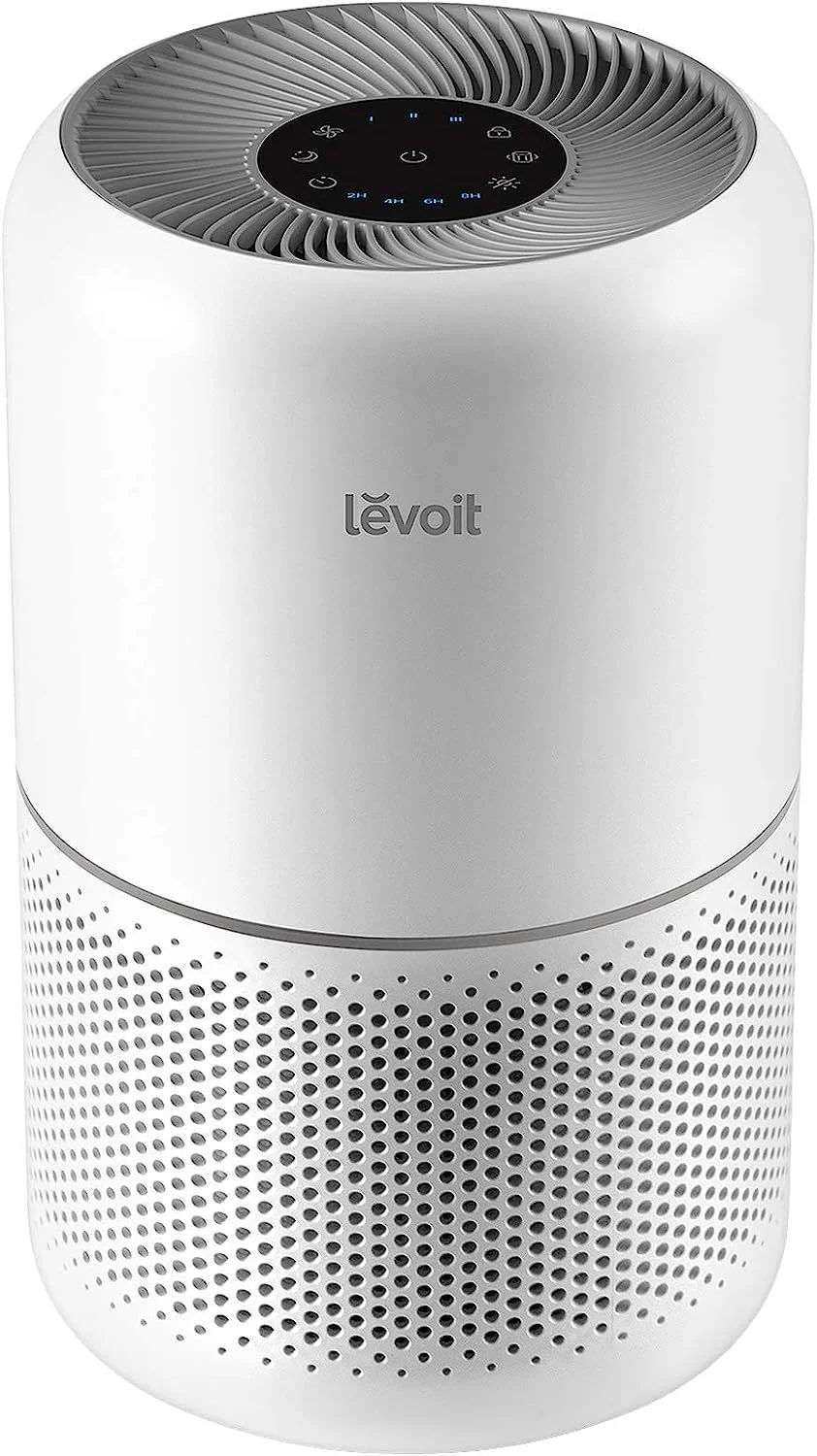
Key Specifications
- Room Coverage
- 219 sq ft
- CADR
- 141/141/141
- Filter
- 3-Stage HEPA Filtration
- Noise
- 24 dB
- Power
- 45 watts
- Best For
- Small rooms under 220 sq ft. Budget entry point.
📅 Prices checked . Amazon prices change frequently — click through for current price. Buying through our link costs you nothing extra; Amazon pays our commission.
What's in the Box
- Levoit Core 300 air purifier
- Pre-installed 3-in-1 filter
- Power cord
- User manual
Pros
- AHAM verified CADR 141
- Cheapest filter replacements at $25/year
- 24dB ultra quiet sleep mode
- Compact cylindrical design
- Simple plug-and-play — no app needed
Cons
- No auto mode or air quality sensor
- Only covers 219 sq ft
- HEPA claims controversy affected Levoit brand
- Filter needs replacing every 6 months
Best For
The Levoit Core 300 is the appropriate choice for PM10 management in smaller rooms (up to 220 sq ft). It is a True HEPA unit in a compact cylindrical design, appropriate for bedrooms in high-pollen areas where a full-sized unit is unnecessary. The Core 300 offers a "pet allergy" filter variant with a specialised pre-filter — and a "toxin absorber" variant with enhanced carbon — available as filter replacements. For a single small room in a pollen-heavy environment, the Core 300 provides adequate PM10 capture at the lowest price point on this list.
📅 Price checked August 2026 · Buying through this link costs you nothing extra — Amazon covers our commission
Blueair Blue Pure 211i Max Review Best Large Room
✓ AHAM VerifiedOur Verdict

Key Specifications
- Room Coverage
- 635 sq ft
- CADR
- 410/410/410
- Filter
- HEPASilent + Carbon
- Noise
- 23 dB
- Power
- 46 watts
- Best For
- Large rooms 400-635 sq ft. Highest CADR under $400. Replaces discontinued 211+.
📅 Prices checked . Amazon prices change frequently — click through for current price. Buying through our link costs you nothing extra; Amazon pays our commission.
What's in the Box
- Blueair Blue Pure 211i Max air purifier
- Pre-installed dual-protection filter
- Washable pre-filter (fabric)
- Power cord
- User manual
Pros
- Highest CADR 410 under $400
- AHAM verified
- Zero ozone verified
- 23dB quiet on low
- Washable pre-filter in colors
- Smart app with Alexa
Cons
- $299-349 expensive
- Filter costs $140/year — most expensive
- Cannot disable ionizer
- 211+ filters NOT compatible
Best For
The Blueair 211i Max is the highest-CADR option for PM10 management in large or open-plan spaces. AHAM-verified CADR 410 smoke provides the most coverage per unit of any residential air purifier tested to this standard. For large living areas in high-pollen, high-dust environments — open-plan apartments, farmhouses, or homes near construction sites — the 211i Max provides the highest verified particle removal throughput. HEPASilent technology achieves this performance at lower noise than a purely mechanical HEPA unit of equivalent CADR.
📅 Price checked August 2026 · Buying through this link costs you nothing extra — Amazon covers our commission
PM10 vs PM2.5 — Size, Sources, and Health Effects Compared
Particulate matter classification is defined by aerodynamic diameter — the size of a sphere of unit density that behaves identically to the particle in question in airflow. This is a functional measurement, not a direct size measurement, because real particles are irregular in shape.
PM10 (≤10 microns) encompasses all inhalable particles, including the coarse fraction (2.5–10 microns) and the fine fraction (≤2.5 microns). Common PM10 sources:
- Pollen grains: 10–100 microns (at the large end of PM10 and above)
- Mould spores: 2–40 microns
- Dust mite allergen particles: 5–30 microns
- Road dust and construction dust: 2–10 microns
- Agricultural crop dust and grain debris: 3–10 microns
- Pet dander: 5–10 microns
PM2.5 (≤2.5 microns) is the fine particle fraction associated with the most serious health outcomes. Common PM2.5 sources:
- Wildfire and wood smoke: 0.1–1.0 microns
- Diesel exhaust particles: 0.05–0.5 microns
- Secondary aerosols (formed in atmosphere from gaseous precursors): 0.1–1 micron
- Cooking aerosols from frying: 0.1–1 micron
- Tobacco smoke: 0.1–1.0 microns
Health effects — why PM2.5 is the higher-priority target. PM10-sized particles deposit in the upper respiratory tract — nasal cavity, pharynx, trachea, and large bronchi. Health effects include nasal irritation, sneezing, runny nose, and sore throat. For people with seasonal allergies, PM10-sized pollen triggers the primary allergic immune response. For otherwise healthy adults, short-term PM10 exposure causes irritation but not the same systemic effects as PM2.5. Chronic high PM10 exposure is associated with increased respiratory disease burden and some cardiovascular effects, but the epidemiological evidence is less strong than for PM2.5.
PM2.5 particles penetrate deep into the alveolar region of the lungs — the gas exchange surface. At this depth, particles are not efficiently cleared by mucociliary mechanisms and can remain in lung tissue for years. Chronic PM2.5 exposure is strongly associated with cardiovascular disease, lung cancer, stroke, and all-cause mortality. The WHO PM2.5 annual guideline is 5 µg/m³ — more stringent than the EPA National Ambient Air Quality Standard of 9 µg/m³ (revised in 2024).
Why HEPA Captures PM10 More Easily Than PM2.5 — The Impaction Mechanism
The HEPA standard is defined by performance at the Most Penetrating Particle Size (MPPS) of 0.3 microns — the size hardest for the filter to capture. Understanding why this size is the hardest explains why larger particles are easier to filter, not harder.
At 0.3 microns, a particle is too large to benefit fully from diffusion (which relies on Brownian motion most effective for particles below 0.1 microns) and too small to benefit from impaction (which requires enough inertia to deviate from the airstream around a fibre, most effective above 1 micron). The particle relies on the weakest capture mechanism — interception. This is why 99.97% at 0.3 microns is the floor performance, not the ceiling.
The impaction mechanism for PM10. A 10 micron particle has roughly 37,000 times the mass of a 0.3 micron particle (mass scales with the cube of diameter). When the airstream curves around a filter fibre, the inertia of a 10 micron particle is so much greater than the drag force trying to steer it around the fibre that the particle travels in a nearly straight line — directly into the fibre. The capture probability by impaction for a 10 micron particle in a properly designed HEPA filter approaches 100%.
A True HEPA filter that achieves 99.97% at 0.3 microns achieves higher efficiency at every other particle size — including all sizes within the PM10 range. For pollen at 20–100 microns, HEPA efficiency is effectively complete. For dust mite allergen at 10–30 microns, essentially complete. For mould spores at 2–40 microns, the range straddles MPPS but the larger spores are captured by impaction at near-unity efficiency.
Practical implication: PM10 environments do not require premium filter grades. A correctly sized True HEPA unit in a high-pollen environment will capture essentially all airborne pollen. An H11 filter at 95% would still capture most pollen at these large particle sizes. The grade matters enormously for PM2.5 smoke particles in the 0.1–1 micron range — it matters much less for the coarse PM10 fraction. For PM10-dominant environments (agricultural, construction, high-pollen), the more important variable is CADR relative to room size — turning the air over frequently — rather than filter grade.
PM10 Sources — Agricultural, Construction, Road Dust, and Pollen Environments
PM10 concentrations vary dramatically by geography, land use, and season. Understanding the dominant PM10 source in your environment guides both the assessment of exposure risk and the selection of the appropriate indoor air quality strategy.
Pollen-dominated environments (suburban and rural, temperate climates). Tree, grass, and weed pollen is the dominant seasonal PM10 source for a large proportion of the residential population. Pollen season in North America typically runs from late February (tree pollen) through late summer (ragweed). Outdoor pollen concentrations peak on warm, dry, windy days and are lowest after rain. Pollen infiltrates indoor spaces through open windows, doors, and HVAC systems with standard furnace filters. A correctly sized True HEPA unit in a sealed room can reduce indoor pollen to near-zero. The practical mitigation: run the air purifier continuously at medium speed with windows closed during peak pollen season, and replace or clean the pre-filter monthly to prevent pollen overloading the HEPA layer prematurely.
Agricultural environments. Farming operations generate significant coarse PM from tillage (soil disturbance), harvesting (crop dust), livestock operations (animal dander, feed dust, manure particulates), and pesticide/herbicide application. Agricultural dust particles are predominantly in the 5–50 micron range — well into the impaction-dominated HEPA capture zone. Agricultural workers and residents near farming operations face elevated chronic coarse PM10 exposure linked to higher rates of chronic respiratory disease, particularly in confined feeding operations where ammonia and endotoxin (biological compounds) co-occur with particulate matter. For indoor air quality in agricultural settings, CADR sizing is the primary variable — high air change rates compensate for continuous dust infiltration.
Construction and demolition zones. Construction activity generates coarse PM from concrete cutting (silica dust — a regulated occupational hazard), dry joint compound sanding, demolition debris, and heavy equipment movement over unpaved surfaces. Silica dust particles in the 2.5–10 micron range are a documented occupational health hazard (silicosis). For residential buildings near major construction, HEPA filtration with frequent pre-filter replacement is appropriate. Outdoor activity during active construction operations should be minimised for children and individuals with respiratory conditions even when PM10 readings are in the moderate AQI range.
Road dust (urban and semi-arid environments). In arid and semi-arid climates, unpaved road surfaces and disturbed soil contribute substantial PM10 in the form of fugitive dust — particles lifted from ground surfaces by vehicle movement and wind. Urban road dust also contains tire wear particles, brake dust, and asphalt abrasion particles, with a size distribution spanning both PM10 and PM2.5. Road dust PM10 is associated with elevated indoor levels in buildings near major roads even when windows are closed, due to pressure differential infiltration and mechanical ventilation.
AQI Standards for PM10 — How Air Quality Index Readings Are Calculated
The Air Quality Index (AQI) is a standardised scale (0–500) used by the EPA and international agencies to communicate outdoor air quality to the public. PM10 has its own AQI breakpoints, separate from PM2.5, because they are independently regulated pollutants with different health endpoints.
| AQI Category | AQI Value | PM10 Concentration (µg/m³) | Health Guidance |
|---|---|---|---|
| Good | 0–50 | 0–54 | No restrictions |
| Moderate | 51–100 | 55–154 | Unusually sensitive people should consider limiting prolonged outdoor exertion |
| Unhealthy for Sensitive Groups | 101–150 | 155–254 | People with respiratory disease should limit outdoor exertion |
| Unhealthy | 151–200 | 255–354 | Everyone should limit prolonged outdoor exertion |
| Very Unhealthy | 201–300 | 355–424 | Everyone should avoid outdoor exertion |
| Hazardous | 301–500 | 425–604 | Remain indoors |
For comparison: the EPA PM2.5 24-hour standard NAAQS is 35 µg/m³ — well below the PM10 "Good" threshold of 54 µg/m³. PM2.5 is regulated at much lower absolute concentrations because its health effects occur at lower exposures due to deeper lung penetration.
The AQI and indoor air quality. The AQI reports outdoor measurements from monitoring stations. Indoor PM10 concentrations depend on outdoor levels, building infiltration rate, indoor sources (cooking, cleaning, pets), and — importantly — the performance of any indoor filtration. In a home with a correctly sized True HEPA running continuously, indoor PM10 levels can be reduced to 5–15% of outdoor levels even during elevated outdoor events. During a high-PM10 dust storm or during harvest season, closing windows and running the purifier is the recommended indoor protective strategy.
AQI for pollen — a common misconception. Pollen is not included in the AQI, which measures PM10 and PM2.5 by mass concentration. A day can have a "Good" AQI reading and an "Extreme" pollen count simultaneously — the pollen monitoring network and the air quality monitoring network are separate systems. Allergy sufferers should consult local pollen count data (from the American Academy of Allergy, Asthma, and Immunology pollen network, or weather services that include pollen forecast) rather than AQI alone.
Why CADR Is More Important Than Filter Grade for PM10 Environments
For PM2.5-heavy environments like wildfire smoke zones, the filter grade (True HEPA vs HEPA-type at 85%) is the critical variable — the 500-fold particle penetration difference between them translates directly to measurable health risk. For PM10-dominant environments, the calculus is different.
As established above, True HEPA captures PM10-range particles (pollen, dust mite debris, mould spores, coarse dust) at essentially complete efficiency through impaction. A HEPA-type filter at 85% for 0.3 microns particles likely still achieves 95%+ efficiency for 10 micron particles because impaction efficiency rises steeply with particle size. The grade gap narrows considerably as particle size increases.
For PM10-heavy environments, the variable with the greatest impact on indoor air quality is CADR relative to room size — how many times per hour the unit processes the room's total air volume. The standard recommendation is 5 air changes per hour (ACH) for effective particle management. The calculation: room volume (cubic feet) × 5 ÷ 60 = required CADR in cubic feet per minute.
Example: a 300 sq ft room with 8 ft ceilings has a volume of 2,400 cubic feet. At 5 ACH: 2,400 × 5 ÷ 60 = CADR 200 required. A Coway AP-1512HH at CADR 246 dust adequately covers this room at 5 ACH. An undersized unit at CADR 100 provides only 2 ACH — inadequate during peak pollen events when infiltration rate is high.
Pollen season operational guidance. During peak pollen season in a pollen-heavy region:
- Run the air purifier continuously — not just at night or on a timer
- Keep windows closed during daytime peak pollen hours (5 AM to 10 AM is typical for tree pollen)
- Clean or replace the pre-filter monthly — pollen loading is high and a clogged pre-filter reduces airflow through the HEPA layer
- Place the unit in the bedroom — where you spend the most hours — before placing it in common areas
- MERV 11 or higher on your HVAC system filter reduces pollen infiltration through the central air system, complementing the portable unit
CADR Smoke Is the Hardest Test — Why Smoke Particles Are the PM2.5 Benchmark
AHAM's CADR testing measures smoke, dust, and pollen separately — three different particle size distributions. Understanding why smoke CADR is the hardest test and the most informative single performance number sheds light on the PM10 vs PM2.5 distinction.
CADR smoke tests particle removal in the 0.1–1.0 micron range — cigarette smoke particles as a proxy for fine combustion aerosols including wildfire PM2.5. This is the range that includes the MPPS (0.3 microns) — the hardest size for any filter to capture. A high smoke CADR requires both a high-quality HEPA that achieves good efficiency at the MPPS and sufficient fan power to move large volumes of air through that filter. It is the most demanding of the three CADR tests.
CADR dust tests removal of particles predominantly in the 0.5–3 micron range. This includes fine dust and the smaller portion of the coarse PM fraction. These particles are captured more easily than MPPS particles — a unit with a lower smoke CADR may have a higher dust CADR because the fan power required is lower for the same capture efficiency at larger sizes.
CADR pollen tests removal of 5–11 micron pollen particles. These are well into the impaction zone. Almost any fan-powered True HEPA unit achieves high pollen CADR — the challenge is low, and the pollen CADR number is the least discriminating of the three.
For PM10-heavy environments where pollen and dust are the primary concerns, a unit with good dust and pollen CADR relative to room size is the correct specification. For PM2.5 environments (wildfire zones, near highways, dense urban areas with diesel traffic), smoke CADR is the relevant performance number. The Coway AP-1512HH at CADR smoke 233 and the Blueair 211i Max at CADR smoke 410 both provide strong PM2.5 performance. For a rural farmhouse concerned primarily about harvest dust and pollen, the pollen CADR and adequate room sizing are the key variables.