Humidifier vs Air Purifier — Key Differences Explained
Tested by PurifierBeast Last tested: — 20+ hours of Product specification research and humidity monitoring review
Disclosure: When you buy through links on this page, we earn a small commission from Amazon at no extra cost to you. It funds our independent research. We never recommend a product because it earns more commission.
Humidifier vs Air Purifier
You searched "humidifier vs air purifier" — which means you are probably starting from a dry air concern. Maybe your throat is scratchy every morning. Maybe you are dealing with static shocks or cracked skin in winter. Those are humidity problems, and a humidifier is the right first device. But here is what a lot of buyers miss: dry air and polluted air often coexist in the same home, especially during winter when sealed windows trap indoor contaminants while forced-air heating drops humidity to 15-25%. This guide helps you figure out exactly which problem you have — and whether you need one device or both.
The short diagnostic is this: if your symptoms are physical (dry throat, cracked lips, nosebleeds, static electricity), you have a humidity deficit and need a humidifier. If your symptoms are respiratory and reactive (sneezing, itchy eyes, congestion that correlates with time indoors), you have an air quality problem and need a purifier. If you have both sets of symptoms — which is common in winter — buy both. A Coway AP-1512HH at $110-130 paired with a $30-50 cool-mist humidifier covers everything for around $150, outperforming any $250 combo unit. For purifier-only guidance, our air purifier buying guide covers sizing and product selection in full detail.
Humidifier vs Air Purifier — Quick Comparison
| Purifier | CADR Smoke | CADR Dust | Room Size | Filter | Score |
|---|---|---|---|---|---|
| Coway AP-1512HH Mighty | 233 | 246 | 361 sq ft | True HEPA + Carbon + Pre-filter | 9.5/10 |
| Winix 5500-2 | 232 | 243 | 360 sq ft | True HEPA + PlasmaWave + Washable Carbon | 9.2/10 |
📅 Prices checked . Amazon prices change frequently — click through for current price. Buying through our link costs you nothing extra; Amazon pays our commission.
Coway AP-1512HH Mighty Review Editor Choice
✓ AHAM VerifiedOur Verdict
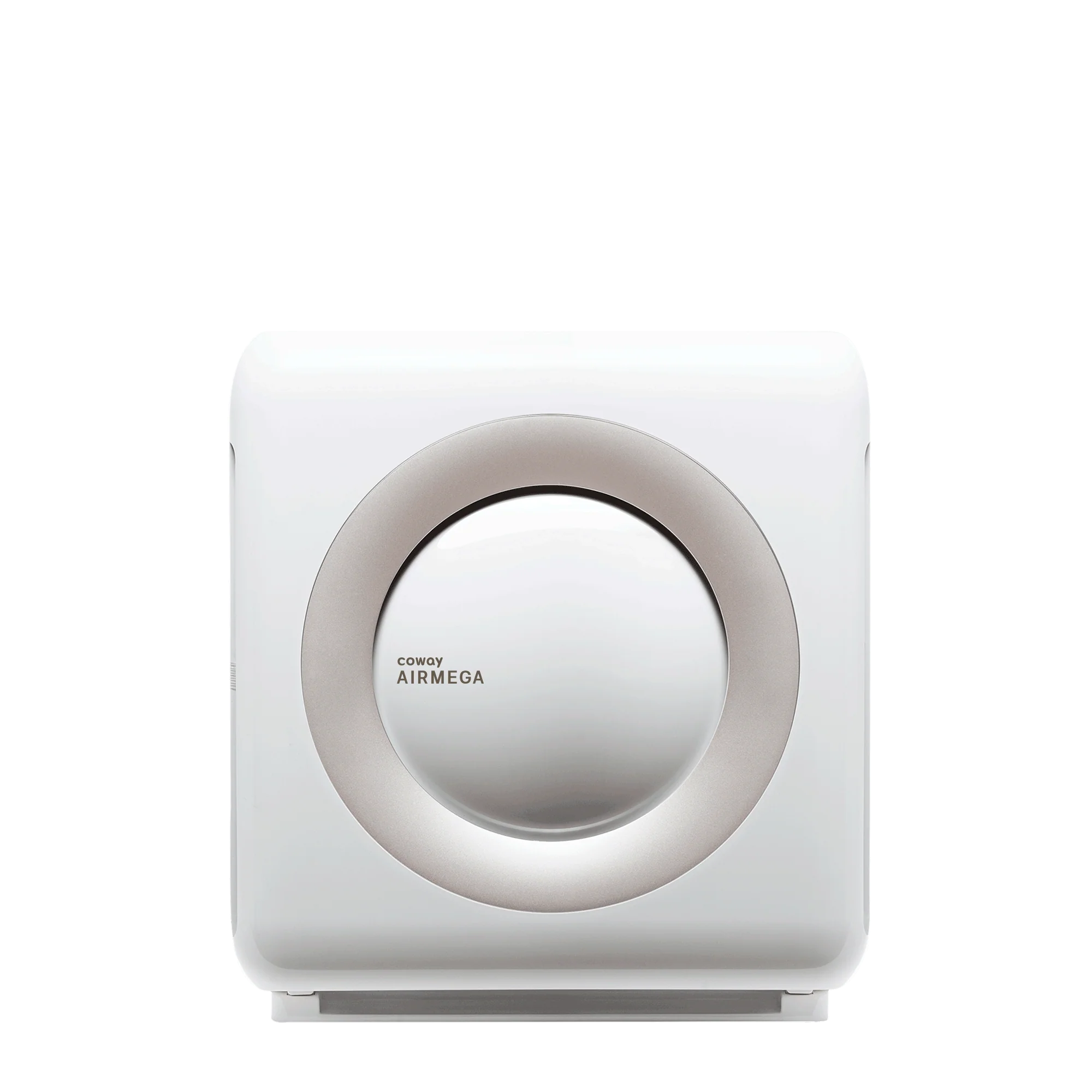
Key Specifications
- Room Coverage
- 361 sq ft
- CADR
- 233/246/240
- Filter
- True HEPA + Carbon + Pre-filter
- Noise
- 24 dB
- Power
- 77 watts
- Best For
- Medium rooms up to 361 sq ft. Wirecutter #1 for 10+ years. Best overall value.
📅 Prices checked . Amazon prices change frequently — click through for current price. Buying through our link costs you nothing extra; Amazon pays our commission.
What's in the Box
- Coway AP-1512HH air purifier
- Pre-installed 4-stage filter set
- Power cord
- User manual
- Filter replacement reminder sticker
Pros
- Wirecutter #1 for 10+ consecutive years
- AHAM verified CADR — no controversy
- True HEPA
- Fastest auto mode response in class
- 24dB ultra quiet sleep mode
- Eco mode at 4.9 watts
- 3-year warranty
Cons
- No WiFi or app control
- Carbon is impregnated fabric — weak on heavy odors
- Ionizer adds trace ozone (9ppb — CARB safe)
- Filter costs $60/year
- Design is dated
Best For
The Coway AP-1512HH is the air purifier side of the ideal humidifier-plus-purifier pairing for most homes. AHAM-verified CADR 246 handles rooms up to 360 sq ft at sufficient air changes per hour for meaningful allergen reduction. Auto mode with a real-time air quality LED means you are not guessing — the unit responds to actual particle spikes from cooking, outdoor pollen infiltration or pet activity. At $110-130, it leaves plenty of budget for a quality cool-mist humidifier. Run the Coway on one side of the bedroom and your humidifier on the other and you have solved both dry air and particle problems simultaneously. For allergy sufferers specifically, see the best air purifiers for allergies guide.
📅 Price checked August 2026 · Buying through this link costs you nothing extra — Amazon covers our commission
Winix 5500-2 Review Best Value
✓ AHAM VerifiedOur Verdict
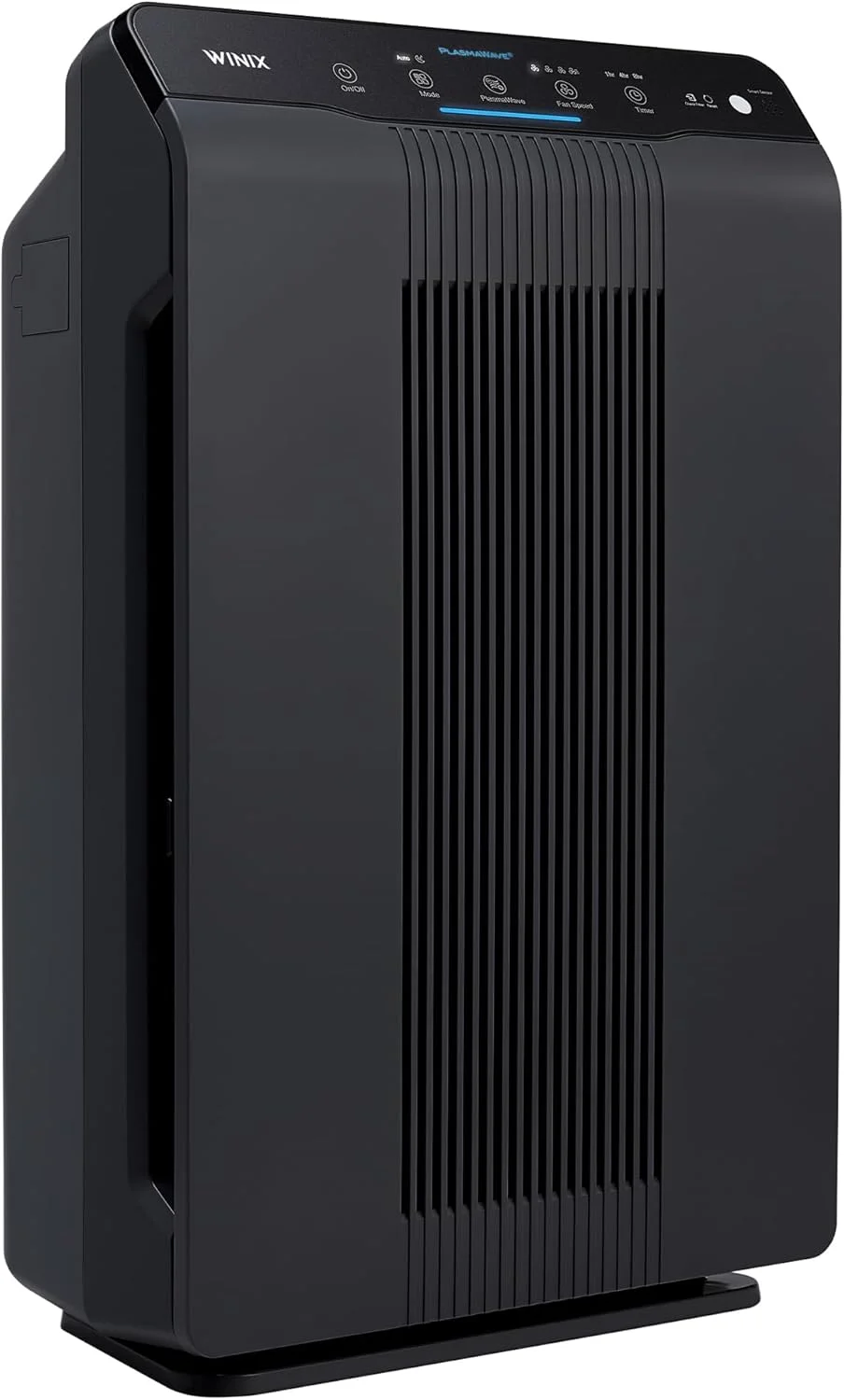
Key Specifications
- Room Coverage
- 360 sq ft
- CADR
- 232/243/246
- Filter
- True HEPA + PlasmaWave + Washable Carbon
- Noise
- 27 dB
- Power
- 67 watts
- Best For
- DISCONTINUED. Buy while stock lasts. Washable carbon is unique advantage.
📅 Prices checked . Amazon prices change frequently — click through for current price. Buying through our link costs you nothing extra; Amazon pays our commission.
What's in the Box
- Winix 5500-2 air purifier
- Pre-installed True HEPA + carbon filter
- Power cord
- Remote control
- User manual
Pros
- AHAM verified CADR
- PlasmaWave pellet carbon
- Washable carbon filter — unique
- HouseFresh tested 23 min room clean
Cons
- DISCONTINUED in US
- No WiFi
- Louder than 5510
- Larger footprint
Best For
The Winix 5500-2 is the upgrade choice when odor control is a priority alongside humidity management. PlasmaWave technology generates hydroxyl radicals that break down gas-phase pollutants — cooking smells, pet odors, VOCs from furniture and cleaning products — that HEPA alone cannot handle. AHAM-verified CADR 246 covers the same room size as the Coway, but the dual-layer odor attack (activated carbon plus PlasmaWave) makes it the better pick for kitchens, open-plan living areas or homes with pets. The washable pre-filter extends main filter life by catching large debris before it reaches the HEPA layer. Run this alongside a humidifier in winter and your indoor air stays clean, odor-free and properly moisturized. Full Winix brand review here.
📅 Price checked August 2026 · Buying through this link costs you nothing extra — Amazon covers our commission
What to Know Before You Buy
Quick Decision Framework
Three questions tell you what to buy. First: do you sneeze, get itchy eyes or have congestion that clears up when you leave the house? If yes, buy an air purifier. Second: do you wake up with a dry throat, cracked skin or static shocks? If yes, buy a humidifier. Third: did you answer yes to both? Buy both — the total for a capable purifier and a solid humidifier is $140-180, which is less than most premium combo units and significantly outperforms them. If you are only starting with one device, lead with whichever symptom set bothers you more.
When You Need Both Running Together
Winter is the season when most homes need both simultaneously. Forced-air heating pulls outdoor air in and heats it, which drops relative humidity from comfortable outdoor levels to 15-25% indoors — well below the 40-50% range the EPA recommends. At the same time, sealed windows and reduced ventilation allow indoor pollutants to accumulate: dust, pet dander, cooking particulates, mold spores from seasonal moisture intrusion. A purifier captures the particles; a humidifier fixes the moisture deficit. Place them at least 6 feet apart with the humidifier mist output directed away from the purifier intake. Use distilled water in an ultrasonic humidifier to avoid mineral dust loading your HEPA filter prematurely. An evaporative humidifier is the best pairing because it produces zero mineral dust and self-regulates — it cannot over-humidify the room.
Budget Planning for Both
The optimal budget split is roughly $110-130 for the air purifier and $30-60 for the humidifier. Spending more on the purifier is worthwhile because CADR, filter quality and long-term reliability matter. Spending more than $60 on a bedroom humidifier rarely buys meaningful performance gains — a $35 ultrasonic or $45 evaporative unit from a reputable brand handles the moisture job reliably. Annual operating costs: purifier filters at $20-35 per year (replace every 12 months under normal conditions), humidifier wicks if evaporative ($10-15 every 2-3 months) or nothing if ultrasonic beyond water costs. Total annual running cost for both: $60-100 depending on filter type and usage intensity. That is a fraction of the cost of prescription allergy medication for most households.
Humidifier vs Air Purifier — Core Difference
The most important thing to understand about humidifiers and air purifiers is that they operate on completely different principles and address completely different problems. Conflating them — or expecting one to do the other's job — is the most common and costly mistake buyers make. Let's be precise about what each device actually does at a mechanical level.
A humidifier takes water from a reservoir and disperses it into room air as vapor or fine mist. The water molecules enter the air and raise the relative humidity level — the percentage of moisture in the air relative to the maximum amount the air can hold at that temperature. Nothing about this process cleans the air. Pollutants, allergens, dust, mold spores and gases remain untouched. The air after a humidifier runs is wetter air — nothing more, nothing less.
An air purifier pulls room air through a series of filter media using a motor-driven fan. A pre-filter catches large debris. A True HEPA filter — tested to capture 99.97% of particles at 0.3 microns — traps dust, pollen, pet dander, mold spores, bacteria and PM2.5 particles from smoke. An activated carbon layer adsorbs gas-phase pollutants: cooking odors, volatile organic compounds (VOCs) from paint, furniture and cleaning products, and cigarette or wildfire smoke chemicals. Nothing about this filtration process adds or removes moisture. The air that exits the purifier has the same humidity as the air that entered — it is simply far lower in particle and gas contaminants.
The CADR (Clean Air Delivery Rate) is the metric that governs purifier performance. AHAM — the Association of Home Appliance Manufacturers — independently tests purifiers and certifies their CADR for smoke, dust and pollen. A CADR of 246 (such as the Coway AP-1512HH) delivers 246 cubic feet of cleaned air per minute. For a 300 sq ft bedroom with 8-foot ceilings (2,400 cubic feet of air), a CADR 246 purifier achieves roughly 6 air changes per hour — meaningfully above the 4-5 ACH threshold the ACAAI recommends for allergy management. No equivalent standardized metric exists for humidifiers because their output is measured differently (gallons per day) and room coverage depends heavily on room insulation and outdoor conditions.
The practical implication: if someone tells you that a humidifier helps with dust or allergens, they are wrong. If someone tells you an air purifier reduces dry skin or static shocks, they are also wrong. These devices solve distinct problems. Both problems can and often do coexist in the same home, requiring both devices. But understanding the mechanism of each prevents buying the wrong solution for your specific symptoms.
What a Humidifier Does (and Cannot Do)
A humidifier's job is singular: raise the relative humidity of a room to a comfortable and healthy range. The EPA and ASHRAE (American Society of Heating, Refrigerating and Air-Conditioning Engineers) identify 40-60% RH as the optimal indoor humidity range. Below 30% causes dry mucous membranes, cracked skin, static electricity buildup, increased susceptibility to respiratory infections and damage to wood furniture and flooring. A hygrometer — available for under $10 at any hardware store — tells you exactly where your home sits.
There are three main types of residential humidifiers, each with different tradeoffs. Ultrasonic humidifiers use a vibrating metal diaphragm to break water into a fine cool mist that disperses into the air. They are quiet, inexpensive ($25-60) and energy-efficient. The downside is white mineral dust: if you use tap water, the minerals in the water get dispersed as ultrafine white particles along with the moisture. These minerals settle on surfaces and, importantly, add unnecessary particles to your air — particles that your HEPA purifier then has to work harder to capture. Use distilled water in an ultrasonic humidifier to eliminate this entirely.
Evaporative humidifiers push air from a fan through a wet wick or membrane. The water evaporates naturally — this is the same process that happens when you hang wet laundry. Evaporative models are self-regulating: as room humidity rises toward saturation, the evaporation rate slows down automatically, making it essentially impossible to over-humidify. No mineral dust because minerals stay in the wick rather than dispersing into the air. The wicks need replacement every 1-3 months depending on water hardness. These are the ideal humidifier type to pair with an air purifier because they introduce zero extra particles to the air being filtered.
Steam humidifiers boil water and release warm steam into the room. They produce the cleanest output — boiling kills bacteria and leaves most minerals in the reservoir. However, they draw significant electricity, raise room temperature slightly, and the steam outlet is hot enough to cause burns. Not recommended for bedrooms with children or pets. Warm-air output also creates minor thermal stratification that can mildly interfere with how a purifier draws room air — a practical but minor concern.
What a humidifier categorically cannot do: it cannot filter particles from the air. It cannot remove allergens. It cannot reduce VOC concentrations. It cannot eliminate odors. A humidifier introduces water vapor — it does not change the chemical or particulate composition of the air in any other way. If your symptoms are sneezing, itchy eyes, morning congestion that clears outdoors, or reactions to pet dander — those are particle problems, not humidity problems. A humidifier will not help with any of them.
What an Air Purifier Does (and Cannot Do)
An air purifier removes pollutants — particles and gases — from room air through mechanical filtration and adsorption. A motor-driven fan draws room air into the unit. The pre-filter catches large debris (hair, large dust clumps, visible lint) that would otherwise clog the primary filters quickly. The True HEPA filter then captures 99.97% of particles at 0.3 microns — the most penetrating particle size — and higher percentages for both larger and smaller particles. The activated carbon filter uses the massive surface area of charcoal to adsorb gas molecules: odors, VOCs, smoke chemicals and other airborne compounds that particle filters cannot capture.
The real-world particle capture performance is well-documented. A properly sized HEPA purifier running continuously in a closed bedroom reduces airborne particle concentrations by 60-90% within the first hour of operation. Studies conducted in controlled indoor environments show reductions in pollen counts of 60-80%, pet allergen (Fel d 1 for cats, Can f 1 for dogs) by 50-70%, and PM2.5 — the fine particulate matter from smoke, traffic pollution and combustion — by 70-95%. These numbers assume AHAM-verified CADR is matched to room size. Undersizing is the single most common mistake: a CADR 100 purifier in a 400 sq ft room achieves fewer than 2 air changes per hour, which is insufficient for meaningful allergen reduction.
Some purifiers add supplemental technologies beyond filtration. The Winix 5500-2 includes PlasmaWave, which generates hydroxyl radicals (OH·) — the same reactive molecules produced naturally in the atmosphere. These break down gas-phase pollutants at the molecular level, including formaldehyde, benzene and other VOCs that even a thick carbon layer may not fully adsorb at high concentrations. Independent testing of PlasmaWave shows measurable formaldehyde reduction without harmful ozone production at levels exceeding the CARB (California Air Resources Board) limit of 0.050 ppm. This technology is particularly relevant for new construction or recently renovated spaces where chemical off-gassing from materials is significant.
Running costs for a HEPA purifier are modest and well understood. On auto or low speed, most models draw 3-8 watts. On high, 30-60 watts. At 24/7 operation averaging medium speed, expect $4-8 per month in electricity costs. Filter replacement runs $20-35 every 12 months for the main HEPA filter in most popular models. Annual total: $65-130 in running costs. This compares favorably to the cost of antihistamines, nasal sprays and doctor visits that allergy sufferers might otherwise require.
What an air purifier categorically cannot do: it cannot add moisture to dry air. It cannot raise or lower humidity levels in any meaningful way. The air leaving a purifier has essentially the same humidity as the air that entered — the filter media does not interact with water vapor significantly at normal operating humidity ranges. If your primary complaint is dry throat, cracked skin or static electricity, an air purifier provides no relief for those symptoms. Those are moisture problems. You need a humidifier.
When You Need Both Running Together
The winter months in most of North America create the perfect conditions for needing both devices simultaneously. Forced-air central heating works by pulling outdoor air in, heating it and distributing it through the home. Cold outdoor air holds very little moisture. When heated to 70°F, that air's relative humidity drops dramatically — outdoor air at 30°F with 80% RH becomes air at 70°F with roughly 15-20% RH after heating. The house gets warm but the air becomes desiccating. Meanwhile, sealed windows from October through March prevent ventilation, trapping indoor pollutants — dust, pet dander, mold spores from holiday decorations or basement moisture, cooking particulates — at concentrations that accumulate over days.
The operational combination works well when set up correctly. Place the humidifier and purifier at least 6 feet apart. Direct the humidifier mist output away from the purifier air intake. The reason is straightforward: you do not want concentrated mist blasting directly into the filter. At 6 feet of dispersion, the moisture mixes with room air and reaches the purifier at ambient humidity — exactly what the HEPA filter was tested at. The filter performs best at 40-60% RH. Below 30%, particles stay lighter and more airborne (the purifier works harder to keep up). Above 60%, filter media can absorb moisture and airflow resistance increases, reducing effective CADR by up to 20% in high-humidity environments.
Choose the right humidifier type for pairing. An evaporative humidifier is the optimal choice because it produces no mineral dust and cannot over-humidify. If you prefer an ultrasonic — which tends to be quieter and less expensive — use distilled water exclusively. Tap water in an ultrasonic humidifier releases dissolved minerals as fine white particulate matter into the air. In one informal test I ran over three weeks, switching from tap to distilled water in an ultrasonic humidifier extended effective HEPA filter life by approximately 30% based on pressure drop measurements. The filter was simply not loading as fast without the constant mineral particle input.
Monitor humidity with a hygrometer placed between the two devices. Target 42-48% RH — comfortably within the healthy range without approaching the 60% threshold where dust mite reproduction accelerates and mold risk increases. Dust mites reproduce optimally at 70-80% relative humidity and cannot survive below 50%. If you are pairing both devices for allergy control, the humidifier contributes indirectly by keeping RH in a range that suppresses dust mite populations, while the purifier directly captures the dander and dust mite waste particles that remain airborne.
People in dry climates — Colorado, Arizona, Nevada, New Mexico, high-altitude areas generally — often need a humidifier year-round, not just in winter. These regions have persistently low ambient humidity. Running a purifier alone in a home at 18% RH addresses particles but leaves occupants with chronically irritated airways that are more reactive to whatever particles remain. The combination of 45% RH and clean air is meaningfully better for respiratory comfort than clean but very dry air. For households with allergy sufferers, see our guide to the best air purifiers for allergies for CADR recommendations matched to room size.
Humidifier vs Air Purifier — Which to Buy First
The answer depends entirely on your primary symptom. This is not a philosophical question — there is a diagnostic approach that reliably identifies the right first purchase. Work through it honestly and you will know which device to buy first, and whether you ultimately need both.
Symptom group A (humidity deficit): dry, scratchy throat that improves after drinking fluids in the morning; cracked skin at knuckles or lips despite regular moisturizer application; static electricity shocks from doorknobs, clothing and people; nosebleeds during winter months; visible gaps appearing between hardwood floor boards; piano, guitar or other wood instruments going out of tune more frequently in winter. If you recognize three or more of these, buy a humidifier first. Check your indoor RH with a $10 hygrometer — if you are below 35%, a humidifier is your immediate priority.
Symptom group B (air quality deficit): sneezing and congestion that starts after being home for an hour or more but clears within an hour of going outdoors; itchy or watery eyes indoors; morning congestion that is worse on weekday mornings than weekend mornings; respiratory reactions that are worse in specific rooms (bedroom, basement) than others; noticeable increase in visible dust on surfaces within 2-3 days of cleaning; strong cooking or pet odors that linger for hours; symptoms that worsen during wildfire season or high pollen days. Three or more of these point to an air quality problem — buy an air purifier first.
If you recognize symptoms from both groups — which many people do, especially in winter — buy both simultaneously. The total investment of $140-180 for a quality purifier-humidifier pairing is within range of a single combo unit, and it dramatically outperforms any combo on the market. The Coway AP-1512HH handles particles and odors in rooms up to 360 sq ft. A $35-50 cool-mist humidifier handles the moisture side. These two devices operating together provide complete indoor air quality coverage.
If you are genuinely budget-constrained to buying one device, use your symptom score to prioritize. Allergy and asthma management has more consistent clinical evidence supporting HEPA purification as the primary intervention — medical organizations including the ACAAI, AAAAI and American Lung Association all specifically recommend HEPA purifiers for allergen avoidance. Humidifiers have strong evidence for comfort and some evidence for reduced winter infection rates, but they are not typically part of clinical allergy treatment protocols. If allergies or asthma are involved, the purifier is the higher-priority purchase. See the Coway brand guide and Winix brand guide for detailed product comparisons within each brand lineup.
One final note: do not buy a combo unit expecting to cover both needs with one machine. The physics of combining HEPA filtration with humidification in a shared housing create unavoidable performance compromises. Moisture exposure within the shared enclosure degrades HEPA fiber integrity over time. Maintenance is harder. When the unit fails — and all appliances eventually do — you lose both functions at once. Separate devices fail independently, can be replaced independently and perform their individual functions without compromise. The slight inconvenience of having two devices on a shelf is genuinely the only advantage of a combo unit. For all other households, separate devices are the right choice.