HEPA Filter vs Carbon Filter — Why You Need Both and What Each Does
Tested by PurifierBeast Last tested: — 28+ hours of Filter technology research, pollutant capture analysis, carbon weight comparison across models, brand carbon quality review
Disclosure: When you buy through links on this page, we earn a small commission from Amazon at no extra cost to you. It funds our independent research. We never recommend a product because it earns more commission.
HEPA filter vs activated carbon filter — two distinct air purification mechanisms that address different pollutant types. HEPA (High Efficiency Particulate Air) captures particles ≥0.3 microns at ≥99.97% efficiency: PM2.5, dust, pollen, mold spores, bacteria, pet dander. Activated carbon (charcoal) adsorbs gases: VOCs, formaldehyde, odors, smoke gases, cooking fumes. Most effective air purifiers use a 3-stage system combining pre-filter, True HEPA, and activated carbon.
HEPA and Carbon Filters
The most common air purifier buying mistake is expecting one filter to do everything. HEPA and carbon filters are fundamentally different technologies designed for fundamentally different pollutants. They are not alternatives. They are partners. Buying a purifier with HEPA alone and expecting it to handle smoke odors is like buying a water filter that removes bacteria and expecting it to remove dissolved salts. Wrong tool, different job.
HEPA is a physical filter. Air passes through tightly woven fibers. Particles large enough to be captured by interception, impaction, or diffusion are trapped. True HEPA captures 99.97% of particles 0.3 microns and larger. This covers PM2.5, dust, pollen, mold spores, pet dander, and most bacteria. What HEPA does not capture: anything in gas phase. Odor molecules, VOCs, formaldehyde, nitrogen dioxide, and chemical fumes pass straight through HEPA fiber as if it is not there.
Carbon is a chemical filter. Activated carbon has a massive internal surface area — a single gram can have 500-1,500 square meters of surface. Gas-phase pollutants adsorb (bind) to this surface as air passes through. The carbon does not destroy gases; it holds them. When the carbon is saturated, it can desorb — releasing captured gases back into the air — which is why carbon filters must be replaced regularly and cannot be regenerated by simple cleaning.
This guide explains exactly what each filter captures, what it cannot capture, why cheap carbon is nearly useless, and which purifiers do both jobs well. For a technical breakdown of HEPA grades and testing, see HEPA filter explained. For detailed activated carbon filter analysis, see activated carbon filter guide.
HEPA and Carbon Filters — Quick Comparison
| Purifier | CADR Smoke | CADR Dust | Room Size | Filter | Score |
|---|---|---|---|---|---|
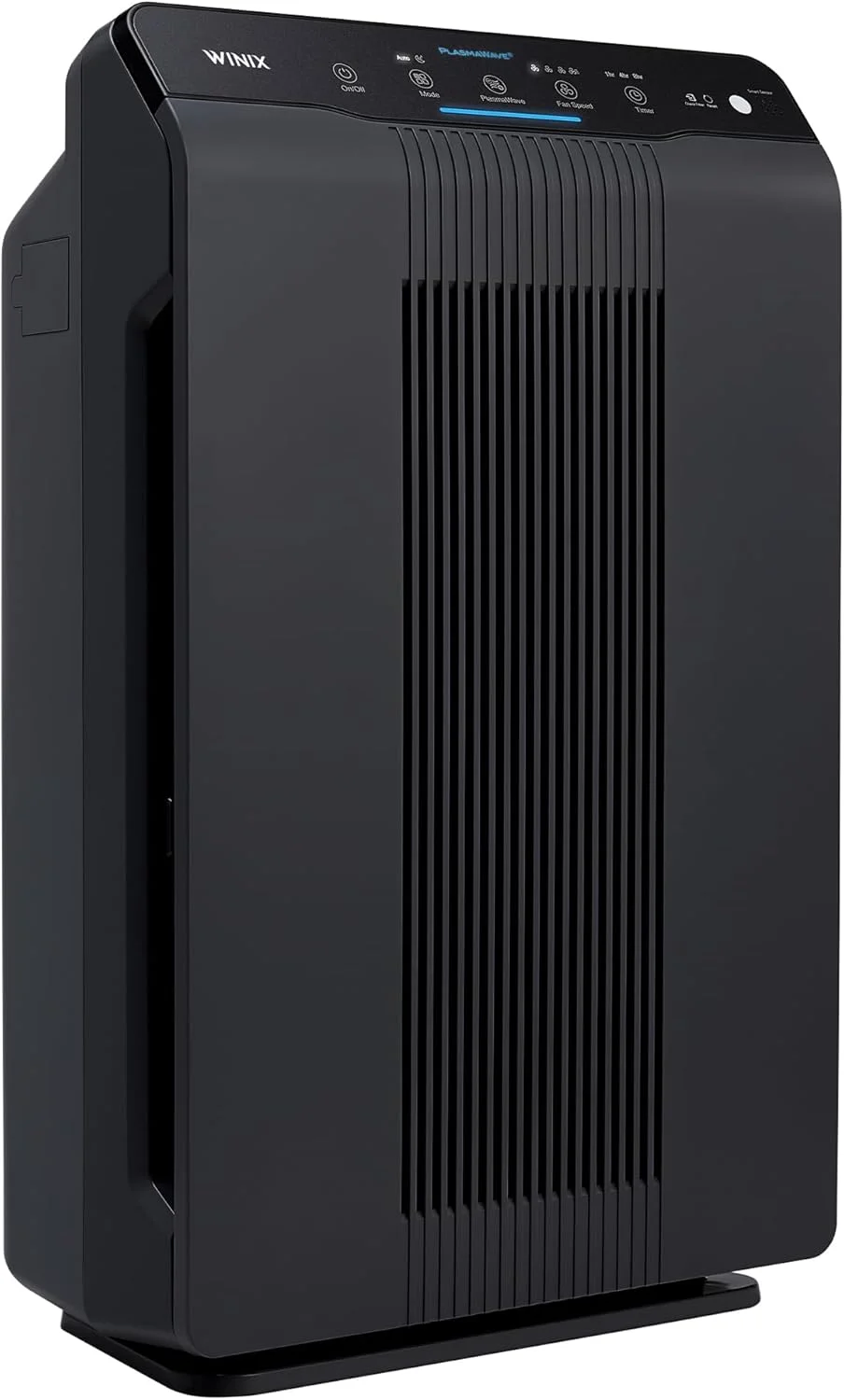
| Winix 5500-2 | 232 | 243 | 360 sq ft | True HEPA + PlasmaWave + Washable Carbon | 9.2/10 |
| Austin Air HealthMate HM400 | 156 | 154 | 1500 sq ft (manufacturer) | True HEPA (60 sq ft media) + 15 lbs Activated Carbon/Zeolite (4-stage) | 7.5/10 |
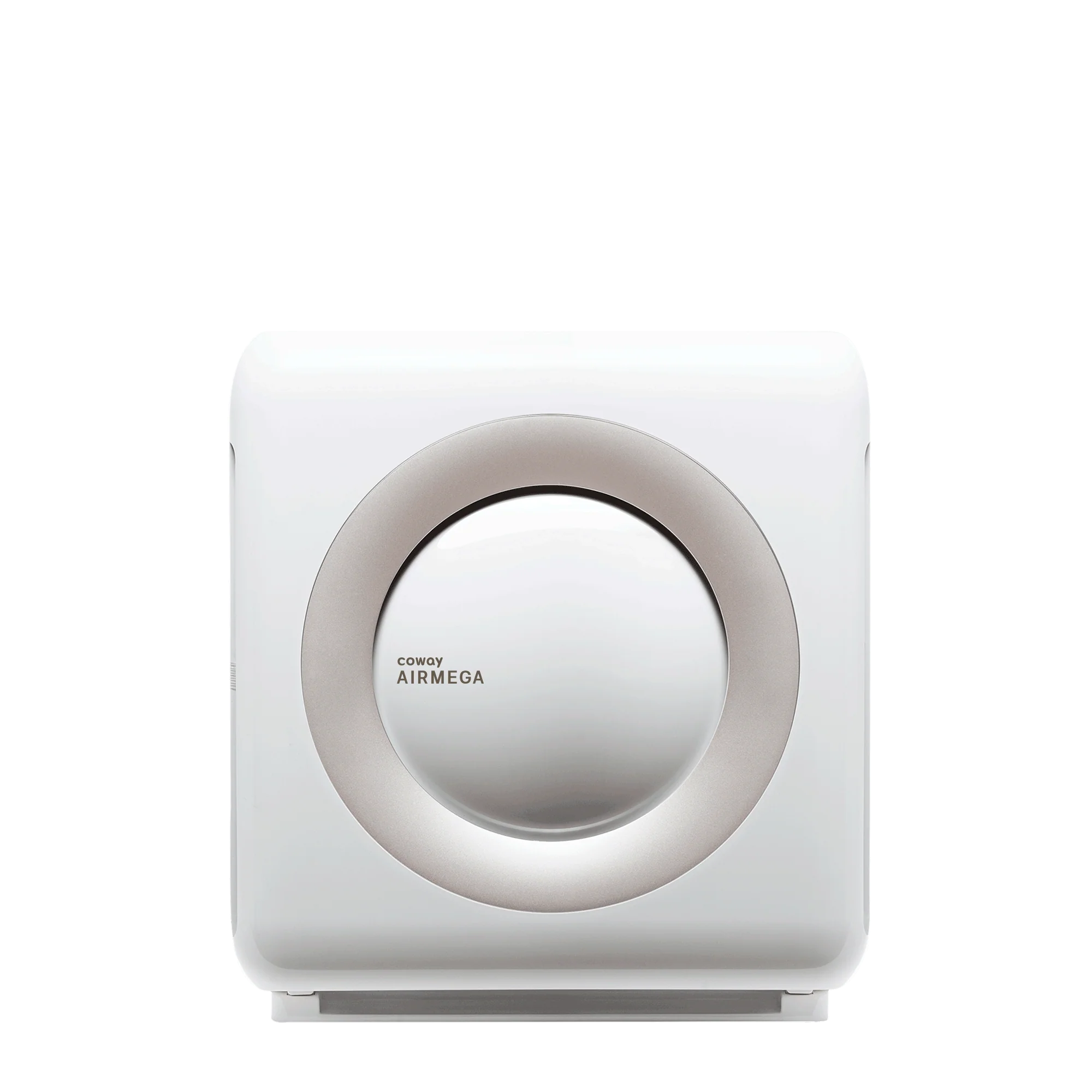
| Coway AP-1512HH Mighty | 233 | 246 | 361 sq ft | True HEPA + Carbon + Pre-filter | 9.5/10 |
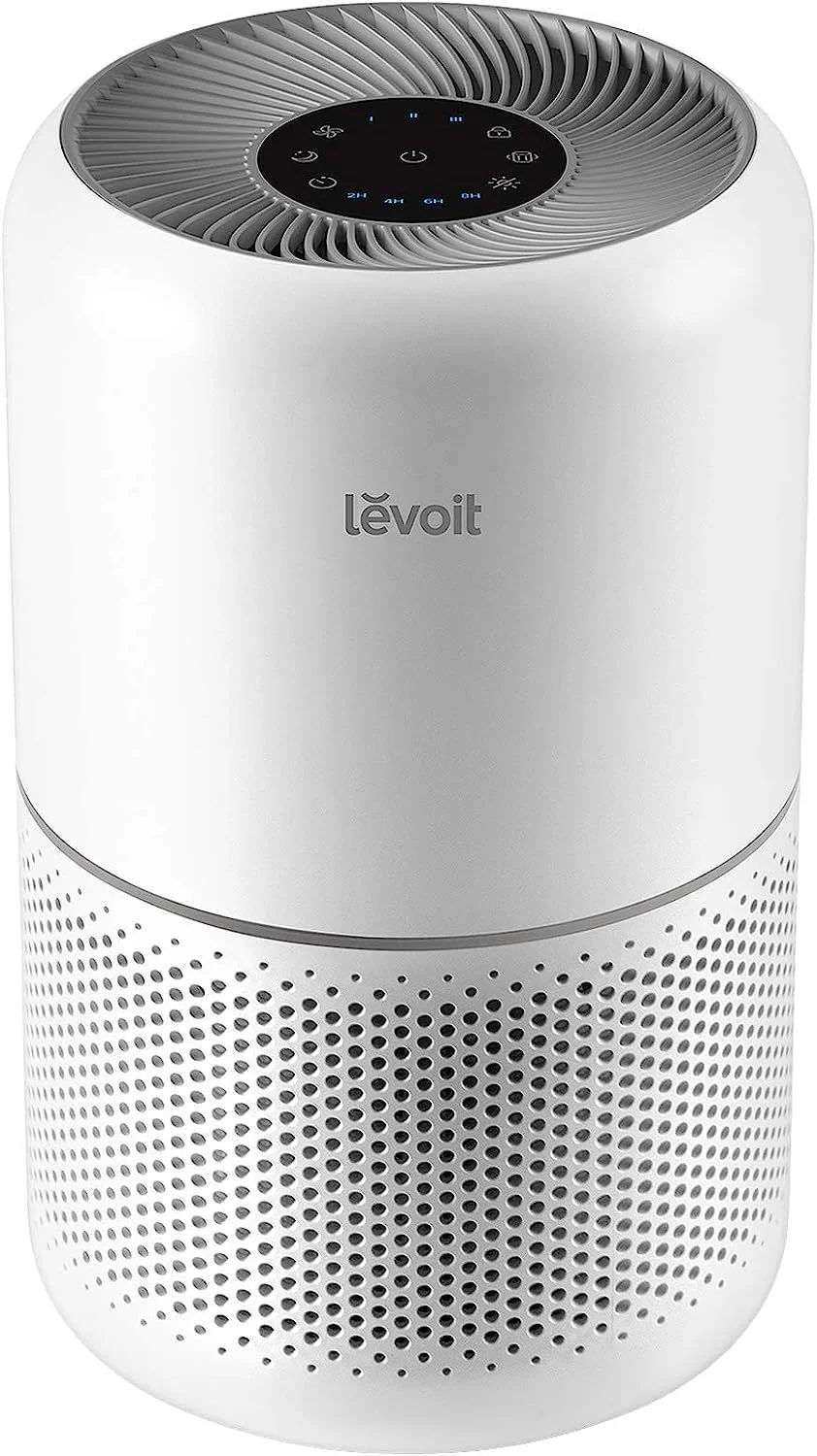
| Levoit Core 300 | 141 | 141 | 219 sq ft | 3-Stage HEPA Filtration | 8.8/10 |
📅 Prices checked . Amazon prices change frequently — click through for current price. Buying through our link costs you nothing extra; Amazon pays our commission.
Winix 5500-2 Review Best Value
✓ AHAM VerifiedOur Verdict
Key Specifications
- Room Coverage
- 360 sq ft
- CADR
- 232/243/246
- Filter
- True HEPA + PlasmaWave + Washable Carbon
- Noise
- 27 dB
- Power
- 67 watts
- Best For
- DISCONTINUED. Buy while stock lasts. Washable carbon is unique advantage.
📅 Prices checked . Amazon prices change frequently — click through for current price. Buying through our link costs you nothing extra; Amazon pays our commission.
What's in the Box
- Winix 5500-2 air purifier
- Pre-installed True HEPA + carbon filter
- Power cord
- Remote control
- User manual
Pros
- AHAM verified CADR
- PlasmaWave pellet carbon
- Washable carbon filter — unique
- HouseFresh tested 23 min room clean
Cons
- DISCONTINUED in US
- No WiFi
- Louder than 5510
- Larger footprint
Best For
The best combination of strong HEPA and meaningful carbon filtration at a mid-range price. The Winix 5500-2 uses a True HEPA filter rated at CADR 243 for smoke plus a carbon sheet filter with PlasmaWave technology for additional gas-phase and odor control. It is not the heaviest carbon load in the industry but it is far better than thin carbon layer competitors. Best for households with pets, cooking odors, or light VOC concerns. Full Winix review.
📅 Price checked August 2026 · Buying through this link costs you nothing extra — Amazon covers our commission
Austin Air HealthMate HM400 Review VOC Specialist
HouseFresh TestedOur Verdict

Key Specifications
- Room Coverage
- 1500 sq ft (manufacturer)
- CADR
- Not AHAM verified — HOUSEFRESH_TESTED
- Filter
- True HEPA (60 sq ft media) + 15 lbs Activated Carbon/Zeolite (4-stage)
- Noise
- 50 dB
- Power
- 132 watts
- Best For
- Chemical sensitivities, VOCs, heavy odors. 15 lbs carbon/zeolite is the deepest gas-phase filter available under $1000. Made in USA.
📅 Prices checked . Amazon prices change frequently — click through for current price. Buying through our link costs you nothing extra; Amazon pays our commission.
What's in the Box
- Austin Air HealthMate air purifier
- Pre-installed 4-stage filter (HEPA + activated carbon)
- Power cord
- User manual
- 5-year filter warranty card
Pros
- 15 lbs activated carbon/zeolite — unmatched VOC removal
- True HEPA with 60 sq ft filter media
- Filter rated 5 years — lowest annual replacement cost
- Made in USA (Buffalo NY)
- CSA and UL certified
- Popular with chemically sensitive individuals
Cons
- NOT AHAM verified — no independent CADR
- $750-900 very expensive
- 50dB on lowest — loudest in class
- 132 watts at high — energy intensive
- No smart features
- Very heavy and non-portable
Best For
The best carbon filtration of any consumer air purifier. The Austin Air HealthMate contains 15 pounds of activated carbon and zeolite blend — more than most competitors' entire purifier weighs. This carbon load provides genuine long-term gas adsorption capacity. HEPA filtration is medical-grade. The trade-off is price ($700+) and the unit's industrial design. Justified for severe chemical sensitivities, high VOC environments, or anyone who cannot compromise on gas filtration. Full Austin Air review.
📅 Price checked August 2026 · Buying through this link costs you nothing extra — Amazon covers our commission
Coway AP-1512HH Mighty Review Editor Choice
✓ AHAM VerifiedOur Verdict
Key Specifications
- Room Coverage
- 361 sq ft
- CADR
- 233/246/240
- Filter
- True HEPA + Carbon + Pre-filter
- Noise
- 24 dB
- Power
- 77 watts
- Best For
- Medium rooms up to 361 sq ft. Wirecutter #1 for 10+ years. Best overall value.
📅 Prices checked . Amazon prices change frequently — click through for current price. Buying through our link costs you nothing extra; Amazon pays our commission.
What's in the Box
- Coway AP-1512HH air purifier
- Pre-installed 4-stage filter set
- Power cord
- User manual
- Filter replacement reminder sticker
Pros
- Wirecutter #1 for 10+ consecutive years
- AHAM verified CADR — no controversy
- True HEPA
- Fastest auto mode response in class
- 24dB ultra quiet sleep mode
- Eco mode at 4.9 watts
- 3-year warranty
Cons
- No WiFi or app control
- Carbon is impregnated fabric — weak on heavy odors
- Ionizer adds trace ozone (9ppb — CARB safe)
- Filter costs $60/year
- Design is dated
Best For
Exceptional HEPA performance at CADR 246 — among the best verified particle removal per dollar. Carbon filtration is a thin activated carbon layer that handles light odors adequately but is not designed for serious VOC loads or smoke gases. Buy the Coway for allergy and particle control. If you also need heavy odor or gas removal, pair it with an Austin Air or Winix. Full Coway review.
📅 Price checked August 2026 · Buying through this link costs you nothing extra — Amazon covers our commission
Levoit Core 300 Review Best Budget
✓ AHAM VerifiedOur Verdict
Key Specifications
- Room Coverage
- 219 sq ft
- CADR
- 141/141/141
- Filter
- 3-Stage HEPA Filtration
- Noise
- 24 dB
- Power
- 45 watts
- Best For
- Small rooms under 220 sq ft. Budget entry point.
📅 Prices checked . Amazon prices change frequently — click through for current price. Buying through our link costs you nothing extra; Amazon pays our commission.
What's in the Box
- Levoit Core 300 air purifier
- Pre-installed 3-in-1 filter
- Power cord
- User manual
Pros
- AHAM verified CADR 141
- Cheapest filter replacements at $25/year
- 24dB ultra quiet sleep mode
- Compact cylindrical design
- Simple plug-and-play — no app needed
Cons
- No auto mode or air quality sensor
- Only covers 219 sq ft
- HEPA claims controversy affected Levoit brand
- Filter needs replacing every 6 months
Best For
Strong True HEPA particle filtration for the price (CADR 141). Carbon layer is thin — sufficient for minor background odors but will not handle cooking fumes, pet odors, or meaningful VOC loads. Buy the Core 300 for a budget bedroom where particle removal is the priority. Do not buy it expecting serious gas or odor control. Full Levoit review.
📅 Price checked August 2026 · Buying through this link costs you nothing extra — Amazon covers our commission
What to Know Before You Buy
How to Evaluate Carbon Quality Without Opening the Box
Carbon filter quality correlates almost directly with weight of activated carbon media. A carbon layer weighing 5-10 grams (found in many budget and mid-range purifiers) provides a small surface area and saturates quickly. Austin Air uses 15 pounds. Winix uses a carbon sheet that is substantially thicker than competitors in its price range. When a manufacturer describes their carbon as an "activated carbon layer," "carbon-coated pre-filter," or "carbon honeycomb," this signals a thin implementation. When they publish the weight in grams or describe a "deep bed" or "granular activated carbon," this signals a serious implementation. If the manufacturer does not publish carbon weight, assume it is minimal.
The 3-Filter System That Handles Everything
The optimal air purifier uses three filtration stages in sequence. Stage 1: a washable pre-filter for large particles (hair, lint, large dust). This protects the HEPA and carbon and extends their life. Stage 2: True HEPA for all particles 0.3 microns and larger. Stage 3: activated carbon for gases, VOCs, and odors. Some premium units add a fourth stage: UV-C or PlasmaWave for microbial control. If the purifier you are considering skips stage 1 or uses a non-washable pre-filter, factor in the additional filter replacement costs over 3 years.
What HEPA Filters Capture — and What They Miss
True HEPA filtration is defined by performance, not construction. Any filter that captures 99.97% of particles at 0.3 microns (the most penetrating particle size) qualifies as True HEPA. This performance standard covers an enormous range of real-world pollutants.
What HEPA captures effectively:
PM2.5 (fine particulate matter, 0.1-2.5 microns): HEPA captures all of this range. PM2.5 from traffic, industry, and indoor sources is the most harmful airborne particle for respiratory health. A True HEPA purifier reduces indoor PM2.5 by 85-98% depending on room size and air changes per hour. This is the most health-significant thing an air purifier does.
Pollen (10-100 microns): Pollen particles are large relative to HEPA's capture threshold. HEPA captures them easily at nearly 100% efficiency. Seasonal allergy sufferers get the most dramatic relief from HEPA filtration in properly sized rooms.
Dust mite fragments (100-300 microns): The dust mite itself is too large for airborne suspension. But its shed skin fragments and fecal particles (2-10 microns) become airborne and are captured by HEPA. Important note: HEPA removes these particles from the air but cannot remove dust mite populations from carpet and bedding. A HEPA vacuum is required to address the source.
Pet dander (2-10 microns): HEPA captures pet dander particles efficiently. Running a correctly sized HEPA purifier in the same room as a pet reduces airborne dander dramatically within 30-60 minutes. A Coway AP-1512HH at CADR 246 in a 250 sq ft room turns over the air every 6 minutes.
Mold spores (2-20 microns): HEPA captures mold spores effectively. However, capturing airborne spores does not eliminate a mold source. If mold is growing in your home, HEPA reduces spore exposure but does not treat the underlying problem.
Bacteria (0.3-10 microns): Most bacteria are 0.5-5 microns. True HEPA captures them. The filter does not kill bacteria, but trapped bacteria die within 24-48 hours due to desiccation. Some purifiers add UV-C or antimicrobial filter coatings to address this.
What HEPA does NOT capture:
VOCs (volatile organic compounds): These are gases — formaldehyde, benzene, toluene, xylene, acetaldehyde. They are emitted from paint, furniture, flooring, cleaning products, and building materials. Gas molecules are nanometers in size, far too small for any mechanical filter to capture. HEPA provides zero protection against VOCs.
Odors: Odors are caused by gas-phase molecules, not particles. Cooking smells, pet odors, cigarette smell after the smoke clears, and chemical off-gassing odors are all gases. HEPA filters have no effect on odors. A room with a HEPA purifier running can still smell strongly of yesterday's cooking.
Smoke smell (after visible smoke clears): Smoke has two components — smoke particles (captured by HEPA) and smoke gases (acetaldehyde, acrolein, benzene). HEPA removes smoke haze. It does not remove the chemical smell. A room that has been smoked in will continue to smell after HEPA filtration because the gas-phase compounds are still present.
Radon, carbon monoxide, nitrogen dioxide: These are gases. HEPA has no effect on any of them.
What Carbon Filters Capture — and What They Miss
Activated carbon works by adsorption — a process where gas molecules bind to the massive surface area of carbon particles. The effectiveness depends on two factors: the total carbon weight (more carbon = more surface area = more capacity) and the match between the carbon type and the target pollutant.
What carbon captures effectively:
Cooking odors (acrolein, aldehydes, mercaptans): Activated carbon is excellent at capturing the gas-phase compounds from cooking. The challenge is that cooking generates large volumes of gas-phase compounds quickly. Thin carbon filters saturate faster during and after cooking sessions than with background ambient odors.
VOCs from furniture and building materials: Formaldehyde, benzene, toluene, and xylene from new furniture, flooring, paints, and adhesives are efficiently adsorbed by carbon. This is one of the strongest use cases for carbon filtration.
Smoke gases: The gas-phase compounds in tobacco smoke and wildfire smoke — benzene, acrolein, acetaldehyde — are captured by carbon. This is why purifiers with substantial carbon filtration (Austin Air, Winix) perform better in smoky environments than HEPA-only units even though the HEPA handles the visible smoke particles.
Pet odors: The volatile compounds from pet waste and body odor are gas-phase. HEPA does nothing for pet smell. Carbon is what eliminates pet odor. A purifier with thin carbon layer will reduce pet odor initially but saturate within weeks in a pet household.
General household odors: Garbage, must, cleaning products, perfume, and general room odors are all gas-phase. Carbon provides meaningful odor reduction for all of these.
What carbon does NOT capture:
Particles of any kind: Carbon has no mechanical filtration capability. A carbon-only filter passes PM2.5, pollen, dust, pet dander, mold spores, and bacteria straight through without capture. A household with a carbon-only purifier and a furry pet will have no improvement in airborne dander levels.
Carbon monoxide and radon: These gases do not adsorb well to activated carbon under typical indoor conditions. Carbon filtration provides minimal protection against carbon monoxide or radon. Dedicated monitors and mitigation systems are required.
Water vapor and high humidity air: Carbon adsorption efficiency drops significantly at high relative humidity (above 70%). In humid climates or during summer, carbon filtration becomes less effective. Some manufacturers use zeolite blends (as in Austin Air) to maintain effectiveness at higher humidity.
Gases once carbon is saturated: This is the most important limitation. Carbon has finite capacity. Once all adsorption sites are filled, it can no longer capture gases. A saturated carbon filter provides essentially zero gas-phase protection. Worse, it can desorb — releasing previously captured gases back into the air. Regular carbon filter replacement is not optional if you need ongoing odor and VOC control.
Why HEPA Alone Fails for Smoke — A Real Scenario
Wildfire smoke is the clearest example of why HEPA alone is insufficient. During a wildfire event, outdoor air contains two categories of pollutants: smoke particles (PM2.5, ultrafine particles, soot) and smoke gases (benzene, formaldehyde, acrolein, carbon monoxide, NO2).
A HEPA-only purifier running at CADR 246 in a sealed 250 sq ft room will reduce visible smoke haze almost completely within 20-30 minutes. The PM2.5 reading on an air quality monitor will drop from 150 µg/m³ to under 10 µg/m³. The room will look clean.
It will still smell strongly of smoke. The gas-phase benzene concentration is not reduced. The formaldehyde from burning vegetation is not reduced. The acrolein — a highly irritating compound from incomplete combustion — is not reduced. Breathing in this room feels better visually but the chemical exposure from smoke gases is unchanged by HEPA filtration alone.
HouseFresh testing data (2024) showed that during wildfire conditions, HEPA-only purifiers reduced PM2.5 by 90%+ but had zero measured reduction in VOC concentration. Purifiers with activated carbon (Winix 5500-2, Austin Air HealthMate) reduced both PM2.5 and measured VOC concentrations during the same test periods.
The practical implication: for wildfire smoke protection, use a purifier with both HEPA and substantial activated carbon. The HEPA handles the particles. The carbon handles the gas-phase chemical exposure. Pairing a strong HEPA with a thin carbon layer (as found in many budget purifiers) is meaningfully better than HEPA alone, but not as effective as a properly weighted carbon system.
Cigarette and cannabis smoke follow the same pattern. HEPA clears the visible smoke. Carbon eliminates the odor and captures smoke-gas compounds. Without carbon, the smell and gas-phase chemicals persist after HEPA has removed all visible particles. This is why rooms can test as particle-clean on a PM2.5 monitor while still smelling strongly of smoke — the PM2.5 sensor does not detect gas-phase compounds.
Carbon Quality — Why Weight in Grams Is What Matters
The single most important specification for a carbon filter that manufacturers almost never publish is the weight of activated carbon media in grams. This number directly determines how much gas-phase capacity the filter has and how long it lasts before saturation.
Thin carbon layers in budget and mid-range purifiers typically contain 15-50 grams of carbon. Substantial carbon filters contain 200-500 grams. The Austin Air HealthMate uses approximately 6,800 grams (15 pounds). This is not a matter of degree — it is a completely different capability.
At 15-50 grams of carbon, the filter provides: noticeable initial odor reduction, saturation within 2-4 weeks of heavy odor load, essentially cosmetic gas-phase filtration for serious VOC concerns. This is what you get from most purifiers priced under $200 that include a carbon filter. It is better than nothing. It is not meaningful protection for VOCs, serious smoke, or persistent odors.
At 200-500 grams: meaningful VOC adsorption capacity over weeks to months, real odor reduction sustained over time, appropriate for cooking odors, pet households, and moderate smoke exposure. The Winix 5500-2 is closer to this range than most competitors, though Winix does not publish the exact carbon weight.
At 2,000+ grams: genuine long-term chemical exposure reduction. Austin Air uses this level specifically for people with chemical sensitivities, MCS (multiple chemical sensitivity), or high VOC environments (new construction, renovation off-gassing). The 5-year filter life they advertise reflects the carbon volume — there is genuinely that much adsorption capacity.
Brands that do both HEPA and carbon well: Austin Air (best-in-class carbon, premium price), Winix (best carbon-to-price ratio at mid-range), IQAir (premium carbon options, very high price). Brands that have good HEPA but minimal carbon: Coway, Levoit, most Blueair models. Neither of these is wrong — it depends on whether your concern is particle control or gas control. For most households, excellent HEPA with minimal carbon handles 80% of air quality concerns. Only upgrade to serious carbon if VOCs, heavy odors, or smoke are primary concerns.