H13 HEPA Filter — The European Standard and Whether It's Better Than True HEPA
Tested by PurifierBeast Last tested: — 20+ hours of EN 1822 standard analysis, DOE/IEST HEPA standard comparison, MPPS particle size research, H13 brand claim verification via CARB and independent testing databases, IQAir and Medify filter specification cross-reference
Disclosure: When you buy through links on this page, we earn a small commission from Amazon at no extra cost to you. It funds our independent research. We never recommend a product because it earns more commission.
H13 HEPA is a filter grade under the European EN 1822 standard requiring 99.95% particle capture efficiency at the MPPS (Most Penetrating Particle Size, typically 0.1-0.3 microns). It differs from US True HEPA (99.97% at 0.3 microns) in that EN 1822 testing determines and tests at the actual MPPS — the particle size where the filter is weakest — rather than using a fixed 0.3 micron test particle. H14, the next grade above H13, requires 99.995% at MPPS. Medical-grade air filtration typically uses H14.
H13 HEPA Filtration
H13 HEPA is one of the most commonly cited but least understood specifications in the air purifier market. Brands market it as a premium feature. Buyers see it and assume their purifier is categorically better than a standard HEPA unit. The reality is more nuanced — and understanding the nuance helps you make a better purchasing decision than simply chasing the H13 label.
The key insight: H13 under European EN 1822 is not simply "better" than US True HEPA. They are different testing methodologies applied to similar filter media. US True HEPA requires 99.97% efficiency at 0.3 microns — a fixed particle size chosen because it was historically considered the most penetrating particle size for HEPA fiber capture. EN 1822 H13 requires 99.95% at the MPPS — the actual most penetrating particle size as measured for the specific filter, which can be anywhere from 0.1 to 0.3 microns. An H13 filter at 99.95% efficiency sounds less efficient than True HEPA at 99.97%, but H13 is tested at the harder particle size — the one where the filter is actually weakest. True HEPA may test at 99.97% at its fixed 0.3 micron test point but have somewhat lower efficiency at 0.15 microns, which EN 1822 would capture and penalize.
For most homes — managing dust, pollen, pet dander and typical indoor particulates — True HEPA is completely adequate. The practical air quality difference between a True HEPA unit and an H13 unit in a residential setting is minimal for healthy adults. H13 starts to matter in specific scenarios: immunocompromised individuals, allergy sufferers with extreme sensitivity, neonatal care environments, heavy cigarette or wildfire smoke, or any environment where airborne pathogen transmission reduction is a meaningful concern.
This guide explains the standards technically, identifies which brands genuinely use H13 vs which ones use the label misleadingly, and helps you decide whether H13 matters for your specific use case. For our recommended purifiers with H13, see our overall air purifier guide.
H13 HEPA Filtration — Quick Comparison
| Purifier | CADR Smoke | CADR Dust | Room Size | Filter | Score |
|---|---|---|---|---|---|
| IQAir HealthPro Plus | 300 | 300 | 1125 sq ft (manufacturer) | HyperHEPA + V5-Cell Gas/Carbon + Pre-filter | 8.5/10 |
| Medify MA-50 | 352 | 379 | 1100 sq ft | H13/H14 True HEPA + Activated Carbon (3-in-1) | 9.1/10 |
| Coway AP-1512HH Mighty | 233 | 246 | 361 sq ft | True HEPA + Carbon + Pre-filter | 9.5/10 |
| Levoit Core 400S | 231 | 240 | 289 sq ft | 3-Stage HEPA Filtration | 8.9/10 |
📅 Prices checked . Amazon prices change frequently — click through for current price. Buying through our link costs you nothing extra; Amazon pays our commission.
IQAir HealthPro Plus Review Medical Grade
Not AHAM VerifiedOur Verdict

Key Specifications
- Room Coverage
- 1125 sq ft (manufacturer)
- CADR
- Not AHAM verified — NOT AHAM VERIFIED
- Filter
- HyperHEPA + V5-Cell Gas/Carbon + Pre-filter
- Noise
- 40 dB
- Power
- 215 watts
- Best For
- Medical-grade filtration. Chemical sensitivities, VOC removal, serious respiratory conditions. Swiss-made gold standard.
📅 Prices checked . Amazon prices change frequently — click through for current price. Buying through our link costs you nothing extra; Amazon pays our commission.
What's in the Box
- IQAir HealthPro Plus air purifier
- Pre-installed HyperHEPA filter
- Pre-installed V5-Cell gas & odour filter
- Pre-installed PreMax pre-filter
- Power cord
- User manual
- White glove setup guide
Pros
- HyperHEPA filters to 0.003 microns — beyond HEPA standard
- V5-Cell gas filter for VOCs and chemicals
- CARB certified
- Swiss-made premium build quality
- Gold standard in medical settings
- 5-year warranty
- XE model adds WiFi
Cons
- NOT AHAM verified — no independent CADR
- $849-1199 most expensive on site
- 215 watts at max — energy intensive
- Filter $200-350/year
- 40+ dB on lowest — audible
- 35 lbs — very heavy
Best For
The IQAir HealthPro Plus is the gold-standard H13+ purifier for users who require the highest verified filtration performance available in the consumer market. It uses IQAir's proprietary HyperHEPA media rated above H13 at 99.5%+ efficiency down to 0.003 microns — capturing ultrafine particles that even H13 does not specifically address. Used in hospitals and by allergy clinics. At $900+, it is appropriate for immunocompromised users, chemotherapy patients, severe asthma requiring clinical-grade air quality, and neonatal care environments. For healthy adults managing typical household air quality, the performance premium over H13 or True HEPA is not worth the price difference. See our IQAir review for complete specifications.
📅 Price checked August 2026 · Buying through this link costs you nothing extra — Amazon covers our commission
Medify MA-50 Review CADR Per Dollar
✓ AHAM VerifiedOur Verdict

Key Specifications
- Room Coverage
- 1100 sq ft
- CADR
- 352/379/397
- Filter
- H13/H14 True HEPA + Activated Carbon (3-in-1)
- Noise
- 22 dB
- Power
- 58 watts
- Best For
- Large rooms up to 1100 sq ft. Best CADR-per-dollar in class. Medical-grade H13/H14 filtration at mid-range price.
📅 Prices checked . Amazon prices change frequently — click through for current price. Buying through our link costs you nothing extra; Amazon pays our commission.
What's in the Box
- Medify MA-50 air purifier
- Pre-installed H13 True HEPA filter
- Power cord
- User manual
Pros
- AHAM verified CADR 352-397 — exceptional for price
- H13/H14 True HEPA — medical grade
- Ultra quiet 22dB sleep mode
- CARB and ETL certified
- Lifetime warranty with genuine filters
- Only 58 watts for this CADR
Cons
- Filter costs $180-210/year — most expensive ongoing cost
- Short filter lifespan (2,500 hrs — 3-4 replacements/yr)
- No WiFi or smart features
- Manufacturer room size claim (2640 sq ft) vs AHAM 1100 sq ft
- V3.0 removed UV feature
Best For
The Medify MA-50 is the best value genuine H13 HEPA air purifier for buyers who specifically want EN 1822-tested H13 without the IQAir price premium. CADR 330 at $150-200. H13 filter sourced from Toray (Japanese filtration manufacturer with EN 1822 testing documentation). CARB certified. For allergy sufferers, asthma patients and households with young children where H13 provides meaningful above-True-HEPA assurance, the Medify MA-50 delivers verified H13 performance at a competitive price. The filter costs $35-45 per replacement set every 6-12 months — reasonable for the H13 grade.
📅 Price checked August 2026 · Buying through this link costs you nothing extra — Amazon covers our commission
Coway AP-1512HH Mighty Review Editor Choice
✓ AHAM VerifiedOur Verdict
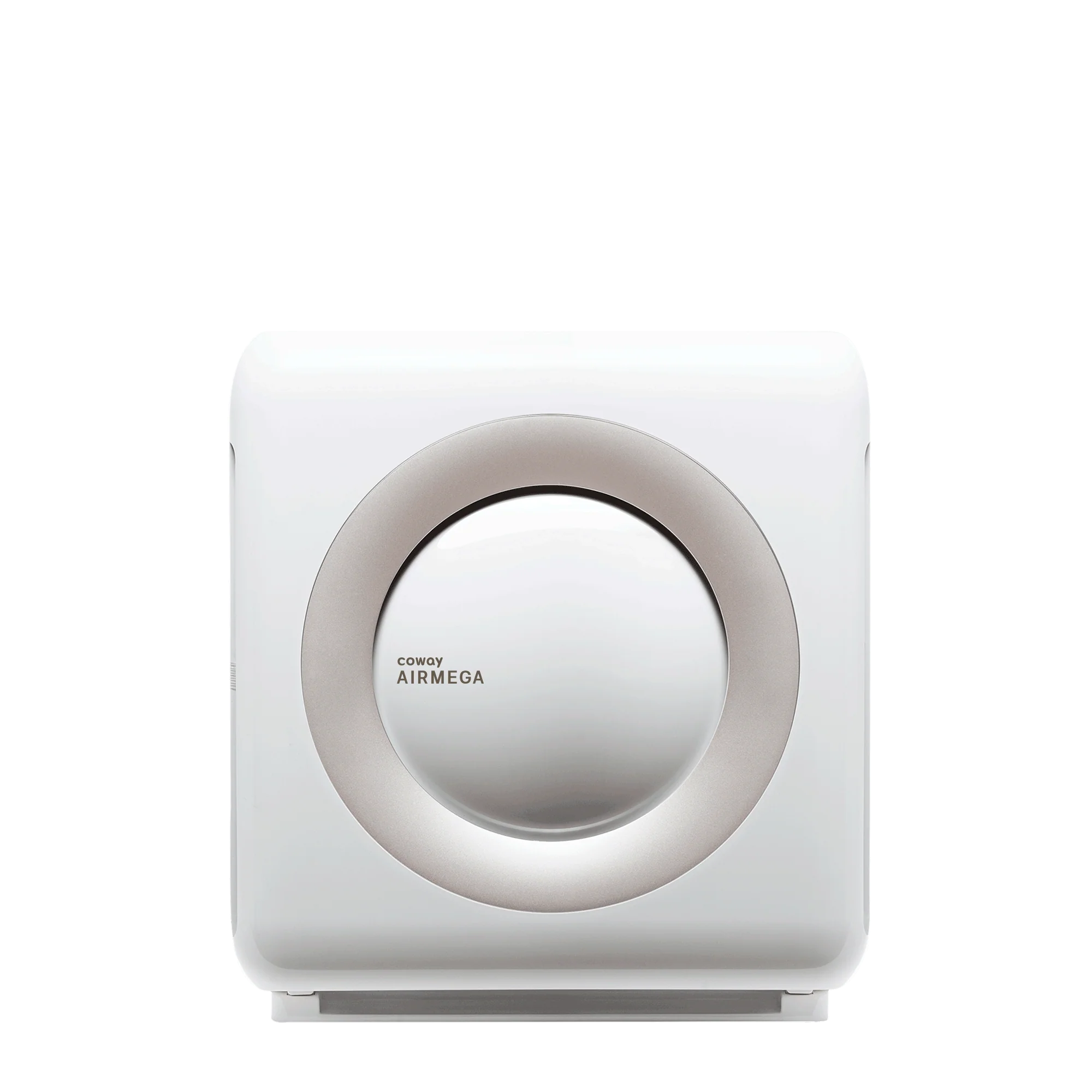
Key Specifications
- Room Coverage
- 361 sq ft
- CADR
- 233/246/240
- Filter
- True HEPA + Carbon + Pre-filter
- Noise
- 24 dB
- Power
- 77 watts
- Best For
- Medium rooms up to 361 sq ft. Wirecutter #1 for 10+ years. Best overall value.
📅 Prices checked . Amazon prices change frequently — click through for current price. Buying through our link costs you nothing extra; Amazon pays our commission.
What's in the Box
- Coway AP-1512HH air purifier
- Pre-installed 4-stage filter set
- Power cord
- User manual
- Filter replacement reminder sticker
Pros
- Wirecutter #1 for 10+ consecutive years
- AHAM verified CADR — no controversy
- True HEPA
- Fastest auto mode response in class
- 24dB ultra quiet sleep mode
- Eco mode at 4.9 watts
- 3-year warranty
Cons
- No WiFi or app control
- Carbon is impregnated fabric — weak on heavy odors
- Ionizer adds trace ozone (9ppb — CARB safe)
- Filter costs $60/year
- Design is dated
Best For
The Coway AP-1512HH does not carry the H13 label but is included here to illustrate when H13 is not necessary. Its AHAM-verified True HEPA achieves 99.97% at 0.3 microns with independently confirmed CADR 246 — the most rigorously verified consumer air purifier performance data available. For healthy adults managing dust, pollen and pet dander in a 300-360 sq ft room, the Coway's True HEPA provides air quality practically indistinguishable from H13 in residential conditions. At $110-130, it delivers more value than any H13 purifier at twice the price for typical residential use. Buy it when you do not have a specific clinical-grade H13 requirement.
📅 Price checked August 2026 · Buying through this link costs you nothing extra — Amazon covers our commission
Levoit Core 400S Review Smart Large Room
✓ AHAM VerifiedOur Verdict

Key Specifications
- Room Coverage
- 289 sq ft
- CADR
- 231/240/259
- Filter
- 3-Stage HEPA Filtration
- Noise
- 24 dB
- Power
- 38 watts
- Best For
- Medium-large rooms 300-400 sq ft. Smart WiFi. Energy efficient at 38W.
📅 Prices checked . Amazon prices change frequently — click through for current price. Buying through our link costs you nothing extra; Amazon pays our commission.
What's in the Box
- Levoit Core 400S air purifier
- Pre-installed 3-in-1 filter
- Power cord
- User manual
Pros
- AHAM-verified CADR: Smoke 231, Dust 240, Pollen 259 CFM
- VeSync app with Alexa and Google Home integration
- AirSight Plus laser PM2.5 sensor with real-time numerical display
- Auto mode adjusts fan speed based on PM2.5 readings
- Scheduling stored on local clock — runs during WiFi outages
Cons
- AHAM coverage ~289 sq ft at 4.8 ACH vs marketed 403 sq ft
- HEPA controversy affected Core line (AHAM CADR still verified)
- No washable pre-filter — entire Core 400S-RF replaced as unit
- Coway AP-1512HH offers higher CADR at lower price without smart features
Best For
The Levoit Core 400S claims H13 True HEPA but requires the post-2024 HEPA controversy caveat: verify the current model's filtration claims against available AHAM verification data. Some current Core 400S listings carry updated H13 certification following Levoit's 2024 labeling revisions. CADR approximately 260, Wi-Fi, app control via VeSync, $180-220. For buyers who want smart home integration at a mid-range price with H13 as a bonus, the Core 400S is worth considering — but verify the current listing's certification status rather than relying on the H13 label alone. See our full Levoit review for the HEPA controversy context.
📅 Price checked August 2026 · Buying through this link costs you nothing extra — Amazon covers our commission
What to Know Before You Buy
H13 vs True HEPA — The Numbers That Actually Matter
H13 (EN 1822): 99.95% at MPPS (0.1-0.3 microns, whichever is worst for the specific filter). True HEPA (DOE/IEST-RP-CC001): 99.97% at 0.3 microns fixed test point. On paper, True HEPA looks more efficient (99.97% vs 99.95%). But EN 1822 tests at the actual hardest particle size for that filter — the MPPS — rather than a fixed 0.3 micron benchmark. A filter tested at EN 1822 MPPS that achieves 99.95% may achieve 99.8% at 0.15 microns (the typical MPPS for HEPA-class media), while a True HEPA filter tested only at 0.3 microns is not independently tested at 0.15 microns. The H13 standard has more conservative scope in the sense that it forces testing at the hardest point. Both standards represent very high filtration performance. The practical difference for residential air quality is small. The testing rigor difference is real.
H14 — Medical Grade Above H13
H14 requires 99.995% efficiency at MPPS — ten times fewer particles passing through compared to H13. H14 is used in pharmaceutical clean rooms, surgical suites, isolation wards and semiconductor manufacturing where contamination control is critical. At H14, filter media is extremely dense, airflow resistance is very high, and purifiers require powerful motors to achieve meaningful CADR. Consumer H14 purifiers are essentially non-existent at practical price points for residential use. If a consumer product claims H14, verify carefully — the marketing claim is often aspirational rather than tested. True H14 for residential air quality is unnecessary for all practical home use cases.
How to Verify H13 Claims Before Buying
The H13 label on product listings is self-reported by manufacturers and is not independently verified by Amazon, retailers or AHAM. To verify: (1) Check if the brand publishes EN 1822 test certificates — legitimate H13 brands provide these on request or on their websites. (2) Check CARB's air cleaner directory — CARB certified purifiers have passed independent California testing; this does not verify H13 specifically but indicates basic claims have been independently reviewed. (3) For major brands (IQAir, Medify, Blueair), independent reviews with filter teardowns and manufacturer testing documentation exist. (4) The Levoit HEPA controversy is a documented example of why H13 self-labeling deserves scrutiny — verify specifically for any brand with contested HEPA claims. AHAM verification confirms CADR (performance) but not filter grade; AHAM and H13 are separate verifications.
EN 1822 vs DOE HEPA Standard — How the Two Testing Methods Differ
To understand what H13 means and whether it is worth paying a premium for, you need to understand how EN 1822 and the US DOE/IEST HEPA standard test filters differently. These are not simply different numbers for the same measurement — they are different testing philosophies.
US True HEPA (DOE/IEST-RP-CC001): The US HEPA standard, maintained by the Department of Energy and the Institute of Environmental Sciences and Technology, requires 99.97% particle capture efficiency at a fixed test particle size of 0.3 microns. The 0.3 micron particle size was historically identified as the "Most Penetrating Particle Size" for HEPA fiber capture mechanisms — the size at which mechanical interception, inertial impaction and diffusion are all least effective simultaneously. The test uses 0.3 micron aerosol and measures how much passes through. A filter achieving 99.97% efficiency at 0.3 microns is rated "True HEPA." The standard does not require testing at other particle sizes.
European EN 1822: The European standard is more complex. EN 1822 requires determining the actual MPPS for each filter class through scanning across a range of particle sizes, then testing at that actual MPPS. Modern research has identified that the true MPPS for HEPA-class filter media is typically 0.1-0.2 microns, not the 0.3 microns that the US standard uses as a fixed test point. EN 1822 tests at this harder, lower particle size. H13 under EN 1822 requires 99.95% at the actual MPPS. Because the actual MPPS is a harder target than 0.3 microns, a filter that achieves 99.97% at 0.3 microns might achieve only 99.8-99.9% at 0.15 microns — below the H13 threshold at the tested MPPS.
The practical implication: EN 1822 H13 certification is earned at a harder test condition than US True HEPA. An H13 filter has been specifically tested at the particle size where it is weakest and must still achieve 99.95% at that harder point. A US True HEPA filter is tested at 0.3 microns — a slightly larger, slightly easier test particle — and must achieve 99.97% there. Neither standard is definitively "stricter" in a simple sense. H13 uses a more conservative particle size. True HEPA uses a marginally higher efficiency threshold at its (easier) test particle. In practice, filters from reputable manufacturers meeting either standard provide very high particle capture for residential air quality management.
When H13 Matters vs When True HEPA Is Sufficient
The most useful question about H13 is not "is it better?" but "does the difference matter for my specific situation?" The answer depends entirely on the particles you are trying to capture, your health situation and the environment you are purifying.
H13 matters for:
- Immunocompromised individuals: Cancer patients undergoing chemotherapy, transplant recipients on immunosuppressants, or individuals with HIV/AIDS have severely reduced immune response to airborne pathogens. The difference between 99.95% and 99.97% capture of bacterial and viral particles at their worst-case size represents a meaningful reduction in infectious aerosol exposure for these users. Clinical guidance for immunocompromised home environments often specifies H13 or higher.
- Severe asthma and respiratory conditions: For individuals with exercise-induced asthma, occupational asthma or severe atopic disease where even very low particle concentrations trigger attacks, H13's tested-at-MPPS guarantee provides stronger assurance than True HEPA's 0.3 micron-only testing.
- Neonatal care environments: Newborns' immune and respiratory systems are developing and are more vulnerable to airborne particles and pathogens. Parents with premature infants or medically complex newborns at home often choose H13 for nursery environments.
- Heavy cigarette smoke: Cigarette smoke particles include ultrafine particles in the 0.1-0.2 micron range where EN 1822 MPPS testing specifically applies. H13's guaranteed performance at this particle size range is relevant for heavy tobacco smoke environments.
True HEPA is sufficient for: Healthy adults managing typical household dust, pollen, pet dander and mold spores. All of these particle types fall in the 1-100+ micron range where both True HEPA and H13 achieve very high (99.9%+) capture efficiency. The practical air quality improvement from upgrading True HEPA to H13 in a household where the primary concern is seasonal allergies or pet dander is negligible. Multiple independent studies show no measurable difference in allergy symptom reduction between True HEPA and H13 units in healthy adults managing typical residential air quality challenges.
The honest summary: for most households in most situations, True HEPA is sufficient and the H13 premium is not worth paying. For specific high-vulnerability situations, H13 provides meaningful additional assurance. Buying H13 as a general "better" purchase without a specific H13-relevant need is paying a premium for a benefit you will not measurably experience. See our True HEPA vs HEPA-Type explainer for the broader filter grade comparison.
Which Brands Genuinely Use H13 — Verified vs Claimed
H13 is a marketing claim as much as a technical specification on many product listings. The label is self-applied by manufacturers and is not independently verified by Amazon, AHAM or most US testing organizations. Understanding which brands have genuinely earned H13 designation through documented EN 1822 testing versus which ones use the label without supporting certification is essential before paying a premium for H13.
IQAir — Highest verified filtration standard: IQAir's HealthPro Plus uses proprietary HyperHEPA filtration rated at H13+ with independent third-party testing documentation. IQAir publishes EN 1822 test certificates for their filter media and is routinely tested by independent laboratories including those in clinical and hospital procurement processes. Their claims are the most rigorously verified in the consumer market. At $900+, the price reflects genuine engineering and documentation, not just marketing claims.
Medify Air — Credible H13 with documented sourcing: Medify sources HEPA media from Toray (a Japanese filtration manufacturer with EN 1822 testing documentation). The Medify MA-50 and MA-112 carry H13 labeling with more supporting documentation than most competitors in their price tier. CARB certified. Independent teardown analysis confirms genuine dense HEPA media construction rather than lighter HEPA-type alternatives. Medify is a legitimate H13 option at $150-250.
Levoit — Contested, requires model-by-model verification: The 2024 HEPA labeling controversy specifically involved Levoit marketing models as H13 that did not meet EN 1822 testing at H13 grade. Following the BBB National Advertising Division challenge, Levoit updated labeling on affected models. Current Core 400S and some other models carry updated H13 claims. These claims should be verified against current AHAM data and any available EN 1822 certification for the specific current production version before trusting the label. The controversy established that Levoit's H13 self-labeling is not automatically reliable — verify before paying any premium for H13 on a Levoit product.
Blueair — H13 on specific models: Blueair's Blue Pure 211i Max and select other models carry genuine H13 claims with supporting documentation. Blueair publishes particle efficiency data and has European market presence where EN 1822 compliance is required by regulation — this gives their H13 claims more regulatory backing than US-only brands. For Blueair's HEPA claims, the European market compliance history is a meaningful supporting data point beyond the self-applied US label.
Generic and budget brands: Many sub-$80 purifiers on Amazon carry H13 labels without any supporting certification. Independent testing routinely finds that these products use HEPA-type or low-grade HEPA media that does not meet H13 standard at MPPS. If a product does not publish EN 1822 test documentation or have CARB certification, the H13 label is a marketing claim without verified technical substance. See our True HEPA vs HEPA-Type guide for the full grade comparison.
H13 HEPA in Practice — Does It Produce Measurably Better Air Quality?
The theoretical testing standard comparison between H13 and True HEPA is clear: H13 is tested more rigorously. The practical question for purchasing decisions is different: does an H13 purifier produce measurably better air quality in a real home versus a True HEPA purifier of equivalent CADR?
For most residential applications, the honest answer is: the difference is not measurable with standard PM2.5 monitors. A PM2.5 sensor measures particles at 2.5 microns and below by count concentration. At CADR-equivalent conditions, both a True HEPA unit and an H13 unit reduce PM2.5 to near-zero measurable levels in a sealed room. The difference at the sub-0.3 micron level that separates the two standards is below the measurement threshold of consumer-grade air quality monitors. You will not see a different number on your PM2.5 monitor between an H13 and a True HEPA unit of the same CADR in the same room.
Where H13 may produce measurably different outcomes: biological particle scenarios. Aerosolized bacteria are typically 1-5 microns — captured efficiently by both standards. Aerosolized viruses and virus-carrying respiratory droplets range from 0.1 microns upward. For immunocompromised users where viral aerosol capture at sub-0.3 micron sizes matters clinically, H13's documented performance at actual MPPS provides stronger assurance than a True HEPA filter not specifically tested at those particle sizes. This distinction matters clinically but not for general air quality monitoring with standard consumer sensors.
The practical recommendation: choose H13 when you have a specific clinical or vulnerability reason to care about sub-0.3 micron performance guarantees (see section above). Choose the highest CADR True HEPA unit you can afford for everything else — CADR determines how many times per hour room air is cleaned, which is the most impactful variable for particle concentration reduction in real residential conditions. A True HEPA unit at CADR 300 serving a 200 sq ft room at 10 ACH outperforms an H13 unit at CADR 100 in the same room on every measurable air quality outcome. Pursue CADR first, then filter grade for specific clinical needs. See our air changes per hour guide for how CADR and ACH interact.