HSA and FSA Air Purifier Guide — Which Models Qualify and How to Use Benefits
Tested by PurifierBeast Last tested: — 18+ hours of IRS Publication 502 review, FSA Store and HSA retailer policy research, Dyson HSA eligibility documentation review and physician LMN process research
Disclosure: When you buy through links on this page, we earn a small commission from Amazon at no extra cost to you. It funds our independent research. We never recommend a product because it earns more commission.
HSA FSA Air Purifiers
Air purifiers and HSA or FSA accounts are a frequent source of confusion. The short answer: most air purifiers are not eligible for HSA or FSA purchase without documentation proving medical necessity. General health and wellness products — even ones that genuinely improve air quality — do not qualify under IRS rules unless they are used to treat a diagnosed medical condition. An air purifier you buy because you want cleaner air does not qualify. An air purifier prescribed by your doctor to manage your documented asthma almost always does.
The path to HSA or FSA eligibility for most air purifiers is a Letter of Medical Necessity (LMN). This is a signed document from a licensed physician stating that the air purifier is medically necessary for treatment of a diagnosed condition — asthma, COPD, severe allergies, MCS or other documented respiratory conditions. With an LMN, you can typically use HSA or FSA funds at major retailers including Amazon, Walmart and the FSA Store. Without an LMN, your options are limited to products specifically pre-approved as HSA/FSA eligible, of which there are very few in the air purifier category. This guide covers the IRS rules, how to get an LMN, which brands market HSA eligibility and which purifiers to buy once you have your benefits confirmed. For general buying guidance, see our buying guide.
HSA FSA Air Purifiers — Quick Comparison
| Purifier | CADR Smoke | CADR Dust | Room Size | Filter | Score |
|---|---|---|---|---|---|
| Coway AP-1512HH Mighty | 233 | 246 | 361 sq ft | True HEPA + Carbon + Pre-filter | 9.5/10 |
| Blueair Blue Pure 211i Max | 410 | 410 | 635 sq ft | HEPASilent + Carbon | 9.4/10 |
| Winix 5500-2 | 232 | 243 | 360 sq ft | True HEPA + PlasmaWave + Washable Carbon | 9.2/10 |
📅 Prices checked . Amazon prices change frequently — click through for current price. Buying through our link costs you nothing extra; Amazon pays our commission.
Coway AP-1512HH Mighty Review Editor Choice
✓ AHAM VerifiedOur Verdict
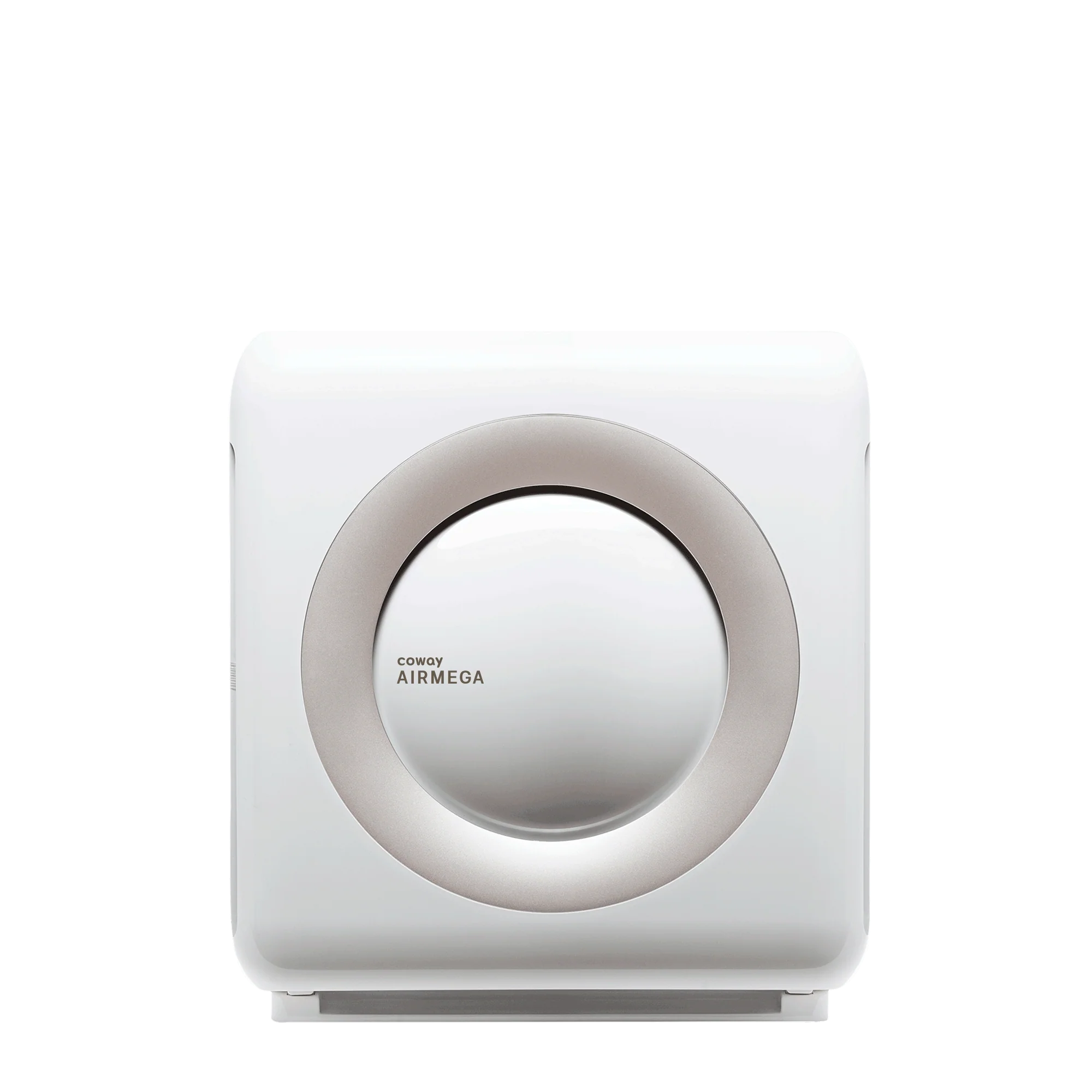
Key Specifications
- Room Coverage
- 361 sq ft
- CADR
- 233/246/240
- Filter
- True HEPA + Carbon + Pre-filter
- Noise
- 24 dB
- Power
- 77 watts
- Best For
- Medium rooms up to 361 sq ft. Wirecutter #1 for 10+ years. Best overall value.
📅 Prices checked . Amazon prices change frequently — click through for current price. Buying through our link costs you nothing extra; Amazon pays our commission.
What's in the Box
- Coway AP-1512HH air purifier
- Pre-installed 4-stage filter set
- Power cord
- User manual
- Filter replacement reminder sticker
Pros
- Wirecutter #1 for 10+ consecutive years
- AHAM verified CADR — no controversy
- True HEPA
- Fastest auto mode response in class
- 24dB ultra quiet sleep mode
- Eco mode at 4.9 watts
- 3-year warranty
Cons
- No WiFi or app control
- Carbon is impregnated fabric — weak on heavy odors
- Ionizer adds trace ozone (9ppb — CARB safe)
- Filter costs $60/year
- Design is dated
Best For
The best value purchase with an LMN. AHAM-verified CADR 246, four-stage auto mode, and at $110-130 one of the lowest-cost air purifiers that delivers genuine clinical-grade particle removal. With HSA or FSA funds paying the cost, the Coway AP-1512HH gives you the most air quality improvement per dollar of benefit spent. For asthma or allergy patients whose LMN has been approved, this is the first recommendation. The HSA or FSA benefit effectively makes an already affordable purifier nearly free. Full Coway review.
📅 Price checked August 2026 · Buying through this link costs you nothing extra — Amazon covers our commission
Blueair Blue Pure 211i Max Review Best Large Room
✓ AHAM VerifiedOur Verdict

Key Specifications
- Room Coverage
- 635 sq ft
- CADR
- 410/410/410
- Filter
- HEPASilent + Carbon
- Noise
- 23 dB
- Power
- 46 watts
- Best For
- Large rooms 400-635 sq ft. Highest CADR under $400. Replaces discontinued 211+.
📅 Prices checked . Amazon prices change frequently — click through for current price. Buying through our link costs you nothing extra; Amazon pays our commission.
What's in the Box
- Blueair Blue Pure 211i Max air purifier
- Pre-installed dual-protection filter
- Washable pre-filter (fabric)
- Power cord
- User manual
Pros
- Highest CADR 410 under $400
- AHAM verified
- Zero ozone verified
- 23dB quiet on low
- Washable pre-filter in colors
- Smart app with Alexa
Cons
- $299-349 expensive
- Filter costs $140/year — most expensive
- Cannot disable ionizer
- 211+ filters NOT compatible
Best For
Best choice for larger rooms (up to 550 sq ft) when using LMN benefits. CADR 350 handles living rooms and open-plan spaces where the Coway is undersized. At $200-250, using FSA funds makes the Blueair accessible at a price point that would otherwise give buyers pause. HEPASilent technology delivers high CADR at lower noise than traditional HEPA designs. For patients who need whole-home air quality improvement across larger rooms, the Blueair 211i Max purchased with LMN benefits is the right upgrade.
📅 Price checked August 2026 · Buying through this link costs you nothing extra — Amazon covers our commission
Winix 5500-2 Review Best Value
✓ AHAM VerifiedOur Verdict
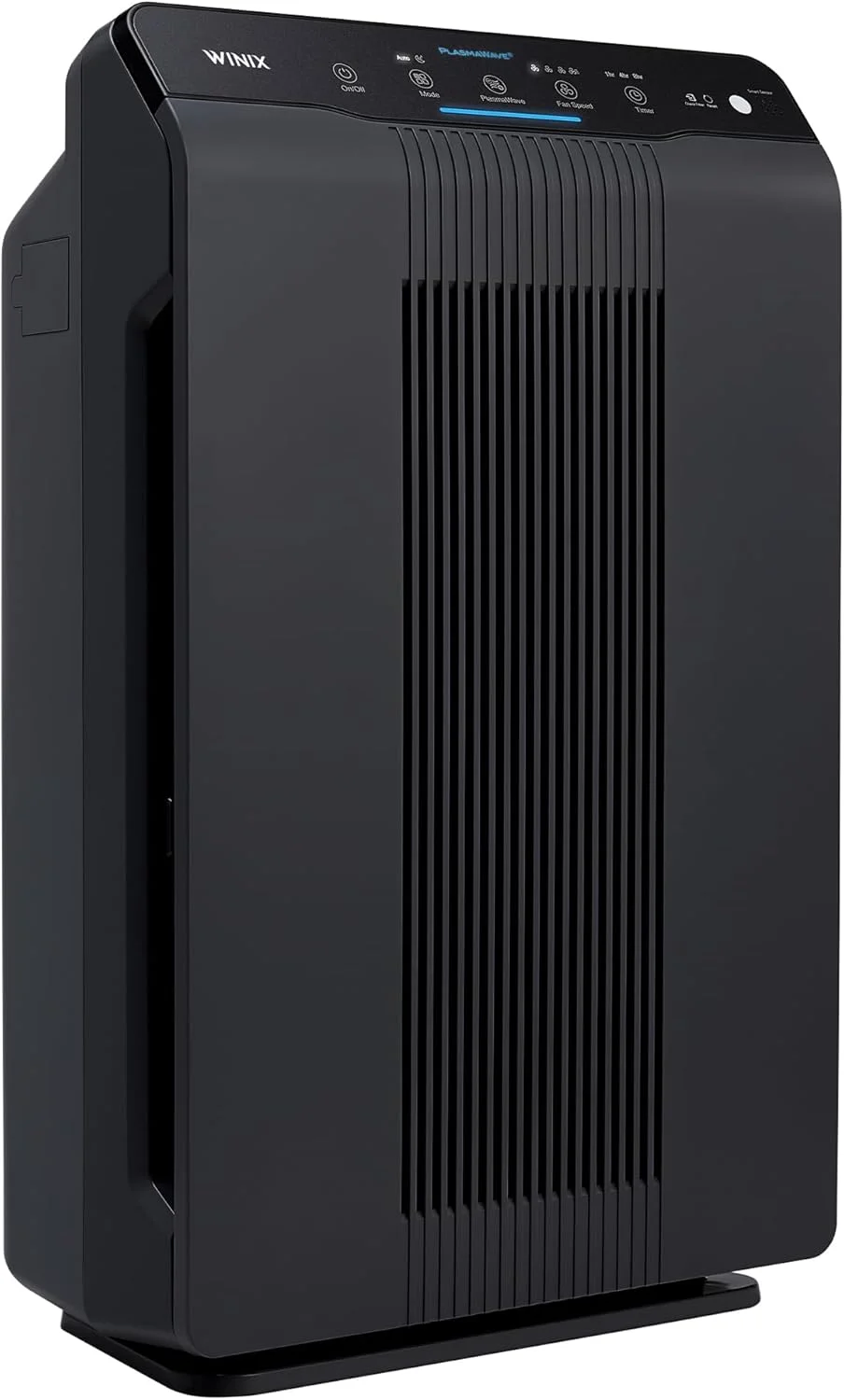
Key Specifications
- Room Coverage
- 360 sq ft
- CADR
- 232/243/246
- Filter
- True HEPA + PlasmaWave + Washable Carbon
- Noise
- 27 dB
- Power
- 67 watts
- Best For
- DISCONTINUED. Buy while stock lasts. Washable carbon is unique advantage.
📅 Prices checked . Amazon prices change frequently — click through for current price. Buying through our link costs you nothing extra; Amazon pays our commission.
What's in the Box
- Winix 5500-2 air purifier
- Pre-installed True HEPA + carbon filter
- Power cord
- Remote control
- User manual
Pros
- AHAM verified CADR
- PlasmaWave pellet carbon
- Washable carbon filter — unique
- HouseFresh tested 23 min room clean
Cons
- DISCONTINUED in US
- No WiFi
- Louder than 5510
- Larger footprint
Best For
Best pick for patients whose condition involves both particles (asthma, allergy) and chemical sensitivity or odors. The Winix 5500-2 adds PlasmaWave VOC control to AHAM-verified CADR 246. Patients with MCS (multiple chemical sensitivity) or those triggered by VOCs and odors alongside particles benefit from the dual-mode approach. At $150-180, FSA funds bring it within range of what most patients would spend regardless. Eligible under LMN for respiratory conditions, chemical sensitivity and environmentally triggered conditions. Full Winix review.
📅 Price checked August 2026 · Buying through this link costs you nothing extra — Amazon covers our commission
What to Know Before You Buy
An LMN Unlocks More Value Than Pre-Approved Products
Dyson pre-approved models cost $400-500 and deliver lower CADR per dollar than verified alternatives. A $110 Coway AP-1512HH with an LMN provides more air quality improvement for less HSA or FSA spend. If you have a respiratory diagnosis — asthma, chronic allergies, COPD — the LMN process is worth 15-20 minutes with your doctor. Most physicians readily provide LMNs for air purifiers to patients with documented respiratory conditions. The LMN opens access to the full market of air purifiers rather than limiting you to the small subset Dyson has pre-approved. Use your benefits on the best purifier for your condition, not the one with the most convenient paperwork trail.
Save All Receipts and Documentation
HSA and FSA purchases are subject to IRS audit. Maintain the original receipt showing product description and cost, a copy of your LMN signed by the physician, documentation of your diagnosis (prescription or medical record reference) and any retailer approval confirmation if your FSA administrator requires pre-approval. Store digital copies in a dedicated folder. IRS audits of HSA accounts are relatively rare but when they occur, undocumented medical expense deductions are disallowed and subject to penalty. Thirty minutes of documentation filing protects a $100-500 purchase from disqualification.
IRS Rules for HSA and FSA — Why Most Air Purifiers Are Not Eligible by Default
Health Savings Accounts (HSAs) and Flexible Spending Accounts (FSAs) are tax-advantaged accounts that allow pre-tax dollars to pay for qualified medical expenses. The IRS defines qualified medical expenses in Publication 502. The core rule: expenses qualify if they are primarily for the diagnosis, cure, mitigation, treatment or prevention of a disease, or for the purpose of affecting any structure or function of the body.
The critical phrase is "primarily for." An air purifier used for general wellness, home comfort or convenience does not meet this standard. The IRS does not consider products that are merely beneficial to general health to be medical expenses. Vitamins, gym memberships, most fitness equipment and general air quality products all fail this test regardless of their genuine health benefits.
The exception is explicit medical use. If an expense is incurred as treatment for a diagnosed medical condition and a physician confirms the medical necessity, the expense typically qualifies. This is the basis for the Letter of Medical Necessity (LMN) approach. An air purifier prescribed to treat documented asthma is an expense primarily for disease treatment. The IRS allows HSA and FSA reimbursement in this scenario because the primary purpose has shifted from general wellness to specific medical treatment.
The 2020 CARES Act expanded HSA and FSA eligible products to include over-the-counter medications and menstrual care products without a prescription. This expansion did not extend to general medical equipment or wellness products. Air purifiers were not included in the CARES Act expansion. The pre-existing LMN requirement for equipment purchases remains in effect.
Some retailers — particularly the FSA Store (fsastore.com) and HSA Store (hsastore.com) — have obtained pre-approval for specific products as FSA/HSA eligible from plan administrators. Products on these sites are verified eligible. However, the air purifier category on these platforms is narrow and expensive relative to the full market. The pre-approved products represent a small subset of what becomes eligible with an LMN. For most buyers with a respiratory diagnosis, the LMN route opens access to significantly better value purifiers than the pre-approved-without-LMN category.
Employer FSA plan rules can vary within IRS limits. Some employers restrict FSA use to a narrower list of products than IRS rules allow. Always confirm your specific plan's coverage rules with your HR department or plan administrator before purchasing, especially for large purchases. HSA rules are more uniform since they are directly governed by IRS regulations without employer modification.
How to Get a Letter of Medical Necessity — the Step-by-Step Process
A Letter of Medical Necessity is a signed document from a licensed physician that establishes the medical basis for an expense and confirms that the expense is being made to treat a diagnosed condition. For air purifiers, the LMN connects the purifier purchase to the treatment of a respiratory or environmental sensitivity diagnosis.
Step 1: Confirm you have a qualifying diagnosis. Common qualifying conditions for air purifier LMNs include: asthma (any severity), allergic rhinitis (hay fever), COPD, environmental allergies, multiple chemical sensitivity (MCS), sinusitis, cystic fibrosis and other chronic respiratory conditions. Your diagnosis should be documented in your medical record. If you believe you have a qualifying condition but have not been formally diagnosed, schedule the diagnostic appointment first.
Step 2: Contact your primary care physician or specialist. Allergists and pulmonologists are the most appropriate specialists to provide air purifier LMNs. Primary care physicians can also provide them for clear-cut cases (asthma, allergies). Call the office and ask specifically: "I need a Letter of Medical Necessity for an air purifier for my [diagnosis]. Can my doctor provide this?" Most practices handle these requests routinely. Some practices have a standard fee ($15-40) for LMN letters as administrative documentation.
Step 3: Provide the necessary details for the letter. The LMN should include: your full name and date of birth, the diagnosed condition requiring the air purifier, a statement that the air purifier is medically necessary for treatment of the condition, the physician's name, credentials, signature and practice information, and the date of the letter. Ask your physician to include the specific purifier model if your FSA plan requires it, though most accept a general reference to air purifiers for respiratory treatment.
Step 4: Submit to your HSA or FSA administrator. For HSA accounts, retain the LMN with your records — you typically do not submit unless audited. For FSA accounts, some administrators require pre-approval before purchase; others accept the LMN as reimbursement documentation after purchase. Contact your FSA administrator to confirm their process before purchasing.
Step 5: Purchase and retain documentation. Buy the purifier from any retailer. Keep the receipt, the LMN and any FSA approval confirmation. Submit for reimbursement through your FSA administrator or retain in your HSA records. The IRS statute of limitations for HSA audits is generally three years, so retain documentation for at least that period.
Turnaround time for LMNs varies by practice — typically 2-10 business days. For telehealth platforms that handle LMN requests, same-day or next-day turnaround is common. Several companies (Luminary, Truemed) specifically facilitate LMN connections for HSA/FSA-qualifying health purchases, including air purifiers, and can often complete the process within 24-48 hours for patients with qualifying diagnoses.
Which Retailers Accept HSA Cards for Air Purifiers
HSA and FSA card acceptance for air purifiers varies by retailer and by whether you have an LMN. Here is the practical breakdown of major US retailers:
Amazon: Amazon accepts HSA and FSA cards for eligible products. The challenge is that air purifiers are not pre-approved as HSA/FSA eligible in Amazon's catalog — you cannot simply add a Coway to your cart and pay with your HSA card. With an LMN, you can purchase the purifier and submit for reimbursement through your HSA or FSA administrator rather than paying directly with the benefit card at checkout. This process works for HSA accounts (reimburse yourself from HSA funds after purchase) more smoothly than for FSA accounts that require pre-approval.
FSA Store (fsastore.com): The FSA Store carries pre-approved HSA/FSA eligible products. Their air purifier selection includes Dyson models that have been specifically approved and a small selection of other purifiers. Products on the FSA Store are guaranteed eligible without an LMN. The selection is limited and prices are often higher than Amazon or big-box retail. For buyers who want guaranteed eligibility without LMN paperwork, the FSA Store is the simplest path. For buyers with an LMN seeking the best value, the broader market is better.
Walmart: Walmart accepts HSA and FSA cards and has expanded its eligible product catalog significantly. Certain air purifiers are listed as HSA/FSA eligible in Walmart's catalog. Availability varies by location and online inventory. Check the Walmart website for the specific model you are considering — eligible products are labeled "FSA/HSA Eligible" in the product listing. For LMN-based purchases, Walmart's reimbursement path is similar to Amazon.
Target and Best Buy: Both accept HSA/FSA cards but their pre-approved air purifier eligible catalog is minimal. For in-store HSA card purchases, only pre-coded eligible items ring up as HSA-eligible at the register. An air purifier would generally not trigger as eligible without pre-approval. Best for LMN-based reimbursement purchases rather than direct HSA card checkout.
Costco: Costco accepts HSA cards but, like most general retailers, does not pre-code air purifiers as HSA-eligible. HSA card purchases of non-coded items may be flagged or declined at point of sale depending on your card issuer's restrictions. Reimbursement purchase with LMN documentation is the more reliable path at Costco.
The practical recommendation: for guaranteed no-LMN eligibility, use FSA Store or check Dyson's HSA-eligible product page. For LMN-based purchases seeking best value, Amazon and Walmart offer the broadest selection and typically the best prices on the recommended models (Coway, Winix, Blueair).
Dyson HSA Eligibility — What Dyson Markets and Whether It Is Worth It
Dyson has taken an unusual step in the air purifier market by specifically marketing certain models as HSA/FSA eligible and working directly with platforms like the FSA Store to pre-approve their products. This makes Dyson one of the very few air purifier brands where some models can be purchased with HSA or FSA funds without requiring an LMN.
The primary Dyson models marketed for HSA/FSA eligibility include the Purifier Cool TP07 and related Purifier series models. These can be purchased through the FSA Store, through Dyson's own website (which accepts FSA cards on eligible models) and through selected retailers. Dyson has invested in the regulatory and administrative work to obtain pre-approval as eligible medical expenses through major FSA plan administrators.
The eligibility mechanism Dyson uses varies by platform. In some cases, specific Dyson purifiers have been approved as medical devices or medical equipment under FSA plan rules. In others, Dyson provides the documentation infrastructure (product eligibility letters, plan administrator relationships) that allows retailers to code the products as FSA-eligible. The practical result for consumers: you can buy certain Dyson purifiers with FSA funds without a doctor visit.
The performance and value question is where the Dyson recommendation becomes complicated. Dyson does not submit products to AHAM testing. Their CADR numbers are self-reported from internal testing. For the TP07 at $400-500, Dyson claims coverage of "up to 800 sq ft" — a claim that independent analysis suggests overstates performance at clinical air-cleaning standards. Comparable AHAM-verified CADR from a Coway AP-1512HH at $110-130 outperforms Dyson TP07 particle removal in independently verifiable testing.
The Dyson HSA/FSA decision comes down to this trade-off: Dyson provides administrative convenience (no LMN required) at a significant premium in price and uncertain performance relative to AHAM-verified alternatives. If obtaining an LMN is genuinely difficult or if your plan specifically covers Dyson models but not LMN-based purchases, the Dyson is a reasonable choice to access your benefits. If you can obtain an LMN from your doctor (which most patients with respiratory diagnoses can do within a week), the $110-180 Coway or Winix provides demonstrably better verified performance per dollar of benefits spent.
Dyson does produce genuinely good air quality products — the brand should not be dismissed. The combination purifier/fan function, the connected app, the design and build quality are real differentiators. If you would independently choose a Dyson for those features at full price, the HSA/FSA eligibility makes it a better deal. If you are choosing Dyson primarily for the HSA/FSA convenience and the TP07 would otherwise be outside your budget, obtain an LMN and buy the Coway or Winix instead — you get better air quality for less HSA spend and more benefit dollars preserved for other medical needs.
Best Purifiers to Buy With LMN — Maximizing Your Benefits
With an LMN in hand, you have access to the full market of air purifiers. Here is how to maximize your HSA or FSA benefit spend based on your condition and room needs:
Asthma and airborne allergens: The Coway AP-1512HH is the best value with LMN benefits. At $110-130, it provides AHAM-verified CADR 246 — the highest verified particle removal at the lowest price point. Asthma and airborne allergen management requires high particle CADR and consistent auto mode operation. The Coway delivers both. With FSA funds covering the cost, this is essentially free air quality improvement for documented asthma patients. Buy multiple units for bedroom and living room if your benefits allow it — two Coway units at $220-260 total cover a whole home at a cost that single-room premium purifiers cannot match.
Severe allergies or year-round respiratory symptoms: The Winix 5500-2 at $150-180 adds PlasmaWave VOC control to AHAM-verified CADR 246. For patients triggered by both particulate allergens and chemical VOCs or odors — common in environmental allergy cases — the Winix covers both categories. The added odor sensor in auto mode provides more comprehensive continuous monitoring than particle-only sensors. An LMN for environmental allergies supports Winix purchase as readily as Coway.
Large-room coverage (living areas, open-plan spaces): The Blueair 211i Max at $200-250 covers up to 550 sq ft at adequate ACH — the largest single-unit coverage among our recommended models. For patients whose condition affects them in living areas or open-plan spaces rather than just bedrooms, the 211i Max provides whole-room coverage that smaller bedroom purifiers cannot achieve. With FSA benefits reducing effective cost, the Blueair 211i Max is within reach for patients who need large-room treatment.
Chemical sensitivity or VOC-triggered conditions (MCS): The IQAir GC MultiGas XE or Austin Air HealthMate are appropriate for multiple chemical sensitivity patients with an LMN. Both cost $600-900+. With FSA benefits and a proper MCS diagnosis LMN, this level of investment is accessible and medically justifiable. Potassium permanganate-impregnated carbon (IQAir) and zeolite-carbon blends (Austin Air) specifically address the chemical VOC removal needs of MCS patients that standard HEPA-carbon purifiers do not adequately provide.
COPD patients: Fine particle exposure worsens COPD symptoms and accelerates disease progression. COPD LMNs for air purifiers are among the most medically clear-cut — the clinical evidence linking PM2.5 exposure to COPD exacerbations is well-established. For COPD patients, high CADR is the primary metric. The Coway AP-1512HH or Winix 5500-2 are the right choices at their price points. For severe COPD or patients with supplemental oxygen, discuss with your pulmonologist whether IQAir HealthPro Plus (the highest-CADR consumer unit with H14 filtration) is medically indicated — this may justify the $900 price under benefits.