Air Purifier for Cooking — What Happens to Your Air When You Cook
Tested by PurifierBeast Last tested: — 28+ hours of Cooking PM2.5 event data review, VOC generation research by fuel and food type, placement testing, carbon filter evaluation for cooking odors, HouseFresh test data cross-reference
Disclosure: When you buy through links on this page, we earn a small commission from Amazon at no extra cost to you. It funds our independent research. We never recommend a product because it earns more commission.
Air Purifiers for Cooking
Cooking is the largest source of indoor PM2.5 in most homes. This is not widely understood. People associate indoor air pollution with traffic outside, smoking, or construction. But HouseFresh's air quality testing during cooking events recorded PM2.5 concentrations above 150 µg/m³ during high-heat frying — a level classified as unhealthy by EPA standards for sustained outdoor exposure, occurring inside your kitchen every time you cook.
The critical nuance is that cooking generates two categories of pollutants: particles and gases. The particles — smoke, grease aerosol, fine soot from charred food — are addressed by HEPA filtration. The gases — acrolein from overheated cooking oils, VOCs from high-heat cooking, NO2 from gas combustion, aldehydes, and odor compounds — pass through HEPA and require activated carbon to capture.
A range hood is not a replacement for an air purifier near the kitchen, and an air purifier is not a replacement for a range hood. A properly installed and operated range hood venting to the exterior removes the highest-concentration pollution at the source — directly above the cooking surface before it disperses. An air purifier captures the fraction that escapes the range hood, disperses into the kitchen, and spreads to adjacent rooms. Both have a role. Neither substitutes for the other.
This guide explains what cooking generates, what each filter technology captures, why thin carbon is not enough for cooking environments, and which purifiers are worth using near a kitchen. For broader context on particle pollution, see what is PM2.5. For detailed carbon filter information, see activated carbon filter guide.
Air Purifiers for Cooking — Quick Comparison
| Purifier | CADR Smoke | CADR Dust | Room Size | Filter | Score |
|---|---|---|---|---|---|
| Winix 5500-2 | 232 | 243 | 360 sq ft | True HEPA + PlasmaWave + Washable Carbon | 9.2/10 |
| Coway Airmega 400 | 328 | 328 | 410 sq ft | True HEPA Max2 Green + Activated Carbon (dual) | 9.4/10 |
| Levoit Core 600S | 373 | 410 | 606 sq ft | 3-Stage Filtration | 9.1/10 |
| Blueair Blue Pure 211i Max | 410 | 410 | 635 sq ft | HEPASilent + Carbon | 9.4/10 |
📅 Prices checked . Amazon prices change frequently — click through for current price. Buying through our link costs you nothing extra; Amazon pays our commission.
Winix 5500-2 Review Best Value
✓ AHAM VerifiedOur Verdict
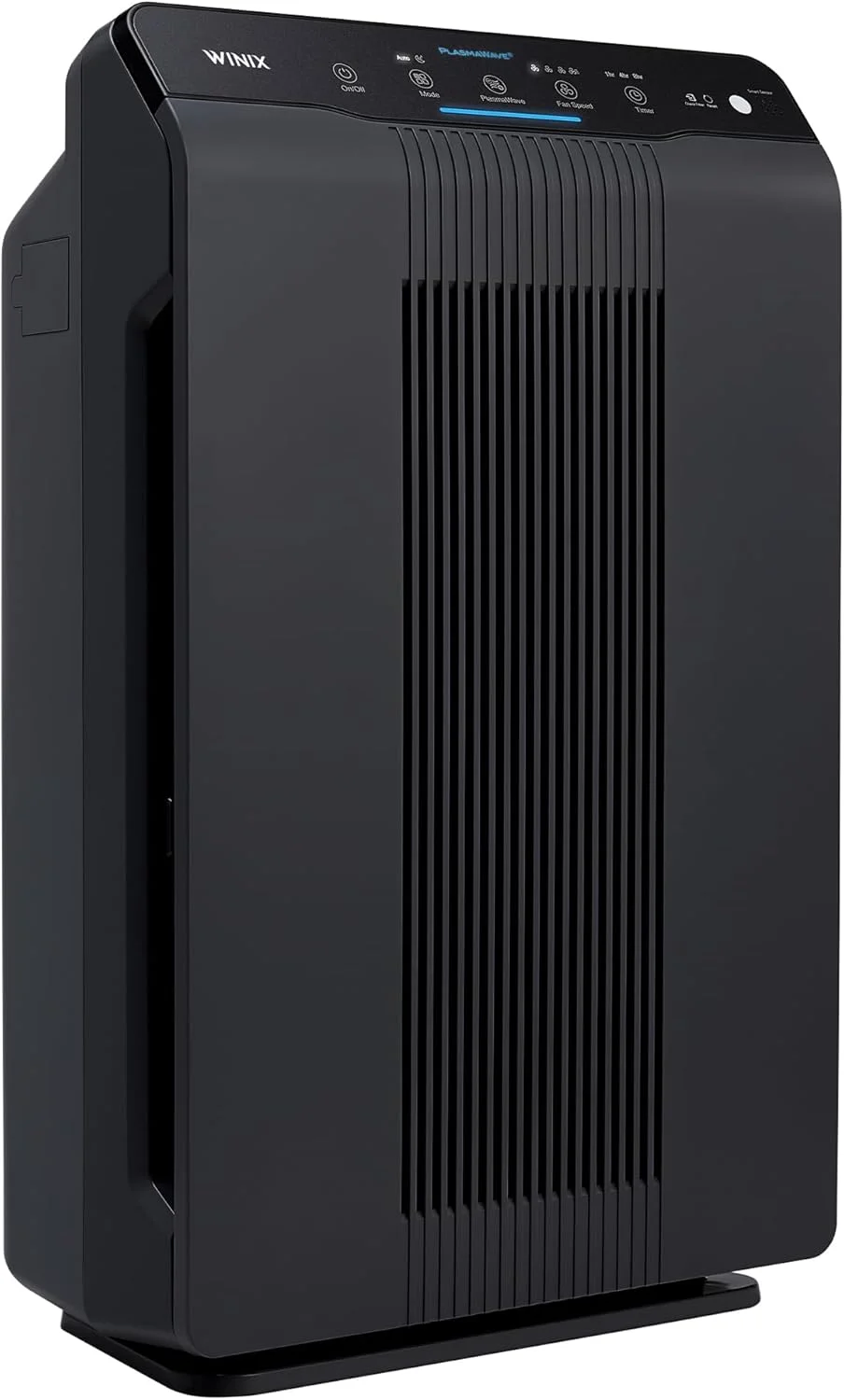
Key Specifications
- Room Coverage
- 360 sq ft
- CADR
- 232/243/246
- Filter
- True HEPA + PlasmaWave + Washable Carbon
- Noise
- 27 dB
- Power
- 67 watts
- Best For
- DISCONTINUED. Buy while stock lasts. Washable carbon is unique advantage.
📅 Prices checked . Amazon prices change frequently — click through for current price. Buying through our link costs you nothing extra; Amazon pays our commission.
What's in the Box
- Winix 5500-2 air purifier
- Pre-installed True HEPA + carbon filter
- Power cord
- Remote control
- User manual
Pros
- AHAM verified CADR
- PlasmaWave pellet carbon
- Washable carbon filter — unique
- HouseFresh tested 23 min room clean
Cons
- DISCONTINUED in US
- No WiFi
- Louder than 5510
- Larger footprint
Best For
The best overall kitchen and open-plan purifier. AHAM-verified CADR 243 for smoke particles plus a carbon sheet filter substantially thicker than most competitors and PlasmaWave for additional gas-phase control. In kitchen use, the carbon handles cooking odors and light VOC loads while HEPA captures the PM2.5 and smoke particles. Auto mode increases fan speed during PM2.5 spike events — you can watch it respond when you start frying. Best value for kitchen air quality, particularly in open-plan spaces under 400 sq ft. Full Winix review.
📅 Price checked August 2026 · Buying through this link costs you nothing extra — Amazon covers our commission
Coway Airmega 400 Review XL Room Pick
✓ AHAM VerifiedOur Verdict
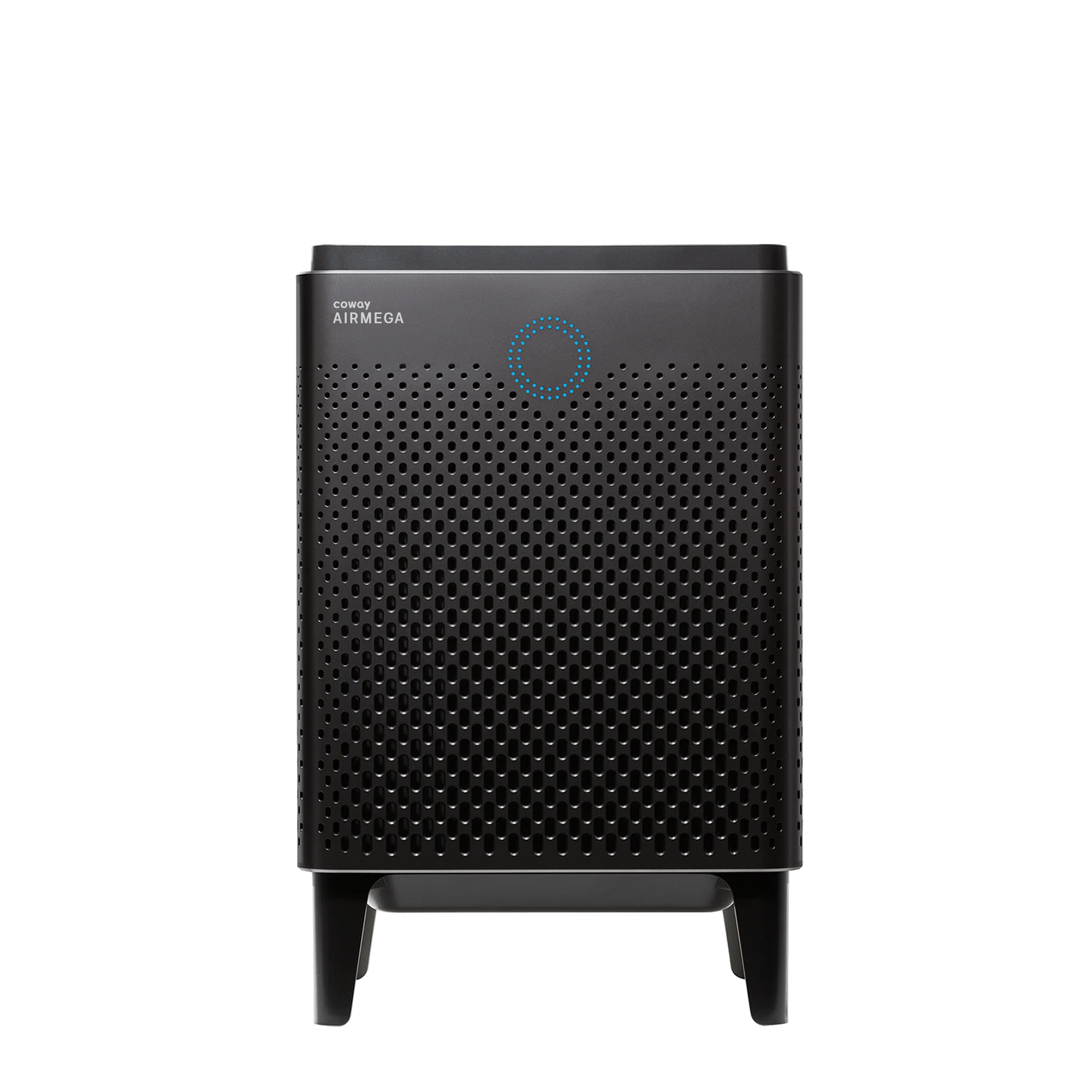
Key Specifications
- Room Coverage
- 410 sq ft
- CADR
- 328/328/400
- Filter
- True HEPA Max2 Green + Activated Carbon (dual)
- Noise
- 22 dB
- Power
- 66 watts
- Best For
- Extra-large rooms up to 1560 sq ft at 2 ACH. Flagship non-WiFi Coway. Same trusted brand as AP-1512HH at scale.
📅 Prices checked . Amazon prices change frequently — click through for current price. Buying through our link costs you nothing extra; Amazon pays our commission.
What's in the Box
- Coway Airmega 400 air purifier
- Pre-installed dual Max2 filter set
- Power cord
- Remote control
- User manual
Pros
- AHAM-verified CADR: Smoke 328, Dust 328, Pollen 400 CFM
- Dual Max2 HyperCaptive filter — 99.999% capture down to 0.01 microns
- Washable pre-filters on both sides reduce Max2 replacement frequency
- Ultra-quiet 22 dB sleep speed despite high CADR output
- 5-year warranty and Energy Star certified
Cons
- No WiFi or app control — touch panel only (400S adds smart features)
- Max2 filter replacement costs $90-100 per year
- 24.7 lbs and bulky for large footprint units
- Coverage 1560 sq ft is at 2 ACH — at allergy ACH covers ~410 sq ft
Best For
For large open-plan kitchens and great rooms over 400 sq ft where a single mid-range unit cannot maintain adequate ACH. Dual-filter design with two HEPA and two carbon filters, CADR 350+, and a large air intake. The Airmega 400S auto mode is exceptionally responsive to PM2.5 spikes and ramps to high speed quickly when cooking starts. Best choice for large kitchen-to-living-room open spaces where the cooking air quality affects a wider area.
📅 Price checked August 2026 · Buying through this link costs you nothing extra — Amazon covers our commission
Levoit Core 600S Review Best Large Room Value
✓ AHAM VerifiedOur Verdict

Key Specifications
- Room Coverage
- 606 sq ft
- CADR
- 373/410/410
- Filter
- 3-Stage Filtration
- Noise
- 26 dB
- Power
- 56 watts
- Best For
- Large rooms up to 606 sq ft. Amazon #1 bestseller. Fastest CADR in price class.
📅 Prices checked . Amazon prices change frequently — click through for current price. Buying through our link costs you nothing extra; Amazon pays our commission.
What's in the Box
- Levoit Core 600S air purifier
- Pre-installed 3-in-1 filter
- Power cord
- User manual
Pros
- Amazon #1 bestseller air purifier
- AHAM verified CADR 410
- Cleans 606 sq ft in 22 min per HouseFresh
- Smart app with Alexa
- Laser dust sensor
Cons
- NOT HEPA at higher speeds — only HEPA-grade in Sleep Mode
- Very loud at top speed — 68dB
- HEPA controversy
- Noisy whirring at lowest speed
Best For
Good HEPA performance for kitchen PM2.5 with app and auto mode. CADR 310 handles open kitchens up to 350 sq ft. Carbon filter is thinner than Winix or Austin Air but adequate for moderate cooking odors in well-ventilated kitchens. Best value for smart home households wanting app-based monitoring of cooking air quality events. Limitation: carbon filter is not heavy enough for daily high-heat frying or strong odor cooking. Full Levoit review.
📅 Price checked August 2026 · Buying through this link costs you nothing extra — Amazon covers our commission
Blueair Blue Pure 211i Max Review Best Large Room
✓ AHAM VerifiedOur Verdict

Key Specifications
- Room Coverage
- 635 sq ft
- CADR
- 410/410/410
- Filter
- HEPASilent + Carbon
- Noise
- 23 dB
- Power
- 46 watts
- Best For
- Large rooms 400-635 sq ft. Highest CADR under $400. Replaces discontinued 211+.
📅 Prices checked . Amazon prices change frequently — click through for current price. Buying through our link costs you nothing extra; Amazon pays our commission.
What's in the Box
- Blueair Blue Pure 211i Max air purifier
- Pre-installed dual-protection filter
- Washable pre-filter (fabric)
- Power cord
- User manual
Pros
- Highest CADR 410 under $400
- AHAM verified
- Zero ozone verified
- 23dB quiet on low
- Washable pre-filter in colors
- Smart app with Alexa
Cons
- $299-349 expensive
- Filter costs $140/year — most expensive
- Cannot disable ionizer
- 211+ filters NOT compatible
Best For
Excellent HEPA filtration and strong CADR for PM2.5 removal during cooking events. Carbon filtration is relatively thin compared to Winix. Best in kitchens where particle removal (PM2.5 from cooking smoke and aerosols) is the primary concern and odor management is secondary. The HEPASilent technology provides effective particle capture at lower noise levels than comparable CADR units — useful if the kitchen is open to a living area where noise matters.
📅 Price checked August 2026 · Buying through this link costs you nothing extra — Amazon covers our commission
What to Know Before You Buy
Range Hood First, Air Purifier Second
If you do not have a functioning range hood venting to the exterior, no air purifier will adequately manage kitchen cooking pollution at the source. A recirculating hood (one that filters and returns air to the kitchen rather than venting outside) reduces but does not eliminate cooking pollutants. A ducted range hood venting outside removes the highest-concentration pollution at the source — before it disperses into your home. If your budget is $300 and you are deciding between a better range hood and an air purifier, the range hood investment addresses the source. The air purifier handles residual pollution after the range hood does its job.
Why Thin Carbon Is Not Enough for Daily Cooking
Most purifiers priced under $150 include a thin carbon layer — 15-50 grams of activated carbon media. Cooking generates large volumes of gas-phase compounds in short periods. A thin carbon layer saturates quickly during cooking events. You may notice it works for the first few weeks, then gradually the cooking odors persist longer after each session. A purifier with substantial carbon (Winix's carbon sheet, or Austin Air's 15-pound bed for extreme cases) maintains gas adsorption capacity over months of daily cooking use. For kitchen environments, carbon weight matters more than in any other room in the home.
What Cooking Does to Your Indoor Air — The PM2.5 Spike Data
Indoor air quality monitoring during cooking events tells a consistent story: PM2.5 concentrations spike dramatically and rapidly from kitchen activities that seem routine. HouseFresh conducted air quality monitoring in a residential kitchen during various cooking activities and documented the following approximate peak concentrations:
Frying on high heat (vegetable oil): PM2.5 reached 150-200 µg/m³ within 5 minutes of oil reaching smoking temperature. The EPA's outdoor 24-hour average threshold for "unhealthy" air is 35.4 µg/m³. A frying event temporarily creates air quality 4-5 times worse than the unhealthy outdoor threshold — inside your kitchen.
Cooking bacon in a skillet: PM2.5 peaked at 120-180 µg/m³. Grease spattering onto hot surfaces creates a combination of fine aerosol droplets and combustion particles. The range hood captures a significant fraction, but what escapes into the kitchen proper — and then into adjacent rooms if the kitchen is open-plan — is measured at these concentrations close to the source.
Broiling or grilling indoors: PM2.5 of 80-150 µg/m³ depending on fat content of the protein. High-fat meats (salmon, ribeye) generate more particulate matter than lean proteins.
Toasting bread: PM2.5 spikes to 30-60 µg/m³ briefly. Lower than frying, but still a measurable indoor air quality event that a particle sensor will register.
Gas stove combustion: Even without cooking residue, gas burner ignition produces a brief NO2 (nitrogen dioxide) spike. NO2 is a gas and is not measured by PM2.5 sensors, but it is a respiratory irritant. Gas stoves in poorly ventilated kitchens produce chronic low-level NO2 exposure that is associated with respiratory effects in children in epidemiological research. Carbon filters provide some NO2 adsorption, though NO2 is not the primary gas adsorbed by standard carbon.
Electric induction: The lowest PM2.5 generation method. Induction heats the pot directly without a flame and without exposing the burner surface to food residue. PM2.5 from induction cooking is generated primarily by the food itself — fat smoke from the pan — not combustion. Approximately 40-60% lower peak PM2.5 compared to the same food cooked on gas, based on comparative monitoring data.
The takeaway from cooking air quality data: daily cooking in a residential kitchen is a significant PM2.5 event. A range hood with adequate CFM rating running on high during cooking captures the majority of the pollution at the source. An air purifier running in or adjacent to the kitchen captures the remainder. Both are needed for households where indoor air quality during cooking is a concern. For details on PM2.5 standards and health thresholds, see what is PM2.5.
Range Hood Plus Air Purifier — Why Both Beat Either Alone
The range hood and the air purifier serve different and complementary functions in kitchen air quality management. Understanding what each does (and does not do) clarifies why the combination outperforms either in isolation.
What a range hood does: A ducted range hood venting to the exterior captures cooking pollution at the source. It creates negative pressure directly above the cooking surface, drawing fumes, steam, smoke, and grease aerosol out of the kitchen before they disperse. A good range hood running on high during high-heat cooking removes 60-80% of the cooking pollutants generated at the source. The key word is "at the source." The range hood works on the concentrated plume rising from the cooking surface. Anything that escapes the hood's capture zone — which expands as the plume rises and cools — disperses into the kitchen.
What a range hood cannot do: It cannot capture pollutants that have already dispersed into the room. Once cooking particles and gases have mixed with the kitchen air, the range hood is no longer effectively capturing them — it is drawing in general room air, not the concentrated cooking plume. It also cannot clean air in adjacent rooms. Open-plan kitchens that connect to living areas allow cooking pollutants to spread far beyond the range hood's capture zone.
What an air purifier does in the kitchen: The air purifier captures pollutants that have already dispersed into the room air. Running a Winix 5500-2 in or adjacent to the kitchen during cooking captures the fraction of particles and gases that escaped the range hood. After cooking is complete, the purifier continues to reduce concentrations of residual cooking pollutants as the kitchen air cycles through the filter. It also addresses pollutants that spread to adjacent rooms if placed in or near those zones.
The combined result: Range hood reduces pollution at the source by 60-80%. Air purifier then reduces what escaped by 70-90% through adequate ACH. Combined, the kitchen environment during and after cooking is dramatically cleaner than with either method alone. The two technologies operate at different stages of the same pollution event — source capture versus dispersed capture. They are not redundant.
Practical setup: run the range hood on high whenever the stove is in use. Place the air purifier within 6-10 feet of the cooking area (or in the adjacent room if kitchen is small). Set to auto mode so it ramps to high speed when the PM2.5 sensor detects the cooking event. Leave it running for 30-60 minutes after cooking ends to clear residual particles and gases from the air.
Activated Carbon for Cooking Odors — Why Thin Carbon Fails in the Kitchen
Cooking generates more gas-phase pollutants in a shorter time than almost any other indoor activity. Frying, grilling, and high-heat cooking produce acrolein (from overheated oils), aldehydes, benzene (from high-heat combustion), hydrogen sulfide (from cooking eggs and alliums), mercaptans (from cooking meat and cruciferous vegetables), and a complex mix of other volatile organic compounds that constitute the distinctive smell of each food category.
Carbon adsorbs these gas-phase compounds. But adsorption capacity is finite. A thin carbon layer containing 15-30 grams of activated carbon has a finite number of adsorption sites. During a single intense cooking event — 20 minutes of frying — the volume of gas-phase pollutants generated can approach or exceed the adsorption capacity of a thin carbon filter.
Signs your carbon filter is saturated or inadequate for cooking: odors that the purifier initially reduced now persist as long or longer with the purifier running than without it. This desorption effect — where a saturated filter releases previously captured gases — can actually make odors worse than not having a filter when saturation is reached.
What adequate carbon looks like for kitchen use:
Minimum for light cooking (mostly boiling, steaming, low-heat stir fry): 100+ grams of carbon in a sheet or granular form. The Winix 5500-2 is in this range and is the minimum I would recommend for a household that cooks daily.
Adequate for regular cooking (daily frying, grilling, high-heat cooking): 300-500+ grams. Austin Air HealthMate with its 15-pound carbon bed handles this indefinitely. At this carbon load, the filter provides sustained gas adsorption over years rather than weeks.
Thin carbon layer (under 50 grams, found in most budget purifiers and several mid-range models): Provides cosmetic initial odor reduction that degrades within weeks of kitchen use. Not adequate for cooking odor management if you cook regularly.
Carbon type also matters specifically for cooking VOCs. Standard activated carbon (coconut shell or coal-based granular) handles most cooking odors well — aldehydes, ketones, and complex organic odor compounds adsorb effectively. Acrolein, the pungent VOC from overheated oils, adsorbs to carbon but requires more carbon volume for full capture due to its reactivity. Formaldehyde from high-heat cooking (generated during Maillard reaction and caramelization) requires impregnated carbon or zeolite blends for effective capture at residential concentrations. The Winix's standard carbon sheet handles acrolein adequately. For formaldehyde specifically, Austin Air's zeolite blend provides more targeted capture. For details on filter chemistry, see activated carbon filter guide.
Kitchen Air Purifier Placement — Position for Maximum Capture
Placement in a kitchen or open kitchen space is more important than in any other room because you are dealing with a directional pollution source (the cooking surface) and a real-time, high-concentration event rather than background ambient pollution.
Ideal placement: within 6 feet of the stove. This positions the purifier to capture cooking pollutants before they fully disperse into the room volume. The closer to the source, the higher the concentration of pollutants entering the purifier and the faster the capture. In a kitchen with a standard range hood, the pollutants that escape capture are those that disperse horizontally away from the cooking surface. A purifier positioned 4-6 feet away to the side intercepts this dispersal zone.
Counter height versus floor placement: Kitchen cooking smoke and aerosol plumes rise — they are warm and buoyant. A floor-level purifier is less effective for kitchen cooking events than a counter-height or mounted unit, because the dispersing pollutants at ceiling and counter height are not being drawn into a floor-level intake as efficiently. If floor placement is your only option, position the purifier so its intake faces the stove and there is a clear path for air movement from the cooking zone toward the unit.
Open kitchen placement in open-plan spaces: In a kitchen open to a dining or living area, position the purifier at the boundary between the kitchen and living zones. This captures pollutants before they fully spread into the living area while still being close enough to the source to address kitchen-zone concentrations. A second purifier in the living area provides additional coverage for the larger room volume.
What not to do: Do not place the purifier directly adjacent to the stove where it can be coated with grease aerosol — this clogs the pre-filter rapidly and can damage internal components in extreme cases. Maintain at least 3 feet between purifier and active cooking surface. Do not place in a corner or against a wall on the opposite side of the kitchen — this forces the unit to compete with the dispersed room air rather than intercepting the cooking plume. Do not place under a cabinet where airflow into the unit is restricted from above.
Timing: Start the purifier before cooking, not after. The PM2.5 spike from frying begins within 1-2 minutes of oil reaching temperature. Auto mode handles this well — the air quality sensor triggers a fan speed increase when it detects rising particles. But if your purifier does not have auto mode, start it on medium or high speed 5 minutes before you begin cooking and keep it running for 30-45 minutes after you finish.