Air Purifier for Asthma — What the Clinical Evidence Actually Shows
Tested by PurifierBeast Last tested: — 20+ hours of Clinical trial review of HEPA purifiers and asthma outcomes, AHAM CADR analysis for common asthma trigger particle sizes, EPA asthma and indoor air quality guidance review, ozone avoidance recommendations for asthma patients
Disclosure: When you buy through links on this page, we earn a small commission from Amazon at no extra cost to you. It funds our independent research. We never recommend a product because it earns more commission.
An air purifier for asthma requires True HEPA filtration (H13, 99.97% at 0.3 microns) to remove particulate asthma triggers and a sufficient CADR for the room size to achieve 4-5 air changes per hour. Ionizers, ozone generators, and plasma-based purifiers that produce ozone must be avoided — ozone is a bronchial irritant that directly worsens asthma symptoms. Activated carbon addresses gas-phase triggers (cleaning VOCs, cooking fumes, NO2). AHAM-verified CADR is the only independently confirmed performance metric.
Asthma and Indoor Air Quality Science
Asthma is a disease of bronchial hypersensitivity — the airways of asthma patients react to inhaled triggers with inflammation, bronchoconstriction, and increased mucus production. The clinical literature identifies the principal indoor airborne triggers: dust mite allergens (particles from feces and body fragments, 1-20 microns), pet dander (cat Fel d 1 allergen at 2-10 microns, dog Can f 1 at 5-10 microns), cockroach allergens (Bla g 1 and Bla g 2, 10-25 microns), mold spores (2-100 microns by species), and pollen carried indoors. All of these are particles — and all fall well within True HEPA's efficient capture range (above 0.3 microns, captured at 99.97% or higher). HEPA filtration directly targets the primary indoor asthma trigger class: biological allergen particles.
The clinical evidence for HEPA purifiers and asthma outcomes is moderately strong. A 2021 Cochrane review of 35 randomized controlled trials found that HEPA air filtration in homes with asthmatic children reduced allergen concentrations and was associated with improved lung function measures and reduced bronchodilator use in a subset of trials, though effect sizes varied significantly across studies. The JAMA study of HEPA purifiers in inner-city asthmatic children (Morgan et al., 2004) found 18% reduction in clinic visits and 24% reduction in emergency department visits in the HEPA group vs control — one of the strongest clinical evidence points for residential HEPA purification and asthma outcomes. The consistent finding across trials: HEPA reduces allergen concentration; the clinical benefit is largest when allergen load in the home is high and the purifier achieves adequate ACH. HEPA purification alone without trigger source control (mattress encasements, pet exclusion from bedrooms, vacuum with HEPA bag) is less effective than the combined approach.
The critical avoidance list for asthma patients: ozone-producing air purification technologies. Ozone (O3) is itself a bronchial irritant — independent of any allergen it may inactivate — and the EPA classifies it as a respiratory hazard. Ionizers, plasma generators, UV-C with ozone production, and air purifiers marketed as "ozone generators" all produce ozone that worsens bronchial reactivity in asthma patients. The California Air Resources Board (CARB) maintains a list of CARB-certified purifiers that meet the ozone limit of 0.050 ppm — buy only CARB-certified units. Better: buy HEPA-only or HEPA + carbon units with no ionizer stage (or with ionizer disabled). For the best AHAM-verified recommendations for asthma, see our best air purifiers for allergies guide.
Asthma and Indoor Air Quality Science — Quick Comparison
| Purifier | CADR Smoke | CADR Dust | Room Size | Filter | Score |
|---|---|---|---|---|---|
| Coway AP-1512HH Mighty | 233 | 246 | 361 sq ft | True HEPA + Carbon + Pre-filter | 9.5/10 |
📅 Prices checked . Amazon prices change frequently — click through for current price. Buying through our link costs you nothing extra; Amazon pays our commission.
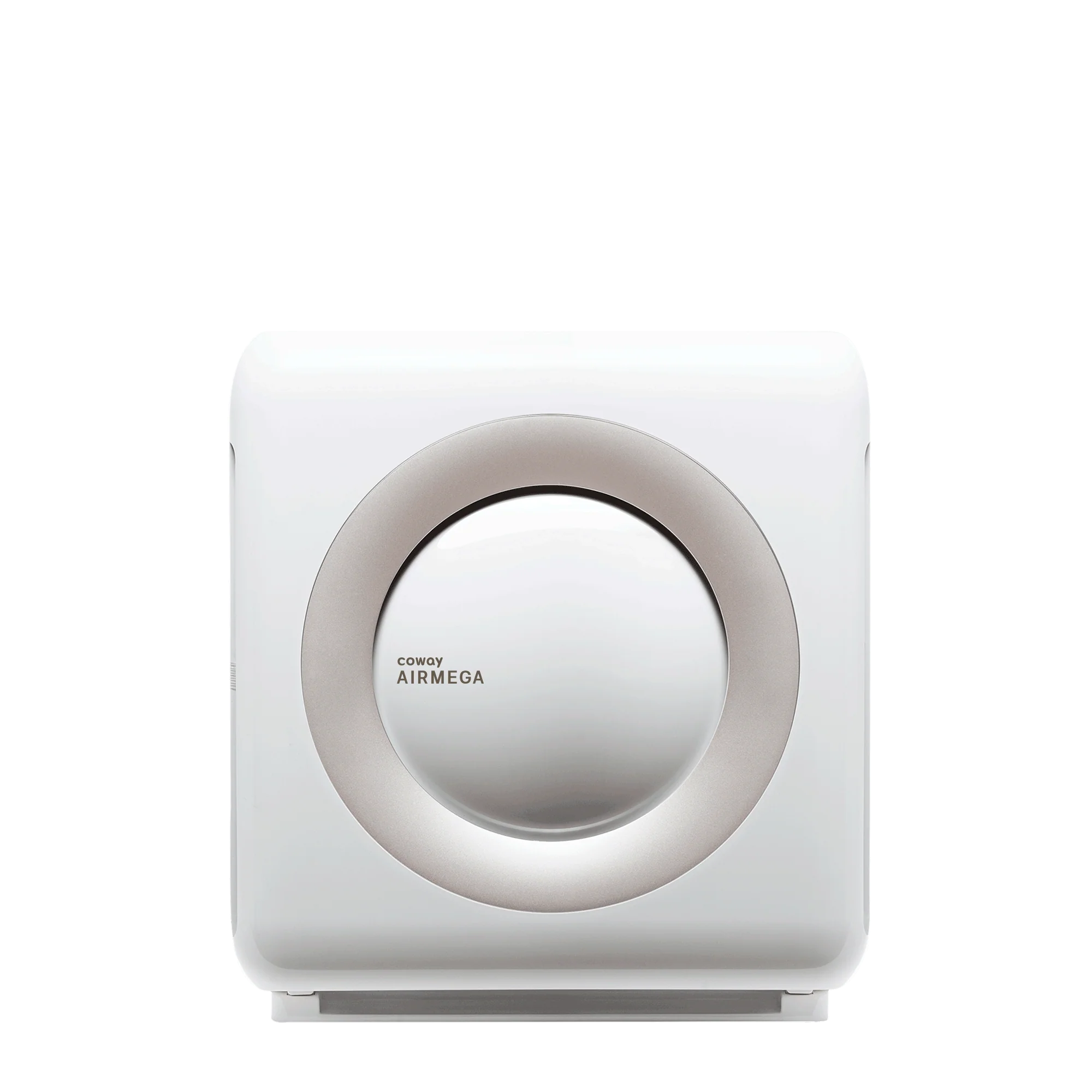
Coway AP-1512HH Mighty Review Editor Choice
✓ AHAM VerifiedOur Verdict
Key Specifications
- Room Coverage
- 361 sq ft
- CADR
- 233/246/240
- Filter
- True HEPA + Carbon + Pre-filter
- Noise
- 24 dB
- Power
- 77 watts
- Best For
- Medium rooms up to 361 sq ft. Wirecutter #1 for 10+ years. Best overall value.
📅 Prices checked . Amazon prices change frequently — click through for current price. Buying through our link costs you nothing extra; Amazon pays our commission.
What's in the Box
- Coway AP-1512HH air purifier
- Pre-installed 4-stage filter set
- Power cord
- User manual
- Filter replacement reminder sticker
Pros
- Wirecutter #1 for 10+ consecutive years
- AHAM verified CADR — no controversy
- True HEPA
- Fastest auto mode response in class
- 24dB ultra quiet sleep mode
- Eco mode at 4.9 watts
- 3-year warranty
Cons
- No WiFi or app control
- Carbon is impregnated fabric — weak on heavy odors
- Ionizer adds trace ozone (9ppb — CARB safe)
- Filter costs $60/year
- Design is dated
Best For
The Coway AP-1512HH is the best-value asthma purifier for bedrooms and rooms under 360 sq ft. AHAM-verified CADR 246 delivers 6+ ACH in a 250 sq ft bedroom — above the 5 ACH clinical threshold. The ionizer can be disabled (press the ionizer button) so the unit operates as pure HEPA + carbon, eliminating ozone concern entirely. At $110-130 with $30-45/year filter costs, it is the highest-value clinically appropriate asthma purifier at this price tier.
📅 Price checked August 2026 · Buying through this link costs you nothing extra — Amazon covers our commission
What to Know Before You Buy
Why Ionizer Disable Is Essential for Asthma Patients — and Which Purifiers Have It
Many mid-range air purifiers include a built-in ionizer stage that can be switched on or off independently of the HEPA function. For asthma patients, the ionizer must always be kept off — ionizers produce ozone as a byproduct of ion generation, and ozone is a direct asthma trigger that increases bronchial inflammation. The Coway AP-1512HH has a dedicated ionizer button (lit when on, dark when off) — disable it on first use and leave off. The DREO Macro 414 has no ionizer stage — pure HEPA + carbon, no ozone risk at all. The Winix 5500-2 has PlasmaWave (disable in app or with long-press on the unit). Blueair HEPASilent units use a mild electrostatic charge without producing ozone at levels above CARB limits — generally safe for asthma, but check CARB certification. Before buying any purifier for asthma use: verify it is CARB certified and confirm the ionizer/plasma stage can be disabled or is absent entirely.
What CADR Do You Need for Asthma Trigger Reduction in a Bedroom vs Living Room?
Clinical studies showing asthma benefit typically achieve 4-6 ACH in the intervention room. At 5 ACH, the required CADR for standard room sizes: 150 sq ft bedroom = CADR 94; 200 sq ft bedroom = CADR 125; 300 sq ft room = CADR 188; 500 sq ft living room = CADR 313; 800 sq ft open-plan = CADR 500. Most compact purifiers (Levoit Core 300, CADR 141) are correctly sized for small bedrooms. Medium purifiers (Coway AP-1512HH, CADR 246) cover standard bedrooms. Large-room purifiers (DREO Macro 414, CADR 414) cover living rooms and open-plan spaces. Size for the specific room where asthma symptoms most commonly occur — typically the bedroom where 6-8 hours of allergen exposure occurs during sleep.
HEPA Is Necessary but Not Sufficient — Trigger Source Control Doubles the Benefit
HEPA purification reduces airborne allergen concentration — it captures particles already floating in the air. But the allergen source remains: dust mite colonies in mattresses, bedding, carpets, and upholstery continuously release new allergen particles. HEPA purification + allergen source control produces better outcomes than either alone. Source control for asthma: encase mattress and pillows in allergen-impermeable covers (the single most effective dust mite allergen intervention), wash bedding weekly at 130°F+, remove carpet from the bedroom (carpet harbors 100× more dust mite allergens per unit area than bare floor), and keep indoor humidity below 50% RH (mold and dust mite colonies both require moisture above this threshold). A HEPA purifier in an encased-mattress, low-carpet bedroom produces measurably better allergen reduction than a HEPA purifier in an uncontrolled high-allergen environment.
HEPA Grade for Asthma — True HEPA vs H13, What the Evidence Says
The terms "True HEPA" and "H13 HEPA" are used interchangeably in consumer marketing but refer to subtly different standards. True HEPA is the US standard requiring 99.97% capture at 0.3 microns — the most penetrating particle size. H13 is the European EN1822 standard requiring 99.95% efficiency at the most penetrating particle size (MPPS), which may be anywhere from 0.1 to 0.3 microns depending on the specific filter, plus 99.75% efficiency at the filter border. For asthma patients, both True HEPA and H13 capture all common biological allergen triggers (dust mite allergens, pet dander, mold spores, pollen — all above 0.5 microns) at effectively 100% efficiency. The clinical evidence base for HEPA purification and asthma outcomes uses True HEPA standard filters; no clinical trial has shown H13 to produce better asthma outcomes than True HEPA in residential applications targeting common allergens.
The grade distinction becomes relevant only when the target particle is near the MPPS — around 0.1-0.3 microns. Virus aerosols in this range and some combustion ultrafine particles fall here. For most asthma patients whose triggers are dust mites, pet dander, cockroach allergens, and mold spores, True HEPA and H13 perform identically for the clinically relevant particle sizes. The priority for asthma purifier selection is AHAM-verified CADR sufficient for 5 ACH in the specific room — not the HEPA grade designation, which is secondary once the basic True HEPA threshold is met.
What Triggers Asthma That Air Purifiers Cannot Fix
HEPA air purification is highly effective for airborne particulate asthma triggers — but a meaningful subset of asthma triggers are either not airborne particles or originate from sources that air purifiers cannot address. Understanding what HEPA cannot fix prevents overreliance on air purification as a sole intervention.
Gas-phase triggers that pass through HEPA unchanged: nitrogen dioxide (NO2) from gas stoves and vehicle exhaust, ozone (O3) from outdoor air infiltration and some air purification technologies, sulfur dioxide, and volatile organic compounds (VOCs) from cleaning products, paints, and new building materials. These require ventilation and source reduction, not HEPA filtration. Activated carbon captures organic VOCs but not inorganic gases like NO2 or ozone. Exercise-induced asthma is triggered by physiological changes during exertion — no air purifier addresses this mechanism. Cold air asthma is triggered by airway temperature drop, not airborne particles. Viral infection-triggered asthma (the most common trigger in children) requires medical management of the underlying respiratory infection, not air filtration. HEPA purification is one tool in asthma management — the evidence is strongest when particulate allergen load reduction is the specific goal.
What Are the Primary Indoor Asthma Triggers That HEPA Filtration Removes — and What Does It Miss?
HEPA filtration removes particles — biological allergen particles that constitute the primary indoor asthma trigger category. Dust mite allergens (Dermatophagoides pteronyssinus, Derp 1 antigen) are shed in fecal particles of 10-40 microns — well within HEPA capture range. Cat allergen (Fel d 1) is carried on particles of 1-25 microns, with significant fraction in the 2-10 micron range — HEPA captures this fraction at 99.99%+. Dog allergen (Can f 1) is on larger particles, generally 5+ microns. Cockroach allergens (Bla g 1, Bla g 2) are on particles 10-25 microns. Mold spores (2-100 microns by species) are fully within HEPA capture range. Pollen (10-100 microns) is trivially captured by HEPA.
What HEPA misses: gas-phase asthma triggers including ozone, nitrogen dioxide (from gas stoves, vehicle exhaust), sulfur dioxide, volatile organic compounds (from cleaning products, paints, adhesives), and formaldehyde. Gas-phase triggers pass through HEPA fiber media unchanged. Activated carbon adsorbs organic VOCs. NO2, SO2, and ozone require ventilation or specialized chemisorption media. An air purifier with HEPA + carbon addresses the particulate and organic VOC trigger categories. Gas-phase inorganic triggers (ozone, NO2) require ventilation and reduction of combustion sources as the primary intervention.
What Does the Clinical Evidence Say About HEPA Air Purifiers and Asthma Symptom Reduction?
The clinical evidence for residential HEPA purification and asthma outcomes includes several key studies. The Asthma and Allergy Foundation of America (AAFA) reviews the evidence as "supportive" for HEPA purification in allergen-sensitized asthmatic patients. The Cochrane Systematic Review (2021, Lodrup Carlsen et al.) of air filtration and respiratory outcomes in asthmatic children found statistically significant improvement in peak expiratory flow (PEF), a spirometry measure of airway obstruction, across trials using HEPA filtration. The effect was most pronounced in studies where baseline allergen load was high — patients with confirmed sensitization and high indoor allergen concentrations showed the largest clinical benefit from HEPA purification.
The Inner City Asthma Study (Morgan et al., JAMA 2004) remains the strongest residential study: in 937 asthmatic inner-city children aged 5-11, comprehensive allergen reduction including HEPA air filtration produced 18.6% more symptom-free days, 24% fewer emergency department visits, and 14.4% fewer unscheduled asthma clinic visits vs control. The critical qualifier in clinical evidence: benefit is clearest in sensitized patients with demonstrated allergen exposure. Patients with confirmed dust mite, pet, mold, or cockroach sensitization (demonstrated by skin-prick test or serum IgE) and high indoor allergen concentrations benefit most from HEPA filtration. Patients with exercise-induced asthma or non-allergen-triggered asthma (viral, occupational) will not benefit from HEPA air filtration as the primary trigger is not airborne allergen particles.