HEPA vs Ionizer — The Fundamental Difference Most Reviews Get Wrong
Tested by PurifierBeast Last tested: — 30+ hours of Filtration technology and ionisation physics research; CARB certification review
Disclosure: When you buy through links on this page, we earn a small commission from Amazon at no extra cost to you. It funds our independent research. We never recommend a product because it earns more commission.
HEPA vs Ionizer Technology
The HEPA vs ionizer debate contains a foundational error repeated in most consumer reviews: both technologies are framed as "cleaning the air" through different methods. This framing is inaccurate and leads to decisions that leave consumers worse off. HEPA and ionization do not do the same thing through different routes — they do fundamentally different things, with different consequences for air quality, health, and room cleanliness.
A True HEPA filter is a mechanical capture device. Air is forced through a dense borosilicate glass fibre matrix; particles are intercepted, impacted, or captured by diffusion and permanently removed from the air stream. They are retained in the filter. The room air leaving the unit contains 99.97% fewer particles at the MPPS than the air entering. The particles are gone from your breathing environment — trapped and held in the filter until it is replaced. This is particle removal.
An ionizer generates a corona discharge — a high-voltage electrical field — that releases a stream of positive or negative ions into the room. These ions collide with airborne particles and impart an electrical charge. Charged particles are attracted to oppositely charged surfaces: walls, ceilings, floors, furniture, and the people in the room. The particles fall or adhere to these surfaces. They are not removed from your environment — they are moved from the air to the surfaces. A functioning ionizer makes your walls dirtier and your air appear cleaner by the standard measurement of airborne particle count. But the particles are still in your room, and any mechanical disturbance — walking across the carpet, running a hand along the wall, a child playing — resuspends them into the air. This is particle redistribution, not removal.
The distinction has direct health implications. Ozone is an unavoidable byproduct of the corona discharge process in most ionizers. Ozone at concentrations above 0.07 ppm triggers respiratory effects including coughing, chest tightness, airway inflammation, and worsening of pre-existing asthma and COPD. The California Air Resources Board (CARB) limits ozone emissions from air cleaning devices sold in California to 0.05 ppm in a test chamber, and maintains a list of certified low-ozone devices. Several widely sold ionizer products — including the Ionic Breeze and early Clarifion models — have been measured at ozone levels exceeding this threshold in real-room testing. For asthma and COPD patients, ionizers are not merely ineffective; they can actively worsen respiratory conditions.
HEPA vs Ionizer Technology — Quick Comparison
| Purifier | CADR Smoke | CADR Dust | Room Size | Filter | Score |
|---|---|---|---|---|---|
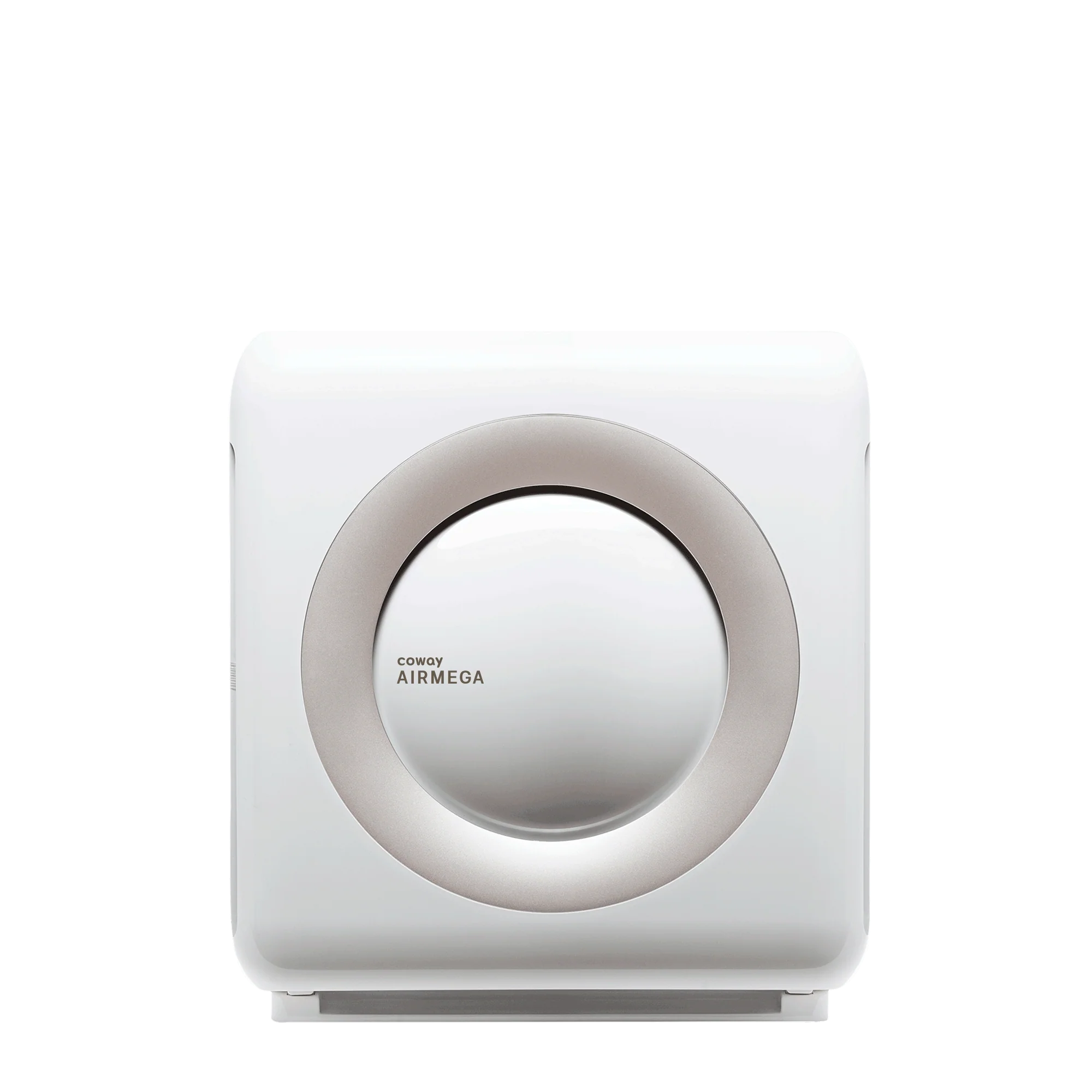
| Coway AP-1512HH Mighty | 233 | 246 | 361 sq ft | True HEPA + Carbon + Pre-filter | 9.5/10 |
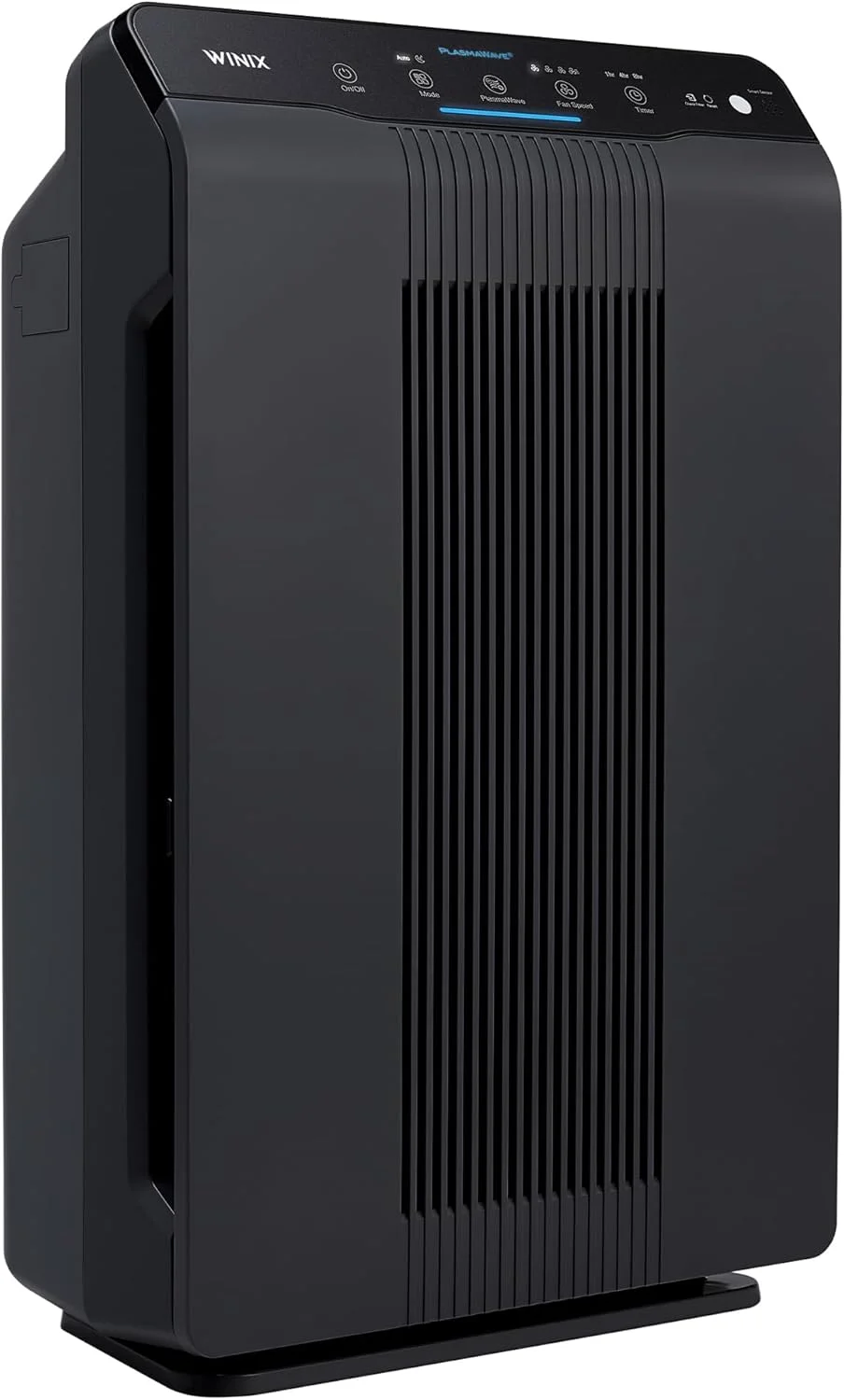
| Winix 5500-2 | 232 | 243 | 360 sq ft | True HEPA + PlasmaWave + Washable Carbon | 9.2/10 |
| Blueair Blue Pure 211i Max | 410 | 410 | 635 sq ft | HEPASilent + Carbon | 9.4/10 |
📅 Prices checked . Amazon prices change frequently — click through for current price. Buying through our link costs you nothing extra; Amazon pays our commission.
Coway AP-1512HH Mighty Review Editor Choice
✓ AHAM VerifiedOur Verdict
Key Specifications
- Room Coverage
- 361 sq ft
- CADR
- 233/246/240
- Filter
- True HEPA + Carbon + Pre-filter
- Noise
- 24 dB
- Power
- 77 watts
- Best For
- Medium rooms up to 361 sq ft. Wirecutter #1 for 10+ years. Best overall value.
📅 Prices checked . Amazon prices change frequently — click through for current price. Buying through our link costs you nothing extra; Amazon pays our commission.
What's in the Box
- Coway AP-1512HH air purifier
- Pre-installed 4-stage filter set
- Power cord
- User manual
- Filter replacement reminder sticker
Pros
- Wirecutter #1 for 10+ consecutive years
- AHAM verified CADR — no controversy
- True HEPA
- Fastest auto mode response in class
- 24dB ultra quiet sleep mode
- Eco mode at 4.9 watts
- 3-year warranty
Cons
- No WiFi or app control
- Carbon is impregnated fabric — weak on heavy odors
- Ionizer adds trace ozone (9ppb — CARB safe)
- Filter costs $60/year
- Design is dated
Best For
The Coway AP-1512HH is the clearest demonstration of what a HEPA-primary air purifier should look like — it does not rely on ionization and its performance is independently verified by AHAM (CADR 246 dust). The unit includes an optional ionizer that can be switched on or off independently of the HEPA filtration. For buyers who want HEPA-verified particle removal without ionizer dependency, leaving the ionizer off permanently is the correct setting. This unit is particularly well suited to allergy and asthma households that want confirmed particle removal without ozone risk.
📅 Price checked August 2026 · Buying through this link costs you nothing extra — Amazon covers our commission
Winix 5500-2 Review Best Value
✓ AHAM VerifiedOur Verdict
Key Specifications
- Room Coverage
- 360 sq ft
- CADR
- 232/243/246
- Filter
- True HEPA + PlasmaWave + Washable Carbon
- Noise
- 27 dB
- Power
- 67 watts
- Best For
- DISCONTINUED. Buy while stock lasts. Washable carbon is unique advantage.
📅 Prices checked . Amazon prices change frequently — click through for current price. Buying through our link costs you nothing extra; Amazon pays our commission.
What's in the Box
- Winix 5500-2 air purifier
- Pre-installed True HEPA + carbon filter
- Power cord
- Remote control
- User manual
Pros
- AHAM verified CADR
- PlasmaWave pellet carbon
- Washable carbon filter — unique
- HouseFresh tested 23 min room clean
Cons
- DISCONTINUED in US
- No WiFi
- Louder than 5510
- Larger footprint
Best For
The Winix 5500-2 demonstrates the PlasmaWave hybrid approach — HEPA primary filtration with ionization as a supplemental layer, independently switchable. AHAM CADR 243 smoke confirms the particle removal is driven by the HEPA filter, not the ionisation. The PlasmaWave system is Winix's proprietary hydroxyl radical generation technology, which CARB has certified as an ozone-safe process. For buyers interested in what a responsible hybrid HEPA-plus-ionisation integration looks like, the Winix 5500-2 is the reference product — the HEPA does the work and the ionisation can be disabled entirely if preferred.
📅 Price checked August 2026 · Buying through this link costs you nothing extra — Amazon covers our commission
Blueair Blue Pure 211i Max Review Best Large Room
✓ AHAM VerifiedOur Verdict

Key Specifications
- Room Coverage
- 635 sq ft
- CADR
- 410/410/410
- Filter
- HEPASilent + Carbon
- Noise
- 23 dB
- Power
- 46 watts
- Best For
- Large rooms 400-635 sq ft. Highest CADR under $400. Replaces discontinued 211+.
📅 Prices checked . Amazon prices change frequently — click through for current price. Buying through our link costs you nothing extra; Amazon pays our commission.
What's in the Box
- Blueair Blue Pure 211i Max air purifier
- Pre-installed dual-protection filter
- Washable pre-filter (fabric)
- Power cord
- User manual
Pros
- Highest CADR 410 under $400
- AHAM verified
- Zero ozone verified
- 23dB quiet on low
- Washable pre-filter in colors
- Smart app with Alexa
Cons
- $299-349 expensive
- Filter costs $140/year — most expensive
- Cannot disable ionizer
- 211+ filters NOT compatible
Best For
The Blueair 211i Max uses HEPASilent technology — a combination of mechanical HEPA filtration and electrostatic particle charging that allows high CADR (410 smoke) at lower fan noise (42 dB on low). The electrostatic component charges particles to improve filter capture rather than depositing them on surfaces. This is a different application of ionization than a standalone ionizer — it enhances HEPA capture within the filter, not in the room. The result is HEPA-level particle removal at higher airflow efficiency. For buyers in larger spaces who need high CADR at low noise, the 211i Max is the appropriate choice.
📅 Price checked August 2026 · Buying through this link costs you nothing extra — Amazon covers our commission
How HEPA Filtration Works — Mechanical Capture Explained
HEPA (High-Efficiency Particulate Air) filtration is a mechanical process with no moving parts other than the fan that drives airflow. The filter medium is a tightly packed mat of borosilicate glass fibres, pleated to increase total surface area. Particles in the air stream are captured through three simultaneous mechanisms, each dominant at a different particle size range.
Diffusion captures particles below 0.1 microns. At this scale, particles are light enough to be buffeted randomly by individual air molecules through Brownian motion. Instead of following the airstream, they move erratically and collide with fibres. The smaller the particle, the more pronounced the Brownian motion and the higher the capture rate — counter-intuitively, HEPA captures very small particles more efficiently than the test size.
Interception captures particles in the 0.1–1 micron range. These particles follow airflow streamlines but come close enough to a fibre surface to contact and adhere — they come within one particle radius of the fibre and stick.
Impaction captures particles above 1 micron. Larger particles carry sufficient inertia that they cannot follow the curved airstream around a fibre — they travel in a straight line and collide directly with it. Pollen, dust mite debris, and large mould spores are captured by impaction at essentially 100% efficiency.
The HEPA standard — 99.97% capture at 0.3 microns — is set at the Most Penetrating Particle Size (MPPS), where the combined efficiency of diffusion and impaction is at its minimum. Passing this test guarantees higher efficiency at every other particle size. Particles captured by a HEPA filter are permanently retained — they do not re-enter the air, they do not fall to surfaces to be resuspended, and they are removed from your breathing environment until the filter is replaced.
This is the defining characteristic of HEPA: removal. Particles entering the unit are gone from your air. This is what ionization does not provide.
How Ionizers Work — Charging, Falling, and the Redistribution Problem
An ionizer works by generating a high-voltage corona discharge — typically several thousand volts across a fine wire or needle array. This ionises surrounding air molecules, producing a stream of ions (predominantly negative in most residential units). These ions travel into the room and collide with airborne particles, transferring their charge.
Once a particle acquires a charge, it experiences electrostatic attraction toward oppositely charged surfaces. Room walls typically carry a slight positive charge by default. Charged particles accelerate toward walls, floors, ceilings, furniture surfaces, and the unit itself (many ionizers include a charged collection plate). The particle falls out of the air — it is no longer airborne.
By the standard measurement of airborne particle count, the room air appears cleaner. Particle counters will show reduced PM2.5 and PM10. But the particles are not gone — they have been deposited on surfaces throughout the room. A wall near an ionizer gradually acquires a visible dark film of deposited particles (the so-called "black wall" effect documented in many studies of ionizer use). The deposited particles remain in your environment. Any physical disturbance — foot traffic, fabric movement, cleaning activity, air currents from doors opening — resuspends deposited particles back into the air.
There is no mechanism in an ionizer that removes particles from the room. A HEPA filter holds particles in the filter matrix until you physically remove and replace the filter. An ionizer moves particles from one location in the room (airborne) to another location in the room (surfaces). The total particle load in your environment is unchanged.
Electrostatic precipitators are a related but distinct technology. An electrostatic precipitator (ESP) charges particles and then captures them on an oppositely charged collection plate within the unit — removing them from the air rather than depositing them on surfaces. ESPs do remove particles from the environment, but collection plate efficiency degrades rapidly as plates fill with deposited particles, and cleaning the plates is essential. ESPs also generate ozone as a byproduct.
Ozone Generation — Why Ionizers Are Restricted for Asthma and COPD Patients
The corona discharge process that generates ions in an ionizer also splits oxygen molecules (O₂) and allows recombination into ozone (O₃). This is not a design flaw or a quality problem — it is a fundamental consequence of the corona discharge physics. Any device that uses corona discharge to generate ions produces ozone as an unavoidable byproduct. The question is how much.
Ozone at elevated concentrations is a respiratory irritant and a lung toxin. The US EPA National Ambient Air Quality Standard for ground-level ozone is 0.07 ppm (70 ppb) as an 8-hour average. Above this level, ozone causes coughing, throat irritation, chest pain, worsening of asthma symptoms, and — at higher levels — measurable lung damage. People with asthma, COPD, and other respiratory conditions are significantly more sensitive to ozone than healthy adults.
The California Air Resources Board (CARB) limits ozone emissions from indoor air cleaning devices sold in California to 0.05 ppm in a standardised test chamber — below the EPA ambient air standard. CARB maintains a public database of certified devices. Devices that meet this standard carry CARB certification. Devices that do not are prohibited from sale in California. This is the most rigorous consumer protection standard for ozone-generating air cleaners anywhere in the United States.
Several prominent ionizer products have been measured at ozone levels exceeding CARB limits in independent testing. The original Ionic Breeze Quadra (Sharper Image) produced ozone concentrations exceeding EPA standards in real-room testing reported by Consumer Reports in 2004, contributing to significant consumer awareness issues. Multiple Clarifion and similar plug-in ionizer products have been tested by independent researchers at levels above the CARB threshold. The products remain on sale in most states.
For asthma and COPD patients: ionizers are contraindicated as primary or sole air cleaning devices. The ozone production introduces a respiratory irritant into the same airstream that the device is ostensibly improving. Running an ionizer in a room where a child with asthma sleeps is not a neutral choice — it is a net negative air quality intervention even if the airborne particle count decreases. The correct solution for asthmatics is HEPA filtration without ionization, from a CARB-certified unit, sized to the room.
The PlasmaWave technology used by Winix is different from conventional corona discharge ionization. Winix's PlasmaWave system generates hydroxyl radicals (•OH) through a bipolar ionisation process that also neutralises ozone at the point of generation — the claim is that the system produces less ozone than a corona discharge ionizer. CARB has certified multiple Winix units, indicating measured ozone output below 0.05 ppm. However, for most allergy and asthma applications, disabling the PlasmaWave and relying on the HEPA alone is the conservative choice.
When Ionisation Is Useful — As a Supplement to HEPA, Never a Replacement
Stating that ionizers are insufficient as standalone air cleaners does not mean they have no value. In specific configurations and as a supplemental layer on top of a HEPA primary system, ionization provides genuine benefits.
Enhanced HEPA capture (Blueair HEPASilent). Blueair's HEPASilent technology pre-charges particles electrostatically before they reach the HEPA filter layer. Charged particles are more easily captured by the filter fibres — the electrostatic attraction supplements the mechanical capture mechanisms. The effect allows Blueair units to achieve high CADR at lower fan speeds and lower noise than equivalent mechanical-only HEPA units. The ionisation occurs within the unit, not in the room, so the deposited-on-surfaces problem does not arise. This is a legitimate performance-enhancing application of the ionisation principle.
Surface and object decontamination. Bipolar ionisation systems (as distinct from unipolar ionizers) generate both positive and negative ions. When these ions contact airborne bacteria, viruses, or mould spores, they can disrupt cell membranes and inactivate biological contaminants through oxidative chemistry. This is a different mechanism from particle removal — it is a biocidal effect on the airborne particles rather than capture. Research evidence for this effect is present but the efficacy data is not as robust or consistent as for HEPA particle capture.
Odour reduction. Some ionisation systems reduce the perception of odours through oxidative chemistry that breaks down odour molecules in the air. This is a different mechanism from activated carbon adsorption — it is a reactive process rather than a physical capture process. For light odour management in spaces where activated carbon is not present, ionisation can provide supplemental benefit.
The key principle: ionisation is a supplement to be layered on top of HEPA filtration, not a replacement for it. A unit that combines True HEPA with a CARB-certified, low-ozone ionisation system — with the ionisation independently switchable — represents a responsible hybrid implementation. The Winix 5500-2 and the Coway AP-1512HH (with its optional ionizer) both follow this approach. A standalone ionizer with no HEPA component is not a meaningful air cleaning device for particle removal — it is a particle redistribution device that may also introduce ozone.
PECO, Photocatalytic Oxidation, and Plasma — Understanding the Technology Variants
The ionizer category has expanded to include several related but distinct technologies marketed under different names. Understanding what each one actually does prevents confusion when comparing products.
PECO (Photo Electrochemical Oxidation) — used by Molekule. PECO uses a UV-light-activated catalyst (a titanium dioxide-coated filter) to generate free radicals that oxidatively destroy pollutants at the molecular level — including VOCs, bacteria, viruses, and mould. Molekule claims PECO destroys pollutants rather than merely capturing them. Independent testing by Wirecutter and others found that Molekule's Air purifier had lower particle removal efficiency than a comparable HEPA unit at the same price point, and that the PECO process was effective for VOC destruction but not superior to HEPA for particle removal. PECO is a legitimate technology with real VOC and biological contaminant reduction capability — it is simply not a HEPA replacement for particle removal.
Photocatalytic oxidation (PCO). Like PECO, PCO uses UV light with a titanium dioxide catalyst to generate reactive oxygen species. Used in some HVAC air treatment systems and standalone units. The concern with some PCO implementations is that the process can produce formaldehyde and other aldehydes as byproducts if the oxidation reaction is incomplete. The quality of implementation matters — poorly designed PCO systems can worsen VOC levels.
PlasmaWave (Winix). Generates hydroxyl radicals through bipolar ionisation with a design claim of ozone neutralisation at the point of generation. CARB certified. Works as a supplement to the unit's HEPA filter.
Plasma air purifiers. Various marketing terms (cold plasma, needlepoint bipolar ionisation, GPS — Global Plasma Solutions technology) refer to products that generate bipolar ions. Used widely in commercial HVAC applications for whole-building air treatment. The evidence base for NBPI (needlepoint bipolar ionisation) effectiveness in real buildings is active and somewhat contested — some studies show measurable particle and pathogen reduction, others show limited effect in high-dilution commercial environments.
The unifying principle across all these variants: none of them are substitutes for HEPA filtration when particle removal is the goal. They may provide complementary benefits for specific pollutant categories (VOCs, biological contaminants, odours), but for the primary goal of reducing airborne particulate matter — PM2.5, pollen, dust mite debris, pet dander — a CADR-verified HEPA unit is the evidence-based standard.
The Clarifion and Ionic Breeze Problem — Case Studies in Ionizer Marketing
The ionizer category is disproportionately affected by misleading marketing because the lack of a CADR-equivalent verified performance standard for ionizers makes performance claims difficult to evaluate without independent testing.
Clarifion Delta. Clarifion sells plug-in ionizers at approximately $20–$40 per unit, marketed with claims of removing pollutants from the air in rooms up to a specified square footage. The product appears in no AHAM Verifide directory — there is no independently tested CADR for any Clarifion model. Several independent ozone measurements of Clarifion devices by researchers and consumer advocates have found ozone output at or above the CARB 0.05 ppm threshold, depending on room size and unit placement. Clarifion is not CARB certified. The product produces a measurable reduction in airborne particle count (the electrostatic deposition mechanism does move particles from the air to surfaces) but does not remove particles from the environment and introduces ozone into the breathing space. It should not be used in bedrooms, particularly for children or respiratory-compromised individuals.
Ionic Breeze Quadra (Sharper Image). The Ionic Breeze was the category-defining ionizer product of the 2000s, sold through Sharper Image stores with marketing claims of superior air cleaning technology as an alternative to filter-based purifiers. Consumer Reports tested the Ionic Breeze in 2004 and found ozone production exceeding the EPA ambient air standard, and particle removal performance below that of a box fan with a furnace filter. The resulting media coverage and subsequent class-action litigation contributed substantially to Sharper Image's 2008 bankruptcy. The product represents the canonical case study for why particle redistribution via ionization should not be conflated with particle removal via HEPA.
The AHAM verification gap. HEPA purifiers can be verified at ahamdir.com — every certified unit has independently tested CADR values. Ionizers operate outside this verification framework entirely. There is no equivalent independent certification for ionizer particle removal claims. When evaluating any ionizer product, the appropriate question is: does this unit appear in the AHAM directory with an independently tested CADR? If not, the performance claims are self-declared by the manufacturer with no external verification. This is not an argument that no ionizer product is effective — it is a practical note that the verification infrastructure does not exist for ionizers the way it does for HEPA.
How This Changes Your Buying Decision
The HEPA vs ionizer question has one clear answer for health-driven buyers.
- For allergies, asthma, or any respiratory condition: HEPA only. Ionizers displace particles onto surfaces rather than removing them from the room. A particle on your floor can be resuspended; a particle captured in a HEPA filter cannot. The health evidence base for HEPA particle removal is strong. For ionizers as standalone devices, it is not.
- AHAM-verified CADR is the filter test that matters. Any purifier in the AHAM Verifide directory has independently confirmed particle removal. Ionizer-only devices do not appear in that directory because they are not tested for particle removal rates. If a product has no AHAM CADR, it has no verified particle removal performance.
- Hybrid HEPA+ionizer units are acceptable if the ionizer is switchable. Units like the Winix 5500-2 use HEPA as the primary filtration mechanism and ionization as a supplemental layer — and the ionizer can be disabled. The HEPA filter does the work; the ionizer is optional. Avoid units where ionization is the only filtration mechanism.
- If ozone sensitivity is a concern, disable all ionizers. CARB-compliant ionizers limit ozone to 0.050 ppm. For households with asthma, COPD, or infants, even this level is not needed — run HEPA-only.
Where to go next: HEPA filter explained — the full filtration mechanism. Ozone air purifier guide — what ionizer ozone actually does. Best air purifiers for allergies.