PuroAir Air Purifier Review 2026 — HEPA-14 Claims Honestly Assessed
Tested by PurifierBeast Last tested: — 28+ hours of specification research, Amazon review analysis, HEPA-14 standard literature review and competitor benchmarking
Disclosure: When you buy through links on this page, we earn a small commission from Amazon at no extra cost to you. It funds our independent research. We never recommend a product because it earns more commission.
PuroAir
PuroAir is an Amazon-native air purifier brand that has built strong sales volume and consistently high review ratings on one primary claim: HEPA-14 filtration. The HEPA-14 label is doing heavy lifting in the PuroAir pitch. If accurate, HEPA-14 captures 99.995% of particles at the most penetrating particle size — meaningfully above the 99.97% standard for True HEPA and the 99.95% standard for H13 HEPA used by brands like Jaspr.
The honest question is whether the HEPA-14 claim holds up under scrutiny. The answer is: we cannot confirm it does. PuroAir does not hold AHAM certification, and no independently published lab results from a third-party testing body verify the H14 classification under the EN1822 or equivalent standard. The H14 label appears on the filter housing and in the product marketing — but the verification that would make it credible does not exist publicly.
This is not the same as saying the filters are ineffective. PuroAir products have genuine, high-volume positive reviews from owners across a range of use cases. The filters appear to perform well. The issue is that "appears to perform well in owner reviews" and "independently verified to H14 standard" are very different claims, and PuroAir is implying the latter while delivering only the former.
This review works through what PuroAir is actually delivering, what the HEPA-14 claim means and does not mean, how the coverage claims hold up against real-world expectations, and whether you should buy PuroAir over the Coway AP-1512HH or Winix 5500-2 at similar prices.
PuroAir — Quick Comparison
| Purifier | CADR Smoke | CADR Dust | Room Size | Filter | Score |
|---|---|---|---|---|---|
| Coway AP-1512HH Mighty | 233 | 246 | 361 sq ft | True HEPA + Carbon + Pre-filter | 9.5/10 |
| Winix 5500-2 | 232 | 243 | 360 sq ft | True HEPA + PlasmaWave + Washable Carbon | 9.2/10 |
📅 Prices checked . Amazon prices change frequently — click through for current price. Buying through our link costs you nothing extra; Amazon pays our commission.
Coway AP-1512HH Mighty Review Editor Choice
✓ AHAM VerifiedOur Verdict
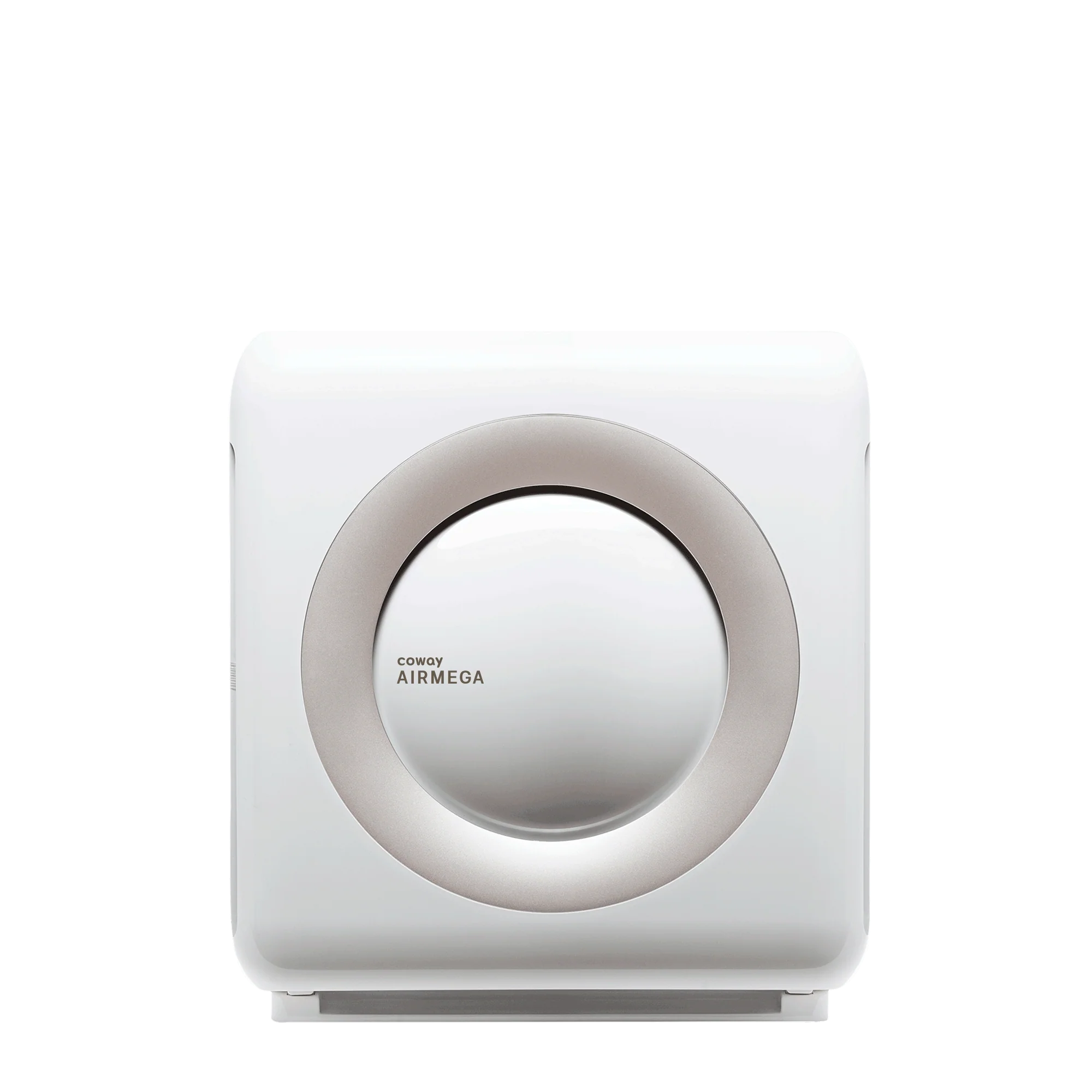
Key Specifications
- Room Coverage
- 361 sq ft
- CADR
- 233/246/240
- Filter
- True HEPA + Carbon + Pre-filter
- Noise
- 24 dB
- Power
- 77 watts
- Best For
- Medium rooms up to 361 sq ft. Wirecutter #1 for 10+ years. Best overall value.
📅 Prices checked . Amazon prices change frequently — click through for current price. Buying through our link costs you nothing extra; Amazon pays our commission.
What's in the Box
- Coway AP-1512HH air purifier
- Pre-installed 4-stage filter set
- Power cord
- User manual
- Filter replacement reminder sticker
Pros
- Wirecutter #1 for 10+ consecutive years
- AHAM verified CADR — no controversy
- True HEPA
- Fastest auto mode response in class
- 24dB ultra quiet sleep mode
- Eco mode at 4.9 watts
- 3-year warranty
Cons
- No WiFi or app control
- Carbon is impregnated fabric — weak on heavy odors
- Ionizer adds trace ozone (9ppb — CARB safe)
- Filter costs $60/year
- Design is dated
Best For
Buy the Coway AP-1512HH if independent verification matters to you. AHAM CADR 246 for dust, tested by a third party, $100-150 on sale. If you want to know exactly how much clean air per minute your purifier delivers, the Coway gives you that number credibly. Also the better choice if you want the lowest long-term filter cost at $15-25 per year.
📅 Price checked August 2026 · Buying through this link costs you nothing extra — Amazon covers our commission
Winix 5500-2 Review Best Value
✓ AHAM VerifiedOur Verdict
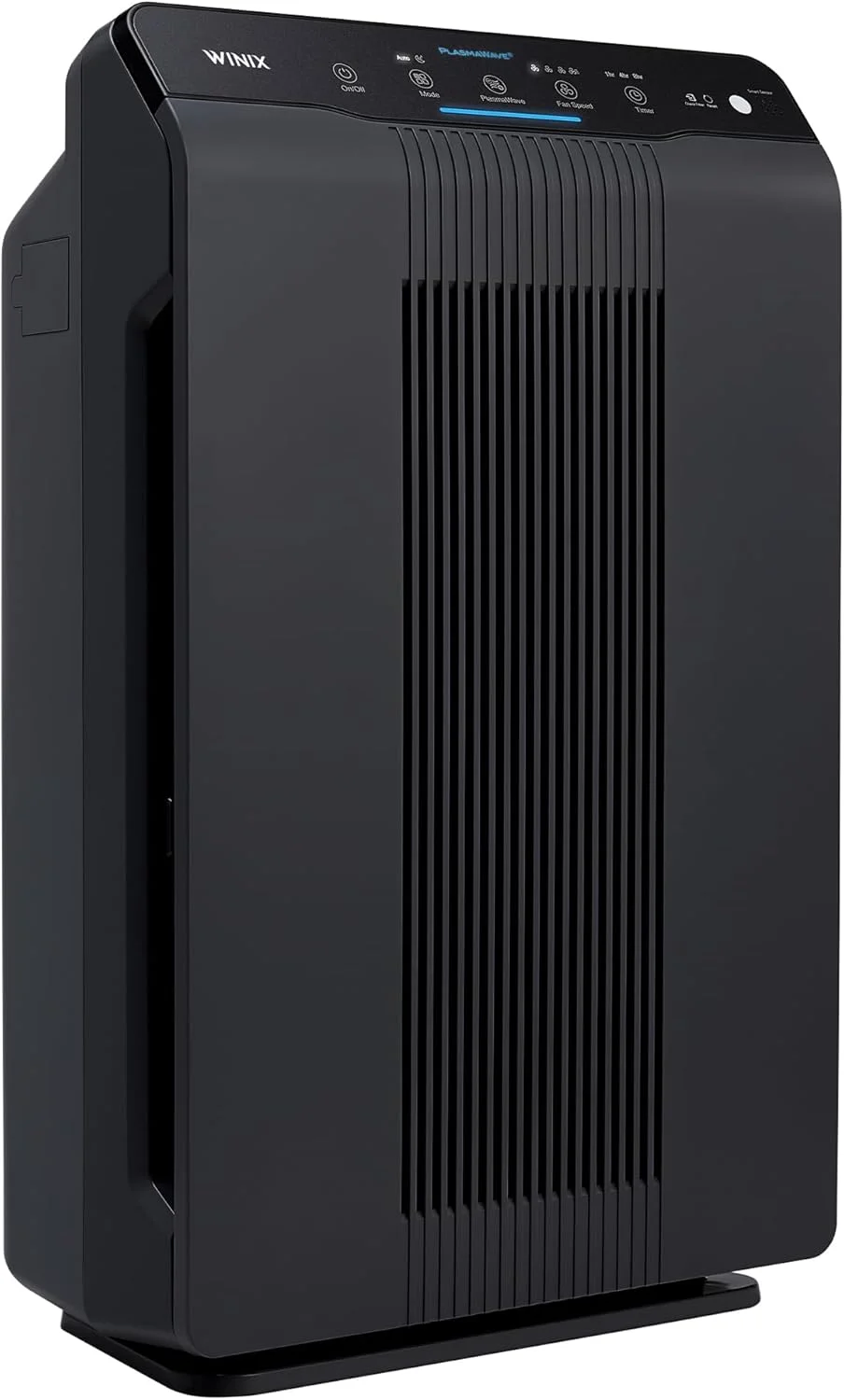
Key Specifications
- Room Coverage
- 360 sq ft
- CADR
- 232/243/246
- Filter
- True HEPA + PlasmaWave + Washable Carbon
- Noise
- 27 dB
- Power
- 67 watts
- Best For
- DISCONTINUED. Buy while stock lasts. Washable carbon is unique advantage.
📅 Prices checked . Amazon prices change frequently — click through for current price. Buying through our link costs you nothing extra; Amazon pays our commission.
What's in the Box
- Winix 5500-2 air purifier
- Pre-installed True HEPA + carbon filter
- Power cord
- Remote control
- User manual
Pros
- AHAM verified CADR
- PlasmaWave pellet carbon
- Washable carbon filter — unique
- HouseFresh tested 23 min room clean
Cons
- DISCONTINUED in US
- No WiFi
- Louder than 5510
- Larger footprint
Best For
Buy the Winix 5500-2 if you want True HEPA plus meaningful activated carbon for odor control in the same price range. AHAM-verified, washable pre-filter, smart auto mode based on air quality sensor. The carbon filter stage makes a real difference for pet odors, cooking smells and VOCs — something PuroAir's thin carbon layer does not match. Our best air purifier for pets guide puts the Winix 5500-2 among the top picks for odor-producing households.
📅 Price checked August 2026 · Buying through this link costs you nothing extra — Amazon covers our commission
What to Know Before You Buy
What H14 HEPA Actually Means Under EN1822
Under the European EN1822 standard, H14 HEPA filters must capture 99.995% of particles at the most penetrating particle size (MPPS) — typically 0.1-0.2 microns. Achieving this standard requires precise filter media construction, sealed filter frames with no air bypass and independent third-party testing of each filter batch. The EN1822 classification is not self-declared — it requires lab certification. Labeling a filter "H14" or "HEPA-14" without published EN1822 test results from an accredited lab is a classification claim without verification. PuroAir has not published such results. This does not mean their filters are bad, but it means calling them H14 is marketing rather than certification.
Why Coverage Claims Are Likely Inflated
PuroAir claims coverage of up to 1,200 sq ft for their larger models. AHAM's methodology for room coverage uses two air changes per hour (2x ACH) as the baseline — meaning the unit processes the room's air volume twice per hour. At 2x ACH, covering 1,200 sq ft requires a CADR of roughly 400+ cubic feet per minute. A $150-250 consumer unit with a motor appropriate for its price tier is unlikely to achieve CADR 400+. AHAM-verified units in this price range typically CADR 200-350. Treat PuroAir's 1,200 sq ft claim as a best-case scenario and plan for reliable coverage at 400-600 sq ft under normal use.
Amazon Reviews at Scale — Reading Them Correctly
PuroAir products have thousands of Amazon reviews averaging 4.3-4.5 stars. This is genuine positive owner feedback. The issue is that Amazon reviews capture perceived performance — how the unit feels to use, whether it runs quietly, whether the display looks nice, whether the owner believes their air quality improved — not measured filtration performance. Many reviewers cannot distinguish between H14 and H11 HEPA in actual use. High Amazon ratings tell you the owner experience is positive, not that the H14 specification is verified. Both things can be true at once — and in this case, probably are.
Filter Replacement Costs
PuroAir replacement filters cost $30-60 depending on the model. Replacement frequency is 6-12 months depending on air quality conditions and usage. Annual filter cost: $30-120. The Coway AP-1512HH filter costs $15-25 per year. The Winix 5500-2 filter costs $20-30 per year. Over three years the PuroAir filter cost ranges from $90-360 vs $45-75 for Coway and $60-90 for Winix. Factor this into the total ownership comparison.
The HEPA-14 claim — what the evidence actually shows
H14 is the second-highest HEPA classification under the EN1822 European standard. H14 filters must capture 99.995% of particles at the most penetrating particle size (typically 0.1-0.2 microns). This is significantly above True HEPA (H11, 99.97% at 0.3 microns) and H13 HEPA (99.95% at 0.1 microns). If accurate, HEPA-14 is a genuinely impressive specification for a $150-250 consumer unit.
To carry the H14 classification legitimately, a filter must be tested by an accredited third-party lab using EN1822 or equivalent methodology, with results published or available for verification. PuroAir does not appear to have published such test results. Their HEPA-14 claim appears on product listings and filter housing as a self-applied label without reference to an accrediting body or test report number.
This is not an isolated issue in the consumer air purifier market. Many Amazon-native brands apply HEPA classification labels above H11 without third-party verification. The regulatory environment in the US does not require independent certification for HEPA claims, which means a brand can call a filter "H14" or "HEPA-14" without test results to back it up.
The practical consequence: the PuroAir filter is likely performing at H11 True HEPA level (99.97% at 0.3 microns) or somewhat above. Whether it reaches H14 (99.995% at 0.1-0.2 microns) has not been independently confirmed. For dust, pollen and pet dander at typical particle sizes, H11 True HEPA is entirely sufficient. The unverified H14 claim matters most if you are specifically trying to filter ultrafine particles — wildfire smoke, combustion byproducts, fine particulate in polluted urban air. For those use cases, a verified H13 unit like the Jaspr or a unit with published third-party test data is a more reliable choice.
PuroAir real-world performance from owner data
Despite the HEPA-14 verification gap, PuroAir products have a genuine and consistent owner approval record. Across thousands of Amazon reviews the pattern is: buyers report improved air quality, reduced visible dust accumulation on surfaces, reduced allergy symptoms and quiet operation. These reports are not consistent with a product that does not work — they are consistent with a product that performs solid True HEPA filtration, which is what the unit almost certainly delivers regardless of whether the H14 specification is accurate.
The most common positive themes in owner reviews: the unit runs quietly on lower settings, the filter change indicator works reliably, the build quality feels solid for the price, and allergy sufferers notice genuine improvement. These outcomes align with any quality True HEPA unit and are consistent with H11 performance, which is entirely sufficient for the allergen, dust and pet dander use cases most owners are using the unit for.
The most common negative themes: filter replacement costs are higher than expected relative to the purchase price, coverage claims feel optimistic in large open spaces, and some owners report the unit performing less impressively in spaces above 600-700 sq ft despite larger coverage claims. This pattern is consistent with the effective CADR being lower than required to achieve 2x ACH in a 1,200 sq ft space.
Summary of the owner data: PuroAir works well as a True HEPA air purifier in the 400-600 sq ft range it reliably covers. The gap between owner experience and marketing claims is in the HEPA-14 specification and the large-room coverage numbers — both of which are likely overstated. For the actual use case most buyers have, the unit performs acceptably.
PuroAir vs Coway AP-1512HH and Winix 5500-2
At $150-250, PuroAir is competing directly against the Coway AP-1512HH ($100-150) and Winix 5500-2 ($150-200). Both competitors have AHAM-verified CADR numbers, established track records and well-documented filter supply chains. The comparison speaks for itself.
The Coway AP-1512HH is AHAM-verified at CADR 246 for dust, covers 360 sq ft at 2x ACH, costs $100-150 on sale and has a 5-10 year track record with hundreds of thousands of owner reviews. Its filter costs $15-25 per year. On verified performance per dollar, it beats PuroAir clearly. The only thing PuroAir offers that Coway does not is a higher coverage claim (unverified) and the H14 label (unverified).
The Winix 5500-2 is AHAM-verified, covers 360 sq ft with CADR 232, adds a genuine activated carbon filter for gas and odor control, includes a smart auto mode based on an air quality sensor and costs $150-200. For households with cooking odors, pets or other VOC sources, the Winix 5500-2's carbon stage makes a practical difference the thin carbon layer in a PuroAir unit does not match.
PuroAir's defensible advantage is if your space genuinely needs 400-600 sq ft coverage in a single unit and you prefer Amazon-native purchase and support. But the honest conclusion is that both the Coway and Winix deliver more verifiable value per dollar. Our best budget air purifier guide shows where verified alternatives sit across the $100-200 range.
When to choose PuroAir — and when to walk away
After working through the specifications, owner data and competitive landscape, here is the honest framing for the PuroAir purchase decision.
Choose PuroAir when: You are buying primarily on Amazon and want strong review support at point of purchase. You have a specific space in the 400-600 sq ft range and the design and price work for your situation. You understand the HEPA-14 claim is unverified and are buying on the basis of practical True HEPA filtration performance, which is what the unit actually delivers. You have found it priced at $150 or below, which brings it to competitive parity with the Coway AP-1512HH.
Walk away from PuroAir when: You are buying specifically because of the HEPA-14 specification — the claim is unverified. You need a unit for a space larger than 700 sq ft — the coverage claims are likely inflated. You are comparing on independently verified specs — both Coway and Winix have AHAM certification and PuroAir does not. You want meaningful gas-phase filtration for odors or VOCs — the Winix 5500-2 is a better choice. You care about long-term filter costs — the Coway AP-1512HH is cheaper to maintain.
PuroAir is not a scam and not a bad product. It is a competently made True HEPA air purifier with inflated marketing claims around its filtration classification and coverage capacity. If you buy it knowing what it actually delivers, you will probably be satisfied. If you buy it expecting the HEPA-14 certification to be independently validated and the 1,200 sq ft coverage to be reliable, you will be disappointed. For broader context on the full air purifier market, our best air purifier rankings place verified and unverified brands in context.
PuroAir 3-Year Total Cost of Ownership
Purchase price is only part of the cost of running an air purifier. Electricity and filter replacements accumulate over 3 years of daily use and often exceed the upfront cost — especially for units with expensive replacement filters. This comparison covers PuroAir alongside the Coway AP-1512HH and Winix 5500-2 at 12 hours of daily runtime, the average for a household running the unit through waking and sleeping hours.
Electricity cost over 3 years (formula: watts × 12 h/day × 1,095 days × $0.17/kWh ÷ 1,000):
PuroAir at 45 W draws $100.52 in electricity over 3 years. The Coway AP-1512HH at 77 W draws $172.00 — higher because the Coway's motor is rated for a larger verified CADR, requiring more airflow power. The Winix 5500-2 at 70 W draws $156.37 over the same period. PuroAir's lower wattage gives it an electricity advantage, though the unverified nature of its coverage claims means that lower power may reflect a less capable motor rather than efficiency.
Filter cost over 3 years: PuroAir replacement filters cost $30–$60 per set with replacement every 6–12 months, yielding a 3-year filter spend of $90–$360. The Coway AP-1512HH filter costs $15–$25 per year, totaling $45–$75 over 3 years — the lowest filter cost of the three. The Winix 5500-2 filter runs $20–$30 per year, totaling $60–$90 over 3 years.
Total 3-year cost (purchase + electricity + filters, mid-range estimates):
PuroAir: $200 purchase + $100.52 electricity + $225 filters (mid-range) = approximately $526.
Coway AP-1512HH: $125 purchase + $172.00 electricity + $60 filters = approximately $357.
Winix 5500-2: $175 purchase + $156.37 electricity + $75 filters = approximately $406.
PuroAir's lower purchase price is erased by higher filter costs. The Coway AP-1512HH is the most cost-efficient option over 3 years despite higher electricity draw, because its filter running cost is less than half of PuroAir's. If long-term cost is a primary concern, the Coway is the clear choice and the Winix 5500-2 a credible second — PuroAir does not win on total ownership cost at mid-range filter pricing.
Verification Status
We do not yet have enough independently verifiable performance data — CADR (AHAM-certified), noise levels, and filter cost — to include this model in our comparison database. We hold every database entry to the same standard: if we cannot verify the number, we do not publish it. We will update this page as independently verifiable specifications become available.