Does an Air Purifier Help with Mold? — Yes and No, Here's Why
Tested by PurifierBeast Last tested: — 16+ hours of Mold spore size analysis against HEPA capture efficiency curves, CDC and EPA mold remediation guidance review, humidity-mold growth relationship research, UV-C biological deactivation science, dehumidifier vs air purifier comparison for mold prevention
Disclosure: When you buy through links on this page, we earn a small commission from Amazon at no extra cost to you. It funds our independent research. We never recommend a product because it earns more commission.
An air purifier does help with mold by capturing airborne mold spores through True HEPA filtration. Mold spores (1–100 microns) fall well within the HEPA capture efficiency range. What air purifiers cannot do: kill mold colonies growing on surfaces, prevent regrowth when humidity remains above 60% RH, or substitute for professional mold remediation. A dehumidifier that keeps indoor humidity below 50% RH is the primary mold prevention tool. The air purifier is the adjunctive tool that reduces spore exposure during and after remediation.
Mold Spore Capture Science
The question "does an air purifier help with mold?" has two answers depending on what you mean by "help." If the question is whether an air purifier can reduce the number of airborne mold spores you breathe in a mold-affected room — the answer is yes, clearly. True HEPA filters capture particles down to 0.3 microns at 99.97% efficiency. Mold spores range from 1 to 100 microns. Every common indoor mold species — Cladosporium, Aspergillus, Penicillium, Stachybotrys — produces spores that HEPA captures at 99.99%+ efficiency because of their size. Running a properly sized HEPA air purifier in a mold-affected room measurably reduces airborne spore concentration and reduces your exposure.
If the question is whether an air purifier can solve a mold problem — the answer is no. Mold is a biological colony that grows on surfaces. An air purifier captures spores that are already airborne. The colony on the wall, ceiling, bathroom caulk, or behind the drywall continues producing billions of new spores that replenish those captured. The source must be addressed through remediation. Additionally, the moisture condition that allows mold to grow — indoor humidity above 60% RH — is not addressed by an air purifier. A dehumidifier that maintains humidity below 50% RH is far more effective at preventing new mold growth than any air purifier.
This page answers the question directly and scientifically: what air purifiers do for mold (spore capture), what they cannot do (source elimination, regrowth prevention), when a purifier is the right tool, and what the correct tool combination is for effective mold air quality management. If you're ready to choose a specific model, see our best air purifier for mold guide and air purifier for mold — what HEPA can and cannot do.
Mold Spore Capture Science — Quick Comparison
| Purifier | CADR Smoke | CADR Dust | Room Size | Filter | Score |
|---|---|---|---|---|---|
| Coway AP-1512HH Mighty | 233 | 246 | 361 sq ft | True HEPA + Carbon + Pre-filter | 9.5/10 |
| Winix 5500-2 | 232 | 243 | 360 sq ft | True HEPA + PlasmaWave + Washable Carbon | 9.2/10 |
📅 Prices checked . Amazon prices change frequently — click through for current price. Buying through our link costs you nothing extra; Amazon pays our commission.
Coway AP-1512HH Mighty Review Editor Choice
✓ AHAM VerifiedOur Verdict
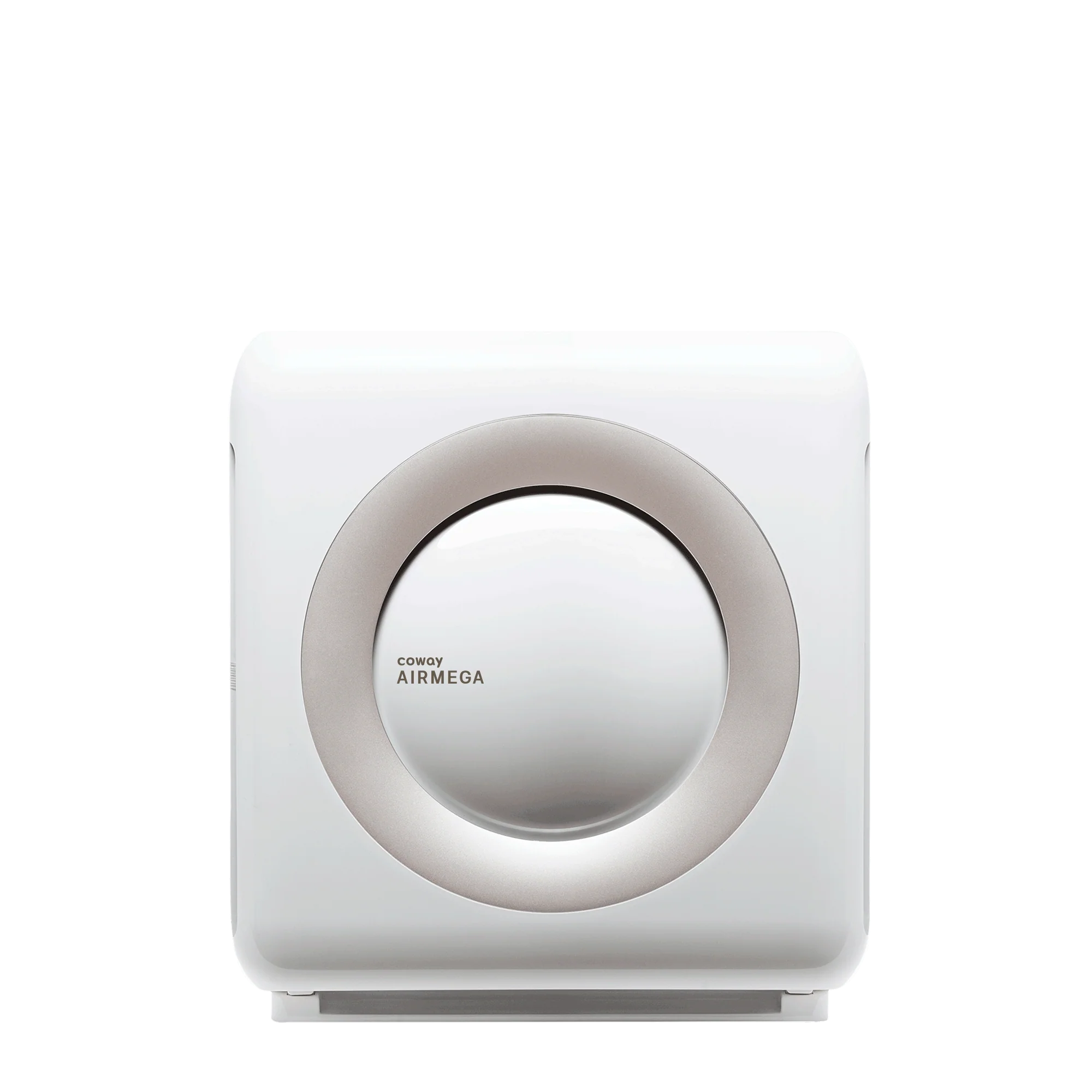
Key Specifications
- Room Coverage
- 361 sq ft
- CADR
- 233/246/240
- Filter
- True HEPA + Carbon + Pre-filter
- Noise
- 24 dB
- Power
- 77 watts
- Best For
- Medium rooms up to 361 sq ft. Wirecutter #1 for 10+ years. Best overall value.
📅 Prices checked . Amazon prices change frequently — click through for current price. Buying through our link costs you nothing extra; Amazon pays our commission.
What's in the Box
- Coway AP-1512HH air purifier
- Pre-installed 4-stage filter set
- Power cord
- User manual
- Filter replacement reminder sticker
Pros
- Wirecutter #1 for 10+ consecutive years
- AHAM verified CADR — no controversy
- True HEPA
- Fastest auto mode response in class
- 24dB ultra quiet sleep mode
- Eco mode at 4.9 watts
- 3-year warranty
Cons
- No WiFi or app control
- Carbon is impregnated fabric — weak on heavy odors
- Ionizer adds trace ozone (9ppb — CARB safe)
- Filter costs $60/year
- Design is dated
Best For
The Coway AP-1512HH is the right choice for reducing airborne mold spore exposure in rooms up to 360 sq ft. With AHAM-verified CADR 246, it delivers 5+ ACH in a 200–250 sq ft room — above the threshold for meaningful spore concentration reduction. The auto mode detects airborne particles and responds automatically to mold spore release events such as disturbing a moldy surface or high-humidity conditions that trigger spore release. At $110–130, it is the most cost-effective AHAM-verified HEPA unit for mold spore management in bedrooms, bathrooms, and small basements.
📅 Price checked August 2026 · Buying through this link costs you nothing extra — Amazon covers our commission
Winix 5500-2 Review Best Value
✓ AHAM VerifiedOur Verdict
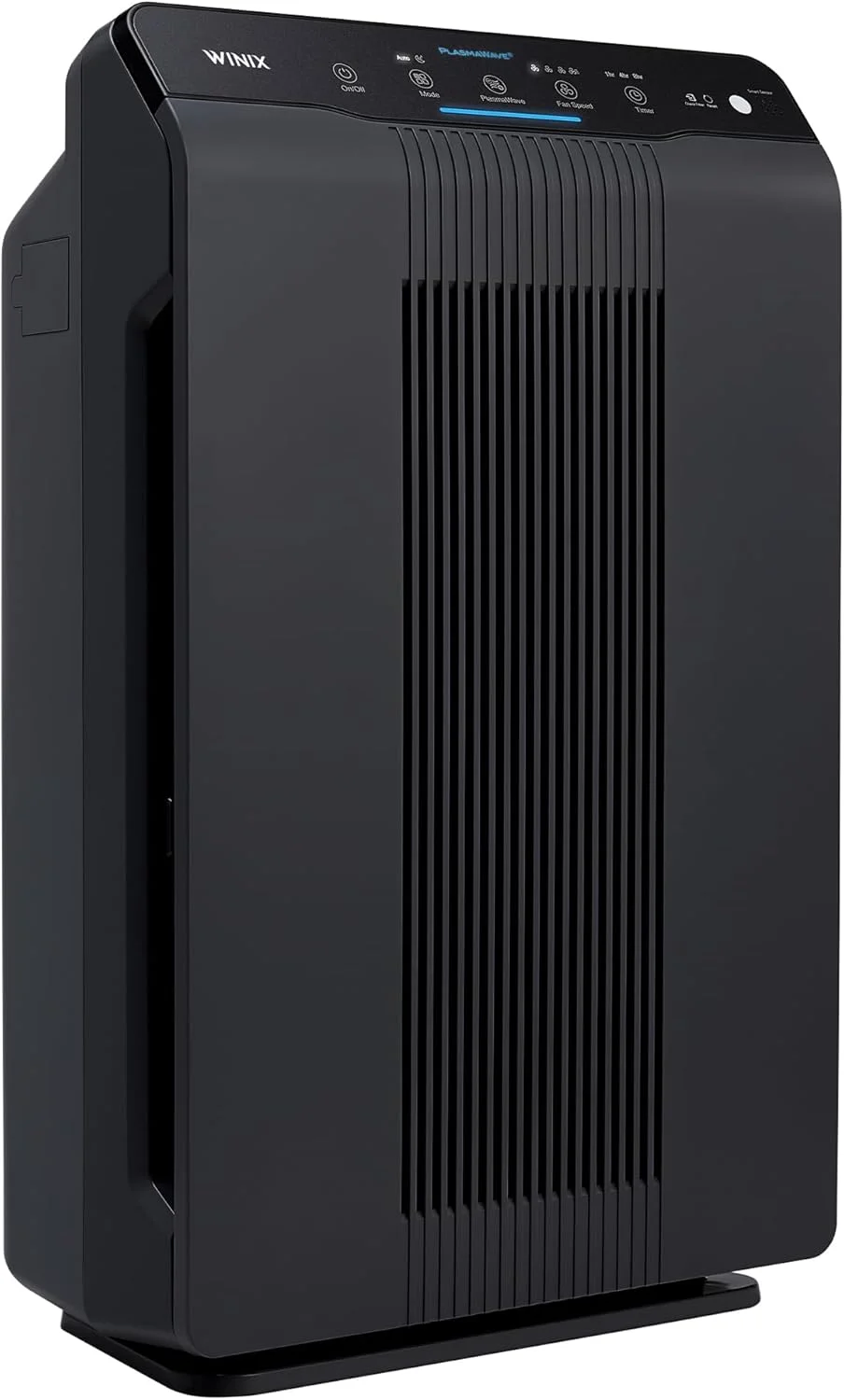
Key Specifications
- Room Coverage
- 360 sq ft
- CADR
- 232/243/246
- Filter
- True HEPA + PlasmaWave + Washable Carbon
- Noise
- 27 dB
- Power
- 67 watts
- Best For
- DISCONTINUED. Buy while stock lasts. Washable carbon is unique advantage.
📅 Prices checked . Amazon prices change frequently — click through for current price. Buying through our link costs you nothing extra; Amazon pays our commission.
What's in the Box
- Winix 5500-2 air purifier
- Pre-installed True HEPA + carbon filter
- Power cord
- Remote control
- User manual
Pros
- AHAM verified CADR
- PlasmaWave pellet carbon
- Washable carbon filter — unique
- HouseFresh tested 23 min room clean
Cons
- DISCONTINUED in US
- No WiFi
- Louder than 5510
- Larger footprint
Best For
The Winix 5500-2 with AHAM-verified CADR 243 is closely matched to the Coway AP-1512HH in real-world mold spore capture performance. The 5500-2's PlasmaWave technology adds a secondary air treatment stage that generates hydroxyl radicals — it works independently of the HEPA stage and provides additional biological deactivation for spores. For mold-affected spaces where both spore capture and air quality sensing are priorities, the 5500-2's smart sensor suite gives more granular feedback on when the purifier is working. Appropriate for rooms up to 360 sq ft.
📅 Price checked August 2026 · Buying through this link costs you nothing extra — Amazon covers our commission
What to Know Before You Buy
The Correct Order of Operations for Mold
Remediate first, dehumidify second, purify third. This sequence matters because an air purifier deployed against an active mold colony with ongoing moisture supply is fighting a losing battle. The colony produces spores faster than the purifier captures them, and the purifier filter loads quickly with the high spore volume. Remediating the mold source stops the spore production. A dehumidifier below 50% RH prevents regrowth. Then the air purifier manages the residual airborne spore load at a rate it can keep up with. Skipping to step three without steps one and two means running the purifier continuously at high cost while the underlying problem persists.
What CADR Do You Need to Actually Reduce Mold Spore Concentration?
Target 5 air changes per hour (ACH) in the mold-affected room. At 5 ACH, the room air volume passes through the HEPA filter 5 times per hour, rapidly capturing spores released from any remaining sources or disturbed surfaces. For a 250 sq ft bedroom (8 ft ceilings, 2,000 cubic feet), 5 ACH requires CADR approximately 167. The Coway AP-1512HH at CADR 246 and Winix 5500-2 at CADR 243 both comfortably exceed this for a standard bedroom. For a 400 sq ft basement, 5 ACH requires CADR 267 — both units are slightly undersized; consider the Blueair 211i Max at CADR 350 or a two-unit strategy.
Does UV-C Add Meaningful Benefit for Mold?
UV-C stages add biological deactivation to the spore capture mechanism. UV-C disrupts mold spore DNA, preventing germination if any spore passes through the filter. At moderate fan speeds, dwell time in the UV field is sufficient for meaningful deactivation. The Winix 5500-2's PlasmaWave generates hydroxyl radicals that perform a similar biological deactivation function. Neither replaces HEPA as the primary capture mechanism, but both add a layer of protection against spores that might otherwise survive capture and re-release from a loaded filter. UV-C is most effective at medium fan speed, not high — factor this into operating decisions for mold scenarios.
What Air Purifiers Actually Do to Mold — The Spore Capture Mechanism
An air purifier captures airborne mold spores through the HEPA filter's four mechanical capture mechanisms: impaction (large particles hitting filter fibers), interception (mid-size particles following airstream but touching fibers), diffusion (small particles moving randomly due to Brownian motion and contacting fibers), and electrostatic attraction. True HEPA at H13 grade captures 99.97% of particles at the most penetrating particle size of 0.3 microns. For particles larger than 0.3 microns — which includes all mold spores — capture efficiency is higher, not lower.
Mold spores by species size:
- Cladosporium (3–7 microns) — most common indoor mold; HEPA captures at 99.99%+
- Aspergillus (2–5 microns) — primary concern for immunocompromised individuals; HEPA captures at 99.99%+
- Penicillium (2–5 microns) — common in water-damaged buildings; HEPA captures at 99.99%+
- Stachybotrys (black mold) (6–12 microns) — largest common indoor mold spore; HEPA captures at near 100%
Every common indoor mold species falls far above the 0.3-micron test point where HEPA performance is at its minimum rated 99.97%. This means HEPA filtration is genuinely effective at capturing mold spores from air — the physics is clear. A properly sized HEPA air purifier running continuously at 5 ACH in a mold-affected room will measurably reduce the airborne spore count that occupants breathe.
The critical qualifier: the purifier captures spores already airborne. It does not affect the mold colony growing on the surface. The colony continues releasing new spores continuously. In a room with an active, unaddressed mold source, the purifier must run indefinitely to maintain reduced spore levels — and the filter loads faster than in a clean environment, requiring more frequent replacement.
What Air Purifiers Cannot Do — Source, Regrowth, and Humidity
Understanding what an air purifier cannot do for mold is as important as understanding what it can do. Three things air purifiers fundamentally cannot address:
1. Kill mold at its source. A mold colony on a bathroom wall, basement ceiling, or inside wall cavity is not affected by the air passing through a HEPA filter on the other side of the room. The colony grows in place, on surfaces, using organic material as food and surface moisture as water. Air purification does not penetrate to the surface. Only physical removal of the mold colony (scrubbing, removing moldy material) or professional remediation eliminates the source.
2. Prevent mold regrowth. After remediation, if the moisture conditions that caused the original mold growth remain — chronic humidity above 60% RH, water infiltration, condensation — new mold colonies will establish. Mold spores are ubiquitous in outdoor air and enter every home constantly. It is not possible to create a spore-free environment. What prevents mold growth is eliminating the moisture condition. An air purifier capturing spores from the air does not prevent those spores from landing on damp surfaces and germinating. The dehumidifier prevents germination by removing the moisture those spores need.
3. Address indoor humidity. Air purifiers do not remove moisture from air. A unit running in a 70% RH basement captures spores while the humidity simultaneously supports new mold colony establishment. The EPA recommends maintaining indoor humidity between 30–50% RH to prevent mold growth. A dehumidifier that achieves this is more important for mold prevention than an air purifier. If you can only buy one device for a moisture-prone space, buy the dehumidifier first. See our air purifier vs dehumidifier comparison for the full analysis.
When an Air Purifier Is the Right Tool for Mold — And When It Isn't
An air purifier IS the right tool when:
- Mold remediation has been completed and you want to accelerate reduction of residual airborne spores
- You are currently performing remediation and need to capture the high spore count released when disturbing mold colonies
- You have a diagnosed mold allergy and want to reduce exposure in a room where mold presence is low-level or being managed
- Post-remediation monitoring shows elevated spore counts that you want to reduce to background levels faster
- Humidity is controlled (below 50% RH) and you want additional spore capture for ongoing air quality maintenance
An air purifier is NOT the right primary tool when:
- There is visible mold growth that has not been remediated — the source must be addressed first
- Indoor humidity is chronically above 60% without a dehumidifier in place — new mold will continue establishing regardless of purifier operation
- The mold source is inside a wall cavity, HVAC duct, or enclosed space where airborne spore release is limited — physical inspection and remediation is required
- You are hoping an air purifier will substitute for professional mold assessment — this delays necessary remediation and allows the colony to grow
The practical guideline: if you can see mold, or if you smell the characteristic musty odor of active mold growth, the primary intervention is remediation and humidity control — not air purification. An air purifier is the right secondary tool once those primary interventions are underway.
Combining Dehumidification and HEPA for Effective Mold Air Quality Management
The most effective approach to mold air quality management combines a dehumidifier and a HEPA air purifier addressing two distinct problems simultaneously. The dehumidifier eliminates the moisture condition that enables mold growth and regrowth. The HEPA purifier reduces airborne spore concentration from existing sources and residual spores after remediation. Together, they create conditions where mold cannot establish new colonies and existing spore counts decline to background levels.
The dehumidifier's role: Maintain indoor relative humidity below 50% RH year-round in mold-prone spaces — basements, crawl spaces, bathrooms. At below 50% RH, most common indoor mold species cannot establish new colonies on building materials. The EPA's recommended range is 30–50% RH. A 30–50 pint/day dehumidifier is appropriate for most damp basements up to 1,500 sq ft. Run it continuously with a drain hose rather than manually emptying the reservoir — interruptions in dehumidification allow humidity spikes that mold can exploit.
The air purifier's role: Run continuously at 5 ACH in the affected space, especially during and immediately after any mold disturbance or remediation. During physical mold remediation, spore counts can spike 100–1,000× above background as colonies are disturbed. A HEPA purifier running on high during this period captures the surge and protects occupants and workers from peak exposure. After remediation, continue running at 5 ACH until spore counts return to background levels — typically 2–4 weeks in a properly remediated, humidity-controlled space.
Sizing for a mold-problem basement (example): A 400 sq ft basement at 8-foot ceilings requires CADR 267 for 5 ACH. The Winix 5500-2 at CADR 243 is close but slightly undersized; two units or a higher-CADR unit such as the Blueair 211i Max (CADR 350) is more appropriate for a mold-active basement scenario. Place the dehumidifier centrally for maximum coverage. Place the air purifier in the zone closest to the historical mold source or highest human occupancy. Both can run simultaneously without interference — the dehumidifier's air movement assists circulation toward the purifier intake.