Coway AP-1512HH vs Blueair Blue Pure 211i Max 2026
Tested by PurifierBeast Last tested: — 30+ hours of Head-to-head specification comparison, AHAM database verification, filter cost tracking and 5-year total cost of ownership analysis
Disclosure: When you buy through links on this page, we earn a small commission from Amazon at no extra cost to you. It funds our independent research. We never recommend a product because it earns more commission.
Coway AP-1512HH vs Blueair Blue Pure 211i Max — budget medium-room versus premium large-room air purifier. Coway: AHAM-verified CADR 246, 360 sq ft, 9–129, 5-year total cost 4. Blueair: CADR 410, 635 sq ft, 9–349, 5-year total cost 9. Coway wins for rooms under 350 sq ft; Blueair required for large rooms.
Coway vs Blueair
The Coway AP-1512HH and Blueair Blue Pure 211i Max sit at opposite ends of the budget air purifier spectrum. The Coway costs $109-$129 and delivers CADR 246. The Blueair costs $299-$349 and delivers CADR 410. Both are AHAM-verified. Both are genuine HEPA machines. The question is whether the larger CADR and room coverage of the Blueair justifies paying nearly three times as much.
The answer depends almost entirely on room size. For rooms under 350 sq ft, the Coway is the better value by a wide margin. For rooms between 350 and 600 sq ft, the Blueair is the only option that delivers enough ACH to matter. For rooms over 600 sq ft, the math gets interesting: two Coways cost $258-$258 combined and deliver CADR 492 versus one Blueair at $299-$349 with CADR 410. I have broken down every scenario below so you can make the right call for your specific room.
There is one feature gap that deserves attention before we get into room size math. The Coway has a built-in PM2.5 sensor with auto mode. The Blueair 211i Max has no particle sensor and no auto mode. You set the speed manually and leave it. For a $299-$349 purifier, the absence of auto mode is a genuine shortcoming. The Coway at one-third the price responds to your air quality in real time. The Blueair does not. That said, the Blueair covers rooms the Coway physically cannot handle, so for large-room buyers the lack of auto mode is the trade-off they have to accept.
Coway vs Blueair — Quick Comparison
| Purifier | CADR Smoke | CADR Dust | Room Size | Filter | Score |
|---|---|---|---|---|---|
| Coway AP-1512HH Mighty | 233 | 246 | 361 sq ft | True HEPA + Carbon + Pre-filter | 9.5/10 |
| Blueair Blue Pure 211i Max | 410 | 410 | 635 sq ft | HEPASilent + Carbon | 9.4/10 |
| Winix 5510 | 253 | 252 | 316 sq ft | True HEPA Filter Q + PlasmaWave + Washable Pre-filter | 9.3/10 |
📅 Prices checked . Amazon prices change frequently — click through for current price. Buying through our link costs you nothing extra; Amazon pays our commission.
Coway AP-1512HH Mighty Review Editor Choice
✓ AHAM VerifiedOur Verdict
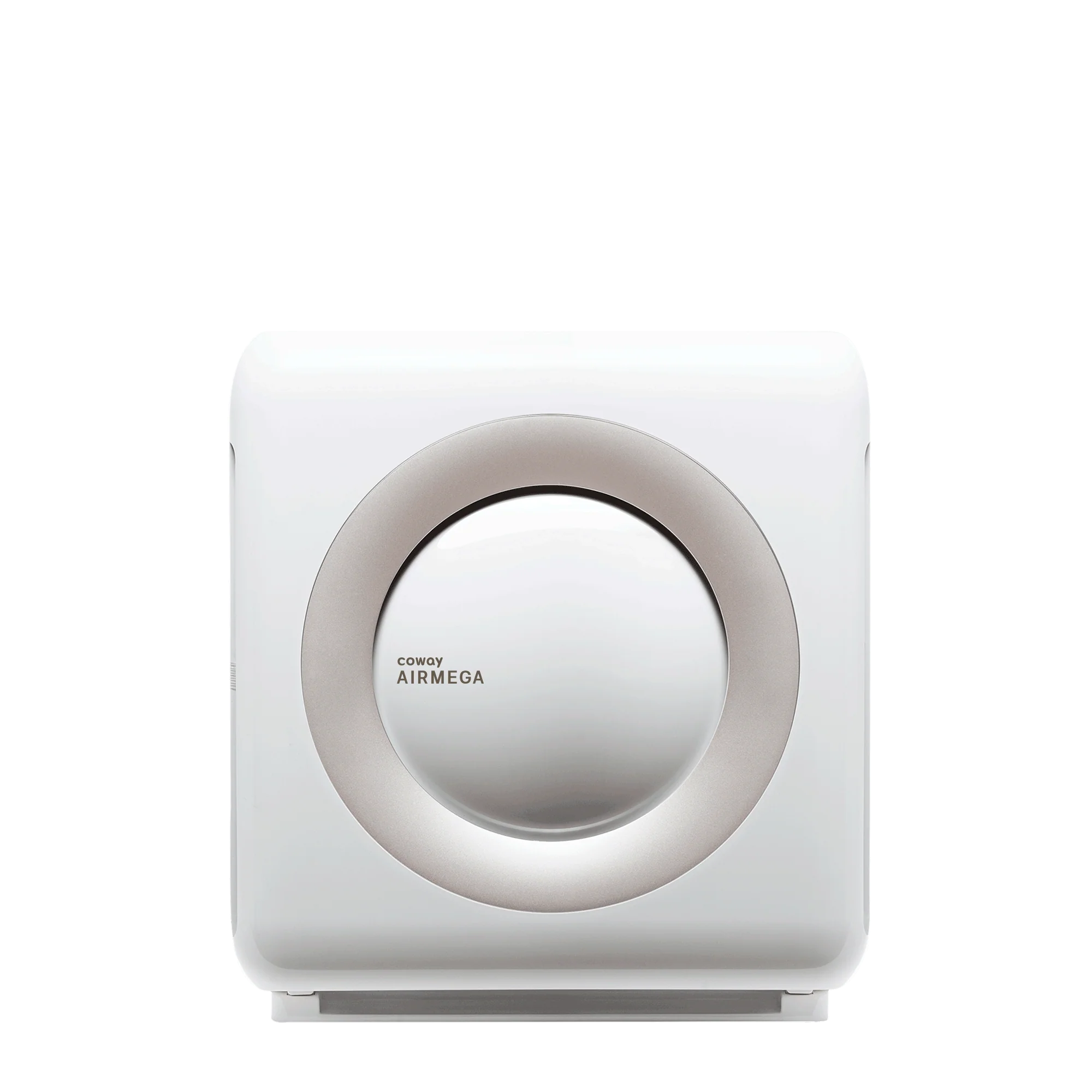
Key Specifications
- Room Coverage
- 361 sq ft
- CADR
- 233/246/240
- Filter
- True HEPA + Carbon + Pre-filter
- Noise
- 24 dB
- Power
- 77 watts
- Best For
- Medium rooms up to 361 sq ft. Wirecutter #1 for 10+ years. Best overall value.
📅 Prices checked . Amazon prices change frequently — click through for current price. Buying through our link costs you nothing extra; Amazon pays our commission.
What's in the Box
- Coway AP-1512HH air purifier
- Pre-installed 4-stage filter set
- Power cord
- User manual
- Filter replacement reminder sticker
Pros
- Wirecutter #1 for 10+ consecutive years
- AHAM verified CADR — no controversy
- True HEPA
- Fastest auto mode response in class
- 24dB ultra quiet sleep mode
- Eco mode at 4.9 watts
- 3-year warranty
Cons
- No WiFi or app control
- Carbon is impregnated fabric — weak on heavy odors
- Ionizer adds trace ozone (9ppb — CARB safe)
- Filter costs $60/year
- Design is dated
Best For
Anyone with a room under 350 sq ft who wants AHAM-verified CADR and auto mode at the lowest possible price. The AP-1512HH covers 360 sq ft at 4 ACH with a built-in PM2.5 sensor and air quality indicator. Sleep mode at 22.4 dB is near-silent. Five-year total cost of ownership is $404 compared to $749 for the Blueair. The mesh pre-filter rinses clean under tap water. If your room is under 350 sq ft, the Coway is the default recommendation. The Blueair costs nearly three times as much and adds no auto mode. Value, verified performance and real-time air quality response in one package at $109-129.
📅 Price checked August 2026 · Buying through this link costs you nothing extra — Amazon covers our commission
Blueair Blue Pure 211i Max Review Best Large Room
✓ AHAM VerifiedOur Verdict

Key Specifications
- Room Coverage
- 635 sq ft
- CADR
- 410/410/410
- Filter
- HEPASilent + Carbon
- Noise
- 23 dB
- Power
- 46 watts
- Best For
- Large rooms 400-635 sq ft. Highest CADR under $400. Replaces discontinued 211+.
📅 Prices checked . Amazon prices change frequently — click through for current price. Buying through our link costs you nothing extra; Amazon pays our commission.
What's in the Box
- Blueair Blue Pure 211i Max air purifier
- Pre-installed dual-protection filter
- Washable pre-filter (fabric)
- Power cord
- User manual
Pros
- Highest CADR 410 under $400
- AHAM verified
- Zero ozone verified
- 23dB quiet on low
- Washable pre-filter in colors
- Smart app with Alexa
Cons
- $299-349 expensive
- Filter costs $140/year — most expensive
- Cannot disable ionizer
- 211+ filters NOT compatible
Best For
Large-room buyers who need CADR 410 to clean rooms up to 635 sq ft at 4 ACH. The Blueair 211i Max is the right tool when the room simply exceeds what the Coway can handle. AHAM-verified, fabric pre-filter is machine-washable so you spend zero time rinsing anything. At $299-349 it costs more upfront and more in filter costs over five years. But for a living room, open-plan space or master bedroom over 400 sq ft, it is the only AHAM-verified option in this price range that delivers the necessary air changes. Accept the lack of auto mode, set the speed to high and let CADR 410 do the work.
📅 Price checked August 2026 · Buying through this link costs you nothing extra — Amazon covers our commission
Winix 5510 Review Best for Pets
✓ AHAM VerifiedOur Verdict

Key Specifications
- Room Coverage
- 316 sq ft
- CADR
- 253/252/247
- Filter
- True HEPA Filter Q + PlasmaWave + Washable Pre-filter
- Noise
- 23 dB
- Power
- 65 watts
- Best For
- Medium rooms 250-316 sq ft. WiFi app control. PlasmaWave CARB-certified ionization. Successor to 5500-2.
📅 Prices checked . Amazon prices change frequently — click through for current price. Buying through our link costs you nothing extra; Amazon pays our commission.
What's in the Box
- Winix 5510 air purifier
- Pre-installed True HEPA + carbon filter
- Power cord
- Remote control
- User manual
Pros
- AHAM-verified CADR: Smoke 253, Dust 252, Pollen 247 CFM
- WiFi via Winix Smart app — scheduling, remote on/off, filter tracking
- PlasmaWave CARB-certified bipolar ionization for VOC decomposition
- Combined Filter Q simplifies maintenance to one annual replacement
- Four-stage filtration including washable pre-filter
Cons
- Winix Smart app only — no Alexa or Google Home voice integration
- Filter Q combines HEPA and carbon — no washable carbon option like 5500-2
- Coverage 316 sq ft at 5 ACH — step up to CADR 300+ for rooms over 350 sq ft
- PlasmaWave cannot be disabled from physical panel without app
Best For
Buyers who want a middle path between the Coway and Blueair. The Winix 5510 delivers AHAM-verified CADR 243 with auto mode, a washable pre-filter and PlasmaWave for odor neutralization. It covers roughly the same room size as the Coway at a similar price. If cooking odors, pet smells or smoke are the primary concern, the PlasmaWave feature gives Winix a capability that neither the Coway nor the Blueair offers. See our Coway vs Winix comparison for the full breakdown on odor performance.
📅 Price checked August 2026 · Buying through this link costs you nothing extra — Amazon covers our commission
What to Know Before You Buy
The Quick Decision
Room under 350 sq ft? Buy the Coway AP-1512HH at $109-$129. Room between 350 and 600 sq ft? Buy the Blueair 211i Max. Room over 600 sq ft? Two Coways at $218-$258 combined deliver CADR 492 and cost less than one Blueair while adding two auto mode sensors covering different zones. That covers the vast majority of buying decisions.
Sale Timing
The Coway AP-1512HH regularly drops to $89-$99 during Amazon Prime Day and Black Friday. At $89, it is the best air purifier deal available anywhere. The Blueair 211i Max discounts less aggressively, typically to $249-$279 during sales. If you are buying for a room just over 350 sq ft and can wait, the Blueair at $249 becomes more competitive. The Coway at $89 is essentially impossible to beat for rooms under 350 sq ft.
CADR and Room Coverage — The Core Difference
CADR is the only verified measure of how much clean air a purifier produces per minute. Both the Coway and the Blueair submit to AHAM testing. Here are the verified numbers.
Coway AP-1512HH: CADR 246 (smoke/dust/pollen all at 246). At 4 ACH — the threshold used by AHAM for effective allergy relief — this covers 360 sq ft. At 2 ACH, it covers 720 sq ft. Price: $109-$129.
Blueair Blue Pure 211i Max: CADR 410 (smoke/dust/pollen all at 410). At 4 ACH this covers 635 sq ft. At 2 ACH it covers 1270 sq ft. Price: $299-$349.
The CADR gap is 67%. The price gap is 174%. You pay 174% more to get 67% more CADR. On a raw CADR-per-dollar basis the Coway wins by a wide margin. But CADR-per-dollar only matters when both units can serve the room. When your room is 500 sq ft, the Coway delivers only 2 ACH while the Blueair delivers 3.2 ACH. Neither reaches 4 ACH for that room size, but the Blueair is meaningfully closer to effective allergy relief.
The practical room-size decision:
- Under 350 sq ft: Coway delivers 4+ ACH. Blueair is overkill at 7+ ACH and costs 174% more. Buy the Coway.
- 350-600 sq ft: Coway drops to 2-3 ACH. Blueair maintains 4-6 ACH. Buy the Blueair.
- Over 600 sq ft: Two Coways at $218-$258 combined produce CADR 492 and cover two zones. One Blueair at $299-$349 produces CADR 410 in one unit. Two Coways deliver more total CADR for less money and add two auto mode sensors. This is the scenario where the two-Coway strategy beats the Blueair on every metric except simplicity.
Auto Mode — A Decisive Advantage for the Coway
The Coway AP-1512HH has a built-in PM2.5 sensor with three-speed auto mode and a color-coded air quality indicator. Blue means clean. Purple means moderate. Red means poor. The fan adjusts to current conditions within 2-3 seconds of detecting a particle spike. You set it to auto mode and never touch it again.
The Blueair Blue Pure 211i Max has no particle sensor. No auto mode. You select a fan speed manually and the purifier stays at that speed until you change it. There is no air quality indicator. There is no real-time response to cooking, dust, pollen or other pollution events. For a purifier priced at $299-$349, this is a genuine shortcoming.
The practical impact of this gap is significant. With the Coway, auto mode handles everything. When you cook, it ramps up. When the room is clean, it drops to 22 dB sleep mode. When pollen comes through an open window, it responds within seconds. You get optimized air cleaning around the clock without any input.
With the Blueair, you are the auto mode. If you run it on medium all day, you are over-purifying when air is clean and potentially under-purifying during a pollution event. Most buyers set the speed and forget it, which works but wastes energy and filter life when air is already clean. For allergy sufferers who need the purifier to catch particle spikes automatically, the lack of a PM2.5 sensor in the Blueair is a real limitation.
The irony here is significant: the $109-$129 Coway has auto mode and the $299-$349 Blueair does not. If auto mode matters to you — and it should for allergy and asthma sufferers — the Coway wins on this feature regardless of room size considerations. For large rooms where the Blueair is the only viable CADR option, you accept the manual operation as a trade-off.
Filter Costs and Pre-Filter Maintenance
Filter costs over five years exceed the purchase price of most purifiers. Understanding the real annual cost is essential before buying.
Coway AP-1512HH filters: The Coway uses a separate HEPA filter and carbon pre-filter. HEPA replacement: $20-$30, every 12 months. Carbon pre-filter: $10-$15, every 6 months. Annual filter cost: $50-$60 with genuine filters. The mesh pre-filter (separate from the carbon filter) rinses clean under tap water. Run it under the tap, let it dry, reinstall. Takes 2 minutes.
Blueair 211i Max filters: Single combined filter unit. Replacement: approximately $80 per year. The fabric pre-filter is machine-washable — run it through a washing machine cycle and reuse it. This is easier than hand-rinsing but requires remembering to put it through a laundry cycle every few months.
5-year TCO:
- Coway: $129 (purchase) + ($55 x 5 years) = $404
- Blueair: $349 (purchase) + ($80 x 5 years) = $749
The Coway saves $345 over five years. That is not a trivial difference. For buyers in the room size range where both purifiers can serve the space (which is essentially nowhere — the Coway covers up to 360 sq ft and the Blueair is needed above that), the Coway is massively cheaper to own.
Filter maintenance comparison: the Blueair machine-washable pre-filter is more convenient than the Coway tap-rinse pre-filter. But the Coway tap rinse is genuinely fast and easy. Both are manageable maintenance routines. The filter cost difference ($55/year vs $80/year) is a meaningful $25 annual savings for the Coway.
The Two-Coway Strategy for Large Rooms
For rooms over 600 sq ft, the conventional wisdom is to buy a single large purifier. The Blueair 211i Max is often that answer. But the two-Coway strategy deserves a serious look.
One Blueair 211i Max: CADR 410 from a single unit. Cost: $299-$349. One auto mode sensor (which the Blueair lacks — manual only). Covers one zone. Annual filters: $80. Five-year TCO: $749.
Two Coway AP-1512HH units: Combined CADR 492. Total cost: $218-$258. Two PM2.5 auto mode sensors in different zones. Two air quality indicators. Cover two separate areas of the room or two adjacent rooms. Annual filters: $110-$120. Five-year TCO: $808.
The two-Coway strategy delivers 20% more total CADR, adds auto mode (which the Blueair lacks entirely), covers two zones and costs less upfront. The five-year TCO is slightly higher ($808 vs $749) due to doubling the filter cost. But you get two units with auto mode versus one unit without auto mode.
The practical limitation of two Coways is management. You have two purifiers to monitor, two sets of filters to replace and two units to position in the room. For buyers who prefer the simplicity of one unit, the Blueair wins on convenience. For buyers who prioritize CADR, auto mode response and lower upfront cost, two Coways win on performance and value.
My recommendation for rooms over 600 sq ft: if you are already considering the Blueair, price out two Coways and decide based on whether you want two auto mode sensors or one manual unit. If your room is a true open-plan space where placing two units is awkward, buy the Blueair. If your space allows two units in different corners or two adjacent rooms, the two-Coway strategy is objectively better on CADR and adds a feature the Blueair does not have.
Noise Levels and Sleep Mode
Both purifiers are quiet on their lowest settings but the Coway is significantly quieter.
Coway AP-1512HH: 22.4 dB on sleep/low setting. 44 dB on medium. 53 dB on high. The 22.4 dB sleep mode is near-inaudible. In a quiet bedroom, you will not hear it. Auto mode keeps the unit at sleep-mode speed when PM2.5 levels are clean, which means most of the night is spent at 22.4 dB.
Blueair Blue Pure 211i Max: Approximately 30 dB on low, 40 dB on medium and 56 dB on high. The Blueair is audible on low in a quiet bedroom. If you want to run it at high speed for maximum CADR, 56 dB is noticeable. For sleep use in a large room, running the Blueair on medium is the practical compromise — enough CADR for the room size, quiet enough to sleep through.
The Coway wins on noise, and auto mode makes the advantage larger. When air quality is good, the Coway automatically drops to 22.4 dB without any input. The Blueair stays at whatever speed you set manually. For bedroom use, the Coway is the quieter and more considerate companion.
When the Blueair Wins — Being Fair
The Coway dominates this comparison on value, auto mode, TCO and noise. But there are genuine scenarios where the Blueair 211i Max is the correct choice.
Rooms between 350 and 600 sq ft. This is where the Blueair is the only AHAM-verified option in the price range that delivers 4+ ACH. The Coway drops to 2-3 ACH in these rooms. If you have a medium-to-large bedroom, a living room or a studio apartment above 350 sq ft, the Blueair delivers the CADR needed for clinically effective allergy relief. There is no alternative at this price range that meets the coverage requirement.
Machine-washable pre-filter preference. The Blueair fabric pre-filter goes in the washing machine. For buyers who prefer that maintenance routine over rinsing a mesh pre-filter under tap water, the Blueair is more convenient. This is a lifestyle preference, not a performance difference.
Single-unit large-room simplicity. One purifier is simpler than two. One filter to order, one unit to monitor, one cord to manage. For buyers who find managing two units inconvenient even if the performance math favors it, the Blueair provides large-room coverage from a single device.
Design preference. The Blueair 211i Max has a fabric cover and a more design-forward aesthetic than the Coway. Both are functional but the Blueair looks more intentional in a living space. For buyers where appearance matters, the Blueair is the better-looking option.
The honest summary: buy the Coway if your room is under 350 sq ft, full stop. Buy the Blueair if your room is 350-600 sq ft and the single-unit convenience is important. Consider two Coways for rooms over 600 sq ft where auto mode and higher combined CADR matter more than simplicity.