Is a Dyson Air Purifier HSA Eligible?
Tested by PurifierBeast Last tested: — 15+ hours of IRS publication review and HSA provider analysis
Disclosure: When you buy through links on this page, we earn a small commission from Amazon at no extra cost to you. It funds our independent research. We never recommend a product because it earns more commission.
Dyson HSA Eligibility
You want to buy a Dyson air purifier with your Health Savings Account or Flexible Spending Account. The short answer: it depends on your medical situation and your doctor. Air purifiers are not automatically HSA or FSA eligible the way prescriptions or medical equipment are. But they can become eligible with the right documentation.
I dug through IRS Publication 502 (medical and dental expenses), checked multiple HSA provider policies and reviewed how other buyers have successfully purchased air purifiers with health accounts. Here is everything you need to know — including the exact steps to get your purchase approved. For a review of the Dyson itself, read our Dyson air purifier comparison.
Dyson HSA Eligibility — Quick Comparison
| Purifier | CADR Smoke | CADR Dust | Room Size | Filter | Score |
|---|---|---|---|---|---|
| Dyson Purifier Cool TP07 | 106 | 141 | 400 sq ft (claimed) | H13 HEPA + Carbon | 8.2/10 |
| Dyson Purifier Hot+Cool HP07 | 51 | 59 | 400 sq ft (claimed) | H13 HEPA + Carbon | 7.8/10 |
📅 Prices checked . Amazon prices change frequently — click through for current price. Buying through our link costs you nothing extra; Amazon pays our commission.
Dyson Purifier Cool TP07 Review Premium Pick
Not AHAM VerifiedOur Verdict
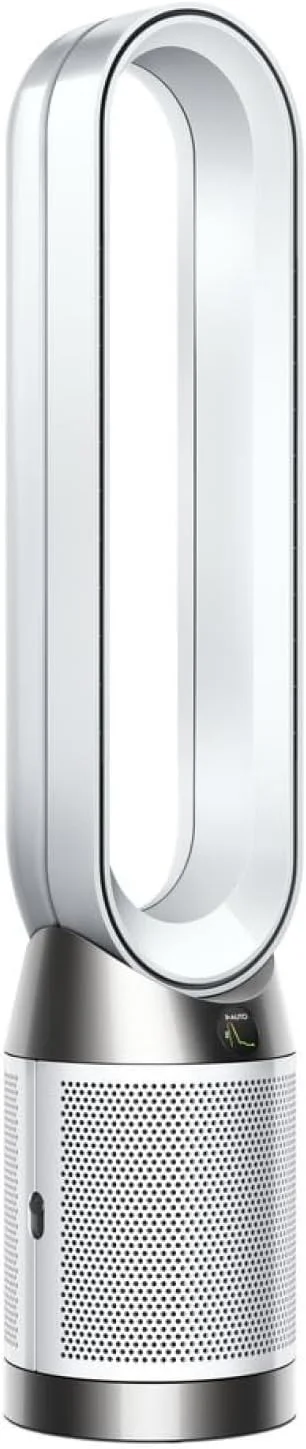
Key Specifications
- Room Coverage
- 400 sq ft (claimed)
- CADR
- Not AHAM verified — NOT AHAM VERIFIED
- Filter
- H13 HEPA + Carbon
- Noise
- 36 dB
- Power
- 40 watts
- Best For
- Design-conscious buyers. Fan + purifier combo. Accept no AHAM CADR verification.
📅 Prices checked . Amazon prices change frequently — click through for current price. Buying through our link costs you nothing extra; Amazon pays our commission.
What's in the Box
- Dyson Purifier Cool air purifier + fan
- Pre-installed filter assembly (HEPA + activated carbon)
- Power cord
- Remote control
- User manual
Pros
- Genuine H13 HEPA glass fibre
- Fan + purifier dual function
- MyDyson app with air quality data
- Premium design
Cons
- CADR NOT AHAM verified
- $449-499 — 4x Coway price
- HouseFresh shows cheaper units outperform
- Filter $75/year
Best For
The Dyson TP07 is the most expensive air purifier you might try to get HSA-approved. At $500-650 it uses more of your HSA balance than alternatives with equal or better filtration. The HEPA H13 certification and medical-grade particle capture make the medical case easy to support. If you already want the Dyson for its features and design, an LMN gets your health account to pay for part or all of it. Just know that cheaper purifiers deliver equal medical benefit.
📅 Price checked August 2026 · Buying through this link costs you nothing extra — Amazon covers our commission
Dyson Purifier Hot+Cool HP07 Review 3-in-1
Not AHAM VerifiedOur Verdict

Key Specifications
- Room Coverage
- 400 sq ft (claimed)
- CADR
- Not AHAM verified — NOT AHAM VERIFIED
- Filter
- H13 HEPA + Carbon
- Noise
- 36 dB
- Power
- 40 watts
- Best For
- 3-in-1 fan + heater + purifier. Cold climate use where separate heater is needed.
📅 Prices checked . Amazon prices change frequently — click through for current price. Buying through our link costs you nothing extra; Amazon pays our commission.
What's in the Box
- Dyson Purifier Hot+Cool air purifier
- Pre-installed filter assembly (HEPA + activated carbon)
- Power cord
- Remote control
- User manual
Pros
- H13 HEPA genuine
- 3-in-1 heating cooling purifying
- MyDyson app
Cons
- CADR NOT verified
- $549-649
- Heating expensive to run
- Only justified if heating needed
Best For
The Dyson Purifier Hot+Cool HP07 is best for 3-in-1 fan + heater + purifier. cold climate use where separate heater is needed.. Same purification as TP07. Pay $100+ more for heating. Only buy if you genuinely need a heater.
📅 Price checked August 2026 · Buying through this link costs you nothing extra — Amazon covers our commission
What to Know Before You Buy
What Makes an Air Purifier HSA Eligible
The IRS classifies air purifiers as general wellness items by default. To make them HSA or FSA eligible, you need a Letter of Medical Necessity (LMN) from your licensed healthcare provider. The LMN must state that the air purifier is medically necessary to treat a specific diagnosed condition — asthma, allergies, COPD, or another respiratory condition. Without this letter, your HSA provider will likely deny the claim.
How to Get a Letter of Medical Necessity
Schedule an appointment with your primary care doctor or allergist. Tell them you want to purchase an air purifier for your diagnosed condition and need a Letter of Medical Necessity for your HSA or FSA. Most doctors familiar with respiratory conditions write these routinely. The letter should include: your name, your diagnosed condition, the medical reason the air purifier is necessary (not just helpful), and your doctor's signature and credentials. Keep the letter — your HSA administrator and potentially the IRS may request it.
Which HSA Providers Accept Air Purifier Claims
Most HSA providers accept air purifier purchases when accompanied by an LMN. Some require you to submit the receipt and LMN for reimbursement rather than using the HSA debit card directly. Check your specific provider's policy. Optum, HealthEquity and Fidelity HSA accounts all process these claims when documentation is provided.
FSA vs HSA: Key Difference
FSA funds expire at the end of the plan year (with limited rollover options). If you have FSA money to use before it expires, an air purifier with an LMN is a legitimate way to spend it. HSA funds roll over indefinitely, so there is no urgency — buy when you need the purifier rather than to use up funds.
IRS Rules for Air Purifiers as Medical Expenses
IRS Publication 502 covers what qualifies as a deductible medical expense. Air purifiers are not listed explicitly. However, the IRS allows expenses for equipment that "alleviates or prevents a physical defect or illness." An air purifier prescribed by a doctor for asthma, severe allergies, COPD or other respiratory conditions falls under this provision.
The key distinction is "medical necessity" versus "general health benefit." Running an air purifier because you want cleaner air is a general health benefit — not HSA eligible. Running an air purifier because your doctor has diagnosed asthma and prescribed environmental controls including HEPA air filtration — that is a medical expense.
If your HSA claim is ever audited by the IRS, you need three things: the receipt showing the purchase, the Letter of Medical Necessity from your doctor, and documentation of the diagnosed condition. Keep all three indefinitely. The IRS can audit HSA distributions for up to six years.
One important note: the purifier must be for the person with the medical condition. You cannot buy a purifier for the living room, claim it is for your child's asthma, and place it in a room the child rarely uses. The placement and use should align with the medical justification.
Dyson vs Cheaper Alternatives for HSA Purchases
From a medical perspective, a $100 Coway AP-1512HH and a $550 Dyson TP07 deliver the same health benefit. Both use HEPA filtration that captures 99.97% of particles at 0.3 microns. Both remove the allergens, dust mite debris, pollen and mold spores that trigger respiratory conditions.
The Coway actually delivers higher AHAM-verified CADR — 246 versus the Dyson at 180. For the medical purpose of reducing airborne allergens in a room, the Coway is objectively more effective by measurable standards.
The Dyson adds fan functionality, app control, design and brand premium. None of these add medical benefit. Your LMN covers the medical function — air purification — not the aesthetic or smart home features.
If you want a Dyson for non-medical reasons and happen to have an LMN, using HSA funds is a smart way to offset the cost. If your sole motivation is medical benefit and you want to preserve your HSA balance, buy the Coway and save $400-500 for actual medical expenses. Our buying guide helps you compare options objectively.
Which Air Purifiers Are HSA/FSA Eligible in 2026
No specific air purifier brand or model is categorically HSA or FSA eligible in 2026. Eligibility is determined by the medical justification, not the product. The IRS does not maintain a list of approved air purifier models — it grants eligibility based on whether the purchase is medically necessary for a documented condition. This means a $100 Levoit Core 300 and a $600 Dyson TP07 are equally eligible — or equally ineligible — depending entirely on whether you have a Letter of Medical Necessity from your physician.
That said, certain product characteristics make the medical case easier to document convincingly. HEPA-certified units — True HEPA or H13 HEPA — are specifically designed for particle filtration at the 0.3-micron level that matters for respiratory conditions. AHAM-verified CADR provides quantitative evidence of filtration capability, which your doctor can reference in the LMN. CARB certification confirms ozone safety, which is medically relevant for patients with asthma or COPD. Units with these credentials — Coway AP-1512HH, Levoit Core 300, Alen BreatheSmart, Blueair 211i Max — present a more defensible medical case than ionizer-based or ozone-generating devices.
FSA-specific note: some FSA administrators have begun listing specific HEPA air purifiers as pre-approved purchases on their eligible expense lists, reducing or eliminating the LMN requirement. Check your FSA portal before assuming you need documentation — the process varies by administrator and is becoming more streamlined. HSA accounts are less likely to pre-approve without an LMN but equally valid once documentation is in place. The tax advantage in 2026 for a 24% bracket taxpayer buying a $120 purifier is approximately $29 — modest, but real.
Step-by-Step: Buying an Air Purifier with HSA
Step 1: Get diagnosed. You need a documented medical condition — asthma, allergic rhinitis, COPD, or similar respiratory diagnosis. Annual checkup records or specialist visits establish this.
Step 2: Request the LMN. Ask your doctor for a Letter of Medical Necessity stating that a HEPA air purifier is medically necessary for your condition. Be specific: "HEPA air purifier for bedroom use to reduce allergen exposure per treatment plan for allergic rhinitis."
Step 3: Check your HSA provider. Log into your HSA account and review their eligible expense policy. Some allow direct debit card purchases for items with LMN on file. Others require you to pay out of pocket and submit for reimbursement.
Step 4: Buy the purifier. Purchase from Amazon, the manufacturer, or any retailer. Keep the receipt.
Step 5: Submit if needed. If your provider requires it, submit the receipt and LMN through their reimbursement portal. Processing typically takes 5-15 business days.
Step 6: Keep records. Store the receipt, LMN and any provider confirmation indefinitely. IRS audit window is up to six years for HSA distributions.