Air Purifier for Smoke — What Works, What Doesn't and Why
Tested by PurifierBeast Last tested: — 20+ hours of EPA smoke removal research review, CADR-for-smoke AHAM testing methodology analysis, carbon bed weight comparison across models, wildfire smoke PM2.5 infiltration rate research, tobacco and marijuana smoke compound analysis
Disclosure: When you buy through links on this page, we earn a small commission from Amazon at no extra cost to you. It funds our independent research. We never recommend a product because it earns more commission.
Air purifiers for smoke require high-CADR True HEPA filtration for smoke particles plus thick activated carbon for smoke gases and odors. Standard thin carbon layers (less than 1 lb of carbon) saturate within days in a smoke-affected room. For wildfire smoke events, CADR of 300+ is recommended. For tobacco and marijuana smoke, odor control is the primary challenge requiring dense carbon beds.
Smoke Filtration Science
Smoke is a multi-phase air quality problem that requires two separate filtration technologies working together. Fine smoke particles — the PM2.5 fraction that penetrates deepest into the lungs — are a solid particulate problem solved by True HEPA filtration at H13 grade. Smoke gases and odors — the VOC fraction including aromatic hydrocarbons, aldehydes, carbon compounds and organic acids — are a chemical problem that HEPA cannot address. Activated carbon adsorbs these compounds. Air purifiers marketed for smoke that only emphasize HEPA filtration are providing incomplete protection: they capture the visible smoke haze but allow the odor and chemical fraction to pass through unchanged.
The practical implication: smoke removal requires purchasing a unit with both strong HEPA performance (high CADR for the particle fraction) and a substantial activated carbon bed. "Substantial" matters — the thin carbon layers in many budget units (50-100 grams of carbon) saturate within days of continuous smoke exposure. Purpose-designed smoke purifiers use 1-3+ lbs of activated carbon to provide meaningful odor adsorption capacity over weeks to months of exposure.
This guide covers three smoke scenarios with different requirements: wildfire smoke infiltration (extreme particle load, outdoor-sourced, acute events), tobacco and marijuana smoke (continuous indoor generation, odor is primary concern), and cooking smoke (intermittent, particle and odor combined). Each scenario has different optimal unit selection and operational strategies. For our ranked recommendations, see our best air purifier for smoke guide.
Smoke Filtration Science — Quick Comparison
| Purifier | CADR Smoke | CADR Dust | Room Size | Filter | Score |
|---|---|---|---|---|---|
| Coway AP-1512HH Mighty | 233 | 246 | 361 sq ft | True HEPA + Carbon + Pre-filter | 9.5/10 |
| Winix 5500-2 | 232 | 243 | 360 sq ft | True HEPA + PlasmaWave + Washable Carbon | 9.2/10 |
📅 Prices checked . Amazon prices change frequently — click through for current price. Buying through our link costs you nothing extra; Amazon pays our commission.
Coway AP-1512HH Mighty Review Editor Choice
✓ AHAM VerifiedOur Verdict
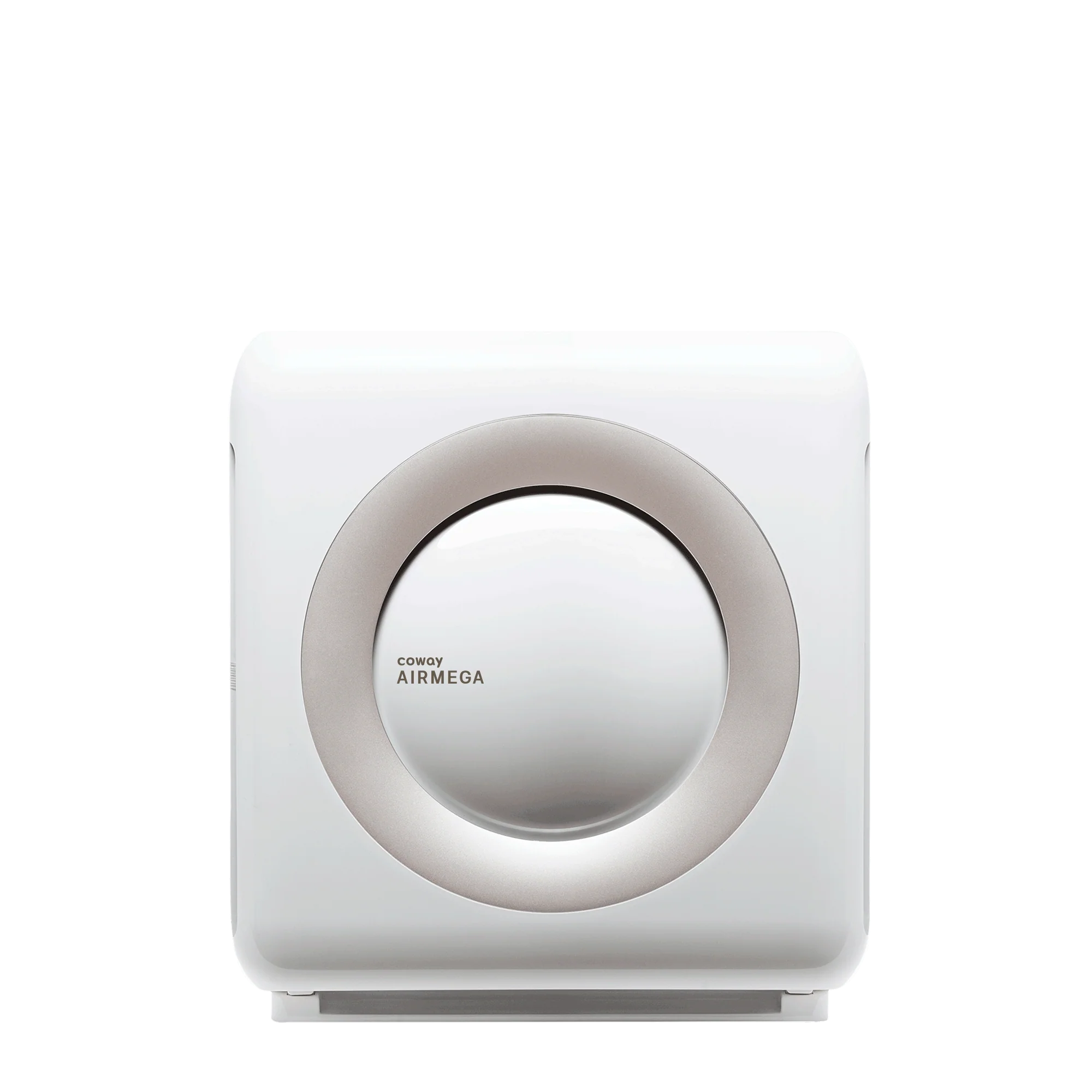
Key Specifications
- Room Coverage
- 361 sq ft
- CADR
- 233/246/240
- Filter
- True HEPA + Carbon + Pre-filter
- Noise
- 24 dB
- Power
- 77 watts
- Best For
- Medium rooms up to 361 sq ft. Wirecutter #1 for 10+ years. Best overall value.
📅 Prices checked . Amazon prices change frequently — click through for current price. Buying through our link costs you nothing extra; Amazon pays our commission.
What's in the Box
- Coway AP-1512HH air purifier
- Pre-installed 4-stage filter set
- Power cord
- User manual
- Filter replacement reminder sticker
Pros
- Wirecutter #1 for 10+ consecutive years
- AHAM verified CADR — no controversy
- True HEPA
- Fastest auto mode response in class
- 24dB ultra quiet sleep mode
- Eco mode at 4.9 watts
- 3-year warranty
Cons
- No WiFi or app control
- Carbon is impregnated fabric — weak on heavy odors
- Ionizer adds trace ozone (9ppb — CARB safe)
- Filter costs $60/year
- Design is dated
Best For
The Coway AP-1512HH is the correct smoke purifier for wildfire smoke events and general particle-heavy smoke in rooms under 360 sq ft. AHAM-verified CADR 246 for smoke — the only independently confirmed CADR in its price tier. The carbon layer handles light odors adequately. For heavy tobacco or marijuana odor control where the chemical fraction of smoke is the primary concern, the Winix 5500-2 with PlasmaWave adds chemical decomposition that the Coway cannot match.
📅 Price checked August 2026 · Buying through this link costs you nothing extra — Amazon covers our commission
Winix 5500-2 Review Best Value
✓ AHAM VerifiedOur Verdict
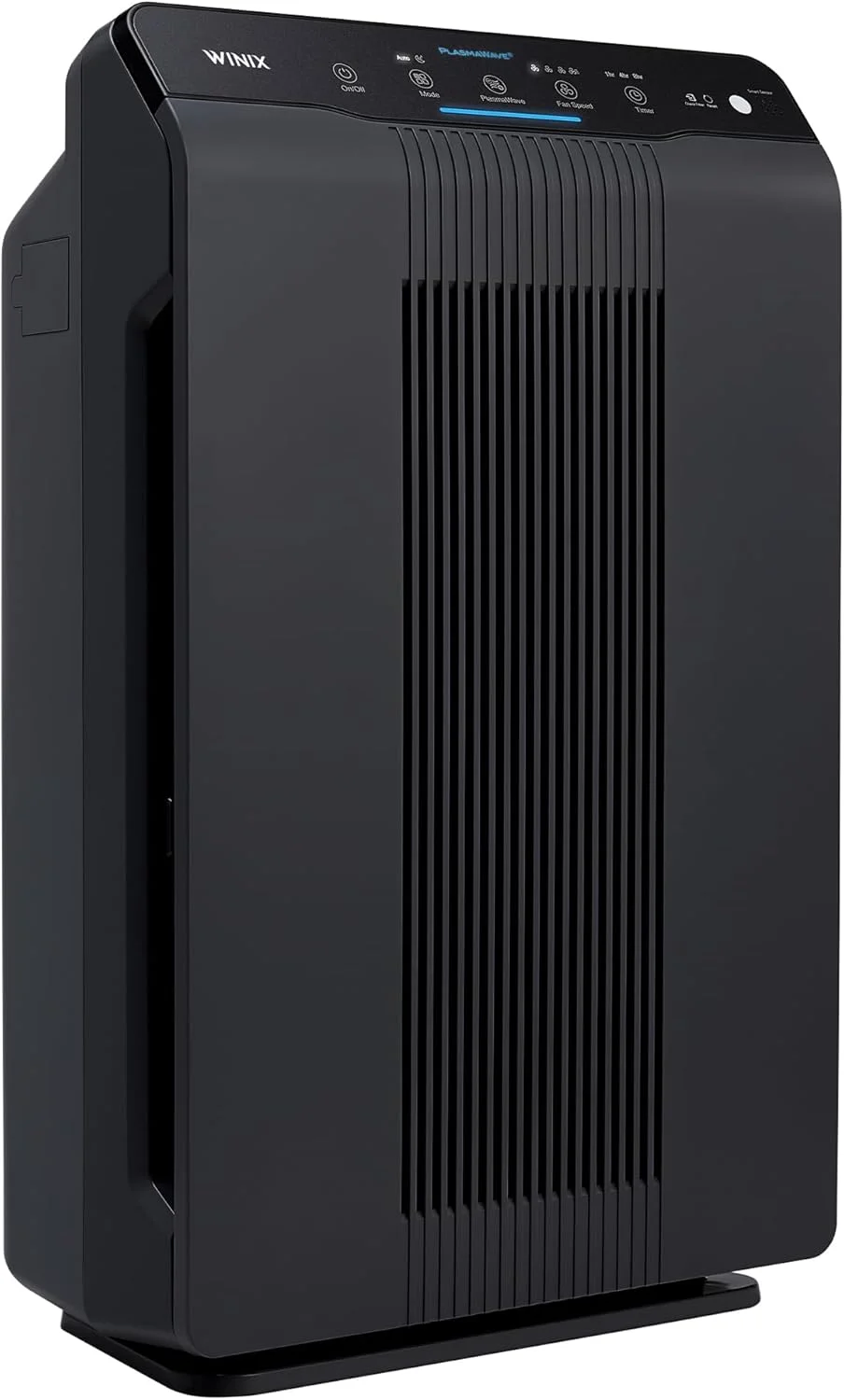
Key Specifications
- Room Coverage
- 360 sq ft
- CADR
- 232/243/246
- Filter
- True HEPA + PlasmaWave + Washable Carbon
- Noise
- 27 dB
- Power
- 67 watts
- Best For
- DISCONTINUED. Buy while stock lasts. Washable carbon is unique advantage.
📅 Prices checked . Amazon prices change frequently — click through for current price. Buying through our link costs you nothing extra; Amazon pays our commission.
What's in the Box
- Winix 5500-2 air purifier
- Pre-installed True HEPA + carbon filter
- Power cord
- Remote control
- User manual
Pros
- AHAM verified CADR
- PlasmaWave pellet carbon
- Washable carbon filter — unique
- HouseFresh tested 23 min room clean
Cons
- DISCONTINUED in US
- No WiFi
- Louder than 5510
- Larger footprint
Best For
The Winix 5500-2 is the best smoke purifier for households where odor control is as important as particle removal. AHAM-verified CADR 269 for smoke, PlasmaWave technology breaks down smoke VOCs chemically. In tobacco or marijuana smoke environments, PlasmaWave provides meaningful odor reduction that a carbon-only stage cannot sustain. At $120-160, it is $10-30 more than the Coway AP-1512HH and the correct upgrade when persistent odor control is required.
📅 Price checked August 2026 · Buying through this link costs you nothing extra — Amazon covers our commission
What to Know Before You Buy
For Wildfire Smoke — The Specific CADR Threshold That Matters
During wildfire smoke events, outdoor PM2.5 concentrations can reach 150-500+ μg/m³ — 10-30× the EPA "good" air quality threshold of 12 μg/m³. Indoor infiltration rates depend on building tightness, but typical homes experience 30-50% of outdoor PM2.5 concentration infiltrating indoors during sustained wildfire events. To reduce indoor PM2.5 from infiltration-elevated levels to safe ranges (below 12 μg/m³), you need a purifier running at 5+ ACH continuously. This means CADR of 300+ for a 360 sq ft room, 400+ for larger spaces. The EPA specifically recommends using HEPA air purifiers during wildfire smoke events — portable HEPA purifiers with CADR above 300 are the recommendation for standard residential rooms during acute smoke events.
For Cigarette and Marijuana Smoke — Carbon Bed Weight Is the Key Variable
Cigarette smoke contains 7,000+ chemical compounds including aldehydes, aromatic hydrocarbons, nitrogen oxides and carbon monoxide. Activated carbon adsorbs the organic compound fraction (not CO or NOx at normal carbon bed thicknesses). The practical variable is how long the carbon bed lasts before saturation. A 100-gram carbon bed in a room with one pack per day of cigarette smoke may saturate in 1-2 weeks. A 3 lb (1,360 gram) carbon bed extends this to months. Most standard consumer air purifiers have 50-200 grams of carbon. For heavy smoking environments, purpose-designed units with thick carbon — Austin Air, IQAir GC MultiGas XE, or large activated carbon filter stages — are required. For light or occasional smoking exposure, the Winix 5500-2 or Coway AP-1512HH with fresh filters handle it adequately for weeks before replacement.
For Cooking Smoke — Placement Matters as Much as CADR
Cooking smoke is an intermittent acute event rather than a sustained background issue. Placement near the cooking zone (within 6-10 feet of the stove or cooking area) allows the purifier to respond to PM2.5 spikes quickly before smoke distributes through the space. Run on high during cooking; the auto mode on units with PM2.5 sensors will trigger this automatically. For kitchen and open-plan cooking spaces above 500 sq ft, CADR of 350+ is needed to respond adequately during active high-heat cooking events. For smaller kitchens under 200 sq ft, CADR 150-200 is sufficient for cooking smoke events.
Smoke CADR Benchmark — What Numbers Matter for Wildfire vs Cigarette
CADR for smoke is an AHAM-specific rating measured in cubic feet per minute of smoke-equivalent clean air delivery. It is the most relevant performance number for smoke applications, and the benchmarks that matter differ meaningfully between wildfire events and indoor cigarette smoke environments because the two scenarios present fundamentally different purifier challenges.
Wildfire smoke CADR benchmark: The EPA and AHAM both recommend CADR of at least 2/3 of the room area in square feet for wildfire smoke use — a 300 sq ft room needs CADR 200 as a floor. For severe wildfire events (outdoor AQI above 150, PM2.5 above 55 μg/m³ consistently), this floor is insufficient. Research from Lawrence Berkeley National Laboratory on wildfire PM2.5 infiltration puts the effective threshold for maintaining indoor PM2.5 below the EPA moderate threshold (35 μg/m³) at CADR providing 5+ ACH during sustained severe events. For a 300 sq ft room that means CADR 250+. For a 500 sq ft living room during a heavy wildfire event, CADR 420+. The Coway AP-1512HH at CADR 246 handles a 300 sq ft room; the Blueair 211i Max at CADR 350 handles up to 420 sq ft; the DREO Macro 414 at CADR 414 handles up to 500 sq ft.
Cigarette smoke CADR benchmark: CADR 200+ in a 300 sq ft room clears a single cigarette's particle load to below 12 μg/m³ in approximately 20-30 minutes. The CADR threshold for cigarette smoke particle clearance is lower than for wildfire events because cigarette smoke is a discrete event rather than a continuous infiltration source. The harder challenge is carbon bed weight for gas-phase odor — a thin carbon layer (under 150g) saturates within days of daily smoking regardless of CADR. For cigarette smoke, prioritize carbon bed weight above 500g alongside CADR 200+ rather than chasing the highest CADR available. A DREO Macro 414 with high CADR but thin carbon performs worse in a smoking household than a Winix 5500-2 with PlasmaWave and lower CADR but non-saturating VOC decomposition.
Wildfire Smoke vs Cigarette Smoke — CADR Requirements Differ
Wildfire smoke and cigarette smoke are both combustion products captured by HEPA filtration, but they present different air purification challenges in terms of CADR requirements, carbon bed demands, and operational strategy. Conflating the two leads to undersized or wrongly configured units.
Wildfire smoke — the particle overload scenario: During a wildfire event, outdoor PM2.5 can reach 200-500+ μg/m³ — 15-40× the EPA "good" threshold of 12 μg/m³. The challenge is not filtering a single source but continuously competing with infiltrating outdoor smoke. Typical homes allow 30-50% of outdoor PM2.5 to infiltrate indoors through gaps around windows, doors, and ventilation. At outdoor PM2.5 of 300 μg/m³, indoor concentration without intervention settles at 90-150 μg/m³ — well above the "hazardous" threshold of 55 μg/m³. Keeping indoor PM2.5 below 35 μg/m³ during a severe wildfire event requires a purifier running continuously at maximum speed with CADR of 300+ in a standard bedroom, and CADR 400+ in a living room or open-plan space. The operative word is continuously — the moment the purifier stops, infiltration raises PM2.5 again. Wildfire smoke purification is primarily a CADR-at-high-speed problem. Carbon bed weight matters less because wildfire smoke has lower odor concentration relative to particle load compared to tobacco smoke.
Cigarette smoke — the gas-phase dominance scenario: A single cigarette produces approximately 12 mg of PM2.5. In a 300 sq ft bedroom with windows closed, one cigarette raises indoor PM2.5 to approximately 80-120 μg/m³ — elevated but an acute, decaying event rather than a continuous infiltration source. HEPA at CADR 246 in a 300 sq ft room (6.1 ACH) clears this particle load to below 12 μg/m³ in 25-40 minutes. The harder problem with cigarette smoke is the gas phase: nicotine, benzene, formaldehyde, acrolein, and hundreds of other VOCs that HEPA cannot capture. These gases persist in the room air and deposit on surfaces where they continue to off-gas (thirdhand smoke). A carbon bed with adequate weight (500g+) captures a meaningful fraction of these gases. A thin carbon layer (under 150g) saturates within days in a daily-smoking environment, after which odors and gases pass through completely. For tobacco smoke environments: CADR is secondary to carbon bed weight for long-term air quality management.
Operational difference: For wildfire events — run on high continuously; CADR matters most; carbon is secondary. For cigarette smoke environments — ensure adequate carbon bed weight for gas capture; CADR matters for particle clearance speed after each smoking event. For environments with both wildfire exposure and smoking: choose a unit with both high CADR (300+) and a substantial carbon bed (500g+, or PlasmaWave for non-saturating VOC decomposition). The Winix 5500-2 (AHAM CADR 269, PlasmaWave for persistent VOC management) addresses both scenarios better than the Coway AP-1512HH (AHAM CADR 246, lighter carbon) for dual-source smoke environments.
What Smoke Particle Size Does HEPA Capture — and What Gets Through?
Cigarette smoke particles range from 0.1 to 1 micron, with peak concentration around 0.3-0.5 microns — the most penetrating range for mechanical HEPA filtration. True HEPA at H13 grade captures 99.97% of particles at 0.3 microns. At 0.5 microns and above, efficiency increases toward 99.99%+. At 0.1 microns (the ultrafine combustion particle range), diffusion-based capture in HEPA media still achieves high efficiency (typically above 99.9% for agglomerated smoke particles), though individual sub-0.1-micron particles have higher theoretical penetration probability.
What True HEPA does not capture from smoke: the gas phase. Benzene, toluene, formaldehyde, acrolein, hydrogen cyanide, and thousands of other smoke-associated VOCs exist in the gas phase below the HEPA's particle-capture threshold. These gases pass through the HEPA fiber matrix unchanged. The activated carbon stage downstream of the HEPA handles these compounds through adsorption. In smoke contexts, the carbon stage is arguably as important as the HEPA stage — the gas phase is what generates persistent odor and drives long-term chemical exposure in tobacco and marijuana smoke environments.
The HEPA-only marketing problem: many air purifiers emphasize HEPA specifications in smoke marketing without equally emphasizing the activated carbon stage. A HEPA-only unit in a tobacco smoking environment removes visible smoke haze efficiently (particles) while allowing 100% of the gaseous odor and chemical fraction to pass through. The room looks cleaner (lower PM2.5) but smells the same and has equal chemical VOC exposure. Effective smoke purification requires both stages operating at adequate capacity for the specific smoke load in the environment.
How Does Wildfire Smoke PM2.5 Infiltration Rate Affect Air Purifier Sizing?
Wildfire smoke events create a specific sizing challenge: outdoor PM2.5 can reach extreme concentrations (above 500 μg/m³ during severe events), and infiltration rate depends on building envelope tightness. Research by the Lawrence Berkeley National Laboratory on smoke infiltration in residential buildings shows that average US homes — not specifically sealed or weather-stripped — experience 30-50% outdoor PM2.5 infiltration. A well-sealed home may experience 15-25% infiltration. An older home with gaps and poor sealing can experience 60-80% infiltration.
The infiltration fraction creates a continuous PM2.5 source: the purifier is not clearing a one-time event but competing against ongoing infiltration. At 50% infiltration with outdoor PM2.5 at 200 μg/m³, indoor PM2.5 settles around 100 μg/m³ without a purifier — far above the EPA safe threshold. With a HEPA purifier running at 5 ACH, indoor PM2.5 can be maintained at 25-35 μg/m³ even at this outdoor concentration. At 10 ACH (two adequate-CADR units running simultaneously), indoor levels approach 12-15 μg/m³ — below the EPA moderate threshold.
Practical wildfire sizing rule: for a standard 300 sq ft room at 50% infiltration efficiency and moderate wildfire smoke (outdoor PM2.5 100-200 μg/m³), one HEPA purifier with CADR 250+ running continuously maintains adequate indoor air quality below 35 μg/m³. For severe events (outdoor PM2.5 300-500+), either upgrade CADR (use CADR 400+) or add a second unit. The EPA's DIY Corsi-Rosenthal box (a box fan with MERV-13 filters taped to 3 sides) at approximately CADR 400-600 is a supplemental strategy during acute wildfire events when commercial purifiers are sold out or insufficient for the room size. For our wildfire-specific ranked recommendations, see the smoke purifier guide.