Air Cleaner vs Air Purifier — What the Terms Mean and Which You Need
Tested by PurifierBeast Last tested: — 16+ hours of EPA and ASHRAE air cleaner terminology review, MERV rating standard analysis, portable HEPA vs electronic air cleaner performance comparison, HVAC filter upgrade cost-benefit analysis, ozone generation risk assessment for electronic air cleaners
Disclosure: When you buy through links on this page, we earn a small commission from Amazon at no extra cost to you. It funds our independent research. We never recommend a product because it earns more commission.
An air cleaner is the EPA and ASHRAE technical term for any device that removes particles, gases, or biological contaminants from indoor air. The category includes portable HEPA air purifiers (the most common consumer product), whole-home electronic air cleaners installed on HVAC systems, upgraded HVAC filters (MERV-8 through MERV-16), UV-C germicidal devices, and ionizers. "Air purifier" is the colloquial consumer term for portable units. When someone searches "air cleaner," they may mean a portable purifier, an HVAC upgrade, or a whole-home system — this guide covers all three.
Air Cleaner Technology Review
The confusion between "air cleaner" and "air purifier" is a terminology problem, not a product problem. The EPA, ASHRAE, and the U.S. Department of Energy use "air cleaner" as the technical umbrella term for all devices that remove contaminants from indoor air — particles, gases, biological agents. Consumer marketing adopted "air purifier" for the portable units because it tested better with buyers. Both terms describe the same underlying technology; the difference is context: technical documentation says "air cleaner," product listings say "air purifier."
What matters more than the name is the mechanism and the application. A portable HEPA air cleaner (air purifier) treats a single room. An HVAC filter upgrade (also an air cleaner) treats the whole home every time the system runs. An electronic air cleaner on the HVAC system removes particles through electrostatic charge rather than mechanical filtration. Each has different costs, coverage, maintenance requirements, and tradeoffs. This guide maps the full air cleaner category so you can identify which type of air cleaner fits your actual problem — room-level particle removal, whole-home allergen control, or odor and VOC reduction throughout the house.
For specific portable air cleaner recommendations, see our best air purifier guides by room and use case. For the whole-home approach, see our whole house air purifier guide.
Air Cleaner Technology Review — Quick Comparison
| Purifier | CADR Smoke | CADR Dust | Room Size | Filter | Score |
|---|---|---|---|---|---|
| Coway AP-1512HH Mighty | 233 | 246 | 361 sq ft | True HEPA + Carbon + Pre-filter | 9.5/10 |
| Winix 5500-2 | 232 | 243 | 360 sq ft | True HEPA + PlasmaWave + Washable Carbon | 9.2/10 |
📅 Prices checked . Amazon prices change frequently — click through for current price. Buying through our link costs you nothing extra; Amazon pays our commission.
Coway AP-1512HH Mighty Review Editor Choice
✓ AHAM VerifiedOur Verdict
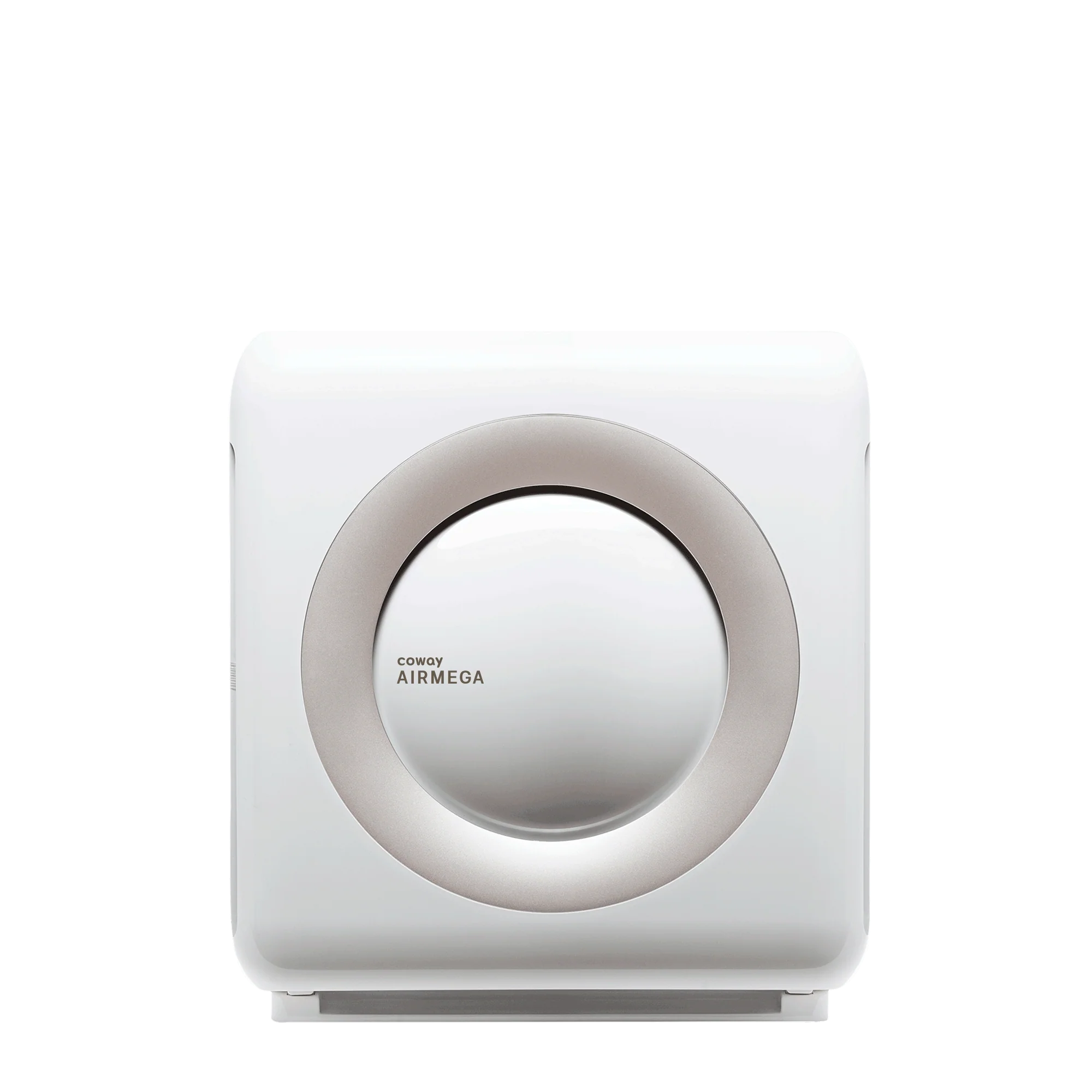
Key Specifications
- Room Coverage
- 361 sq ft
- CADR
- 233/246/240
- Filter
- True HEPA + Carbon + Pre-filter
- Noise
- 24 dB
- Power
- 77 watts
- Best For
- Medium rooms up to 361 sq ft. Wirecutter #1 for 10+ years. Best overall value.
📅 Prices checked . Amazon prices change frequently — click through for current price. Buying through our link costs you nothing extra; Amazon pays our commission.
What's in the Box
- Coway AP-1512HH air purifier
- Pre-installed 4-stage filter set
- Power cord
- User manual
- Filter replacement reminder sticker
Pros
- Wirecutter #1 for 10+ consecutive years
- AHAM verified CADR — no controversy
- True HEPA
- Fastest auto mode response in class
- 24dB ultra quiet sleep mode
- Eco mode at 4.9 watts
- 3-year warranty
Cons
- No WiFi or app control
- Carbon is impregnated fabric — weak on heavy odors
- Ionizer adds trace ozone (9ppb — CARB safe)
- Filter costs $60/year
- Design is dated
Best For
The Coway AP-1512HH is the correct portable air cleaner for single-room particle and allergen removal up to 360 sq ft. AHAM-verified CADR 246, True HEPA, no ozone output, and a filter cost that is among the lowest in its performance class. For buyers who searched "air cleaner" and need a portable unit to improve air quality in a specific bedroom or home office, this is the benchmark value recommendation.
📅 Price checked August 2026 · Buying through this link costs you nothing extra — Amazon covers our commission
Winix 5500-2 Review Best Value
✓ AHAM VerifiedOur Verdict
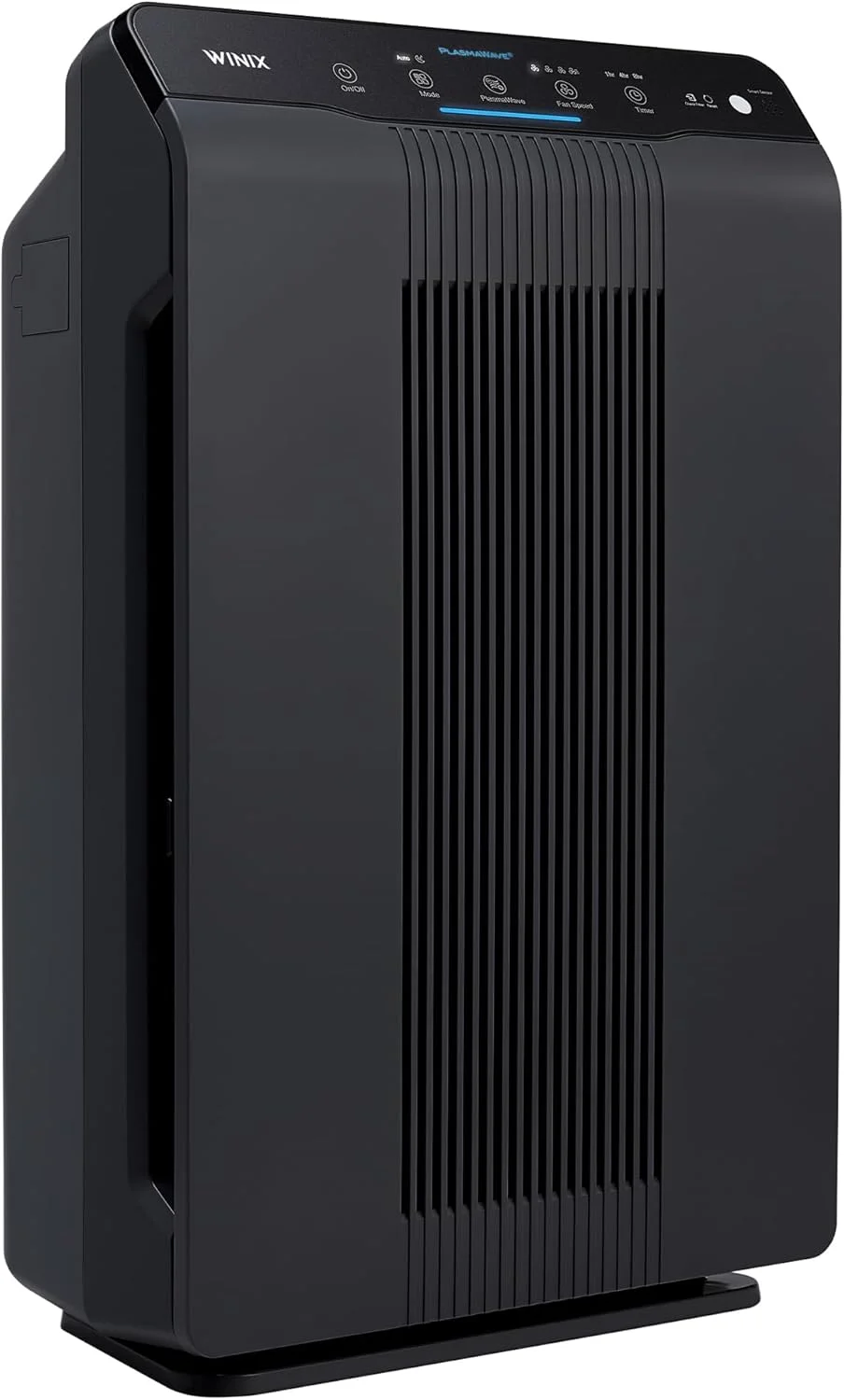
Key Specifications
- Room Coverage
- 360 sq ft
- CADR
- 232/243/246
- Filter
- True HEPA + PlasmaWave + Washable Carbon
- Noise
- 27 dB
- Power
- 67 watts
- Best For
- DISCONTINUED. Buy while stock lasts. Washable carbon is unique advantage.
📅 Prices checked . Amazon prices change frequently — click through for current price. Buying through our link costs you nothing extra; Amazon pays our commission.
What's in the Box
- Winix 5500-2 air purifier
- Pre-installed True HEPA + carbon filter
- Power cord
- Remote control
- User manual
Pros
- AHAM verified CADR
- PlasmaWave pellet carbon
- Washable carbon filter — unique
- HouseFresh tested 23 min room clean
Cons
- DISCONTINUED in US
- No WiFi
- Louder than 5510
- Larger footprint
Best For
The Winix 5500-2 is the correct portable air cleaner when odor control is a priority alongside particle removal. AHAM-verified CADR 243 (smoke), True HEPA, and a carbon filter stage that outperforms the Coway's carbon pre-filter for VOC and cooking odor adsorption. For buyers who need both particle and gas-phase air cleaning in a single portable unit, the Winix 5500-2 is the more complete air cleaner.
📅 Price checked August 2026 · Buying through this link costs you nothing extra — Amazon covers our commission
What to Know Before You Buy
MERV Ratings for HVAC Air Cleaners — What Each Level Captures
MERV (Minimum Efficiency Reporting Value) is the air cleaner rating standard for HVAC filters. It rates filters from MERV-1 (lowest, large particle only) to MERV-16 (near-HEPA efficiency). For home use: MERV-8 catches lint, dust, pollen, and mold spores above 3 microns — the standard for most HVAC systems. MERV-11 adds finer dust and some allergen capture. MERV-13 catches particles down to 1 micron including virus-carrying respiratory droplets — the EPA and CDC recommendation for improved indoor air quality during respiratory illness. Most residential HVAC systems can handle MERV-13 without significant airflow restriction. MERV-16 and above require higher airflow capacity and are typically found in commercial air cleaner systems. A MERV-13 filter upgrade costs $20-50 and treats all air the HVAC system processes — the lowest cost air cleaner upgrade available for whole-home coverage.
Electronic Air Cleaners — Electrostatic HVAC Systems and Their Tradeoffs
Whole-home electronic air cleaners (Aprilaire, Trane CleanEffects, Honeywell whole-home units) mount on the HVAC system and use electrostatic charge to attract particles to collection plates. They can achieve high particle capture efficiency without the airflow restriction of dense MERV filters. The tradeoffs: 1) Some generate ozone as a byproduct of the electrostatic process — a respiratory irritant at elevated concentrations. 2) Collection plates require regular cleaning (every 1-3 months) or efficiency drops sharply. 3) Installation costs $800-2,500 professionally installed. 4) Without maintenance, an unwashed electronic air cleaner can produce ozone without providing meaningful air cleaning. The EPA recommends avoiding air cleaners that generate ozone intentionally. For most homeowners, a MERV-13 filter upgrade is more cost-effective and lower maintenance than an electronic air cleaner.
When to Choose a Portable Air Cleaner vs an HVAC Air Cleaner
Choose a portable air cleaner (HEPA purifier) when: you rent and cannot modify the HVAC system; you need higher air quality in a specific room than the HVAC can provide; the HVAC system runs less than 8 hours per day; or you have no central HVAC (window units, mini-splits). Choose an HVAC air cleaner upgrade (MERV-13 filter) when: you own the home, have central forced-air HVAC, and want whole-home coverage at the lowest per-square-foot cost. Use both when: you have whole-home HVAC with MERV-13 but a specific bedroom or home office requires higher air change rates than the HVAC provides during normal operation.
What "Air Cleaner" Means — EPA and ASHRAE Technical Definition vs Consumer Term
The EPA defines "air cleaner" as any device designed to remove contaminants from indoor air, including particulate matter, gaseous pollutants, and biological agents. This definition encompasses portable HEPA units, whole-home HVAC-integrated systems, standalone ionizers, UV-C germicidal devices, and HVAC filter upgrades. The term appears throughout EPA indoor air quality guidance, ASHRAE Standard 62.1 (ventilation for acceptable indoor air quality), and DOE documentation.
"Air purifier" is the consumer marketing term that became the dominant product category name for portable units. There is no technical distinction between an "air purifier" and a portable "air cleaner" — they are the same product described using different vocabulary. The EPA uses "air cleaner" in technical documentation. Amazon, Home Depot, and consumer media use "air purifier." Same product, different terminology contexts.
The practical reason this distinction matters: when a homeowner searches "air cleaner," they may be looking for a portable unit, an HVAC filter upgrade, or a whole-home system. Understanding that "air cleaner" is the broader category — and "portable HEPA air purifier" is the most common subset — helps identify the right product for the application. For room-level air quality improvement, a portable HEPA air cleaner is the appropriate product. For whole-home improvement on the least-cost basis, an HVAC filter upgrade to MERV-13 is the starting point.
MERV-8 vs MERV-13 — Which HVAC Air Cleaner Filter Do You Need?
MERV (Minimum Efficiency Reporting Value) is the standardized rating system for HVAC air cleaner filters, defined by ASHRAE Standard 52.2. Unlike CADR for portable units, MERV does not measure output — it measures minimum capture efficiency for particles in three size ranges at the most restrictive (worst) conditions.
MERV-8: Captures 70%+ of particles in the 3-10 micron range (dust, pollen, mold spores). Does not capture fine particles below 1 micron. Appropriate for standard HVAC filtration without allergy concerns. Most residential systems ship with MERV-8 or equivalent filters.
MERV-11: Captures 65%+ of particles in the 1-3 micron range — adds finer dust, pet dander, and some allergens. A meaningful upgrade from MERV-8 for allergy sufferers. Compatible with most residential HVAC systems.
MERV-13: Captures 75%+ of particles in the 0.3-1 micron range — the size range that includes virus-carrying respiratory aerosols, fine PM2.5 particles, and tobacco smoke. The EPA and CDC specifically recommend MERV-13 for improved indoor air quality during respiratory illness seasons and general PM2.5 reduction. Most modern residential HVAC systems can handle MERV-13 without excessive airflow restriction. Cost: $20-50 per filter, typically replaced every 90 days.
Important limitation: HVAC air cleaners only treat air when the system is running. In mild weather when heating and cooling are not needed, the HVAC may run only 2-4 hours per day — significantly reducing effective air cleaning coverage. In these conditions, a portable HEPA air cleaner running 24/7 in occupied rooms provides more consistent air quality than the HVAC-integrated approach. See our MERV rating vs HEPA comparison for full details.
Electronic Air Cleaners on HVAC Systems — How They Work and the Ozone Risk
Whole-home electronic air cleaners (electrostatic precipitators installed on HVAC systems) work by applying a high-voltage electrostatic charge to incoming air. Particles in the air become charged and are attracted to oppositely charged collection plates, where they are captured. This approach achieves high particle capture efficiency without the airflow restriction of dense mechanical filters.
How they differ from portable ionizers: Whole-home electronic air cleaners are installed in the HVAC ductwork by professionals. The electrostatic charging section and collection plates are permanent components. Portable ionizers add negative charge to particles, causing them to settle on surfaces or clump together and fall — without a collection plate mechanism. The whole-home electronic air cleaner is more effective because particles are captured in collection plates and removed from air circulation; a portable ionizer deposits charged particles on walls and furniture.
The ozone problem: The high-voltage ionization process in electronic air cleaners produces ozone as a byproduct. At low concentrations, ozone production from electronic air cleaners is typically within EPA limits. However, the ozone risk is real and documented — the California Air Resources Board specifically bans the sale of air cleaners that emit ozone above 0.050 ppm in California. Unwashed collection plates on an electronic air cleaner reduce particle capture efficiency while ozone production continues — meaning the device produces a respiratory irritant without providing the air cleaning benefit it was installed for. If choosing a whole-home electronic air cleaner, establish a strict monthly plate-washing schedule or consider a MERV-13 filter upgrade as the lower-maintenance alternative.
Portable HEPA Air Cleaner vs Whole-Home System — Which Covers Your Situation?
The choice between a portable HEPA air cleaner and a whole-home air cleaning strategy depends on four factors: home ownership, HVAC type, target rooms, and air quality goals.
Renters and those without central HVAC: A portable HEPA air cleaner (portable "air purifier") is the only practical option. HVAC filter upgrades require a forced-air central system. Electronic air cleaners require ductwork. Portable units are the complete solution for renters, apartments, condos, and homes with window units or mini-split systems. Place the portable air cleaner in the bedroom and any primary living space. Two or three portable units cover a typical apartment or small home comprehensively.
Homeowners with central forced-air HVAC: The best air cleaning strategy combines a MERV-13 HVAC filter (whole-home particle reduction during HVAC operation) with portable HEPA units in bedrooms and home offices (continuous high-CADR air cleaning regardless of HVAC run time). The HVAC filter handles baseline whole-home particle levels; the portable units provide the 5+ ACH needed for health-grade air quality in occupied rooms. The marginal cost of adding MERV-13 filtration to an existing HVAC system is $20-50 per quarter — the highest cost-effectiveness air cleaning upgrade available for homeowners.
For whole-home coverage with only portable units: Calculate total coverage needed (sum of all rooms you want to treat), then size portable units for each space independently. A 1,200 sq ft home requires three to four portable units sized correctly for each room — CADR matched to each room's square footage at 4.8 ACH. See our whole house air purifier guide for complete multi-room coverage planning.