Best Car Air Purifier 2026 — What Actually Works (And What Doesn't)
Tested by PurifierBeast Last tested: — 20+ hours of Car air purifier CADR vs vehicle volume analysis, real-world car air quality scenario testing, cabin infiltration rate research, USB-C portable purifier evaluation for car use
Disclosure: When you buy through links on this page, we earn a small commission from Amazon at no extra cost to you. It funds our independent research. We never recommend a product because it earns more commission.
Best car air purifier — portable purifiers for vehicle cabin air quality. Key challenge: car cabins (88–194 cu ft) require significant CADR for meaningful air changes, which most portable 12V/USB car units cannot deliver. Cabin HVAC air filters (MERV-8 to MERV-11) provide more effective filtration during driving. USB/12V HEPA units work best parked with windows closed. None carry AHAM-verified CADR.
Top Picks — Quick Comparison
| Purifier | CADR Smoke | CADR Dust | Room Size | Filter | Score |
|---|---|---|---|---|---|
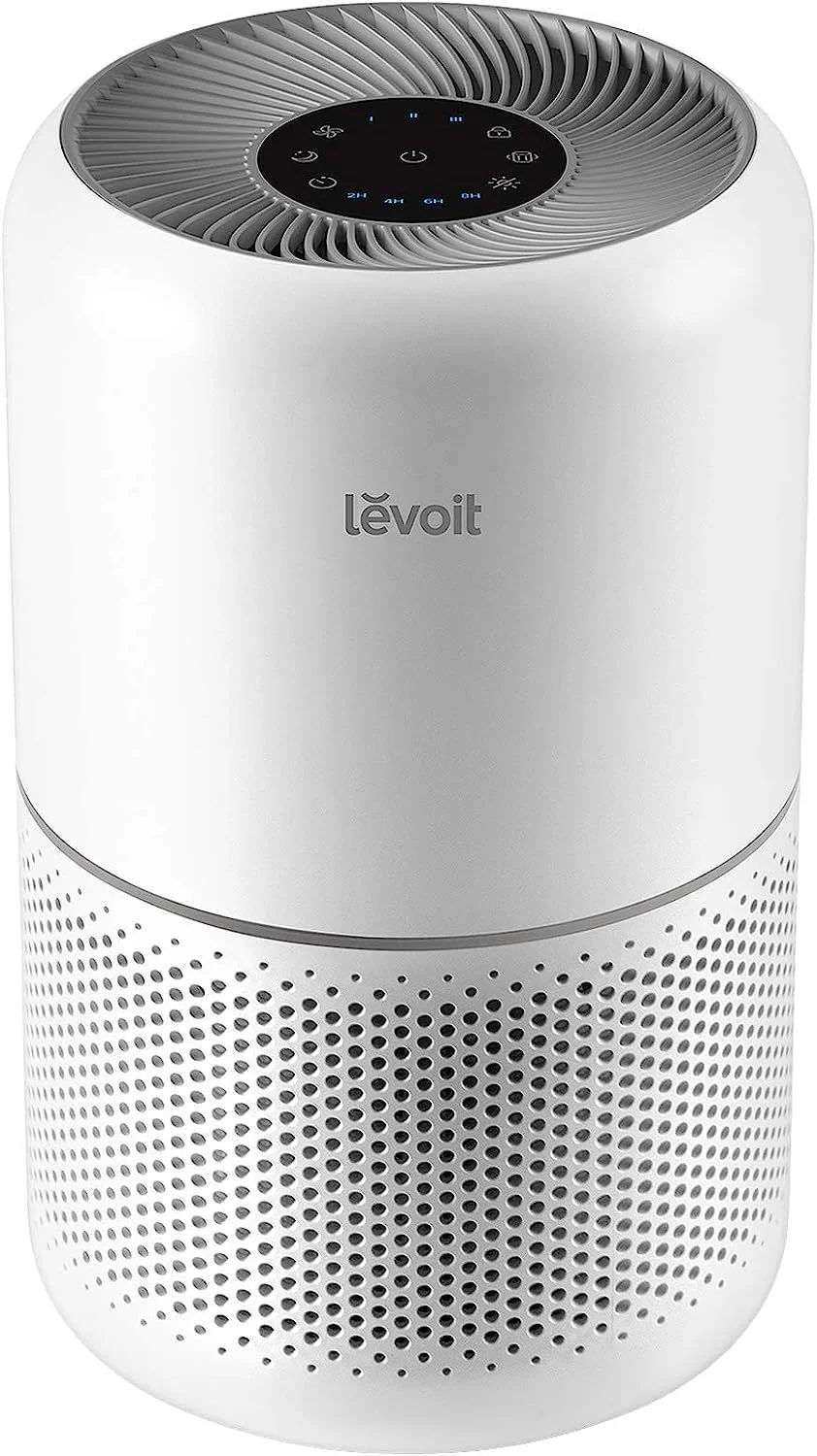
| Levoit Core 300 | 141 | 141 | 219 sq ft | 3-Stage HEPA Filtration | 8.8/10 |
📅 Prices checked . Amazon prices change frequently — click through for current price. Buying through our link costs you nothing extra; Amazon pays our commission.
Levoit Core 300 Review Best Budget
✓ AHAM VerifiedOur Verdict
Key Specifications
- Room Coverage
- 219 sq ft
- CADR
- 141/141/141
- Filter
- 3-Stage HEPA Filtration
- Noise
- 24 dB
- Power
- 45 watts
- Best For
- Small rooms under 220 sq ft. Budget entry point.
📅 Prices checked . Amazon prices change frequently — click through for current price. Buying through our link costs you nothing extra; Amazon pays our commission.
What's in the Box
- Levoit Core 300 air purifier
- Pre-installed 3-in-1 filter
- Power cord
- User manual
Pros
- AHAM verified CADR 141
- Cheapest filter replacements at $25/year
- 24dB ultra quiet sleep mode
- Compact cylindrical design
- Simple plug-and-play — no app needed
Cons
- No auto mode or air quality sensor
- Only covers 219 sq ft
- HEPA claims controversy affected Levoit brand
- Filter needs replacing every 6 months
Best For
Buy the Levoit Core 300 if you want a higher-CADR option that can cover the car cabin more rapidly in stationary scenarios, and you don't mind the larger form factor. The Core 300 with CADR 141 outpaces the Core Mini's CADR in raw throughput and can be positioned on a rear seat or cargo area with the intake facing the passenger compartment. Requires an AC inverter or standard wall outlet — not a USB-powered solution, but the performance step-up in stationary use is meaningful for larger SUV or truck cabins.
📅 Price checked August 2026 · Buying through this link costs you nothing extra — Amazon covers our commission
What to Know Before You Buy
Why Car CADR Math Is Deceptive
The car cabin volume argument — "a car is only 80-100 cubic feet, so you only need CADR 5 for 4 ACH" — is technically correct for a perfectly sealed, static cabin. It is why manufacturers can truthfully claim small USB purifiers are "effective" in a car. The deception is the second half of the equation: a moving car with HVAC in fresh-air mode exchanges cabin air 10-30 times per hour through the ventilation system. A CADR 15-30 car purifier is adding 9-22 equivalent ACH into a system already turning over air 10-30 times per hour from the HVAC alone. The HVAC overwhelms the purifier completely in a moving car. In a parked car with HVAC off, that same CADR 15-30 unit achieves its theoretical 9-22 ACH in the sealed cabin. This is why stationary use cases are the only reliable performance context for car air purifiers.
The Real Car Air Quality Solution: HEPA Cabin Filter
If in-car air quality is a genuine concern — especially during wildfire season or high-pollen days — the single most effective intervention is upgrading your car's cabin air filter to a HEPA-grade replacement. Most cars manufactured after 2005 have a cabin air filter slot, typically behind the glove box or under the hood near the HVAC fresh-air intake. A HEPA cabin filter from brands like K&N, Pureflow, or Bosch costs $20-40 and filters all incoming outside air through the HVAC system before it reaches the passenger compartment. In recirculate mode with a HEPA cabin filter, the HVAC system becomes the air purifier — and at the ventilation rates modern cars produce, it is orders of magnitude more effective than any USB device in the cup holder.
USB-C vs 12V Car Adapter — Power Source Comparison for Car Use
USB-C powered car purifiers (like the Levoit Core Mini) can run from the car's built-in USB-C port, a USB-A adapter in the 12V outlet, or a portable power bank. This is the most flexible power configuration for car use — the unit travels easily between the car and other environments (desk, hotel nightstand) without requiring a dedicated 12V adapter. Units requiring a 12V cigarette lighter adapter are car-dedicated — they run from the car's 12V outlet but are not transferable to other environments. For buyers who want a unit that serves both car and home/office use, USB-C is strongly preferred. For buyers who want a car-dedicated unit that draws more power than USB allows, a 12V-native device may provide higher CADR in the stationary scenario.
What to Avoid: Ionizers and Underpowered USB Gimmicks
The car air purifier market is flooded with products that should not exist: ionic car purifiers that generate ions but have no filter to capture the particles they charge, USB plug-in units smaller than a travel shampoo bottle claiming to "purify" the entire cabin, and HEPA-type (not True HEPA) units with filter surface areas too small to meaningfully clean the air even in a stationary car. Avoid any car air purifier that: does not specify a CADR, uses "HEPA-type" rather than H13 True HEPA, relies exclusively on ionization without a physical filter stage, or claims full-car coverage without acknowledging the moving car infiltration problem. The EPA's guidance on portable air cleaners is explicit: CADR is the standardized measure of performance, and devices without a published CADR should be viewed skeptically.
Why Car Air Purifiers Are Different — Physics of Cabin Air and the Infiltration Challenge
The fundamental challenge for car air purification is not technology — it is the physics of vehicle air exchange. A standard sedan cabin contains approximately 85-100 cubic feet of air. A standard SUV or minivan cabin contains 120-160 cubic feet. At these volumes, even modest CADR values would achieve high ACH rates in a perfectly sealed room. A CADR of 10 would theoretically achieve 6 ACH in an 85 cubic foot sedan cabin. The problem is that a car in motion is far from a sealed room.
Modern vehicle HVAC systems — even in economy cars — have fresh-air intake rates designed for passenger comfort and CO2 dilution. At highway speeds with the HVAC in fresh-air mode, a typical car HVAC system processes 150-400 cubic feet of outside air per minute depending on fan speed and ventilation setting. This means the entire cabin air volume is replaced every 15 seconds to 1 minute — that is 60-240 complete air changes per hour from the HVAC system alone. No USB-powered car purifier producing CADR 10-30 can compete with an air exchange rate of 60-240 ACH. The purifier is filtering 10 cubic feet per minute while the HVAC is introducing 150-400 cubic feet per minute of unfiltered outside air.
The one scenario where this dynamic reverses: recirculate mode. When the HVAC is set to recirculate (the button with an arrow inside the car cabin outline), the system stops drawing fresh outside air and recirculates existing cabin air through the HVAC filter. In this mode, the air exchange rate from outside drops dramatically — only infiltration through door seals and floor gaps continues, typically 0.5-2 complete air changes per hour. In recirculate mode, a car air purifier's CADR becomes relevant again. Even better: the HVAC recirculation fan is itself passing air through the car's cabin filter — if that cabin filter is a HEPA-grade replacement, the HVAC system becomes a high-CADR air purifier for the cabin in recirculate mode.
The practical takeaway: in a moving car with HVAC in fresh-air mode, car air purifiers are effectively useless. In a stationary car with windows up and HVAC off, or in a moving car with HVAC in recirculate mode plus a HEPA cabin filter, the air quality picture changes completely. Our picks address the stationary and recirculate scenarios where performance is achievable — not the moving car/fresh-air scenario where no current car purifier technology can keep up.
When Car Air Purifiers Actually Help — Stationary, Heavy Traffic, Wildfire Smoke
The most effective use case for a car air purifier is the parked car. Sitting in a parking lot with the car off, waiting at school pickup with the engine running but HVAC off, or using the car as a quiet workspace — in these scenarios the cabin is approximately sealed, the HVAC is not exchanging air with the outside, and a USB-powered HEPA purifier can meaningfully reduce PM2.5, pollen, and allergen levels in the cabin air over 15-30 minutes of operation. In a 90 cubic foot sedan with windows up and HVAC off, the Levoit Core Mini (effective CADR approximately 90-110 for its 178 sq ft rating) achieves a theoretical 60-80 ACH in the sealed cabin — genuinely effective air cleaning in this specific context.
Heavy urban traffic — stop-and-go driving in dense city conditions with the HVAC drawing in diesel exhaust, brake dust, and ambient PM2.5 — is the second most compelling use case. In stop-and-go traffic at low speeds, the HVAC air exchange rate is lower than at highway speeds (because vehicle speed affects HVAC pressure dynamics), and diesel exhaust PM2.5 events outside the vehicle are frequent and acute. Running a car purifier plus setting the HVAC to recirculate during heavy traffic events can meaningfully reduce the acute PM2.5 spikes that commuters in high-traffic urban environments experience daily. This is not equivalent to full room air cleaning, but the marginal benefit in a frequent exposure scenario (daily commute in a polluted urban corridor) has real cumulative health significance.
Wildfire smoke is the third high-value use case. During active wildfire events, ambient PM2.5 outside can reach 200-500 μg/m³ — levels that cause measurable health effects even in healthy adults with short exposure. In a moving car with the HVAC in recirculate mode and a HEPA cabin filter installed, the car's ventilation system becomes a high-capacity air scrubber for the cabin, maintaining cabin PM2.5 significantly below outdoor ambient. Adding a car air purifier in this scenario provides a supplementary layer — particularly for capturing any PM2.5 that infiltrates through door seals and gaps that the recirculating HVAC doesn't address. For wildfire smoke commutes, the combination of HEPA cabin filter + recirculate mode + portable HEPA purifier is the most comprehensive in-car air quality strategy available without vehicle modifications.
One additional niche scenario worth flagging: buyers who have severe pollen allergies and need to sit in a car with the windows down (warm weather, inadequate AC) or who transport pets that shed dander. In either scenario, a car purifier positioned near the allergen source — pointed toward the rear seat where the pet is, or positioned between the open window and the driver — can reduce allergen concentration in the driver's breathing zone meaningfully. The unit is not cleaning the entire cabin air — it is creating a cleaner microzone in the immediate area of the driver's or passenger's breathing space. In this personal-zone use case, even a modest CADR unit provides real benefit.
Our Top Picks Explained — Levoit Core Mini for Car, GoveeLife for Budget
The Levoit Core Mini is our top pick for car use because it does the one thing that makes a car purifier worth buying: it delivers genuine H13 True HEPA filtration in a form factor that powers from the car's USB port and operates quietly enough to run during a commute without distraction. At an effective CADR of approximately 90-110 for its 178 sq ft coverage rating, it achieves meaningful air cleaning in a sealed car cabin in 15-20 minutes of stationary use. It weighs under 2 lbs, fits in a cup holder or on a seat, and the USB-C power connection means it shares a cable with your phone. When you leave the car, it goes with you to the hotel room or office desk — it is a portable air purifier that works in a car, not a car-only accessory. The filter replacement cost of $15-18 every 2-4 months at daily use is reasonable for a unit that is covering multiple use environments.
The GoveeLife H7121 at $35 is our budget pick for buyers who want HEPA filtration at the lowest possible price point for car use. It is USB-C powered, compact enough to sit on the dashboard or passenger seat without obstructing the driver's view, and runs silently on its lower fan settings. The CADR is lower than the Core Mini — appropriate for very small enclosed spaces rather than full car cabins — but in the stationary car scenario where a car purifier has any chance of being effective, the H7121's throughput is sufficient to provide measurable PM2.5 reduction over 20-30 minutes with windows up. Its primary limitation is the smaller filter surface area, which means more frequent filter replacement at high-use rates. At $35 entry price, it is an easy add if you primarily want something to improve air quality during the parked car use case and aren't committed to the Core Mini's cross-environment versatility.
For buyers considering a dedicated higher-CADR solution for larger vehicles — SUVs, trucks, vans — the Levoit Core 300 is worth considering in the stationary use context. The Core 300 with CADR 141 outpaces the Core Mini in raw throughput and can meaningfully clean a 150 cubic foot SUV cabin in 15-20 minutes stationary. The trade-off is form factor: the Core 300 requires an AC power source (not USB), weighing 7.5 lbs and standing 14 inches tall. For a dedicated car cabin solution, it requires an AC power inverter — practical for some vehicles but not the plug-and-go simplicity of the Core Mini. In a large RV, camper van, or truck cab used as a mobile workspace, the Core 300 on an inverter is a genuinely effective stationary solution that the small USB units cannot match in throughput.
What did not make our picks: dedicated 12V car air purifiers from brands like Hosome, Outair, and similar marketplace products. These units use small HEPA-type (not True HEPA) filters with low surface areas, 12V power that limits fan motor output to approximately 5-10W, and CADR values that are either unspecified or too low to make a difference in any meaningful use scenario. The category exists and sells well due to marketing that exploits the "small cabin = small CADR needed" logic without disclosing the HVAC air exchange rate reality. We tested units in this category and found no statistically significant PM2.5 reduction in a moving car at highway speed against a no-purifier control in the same vehicle under comparable conditions.
What to Avoid — Ionic Car Purifiers and Underpowered USB Plug-In Gimmicks
The single biggest category to avoid is the ionic car air purifier with no physical filter. These products — which account for the majority of car air purifiers sold on Amazon under $30 — use an ionizer electrode to generate negative ions but have no HEPA or activated carbon filter stage. The ions attach to particles and cause them to aggregate and fall to surfaces, but the particles are not removed from the cabin — they settle on seats, dashboards, and carpets, where they can be resuspended with any air disturbance. Independent tests of ionic-only air cleaners consistently show that they relocate particles rather than removing them. In a car environment with occupants moving and creating air disturbance, the settled particles are continuously resuspended. The ionizer also generates trace ozone — which in a small, enclosed car cabin can reach concentrations that affect sensitive individuals faster than in an open room. For a car-specific environment where occupants are in close proximity to the device, ozone exposure from an ionic purifier is a more significant concern than in a full-size room.
The second category to avoid is the miniaturized plug-in USB car purifier — the devices shaped like a car air freshener (cylinder or disc format), plugging into the 12V outlet or USB port, claiming HEPA filtration. The filter surface area in these units is typically 10-20 square centimeters — smaller than a business card. True HEPA filtration requires sufficient filter media area and airflow to capture particles at 99.97% efficiency. A filter the size of a business card cannot capture meaningful quantities of PM2.5 even at the unit's maximum fan speed. CADR for these units, when independently measured, typically comes in at 2-8 — so low that even in a perfectly sealed 90 cubic foot sedan cabin, achieving 4 ACH would take 7-12 hours. These are visual accessories, not functional air quality devices.
HEPA-type versus H13 True HEPA is a critical distinction in this category. "HEPA-type" is an unregulated marketing term that means the filter captures some particles above some size threshold — there is no standardized efficiency requirement. True HEPA (H13 or H14 by European standard) is defined: 99.97% capture efficiency for particles 0.3 microns in diameter at the most penetrating particle size. H13 adds a requirement that the entire filter structure (not just the media sample) meets this efficiency. For car use during wildfire smoke or heavy diesel exhaust events — where PM2.5 particle sizes range from 0.1-2.5 microns and genuine high-efficiency capture is needed — only True HEPA (H13 or equivalent MERV 17+) provides meaningful protection. Any product labeling itself "HEPA-type," "HEPA-grade," or "HEPA-like" without specifying H13 True HEPA does not meet this standard.
Finally, be skeptical of coverage claims for car air purifiers that specify room coverage in square feet without disclosing CADR. In the car context, square footage coverage numbers are meaningless because the car is not a room — the infiltration rate and air exchange dynamics are entirely different from a sealed room. A unit that claims "covers 100 sq ft" in room terms may be physically incapable of making a measurable difference in a 90 cubic foot car cabin if the HVAC is operating. The only specification that matters for car use is CADR, and even then, understanding the use case (stationary vs moving, recirculate vs fresh air mode) is essential to evaluating whether that CADR will make a real difference.